
Tesla Powerwall in South Carolina: Cost, Availability & Is It Worth It?
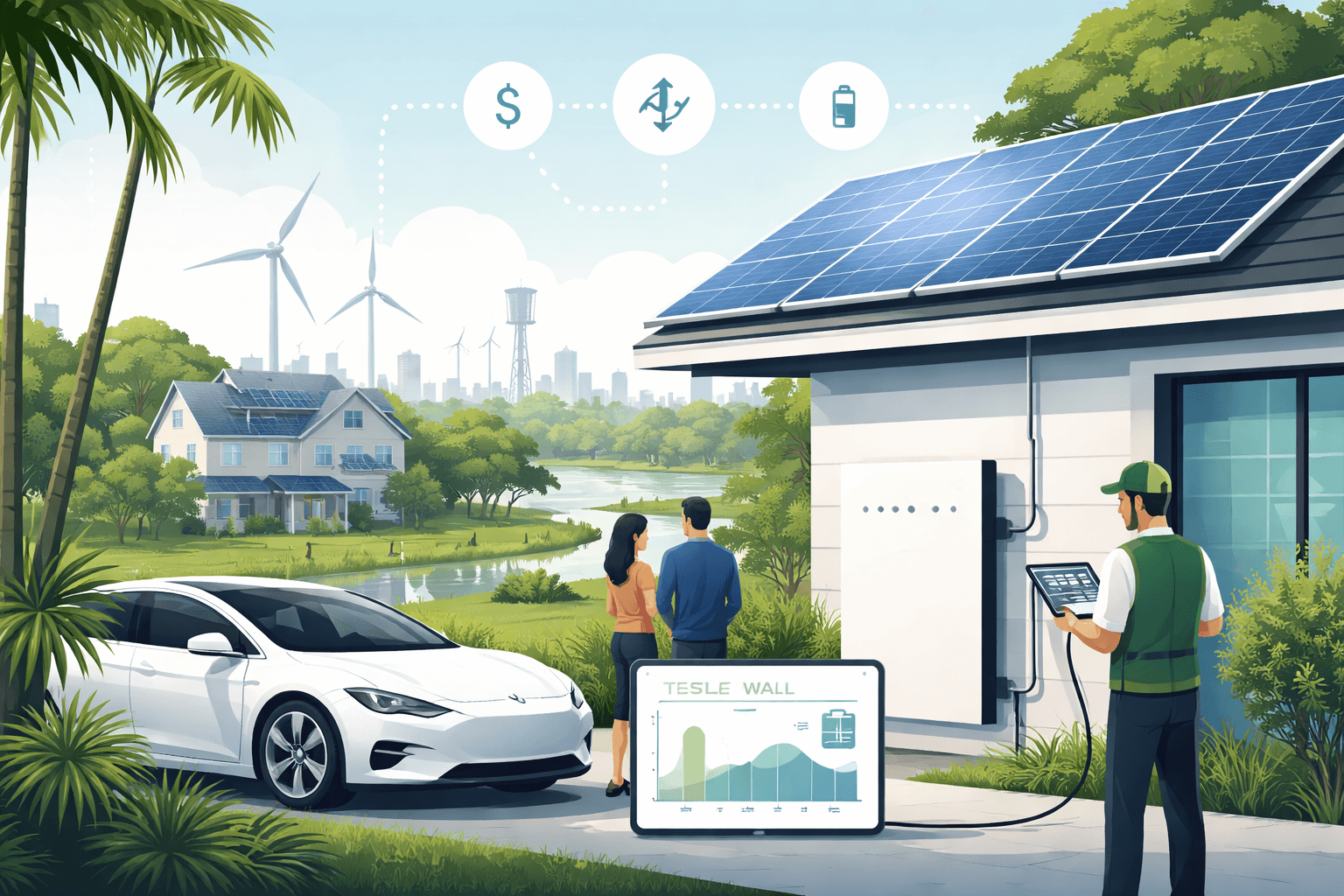
South Carolina homeowners are asking about the Tesla Powerwall for two big reasons: storm resiliency and changing solar economics. Residential battery adoption is surging nationally—about 14–17% of new U.S. home solar systems included storage in 2023, up from roughly 6% in 2020 (SEIA/Wood Mackenzie). At the same time, South Carolina’s “Solar Choice” tariffs from Duke Energy and Dominion Energy shift solar customers to time-of-use (TOU) rates, making self-consumption and peak-shaving more valuable. With the 30% federal tax credit now available for standalone batteries under the Inflation Reduction Act, the Tesla Powerwall in South Carolina is squarely in play for backup power and bill savings.
Below, we break down specs, pricing, incentives, rate structures, installer availability, and strong alternatives—plus a practical FAQ for South Carolina homes.
Tesla Powerwall overview: specs, capacity, and how it works
Tesla’s latest home battery platform centers on a 13.5 kWh usable-capacity pack per unit, designed to stack for larger homes. The system stores energy from rooftop solar or the grid, then discharges during outages or high-cost periods.

Electrify: An Optimist's Playbook for Our Clean Energy Future
In Electrify, <strong>Griffith lays out a detailed blueprint—optimistic but feasible—for fighting climate change while creating millions of new jobs and a healthier environment</strong>. Griffith’s pl
Check Price on AmazonKey capabilities (Tesla datasheet; installer documentation):
- Usable energy: 13.5 kWh per unit
- Power rating: up to ~11.5 kW continuous output for Powerwall 3 architecture during backup, enabling startup of large loads; earlier Powerwall 2 systems are typically 5 kW continuous, 7 kW peak (site-dependent)
- Chemistry: lithium-ion (NMC)
- Round-trip efficiency: ~90% (system-level)
- Operating modes: Backup-only, Self-Powered (self-consumption), Time-Based Control (TOU optimization), Storm Watch (pre-charges ahead of severe weather)
- Warranty: 10 years; typical end-of-warranty energy retention around 70% (conditions apply)
- Scalability: frequently 1–3 units (13.5–40.5 kWh) for single-family homes; larger configurations possible
- Coupling: Powerwall 3 is integrated with a high-power hybrid inverter (DC-coupled PV + battery), while Powerwall 2 is AC-coupled and pairs with a wide range of existing inverters
How it works day-to-day:
- With solar: The battery charges from midday solar, then runs evening loads and covers overnight essentials. Under TOU rates, it can discharge during peak windows to avoid expensive energy.
- Without solar: The battery can still charge off-peak from the grid and discharge at peak times for rate arbitrage, and it provides backup power during outages.
- During storms: Tesla’s Storm Watch uses National Weather Service alerts to automatically pre-charge to full.
Powerwall pricing in South Carolina including installation costs
Installed prices vary with panel upgrades, distance to the main service, and whether you’re integrating new solar. National benchmarks from NREL’s 2023–2024 cost analyses and installer price sheets indicate the following realistic ranges for South Carolina in 2026:
- Single Powerwall (all-in, before incentives): $12,000–$15,000
- Two Powerwalls (26–27 kWh total): $20,000–$27,000
- Three Powerwalls (40.5 kWh): $28,000–$38,000
What’s in the price:
- Hardware (battery unit, gateway/backup switch, integrated inverter for PW3)
- Balance of system (conduit, disconnects, subpanel/critical loads panel if used)
- Labor and commissioning
- Permitting and inspections
Cost drivers to watch:
- Electrical upgrades: A main panel or service upgrade can add $1,000–$3,000.
- Whole-home backup vs. critical loads: Whole-home usually costs more but avoids load-shedding complexity.
- AC vs. DC coupling: New solar with Powerwall 3 (DC-coupled) can trim inverter costs versus retrofitting storage to older arrays.
After incentives (see below), many South Carolina homeowners net $8,500–$10,500 for a single Powerwall and $14,000–$20,000 for two units, depending on eligibility and tax appetite. These ranges align with 2024–2025 installer quotes and NREL benchmark components.
South Carolina battery storage incentives: state rebates, SGIP, utility programs
The big one: Federal Investment Tax Credit (ITC)
- 30% tax credit for residential battery systems 3 kWh or larger under the Inflation Reduction Act, available whether or not you install solar at the same time (IRS guidance; effective for projects placed in service 2023+). Tax credit value scales with the total installed cost.
South Carolina state incentives
- State Solar Tax Credit (25%): South Carolina offers a personal income tax credit equal to 25% of eligible solar project costs (South Carolina Code §12‑6‑3587; DSIRE). Historically this credit has focused on solar energy systems. Eligibility for batteries is most straightforward when storage is installed as part of a solar energy system and configured to charge primarily from that solar. Standalone battery eligibility is less clear. Many installers in 2024–2026 have treated batteries paired with PV as eligible project costs, but homeowners should confirm with a tax professional and the South Carolina Department of Revenue.
- Annual cap and carryforward: The 25% credit is subject to per-year use limits (e.g., up to $3,500/year or 50% of tax liability, with carryforward up to 10 years—check current DOR guidance for exact limits applicable in your filing year).
No SGIP in South Carolina
- California’s Self-Generation Incentive Program (SGIP) does not apply in South Carolina. There is no statewide up-front battery rebate in SC as of 2026.
Utility pilot programs
- Pilot and tariff-based incentives come and go. As of 2026, South Carolina’s major investor-owned utilities (Dominion Energy South Carolina; Duke Energy Carolinas and Duke Energy Progress in SC) do not offer a standing, statewide battery rebate program. Some limited pilots or bring-your-own-battery programs may open periodically. Always check your utility’s current offerings and the South Carolina Public Service Commission dockets for the latest.
Other potential savings
- Insurance discounts for backup power or home hardening are sometimes available—ask your insurer.
- Builder/developer incentives may exist in new communities designed for solar + storage resiliency.
How the Powerwall pairs with solar in South Carolina: backup vs. self-consumption
South Carolina’s coastal and inland storm risks make backup a leading driver. EIA reliability data show U.S. customers experienced roughly 5–8 hours of outage time in a typical year (varying by major events), with Southeastern hurricane seasons driving spikes in some years (EIA Electric Power Monthly reliability indicators). Batteries mitigate fridge spoilage, sump pump failures, and loss of internet/communications.
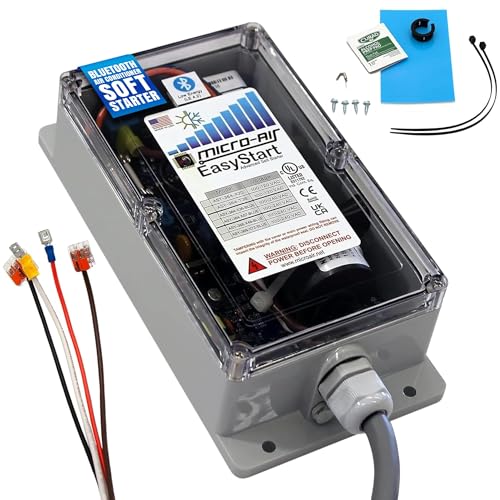
MICRO-AIR EasyStart 368 Advanced Soft Start Kit for Home Air Conditioner, RV & Commercial Use, Works with Generators, Reduces Power Surge, Efficient Start-Up - Up to 6 Tons : Automotive
View on AmazonTwo primary operating strategies:
- Backup-first configuration
- Design: Whole-home backup with load management, or a critical loads panel covering essentials (refrigeration, lighting, outlets for communications, gas furnace blower, well pump if applicable).
- Runtime example: A single 13.5 kWh unit can power a 1–2 kW essential load for 6–10 hours; two units can extend that to 12–20 hours. Actual runtime depends on appliances and whether your solar array can recharge the battery during daylight.
- Self-consumption and TOU optimization
- With South Carolina’s Solar Choice tariffs, exported solar often receives less value than retail on-peak prices. Storing midday generation to serve evening peaks raises the value of each kWh you produce.
- Powerwall’s Time-Based Control mode automates charge/discharge to reduce your bill under TOU and critical-peak windows.
Practical tip: If you plan to back up high-surge loads (well pumps, HVAC compressors), the higher-power delivery of Powerwall 3—with careful load analysis—can reduce how many batteries you need or avoid complex soft-start retrofits.
South Carolina utility rate structures and how Powerwall saves with time-of-use
Act 62 reformed net metering in South Carolina. Under “Solar Choice” tariffs adopted by Dominion Energy South Carolina and Duke Energy’s SC utilities, residential solar customers are typically placed on TOU rates with seasonal on-peak windows, plus critical-peak events a limited number of times per year. Some riders also include minimum bills or non-bypassable charges. The result: exporting midday kWh is often worth less than using them during on-peak hours.

Emporia Gen 2 Smart Home Energy Monitor with 16 50A Circuit Level Sensors | Real Time Electricity Monitor/Meter | Solar/Net Metering - Amazon.com
View on AmazonHow storage can help under TOU
- Peak shaving: Discharging during on-peak windows avoids paying the highest per-kWh rates.
- Export shaping: Battery stores surplus solar that would otherwise be exported at a lower credit and uses it later at higher on-peak value.
- Critical peak events: During declared events (often late afternoon/early evening), prices or credits can swing sharply; a full battery shields you from those spikes.
Illustrative savings math (your tariff will differ):
- Assume on-peak electricity is 12¢/kWh higher than off-peak, and you can cycle 10 kWh/day for TOU shifting with 90% round-trip efficiency.
- Gross arbitrage value ≈ 10 kWh × $0.12 = $1.20/day; net of losses ≈ $1.08/day; about $32/month or ~$385/year just from TOU arbitrage.
- Add value from avoiding low export credits and capturing evening self-consumption; total annual benefit for a typical solar home can land in the $300–$700 range per battery, sometimes higher with frequent critical peaks or high load factors.
Where demand charges apply
- Some optional residential TOU-demand riders exist in the Carolinas. If you’re on a rate with a residential demand charge (measured kW at peak), a battery can clip that monthly peak, adding meaningful savings. Confirm with your specific utility rate.
Important: Always model with your utility’s exact tariff. Duke Energy Carolinas, Duke Energy Progress, and Dominion Energy SC publish Solar Choice riders with defined on/off-peak windows and seasonal pricing that change over time. Ask your installer for a utility-grade proposal using your 12-month interval data when possible.
By the Numbers: Tesla Powerwall in South Carolina
- 13.5 kWh per unit: typical usable capacity (Tesla)
- ~11.5 kW continuous backup power for Powerwall 3 systems in many configurations (Tesla)
- 10-year warranty; common end-of-warranty retention ~70% (Tesla)
- 30% federal tax credit now applies to standalone batteries ≥3 kWh (IRS/IRA)
- 25% South Carolina solar tax credit may apply when batteries are installed with solar; seek professional tax advice (DSIRE, SC Code §12‑6‑3587)
- 14–17% of new U.S. residential solar added storage in 2023 (SEIA/WoodMac)
Powerwall availability and certified installers in South Carolina
Availability
- Tesla lists Powerwall availability throughout major South Carolina metros including the Upstate, Midlands, and Lowcountry. Lead times typically run 4–12 weeks depending on permitting queues, supply, and utility inspection schedules—longer during peak hurricane season or strong demand surges.
Installers
- You can purchase directly from Tesla or through Tesla Certified Installers. Certified firms handle site surveys, utility interconnection, and coordination with TOU/Solar Choice tariffs. Ask for:
- A load analysis for backup sizing (startup surges, HVAC strategy)
- A utility-specific TOU bill savings model using your usage data
- Clear line-item pricing for any service/panel upgrades
Neighboring states
- If you’re just across the border, see our state guides for local pricing and incentives: Tesla Powerwall in North Carolina: Cost, Availability & Is It Worth It? and Tesla Powerwall in Georgia: Cost, Availability & Is It Worth It?. For hurricane-focused comparisons, our Florida guide is also helpful.
Alternatives to Powerwall available in South Carolina: Enphase, LG, Generac
Enphase IQ Battery (IQ Battery 5P/10/3T families)
- Strengths: Tight integration with Enphase IQ8 microinverters; modularity; excellent solar self-consumption control; UL 9540A-certified; robust app and fleet performance data. Power per module is strong on the latest 5P architecture.
- Consider if: You already have Enphase IQ8 microinverters or want fine-grained module-level monitoring. Enphase’s NEM/TOU controls are well-regarded.
LG Energy Solution (LG ESS Home 8–16)
- Strengths: High round-trip efficiency and strong warranty pedigree from a top-tier cell manufacturer. Hybrid inverter packages offer DC coupling with new solar.
- Consider if: You want a vertically integrated battery+inverter from a bankable battery OEM.
Generac PWRcell
- Strengths: DC-coupled architecture with modular battery cabinets; competitive power output for whole-home backup when sized up; integration with Generac transfer equipment.
- Consider if: You plan larger systems (≥20–30 kWh) and want strong surge capacity. Pairing with a Generac backup generator can yield extended resiliency.
Practical buying notes
- App quality, installer base, and warranty support matter as much as datasheet specs.
- Confirm UL 9540 system certification and NEC 2020/2023 compliance with your local AHJ.
- For heavy whole-home loads, consider load management via a smart panel to stretch battery value. Systems like the Span Smart Panel can prioritize circuits dynamically and often reduce the number of batteries needed for comfortable backup.
Based on 2024–2026 field data and pricing, the Tesla Powerwall and Enphase IQ Battery 5P families typically offer the strongest value for residential self-consumption and TOU shifting in the Carolinas, with Generac favored for larger whole-home backup designs.
FAQ: common questions about Tesla Powerwall in South Carolina
How many Powerwalls do I need?
- Many 2,000–2,800 sq ft South Carolina homes choose 1–2 units for essentials and evening load coverage. If you want whole-home backup with central AC or a well pump, plan on 2–3 units, or pair storage with a smart panel to manage peaks.
Will a Powerwall run my air conditioner?
- Often yes, especially with Powerwall 3’s higher continuous output, but results depend on your HVAC tonnage and inrush current. A soft-start kit can help. Your installer should capture nameplate data and run a surge analysis.
What’s the warranty?
- Tesla’s residential warranty is 10 years with a throughput limit and typical 70% capacity guarantee at year 10 (review your specific agreement). Enphase/LG/Generac offer similar 10-year terms with differing throughput and operating mode conditions.
Does South Carolina’s 25% solar tax credit apply to batteries?
- It most clearly applies to solar energy systems. When batteries are installed with solar and configured to charge primarily from that solar, many installers claim the credit on the battery portion. Standalone eligibility is less certain. Consult a tax professional and current SC DOR guidance.
Is there net metering in South Carolina?
- The legacy 1:1 retail net metering is gone for new applicants. Under Solar Choice, customers are on TOU with specific export valuation rules, seasonal peaks, and sometimes minimum bills. Batteries increase self-consumption to align with these rules.
How long is the typical installation timeline?
- From site survey to Permission to Operate (PTO): 4–12 weeks. Permitting and utility inspection backlog are the main variables; coastal jurisdictions can be busier pre-hurricane season.
Can I add a Powerwall to my existing solar?
- Yes. Powerwall 2 is AC-coupled and commonly retrofitted to existing arrays. Powerwall 3 is optimized for new solar or major inverter refreshes because it’s a hybrid DC-coupled design. Your installer will advise based on your current inverter.
Is there a virtual power plant (VPP) in South Carolina?
- As of 2026, no large-scale, ongoing VPP program is available statewide. Utilities may pilot demand response programs—ask your installer and utility.
How noisy is a Powerwall?
- Very quiet. You’ll primarily hear a low fan whir under heavy load or high ambient heat. Outdoor-rated installations are common in SC; shaded locations help thermal performance.
What about hurricanes and code compliance?
- Choose UL 9540 and UL 9540A-certified systems installed per NEC 2020/2023 and local wind-load/clearance requirements. Elevate equipment where flood risk exists and avoid salt-spray zones without proper enclosures. Storm Watch should be enabled during hurricane season.
What else should I buy with a Powerwall?
- A smart panel like Span Smart Panel or a load management system can maximize whole-home backup with fewer batteries.
- If you’re building new or upgrading solar, high-efficiency microinverters such as Enphase IQ8 Series pair well with batteries for fine-grained control.
- A home energy monitor like Emporia Vue helps you verify savings and size future upgrades.
Practical implications for South Carolina homeowners
- Economics: Expect energy bill savings primarily from TOU arbitrage and increased self-consumption under Solar Choice, not from pure net metering. With the 30% federal ITC and potential SC solar tax credit when paired with PV, payback times often land in the 8–12 year range for homes with good load shifting and frequent critical peaks. Homes prioritizing backup may accept a longer payback for resiliency benefits.
- Resilience: If you’ve experienced multi-day outages, combining 2–3 Powerwalls with rooftop solar and load management provides compelling peace of mind. For extended outages, a hybrid setup with a small generator for cloudy stretches is an option; discuss safe, code-compliant integration.
- Future readiness: As VPPs and demand response programs expand across the Southeast, owning a grid-interactive battery positions you to earn additional value streams later.
Where the market is heading
- Higher-power home batteries: The industry trend (Powerwall 3, Enphase 5P) is toward more kW per kWh, enabling whole-home backup without oversizing energy capacity.
- Smarter tariffs: Expect refined TOU and critical-peak structures under Solar Choice in coming years. Batteries will help customers respond without lifestyle sacrifices.
- Grid services: Utilities in the Carolinas are piloting distributed energy resource (DER) aggregation. As programs mature, enrolled batteries could be compensated for helping manage peak demand and integrating utility-scale solar.
Cited sources and references
- Tesla Powerwall datasheets and installer manuals (specs, warranty)
- NREL, U.S. Solar Photovoltaic System and Energy Storage Cost Benchmarks (2023–2024 updates)
- SEIA/Wood Mackenzie U.S. Solar Market Insight (residential storage attachment rates)
- IRS guidance on Residential Clean Energy Credit under the Inflation Reduction Act (30% ITC for standalone storage ≥3 kWh)
- DSIRE: South Carolina Solar Energy Tax Credit (SC Code §12‑6‑3587) and notes on eligibility
- EIA reliability statistics (SAIDI/SAIFI trends)
- South Carolina PSC dockets and utility Solar Choice TOU riders (Dominion Energy SC; Duke Energy Carolinas; Duke Energy Progress)
Recommended Products
Electrify: An Optimist's Playbook for Our Clean Energy Future
In Electrify, <strong>Griffith lays out a detailed blueprint—optimistic but feasible—for fighting climate change while creating millions of new jobs and a healthier environment</strong>. Griffith’s pl
Emporia Gen 2 Smart Home Energy Monitor with 16 50A Circuit Level Sensors | Real Time Electricity Monitor/Meter | Solar/Net Metering - Amazon.com
See how much electricity your home is using anywhere, anytime. ... <strong>Add individual 50A sensors to your Vue to monitor up to 16 individual circuits</strong> — providing accurate energy use for t
MICRO-AIR EasyStart 368 Advanced Soft Start Kit for Home Air Conditioner, RV & Commercial Use, Works with Generators, Reduces Power Surge, Efficient Start-Up - Up to 6 Tons : Automotive
QUIET AND SMART PROTECTION: This soft starter for air conditioner <strong>reduces startup noise and prevents light flickering</strong>, creating a quieter, more comfortable environment. The intelligen