
How Do Wind Turbines Work? Simple Explanation, Components & Facts
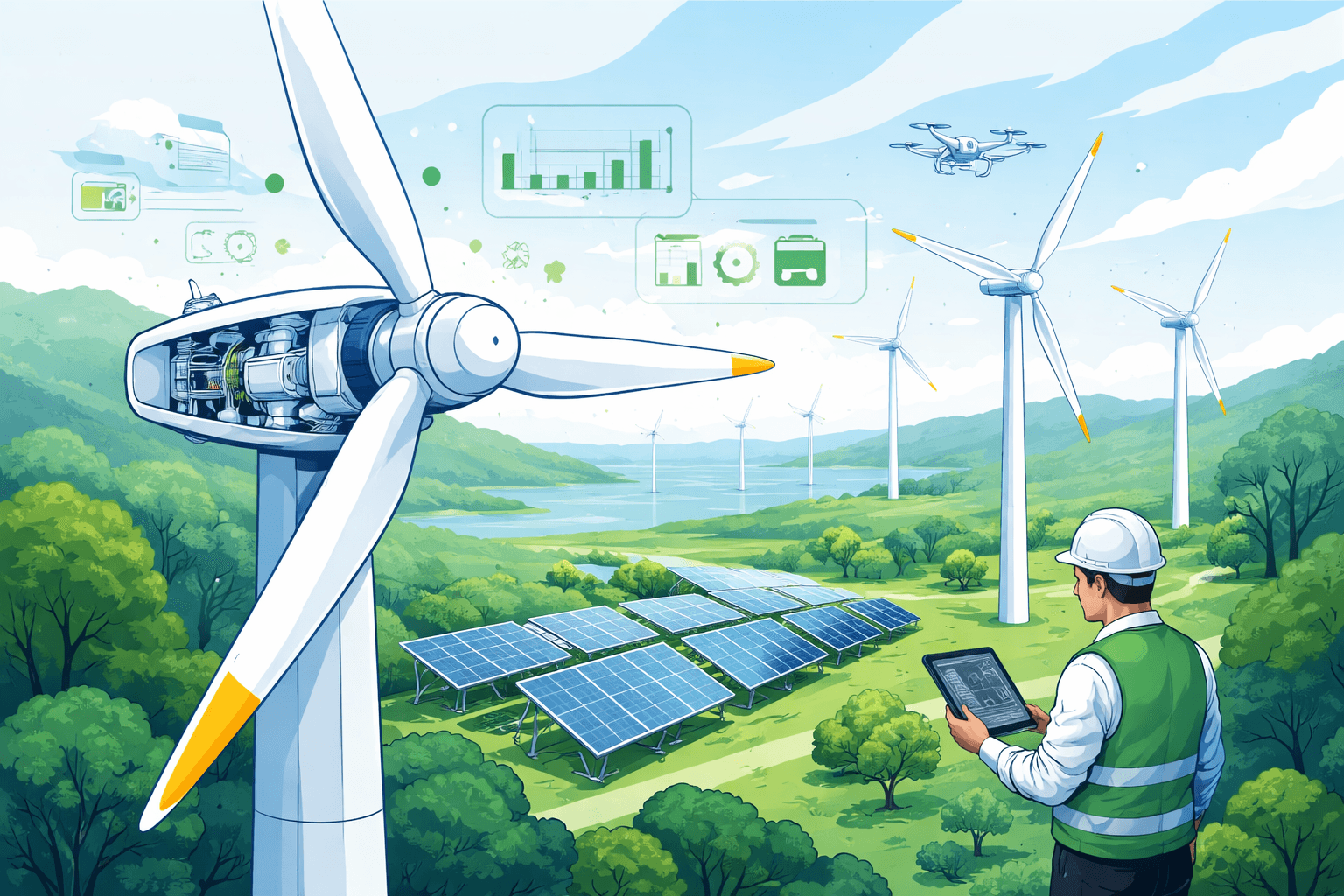
Wind added a record 116 gigawatts (GW) of new capacity in 2023, pushing global installed wind power to roughly 1 terawatt (TW), according to the Global Wind Energy Council (GWEC). As turbines have grown taller with rotors now spanning 120–170 meters onshore and 200–260 meters offshore, their energy output and reliability have climbed. If you’ve ever wondered how do wind turbines work, this explainer walks through the physics, components, performance metrics, siting, and real-world impacts—with data from NREL, IEA, IRENA, and peer-reviewed research.
How do wind turbines work: the basic physics
At their core, wind turbines convert the kinetic energy in moving air into electrical energy.

Wind Energy Handbook: Burton, Tony, Jenkins, Nick, Sharpe, David, Bossanyi, Ervin
"I highly recommend the classic and definitive reference book Wind Energy Handbook, Second Edition by Tony Burton, Nick Jenkins, David Sharpe, and Ervin Bossanyi, to any engineering students in u
Check Price on Amazon- The energy in wind rises with the cube of wind speed. The power available in wind is P_wind = 1/2 × ρ × A × v³, where ρ is air density (~1.225 kg/m³ at sea level), A is the swept area of the rotor (πR²), and v is wind speed. Doubling wind speed increases available power eightfold.
- Only a fraction of that energy can be captured. The Betz limit shows a theoretical maximum of 59.3% conversion of wind’s kinetic energy into mechanical power. Modern utility-scale turbines achieve power coefficients (C_p) around 45–50% under optimal conditions.
- The rotor’s spinning shaft turns a generator. Most turbines use a three-bladed, horizontal-axis rotor. Pitch systems twist each blade to control aerodynamic lift. A yaw drive turns the nacelle so the rotor faces the wind. Mechanical power from the rotor is converted to electrical power by a generator (either directly or via a gearbox) and conditioned by power electronics to meet grid requirements.
Why tall towers and large rotors? Wind speeds rise with altitude (wind shear) and larger rotors sweep more area. A 170 m rotor sweeps ~22,700 m²—about four times the area of an 85 m rotor—boosting energy capture dramatically at similar wind speeds.
By the numbers: wind energy today
- 1 TW: Approximate global installed wind capacity by end-2023 (GWEC 2024)
- 116 GW: New wind installed in 2023, an all-time record (GWEC 2024)
- 3–4 m/s: Typical cut-in speed; below this, most turbines don’t generate
- 11–13 m/s: Typical rated wind speed; above this, output is capped at nameplate power
- ~25 m/s: Typical cut-out speed to protect the turbine in very high winds
- 30–40%: Typical onshore capacity factors; 45–55% offshore, with best sites exceeding 60% (IEA, NREL)
- 2–6 MW: Common onshore turbine ratings; 12–18 MW for the newest offshore models
- 6–9: Typical tip speed ratio (blade-tip speed divided by wind speed) at peak efficiency
For a deeper dive into offshore buildout trends and turbine scale, see Wind Energy Growth: Analyzing the Global Shift to Offshore Wind Farms: /renewable-energy/wind-energy-growth-global-offshore-wind-farms
Main components, simply explained
Utility-scale horizontal-axis wind turbines (HAWTs) share a common architecture. Here’s how each part works.
Blades
- Shape: Airfoil profiles create lift as wind flows over them, much like airplane wings.
- Control: Pitch actuators rotate blades along their longitudinal axis to maximize efficiency at varying wind speeds and to feather (reduce lift) in high winds for protection.
- Materials: Typically fiberglass- or carbon-fiber-reinforced epoxy composites for high strength-to-weight ratios. Modern blades can exceed 80–115 m in length offshore.
Hub and rotor
- The hub connects the blades to the main shaft. Pitch bearings and drives reside here.
- The combined assembly of blades and hub is the rotor. Its swept area largely determines energy capture potential.
Nacelle
- The nacelle houses the drivetrain: main shaft, bearings, gearbox (if used), generator, brakes, cooling, control systems, and often a transformer.
- A yaw system rotates the nacelle atop the tower to face the wind.
Gearbox (in geared designs)
- Purpose: Steps up the slow rotation of the rotor (typically 6–15 rpm) to high-speed rotation (1,000–1,800 rpm) suitable for conventional generators.
- Alternatives: Direct-drive turbines eliminate the gearbox, coupling the low-speed shaft to a large-diameter, multi-pole permanent magnet generator. Direct-drive can reduce maintenance but relies on high-grade magnets.
Generator and power electronics
- Generator: Converts mechanical rotation to electricity. Induction or synchronous (including permanent magnet) machines are common.
- Conversion: Full-scale converters or partial-power converters condition frequency and voltage, enabling grid-friendly output and advanced controls (fault ride-through, reactive power support).
Tower
- Function: Elevates the rotor into stronger, steadier winds.
- Types: Tubular steel dominates; concrete, hybrid steel–concrete, and modular lattice or segmental designs are also used, especially for taller hub heights (100–160 m onshore).
Foundation (and substructure offshore)
- Onshore: Gravity or piled foundations spread loads into soil or bedrock.
- Offshore: Fixed-bottom (monopile, jacket) in waters up to ~60 m; floating platforms (spar, semi-submersible, tension-leg) for deeper waters, anchored with mooring lines.
Control and sensing
- Sensors: Anemometers, wind vanes, and increasingly lidar measure inflow to optimize yaw and pitch.
- SCADA: Supervisory control systems monitor performance, detect faults, and coordinate curtailment for grid or wildlife protection.
Types of wind turbines and applications
- Onshore HAWT (3-blade): The global workhorse. Sizes from 2–6 MW, hub heights 80–120+ m. Best suited to plains, ridgelines, and open agricultural landscapes.
- Offshore fixed-bottom HAWT: 6–18 MW class in 15–60 m water depths. Benefits from stronger, steadier winds and larger rotors. Higher capacity factors and fewer siting conflicts.
- Floating offshore HAWT: Early commercial stage; allows deployment in 60–1,000 m depths. Unlocks vast wind resources and can reduce visual impacts from shore.
- Vertical-axis wind turbines (VAWT): Rotors spin around a vertical axis (Darrieus, Savonius). Advantages include omni-directional wind acceptance and potential maintenance at ground level, but generally lower efficiency and commercial maturity for utility scale.
- Small wind turbines (residential/farm): 1–20 kW. Viable on very windy, unobstructed sites with proper tower height. Many suburban sites lack sufficient wind. For details on costs and site needs, see Home Wind Turbine Buying Guide: Cost, Sizing & Best Models (2026): /renewable-energy/home-wind-turbine-buying-guide-2026
Key performance metrics you should know
Capacity factor
- Definition: The ratio of actual energy produced over a period to the energy that would be produced if the turbine ran at rated power 100% of the time.
- Typical values: Onshore 30–40%; offshore 45–55%, with next-gen sites exceeding 60% (IEA, NREL). Higher capacity factors lower the levelized cost of energy (LCOE).
Cut-in, rated, and cut-out wind speeds
- Cut-in (v_ci): Wind speed where the turbine begins generating, often 3–4 m/s.
- Rated (v_r): Speed at which the turbine reaches nameplate output, typically 11–13 m/s.
- Cut-out (v_co): Safety shutdown threshold, commonly ~25 m/s. Advanced designs can ride through gusts while maintaining loads within limits.
Tip speed ratio (TSR)
- Definition: Blade tip speed divided by wind speed. Most modern three-blade HAWTs operate optimally at TSR ~6–9.
- Implications: TSR influences aerodynamic efficiency, noise, and structural loads. Control systems adjust blade pitch to maintain near-optimal TSR as winds vary.
Losses and availability
- Aerodynamic and mechanical losses: Airfoil drag, wake interaction with the tower, bearing and gearbox friction.
- Electrical/conversion losses: Generator and power electronics inefficiencies.
- Array/wake losses: Turbines downwind experience reduced wind speeds and increased turbulence; wind plants are laid out to minimize these effects (often 5–7 rotor diameters crosswind and 7–10 downwind spacing).
- Availability: With modern condition monitoring and predictive maintenance, turbine availability often reaches 97–99%.
Site selection and wind resource assessment
The best turbine is only as good as its site. Because wind power scales with v³, a 1 m/s difference in average wind speed can make or break a project’s economics.
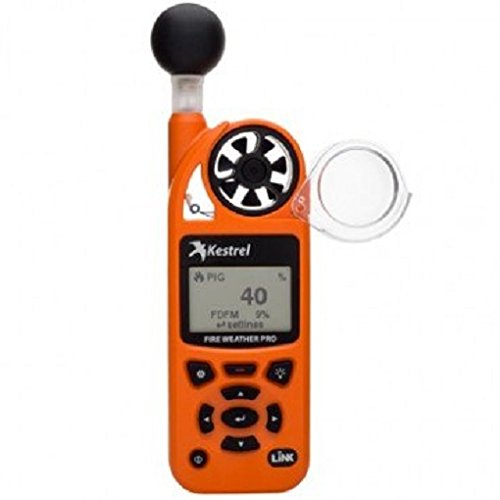
Kestrel 5500 Weather Meter with Link and Vane Mount, Olive Drab : Patio, Lawn & Garden
View on Amazon- Screening: Developers use mesoscale wind maps and atlases (e.g., Global Wind Atlas, NREL maps in the U.S.) to identify candidate areas. Constraints like setbacks, wildlife habitats, transmission access, and road logistics are screened early.
- Measurement: Onsite anemometry at multiple heights and remote sensing (lidar/SoDAR) for 12–24 months characterize wind speed distributions (often modeled with a Weibull distribution), wind shear, turbulence intensity, and extreme gusts.
- Micrositing: Computational fluid dynamics (CFD) models terrain effects (ridgelines, escarpments) and array layouts to manage wakes and loads. Turbine spacing of 5–7D laterally and 7–10D downwind is common; tighter spacing may be used with advanced wake steering controls.
- Grid and storage: Interconnection capacity, curtailment risk, and potential pairing with storage matter. For grid balancing options and storage types, see Energy Storage Explained: Types, Costs, and How It Powers the Grid: /ai-technology/energy-storage-explained-types-costs-grid
Environmental impacts, benefits, and common concerns
Emissions and energy payback
- Life-cycle emissions: 7–12 g CO₂-e/kWh for onshore wind and roughly 8–16 g CO₂-e/kWh for offshore, per IPCC- and NREL-harmonized studies—far below natural gas (~400–500 g) or coal (~900+ g).
- Energy payback time: Typically 6–12 months onshore and around 1–2 years offshore, after which the turbine produces net clean energy for decades.
A 3.6 MW onshore turbine with a 35% capacity factor generates about 11,000 MWh/year. Displacing natural gas at 400 g CO₂/kWh avoids roughly 4,400 metric tons of CO₂ annually; versus coal at 900 g, about 9,900 tons.
Wildlife
- Birds and bats: Impacts are highly site-specific. Studies show curtailing turbines during low wind speeds in peak bat migration can reduce bat mortality by 50–90%. Siting away from raptor nesting and migration corridors, and using detection/curtailment technology, lowers risks.
- Marine life (offshore): Pile driving can disturb marine mammals and fish; mitigations include seasonal timing, acoustic deterrents, and bubble curtains. Operational noise is generally low relative to construction phases.
Noise and shadow flicker
- Modern turbines produce 35–45 dB at typical residential setback distances (300–500+ m)—comparable to a quiet library. Turbine layout and operational strategies minimize shadow flicker duration at nearby homes.
Land use and visual impact
- Land footprint: While wind plants cover large areas, 95–99% of onshore project land typically remains available for agriculture and grazing; roads and pads occupy a small fraction. Offshore arrays are usually sited far from shore to reduce visual impact.
For a data-rich look at where offshore wind is headed and how developers address impacts, see Wind Energy Growth: Analyzing the Global Shift to Offshore Wind Farms: /renewable-energy/wind-energy-growth-global-offshore-wind-farms
Operation, maintenance, lifespan, and end-of-life
- Operation: Turbines start automatically when winds exceed cut-in speed. Control systems continually adjust blade pitch and yaw to maximize energy and limit loads. In very high winds, blades feather and brakes engage; turbines restart when conditions normalize.
- Maintenance: Preventive and predictive maintenance include lubrication, gearbox inspections (if present), blade surface repairs, and monitoring via vibration and thermal sensors. O&M strategies target >97% availability and can cost on the order of $10–20/MWh for mature fleets, depending on age and location.
- Lifespan: Typical design life is 20–25 years; many turbines operate longer with life extension and component replacements. Repowering—installing new rotors/generators on existing towers or replacing turbines—can increase output 20–60% on the same site.
- Recycling and materials: About 85–90% of a turbine (steel, copper, aluminum, concrete) is readily recyclable. Composite blades are harder to recycle, but solutions are scaling: co-processing in cement kilns, pyrolysis, and new thermoplastic resin blades that can be remelted and reformed. Policies in the EU and U.S. are accelerating blade circularity pilots.
FAQs
Why are wind turbines so tall and have such large blades?
Wind speeds increase with height above ground due to reduced friction (wind shear), and energy capture scales with the swept area (A = πR²). Taller towers and longer blades significantly raise annual energy production and capacity factor. Modern onshore hub heights commonly exceed 100 m; offshore, even taller towers and 200–260 m rotors are feasible, thanks to fewer transport constraints.
What happens to turbines during storms or hurricanes?
Control systems pitch blades to feather, apply mechanical brakes, and shut down around 25 m/s sustained winds to protect the drivetrain. Structural design considers extreme gusts per IEC standards. In typhoon-prone regions, newer “typhoon-class” turbines include reinforced components and control strategies to survive extreme gusts well above standard cut-out speeds. Offshore platforms are engineered for wave and wind loads with large safety margins.
Can a small wind turbine power a typical home?
It depends on your wind resource and siting. A home using 10,000 kWh/year would need roughly a 5–10 kW turbine at a site averaging 5.5–7 m/s at hub height, typically on a 15–30 m tower with excellent exposure. Many residential lots don’t have adequate wind or space. If you’re evaluating small wind, start here: Small Wind Turbine Guide for Homes: Cost, Size & Best Models: /renewable-energy/small-wind-turbine-guide-homes and Wind Turbine for Home Use: Complete Buyer’s Guide & Cost Analysis: /renewable-energy/wind-turbine-for-home-use-buyers-guide-cost-analysis
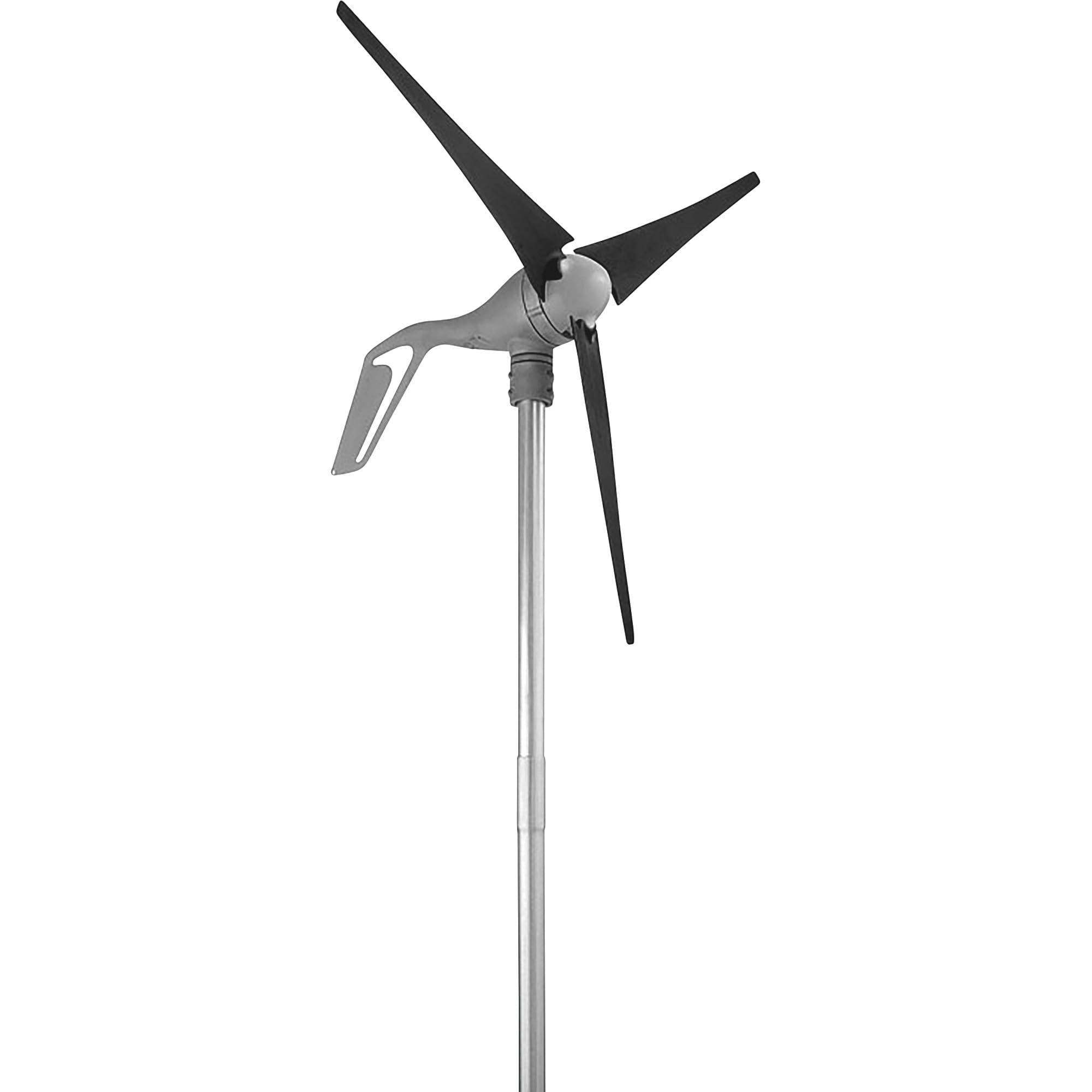
Primus Wind Power 1-AR40-10-12 Air 40 Wind Turbine 12V : Patio, Lawn & Garden
View on AmazonWhy do most big turbines have three blades?
Three blades balance aerodynamic efficiency, structural loads, and smooth operation. Two-bladed rotors are lighter and cheaper but can have higher cyclic loads and visual flicker; more than three increases cost and drag without significant gains in energy capture.
How do wind farms keep power quality stable on the grid?
Modern turbines use power electronics to control voltage and frequency support, provide reactive power, and ride through faults. Grid operators combine geographic diversity, forecasting, flexible generation, demand response, and storage to integrate variable wind. For a primer on storage options and costs, see Energy Storage Explained: Types, Costs, and How It Powers the Grid: /ai-technology/energy-storage-explained-types-costs-grid
Practical implications for consumers, businesses, and policymakers
- Consumers: If you live in a windy rural area, small wind may complement solar and storage, but most households will gain more from efficiency and rooftop solar first. Variable winds don’t mean unreliable grids—diverse resources and storage keep lights on.
- Businesses: Corporate power purchase agreements (PPAs) from high-capacity-factor wind sites can lock in long-term price stability and cut scope 2 emissions. Co-locating wind with storage can mitigate curtailment and shape delivery profiles.
- Policymakers: The biggest gains now come from faster grid interconnections, better transmission to windy regions, streamlined but science-based siting that protects wildlife, and investment in domestic supply chains (steel, towers, nacelles, and blade recycling).
Where wind technology is heading
- Bigger, smarter machines: Offshore turbines in the 15–18 MW class are commercial, with 20+ MW concepts announced. Expect continued improvements in aeroelastic design, predictive controls, and lidar-assisted gust handling.
- Floating wind scale-up: As floating costs fall, deep-water resources near major load centers become accessible, expanding the technical potential dramatically.
- Digital O&M: Condition monitoring, AI-driven prognostics, and robotics for blade inspection/repair will push availability higher and O&M costs lower.
- Circular materials: Thermoplastic blades, recyclable resins, and better end-of-life logistics will slash landfill use and embodied emissions.
For broader context on how wind fits among other clean options, see Renewable Energy Sources: A Clear Guide to Solar, Wind & More: /renewable-energy/renewable-energy-sources-guide
Recommended Products
Wind Energy Handbook: Burton, Tony, Jenkins, Nick, Sharpe, David, Bossanyi, Ervin
"I highly recommend the classic and definitive reference book Wind Energy Handbook, Second Edition by Tony Burton, Nick Jenkins, David Sharpe, and Ervin Bossanyi, to any engineering students in u
Kestrel 5500 Weather Meter with Link and Vane Mount, Olive Drab : Patio, Lawn & Garden
Once mounted, the Kestrel 5500 ... – with <strong>a large wind vane and precision pivot keeping the Kestrel oriented into the wind for continuous measurement and logging of wind speed, wind direction,
Primus Wind Power 1-AR40-10-12 Air 40 Wind Turbine 12V : Patio, Lawn & Garden
<strong>Tower kits are available</strong>. Output and Specs: Maximum output of the wind turbine is 160 watts, exporting roughly 40 KW Hrs per month in average 12 mph wind regimes (or approximately 110