
Microinverter vs String Inverter: Which Solar Setup Is Right for You?
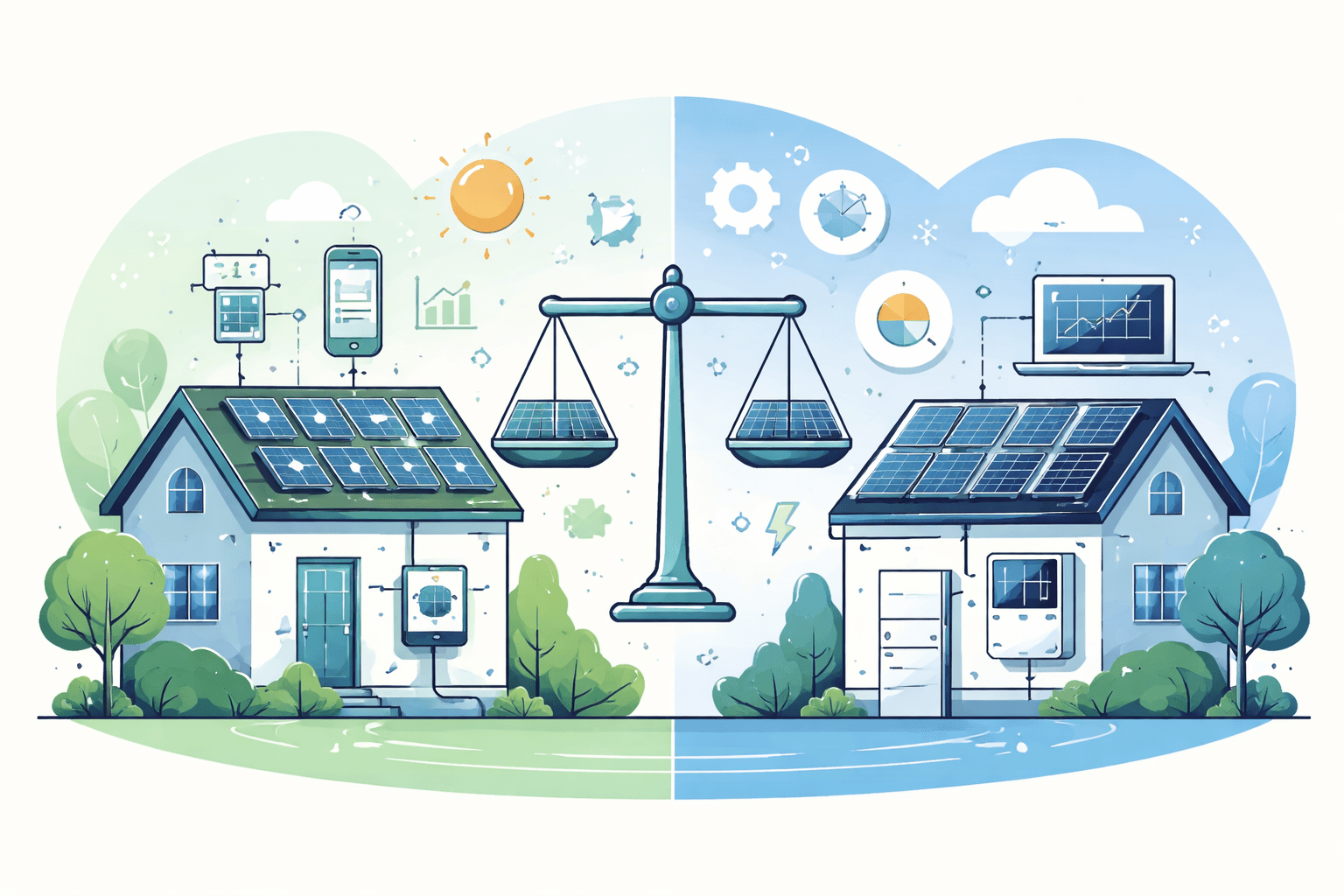
Solar buyers quickly run into a core design choice: microinverter vs string inverter. The inverter you pick shapes how your system performs in shade, how it’s monitored, how easy it is to expand, how it pairs with batteries, and what it costs—upfront and over decades. If you’re new to the landscape of inverter types and features, see our broader primer: Solar Inverter Buyer’s Guide: Types, Sizing & Top Picks.
What they are and how they work
Solar Electricity Handbook - 2023 Edition: A simple, practical guide to solar energy – designing and installing solar photovoltaic systems: Boxwell, Michael
Solar Electricity Handbook - 2023 Edition: <strong>A simple, practical guide to solar energy – designing and installing solar photovoltaic systems</strong> [Boxwell, Michael] on Amazon.com. *FREE* shi
Check Price on AmazonMicroinverters (module-level power electronics)
- What they do: A microinverter is a small inverter attached to each solar panel (or occasionally shared by 2 panels). It converts that panel’s direct current (DC) into grid-ready alternating current (AC) right on the roof.
- Where conversion happens: On each module. You end up with multiple parallel AC sources that tie into a trunk cable and then your home’s service panel.
- MPPT per panel: Each microinverter performs maximum power point tracking (MPPT) for its module, continuously optimizing voltage and current.
String inverters
- What they do: A string inverter sits on a wall (garage, exterior, or utility room). Panels are wired in series into one or more “strings” carrying high-voltage DC to the inverter, which converts it to AC in one place.
- Where conversion happens: At a single central unit.
- MPPT per string (or per input): The inverter typically has one or more MPPT channels that optimize entire strings, not individual modules. Optional DC optimizers at each panel can add module-level control, but that’s a hybrid approach beyond a basic string system.
Why this design difference matters: With microinverters, each panel operates independently. In a basic string system, the whole string’s current is limited by its lowest-performing panel at any moment (the “Christmas-tree light” effect), partially mitigated by panel bypass diodes.
Microinverter vs String Inverter: performance in the real world
Shading tolerance, mismatch, and complex roofs
- Partial shade: Field studies by the National Renewable Energy Laboratory (NREL) and other labs consistently show that module-level MPPT (microinverters or DC optimizers) recovers energy otherwise lost to shading and panel mismatch. Typical annual gains are in the 3–7% range for sites with intermittent or partial shading, and can exceed 10% on complex, multi-orientation roofs with regular shade events.
- Orientation and tilt: If part of your array faces southeast and part southwest, per-panel MPPT lets each orientation follow its own optimal operating point. With a basic string, mixing orientations on one MPPT channel reduces output during much of the day.
- Soiling and degradation: Microinverters localize the impact of a dirty or underperforming panel. In a string, the weakest panel still drags on the whole series to a degree.
Energy monitoring and O&M visibility
- Panel-level insight: Microinverters natively provide module-level monitoring—useful for pinpointing performance issues, tracking shade impacts, and verifying production after a repair. DC-optimizer-plus-string systems offer similar visibility.
- String-level monitoring: Many string inverters provide only per-inverter or per-string data. That’s sufficient for simple arrays but gives less diagnostic resolution.
- Fleet and VPP readiness: High-resolution data and per-module control make MLPE-equipped systems strong candidates for virtual power plant (VPP) aggregation and advanced grid services. For a primer on how distributed solar and batteries get networked into grid assets, see Virtual Power Plants: How Distributed Energy Resources Become a Grid Asset.
Conversion efficiency and annual yield
- Nameplate (CEC) efficiencies: Modern residential string inverters commonly post California Energy Commission (CEC) weighted efficiencies of ~97.5–99%. Contemporary microinverters typically land around ~96–97.5%. That 0.5–2 percentage point advantage for strings is real at the component level.
- System-level result: In simple, shade-free arrays with uniform modules and orientation, a high-efficiency string inverter can edge out microinverters on net kilowatt-hours. In arrays with partial shade, orientation diversity, or mismatch, per-panel MPPT often more than compensates, delivering higher annual energy despite slightly lower conversion efficiency.
Safety and code compliance
- Rapid shutdown: The National Electrical Code (NEC) 2017/2020 requires rapid shutdown of rooftop conductors to protect first responders. Microinverters inherently reduce on-roof DC voltages and typically satisfy module-level rapid shutdown out of the box. Basic string systems need additional rapid-shutdown devices or DC optimizers to meet code.
- Arc-fault detection: Both microinverters and modern string inverters ship with arc-fault and ground-fault protections per UL 1741 and related standards. New UL 3741 “PV Hazard Control” pathways also influence design choices on commercial roofs.
Cost, installation, and maintenance
Upfront equipment and labor
- Equipment price: Microinverters generally cost more per watt than a basic string inverter. Analyses by Lawrence Berkeley National Laboratory (LBNL, Tracking the Sun series) and marketplace data show typical installed-price premiums of roughly $0.10–$0.25 per watt for systems using module-level power electronics in U.S. residential projects, depending on market and design complexity.
- Balance of system: Microinverters reduce DC homeruns and combiner hardware but add rooftop plug-and-play components and an AC trunk. String systems centralize power electronics near the service panel but require careful stringing within DC voltage windows.
- Labor complexity: Microinverters add repeated rooftop steps (mount, connect, test) for each module. String systems concentrate most terminations at the inverter and combiner, with fewer active electronic devices on the roof.
Warranties and service life
- Warranty norms: Microinverters often carry 20–25-year warranties to match panel lifetimes. Standard string inverter warranties are commonly 10–12 years, with optional extensions to 20+ years.
- Expected replacements: LBNL and NREL reliability studies show inverters account for a large share of PV service events over a system’s life; central inverters are more likely to be replaced once within 10–15 years, while microinverter replacements tend to be smaller and localized when they occur. Reliability has improved for both classes over the last decade.
Maintenance trade-offs
- Single point vs distributed risk: If a string inverter fails, the entire array is offline until replacement. If a microinverter fails, only that panel is affected. However, diagnosing and replacing a rooftop microinverter means a roof visit, while a ground-level string inverter is easier to service.
- Long-term access: Roof material, pitch, and snow/ice exposure affect serviceability. In harsh climates or on fragile roofs, minimizing rooftop electronics can be advantageous.
Batteries, backup power, and future add-ons
- AC vs DC coupling: Microinverter arrays produce AC on the roof, so they pair most naturally with AC-coupled batteries (the battery has its own inverter). String systems can use hybrid string inverters that DC-couple a battery, reducing the number of conversion steps and typically improving round-trip efficiency by 1–3 percentage points in solar-to-battery-to-load pathways (NREL grid-integration studies).
- Backup operation: Many modern string “hybrid” inverters can form a backup microgrid and provide whole-home or partial-home backup with high instantaneous power. Microinverter-based systems increasingly support backup via specialized controllers and AC-coupled batteries, but whole-home backup may require more components. For a deeper dive on home battery options and AC/DC coupling trade-offs, see Tesla Powerwall vs Competitors: Best Home Battery for EV Owners.
- Expansion: Adding a few panels later is straightforward with microinverters—each new module is its own power block. With string systems, expansions must fit within inverter MPPT channel limits and string voltage/current windows; sometimes a second inverter (or a larger one) is required.
- Off-grid considerations: Traditional off-grid systems rely on DC-coupled batteries and charge controllers—roles filled naturally by hybrid string inverter/charger architectures. While AC-coupled microinverter arrays can support off-grid scenarios, design is more complex and less efficient for deep storage cycles. If an autonomous system is your goal, start with our Off-Grid Solar: Complete Buyer’s Guide to Systems, Costs & Setup.
Ideal use cases
When microinverters shine
- Complex roofs and partial shade: Dormers, chimneys, trees, and multiple orientations increase mismatch; per-panel MPPT often nets 3–10% higher annual energy.
- Incremental expansion plans: Easy to add a few modules in the future without reconfiguring strings.
- Panel-level monitoring priority: For owners who want diagnostic granularity and portfolio managers aggregating small systems.
- Strict module-level rapid shutdown needs: Simplifies code compliance and reduces on-roof DC voltages.
- Noise sensitivity: Microinverters are essentially silent on the roof; there’s no central fan near living spaces.
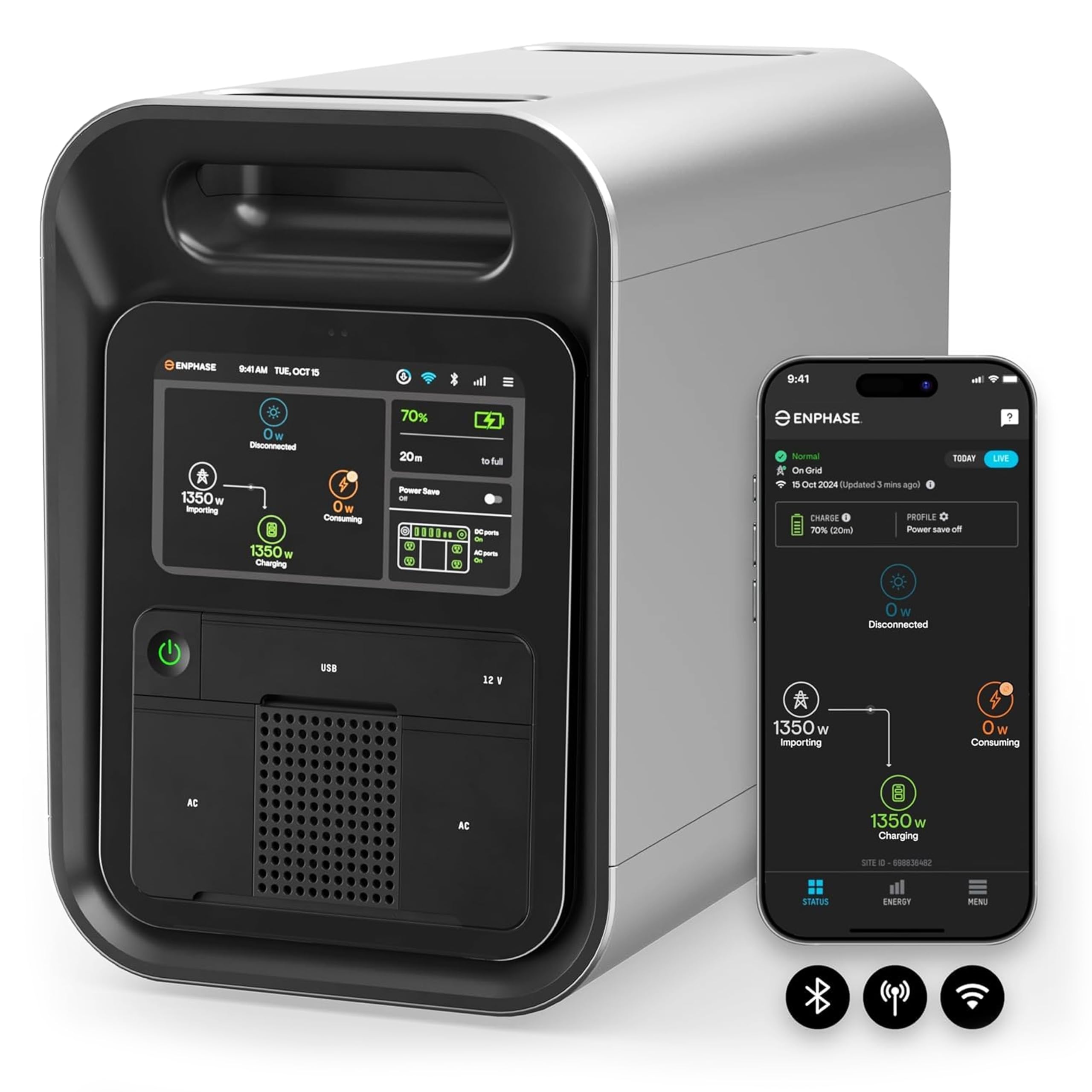
Enphase IQ PowerPack 1500 Wh Portable Power Station | UL 9540A Certified Solar Generator | Home Backup Power Outage | LFP Battery | IQ8 Microinverters | Enphase App | 11 Ports 1500 W : Patio, Lawn & Garden
View on AmazonWhen string inverters make the most sense
- Unshaded, uniform arrays: South-facing, single-tilt roofs without shade maximize the efficiency advantage of a high-quality string inverter.
- Budget-focused builds: Lower $/W for the inverter can trim total system price, especially for larger systems.
- Whole-home backup with DC-coupled storage: Hybrid string inverters streamline battery integration and can deliver high backup power with fewer conversion steps.
- Commercial and large residential: For 10–100 kW rooftops and beyond, the cost and serviceability benefits of fewer, higher-capacity inverters often win.

SMA Sunny Boy 6.0-US Inverter : Patio, Lawn & Garden
View on AmazonBy the numbers
- Annual energy gain with module-level MPPT (mismatch/partial shade): ~3–7% typical; >10% in challenging shading (NREL field and simulation studies)
- CEC weighted efficiency: string inverters ~97.5–99%; microinverters ~96–97.5%
- Installed price premium for MLPE in U.S. residential: roughly $0.10–$0.25/W median (LBNL Tracking the Sun analyses; market-dependent)
- Standard warranties: microinverters 20–25 years; string inverters 10–12 years (extensions often available)
- Battery coupling efficiency edge: DC-coupled hybrid string architectures often 1–3 percentage points higher for solar-to-battery-to-load paths (NREL)
Practical implications for homeowners and businesses
- Energy production vs cost: In lightly shaded, simple arrays, the energy advantage of microinverters may be small, making a string inverter the value pick. In variable or shaded conditions, the additional yield and monitoring can justify the premium.
- O&M approach: Decide whether you prefer fewer electronics on the roof (string) or distributed electronics with localized fault impact (microinverters). Consider roof access and local installer expertise.
- Code and permitting: In many U.S. jurisdictions following NEC 2017/2020, you’ll need module-level rapid shutdown. Microinverters satisfy this inherently; string systems do it with added devices or optimizers.
- Grid programs: If you plan to enroll in demand response, time-of-use arbitrage, or VPPs, prioritize systems with robust telemetry and control—features common in MLPE ecosystems. Learn how these programs work in our Virtual Power Plants explainer.
A decision framework you can use
- Map your roof and shading honestly
- Uniform tilt/orientation, minimal shading (<5% annual shading loss): String inverter likely the value leader.
- Mixed orientations or regular partial shading (>5–10% annual loss): Microinverters (or string + optimizers) likely recover enough energy to offset added cost.
- Clarify battery and backup goals
- Whole-home backup, high surge loads, and efficiency-sensitive cycling: Favor a hybrid string inverter with DC-coupled storage.
- Modest critical-load backup or future battery add later: Both paths work; microinverters pair easily with AC-coupled batteries, while hybrid strings keep the DC-coupling door open.
- Consider growth and roof work
- Expect to add a few panels later or have multiple roof planes? Microinverters simplify expansion and mixed-module layouts.
- Planning a roof replacement soon? A single string inverter reduces rooftop devices to reconnect post-roofing.
- Weigh serviceability and warranties
- Prefer ground-level service and fewer rooftop electronics? String inverter.
- Prefer avoiding a single point of failure and value 20–25-year inverter warranties? Microinverters.
- Run the math with actual quotes
- Ask installers to model annual production under site-specific shading with both architectures. Compare lifetime kWh, equipment warranties, battery integration path, and any service-plan costs. If you net an extra 3–8% energy at a $0.10–$0.20/W premium, the microinverter case may pencil out—especially under time-of-use or high retail rates, and in jurisdictions with strong net metering or export compensation.
Where the market is heading
- Code and safety: Module-level rapid shutdown requirements have pushed widespread adoption of MLPE (microinverters or optimizers) in U.S. residential markets, according to LBNL’s Tracking the Sun reports. Expect continued emphasis on safety certifications (UL 1741/3741) and integrated rooftop electronics.
- Smarter inverters: Grid-support functions (volt/VAR, frequency-watt) are becoming standard across both categories, improving hosting capacity and resilience as solar penetration rises (IEEE 1547-2018).
- Storage-native designs: Hybrid string inverters will keep gaining share in battery-first projects, while microinverter ecosystems expand their backup and load-management toolkits.
- Data-driven O&M: High-resolution monitoring—whether from microinverters or optimizer-equipped strings—will enable better diagnostics, warranty analytics, and VPP participation.
Bottom line: In a clean, shade-free layout with a focus on lowest upfront cost and DC-coupled storage, a high-quality string inverter is hard to beat. In real-world roofs with shade, multiple orientations, or a desire for panel-level visibility and simple expansion, microinverters often deliver more usable energy and a smoother ownership experience. The best choice is the one that fits your roof, your battery plan, your maintenance preferences, and your budget—validated by site-specific production modeling from a qualified installer.
Recommended Products
Solar Electricity Handbook - 2023 Edition: A simple, practical guide to solar energy – designing and installing solar photovoltaic systems: Boxwell, Michael
Solar Electricity Handbook - 2023 Edition: <strong>A simple, practical guide to solar energy – designing and installing solar photovoltaic systems</strong> [Boxwell, Michael] on Amazon.com. *FREE* shi
Enphase IQ PowerPack 1500 Wh Portable Power Station | UL 9540A Certified Solar Generator | Home Backup Power Outage | LFP Battery | IQ8 Microinverters | Enphase App | 11 Ports 1500 W : Patio, Lawn & Garden
BUILT-IN IQ8 MICROINVERTERS: <strong>Three microinverters deliver clean, stable power - safe for routers, and laptops</strong>. If one inverter has an issue, the others keep running. Microinverter tec
SMA Sunny Boy 6.0-US Inverter : Patio, Lawn & Garden
The Sunny Boy 5.0-US/6.0-US join the SMA lineup of field-proven solar technology backed by the world’s #1 service team, along with a wealth of improvements.