
Solar in Nebraska: Costs, Incentives & Top Installers (2026)

Nebraska sits squarely in America’s solar “sweet spot.” According to NREL’s National Solar Radiation Database, most of the state sees 4.8–5.5 kWh/m²/day of global horizontal irradiance (GHI), with western counties edging higher thanks to drier air and clearer skies. In practical terms, a well-sited 6–10 kW residential array in Omaha or Lincoln modeled in NREL PVWatts typically produces 1,350–1,500 kWh per kWdc each year. That strong resource, combined with cold-weather panel efficiency gains, makes solar in Nebraska more productive than many coastal states—despite winter snow.
This 2026 guide covers Nebraska’s solar potential, current installed costs and price-per-watt, incentives and net metering, how the 30% federal tax credit applies, reputable installers, real-world ROI, permitting/HOA norms, and a practical FAQ.
By the numbers: solar in Nebraska
- Solar resource: 4.8–5.5 kWh/m²/day GHI (NREL NSRDB)
- Typical annual output: 1,350–1,500 kWh per kWdc for fixed-tilt residential systems (NREL PVWatts; Omaha/Lincoln modeling)
- Average installed price (2026 est.): $2.60–$3.20/W before incentives; $1.82–$2.24/W after 30% ITC
- Example system price: 6 kW = $15,600–$19,200 before ITC; net $10,920–$13,440 after ITC
- Electric rates: ~12–13¢/kWh residential average in recent EIA data (below U.S. average)
- Net metering: Required up to 25 kW for eligible customer-generators; aggregate cap 1% of utility peak load; retail-rate credit with annual true-up at avoided cost (Nebraska statutes; DSIRE)
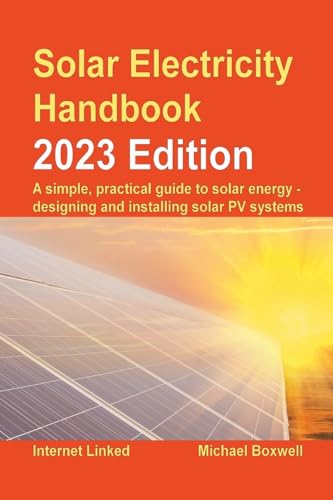
Solar Electricity Handbook - 2023 Edition: A simple, practical guide to solar energy – designing and installing solar photovoltaic systems: Boxwell, Michael
Solar Electricity Handbook - 2023 Edition: <strong>A simple, practical guide to solar energy – designing and installing solar photovoltaic systems</strong> [Boxwell, Michael] on Amazon.com. *FREE* shi
Check Price on AmazonSolar energy potential in Nebraska: sun hours, irradiance, and climate factors
NREL’s resource maps place Nebraska among the country’s better solar regions. The state’s combination of high plains sunlight, relatively low humidity (especially west of Kearney), and cold winters can be an advantage for PV: silicon panels operate more efficiently at lower temperatures, so sunny, cold days often deliver excellent production.
What to expect by location (PVWatts fixed-tilt, south-facing, 30–35° tilt, minimal shading):
- Eastern Nebraska (Omaha/Lincoln): ~1,350–1,450 kWh per kWdc per year
- Central Nebraska (Kearney/Grand Island): ~1,400–1,500 kWh per kWdc per year
- Western Nebraska (Scottsbluff/North Platte): ~1,450–1,550+ kWh per kWdc per year
Climate realities to plan for:
- Snow: Brief winter losses are typical; most snow slides off modern, dark-framed modules within days. Production “catches up” during long, high-irradiance spring days. A slightly steeper tilt (30–35°) helps shedding.
- Hail: Tier-1 panels are tested under IEC 61215 standards for hail impact. If hail risk is a concern where you live, consider higher front-glass thickness and robust mounting. Many Nebraska homeowners rely on homeowners insurance to cover extreme hail events—confirm your rider terms.
- Wind: Proper racking and roof attachment are critical in plains’ winds. Reputable installers will complete a structural assessment and select racking with certified wind ratings for your county.
Average cost of solar panels in Nebraska and price-per-watt breakdown
Two nationally respected datasets frame today’s pricing:
- Lawrence Berkeley National Laboratory’s Tracking the Sun (2024 edition, reflecting 2023 systems) reported a U.S. median residential price of roughly $3.30/W before incentives, with the Midwest generally below coastal markets.
- NREL’s U.S. Solar Photovoltaic System and Energy Storage Cost Benchmark (Q1 2024) pegs bottom-up direct EPC costs for typical residential systems under $3/W, with soft costs (customer acquisition, permitting, margin) driving variance across markets.

Hanwha Qcells Q.Peak BLK G4.1 290W BLK/BLK Solar Panel - Pack of 4 : Everything Else
Buy Hanwha Qcells Q.Peak BLK G4.1 290W BLK/BLK Solar Panel - Pack of 4: Everything Else - Amazon.com ✓ FREE DELIVERY possible on eligible purchases
Check Price on AmazonBased on recent Midwest bid data and Nebraska installer quotes, 2026 residential systems in Nebraska commonly price in the $2.60–$3.20 per watt range before incentives. Where you land in that band depends on equipment (premium modules or batteries), roof complexity, travel distance in rural counties, and local permitting.
Illustrative budgets:
- 6 kW: $15,600–$19,200 before ITC; $10,920–$13,440 after ITC
- 8 kW: $20,800–$25,600 before ITC; $14,560–$17,920 after ITC
- 10 kW: $26,000–$32,000 before ITC; $18,200–$22,400 after ITC
Typical cost components (NREL cost benchmark shares, adapted):
- Modules and inverters: ~35–45% of total
- Balance of system (racking, wiring, monitoring): ~15–20%
- Labor: ~10–15%
- Permitting, inspection, interconnection, overhead and margin: ~20–30%
Equipment choices matter. Higher-efficiency panels can trim array footprint, useful on smaller or shaded roofs. Module-level power electronics (microinverters or DC optimizers) help with partial shading and granular monitoring.
Affiliate pick: Based on hail ratings and cold-weather efficiency, REC Alpha Pure modules or Qcells high-efficiency lines are strong values in Nebraska. The REC Alpha Pure-R and Qcells Q.TRON BLK M-G2+ often deliver >21% efficiency with solid snow-load and hail credentials.
Nebraska solar incentives: state tax credits, rebates, net metering, and SRECs
- State tax credits: Nebraska does not offer a statewide personal income tax credit for residential solar. Most savings come from the federal tax credit and from net metering.
- Sales or property tax relief: Nebraska does not currently provide a broad-based sales tax exemption for residential PV. Property tax treatment varies; many counties assess little to no added value for rooftop PV, but policies can differ. Ask your county assessor how residential PV is handled locally.
- Utility rebates: Utility incentives can change year to year. Lincoln Electric System (LES) has historically offered capacity-based rebates through its Sustainable Energy Program for qualifying PV; program budgets and $/kW amounts vary annually. Omaha Public Power District (OPPD) and Nebraska Public Power District (NPPD) have supported community solar and energy efficiency programs; check current offerings as residential PV rebates are not guaranteed each year.
- Net metering: Nebraska law requires net metering for eligible customer-generators up to 25 kW per system, with a utility-wide cap at 1% of the previous year’s peak demand. Credits for exported energy are generally at the retail rate and offset future consumption. At annual true-up, any remaining net excess generation may be compensated at the utility’s avoided-cost rate. Details (credit rate, rollover, insurance requirements) are set by each public power utility; confirm with OPPD, LES, NPPD, or your municipal/coop. Source: DSIRE and Nebraska Revised Statutes.
- SRECs: Nebraska does not have a solar carve-out or a tradable SREC market for residential systems at this time.
Federal ITC and how it applies to Nebraska homeowners
The federal Residential Clean Energy Credit—commonly called the Investment Tax Credit (ITC)—covers 30% of eligible project costs for systems placed in service through 2032 under the Inflation Reduction Act. It applies to panels, inverters, racking, wiring, sales tax, and related installation labor. Homeowners need sufficient federal income tax liability to realize the full credit; unused amounts can carry forward.
Key points for Nebraskans:
- Standalone batteries now qualify for the 30% credit. If you add a battery like the Tesla Powerwall 3 or FranklinWH aPower X, it’s eligible even without solar, provided it meets capacity requirements.
- There is no cap on system size for the ITC, but Nebraska’s net metering limit of 25 kW still applies if you plan to connect to the grid under net metering.
- For new homes, the credit applies in the tax year the system is energized and passes final inspection/interconnection.
Consult a tax professional to confirm eligibility and how the credit interacts with your specific return.
Best solar installers and companies serving Nebraska
Nebraska is a public-power state with many local utilities and a vibrant community of regional installers. Always solicit multiple quotes, verify NABCEP certification for key staff, and check recent references.
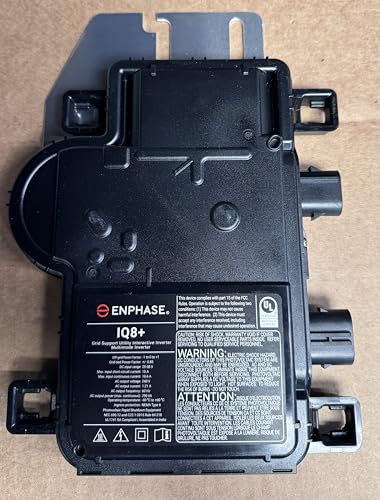
Box x 18 Enphase IQ8+ Microinverter Integrated MC4 connectors - IQ8PLUS-72-M-US (Plus Free IQ Cable & Connector) : Electronics
View on AmazonReputable Nebraska-focused providers to consider:
- GRNE Solar by Nelnet (Lincoln/Omaha): Full-service residential and commercial installer with NABCEP-certified professionals and experience across Nebraska’s major utilities. Offers roof and ground-mount solutions and battery integrations.
- J-Tech Solar (Lincoln): Well-known Nebraska contractor offering solar plus roofing—useful if your roof needs work before PV. Familiar with local permitting and interconnection steps for LES, OPPD, and surrounding municipalities.
- Solar Heat and Electric (Omaha): Long-standing Omaha-based firm with both solar PV and solar thermal experience; good option for homeowners considering diversified solar technologies.
- Interconnection Systems Inc. (Central City): Strong track record in commercial/ag installations and utility interconnections; residential offerings vary by project.
What to look for in a bid:
- Module and inverter makes/model numbers with datasheets
- Modeled annual production (kWh) using PVWatts or equivalent, assumptions clearly stated
- All-in price with equipment, labor, permitting, and interconnection fees broken out
- Warranty terms: module product/power, inverter, workmanship; clarify roof penetration warranties
- Expected timeline: site audit to PTO (permission to operate), typically 6–12 weeks depending on AHJ/utility
Affiliate pick: For Nebraska’s mix of partial shade and cold winters, Enphase IQ8-series microinverters are a solid choice. Their module-level optimization and rapid shutdown compliance make Enphase IQ8 Microinverters a practical, value-forward option.
If you live near Nebraska’s borders, you may also find competitive bids from neighboring-state installers. For context on nearby markets, see our state guides for Solar in Iowa: Costs, Incentives & Top Installers (2026), Solar in Kansas: Costs, Incentives & Top Installers (2026), Solar in Missouri: Costs, Incentives & Top Installers (2026), and Solar in Colorado: Costs, Incentives & Top Installers (2026).
ROI and payback period for solar in Nebraska
Nebraska’s below-average electricity rates lengthen payback compared to high-cost states, but strong sunlight, the 30% ITC, and steady rate inflation still produce attractive long-term returns.
Example ROI (owner-occupied home, Omaha/Lincoln):
- System size: 6 kW at $2.90/W = $17,400 before ITC; $12,180 net after 30% ITC
- Modeled production: 6 kW × 1,400 kWh/kWdc-year = ~8,400 kWh/year (PVWatts)
- First-year bill reduction: 8,400 kWh × $0.125/kWh = ~$1,050
- Assumptions: 0.5%/yr panel degradation, 2%/yr utility rate escalation, net metering credit at retail with annual true-up at avoided cost
Results:
- Simple payback: roughly 11–13 years depending on final price-per-watt and your rate
- 25-year bill savings (nominal): $30,000–$37,000 under the above assumptions
- Internal rate of return (IRR): commonly 5–8% for cash purchases; higher if rates rise faster, lower if your installed price is above $3.10/W
Batteries and ROI: Batteries add resilience and backup power but typically extend payback unless your utility offers time-of-use or demand-based residential rates that a battery can mitigate. In Nebraska, most residential customers face flat volumetric rates, so treat batteries as a resilience purchase rather than a pure ROI play—though the 30% ITC on batteries improves the math.
Home value: LBNL’s multi-state analyses have found solar homes sell at a premium, historically around $3–$4 per watt of installed capacity, though local Nebraska comps vary. If you expect to sell within a few years, discuss appraisals and solar documentation with your agent.
Nebraska-specific permitting, HOA rules, and interconnection process
Permitting and inspections
- Electrical code: Nebraska follows the National Electrical Code (NEC), with many jurisdictions on 2020 or 2023 editions. Your installer will pull electrical permits and schedule inspections; some rural areas use state electrical inspection services, while larger cities handle permits locally.
- Structural: Most AHJs require a structural letter or standardized load path documentation. Expect review of roof condition, truss spacing, and attachment methods for wind/snow loads.
- Timelines: Plan for 2–6 weeks for permits and 1–4 weeks for utility approval, depending on jurisdiction and season.
HOA considerations
- Nebraska does not have a broad statewide “solar rights” statute preempting HOA restrictions. Many HOAs permit solar with architectural review. Submit a complete package (module layout, frames, color, conduit routing) and reference best practices to preserve curb appeal. In case of restrictive covenants, installers can propose low-profile, black-frame modules and attic conduit runs.
Utility interconnection and net metering
- Size threshold: Residential net metering applies up to 25 kW per system.
- Application: Expect to submit a one-line diagram, site plan, equipment datasheets, and sometimes proof of liability insurance. Some utilities require an external, lockable AC disconnect in sight of the meter.
- Fees: Modest application/processing fees are common.
- Metering: Utilities swap in a bi-directional meter after passing inspection. Credits accrue monthly; annual true-up policies vary, with many paying out remaining credits at avoided-cost rates.
- Public power specifics: As Nebraska’s utilities are public (OPPD, LES, NPPD, and numerous municipal/coop providers), processes and forms vary. Your installer should manage submissions and communicate any utility-specific requirements.
FAQ: common questions about going solar in Nebraska
- How well does solar work in winter? Very well on sunny, cold days—panels are more efficient in low temperatures. Snow can temporarily reduce output, but annual losses are usually modest and offset by spring/summer production.
- Is my roof good for solar? South, southwest, or southeast roofs with 15–45° pitch perform best. East/west roofs still work with a ~10–15% production penalty. Aim for minimal shade between 9 a.m. and 3 p.m.
- What about hail? Choose modules with robust hail testing and ensure racking meets local wind codes. Many homeowners rely on standard homeowners insurance; confirm deductibles and coverage.
- Can I go off-grid? Most Nebraska systems are grid-tied. Off-grid requires larger arrays, substantial batteries, and usually a backup generator—higher cost and more maintenance.
- Do I need batteries? Not for net metering. Batteries add backup and can time-shift energy, but in Nebraska’s flat-rate structures they’re primarily a resilience investment. They do qualify for the 30% ITC.
- How long do panels last? Most Tier-1 panels carry 25-year performance warranties (e.g., ~84–92% of original output at year 25) and 10–25-year product warranties. Inverters are commonly 10–25 years depending on type.
- Will my utility buy my extra power? Under net metering, you get bill credits at the retail rate; many utilities true-up annually at avoided cost for any leftover credits. Design systems to closely match your usage to maximize savings.
- How do I get the federal tax credit? Claim the 30% Residential Clean Energy Credit on IRS Form 5695 in the year your system is placed in service. Consult a tax professional regarding carryforwards.
- How many quotes should I get? At least three. Ask for identical system sizes and similar equipment so you can compare apples to apples.
- What maintenance is required? Very little—periodic visual checks, monitoring alerts, and occasional rinsing if dust or pollen accumulates. Annual professional inspections are optional but helpful.
Practical next steps for Nebraskans
- Pull your last 12 months of electric bills to size a system accurately.
- Ask prospective installers for PVWatts-based production estimates with your exact roof geometry and shading.
- Verify licenses, insurance, and NABCEP certifications; request references from jobs completed within the last 12–18 months in your utility territory.
- If you’re in an HOA, submit design documents early to avoid delays.
- If you live near the Iowa, Kansas, Missouri, or Colorado borders, broaden your quote radius a bit—cross-border installers sometimes offer compelling pricing. Our regional guides for Iowa, Kansas, Missouri, and Colorado can help you benchmark.
Where solar in Nebraska is heading
Two macro trends favor Nebraskans over the next few years: continuing declines in hardware costs (particularly inverters and modules, per NREL’s cost benchmarks) and steady growth of installer expertise with public-power interconnections. As more households add electric vehicles and heat pumps, self-consumption of rooftop solar should increase—boosting ROI even in low-rate territories. Utility pilots for flexible or time-varying rates could also improve the economics of batteries. For homeowners ready in 2026, the combination of strong sunlight, the 30% federal credit, and maturing local installer networks makes solar in Nebraska a well-timed investment with durable, low-volatility returns.
Sources cited: NREL National Solar Radiation Database and PVWatts; LBNL Tracking the Sun (2024); NREL U.S. Solar PV and Energy Storage Cost Benchmark (Q1 2024); EIA Electric Power Monthly (residential rates); DSIRE (Nebraska net metering).
Recommended Products
Solar Electricity Handbook - 2023 Edition: A simple, practical guide to solar energy – designing and installing solar photovoltaic systems: Boxwell, Michael
Solar Electricity Handbook - 2023 Edition: <strong>A simple, practical guide to solar energy – designing and installing solar photovoltaic systems</strong> [Boxwell, Michael] on Amazon.com. *FREE* shi
Hanwha Qcells Q.Peak BLK G4.1 290W BLK/BLK Solar Panel - Pack of 4 : Everything Else
Buy Hanwha Qcells Q.Peak BLK G4.1 290W BLK/BLK Solar Panel - Pack of 4: Everything Else - Amazon.com ✓ FREE DELIVERY possible on eligible purchases
Box x 18 Enphase IQ8+ Microinverter Integrated MC4 connectors - IQ8PLUS-72-M-US (Plus Free IQ Cable & Connector) : Electronics
Enphase has released two versions of the IQ8+ MICROINVERTERS , one is the IQ8PLUS-72-2-US that comes with the "Pigtails" also called Q-DCC connectors, and the other version is the IQ8PLUS-72