
Tesla Powerwall in Louisiana: Cost, Availability & Is It Worth It?

Louisiana homeowners are increasingly asking whether a Tesla Powerwall in Louisiana makes sense—both for hurricane-season backup and everyday bill savings. With residential electricity prices averaging about 11–12 cents/kWh in 2024 (U.S. EIA), strong solar resource, and shifting net metering rules that pay less for exported energy, batteries can be practical when paired with rooftop solar, especially along the Gulf Coast where outages are frequent. Below, we break down specs, costs, incentives, utility rates, and real payback math for Louisiana.
By the numbers: Tesla Powerwall in Louisiana
- Energy capacity: 13.5 kWh usable per unit (Tesla)
- Power output: 5 kW continuous (Powerwall 2); up to ~11.5 kW continuous with integrated inverter on Powerwall 3 (Tesla)
- Round-trip efficiency: ~90% (DC-based; Tesla)
- Warranty: 10 years, 70% capacity retention; unlimited cycles under self-consumption/time-based control modes (Tesla warranty terms)
- Typical installed price in Louisiana: $10,000–$13,500 per unit before incentives; multi-unit systems can reduce per-kWh cost (market quotes; 2025)
- Federal tax credit: 30% Residential Clean Energy Credit for standalone or solar-paired batteries ≥3 kWh (U.S. Treasury/IRS, enacted by the Inflation Reduction Act)
- Average residential retail rate in LA: ~11–12¢/kWh (U.S. EIA 2024)
- Typical solar output: ~1,450–1,650 kWh per kW of PV annually in South Louisiana (NREL PVWatts), capacity factor ~17–19%
- Reliability context: Louisiana experiences among the longest outage durations during major storms; Hurricane Ida (2021) left ~1 million customers without power (DOE/EIA event reporting)

The Grid: The Fraying Wires Between Americans and Our Energy Future
Cultural anthropologist Gretchen Bakke <strong>unveils the many facets of America's energy infrastructure, its most dynamic moments and its most stable ones, and its essential role in personal an
Check Price on Amazon1) Tesla Powerwall overview: specs, capacity, and how it works
A home battery stores electricity for use when the grid is down or when it’s cheaper to discharge than buy from your utility. The Tesla Powerwall family is a lithium-ion system designed for residential backup and solar self-consumption.
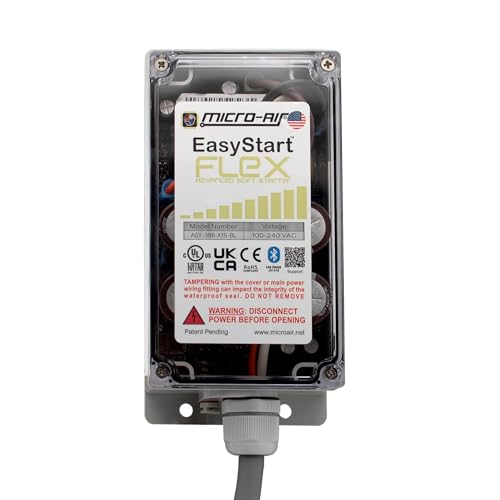
MICRO-AIR EasyStart 368 Bluetooth Soft Start Kit for Home Air Conditioner, RV & Commercial Use, Works with Generators, Reduces Power Surge, Efficient Start-Up - Up to 2-3.5 Tons(ASY-368-X48 BlueTooth) : Automotive
View on Amazon- Capacity vs. power: Capacity (13.5 kWh) is how much energy the battery can store. Power (kW) is how fast it can deliver that energy. Powerwall 2 typically delivers 5 kW continuous (7 kW peak for short bursts). Powerwall 3 integrates a high-power solar inverter capable of roughly 11.5 kW continuous backup output per unit, improving whole-home backup for large loads like HVAC.
- Chemistry: Tesla has moved toward lithium iron phosphate (LFP) in Powerwall 3, valued for thermal stability and long cycle life. Earlier Powerwall 2 units use nickel-manganese-cobalt (NMC). Both carry a 10-year warranty.
- Efficiency: Round-trip efficiency around 90% means you’ll get back roughly 90 kWh for every 100 kWh you charge, accounting for conversion losses.
- Backup operation: With the Tesla Backup Gateway, the system island-detects grid outages and powers backed-up circuits (or the whole home, depending on design). Batteries recharge from solar during daylight even when the grid is down, extending outage coverage for days if the weather cooperates.
- System sizing: A single 13.5 kWh unit can cover essentials (refrigeration, lighting, internet, some outlets, and often a 1–2 ton mini-split). Whole-home backup with central AC often benefits from 2–3 units, soft-start kits, or intelligent load management.
2) Powerwall pricing in Louisiana including installation costs
Installed costs for a Tesla Powerwall in Louisiana typically range from $10,000–$13,500 per unit before incentives, based on recent market quotes and installer surveys in 2024–2025. Factors that drive price variation:
- Hardware: Powerwall 3 hardware plus Backup Gateway typically lists near the $9,000–$10,500 range before labor and balance-of-system parts. Multi-unit pricing may reduce per-unit hardware cost.
- Labor and BOS: Permitting, site prep, wiring, conduit, mounting, and the Gateway often add $2,000–$4,000 depending on distance to service equipment and complexity.
- Coastal code and mounting: Wind-load requirements and corrosion-resistant hardware near the Gulf can add cost. Elevation above base flood elevation may be required in flood-prone parishes.
- Multi-unit systems: Two Powerwalls commonly price in the $18,000–$23,000 range pre-incentive; three units $26,000–$32,000. Per-kWh installed cost generally drops as you add units.
After the 30% federal tax credit, a single-unit net cost can land around $7,000–$9,500. If paired with solar, some installers bundle discounts, reduce BOS costs, and optimize inverter configuration.
For an all-in buyers’ overview of hardware options and wiring topologies, see our deeper dive: Tesla Powerwall: Complete Buyer's Guide — Cost, Installation & Alternatives.
3) Louisiana battery storage incentives: state rebates, SGIP, utility programs
- Federal 30% credit: The Residential Clean Energy Credit (Internal Revenue Code Section 25D) covers standalone batteries ≥3 kWh and solar-paired systems through 2032 at 30% of eligible costs.
- State incentives: Louisiana does not currently offer a statewide battery rebate or income tax credit for residential storage. The state solar tax credit expired years ago. Check DSIRE and your parish for any property/sales tax considerations, but storage-specific statewide incentives are not active as of 2026.
- SGIP: The Self-Generation Incentive Program (SGIP) is a California-only rebate; it does not apply in Louisiana.
- Utility/municipal pilots: Programs change. Entergy New Orleans (separately regulated by the City Council) and other utilities occasionally pilot demand response or resilience offerings. As of this writing, widespread, permanent residential storage rebates in Louisiana are limited; verify with your local utility for any new pilot enrollment windows.
4) How the Powerwall pairs with solar in Louisiana: backup vs. self-consumption
Louisiana’s solar resource is solid—NREL PVWatts estimates around 4.5–5.0 kWh/kW/day in the New Orleans–Baton Rouge corridor. That’s enough sun to recharge one or more Powerwalls most days from March through October.
- Backup-first design: If outages are your main driver, prioritize critical loads (refrigeration, lights, internet, medical devices, sump pump, mini-split or central air with soft-start). Powerwall 3’s higher power can support more whole-home scenarios, but careful load management still matters.
- Self-consumption: Many Louisiana utilities have shifted from 1:1 net metering to net billing or avoided-cost export rates for new solar customers. That means you might get only ~3–5¢/kWh for mid-day exports while you pay ~11–12¢/kWh for evening electricity. A battery lets you store mid-day solar and use it at night, turning low-value exports into high-value self-consumption.
- Smart controls: Tesla’s Time-Based Control uses algorithmic charging/discharging to maximize bill savings and backup readiness. In practice, the system will reserve capacity if severe weather is forecast while still shifting energy to avoid peak prices (if on a TOU rate) or to reduce exports (under net billing).
For Louisiana-specific solar costs, production expectations, and vetted installers, see our guide: Solar in Louisiana: Costs, Incentives & Top Installers (2026).
5) Louisiana utility rate structures and how Powerwall saves with time-of-use
Rate design drives battery economics. Key terms:
- Time-of-use (TOU): Prices vary by time of day. Batteries charge when cheap and discharge when expensive.
- Net metering vs. net billing: Net metering credits exports at retail; net billing credits at a lower “avoided-cost” or wholesale-like rate. Louisiana has generally moved new customers toward net billing.
- Demand charges: Fees based on your highest 15–60 minute usage in a month. Uncommon for Louisiana residential tariffs but may appear in some co-op pilots.
What’s typical in Louisiana?
- Many residential customers are on flat volumetric rates around 11–12¢/kWh (EIA). Some utilities (e.g., Entergy Louisiana, Cleco) have offered optional TOU tariffs or pilots with higher on-peak and lower off-peak prices. Participation and structures vary; check your utility’s current tariff book.
- Under net billing, batteries add value by time-shifting solar from mid-day (low export credit) to evening (high retail offset). Even without TOU, the spread between avoided-cost export (say 4¢) and retail (say 11.5¢) can be ~7.5¢/kWh of arbitrage.
Illustrative example (self-consumption, not a quote):
- 7 kW PV system in Baton Rouge generates ~10,800 kWh/year (NREL PVWatts). Suppose 40% would normally be exported mid-day: 4,320 kWh/year at 4¢ = $173 value.
- A Powerwall captures half of those exports after accounting for efficiency and nighttime use:
1,944 kWh/year displacing retail at 11.5¢ = $224; minus the lost export value (1,944 kWh × 4¢ = $78) and about 10% efficiency losses ($22 equivalent). Net additional value ≈ $224 − $78 − $22 = $124/year from time-shifting alone. - Add outage resilience value: if you avoid a $300 generator fuel/maintenance spend or prevent food spoilage and lost work during a major outage even once every few years, the qualitative and quantitative value grows.
With optional TOU, spreads are bigger. If off-peak is 8¢ and on-peak 18¢, a 10¢ spread roughly doubles arbitrage value. But not all Louisiana utilities offer TOU, and enrollment caps may apply.
6) Powerwall availability and certified installers in Louisiana
Tesla sells Powerwall through Tesla Energy and certified third-party installers. Availability in Louisiana is generally good, though lead times can lengthen ahead of hurricane season.
- Lead times: 4–12 weeks is common, longer during high-demand periods or for multi-unit, whole-home systems requiring service upgrades.
- Powerwall 3 vs. retrofit: Powerwall 3 integrates a solar inverter and is ideal for new solar installations. If you already have a third-party solar inverter, consult your installer—Powerwall 2 or other AC-coupled options may be a smoother retrofit path depending on compatibility.
- Site readiness: Typical 200A service is fine; whole-home backup may require service panel upgrades, load-shedding, or a smart panel.
- Environment: Units are NEMA 3R outdoor-rated, but in coastal areas, installers may recommend protective enclosures and corrosion-resistant fasteners. In flood-prone parishes, mounting above base flood elevation is best practice.
If you’re comparing quotes, ask for:
- Detailed scope (panel work, trenching, Gateway location)
- Backup strategy (critical loads vs. whole home)
- Commissioning plan and app setup
- Post-install service and warranty claims process
7) Alternatives to Powerwall available in Louisiana: Enphase, LG, Generac
Several high-quality batteries are widely available in Louisiana. Your ideal choice depends on inverter compatibility, power requirements, and budget.
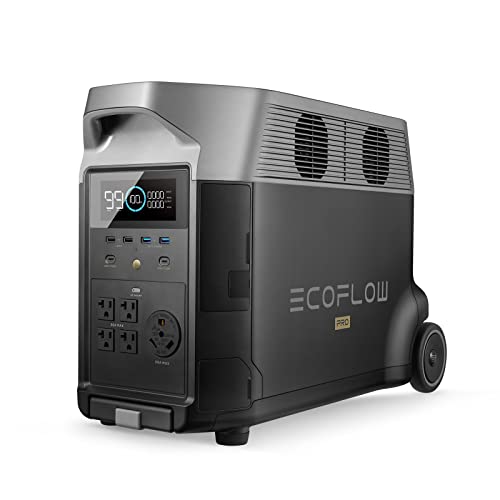
EF ECOFLOW Portable Power Station 3600Wh DELTA Pro, 120V AC Outlets x 5, 3600W, 2.7H Fast Charge, Lifepo4 Power Station, Solar Generator for Home Use, Power Outage, Camping, RV, Emergencies : Patio, Lawn & Garden
<strong>Fully recharge the lifepo4 battery in 1.8 hrs with 240V outlets(3000W), 2.7 hrs with 1800W wall outlets or solar charged in 2.8 hours with 4*400W solar panels</strong> thanks to the industry-l
Check Price on Amazon- Enphase IQ Battery 5P/10T (LFP): Highly modular and pairs natively with Enphase microinverters. The 5P provides 5 kWh with up to 3.84 kW output; multiple units can supply whole-home loads. Strengths: rock-solid microinverter ecosystem, fast outage detection. Consider if you have or want Enphase solar. A strong value pick for microinverter-based designs is the Enphase IQ Battery 5P.
- LG Energy Solution RESU Prime 16H (NMC): Around 16 kWh usable, 7 kW peak/5 kW continuous. Compact footprint, good energy density. Best fit for DC-coupled systems with compatible inverters.
- Generac PWRcell (NMC): Cabinet-based system from ~9 to 18 kWh; high surge capacity beneficial for motor loads. Works best in all-Generac ecosystems. If your site has large HVAC inrush currents, the Generac PWRcell is worth a bid.
- FranklinWH aPower + aGate (LFP): 13.6 kWh per unit, 5 kW continuous, 10 kW peak; strong whole-home load management with its aGate. Competitive pricing and growing installer base in the Gulf Coast. The FranklinWH aPower offers robust whole-home features at a compelling $/kWh.
- Sonnen eco/ecoLinx (LFP): Premium, long-cycle systems with advanced home automation. Pricey, strong warranty.
What to compare:
- Output power (kW) vs. your HVAC and well/sump needs
- Chemistry (LFP preferred for heat tolerance and longevity)
- Ecosystem compatibility (existing inverters, microinverters)
- Software features (storm watch, grid services)
- Warranty terms (years, throughput limits, capacity retention)
8) FAQ: common questions about Tesla Powerwall in Louisiana
How many Powerwalls do I need to run central AC in Louisiana’s heat?
- Many 2–4 ton systems can run on two Powerwalls, especially with soft-start kits and Powerwall 3’s higher output. For a 4–5 ton unit or multiple air handlers, three units or intelligent load management is safer. Your installer can measure starting currents and advise.
Can I add a Powerwall to my existing solar system?
- Yes, but compatibility varies. Powerwall 3 is optimized for new, DC-coupled installs. If you already have a third-party inverter, Powerwall 2 or alternative AC-coupled batteries may integrate more cleanly. Bring your inverter model and one-line diagram to your quote meeting.
Will a Powerwall pay for itself in Louisiana?
- Strictly on bill savings under flat rates, payback can be long (often 10–15+ years). Under net billing with low export credits, a battery captures more value by shifting solar to evening. Optional TOU rates, where available, further improve economics. Resilience during hurricanes adds significant, if hard-to-quantify, value.
How long will one Powerwall last during an outage?
- One 13.5 kWh unit running a 500 W average essential load (fridge, lights, internet, phone charging, occasional microwave) could last ~20–24 hours. With daytime solar recharge, you can sustain for days. High, continuous loads (electric resistance heat, large central AC) shorten runtime.
Is the Powerwall safe in Louisiana’s heat and humidity?
- Powerwalls are designed for outdoor use (NEMA 3R) and operate roughly from -4°F to 122°F. Shaded, ventilated installation helps. In coastal environments, specify corrosion-resistant hardware and consider a protective enclosure.
What maintenance is required?
- Minimal. The system is sealed and app-monitored. Keep the unit clear of debris, ensure ventilation, and schedule a system check if the app flags issues.
What about insurance and permits?
- Most parishes require an electrical permit and, in flood zones, mounting above base flood elevation. Some insurers offer premium credits for standby power; ask your agent.
How does the warranty work?
- Tesla’s residential warranty is 10 years with 70% capacity retention. For self-consumption and time-based control, cycling is effectively unlimited under warranty terms; backup-only usage has an energy throughput clause. Always review the current Tesla warranty with your installer.
Practical economics: example scenarios for Louisiana
- Resilience-first household near the coast: Two to three Powerwalls with a 7–10 kW PV array provide multi-day outage coverage. Payback is resilience-driven; bill savings are a bonus.
- Net-billed solar home inland with flat rates: One Powerwall can reduce low-value exports and improve self-consumption. Expect modest annual bill savings plus outage readiness.
- TOU participant (where available): Batteries arbitrage price spreads. Savings can be meaningful if the peak/off-peak delta is >8–10¢/kWh and you have flexible load.
Installation tips specific to Louisiana
- Flood elevation: Mount on a wall or raised pad above base flood elevation. Avoid ground-level placements in flood-prone areas.
- Wind and code: Verify anchoring and fastener spec for coastal wind loads. Request stainless hardware within 5–10 miles of the coast.
- Load triage: Identify essential circuits and consider a smart panel or load-shedding for HVAC and EV charging.
- Hurricane readiness: Use Tesla’s Storm Watch feature to top up when severe weather is forecast.
Is the Tesla Powerwall in Louisiana worth it?
If you want whole-home or critical-load backup for hurricane season and have (or plan) rooftop solar, a Tesla Powerwall in Louisiana is compelling. On pure bill savings, economics are mixed under flat rates, but improve when:
- You’re on net billing with low export credits
- You can enroll in an optional TOU rate with meaningful spreads
- You value outage resilience and can place a dollar value on avoided losses
For a comprehensive solar plan—including array sizing, battery pairing, and local installer options—start here: Solar in Louisiana: Costs, Incentives & Top Installers (2026).
Glossary
- Capacity factor: The percentage of time a system operates at its rated output averaged over the year (for solar, driven by sun hours and weather). Louisiana PV capacity factors commonly ~17–19%.
- Round-trip efficiency: The percentage of energy you get back from a battery relative to what you put in.
- Time-of-use (TOU): Utility pricing that varies by time of day; encourages shifting consumption away from peaks.
- Net billing: Compensates exported solar at a rate lower than retail, often close to wholesale/avoided cost.
Sources and data
- U.S. Energy Information Administration (EIA): historical and 2024 average residential rates
- National Renewable Energy Laboratory (NREL) PVWatts: Louisiana solar production estimates
- Tesla Energy product specifications and warranty summaries (Powerwall 2/3)
- U.S. Treasury/IRS guidance on the 30% Residential Clean Energy Credit (Inflation Reduction Act)
- U.S. DOE/EIA storm event reporting for Hurricane Ida and Gulf Coast outages
Recommended Products
The Grid: The Fraying Wires Between Americans and Our Energy Future
Cultural anthropologist Gretchen Bakke <strong>unveils the many facets of America's energy infrastructure, its most dynamic moments and its most stable ones, and its essential role in personal an
MICRO-AIR EasyStart 368 Bluetooth Soft Start Kit for Home Air Conditioner, RV & Commercial Use, Works with Generators, Reduces Power Surge, Efficient Start-Up - Up to 2-3.5 Tons(ASY-368-X48 BlueTooth) : Automotive
COMPATIBILITY WITH GENERATORS: ... power-limited locations. This Easy Start flex home ac soft starter is <strong>compatible with 2-stage compressors and heat pump units</strong>, making it a versatile
EF ECOFLOW Portable Power Station 3600Wh DELTA Pro, 120V AC Outlets x 5, 3600W, 2.7H Fast Charge, Lifepo4 Power Station, Solar Generator for Home Use, Power Outage, Camping, RV, Emergencies : Patio, Lawn & Garden
<strong>Fully recharge the lifepo4 battery in 1.8 hrs with 240V outlets(3000W), 2.7 hrs with 1800W wall outlets or solar charged in 2.8 hours with 4*400W solar panels</strong> thanks to the industry-l