
Tesla Powerwall in Alabama: Cost, Availability & Is It Worth It?
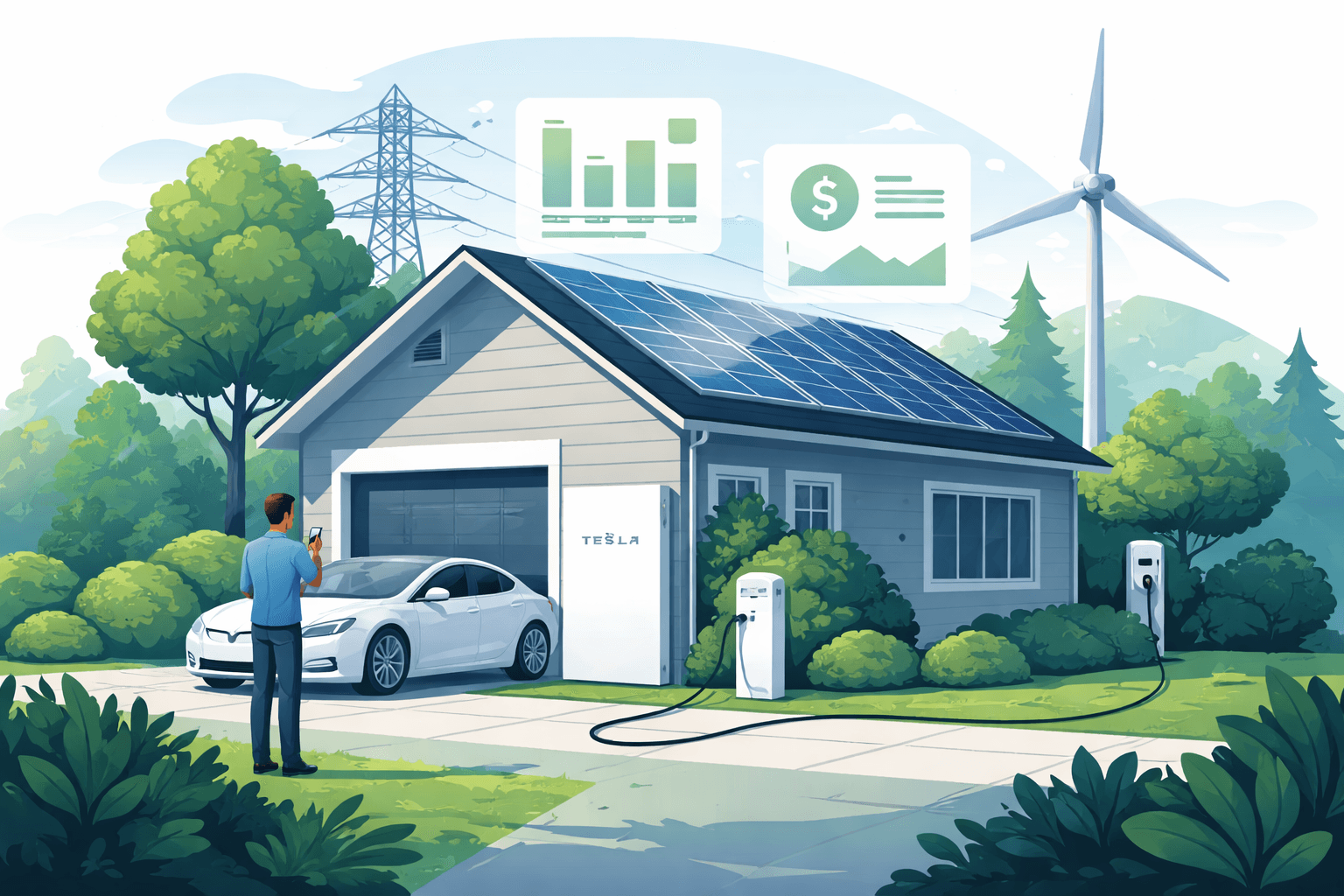
Alabama homeowners are asking whether a Tesla Powerwall in Alabama makes financial and practical sense. With more frequent severe-weather outages across the Southeast and rising interest in energy independence, batteries are moving from niche to mainstream: U.S. residential battery installations grew roughly 79% year-over-year in 2024, according to Wood Mackenzie, and the 30% federal tax credit now applies to standalone home batteries. Here’s a data-forward guide to specs, pricing, incentives, and real savings potential in Alabama.
Tesla Powerwall overview: specs, capacity, and how it works
Tesla’s latest home battery, Powerwall 3, integrates a lithium iron phosphate (LFP) battery with a hybrid inverter, enabling both solar and battery control in one unit. Key points, based on Tesla’s published datasheets and warranty documents:
The Homeowner's Guide to Renewable Energy - Revised & Updated Edition: Achieving Energy Independence through Solar, Wind, Biomass and Hydropower: Chiras, Dan
After beginning with the all important discussion about energy efficiency and conservation, <strong>Dan guides you through everything you need to choose which renewable options to integrate into your
Check Price on Amazon- Usable energy capacity: 13.5 kWh per unit
- Power output: up to 11.5 kW continuous (higher surge to start large loads)
- Chemistry: LFP (lithium iron phosphate) for improved thermal stability and long cycle life
- Round-trip efficiency: ~90% under typical conditions
- Operating environment: outdoor-rated (NEMA 3R); designed for heat/humidity with appropriate shading/clearance
- Warranty: 10 years, with at least 70% capacity retention; unlimited cycles when charged by solar for self-consumption and backup, per Tesla’s warranty terms
- Integration: Powerwall 3’s built-in solar inverter can directly connect to PV strings, reducing balance-of-system components compared with separate battery and inverter setups
How it works in plain terms: the Powerwall stores electricity from your solar array or the grid during lower-cost periods. When the grid goes down, it instantly supplies backup power. When the grid is up, it can “time-shift” energy to avoid expensive peak periods or reduce demand charges (where applicable).
For a deeper spec comparison across versions and alternatives, see our broader Tesla Powerwall buyer’s guide.
Powerwall pricing in Alabama, including installation costs
Installed cost in Alabama typically lands below the national average due to lower labor rates, though final pricing depends on site complexity, main panel capacity, and whether you’re integrating new solar.
What we’re seeing in 2025–2026 quotes from certified installers across the Southeast and benchmarking against NREL’s U.S. cost studies:
- Hardware (Powerwall 3): $8,500–$9,500 per unit
- Tesla Backup Gateway or controller hardware: often included with Powerwall 3’s integrated architecture, but budget $500–$1,000 for ancillary components
- Balance of system (disconnects, wiring, mounting): $1,500–$3,000
- Labor, permits, commissioning: $2,000–$4,000
Typical installed price per first unit: $12,000–$15,000 before incentives. Each additional Powerwall usually costs less ($8,000–$10,000) because you share labor and balance-of-system components.
- Federal tax credit (30%): The Inflation Reduction Act allows a 30% credit on total installed cost for standalone batteries ≥3 kWh placed in service after 2022. On a $14,000 installation, that’s ~$4,200 back at tax time (consult a tax professional).
Net: After the federal credit, many Alabama homeowners see effective first-unit costs in the $8,400–$10,500 range; additional units can pencil to $5,600–$7,000 after credit.
Alabama battery storage incentives: state rebates, SGIP, utility programs
- State-level incentives: Alabama does not currently offer a statewide battery storage rebate or income-tax credit. There’s no Alabama equivalent to California’s Self-Generation Incentive Program (SGIP). SGIP is California-only.
- Sales/property tax: Alabama has no broad statewide sales-tax exemption for residential solar+storage; local rates vary. Property tax treatment for PV and batteries is jurisdiction-specific; most counties have not adopted special assessments for storage.
- Utility and local programs: As of early 2026, Alabama Power does not publish a residential battery rebate. Some municipal or cooperative utilities (especially in TVA territory in North Alabama) occasionally pilot demand-response or battery programs; availability is limited and can change quickly. Always check with your local utility or cooperative for current offerings.
- Federal tax credit (again): The 30% investment tax credit (ITC) is the main driver of battery affordability in Alabama.
Sources: IRS guidance under the Inflation Reduction Act (2023 onward). For evolving utility pilots, consult your provider’s tariff pages or energy programs desk.
How the Powerwall pairs with solar in Alabama: backup vs. self-consumption
Pairing a Tesla Powerwall with rooftop solar in Alabama has two primary value streams:
Resilience (backup power): Alabama’s severe weather (spring tornadoes, summer thunderstorms, Gulf hurricanes) can cause outages. The U.S. Energy Information Administration (EIA) reports national average outage durations of ~5–7 hours annually, but severe events in the Southeast often push some customers much higher in a given year. A single Powerwall (13.5 kWh) can typically keep essential loads—refrigerator, lights, Wi-Fi, key outlets—running through a multi-hour outage, and multiple units can support air conditioning and whole-home backup for longer intervals.
Self-consumption and export control: Alabama lacks a statewide net-metering policy. In many service territories, exported solar power is credited at an avoided-cost rate meaningfully below the retail price of electricity. A battery lets you store solar you’d otherwise export at a low rate and use it later, increasing the share of your solar consumed on-site. This is particularly useful where special charges or low export credits reduce the value of sending energy to the grid.
Design note: If your goal is resilience, size for your critical loads and desired backup hours. If your goal is self-consumption and arbitrage, prioritize daily cycling and controls that minimize grid exports.
- Sizing thumbnail: Essential-load homes often start with 1–2 Powerwalls (13.5–27 kWh). Whole-home backup with central AC in Alabama’s summer often requires 2–3+ units, depending on HVAC size and efficiency. Your installer will model load profiles and inrush current (the surge needed to start compressors) to right-size.
Learn more about local solar economics in our state guide: Solar in Alabama: Costs, Incentives & Top Installers (2026).
Alabama utility rate structures and how Powerwall saves with time-of-use
Alabama’s dominant IOU, Alabama Power, historically bills most customers on standard residential rates without widespread mandatory time-of-use (TOU). However, optional TOU and demand-based pilot rates exist for eligible customers with smart meters (e.g., “Time Advantage” energy and demand structures). In TVA-served parts of North Alabama (through local power companies like Huntsville Utilities), rate options and export credits may differ.
How the Tesla Powerwall in Alabama can save money under various structures:
- Flat volumetric rates with low export credit: Storing mid-day solar to use in the evening improves self-consumption. If your retail rate is, say, $0.13/kWh and your export credit is $0.03–$0.05/kWh, every kWh shifted from export to self-use can improve value by roughly $0.08–$0.10 before considering round-trip losses. With ~90% round-trip efficiency, shifting 10 kWh/day yields perhaps $260–$330/year. This is meaningful but rarely covers the full battery cost by itself.
- Time-of-Use (TOU) energy rates: If your utility offers on-peak rates that are $0.10–$0.20/kWh higher than off-peak, daily cycling can add $200–$700+/year in arbitrage value, depending on your load and schedule.
- Demand charges (kW-based): Some optional residential demand rates bill you for the highest 15–60-minute peak kW each month. A battery can cap those peaks (for example, by limiting to 4 kW), potentially saving $15–$40 per month per reduced kW where such rates apply.
Reality check: In Alabama today, the financial payback case for batteries is strongest when you can stack multiple value streams—resilience + self-consumption + any TOU/demand benefits + federal tax credit. For many households, the resilience value during storms is the primary driver; bill savings help but usually don’t fully pay for a battery alone under current tariffs.
Powerwall availability and certified installers in Alabama
- Availability: Powerwall 3 is broadly available in the Southeast. Lead times are typically 4–10 weeks, but can extend during storm seasons or supply spikes.
- Who installs it: You can order directly through Tesla Energy in many ZIP codes or work with a Tesla Certified Installer (regional solar firms and licensed electricians) serving Birmingham, Huntsville, Montgomery, Mobile, and the Gulf Coast.
- What to look for in a bid:
- Load analysis and backup strategy (essential circuits vs. whole-home)
- Main panel capacity and any service upgrade needs
- Outdoor placement plan to manage Alabama heat/humidity (shade, ventilation)
- Clarification of solar integration (new DC-coupled PV with Powerwall 3 vs. retrofits)
- Monitoring, commissioning, and warranty support expectations
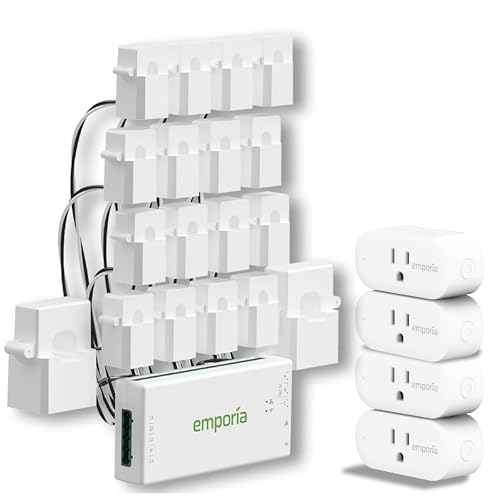
Emporia Energy Monitor with 16 Sensors + 4 Smart Plugs Super Bundle - Whole Home Electricity Usage Tracking & Real-Time Control - Supports Solar Net Metering - Works with iOS, Android, Alexa - Amazon.com
View on AmazonTip: Ask the installer to model your last 12 months of interval data (if available from your utility) to quantify TOU/demand savings potential and right-size the system.
Alternatives to Powerwall available in Alabama: Enphase, LG, Generac
Several high-quality battery systems are widely available in Alabama. Differences to consider include chemistry, inverter integration, power rating, and ecosystem compatibility.
- Enphase IQ Batteries (e.g., IQ Battery 5P/10): LFP chemistry, modular (5–10 kWh blocks), and tightly integrated with Enphase microinverters. Strong for retrofits on existing Enphase solar systems and for homeowners who want highly granular monitoring. Based on efficiency and cycle-life data, the Enphase IQ Battery 5P represents strong value for residential installations where modularity and LFP safety are priorities.
- LG Energy Solution RESU Prime (10H/16H): High-capacity options compatible with several third-party hybrid inverters. A fit when you want larger single-battery capacities; check inverter pairing and throughput warranty details carefully. For homes needing 15–20 kWh in a single enclosure, the LG RESU Prime 16H is a proven option in the U.S. market.
- Generac PWRcell: Modular cabinet system (roughly 9–18 kWh) with a strong whole-home backup focus and integrated load management. Its ecosystem can be appealing where generator integration or larger backup power is desired. The Generac PWRcell can be competitive on a per-kWh basis for larger systems.
Other contenders include SolarEdge Home Battery (tight integration with SolarEdge inverters) and Panasonic EverVolt. If you already have a particular inverter brand, choosing its matching battery often simplifies permitting and commissioning.
By the numbers: Tesla Powerwall in Alabama
- 13.5 kWh: Usable storage capacity per Powerwall 3 unit (Tesla)
- 11.5 kW: Up to continuous power output (Tesla)
- ~90%: Round-trip efficiency under typical conditions (Tesla/NREL benchmarks)
- $12,000–$15,000: Typical installed price for first unit in Alabama before incentives; $8,400–$10,500 after 30% federal credit
- $5,600–$7,000: Typical marginal cost of each additional unit after federal credit
- 30%: Federal tax credit for standalone residential batteries ≥3 kWh (IRS, Inflation Reduction Act)
- 1–3+ units: Common range to cover essential to whole-home backup for Alabama homes, depending on HVAC and load profile
Practical implications for Alabama homeowners
- If your primary goal is storm resilience, a Powerwall provides instant, silent backup without fuel or maintenance typical of generators. LFP chemistry lowers thermal risk and improves longevity in hot climates.
- If your main goal is bill savings, model carefully. Without strong TOU price spreads or demand charges, arbitrage alone won’t drive a fast payback. The biggest financial lift comes from stacking the federal credit, avoiding low export credits, and any optional TOU/demand rate optimization.
- If you’re adding new solar, Powerwall 3’s integrated hybrid inverter can simplify design and reduce part count. If you already have solar with an existing string inverter, discuss whether a Powerwall 2 (AC-coupled) or a different hybrid architecture makes more sense—or whether reconfiguring for Powerwall 3 is worth it.
- Consider complementary load management: smart thermostats, heat-pump water heaters, and smart panels can shrink peaks and stretch your stored kWh farther.
For a broader look at rooftop PV economics, installer lists, and incentives, see Solar in Alabama: Costs, Incentives & Top Installers (2026).
Is a Tesla Powerwall in Alabama worth it?
Short answer: It can be—especially if you value resilience during storms and can capture some self-consumption or TOU/demand savings. The 30% federal credit materially improves ROI. Purely financial paybacks based on arbitrage alone tend to be long under today’s Alabama tariffs, but many households judge the resilience and comfort benefits as worth the investment.
A conservative home economics example:
- One Powerwall cycled daily shifting 8 kWh from off-peak/solar export to evening usage with a $0.10/kWh spread earns ~$292/year net of efficiency losses.
- Add modest demand-peak reduction savings (e.g., $20/month on an optional demand rate) and you’re near $532/year.
- Over 10 years, that’s ~$5,300 in bill effects—helpful, but the bigger justification remains outage protection and quality-of-life during Alabama’s severe weather.
Installation, permitting, and siting considerations in Alabama
- Permitting timelines vary by jurisdiction; many Alabama AHJs turn residential electrical permits within 1–3 weeks.
- Electrical service upgrades (e.g., from 150A to 200A) add cost/time if required for whole-home backup.
- Outdoor placement should prioritize shade and airflow to preserve battery efficiency in summer heat. Enclosures rated NEMA 3R are outdoor-safe; installers often add awnings or place on the north/east side of the home.
- Insurance and appraisals: Some carriers may ask for documentation on UL 9540 compliance and installation by a licensed electrician. Storage can be a selling point in listings in outage-prone areas, though appraised value uplift is still case-by-case.

ecobee Smart Thermostat Premium with Smart Sensor and Air Quality Monitor - Programmable Wifi Thermostat - Works with Siri, Alexa, Google Assistant - Amazon.com
View on AmazonComplementary tech that often pencils out:
- Span Smart Panel for dynamic load management and flexible backup circuits
- Enphase IQ Battery 5P if you have Enphase microinverters and value modular LFP storage
- High-efficiency heat pump water heater to shift load into solar hours and reduce evening peaks
FAQ: common questions about Tesla Powerwall in Alabama
How many Powerwalls do I need for an Alabama home with central AC?
- Many 2,000–2,500 sq. ft. homes opt for 2–3 units to run essential loads plus one central AC during outages, but every case is different. Your installer should evaluate your HVAC tonnage and locked-rotor amps (LRA) for startup.
Can a Powerwall run my entire home during an outage?
- Yes, with sufficient capacity and proper design. Whole-home backup requires a transfer switch or whole-home backup configuration and enough units to handle continuous and surge loads. Many choose “essential loads” to reduce system size.
What’s the difference between Powerwall 2 and Powerwall 3 for Alabama homes?
- Powerwall 2 is AC-coupled and pairs easily with existing solar systems regardless of inverter brand. Powerwall 3 includes a built-in hybrid inverter (DC-coupled), which can lower costs in new builds but may require reconfiguration for retrofits.
Will batteries save me money if I don’t have TOU rates?
- Savings are modest without TOU or demand charges, but you can still increase solar self-consumption where export credits are low. Most Alabama buyers emphasize resilience first, savings second.
How long will a Powerwall last in Alabama heat?
- LFP chemistry is more heat-tolerant, and the unit is rated for outdoor use. Proper siting (shade, airflow) and firmware-managed thermal control protect longevity. Tesla’s warranty covers 10 years to at least 70% capacity.
How noisy is it compared with a generator?
- Batteries are virtually silent, with occasional fan noise. They start instantly and require no fuel or oil changes.
What about hurricanes and tornadoes?
- Batteries can’t protect the structure, but they keep essentials running during multi-day grid repairs if you have sufficient capacity and solar for daytime recharging.
Are there Alabama rebates for batteries?
- Not at the state level as of early 2026. The main incentive is the 30% federal tax credit; check your local utility for any pilots.
Do I need solar to get the federal credit?
- No. Since 2023, standalone batteries ≥3 kWh qualify. Many Alabama homeowners start with standalone storage for backup and add solar later.
Can I add an EV charger?
- Yes. Coordinating an EV charger with a battery and smart panel can reduce demand spikes. Products like a load-sharing EVSE and managed charging schedules are common add-ons.
Where this is heading
- Falling costs: NREL’s residential storage benchmarks show steady BOS and installation learning-curve declines. As Powerwall 3 and competing LFP systems scale, Alabama homeowners should see more competitive bids.
- Smarter rates: As advanced metering spreads, expect more optional TOU/demand rates in Alabama, improving the arbitrage case—especially when paired with smart panels and heat-pump appliances.
- Virtual power plants (VPPs): Across the U.S., utilities are piloting VPPs that pay homeowners for dispatching batteries during peak events. If Alabama utilities follow suit, enrolled Powerwalls could earn bill credits that materially improve ROI.
For specs, alternatives, and buying tips beyond the Alabama context, explore our Tesla Powerwall: Complete Buyer’s Guide. And if you’re early in your journey, our state solar guide—Solar in Alabama (2026)—covers PV costs and top-rated installers.
Recommended Products
The Homeowner's Guide to Renewable Energy - Revised & Updated Edition: Achieving Energy Independence through Solar, Wind, Biomass and Hydropower: Chiras, Dan
After beginning with the all important discussion about energy efficiency and conservation, <strong>Dan guides you through everything you need to choose which renewable options to integrate into your
Emporia Energy Monitor with 16 Sensors + 4 Smart Plugs Super Bundle - Whole Home Electricity Usage Tracking & Real-Time Control - Supports Solar Net Metering - Works with iOS, Android, Alexa - Amazon.com
Comprehensive Whole-Home Monitoring: Includes the Emporia Vue Energy Monitor with 16 sensors to <strong>track usage from your main panel and up to 16 individual circuits</strong>.
ecobee Smart Thermostat Premium with Smart Sensor and Air Quality Monitor - Programmable Wifi Thermostat - Works with Siri, Alexa, Google Assistant - Amazon.com
ecobee Smart Thermostat Premium with Smart Sensor and Air Quality Monitor - Programmable Wifi Thermostat - <strong>Works with Siri, Alexa, Google Assistant</strong> - Amazon.com