
Tesla Powerwall in North Carolina: Cost, Availability & Is It Worth It?
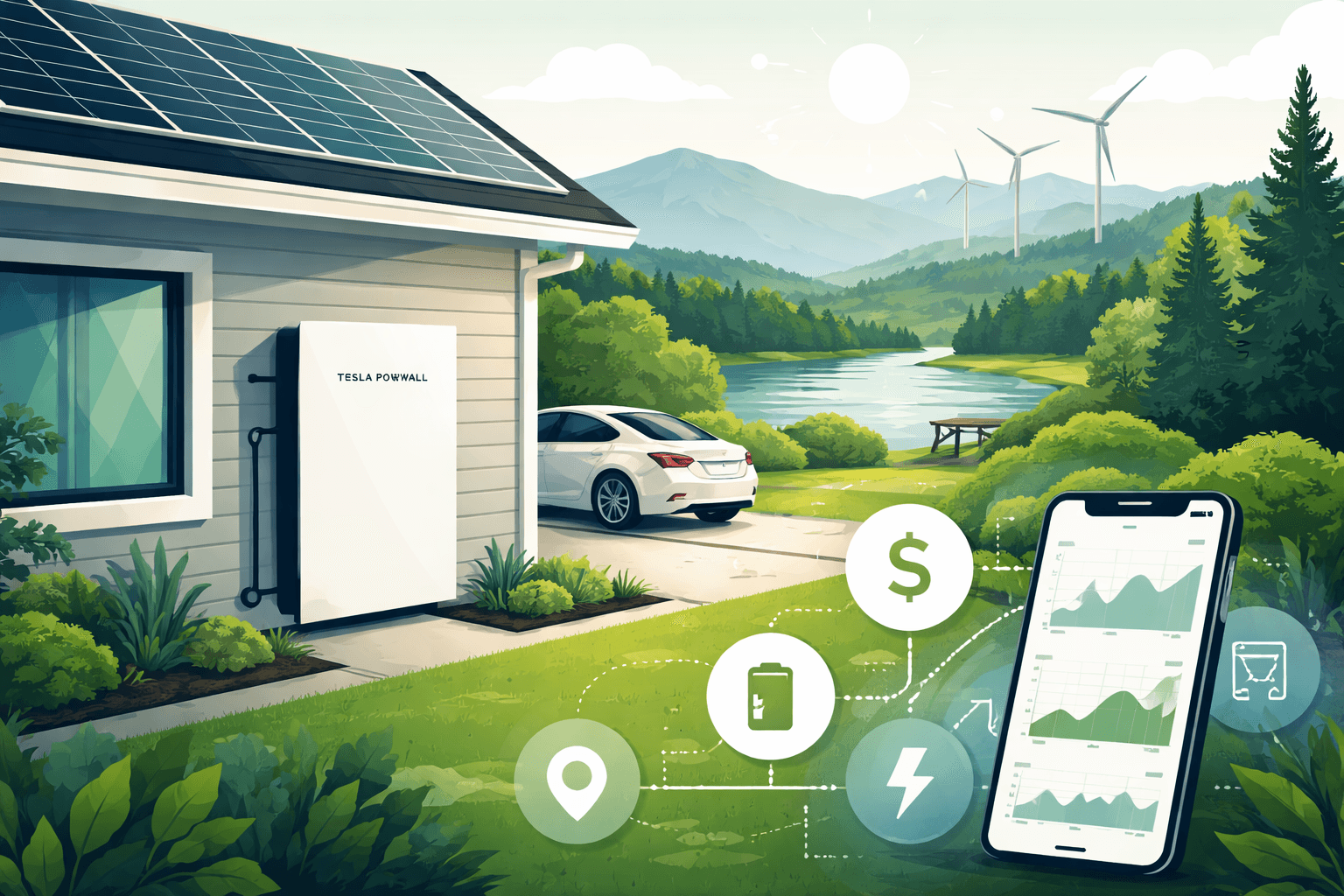
North Carolina added more than 1.7 GW of new solar in 2024, and now ranks among the top 10 U.S. states for installed capacity, according to SEIA’s Solar Market Insight. As more homeowners go solar, interest in the Tesla Powerwall in North Carolina has surged for both storm resilience and new time-of-use (TOU) rate plans. This guide breaks down specs, pricing, incentives, how it saves under NC utility tariffs, installer availability, and credible alternatives.
Tesla Powerwall overview: specs, capacity, and how it works
Tesla’s Powerwall is a lithium-ion home battery that stores electricity from solar or the grid and automatically powers your home during outages or when rates are high. The latest generation Powerwall 3 integrates a solar inverter and backup gateway, simplifying whole-home backup.

The Energy Switch: How Companies and Customers Are Transforming the Electrical Grid and the Future of Power: Kelly-Detwiler, Peter
In The Energy Switch, leading energy industry expert Peter Kelly-Detwiler<strong>looks at all aspects of the transformation: how we got here, where we are going, and the implications for all of us in
Check Price on AmazonKey specifications (Tesla datasheet, 2024):
- Usable energy: 13.5 kWh per unit
- Power: up to ~11.5 kW continuous output (sufficient for most whole-home loads and major appliances)
- Scalability: stack multiple units to expand energy (e.g., 2 units = 27 kWh)
- Operating temperature: roughly -4°F to 122°F (good tolerance for NC summers)
- Ingress protection: outdoor-rated enclosure, flood- and weather-resistant
- Warranty: 10 years with at least 70% capacity retention; terms vary by use case
How it works in practice:
- Backup power: When the grid fails, the Powerwall isolates your home in milliseconds and runs critical circuits or the whole home, depending on your setup.
- Self-consumption: Store daytime solar and use it in the evening, which matters more in NC as new net metering rules reduce credit value for exports.
- Rate optimization: Charge off-peak and discharge on-peak under TOU rates to cut bills.
- Virtual Power Plant (VPP): In some utility programs, you can enroll the battery to support the grid during peak events for bill credits.
What 13.5 kWh covers: A refrigerator (150 W avg), lights and devices (250–500 W), internet, and intermittent loads like a well pump can run 24–36 hours on a single unit if you manage HVAC. Central AC or heat pumps are power-hungry; many NC homes add a second Powerwall to comfortably ride out multi-hour summer outages.
By the Numbers: North Carolina + Storage
- 1.7 GW: Approximate new solar added in NC in 2024 (SEIA)
- 7+ hours: Average U.S. outage duration in 2021 including major events (EIA), with the Southeast experiencing frequent storm-related interruptions
- 13.5 kWh: Usable storage per Tesla Powerwall
- 30%: Federal residential clean energy credit (ITC) for batteries and solar through 2032 (IRS/IRA)
- 5–15 cents/kWh: Typical off-peak vs. on-peak spread under many TOU tariffs nationwide; actual NC spreads vary by Duke tariff and season, driving battery arbitrage value
Powerwall pricing in North Carolina including installation costs
Installed costs for a Tesla Powerwall in North Carolina generally fall between $11,000 and $15,500 per unit before incentives, based on 2024–2025 installer quotes and national marketplace data (e.g., EnergySage, NREL cost benchmarks for residential storage balance-of-system components). Pricing drivers include:
- Electrical work: Main panel upgrades, trenching, or load management can add $1,000–$3,000.
- Whole-home vs. essential-loads backup: Whole-home backup often requires more labor and may need multiple batteries.
- Generation pairing: Powerwall 3’s integrated solar inverter can reduce separate inverter costs in new solar installs.
- Multi-unit discounts: A second unit typically adds $8,500–$11,000 because some labor and hardware are shared.
After incentives: The 30% federal tax credit applies to both standalone storage and solar-paired storage (placed in service after 2022). A $14,000 installed price drops to $9,800 net if you qualify for the full credit. Always consult a tax professional.
Tip: Get itemized quotes comparing Powerwall 2/Powerwall 3 configurations, essential-loads subpanel vs. whole-home backup, and any main service upgrade costs. Itemization helps you compare apples-to-apples and identify savings opportunities.
North Carolina battery storage incentives: state rebates, SGIP, utility programs
- State rebates: North Carolina does not offer a statewide residential battery rebate comparable to California’s SGIP. There is no SGIP in NC.
- Federal credit: The Inflation Reduction Act (IRA) expanded the 30% Residential Clean Energy Credit to standalone batteries ≥3 kWh from 2023 onward.
- Property and sales tax: NC’s 80% property tax exclusion generally applies to solar PV systems; batteries are not clearly covered statewide. Check with your county assessor and installer for local interpretations. There is no statewide sales tax exemption for residential batteries.
- Utility programs: Duke Energy Carolinas (DEC) and Duke Energy Progress (DEP) have been developing solar-plus-storage tariffs and demand response offerings. Program names, budgets, and eligibility can change year to year. Recent filings and pilots in the Carolinas have focused on:
- Solar Choice/TOU-CPP rate structures that increase the value of evening self-consumption
- Battery enrollment for grid events (a form of VPP) that can pay bill credits for allowing limited discharge during peak windows
As of late 2024, multiple utilities nationwide are compensating batteries enrolled in VPP-style programs at levels ranging from modest monthly bill credits to performance-based payments during events. In North Carolina, check Duke Energy’s current residential offerings; enrollment windows can fill quickly and incentives may be capped.
How the Powerwall pairs with solar in North Carolina: backup vs. self-consumption
Pairing a Powerwall with rooftop solar is the most common configuration in NC. Why it matters now:
- Net metering changes: Under Duke’s newer Solar Choice frameworks, exported solar is credited less than full retail and varies by time. Batteries increase self-consumption, so fewer kWh are exported at low credit values.
- Reliability: Hurricanes, ice storms, and severe thunderstorms cause multi-hour outages. Solar plus storage keeps critical loads running without a generator.
- Panel-rightsizing: Batteries let you install a solar array aligned with annual consumption while shifting excess daytime generation to evening peaks, improving your solar payback.

ChargePoint HomeFlex Level 2 EV Charger J1772 - Fast Smart Battery Power Charging at Home for Electric Automobile Vehicles - NEMA 14-50 Plug for Electric Car : Automotive
View on AmazonTwo common strategies:
- Backup-first: Reserve, say, 30–50% of battery capacity for outages. The rest cycles daily for bill savings.
- Self-consumption/TOU-first: Use most capacity to avoid on-peak rates, with a smaller reserve for outages, adjustable seasonally.
If you’re just starting to explore PV, our state-specific overview of pricing and installers is a helpful complement: Solar in North Carolina: Costs, Incentives & Top Installers (2026).
North Carolina utility rate structures and how Powerwall saves with time-of-use
Duke’s newer residential tariffs in NC increasingly feature time-varying prices with higher evening peaks (often weekdays, seasonally adjusted) and occasional critical peak pricing (CPP) events. While exact prices and windows vary by utility territory and year, batteries save in three ways:

Emporia Gen 2 Smart Home Energy Monitor with 16 50A Circuit Level Sensors | Real Time Electricity Monitor/Meter | Solar/Net Metering - Amazon.com
View on Amazon- TOU arbitrage
- Concept: Charge from solar or off-peak grid rates; discharge during on-peak.
- Example math: If your on- vs. off-peak spread averages 10–12 cents/kWh and your battery cycles 8–10 kWh during most weekdays, that’s roughly $200–$350/year in avoided costs. Higher spreads or CPP add more value.
- Demand response/CPP
- Some NC tariffs include critical peak windows a few dozen hours per year with sharply higher rates or credits. Discharging during CPP can materially boost savings.
- Net metering value protection
- With lower export credits at certain times, shifting solar to evening self-use improves the effective value of each kWh you generate.
Note on efficiency: Round-trip efficiency for lithium-ion home batteries is typically 85–92% (NREL). Expect 8–15% losses when routing solar through the battery, so savings models should reflect that.
Powerwall availability and certified installers in North Carolina
Availability: Powerwall 3 rolled out broadly in 2024–2025. In NC metro areas (Charlotte, Raleigh-Durham, Greensboro/Winston-Salem, Asheville, Wilmington), typical lead times for a site survey to commissioning run 6–12 weeks, depending on permitting and utility interconnection queues.
Installer pathways:
- Tesla direct: Order through Tesla’s online portal; Tesla or a regional partner completes the install.
- Tesla Certified Installers: Independent solar/storage firms vetted by Tesla. Advantages include local service and the ability to bundle premium electrical upgrades (smart panels, EV chargers).
What to look for in an installer:
- UL 9540/9540A experience and whole-home backup design competency
- Detailed load calculations and outage-priority planning (heat pump vs. mini-splits, well pumps, sump pumps)
- Clear interconnection timelines with Duke Energy and transparent change orders
For homeowners also evaluating rooftop PV, cross-reference shortlists with this overview of state pricing and providers: Solar in North Carolina: Costs, Incentives & Top Installers (2026).
Alternatives to Powerwall available in North Carolina: Enphase, LG, Generac
Tesla is popular for its high power output and integrated ecosystem, but several strong alternatives compete in NC:
Enphase IQ Battery (e.g., IQ Battery 5P/10/3T series)
- Strengths: Module-level solar with IQ microinverters; highly flexible sizing; strong app and reliability record. The 5P variant improves power density and supports whole-home backup in multi-unit stacks.
- Consider if: You’re planning or already have Enphase microinverters; you want granular monitoring and easy expandability.
LG Energy Solution (e.g., RESU Prime 10H/16H or newer ESS Home models)
- Strengths: High energy density; strong brand in cells; good warranty terms; AC- or DC-coupled options depending on inverter.
- Consider if: You want large-capacity DC-coupled storage with a string inverter PV design.
Generac PWRcell (and updated Generac PWR systems)
- Strengths: Large cabinet-style capacity with flexible battery modules; integration with load management (PWRmanager) and generators.
- Consider if: You want deeper backup plus potential integration with an existing Generac generator and load-shedding controls.
sonnenCore/eco
- Strengths: Premium VPP features and long-cycle life emphasis; strong grid-services pedigree.
- Consider if: You’re targeting participation in emerging VPP programs and value a premium, service-oriented platform.
Comparing on NC priorities:
- Outage performance in heat: Look for high continuous and surge power to start HVAC or well pumps during summer peaks.
- TOU savings: All systems can time-shift, but inverter integration and control software affect outcomes.
- Warranty and service: Prioritize local service networks and clear throughput terms, particularly if you plan frequent TOU cycling.
Based on current specs and field data, Enphase’s IQ Battery 5P and Tesla’s Powerwall 3 offer category-leading power density for whole-home backup in hot climates; if you’re pairing with microinverters, Enphase often pencils out competitively. For large homes with big HVAC loads, multi-battery stacks or cabinet systems (Generac) with load management can be compelling.
Affiliate recommendations (practical add-ons that improve outcomes):
- For tighter control of TOU savings, a circuit-level monitor like the Emporia Vue Energy Monitor helps visualize loads and right-size backup.
- For flexible backup of select circuits without a full service upgrade, a smart panel like Span Smart Panel can prioritize essential loads during outages and integrate cleanly with batteries.
- If you drive electric, a schedule-friendly Level 2 charger such as ChargePoint Home Flex lets you shift EV charging to off-peak hours so your battery can focus on on-peak home loads.
FAQ: common questions about Tesla Powerwall in North Carolina
How much does a Tesla Powerwall cost in NC? Typical turnkey pricing is $11,000–$15,500 per unit before incentives, with a second unit often discounted. After the 30% federal credit, net cost commonly lands near $8,000–$11,000 per unit, depending on scope.
Can I claim the federal tax credit for a standalone battery in NC? Yes. The IRA’s 30% Residential Clean Energy Credit covers standalone storage ≥3 kWh placed in service after 2022. Consult a tax professional.
Are there North Carolina state rebates for Powerwall? There’s no statewide rebate akin to California’s SGIP. Watch Duke Energy for battery enrollment or VPP-style programs that may offer bill credits or limited upfront incentives; availability can be seasonal and capped.
How many Powerwalls do I need to back up my NC home? One unit (13.5 kWh, ~11.5 kW) can cover essentials and many heat pump systems with smart load management. Larger homes with multiple HVAC zones, well pumps, or pool equipment often choose 2–3 units for comfort during multi-hour outages.
Will a Powerwall run my air conditioner or heat pump? Often yes, especially with Powerwall 3’s higher continuous power and strong motor-start capability. Verify compressor locked-rotor amps (LRA) and running load amps (RLA) with your installer.
How long will a Powerwall last during a storm outage? With essentials only (400–800 W average), 13.5 kWh can last 18–36 hours. Running central AC shortens runtime significantly; two units provide more headroom in summer.
What’s the lifespan and warranty in NC’s climate? Lithium-ion batteries typically retain 70–80% capacity after 10 years under residential cycling. Tesla warrants 10 years to 70% capacity (see Tesla warranty). Proper shading and wall placement help thermal performance in NC heat.
Can I add a Powerwall to an existing solar system in NC? Yes. Powerwall can be AC-coupled to most existing PV arrays. The integrated-inverter Powerwall 3 is especially streamlined for new installs.
How does the new NC net metering affect payback? Lower export credits and TOU/CPP elements favor self-consumption, which increases the relative value of a battery. Your exact payback depends on rate spread, export valuation, and daily cycling.
Do I need a generator too? Not necessarily. Batteries are silent, instant, and maintenance-light. Some rural NC homes pair a small generator for extended outages while the battery handles short interruptions and peak shaving.
What permits and inspections are required? Local electrical and building permits are standard. Interconnection with Duke Energy requires approvals and sometimes meter swaps; installers typically manage this. Expect 6–12 weeks from contract to commissioning, depending on jurisdiction.
Practical takeaways for NC homeowners
- If reliability is your top priority, a 2-battery stack with smart load management delivers comfortable whole-home backup for most NC houses.
- If economics lead, model TOU spreads and export credits under your specific Duke tariff. Even modest spreads can yield a few hundred dollars per year; CPP and potential utility program credits can add more.
- If you’re installing solar, consider Powerwall 3’s integrated inverter to streamline hardware, permitting, and design. For Enphase microinverter systems, the IQ Battery 5P is a competitive alternative.
Where this is heading
North Carolina utilities are increasingly valuing flexible demand. Batteries that can shift solar to evening peaks, ride through storms, and support the grid during events are well aligned with that trend. Expect:
- More defined VPP and battery enrollment programs with transparent bill credits
- Continued TOU/CPP refinement that rewards evening self-consumption
- Falling balance-of-system costs and simpler whole-home backup designs
For many NC homeowners, especially those already considering rooftop solar, a Tesla Powerwall delivers both resilience and bill stability. The strongest returns come when system sizing, rate selection, and load management are tuned together—something an experienced, Tesla-certified local installer can help optimize.
Relevant reads on our site:
- Solar in North Carolina: Costs, Incentives & Top Installers (2026)
- For regional comparisons of pricing and availability, you can also see: Tesla Powerwall in Georgia: Cost, Availability & Is It Worth It? and Tesla Powerwall in Florida: Cost, Availability & Is It Worth It?
Recommended Products
The Energy Switch: How Companies and Customers Are Transforming the Electrical Grid and the Future of Power: Kelly-Detwiler, Peter
In The Energy Switch, leading energy industry expert Peter Kelly-Detwiler<strong>looks at all aspects of the transformation: how we got here, where we are going, and the implications for all of us in
Emporia Gen 2 Smart Home Energy Monitor with 16 50A Circuit Level Sensors | Real Time Electricity Monitor/Meter | Solar/Net Metering - Amazon.com
See how much electricity your home is using anywhere, anytime. ... <strong>Add individual 50A sensors to your Vue to monitor up to 16 individual circuits</strong> — providing accurate energy use for t
ChargePoint HomeFlex Level 2 EV Charger J1772 - Fast Smart Battery Power Charging at Home for Electric Automobile Vehicles - NEMA 14-50 Plug for Electric Car : Automotive
Home Flex Hardwired offers the fastest charge at up to 50A. NEMA 6-50 and 14-50 versions <strong>provide up to 40A and work with existing 240V wall outlets</strong>. Yes! Choose from our list of prefe