
Solar in Delaware: Costs, Incentives & Top Installers (2026)

Delaware may be small, but its solar profile is stronger than many assume. With roughly 4.2–4.6 peak sun hours per day and retail electricity rates averaging about 16–18¢/kWh in 2024 (U.S. Energy Information Administration, EIA), solar in Delaware can deliver 7–11 year paybacks for well-sited homes while cutting household emissions. Add in full-retail net metering, a tradable SREC market, and intermittent utility-backed rebates, and the state’s value stack gets compelling for 2026.
Below, we break down solar energy potential, costs, incentives, installers, permitting, and ROI—everything Delaware homeowners need to make a confident decision.
Solar energy potential in Delaware: sun hours, irradiance, and climate factors
- Solar resource: Fixed-tilt arrays in northern Delaware typically produce about 1,250–1,450 kWh per kWdc per year, depending on orientation and shading, according to NREL’s PVWatts modeling tool. A 7 kW system can therefore generate roughly 8,800–10,150 kWh annually.
- Peak sun hours: Delaware averages about 4.2–4.6 peak sun hours per day—comparable to mid-Atlantic peers and sufficient for robust residential output (NREL, typical meteorological year data).
- Climate considerations:
- Coastal humidity and salt mist: If you’re near the coast, look for modules with IEC salt-mist corrosion certification (IEC 61701) and stainless fasteners.
- Wind loading: Select racking rated to local wind codes; coastal gusts can push higher design loads even without hurricane landfalls.
- Snow: Winters are moderate compared with New England, so snow-related production losses are generally limited.
- Shade and trees: Mature tree cover is common in older Delaware neighborhoods. Microinverters or module-level power electronics (MLPE) can mitigate partial shading and increase energy yield.
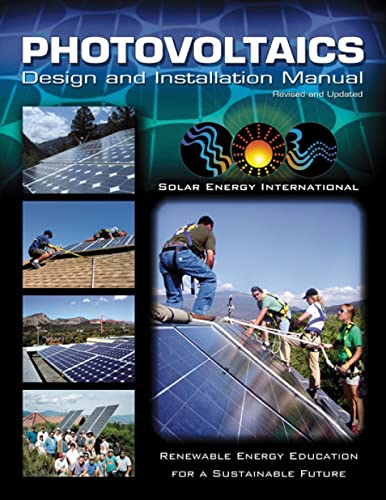
Photovoltaics: Design and Installation Manual: Solar Energy International
It also includes chapters on sizing photovoltaic systems, analyzing sites and installing PV systems, as well as detailed appendices on PV system maintenance, troubleshooting and solar insolation data
Check Price on AmazonWhy this matters: With electricity at ~16–18¢/kWh (EIA) and annual output near 9–10 MWh for a typical system, the avoided-utility-bill value stacks up quickly—even before incentives.
Average cost of solar panels in Delaware and price-per-watt breakdown
As of 2026, turnkey residential solar in the U.S. typically ranges from about $2.50–$3.50 per watt (dc) before incentives, depending on equipment, roof complexity, and installer margins. Marketplace data for the mid-Atlantic and NREL cost benchmarks suggest Delaware installations usually cluster around $2.70–$3.20/W before incentives for standard monocrystalline systems.
- Example system pricing (estimates):
- 6 kW: $16,200–$19,200 before incentives
- 7 kW: $18,900–$22,400 before incentives
- 10 kW: $27,000–$32,000 before incentives
What drives variation:
- Equipment choices: Premium modules (higher efficiency, better temperature coefficient, black-on-black aesthetics) and microinverters add cost but can boost production and shade resilience.
- Roof factors: Steep pitches, multiple roof planes, or older shingles requiring replacement raise labor and balance-of-system (BOS) costs.
- Soft costs: Permitting, interconnection, design, and customer acquisition typically account for 50%+ of residential system cost in the U.S. (NREL PV cost benchmarks).
If you’re brand-new to system components, see our broader primer on soft costs, BOS, and module efficiency ratings in the Solar Panel Cost Guide: Solar Panel Cost Guide: How Much You'll Pay & How to Save.
Delaware solar incentives: state tax credits, rebates, net metering, and SRECs
Delaware’s incentive stack is a mix of utility-administered rebates, full-retail net metering, and a tradable solar renewable energy certificate (SREC) market, all underpinned by the federal investment tax credit (ITC).
State/utility rebates (Green Energy Program)
Delaware’s Green Energy Program (administered through DNREC with utility partners) has historically offered rebates for residential PV, subject to funding availability and caps. The details—per-watt amounts, maximums, and eligibility—vary by the administering utility and can change during the year as budgets replenish or pause.
- Utilities historically involved include Delmarva Power (Delaware Division), Delaware Electric Cooperative (DEC), and some municipals (e.g., City of Newark).
- Typical structure: A per-watt rebate with a project cap, often limited to customers of the administering utility and requiring pre-approval.
- Action step: Check the current status on your utility’s Green Energy Program portal before signing a contract; funds can be seasonal and first-come, first-served (DNREC Green Energy Program).
Net metering (full retail crediting)
Delaware’s net metering policy credits excess solar exports at the full retail rate up to system-size caps, with monthly bill credits that can roll forward. Program details are set by the Delaware Public Service Commission and implemented by utilities (e.g., Delmarva Power, DEC).
- Residential system size limit: Commonly up to 25 kW for single-family homes under standard tariffs.
- Credit treatment: Monthly surplus typically rolls over as kWh credits; annual true-ups may compensate remaining credits at an avoided-cost or supply-rate value depending on the utility and tariff.
- Why it matters: Full-retail net metering shortens payback times compared with buy-all/sell-all or avoided-cost-only structures.
For a deep dive into mechanics and bill credits, see Net Metering Explained: How Solar Owners Get Credit for Excess Power.
Solar Renewable Energy Certificates (SRECs)
Delaware’s Renewable Portfolio Standard (RPS) includes a solar carve‑out, allowing homeowners to generate SRECs—tradable certificates representing 1 MWh of solar production.
- How it works: After interconnection and SREC registration, each 1,000 kWh your system produces generates 1 SREC, which can be sold in PJM-area SREC markets via aggregators or exchanges.
- Value: SREC prices are market-based and can vary widely year-to-year depending on supply, demand, and Alternative Compliance Payment (ACP) levels. In recent years, Delaware SREC prices have generally trailed higher-priced markets like D.C. but can still add meaningful revenue.
- Practical tip: Ask your installer about SREC registration and whether they partner with an aggregator. SREC revenue can improve ROI by several percentage points, but treat it as a bonus given price volatility.
Sales and property tax
- Sales tax: Delaware has no state sales tax, which keeps upfront costs lower compared with many states.
- Property tax: Delaware does not have a statewide property-tax exemption for PV, but local assessors commonly treat rooftop solar modestly or neutrally; verify with your county assessor to understand any assessment implications.
Federal ITC and how it applies to Delaware homeowners
The federal residential clean energy credit (commonly called the Investment Tax Credit, or ITC) provides a 30% tax credit on eligible residential solar costs through at least 2032 under the Inflation Reduction Act.
- What’s eligible: PV modules, inverters, racking, wiring, balance-of-system hardware, labor, permitting, and interconnection fees. Standalone batteries also qualify at 30%.
- How it’s claimed: File IRS Form 5695 with your federal return. The credit reduces tax liability dollar-for-dollar; unused portions can typically roll forward.
- Example: A $20,000 7 kW system can claim a $6,000 ITC, lowering post-credit cost to $14,000 (before any utility rebate or SREC revenue).
For step-by-step guidance and eligibility nuance, see our explainer: Solar Tax Credit Explained: Save on Solar with the Federal ITC.
Best solar installers and companies serving Delaware
Delaware is served by a mix of local specialists and regional providers that cover the mid‑Atlantic. Rather than crown a single “best,” we recommend vetting 3–4 quotes and prioritizing:

EF ECOFLOW Smart Home Panel 2, the Center of the Whole
Alternatively connect <strong>3 x EcoFlow DELTA Pro 3 units with 6 x Extra Batteries for energy storage up to 36kWh</strong>. It's not just for longer backup but lets you to control and run every
Check Price on Amazon
Enphase ENPHASE IQ8PLUS-72-2-US IQ8+ ...
View on Amazon- NABCEP certification (installer-level credentialing)
- Strong workmanship warranties (10+ years on labor) and clear roof-penetration guarantees
- Bankable equipment with solid manufacturer warranties (25-year product/performance on modules; 10–25 years on inverters)
- Local permitting expertise in New Castle, Kent, and Sussex Counties
- Transparent production modeling (NREL PVWatts or equivalent) and shade analysis (e.g., Solmetric SunEye or drone-based scans)
Notable companies active in Delaware (examples; always verify current service areas and credentials):
- CMI Solar & Electric (Newark-based): Longstanding local EPC familiar with HOA and utility processes.
- Clean Energy USA (Rehoboth Beach): Coastal installs with experience in salt-mist environments.
- Lumina Solar (regional Mid-Atlantic): Broad equipment selection and battery options.
- Paradise Energy Solutions (regional): Residential and small commercial with NABCEP-certified staff.
- Green Street Solar (MD-based, serves DE): Known for agricultural and residential projects in the Delmarva Peninsula.
- National providers: Select national brands (e.g., Sunrun, Tesla) serve parts of Delaware; compare proposals carefully on price-per-watt and warranties.
Equipment picks that fit Delaware’s climate and rooftops:
- Shading resilience: Enphase IQ8 Microinverters can improve output on partially shaded roofs and enable sunlight backup on some configurations.
- Coastal durability + efficiency: High-efficiency, salt‑mist‑certified modules like the REC Alpha Pure‑R offer strong value for residential installations.
- Backup power: For frequent outages or well pumps, a 10–15 kWh battery such as Tesla Powerwall 3 pairs well with 6–10 kW arrays and qualifies for the 30% ITC when installed with or without solar.
If you’re comparing module options, our buyer’s guide covers efficiency, temperature coefficients, and warranties in detail: Best Solar Panels 2026: Top Picks, Specs & Buying Guide.
ROI and payback period for solar in Delaware
Let’s ground payback in data. We’ll use conservative, 2026-appropriate assumptions and show how incentives move the needle.
- System size: 7 kWdc
- Installed cost: $2.90/W (mid-range Delaware estimate) → $20,300 before incentives
- Federal ITC (30%): −$6,090 → $14,210 net (before any utility rebate)
- Production: 1,350 kWh/kW/year (NREL PVWatts mid-estimate) → 9,450 kWh/year
- Retail rate: 17¢/kWh (EIA Delaware 2024 average within 16–18¢ range)
- First-year bill offset: 9,450 × $0.17 ≈ $1,606
- SRECs: Variable; assume $0–$300/year as a cautious planning range
- Utility rebate: Intermittent; if available at, say, $0.50/W capped at $2,000, net cost could drop to ~$12,210
Simple payback estimates:
- With ITC only: $14,210 ÷ $1,606 ≈ 8.9 years (no SRECs or rebate)
- With ITC + moderate SRECs ($200/yr): ≈ 8.0 years
- With ITC + $2,000 rebate: ≈ 7.6 years
Finance and sensitivity:
- Electricity inflation: If utility rates rise ~2–3%/year (EIA long-run assumptions vary), payback accelerates.
- Shading and orientation: A 10–15% production loss from shade could extend payback by roughly a year; MLPE can help.
- Financing: Low-interest loans can keep cash flow positive even when simple payback is 8–10 years.
By the numbers, most well-sited Delaware homes see 7–11 year paybacks, 8–12% unlevered IRR, and strong hedge value against future rate volatility.
By the Numbers: Delaware Solar (2026 estimates)
- Typical installed cost: $2.70–$3.20/W (before incentives; NREL + marketplace data)
- Federal ITC: 30% through at least 2032 (IRS/IRA)
- Production: 1,250–1,450 kWh per kWdc per year (NREL PVWatts)
- Retail electricity: ~16–18¢/kWh (EIA 2024)
- Net metering: Full retail crediting up to system-size caps (Delaware PSC)
- Payback: ~7–11 years depending on incentives, SRECs, and site conditions
Want more background on system design, batteries, and siting? Start with our overview: The Complete Guide to Solar Energy: How It Works, Costs, and Benefits.
Delaware-specific permitting, HOA rules, and interconnection process
Permitting and interconnection are handled locally and by your utility. Timelines are generally measured in weeks, not months, for standard residential systems.
Permitting (city/county):
- Jurisdictions: New Castle County, Kent County, and Sussex County (plus incorporated municipalities) require building/electrical permits for rooftop PV.
- Typical documents: Structural mounting plan, site plan, one-line electrical diagram, product spec sheets, and wind/snow load compliance.
- Timelines and fees: 1–3 weeks is common for residential reviews; fees vary by jurisdiction.
- Inspections: Electrical and sometimes fire or structural inspections occur pre- or post-utility meter swap.
HOA considerations:
- Delaware law generally limits homeowners’ associations from unreasonably prohibiting rooftop solar on single-family homes, though reasonable aesthetic or placement guidelines can apply. Details evolve; consult current summaries (DSIRE) and your HOA’s covenants.
- Best practice: Submit a complete application pack (plans, color mockups, equipment datasheets) to streamline approvals.
Utility interconnection and net metering:
- Step 1: Pre-application and interconnection request with your serving utility (e.g., Delmarva Power or Delaware Electric Cooperative). Your installer typically handles this.
- Step 2: Technical review and approval. Standard residential systems on existing transformers usually proceed under a simplified review.
- Step 3: Installation, local inspection approval, and certificate of completion.
- Step 4: Utility meter swap (bi-directional) and Permission to Operate (PTO). Many Delaware homeowners receive PTO within 10–30 business days after final inspection, subject to utility workload.
Interconnection tips:
- Right-size your system to your annual usage to maximize net metering value and minimize excess true-up risk.
- Keep records of all PTO and net metering approvals for SREC registration.
FAQ: common questions about going solar in Delaware
How much does a typical Delaware system cost in 2026?
- Around $2.70–$3.20 per watt before incentives; a 7 kW system might run $18,900–$22,400 before the 30% ITC.
What size system do I need?
- Divide your annual kWh by 1,300–1,400 to estimate kWdc. For example, 9,000 kWh/year ÷ 1,350 ≈ 6.7 kW. Your installer will refine this with shading and orientation.
Can I get batteries with solar?
- Yes. Batteries now qualify for the 30% federal credit even when installed standalone. Many Delaware homes opt for 10–15 kWh to cover evening loads and short outages. Pairing with Tesla Powerwall 3 or similar can increase resiliency.
Are SRECs worth it in Delaware?
- They can add meaningful value but are volatile. Register your system and consider an aggregator for streamlined sales; treat SREC income as a bonus, not a guarantee.
Will a new roof be required?
- If shingles are near end-of-life (e.g., <10 years remaining), replacing before solar avoids future de-install/re-install costs. Installers can coordinate roof work.
What about flat roofs or limited south-facing space?
- Ballasted racking on flat roofs and east/west arrays can still deliver strong production. MLPE like Enphase IQ8 Microinverters help manage variable sun angles and partial shading.
How long is the installation process?
- From contract to Permission to Operate, 6–12 weeks is typical, depending on permitting and utility timelines.
Do HOAs in Delaware block rooftop solar?
- They generally can’t outright prohibit solar on single-family homes, but can apply reasonable aesthetic or placement guidelines. Provide full documentation to streamline approval.
What maintenance is required?
- Rooftop solar is largely maintenance-free. Keep modules free of heavy debris, monitor production monthly, and ensure inverters remain under warranty. Many systems include online monitoring apps.
How does solar affect home value in Delaware?
- Multiple studies (including Lawrence Berkeley National Laboratory) show PV often increases home resale value, especially for owned—not leased—systems with transferable warranties and clear documentation.
Where solar in Delaware is heading
- Equipment trends: N-type high‑efficiency modules and MLPE continue to boost kWh per roof, improving ROI on smaller or shaded rooftops.
- Policy stability: The 30% federal ITC through at least 2032 provides a strong foundation. Delaware’s RPS and net metering rules have supported steady adoption; any future updates to SREC markets or net metering should be watched by prospective buyers.
- Electrification synergies: Pairing PV with heat pumps and EV charging increases self-consumption and improves project economics, especially as time-of-use rates become more common.
For first-time shoppers, comparing at least three quotes, verifying NABCEP credentials, and asking for a PVWatts-based production model are the easiest steps to make sure your solar in Delaware performs as advertised.
Recommended Products
Photovoltaics: Design and Installation Manual: Solar Energy International
It also includes chapters on sizing photovoltaic systems, analyzing sites and installing PV systems, as well as detailed appendices on PV system maintenance, troubleshooting and solar insolation data
Enphase ENPHASE IQ8PLUS-72-2-US IQ8+ ...
Enphase · 240v · Solar · Hoymiles · Iq8 See more · Eligible for Free Shipping · Free Shipping by Amazon · Get FREE Shipping on eligible orders shipped by Amazon · Delivery Day · Get It by Tomorrow · D
EF ECOFLOW Smart Home Panel 2, the Center of the Whole
Alternatively connect <strong>3 x EcoFlow DELTA Pro 3 units with 6 x Extra Batteries for energy storage up to 36kWh</strong>. It's not just for longer backup but lets you to control and run every