
Solar in Louisiana: Costs, Incentives & Top Installers (2026)
Louisiana sits in a strong solar resource zone, with 4.7–5.1 average peak sun hours and annual rooftop PV capacity factors near 18–20% in New Orleans and Baton Rouge, according to NREL PVWatts. That makes solar in Louisiana technically attractive—especially for homeowners looking to pair panels with batteries for hurricane resilience—despite policy shifts away from traditional retail-rate net metering. With residential electricity prices averaging about 12–13¢/kWh in recent EIA data (2023), and the 30% federal solar Investment Tax Credit (ITC) locked in through 2032 under the Inflation Reduction Act (IRA), 2026 is a pragmatic time to evaluate your roof, rates, and rebates.
This guide covers Louisiana’s solar potential, 2026 costs, incentives and net metering rules, installer recommendations, ROI and payback math, permitting and interconnection, and answers to the most common questions homeowners ask.
By the numbers: solar in Louisiana
- Solar resource (rooftop PV): ~4.7–5.1 peak sun hours/day; capacity factor ~18–20% (NREL PVWatts)
- Annual output: 1 kW DC rooftop PV produces ~1,350–1,550 kWh/year depending on location and tilt (NREL PVWatts)
- Residential electricity price: ~12.3¢/kWh (Louisiana avg., EIA 2023)
- Typical residential system size: 6–10 kW
- Installed cost (before incentives, 2026 quotes): ~$2.50–$3.25/W
- Federal ITC: 30% through 2032 (U.S. Treasury/IRS; IRA)
- Net metering: retail-rate net metering closed to new customers; excess exports credited at avoided-cost (wholesale-like) rates set by each utility (Louisiana PSC dockets since 2019; see utility tariffs)
Solar energy potential in Louisiana: sun hours, irradiance, and climate factors
Louisiana benefits from high solar irradiance—roughly 1,700–1,900 kWh/m²-year of global horizontal irradiance across the state—with coastal areas like New Orleans and Houma on the higher end (NREL resource maps). In practical terms:
- New Orleans: ~1,450–1,550 kWh/year per kW of DC capacity (south-facing, 20–25° tilt)
- Baton Rouge/Lafayette/Lake Charles: ~1,400–1,520 kWh/kW-year
- Shreveport/Monroe/Alexandria: ~1,350–1,480 kWh/kW-year
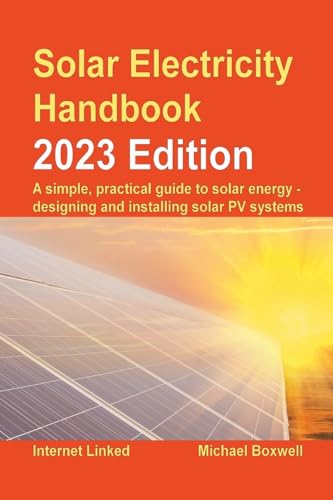
Solar Electricity Handbook - 2023 Edition: A simple, practical guide to solar energy – designing and installing solar photovoltaic systems: Boxwell, Michael
Solar Electricity Handbook - 2023 Edition: <strong>A simple, practical guide to solar energy – designing and installing solar photovoltaic systems</strong> [Boxwell, Michael] on Amazon.com. *FREE* shi
Check Price on AmazonKey climate considerations for solar in Louisiana:
- Heat and humidity: Module output declines about 0.3–0.5% per °C above 25°C (module temperature coefficient). Summer heat lowers instantaneous output but the annual total remains strong. Prioritize high-temperature performance (lower temperature coefficient) and adequate roof airflow.
- Hurricanes and wind: Robust mounting is essential. Look for systems engineered to local wind codes (e.g., ASCE 7-16) with uplift calculations, more attachment points at roof edges and corners, stainless hardware, and continuous rail. A properly engineered system can withstand hurricane-force winds; post-storm field data from Florida and Puerto Rico show well-installed arrays perform comparably to the roof itself (NREL, DOE disaster-resilience briefs).
- Hail and corrosion: Many Tier 1 modules carry IEC 61215 hail resistance ratings; coastal homes should favor marine-grade fasteners and anodized aluminum with anti-corrosion coatings. Ask installers about coastal warranties.
If you’re comparing across the Gulf and Southeast, also see our state guides for policy and cost differences: Solar in Florida: Costs, Incentives & Top Installers (2026), Solar in Georgia: Costs, Incentives & Top Installers (2026), and Solar in Arkansas: Costs, Incentives & Top Installers (2026).
Average cost of solar panels in Louisiana (2026) and price-per-watt breakdown
Nationally, residential solar averaged around $2.95–$3.25/W before incentives in recent SEIA/Wood Mackenzie reports (2024). Louisiana quotes are typically modestly below national averages due to labor and permitting dynamics. As of early 2026, competitive bids we track and marketplace data suggest:
- Typical installed price: ~$2.50–$3.25 per watt (before incentives)
Example system budgets:
- 6 kW system: $15,000–$19,500 before ITC; $10,500–$13,650 after 30% ITC
- 8 kW system: $20,000–$26,000 before ITC; $14,000–$18,200 after 30% ITC
What drives Louisiana price-per-watt:
- Hardware: modules (
$0.35–$0.55/W), inverters/microinverters ($0.20–$0.45/W), racking and balance-of-system (~$0.15–$0.30/W) - Soft costs: design, permitting, interconnection, overhead, and customer acquisition ($1.30–$1.80/W per LBNL Tracking the Sun trends)
- Complexity: steep or fragile roofs, long wire runs, service upgrades, hurricane-rated mounting packages, and batteries add cost
Battery storage (optional): Add ~$11,000–$16,000 for a 10–13.5 kWh battery installed before incentives; the 30% ITC also applies to standalone batteries from 2023 onward (IRA). In Louisiana, batteries can materially improve self-consumption and provide outage resilience during hurricanes.
Louisiana solar incentives: state tax credits, rebates, net metering, and SRECs
State incentives
- State tax credits: Louisiana’s prior residential solar tax credit expired several years ago. There is currently no statewide solar income tax credit in effect (DSIRE; Louisiana Department of Revenue).
- Sales/property tax: Louisiana does not offer a uniform statewide sales or property tax exemption for residential solar. Property assessment is local; adding solar may increase assessed value—ask your parish assessor how PV is treated.
- Local rebates: Periodic utility or municipal rebates may appear for energy efficiency or demand response (smart thermostats, insulation). Direct solar rebates are uncommon; check DSIRE and your utility.
Net metering and export compensation
- Status: The Louisiana Public Service Commission (LPSC) closed retail-rate net metering to new applicants in 2019–2020 dockets. Existing net-metered systems were typically grandfathered for a defined period (often 15 years). For new systems, utilities compensate exported energy at an avoided-cost (wholesale-like) rate set by each utility, which is significantly lower than retail rates.
- What it means for your bill: Self-consumed solar generation offsets your usage at the full retail rate; excess exports earn a credit around a few cents per kWh (varies by utility and time of year). Designing for higher self-consumption—through right-sizing, smart controls, and/or adding a battery—improves savings.
- Utility-specific rules: Entergy Louisiana, Cleco, SWEPCO, and electric cooperatives follow LPSC-approved interconnection and compensation tariffs. Review your utility’s latest rider and application forms for exact credit rates, meter fees, and any external disconnect requirements.
SRECs (Solar Renewable Energy Certificates)
- Louisiana has no binding renewable portfolio standard (RPS) and no active SREC market for residential customers. You won’t earn SREC income as in states with RPS-driven certificate programs.
Federal ITC and how it applies to Louisiana homeowners
The federal Residential Clean Energy Credit (the ITC) equals 30% of eligible project costs for systems placed in service through 2032, stepping down after 2032 unless extended (IRS; IRA).
What qualifies:
- Solar PV equipment and labor (modules, inverters, racking, wiring)
- Energy storage (e.g., batteries) installed with or without solar from 2023 onward
- Main service panel upgrades only if required for the solar/battery installation
- Roofing costs strictly necessary to install solar (flashing, mounts) may qualify; general roof replacement does not
How it works:
- Nonrefundable credit applied against your federal income tax liability; any unused amount can generally be carried forward to future tax years
- Available to owners of the system on a primary or secondary residence in the U.S. (renters cannot claim unless they own the system)
- Leases and PPAs: The third-party owner claims the ITC, often reflected in lower payments to you
Battery bonus in Louisiana: With export credits low, a battery sized to your evening load can raise the self-consumption fraction dramatically. The 30% ITC on storage can materially reduce payback time while providing storm backup.
Best solar installers and companies serving Louisiana
Louisiana’s solar market includes national brands and long-standing local specialists with hurricane-hardened design experience. Always get at least three quotes and compare equipment, warranties, and mounting details. A non-exhaustive list to start your vetting:
- ADT Solar (formerly Sunpro Solar): Founded in Louisiana, now national. Offers Enphase microinverters and mainstream module options; strong workmanship warranties and multiple financing paths.
- Solar Alternatives, Inc. (New Orleans; Gulf South): Residential and commercial focus; known for custom engineering, Tesla Powerwall and Enphase storage certifications, and complex rooftops.
- PosiGen (Louisiana-based): Lease model oriented to low-to-moderate-income households; bundles energy efficiency with rooftop solar; fixed monthly payment simplicity.
- Joule Energy (New Orleans): Regional installer with commercial and residential portfolios; emphasizes quality racking and coastal durability.
- South Coast Solar (Gulf-region): Experience with premium high-efficiency modules and battery integrations; active across Louisiana and neighboring states.
- Solar Power of Louisiana (Baton Rouge area): Local residential installer; check NABCEP credentials, structural engineering approach, and service timelines.
- Regional/national entrants: Some national firms operate in parts of Louisiana; verify local office presence, permit familiarity, and hurricane-specific mounting practices before signing.
How to choose well in Louisiana
- Certifications: Seek NABCEP-certified PV Installation Professional leadership and licensed electricians on staff.
- Equipment: High-temp performance modules (lower temperature coefficients), microinverters or shade-tolerant string inverters with MLPEs, stainless or marine-grade fasteners, wind-engineered racking.
- Warranties: 25-year module performance, 10–25-year product warranties, 10+ year workmanship. Ask for wind-uplift engineering letters and roof penetration details.
- Service and monitoring: App-based monitoring (e.g., Enphase, SolarEdge), clear service response times, and proactive storm-readiness guidance.
- Financing: Compare cash, low-APR secured loans, and leases/PPAs; align term length with equipment warranty.
Equipment picks backed by data
- High-efficiency panels: Based on efficiency ratings around 21–22% and strong temperature coefficients, options like REC Alpha Pure, Qcells Q.TRON, or comparable modules represent solid value. If you’re shopping, REC Alpha Pure and Qcells Q.TRON BLK consistently price well versus performance tiers.
- Inverters: Microinverters such as Enphase IQ8 series enable per-panel optimization and sunlight backup modes; string inverters with DC optimizers (SolarEdge) can be cost-effective on simple roofs.
- Batteries: For resilience and higher self-consumption, 10–13.5 kWh units are common. The Tesla Powerwall 3 integrates an inverter with 13.5 kWh usable capacity and up to 11.5 kW peak power, while the Enphase IQ Battery 5P modular system allows phased expansion—both pair well with Louisiana load profiles and qualify for the 30% ITC.
ROI and payback period for solar in Louisiana
Because export credits are at avoided-cost rates rather than retail, savings hinge on how much solar you use on-site. Below are illustrative scenarios using NREL PVWatts-style production and EIA pricing. Your results will vary based on roof, shading, rates, utility rules, and consumption.
Assumptions
- 8 kW DC system in Baton Rouge
- Annual production: ~12,000 kWh (1,500 kWh/kW-year midpoint)
- Retail electricity rate: $0.125/kWh (EIA LA average around 2023)
- Export credit (avoided cost): $0.04/kWh (illustrative; check your utility)
- System cost: $2.75/W → $22,000 before ITC; $15,400 after 30% ITC
Case A: No battery, 60% self-consumption
- Self-consumed: 7,200 kWh × $0.125 = $900/year
- Exported: 4,800 kWh × $0.04 = $192/year
- First-year bill reduction: ~$1,092
- Simple payback: ~$15,400 / $1,092 ≈ 14.1 years
Case B: Add 10–13.5 kWh battery, raise self-consumption to 85%
- Self-consumed: 10,200 kWh × $0.125 = $1,275/year
- Exported: 1,800 kWh × $0.04 = $72/year
- Incremental battery cost (after 30% ITC on storage): ~$8,400 (assuming $12,000 installed)
- Combined first-year bill reduction: ~$1,347
- Simple payback (PV + battery): ~$23,800 / $1,347 ≈ 17.7 years
Case B often looks longer on simple payback but includes resilience value during outages. If your utility offers time-varying rates or critical-peak credits, or if retail rates rise faster than inflation, battery economics can tighten. Many households model a hybrid: right-size the array for daytime loads and add a modest battery for outages and evening peaks.
Leases and PPAs
- With third-party ownership, you typically see immediate bill savings (a lower monthly payment than your current bill) in exchange for forgoing tax credits and some long-term upside. In Louisiana, lease/efficiency bundles (PosiGen) can be attractive for households without tax appetite.
Rule of thumb
- Cash purchases in Louisiana today often pencil to 11–16 years simple payback, depending on self-consumption, system price, shading, and rate escalation. Well-priced systems on sunny roofs with good on-site usage land on the faster end. Lenders and installers should provide cash flow models; verify export credit assumptions.
Louisiana-specific permitting, HOA rules, and interconnection process
Permitting (AHJ)
- Louisiana permitting is local (city/parish). Expect electrical and structural reviews; hurricane-prone zones scrutinize wind uplift details. Provide stamped structural letters when requested, equipment spec sheets, site plan, and one-line diagrams.
- Timelines: 1–4 weeks for most residential permits, faster in smaller jurisdictions; longer if roof upgrades are needed.
HOAs
- Louisiana does not have a widely cited statewide solar rights statute akin to those in some neighboring states. HOA covenants vary. Many HOAs require architectural review and allow “reasonable” restrictions (placement, color, conduit routing). Always secure written approval before pulling permits and ask your installer to map out a roof layout that meets aesthetic rules while preserving production.
Interconnection (utility)
- Utilities: Entergy Louisiana, Cleco, SWEPCO, plus co-ops (e.g., DEMCO) serve most regions. Each maintains an interconnection application process aligned with LPSC rules.
- Common Level 1 pathway: For systems ≤25 kW, expect a streamlined application, certificate of insurance (if required), a manual AC disconnect near the meter (some utilities), and a bi-directional meter swap.
- Fees and timing: Modest application fees are common (often ~$25–$100). Review timelines vary; many approvals arrive within 10–30 business days once the permit is complete and inspection passes.
- Metering and billing: You’ll be placed on an eligible tariff for distributed generation; self-consumption offsets retail energy, and excess exports are credited at the avoided-cost rate defined in the tariff. Confirm whether credits roll over monthly or are cashed out annually.
Storm-readiness checklist with your installer
- Wind engineering letter specifying design wind speed and uplift calculations
- Attachment count and spacing for edge/corner zones; stainless or coated hardware
- Conduit anchoring and roof penetration flashing details
- Battery backup circuits for critical loads (refrigeration, lighting, internet, sump pumps, mini-split)
- Surge protection and whole-home transfer equipment as needed
FAQ: common questions about going solar in Louisiana
Are solar panels worth it in Louisiana? Often, yes—if you have a sunny roof, plan to self-consume much of your solar, and secure competitive pricing. Paybacks frequently fall between 11 and 16 years for cash purchases, faster on energy-hungry homes or when paired with batteries to increase self-use.
Does Louisiana still have net metering? Retail-rate net metering closed to new applicants. New systems receive avoided-cost credits for exported power. Existing net-metered customers are typically grandfathered under prior rules for a set term. Check your utility’s latest rider.
How much solar do I need to offset my usage? A typical Louisiana household uses 12,000–15,000 kWh/year (EIA). In Baton Rouge, 1 kW of PV generates roughly 1,450 kWh/year. Offsetting 80% of 14,000 kWh may take around 7.7 kW—adjust for roof orientation, shading, and self-consumption.
Will solar help during hurricanes and outages? Yes, if you include a battery or specialized inverter. Standard grid-tied systems shut off when the grid is down (anti-islanding). A battery-backed system can power critical loads for hours to days depending on battery size and weather.
Do I need to replace my roof first? If your roof has <10 years of life left, consider reroofing before or with solar. It’s often cheaper to coordinate the work once. Only the roofing work necessary to install solar is ITC-eligible; general reroofing is not.
How do high temperatures affect performance? Panels lose a fraction of output as they heat up—roughly 0.3–0.5% per °C above 25°C. Choosing modules with better temperature coefficients and ensuring airflow under the array helps in Louisiana summers.
Which direction should panels face? South-facing roofs at 15–30° tilt maximize annual production. West-facing can better align with late afternoon cooling loads. Installers can model outputs by roof plane.
What maintenance is required? Solar is low-maintenance. Rinse pollen/dust buildup if production drops; avoid pressure washing. Monitor system output via app and schedule warranty service if you see sustained underperformance.
Will my homeowner’s insurance change? Many insurers cover rooftop PV as part of the dwelling; premiums may rise modestly due to increased replacement cost. Ask your agent about coverage, wind/hail endorsements, and battery riders.
Can ground mounts work in flood-prone areas? Yes—elevated ground mounts with helical piles or deep-set posts can be engineered for local soil and flood standards. Ensure electrical equipment is above expected flood levels.
What brands are best for Louisiana? High-efficiency, low-temp-coefficient modules (e.g., REC Alpha, Qcells Q.TRON) and reliable inverters (Enphase microinverters or SolarEdge with optimizers). For storage, Enphase IQ Battery 5P and Tesla Powerwall 3 are widely supported, ITC-eligible, and hurricane-tested across the Gulf region.
Practical steps for homeowners
- Pull a year of utility bills and note kWh usage by month.
- Get three site-specific quotes (ask for NREL PVWatts-based production estimates and an interconnection tariff summary).
- Compare module efficiency, inverter type, wind-uplift engineering, warranties, and total cost per watt.
- Test scenarios: solar-only vs. solar + battery, 60% vs. 85% self-consumption.
- Confirm HOA approval steps and your AHJ’s permit timeline.
- Verify utility export credit rates and any meter or monthly fees.
Where solar in Louisiana is heading
- Design for self-consumption: With avoided-cost export credits, right-sizing arrays and adding smart controls or modest storage will be standard practice.
- Storage adoption: As standalone storage qualifies for the 30% ITC, battery attachment rates are rising nationally (SEIA/WoodMac) and are poised to accelerate along the Gulf Coast for resilience.
- Softer costs, faster timelines: Digital permitting, pre-approved plan sets, and standardized interconnection can trim weeks off projects as utilities modernize processes.
- Module and inverter supply: Global module capacity expanded sharply 2023–2025 (IEA PV market reports). Expect continued access to 21–23% efficient modules at competitive prices, with microinverter and hybrid inverter options broadening.
With strong sun, improving equipment, and a 30% federal credit, solar in Louisiana can deliver long-term bill stability and critical backup—especially when systems are engineered for hurricane winds and optimized for on-site consumption. The right installer will tailor your design to local rules, your roof, and your family’s energy profile.

Emporia Gen 2 Smart Home Energy Monitor with 16 50A Circuit Level Sensors | Real Time Electricity Monitor/Meter | Solar/Net Metering - Amazon.com
View on Amazon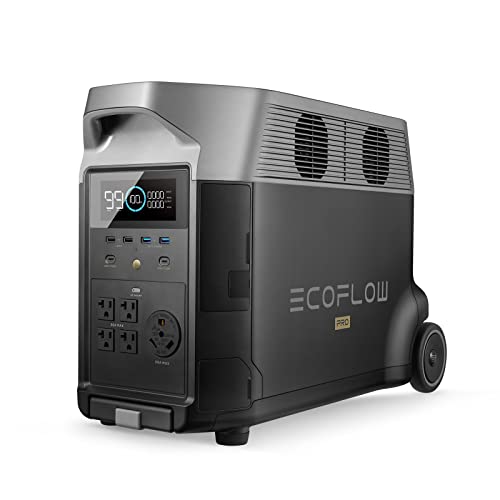
EF ECOFLOW Portable Power Station 3600Wh DELTA Pro, 120V AC Outlets x 5, 3600W, 2.7H Fast Charge, Lifepo4 Power Station, Solar Generator for Home Use, Power Outage, Camping, RV, Emergencies : Patio, Lawn & Garden
<strong>Fully recharge the lifepo4 battery in 1.8 hrs with 240V outlets(3000W), 2.7 hrs with 1800W wall outlets or solar charged in 2.8 hours with 4*400W solar panels</strong> thanks to the industry-l
Check Price on AmazonRecommended Products
Solar Electricity Handbook - 2023 Edition: A simple, practical guide to solar energy – designing and installing solar photovoltaic systems: Boxwell, Michael
Solar Electricity Handbook - 2023 Edition: <strong>A simple, practical guide to solar energy – designing and installing solar photovoltaic systems</strong> [Boxwell, Michael] on Amazon.com. *FREE* shi
Emporia Gen 2 Smart Home Energy Monitor with 16 50A Circuit Level Sensors | Real Time Electricity Monitor/Meter | Solar/Net Metering - Amazon.com
See how much electricity your home is using anywhere, anytime. ... <strong>Add individual 50A sensors to your Vue to monitor up to 16 individual circuits</strong> — providing accurate energy use for t
EF ECOFLOW Portable Power Station 3600Wh DELTA Pro, 120V AC Outlets x 5, 3600W, 2.7H Fast Charge, Lifepo4 Power Station, Solar Generator for Home Use, Power Outage, Camping, RV, Emergencies : Patio, Lawn & Garden
<strong>Fully recharge the lifepo4 battery in 1.8 hrs with 240V outlets(3000W), 2.7 hrs with 1800W wall outlets or solar charged in 2.8 hours with 4*400W solar panels</strong> thanks to the industry-l