
Tesla Powerwall in Mississippi: Cost, Availability & Is It Worth It?

Mississippi homeowners are asking a practical question right now: is a Tesla Powerwall in Mississippi worth it for backup and bill savings? With Gulf storms driving more interest in home resilience and with the 30% federal tax credit now applying to standalone batteries, storage is moving from “nice-to-have” to a serious consideration. The typical U.S. home battery installation cost ranged roughly $1,000–$1,300 per kWh in 2024, according to marketplace data from EnergySage, putting an installed 13.5 kWh unit in the $13,500–$17,500 range before incentives. At the same time, Mississippi’s average residential electricity price hovers around 12 cents/kWh (EIA), and net metering here is closer to net billing at avoided-cost credits—meaning batteries can increase the value of your solar by boosting self-consumption.
This guide breaks down specifications, realistic installed costs, Mississippi incentives and utility rules, how the Powerwall pairs with solar, plus alternatives and FAQs—so you can decide if storage pencils out for your home.
By the Numbers: Mississippi + Powerwall
- Typical battery size: 13.5 kWh usable per Tesla unit (Tesla product specifications)
- Typical installed cost (1 unit): about $12,000–$16,000 in Mississippi, project-dependent (industry marketplace data, installer quotes)
- Federal incentive: 30% Residential Clean Energy Credit for batteries ≥3 kWh (U.S. Treasury/IRS, Inflation Reduction Act)
- Mississippi retail electricity: ~12¢/kWh in 2023 (EIA)
- Export credit for solar: utilities commonly credit at avoided-cost rates, not full retail (Mississippi PSC net billing rules)
Tesla Powerwall overview: specs, capacity, and how it works
Tesla sells two current Powerwall variants in the U.S. market:
- Powerwall 2 (AC-coupled): 13.5 kWh usable capacity; multiple units can be stacked; integrates with the Tesla Backup Gateway for islanding during outages.
- Powerwall 3 (integrated inverter): 13.5 kWh usable; integrates solar inverter and battery in one enclosure for new builds or solar retrofits where replacing/adding an inverter makes sense. It’s designed for higher backup power capability compared with Powerwall 2. (See Tesla’s published specifications.)

Solar Electricity Basics: A Green Energy Guide: Chiras, Dan
Permits, covenants, utility ... the introduction you need-no PhD required! Dan Chiras is an <strong>internationally acclaimed author who has published over 24 books, including The Homeowner's Gui
Check Price on AmazonCore concepts
- Energy vs. power: Energy (kWh) is how much stored electricity you have; power (kW) is how fast you can deliver it. A Powerwall’s 13.5 kWh can run a 1 kW load for ~13.5 hours, or a 2 kW load for ~6–7 hours, minus conversion losses. Tesla systems can stack multiple units to increase both total energy and available power.
- Round-trip efficiency: The share of stored energy you get back after charging and discharging. Tesla reports ~90% round-trip efficiency, typical for lithium-ion systems.
- Backup operation: When the grid fails, the Powerwall and Backup Gateway automatically island your home circuits in under a second. Critical loads—refrigeration, lights, internet, some outlets, and (with adequate sizing) well pumps or HVAC—continue running.
- Smart controls: In the Tesla app you can set modes such as Backup-Only, Self-Powered (maximizes use of your solar), and Time-Based Control (optimizes for time-of-use prices). The system can forecast solar production and household demand to prioritize charging/discharging.
- Warranty: 10 years; commonly warranted to retain a percentage of original capacity at year 10. See Tesla’s warranty terms for exact conditions.
What one unit realistically backs up
- Essentials: fridge/freezer, lights, networking, small appliances, garage door, well pump (check starting surge), window A/C or mini-split.
- Central HVAC: may require additional units or soft starters due to compressor surge current; Powerwall 3’s higher backup power helps here, but a site assessment is key.
Powerwall pricing in Mississippi including installation costs
Installed costs vary with service panel upgrades, trenching, wall reinforcement, permits, and whether you’re integrating with existing solar or adding new PV.
Typical ranges seen in Mississippi bids (late 2024–early 2025):
- Single Powerwall 2 or 3 installed: $12,000–$16,000 before incentives
- Each additional unit in the same project: +$7,000–$9,500 incremental, depending on balance-of-system work
- Optional smart panel (load management) or critical loads subpanel: +$1,500–$4,000
Cost drivers
- AC vs. integrated inverter: Retrofitting a Powerwall 2 to an existing solar array can be straightforward if your current inverter plays nicely; Powerwall 3 can reduce component count when you need a new or replacement inverter.
- Electrical upgrades: Older homes may need a service upgrade or main panel replacement to meet UL 9540 and fire code clearances, which can add $1,500–$4,000.
- Labor and permitting: Mississippi labor costs are generally lower than coastal metros, but rural travel time and permitting reviews can add to timelines.
Federal savings example (standalone battery)
- Installed price: $14,000
- 30% Residential Clean Energy Credit: −$4,200
- Net after federal credit: $9,800
Note: The federal credit is a tax credit (not a rebate) under Internal Revenue Code Section 25D; consult a tax professional to confirm eligibility for your situation.
Mississippi battery storage incentives: state rebates, SGIP, utility programs
What exists—and what doesn’t—in Mississippi:
- Statewide battery rebate: None as of 2025. The Database of State Incentives for Renewables & Efficiency (DSIRE) lists no Mississippi-specific incentive for residential batteries.
- SGIP: California-only. The Self-Generation Incentive Program does not apply in Mississippi.
- Federal 30% tax credit: Applies to batteries ≥3 kWh, whether or not you have solar (U.S. Treasury/IRS guidance following the Inflation Reduction Act).
- Net metering/net billing: Mississippi’s Public Service Commission modernized rules in 2022; most customers are credited for exported solar power at an avoided-cost rate (lower than retail). Some customers may see adders or limited incentives in specific circumstances, especially for low-to-moderate income solar adoption, but these policies target solar generation rather than batteries. Check your utility’s current rider and the PSC’s latest orders.
- Utility pilots: Some Mississippi utilities periodically test demand response or time-of-use (TOU) offerings. Battery-specific bill credits are uncommon today but may emerge as utilities seek flexible capacity.
Bottom line: In Mississippi, the major financial lever for a Tesla Powerwall is the 30% federal credit. Local utility rate design—especially export credits and any TOU spreads—determines the ongoing savings value.
How the Powerwall pairs with solar in Mississippi: backup vs. self-consumption
Because export credits are typically based on avoided-cost (often just a few cents per kWh), using a battery to shift your solar energy into the evening can improve value significantly compared with exporting midday.
Two primary value streams
- Backup resilience: Mississippi is exposed to hurricanes, severe thunderstorms, and tornadoes. The U.S. EIA reports U.S. customers experienced several hours of outage on average annually in recent years, with Gulf states seeing higher outage minutes during major events. A Powerwall keeps essentials powered; stacking multiple units can support larger loads.
- Self-consumption boost: If your retail rate is ~12¢/kWh and the export credit is ~3–5¢/kWh, each kWh you store and use later instead of exporting can be worth an extra ~7–9¢. With ~12 kWh of deliverable energy per full cycle (13.5 kWh × ~90% round-trip), that’s roughly $0.84–$1.08 per full daily cycle in added value.
Operating modes to know
- Self-Powered: Prioritizes charging from your solar and discharging at night. Best where export credits are low.
- Time-Based Control: Optimizes charge/discharge around TOU windows and anticipated solar output. Best where peak/off-peak prices differ.
- Backup-Only: Keeps the battery mostly full; ideal in storm season.
Practical tip: Pairing a battery with a smart load panel can stretch backup time by shedding big loads automatically. A modern smart panel like the Span Smart Panel lets you prioritize circuits dynamically through an app, often cheaper than oversizing your battery stack.
Mississippi utility rate structures and how Powerwall saves with time-of-use
Mississippi’s two large investor-owned utilities—Entergy Mississippi and Mississippi Power—plus TVA-served local power companies and numerous co-ops each publish distinct rate schedules.
What to look for in your tariff
- TOU availability: Some residential TOU riders exist, usually optional. Savings potential depends on the price spread. If peak is 17¢/kWh and off-peak is 10¢, the 7¢ spread can support modest battery arbitrage.
- Demand charges: Less common for residential, but a few co-ops and special riders include a kW demand component. Battery systems can clip short demand spikes, lowering demand charges.
- Net billing vs. net metering: If you’re credited for exports at avoided-cost rates (e.g., 3–5¢), the battery’s self-consumption strategy adds value even without TOU.
Simple payback math examples
- Self-consumption in net billing
- Assumptions: 12¢ retail, 4¢ export credit, 12 kWh delivered nightly.
- Value per cycle: (12¢ − 4¢) × 12 kWh = $0.96/day → ~$350/year if cycled most days.
- TOU arbitrage
- Assumptions: 7¢ peak/off-peak spread, 12 kWh delivered on peak days.
- Value per cycle: 7¢ × 12 = $0.84/day → ~$300/year for daily cycling.
- Outage value
- Harder to price. The “value of lost load” for refrigerated food, remote work, medical devices, sump/well pumps, or HVAC can justify the system even if pure bill savings are modest. Mississippi’s storm exposure makes resilience a primary driver.
Takeaway: In Mississippi, bill savings from a Powerwall alone are typically modest because retail rates are relatively low and TOU spreads are often narrow. The strongest financial case stacks the 30% federal credit, low solar export rates favoring self-consumption, and resilience benefits.
Powerwall availability and certified installers in Mississippi
- Availability: Tesla ships Powerwall nationwide. Supply tightened during 2021–2022 but improved through 2024. Typical lead times in Mississippi today are 4–12 weeks from contract to commissioning, depending on permitting and any panel upgrades.
- Installers: You can buy through Tesla’s own channel or a Tesla Certified Installer. Mississippi has certified installers serving the Jackson metro, Gulf Coast, Hattiesburg, and North Mississippi/Golden Triangle. Ask for proof of Tesla certification, NABCEP credentials, and recent storage projects.
- Site readiness: Install in a shaded, well-ventilated garage or exterior wall meeting Tesla and fire code clearances. Mississippi heat and humidity make indoor or shaded locations preferable for longevity.
- Interconnection and permits: Your installer will handle utility approval and local AHJ permits. Batteries are listed to UL 9540; your jurisdiction may also require UL 9540A test documentation and NEC 706/705 compliance.

Emporia Vue 3 Home Energy Monitor - Smart Home Automation Module and Real Time Electricity Usage Monitor, Power Consumption Meter, Solar and Net Metering for UL Certified Safe Energy Monitoring - Amazon.com
View on AmazonUseful add-ons
- Circuit-level monitoring helps tune your battery strategy. The Emporia Vue Energy Monitor is cost-effective, giving real-time circuit data that can reveal which loads to put on a critical loads panel.
Alternatives to Powerwall available in Mississippi: Enphase, LG, Generac
Powerwall is popular, but it’s not the only high-quality option. The best choice depends on whether you have Enphase microinverters, want higher backup power, or need modular expansion.
Enphase IQ Battery 5P/10 (modular AC-coupled)
- Specs: IQ Battery 5P is ~5 kWh per unit; two units form the 10 kWh configuration; high power per kWh with fast discharge capability. Well-suited to homes with IQ8 microinverters.
- Pros: Tight integration with Enphase solar, granular load control via the app, good surge handling.
- Cons: May require more units to match Powerwall’s total energy.
- Consider: Based on power density and microinverter integration, the Enphase IQ Battery 5P is strong value for Enphase solar owners.
LG Energy Solution RESU Prime 10H/16H (DC-coupled)
- Specs: 10–16 kWh usable; pairs with compatible hybrid inverters (SolarEdge, SMA, others). DC-coupled efficiency is strong for new solar builds.
- Pros: High usable capacity, compact footprint.
- Cons: Requires compatible inverter; retrofit is more complex than AC-coupled options.
Generac PWRcell (modular DC-coupled)
- Specs: Configurable from ~9–18 kWh per cabinet; notable for high backup power with larger stacks.
- Pros: Strong whole-home backup potential; integrated ecosystem with PWRmanager load control.
- Cons: Best suited to new PV installs or inverter replacements.
Selection tips
- Retrofitting existing solar? AC-coupled systems (Powerwall 2/3 in AC mode, Enphase) are usually simpler.
- Want whole-home backup including large central A/C? Prioritize higher continuous and surge power, multiple batteries, and consider a smart panel for load management.
- Value engineering: Don’t oversize day-one. Many systems are expandable—start with one or two units and add later as your needs grow.
FAQ: common questions about Tesla Powerwall in Mississippi
Is a Tesla Powerwall eligible for the 30% federal tax credit in Mississippi?
- Yes. Under the Inflation Reduction Act, standalone residential energy storage systems of 3 kWh or more qualify for the 30% Residential Clean Energy Credit. Consult your tax advisor for specifics.
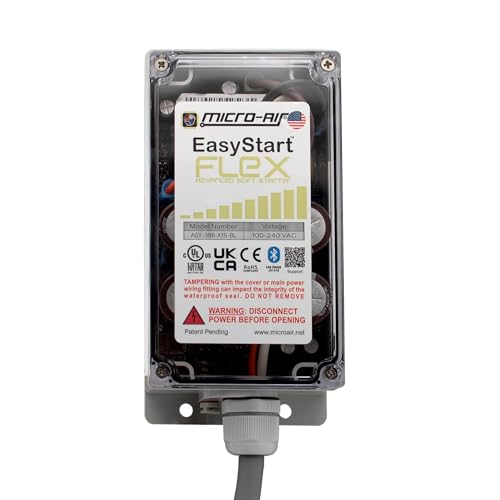
MICRO-AIR EasyStart 368 Bluetooth Soft Start Kit for Home Air Conditioner, RV & Commercial Use, Works with Generators, Reduces Power Surge, Efficient Start-Up - Up to 2-3.5 Tons(ASY-368-X48 BlueTooth) : Automotive
View on AmazonWill a Powerwall work without solar?
- Yes. Standalone operation is supported. The battery can charge from the grid and provide backup or TOU optimization. Pairing with solar boosts resilience during extended outages.
How many Powerwalls do I need for a Mississippi home?
- One unit (13.5 kWh) covers essentials for many homes. Two or more may be needed for larger loads, central HVAC, or multi-day outages. A site visit with interval load data is the best sizing method.
Can a Powerwall run my central air conditioner?
- Often yes with sufficient units and appropriate setup. Compressor inrush can be high; Powerwall 3’s higher backup power and/or a soft starter improve performance. Your installer should test and verify.
What about Mississippi’s heat and humidity?
- Tesla specifies an operating range roughly from near-freezing to hot summer conditions; thermal management is built-in. Still, shaded or indoor locations tend to be better for longevity and performance.
Will a Powerwall lower my bill if I don’t have TOU rates?
- Some, mostly through increased self-consumption of solar in a net-billing setup where export credits are low. Without TOU, pure arbitrage savings are limited on flat rates.
How long is the warranty and what does it cover?
- Tesla’s limited warranty is 10 years with an energy throughput/capacity retention clause. Review the official warranty document for details on cycles, capacity minimums, and exclusions.
What happens during an outage?
- The system isolates your home in a fraction of a second. Solar (with compatible configuration) keeps charging the battery during daylight. You manage loads to extend runtime.
How long does installation take?
- After contract, expect 1–3 months for site survey, utility approval, permitting, installation, and inspection. The physical install often takes 1–2 days.
Should I consider a smart panel?
- Yes. Smart load control can often deliver more resilience per dollar than adding another battery. The Span Smart Panel or similar load management products let you prioritize essentials dynamically.
What about whole-home generators?
- Some Mississippi homeowners choose a hybrid approach: a modest battery for seamless outages and solar self-consumption, plus a generator for multi-day storms. If you go this route, ensure proper transfer switching and code compliance.
Practical implications for Mississippi homeowners
- If your primary goal is resilience, a single Powerwall plus smart load management can keep essentials running through common outages. Add units if you want central HVAC or multi-day autonomy.
- If your goal is savings, verify your utility’s TOU spread and export credit. In Mississippi’s common net-billing design, shifting solar to evening self-use often beats exporting.
- The 30% federal credit is the key incentive. Mississippi has no statewide battery rebate today; budget accordingly.
- Ask installers to model scenarios: backup-only, self-consumption, and time-based control. Request a bill savings estimate with conservative assumptions (e.g., 80–90% daily cycling, realistic round-trip efficiency, and your actual TOU spread/export rate).
Where policy and technology are heading
- More flexible rates: As utilities value flexibility, expect more TOU and potential demand response payments for batteries. Several Southeastern utilities are testing residential demand response for peak shaving.
- Smarter orchestration: UL 9540-listed batteries, smart panels, and appliances will coordinate to ride through storms and shave peaks automatically. Vehicle-to-home (V2H) from bidirectional EVs could complement or substitute for one Powerwall in the late 2020s.
- Cost trajectory: Battery module prices fell sharply in 2H 2023 (BloombergNEF reported global pack prices down ~14% year-over-year), and balance-of-system costs are starting to follow. Mississippi homeowners should see steadier pricing and improved availability.
If you’re considering a Tesla Powerwall in Mississippi, get two or three quotes, ask each installer to run a utility-rate-specific savings model, and decide whether your top priority is outage protection, bill savings, or both. In this state, the strongest case usually combines the 30% federal credit, better value from self-consuming your solar, and the peace of mind of reliable backup when storms roll through.
Recommended Products
Solar Electricity Basics: A Green Energy Guide: Chiras, Dan
Permits, covenants, utility ... the introduction you need-no PhD required! Dan Chiras is an <strong>internationally acclaimed author who has published over 24 books, including The Homeowner's Gui
Emporia Vue 3 Home Energy Monitor - Smart Home Automation Module and Real Time Electricity Usage Monitor, Power Consumption Meter, Solar and Net Metering for UL Certified Safe Energy Monitoring - Amazon.com
<strong>Add individual 50A sensors to your Vue to monitor up to 16 individual circuits</strong> — providing accurate energy use for the appliances and equipment that is important to you. No guesswork.
MICRO-AIR EasyStart 368 Bluetooth Soft Start Kit for Home Air Conditioner, RV & Commercial Use, Works with Generators, Reduces Power Surge, Efficient Start-Up - Up to 2-3.5 Tons(ASY-368-X48 BlueTooth) : Automotive
COMPATIBILITY WITH GENERATORS: ... power-limited locations. This Easy Start flex home ac soft starter is <strong>compatible with 2-stage compressors and heat pump units</strong>, making it a versatile