
Solar in Mississippi: Costs, Incentives & Top Installers (2026)

Mississippi sits in the Gulf South’s solar sweet spot: strong sun, a long cooling season that rewards daytime generation, and growing utility-scale projects. Yet residential adoption has lagged peers because retail electricity is relatively inexpensive and the state uses net billing (credits at a lower rate than you pay) rather than full retail net metering. For homeowners who size systems well and maximize self-consumption, solar in Mississippi can still pencil out—especially with the 30% federal tax credit and utility incentives for distributed generation.
This 2026 guide breaks down solar in Mississippi—irradiance, costs, incentives, installers, interconnection, and payback—using current data from NREL, EIA, and the Mississippi Public Service Commission.
By the numbers: solar in Mississippi (2026)
- Peak sun hours: roughly 4.8–5.2 kWh/m²/day statewide; Jackson averages about 5.0 on fixed-tilt arrays (NREL PVWatts)
- Typical residential capacity factor: ~16–19% for roof-mounted systems (NREL modeling)
- Average Mississippi home electricity use: roughly 1,100–1,250 kWh/month (EIA residential consumption profiles)
- Average residential rate: ~12–14¢/kWh (EIA state electric rates, 2024–2025)
- Typical installed price: $2.40–$3.20 per watt (before incentives) for 2026 projects (NREL U.S. PV Cost Benchmark, recent bids)
- Federal tax credit: 30% through 2032 (Inflation Reduction Act)
- Net billing: credit for exports near avoided-cost energy rates; utilities may offer a per-kWh “DG adder” (Mississippi PSC distributed generation rules)
- Payback (with ITC): often 10–13 years when systems are right-sized and self-consumption is high; longer with low self-consumption
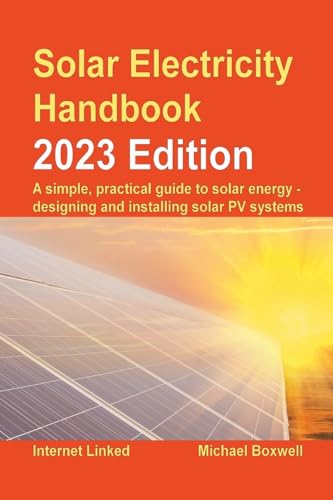
Solar Electricity Handbook - 2023 Edition: A simple, practical guide to solar energy – designing and installing solar photovoltaic systems: Boxwell, Michael
Solar Electricity Handbook - 2023 Edition: <strong>A simple, practical guide to solar energy – designing and installing solar photovoltaic systems</strong> [Boxwell, Michael] on Amazon.com. *FREE* shi
Check Price on AmazonSolar energy potential in Mississippi: sun hours, irradiance, and climate factors
Mississippi’s solar resource is competitive with the broader Southeast. NREL’s PVWatts estimates global horizontal irradiance in the 4.8–5.2 kWh/m²/day range across much of the state, translating to roughly 1,300–1,500 kWh of annual production per kW of DC capacity for well-sited, fixed-tilt arrays. In practice, roof pitch, azimuth (compass orientation), shading, and module temperature will nudge that output up or down.

Enphase ENPHASE IQ8PLUS-72-2-US IQ8+ ...
View on AmazonKey climate factors:
- Heat and humidity: High summertime temperatures reduce panel efficiency slightly (silicon panels lose ~0.3–0.5% output per °C above 25°C). High-efficiency modules with better temperature coefficients can mitigate losses.
- Hurricanes and wind: Gulf Coast counties should specify wind-uplift-rated racking and adhere to local wind-speed design requirements. Flashing and sealed penetrations protect against driving rain.
- Trees and shade: Mississippi homes often have mature trees. A shade analysis during site assessment is crucial; microinverters or DC optimizers can recover production on partially shaded arrays.
Production snapshot (illustrative):
- An 8 kW DC, south-facing system in central Mississippi with a 25–30° tilt will typically generate about 11,000–12,500 kWh/year (capacity factor ~16–18%), according to NREL PVWatts parametric runs.
Costs of solar in Mississippi (2026)
Residential solar in Mississippi typically runs $2.40–$3.20 per watt before incentives for standard roof-mounted systems. That implies pre-ITC sticker prices of:
- 6 kW: $14,400–$19,200
- 8 kW: $19,200–$25,600
- 10 kW: $24,000–$32,000
The 30% federal tax credit lowers net cost to:
- 6 kW: ~$10,080–$13,440
- 8 kW: ~$13,440–$17,920
- 10 kW: ~$16,800–$22,400
What drives the price-per-watt?
- Hardware (modules, inverters, racking, balance-of-system): roughly 40–50% of total cost
- Soft costs (design, permitting, interconnection, labor, overhead, customer acquisition): roughly 50–60%
NREL’s U.S. Solar Photovoltaic System and Energy Storage Cost Benchmark shows 2024–2025 residential all-in costs clustering near $3.00–$3.50/W nationally, with regional markets like Mississippi landing on the lower end when projects are straightforward and competition is healthy. Premium modules, complex roofs, long wire runs, or battery storage push costs up.
Equipment value picks (2026):
- High-efficiency, heat-tolerant modules: Based on temperature coefficients and field reliability, premium panels such as REC Alpha Pure-R and Qcells Q.TRON often deliver strong energy density on limited roof space.
- Inverters for shade and resilience: Rapid shutdown-compliant microinverters like Enphase IQ8 Series perform well on complex roofs and enable limited “sunlight backup” on select circuits when the grid is down.
Mississippi solar incentives: state tax credits, rebates, net metering, and SRECs
Mississippi does not currently offer a statewide personal income tax credit specifically for residential solar PV, and there is no SREC market because the state lacks a binding renewable portfolio standard. Incentives are primarily utility-administered and revolve around “distributed generation” (DG) programs and net billing rules overseen by the Mississippi Public Service Commission (PSC).
What to know in 2026:
- Net billing vs. net metering: Mississippi’s investor‑owned utilities (notably Entergy Mississippi and Mississippi Power) credit excess solar exports at an avoided-cost energy rate—typically several cents per kWh—rather than the full retail rate. Credits are settled monthly. This structure rewards self-consumption (using your solar as it’s produced) more than exporting.
- DG “adder” incentives: Under PSC-updated DG rules, utilities offer a per‑kWh adder on exported energy to improve project economics. The exact value, eligibility, and duration vary by utility tariff and may be updated periodically. Ask your installer to model your utility’s current adder and how long it applies.
- Low-to-moderate income (LMI) offerings: Utilities have provided additional incentives for qualifying LMI customers—such as an upfront rebate and/or enhanced export credit adders—subject to funding and caps. Availability changes; confirm with your utility or installer.
- Property and sales tax: Mississippi does not have a statewide residential solar property tax exemption or sales tax exemption earmarked specifically for PV as of 2026. Local assessment practices can vary—check with your county assessor and installer.
- Municipal and cooperative utilities: PSC rules primarily govern investor-owned utilities. Co-ops and municipal utilities may offer different DG terms or pilot programs; contact your provider directly.
Authoritative sources: Mississippi PSC distributed generation and interconnection rules; utility DG tariffs; U.S. EIA for rates; NREL for production factors.
If you’re near a state line, policies differ across the Gulf South. For neighboring programs and pricing, see our state guides for Solar in Louisiana: Costs, Incentives & Top Installers (2026), Solar in Alabama: Costs, Incentives & Top Installers (2026), or Solar in Arkansas: Costs, Incentives & Top Installers (2026).
Federal ITC and how it applies to Mississippi homeowners
The federal Residential Clean Energy Credit (often called the Investment Tax Credit, or ITC) remains at 30% for systems placed in service through 2032 (Inflation Reduction Act). Key points for Mississippi projects:
- What qualifies: Solar PV, balance-of-system components, and stand‑alone battery storage of 3 kWh or greater (installed 2023 onward) qualify at 30%.
- Basis and rebates: If you receive a utility or state rebate paid to you (or to the installer on your behalf), that rebate generally reduces your project’s tax credit basis. Performance-based payments (like per‑kWh credits) typically do not reduce basis, but may be taxable income. Consult a tax professional; see IRS guidance (e.g., Notice 2013‑70) for details.
- Carryforward: If the credit exceeds your federal tax liability this year, you can carry forward the unused amount to future tax years.
Stacking the ITC with Mississippi net billing and DG adders typically gets projects into a 10–13 year simple payback range when designed for high self-consumption and strong production.
Best solar installers and companies serving Mississippi
Mississippi’s installer market includes local specialists and regional firms that operate across the Gulf South. Always solicit multiple quotes and ask each company to model your actual interval usage (from a Green Button download or utility portal) under your specific net billing tariff.
What to look for:
- Licensing: Mississippi Board of Contractors license for electrical work; NABCEP-certified PV professionals are a plus.
- Local interconnection experience: Familiarity with Entergy Mississippi or Mississippi Power DG tariffs and application portals helps streamline approvals.
- Wind and weather expertise: Gulf-ready racking, sealed roof penetrations, and hurricane hardware where applicable.
- Equipment and warranties: Module and inverter brands with 25-year performance warranties; workmanship warranty of at least 10 years.
- Transparent production modeling: Use of NREL PVWatts or equivalent, with explicit assumptions on shading, losses, orientation, and degradation (typically ~0.5%/year).
Representative companies that have served Mississippi or neighboring markets:
- Regional players: ADT Solar (formerly Sunpro), Solar Alternatives (Gulf South), and other multi-state installers that cover Mississippi’s major metros.
- Local specialists: Mississippi-based electrical and solar contractors operating in Jackson, Gulfport–Biloxi, and Hattiesburg markets. Ask for recent customer references and utility interconnection experience.
- National platforms: Some national providers offer remote design with local install partners; verify who performs the actual installation and service.
Tip: Request at least three quotes with the same system size, module/inverter spec, and performance assumptions so you can make an apples-to-apples comparison. Consider value, not just price—experienced installers often save you time on permitting and interconnection.
ROI and payback period for solar in Mississippi
Because Mississippi uses net billing (not full retail net metering) and residential rates are modest by national standards, two variables dominate your economics: self-consumption and system cost.

Emporia Vue 3 Home Energy Monitor - Smart Home Automation Module and Real Time Electricity Usage Monitor, Power Consumption Meter, Solar and Net Metering for UL Certified Safe Energy Monitoring - Amazon.com
View on AmazonAssumptions for illustrative modeling (2026):
- System: 8 kW DC, $2.80/W before incentives ($22,400), 30% ITC applied (net $15,680)
- Production: 11,700 kWh/year (midpoint of NREL PVWatts range)
- Retail rate: 13¢/kWh
- Export credit: 4¢/kWh (avoided cost proxy; confirm your utility’s actual rate and any DG adder)
- Self-consumption share: varies by household (load shape, thermostat use, EV charging behavior)
Scenarios:
- High self-consumption (70% used on-site, 30% exported): Value = 0.70×$0.13 + 0.30×$0.04 = $0.103 + $0.012 = $0.115/kWh; annual savings ≈ $1,346; simple payback ≈ 11.6 years
- Moderate self-consumption (60% used, 40% exported): Value ≈ $0.11/kWh; annual savings ≈ $1,287; payback ≈ 12.2 years
- Low self-consumption (40% used, 60% exported): Value ≈ $0.098/kWh; annual savings ≈ $1,147; payback ≈ 13.7 years
Ways to boost returns:
- Load shifting: Run dishwashers, laundry, and pool pumps midday; program thermostats to pre‑cool in the afternoon using solar.
- EV charging: If you own an EV, daytime charging can dramatically raise self-consumption.
- Smart inverters and batteries: Batteries improve self-consumption and resilience. In Mississippi’s mostly flat rate structures, batteries rarely shorten payback on bill savings alone but are valuable for backup in storm season. Typical installed home battery costs run $10,000–$16,000 before the 30% ITC.
Equipment note: For homes prioritizing reliability and flexible backup, the Tesla Powerwall 3 or Enphase IQ Battery 5P paired with IQ8 microinverters are widely supported by Mississippi installers and deliver rapid shutdown compliance and robust monitoring.
Mississippi-specific permitting, HOA rules, and interconnection
Permitting and codes
- Jurisdiction: Mississippi permitting is local. Expect electrical and (if roof-mounted) building permits; fire setbacks may apply depending on the AHJ (authority having jurisdiction).
- Codes: Installers design to the National Electrical Code (NEC) as adopted by your locality and to applicable wind-load requirements (ASCE 7). Gulf Coast counties may have higher wind-speed design standards.
HOA considerations
- Solar rights: Mississippi does not have a statewide solar rights statute that uniformly limits HOA restrictions. Many HOAs allow solar with architectural approval on placement, conduit runs, and visibility from the street. Review your covenants, conditions, and restrictions (CC&Rs) early and submit a complete design package (site plan, elevations, spec sheets) to smooth approval.
Interconnection and net billing
- Process: Your installer submits the distributed generation application to your utility (e.g., Entergy Mississippi or Mississippi Power). Small residential systems typically follow a streamlined path if UL 1741‑SA/IEEE 1547‑compliant inverters are used.
- Size limits: Residential interconnection thresholds commonly allow systems up to 20 kW AC for fast‑track review; larger systems may require additional studies. Check your specific tariff.
- Timeline: From complete application to permission to operate (PTO), plan on 4–10 weeks depending on utility workload and meter change scheduling.
- Metering: Utilities install a bi‑directional meter for export tracking. Some may require a visible, lockable AC disconnect; your installer will include it if required.
- Tariff enrollment: You will be placed on the applicable DG/net billing tariff. The export credit rate and any DG adder are defined in that tariff.
Documentation to keep
- Final approved plans, permits, and inspection sign‑offs
- Utility interconnection agreement and PTO letter
- Equipment warranties and monitoring account credentials
FAQ: common questions about going solar in Mississippi
What’s the average cost of solar in Mississippi in 2026?
- Most homeowners see quotes between $2.40–$3.20 per watt before incentives, depending on roof complexity, equipment, and installer. A 7–9 kW system—the norm for Mississippi’s higher‑than‑average electricity use—typically nets $12,000–$20,000 after the 30% ITC.
Is there net metering in Mississippi?
- Mississippi uses net billing. Excess solar sent to the grid is credited at a utility‑defined avoided‑cost rate, not the full retail rate you pay. Some utilities offer a per‑kWh DG adder to improve the export value. This structure makes self‑consumption especially important.
Do I get SRECs for solar in Mississippi?
- Mississippi has no SREC market tied to a state renewable portfolio standard. Some third‑party aggregators may buy your environmental attributes for voluntary markets, but values are typically modest and not guaranteed.
How long is the payback?
- With the 30% ITC and strong self‑consumption (60–70%+), many projects land in the 10–13 year simple payback range. Projects with low self‑consumption or premium equipment can take longer.
Will a battery improve my ROI?
- In Mississippi’s mostly flat residential rate structures, batteries typically don’t shorten payback materially unless paired with high solar export penalties or frequent outages. They do increase resilience for hurricane season and qualify for the 30% ITC when installed stand‑alone or with PV.
Which panels and inverters work best in Mississippi’s heat?
- Look for modules with strong temperature coefficients (around −0.30 to −0.35%/°C) and high efficiency (21%+). Premium lines like REC Alpha Pure-R and Qcells Q.TRON are good examples. For complex roofs or partial shade, microinverters like Enphase IQ8 keep string-level issues from dragging down the whole system.
Can my HOA stop me from installing solar?
- Mississippi lacks a uniform solar rights law for HOAs, so rules vary by community. Many HOAs allow solar with reasonable design standards. Engage your HOA early and provide a complete, tidy plan set.
Are third‑party leases or PPAs available in Mississippi?
- Third‑party ownership options are less common in Mississippi due to the state’s regulatory landscape. Most homeowners purchase with cash or a loan. Ask installers which financing options they support and compare total lifetime costs, not just monthly payments.
What maintenance is required?
- Solar is low‑maintenance. Keep modules clear of heavy debris and schedule a periodic inspection (every 2–3 years) to check wiring, roof attachments, and production trends. Most systems include online monitoring for performance visibility.
How do I choose a system size?
- Start with 12 months of utility bills. Aim to offset your daytime load first; oversizing invites low‑value exports under net billing. Your installer should model multiple sizes to maximize lifetime net present value, not just kW.
Where is Mississippi solar headed?
- Expect steady residential adoption as hardware costs stabilize, DG adders mature, and homeowners optimize for self-consumption with smart appliances and EVs. Utility-scale solar will continue growing as developers tap Mississippi’s land, sun, and transmission access. NREL and EIA both project strong Southeastern solar growth through 2030.
Practical next steps
- Pull your interval usage data (if available) and at least three quotes based on the same assumptions.
- Ask each installer to show production, self-consumption, export value, and degradation over 25 years.
- Verify utility DG tariff, export credit, and any adder in writing before you sign.
If you’re moving or comparing across the region, programs and prices differ by state. See our neighboring guides for Solar in Alabama: Costs, Incentives & Top Installers (2026) and Solar in Louisiana: Costs, Incentives & Top Installers (2026) for side‑by‑side context.
Recommended Products
Solar Electricity Handbook - 2023 Edition: A simple, practical guide to solar energy – designing and installing solar photovoltaic systems: Boxwell, Michael
Solar Electricity Handbook - 2023 Edition: <strong>A simple, practical guide to solar energy – designing and installing solar photovoltaic systems</strong> [Boxwell, Michael] on Amazon.com. *FREE* shi
Enphase ENPHASE IQ8PLUS-72-2-US IQ8+ ...
Enphase · 240v · Solar · Hoymiles · Iq8 See more · Eligible for Free Shipping · Free Shipping by Amazon · Get FREE Shipping on eligible orders shipped by Amazon · Delivery Day · Get It by Tomorrow · D
Emporia Vue 3 Home Energy Monitor - Smart Home Automation Module and Real Time Electricity Usage Monitor, Power Consumption Meter, Solar and Net Metering for UL Certified Safe Energy Monitoring - Amazon.com
<strong>Add individual 50A sensors to your Vue to monitor up to 16 individual circuits</strong> — providing accurate energy use for the appliances and equipment that is important to you. No guesswork.