
Tesla Powerwall in Nebraska: Cost, Availability & Is It Worth It?

Nebraska homeowners are paying some of the lowest electricity rates in the country—typically 11–13¢/kWh, according to the U.S. Energy Information Administration (EIA). Yet outages from severe thunderstorms, ice, and high winds still threaten reliability. That’s why interest in the Tesla Powerwall in Nebraska is rising. With the 30% federal clean energy tax credit now applying to standalone batteries, and Tesla’s latest model delivering higher power, home storage has shifted from niche to practical.
Below, we break down specs, real installed costs in Nebraska, incentives, how batteries interact with local utility rates, availability and installers, and strong alternatives—so you can decide if a Powerwall fits your home.
By the numbers
- 13.5 kWh: Usable energy per Powerwall (Tesla spec)
- Up to ~11.5 kW: Backup power output for Powerwall 3 with integrated inverter (Tesla)
- 10 years: Warranty to 70% capacity retention (Tesla)
- 30%: Federal Investment Tax Credit (ITC) for batteries installed 2023–2032 (U.S. Treasury/IRS)
- 11–13¢/kWh: Average Nebraska residential electricity price (EIA, 2023–2024 range)
- 5–7 hours: Typical U.S. outage duration per customer annually, including major events (EIA)
- $11,500–$16,500: Typical all-in installed price per Powerwall in Nebraska before credits (market quotes)
Solar Electricity Handbook - 2023 Edition: A simple, practical guide to solar energy – designing and installing solar photovoltaic systems: Boxwell, Michael
Solar Electricity Handbook - 2023 Edition: <strong>A simple, practical guide to solar energy – designing and installing solar photovoltaic systems</strong> [Boxwell, Michael] on Amazon.com. *FREE* shi
Check Price on AmazonTesla Powerwall in Nebraska: specs, capacity, and how it works
A home battery stores electricity as chemical energy and converts it back to AC power when you need it. The latest Tesla Powerwall (often referred to as Powerwall 3) ships with an integrated solar-and-battery inverter that simplifies installation. Key details:
- Usable Capacity: 13.5 kilowatt-hours (kWh). One kWh powers a 1,000-watt device for one hour. A typical efficient home uses 20–30 kWh per day, so a single Powerwall often covers evening loads or a partial day of backup.
- Power Output: Up to roughly 11.5 kilowatts (kW) of continuous backup power with Powerwall 3’s integrated inverter, enough to start and run multiple large appliances simultaneously. Prior generations (Powerwall 2/+) typically provide 5 kW continuous and 7 kW peak.
- Round-Trip Efficiency: About 90%—the fraction of energy you get back after charging and discharging.
- Operating Environment: Indoor/outdoor rated; designed to function in cold climates with internal thermal management. Expect some efficiency and capacity derating at very low temperatures.
- Warranty: 10 years, typically guaranteeing at least 70% of original capacity at the end of term (Tesla warranty statement). Solar self-consumption and backup are standard use cases.
How it works:
- Solar charging: During the day, rooftop solar charges the battery first (if configured), then serves household loads, and exports excess.
- Time-shifting: The battery discharges later when solar drops or when grid prices are higher (on time-of-use rates).
- Backup: If the grid fails, a gateway isolates your home from the grid (islanding) and the Powerwall powers backed-up circuits or your whole home depending on system sizing.
Powerwall pricing in Nebraska, including installation costs
Installed Powerwall pricing varies with equipment (Powerwall model, backup gateway, smart load panel), electrical complexity (main panel upgrades, trenching, long conductor runs), and whether you add solar simultaneously. Based on Nebraska installer quotes we’ve reviewed and national averages from 2024–2025:
- Hardware: $8,500–$9,500 per Powerwall (Tesla-direct hardware pricing commonly falls in this band)
- Balance-of-System & Labor: $3,000–$6,000 per site (permits, gateway, wiring, commissioning, potential service panel upgrade)
- Typical All-In (1 unit): $11,500–$16,500 before incentives
- Additional Units: $8,500–$10,500 each incremental installed cost is usually lower because site work is already done
Federal ITC (30%): Applies to battery-only and solar-plus-battery systems in Nebraska through at least 2032. On a $14,000 install, the tax credit could reduce net cost to ~$9,800. Always consult a tax professional to confirm eligibility for your situation.
Neighbor comparisons: Installed costs in Nebraska are generally similar to Iowa and Kansas and sometimes a touch lower than mountain-west markets like Colorado, depending on labor and permitting. For regional context, see our guides for Tesla Powerwall in Iowa: Cost, Availability & Is It Worth It?, Tesla Powerwall in Kansas: Cost, Availability & Is It Worth It?, and Tesla Powerwall in Colorado: Cost, Availability & Is It Worth It?.
Nebraska battery storage incentives: state rebates, SGIP, utility programs
- State rebates: Nebraska does not currently offer a statewide battery rebate for residential customers. Check annually, as municipal and public power incentives can change.
- SGIP: California’s Self-Generation Incentive Program (SGIP) does not apply in Nebraska.
- Federal credit: The 30% ITC for standalone storage (under the Inflation Reduction Act) is the primary incentive statewide.
- Utility programs: Nebraska is unique in that most customers are served by public power utilities—OPPD (Omaha Public Power District), LES (Lincoln Electric System), NPPD (Nebraska Public Power District), and municipal/co-op providers. While we don’t see broad, published rebates for batteries across these utilities, watch for:
- Solar or electrification rebates (heat pumps, EV chargers) that can stack with batteries to improve whole-home economics.
- Optional time-of-use (TOU) or demand-based pilot rates where batteries can deliver savings by shifting or shaving peaks.
- Interconnection rules for solar-plus-storage, which can influence whether export from the battery is allowed.
Sources: U.S. Treasury/IRS guidance confirms standalone storage ITC eligibility beginning in 2023. Utility-specific incentive pages should be checked directly as offerings evolve.
How the Powerwall pairs with solar in Nebraska: backup vs. self-consumption
- Backup and resilience: For many Nebraska homeowners, resilience is the top driver. With thunderstorms, ice storms, and tornadoes, backup power that’s automatic and quiet is attractive. A single Powerwall can keep essentials running (fridge, lights, Wi‑Fi, sump pump, small HVAC loads). Two or more units are common for whole-home backup or homes with large AC or well pumps.
- Self-consumption and net metering: Nebraska’s net metering framework generally credits solar exports at or near retail within the billing period, though annual true-up and caps vary by utility. When export compensation is below your retail rate or capped annually, storing midday solar for evening use increases solar value.
- Solar sizing: Pairing 1–2 Powerwalls with a 6–10 kW solar array is common for a 2,000–2,500 sq. ft. home. The array needs enough surplus midday to fully recharge the battery on typical days. NREL’s PVWatts can estimate solar production by location; installers should model hourly generation against your loads.
- Smart loads: Using a smart load panel or subpanel to prioritize essential circuits can extend your backup runtime significantly. This is especially helpful in heat waves or cold snaps when HVAC dominates demand.
Nebraska utility rate structures and how Powerwall saves with time-of-use
Batteries save most when the difference between off-peak and on-peak rates (the TOU spread) is substantial, or when a residential demand charge applies (a fee based on your highest 15–30 minute demand in a billing period).
- TOU in Nebraska: Some public power districts offer optional or pilot TOU rates. Where available, spreads of 4–8¢/kWh between off- and on-peak are typical in the Midwest. On a 20 kWh daily shift, that’s $0.80–$1.60/day, or ~$24–$48/month in energy arbitrage before losses.
- Demand charges: A few municipal or co-op utilities in the region use residential demand charges. If your utility does, a Powerwall can “clip” peaks—turning on to keep your 15-minute maximum under a threshold. Savings depend on your appliances and behavior; high-amp events like EV charging, electric dryers, or electric resistance heat can drive demand peaks.
- Energy prices: With Nebraska’s average price around 11–13¢/kWh (EIA), pure arbitrage savings are modest compared with high-cost states. That makes resilience and solar value-stacking more compelling drivers than bill savings alone.
Illustrative TOU math:
- Assume on-peak 16¢, off-peak 10¢, battery RTE ~90%.
- Charge 13 kWh off-peak (useful discharge ~11.7 kWh after losses) and discharge on-peak daily.
- Gross spread: 6¢ × 11.7 kWh = $0.70/day → ~$21/month.
- Add demand-charge mitigation or backup value and the case can improve, but in many Nebraska scenarios, economics hinge on resilience plus the federal ITC.
Powerwall availability and certified installers in Nebraska
- Market availability: Tesla sells Powerwall in all 50 states. Nebraska customers can order directly from Tesla or work with Tesla-certified installers. Supply tightness eased in 2024–2025; typical lead times are now 4–10 weeks for battery-only, longer if paired with a new solar install.
- Installer landscape: Expect coverage in and around Omaha, Lincoln, Grand Island, and larger regional hubs, with traveling installers serving rural areas. Look for NABCEP-certified solar/storage contractors and ask for recent Nebraska references.
- Site requirements: A clear wall area roughly 45" × 30" per unit, adequate working clearances, and proximity to your main service panel. Outdoor installs should be shaded from direct sun when possible, and high-flood-risk areas should be avoided.
- Interconnection: Your utility must approve any grid-tied system. In some cases, utilities restrict battery export to the grid or require specific metering. Your installer should submit a line diagram and spec sheets for approval.
Alternatives to Powerwall available in Nebraska: Enphase, LG, Generac
Tesla is popular for its integrated ecosystem and strong power output, but reputable alternatives can fit better depending on your loads, existing solar inverter, or budget.
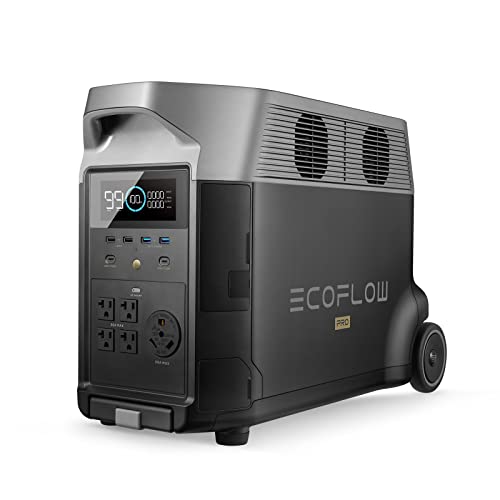
EF ECOFLOW Portable Power Station 3600Wh DELTA Pro, 120V AC Outlets x 5, 3600W, 2.7H Fast Charge, Lifepo4 Power Station, Solar Generator for Home Use, Power Outage, Camping, RV, Emergencies : Patio, Lawn & Garden
<strong>Fully recharge the lifepo4 battery in 1.8 hrs with 240V outlets(3000W), 2.7 hrs with 1800W wall outlets or solar charged in 2.8 hours with 4*400W solar panels</strong> thanks to the industry-l
Check Price on AmazonEnphase IQ Battery 5P/10/3T series
- Capacity: 5–10 kWh modules (stackable)
- Output: Up to 3.84–7.68 kW per cabinet depending on configuration
- Best for: Homes with existing Enphase microinverters; highly granular monitoring and rapid shutdown built-in
- Typical installed cost: ~$1,000–$1,300/kWh in the Midwest (varies by configuration)
- Practical pick: For Enphase-based systems, the Enphase IQ Battery 5P represents strong value and seamless integration.
LG Energy Solution RESU Prime 10H/16H
- Capacity: 9.6–16 kWh
- Output: 5–7 kW depending on model and inverter pairing
- Best for: Homeowners prioritizing compact footprint and established cell manufacturing pedigree
- Typical installed cost: Competitive with Tesla on a per-kWh basis for multi-battery systems
Generac PWRcell
- Capacity: Modular, typically 9–18 kWh per cabinet
- Output: 6–9 kW depending on module count and inverter
- Best for: Whole-home backup with smart load control; integrates well with automatic load shedding
- Note: If you’re also considering standby generators, Generac’s ecosystem can coordinate both.
Portable/expandable power stations (EcoFlow, Bluetti) are not permanent whole-home solutions but can be a stopgap for essential circuits. A system like the EcoFlow DELTA Pro can keep critical loads running and may complement rooftop solar via manual transfer switches.
Smart panels and load management: A Span Smart Panel or similar can stretch any battery further by prioritizing essentials and shedding non-critical loads automatically during outages.
Is a Tesla Powerwall in Nebraska worth it?
Consider these factors:
- Resilience value: If you’ve had multiple multi-hour outages in recent years, or you rely on sump pumps, medical devices, or a home office, the backup value is significant. EIA reports U.S. customers averaged 5–7 outage hours annually (including major events) in recent years; Nebraska’s storm profile can push individual experiences higher.
- Electric heating and cooling: If you use heat pumps or have large AC loads, consider two or more Powerwalls or smart load management for reliable backup.
- Solar pairing: With net metering rules that may credit exports below retail at annual true-up, storing midday solar for evening use increases solar yield. If you plan a new solar array, the incremental cost of adding a battery is often easier to justify.
- Bill savings: With relatively low Nebraska electricity prices and moderate TOU spreads, pure arbitrage rarely pencils out alone. Savings improve on optional TOU or demand rates and with aggressive load management.
- Incentives and ITC: The 30% federal tax credit meaningfully improves economics whether you install standalone storage or solar-plus-storage.
A common path is to install one Powerwall for essentials now and pre-wire for a second battery later if your needs grow or rates change.
FAQ: common questions about Tesla Powerwall in Nebraska
How many Powerwalls do I need?
- One unit (13.5 kWh) typically backs up essentials: fridge, modem/routers, lighting, outlets for device charging, a gas furnace blower, and a sump pump. For large homes, well pumps, or central AC/heat pump backup, plan on 2–3 units or a smart load panel to manage peaks.

Emporia Vue 3 Home Energy Monitor - Smart Home Automation Module and Real Time Electricity Usage Monitor, Power Consumption Meter, Solar and Net Metering for UL Certified Safe Energy Monitoring - Amazon.com
View on AmazonHow long will a Powerwall last during an outage?
- It depends on load. Essentials-only homes often draw 300–800 watts continuously, yielding 10–24 hours from one Powerwall. Heavy HVAC loads or cooking can shorten runtime dramatically. An installer can model your usage profile from utility interval data and smart plugs/monitors.
Can Powerwall power my whole home?
- Yes, if sized appropriately. Whole-home backup is common with 2–3 units, especially for homes with electric ranges, dryers, or heat pumps. Smart load control that sheds EV charging or electric water heating during outages extends runtime.
Does the Powerwall qualify for the 30% tax credit without solar in Nebraska?
- Yes. Under the Inflation Reduction Act, standalone storage qualifies for the 30% ITC starting with systems placed in service in 2023. Consult a tax professional for your eligibility.
What about Nebraska winters—will cold reduce performance?
- All lithium batteries experience reduced power and effective capacity in cold weather. Powerwall includes thermal management and can precondition, but expect some derating at sub-freezing temperatures. Indoor installations in garages or basements help.
What maintenance is required?
- Powerwalls are essentially maintenance-free. Keep the area clear, ensure adequate ventilation, and update firmware via the Tesla app. Have your installer check connections during any service visits.
Will my utility allow battery export to the grid?
- Policies vary. Some Nebraska utilities allow solar exports but restrict battery export. Your installer will configure non-export mode if required, while still enabling self-consumption and backup.
How does Powerwall compare to a generator?
- Batteries are instant, quiet, and emissions-free with minimal maintenance. Generators can run longer at lower upfront cost for extended outages but require fuel, maintenance, and generate noise and emissions. Many homes choose a hybrid approach—battery for everyday reliability, generator for rare, long outages.
How do I size the system correctly?
- Gather 12 months of bills and, if possible, interval data. Identify big loads (HVAC tons, well pump HP, EV charging). A short-term energy monitor like the Emporia Vue can help profile circuits before you buy. Based on those measurements, the Emporia Vue Energy Monitor is a low-cost planning tool that improves sizing accuracy.
What about home insurance and permits?
- Most jurisdictions require an electrical permit and utility interconnection approval. Some insurers offer small premium reductions for UL-listed stationary storage or documented backup systems—ask your provider.
Practical next steps for Nebraska homeowners
- Get three quotes: Ask for whole-home and essential-load options, and request modeled TOU/demand savings if your utility offers such rates.
- Plan your backup priorities: Decide which circuits must stay on. A smart panel can add flexibility later without upsizing the battery bank.
- Validate incentives: Confirm the 30% ITC with your tax advisor and check your utility’s current interconnection and any pilot TOU/demand programs.
- Compare ecosystems: If you already have Enphase microinverters, an Enphase battery may integrate more cleanly; if you prefer a single-app Tesla ecosystem and higher backup power, Powerwall is compelling.
Where the market is heading
The energy storage market is scaling fast. Tesla reported 14.7 GWh of storage deployments in 2023 across all segments, and U.S. grid-scale and behind-the-meter capacity is growing rapidly (EIA and industry trackers). As volumes rise, hardware prices have trended down and supply has normalized. Over the next 2–3 years, expect:
- More Nebraska utilities to pilot or expand TOU/demand options, improving battery economics for some customers.
- Smarter load management that squeezes more backup time from each kWh.
- Incremental hardware gains in power density and thermal robustness.
For many Nebraska homes, the case for a Tesla Powerwall starts with resilience and is sweetened by the 30% federal credit. If you value quiet, automatic backup, want to capture more value from solar, and prefer a mature product with a strong installer network, the Powerwall is worthy of a spot on your shortlist.
Recommended Products
Solar Electricity Handbook - 2023 Edition: A simple, practical guide to solar energy – designing and installing solar photovoltaic systems: Boxwell, Michael
Solar Electricity Handbook - 2023 Edition: <strong>A simple, practical guide to solar energy – designing and installing solar photovoltaic systems</strong> [Boxwell, Michael] on Amazon.com. *FREE* shi
EF ECOFLOW Portable Power Station 3600Wh DELTA Pro, 120V AC Outlets x 5, 3600W, 2.7H Fast Charge, Lifepo4 Power Station, Solar Generator for Home Use, Power Outage, Camping, RV, Emergencies : Patio, Lawn & Garden
<strong>Fully recharge the lifepo4 battery in 1.8 hrs with 240V outlets(3000W), 2.7 hrs with 1800W wall outlets or solar charged in 2.8 hours with 4*400W solar panels</strong> thanks to the industry-l
Emporia Vue 3 Home Energy Monitor - Smart Home Automation Module and Real Time Electricity Usage Monitor, Power Consumption Meter, Solar and Net Metering for UL Certified Safe Energy Monitoring - Amazon.com
<strong>Add individual 50A sensors to your Vue to monitor up to 16 individual circuits</strong> — providing accurate energy use for the appliances and equipment that is important to you. No guesswork.