
Tesla Powerwall in Oklahoma: Cost, Availability & Is It Worth It?

Oklahoma homeowners are eyeing the Tesla Powerwall in Oklahoma as severe weather and rising summer peaks make backup power and bill control more valuable. With lithium-ion battery pack prices falling to a global average of roughly $114/kWh in 2024 (BloombergNEF), and the 30% federal clean energy tax credit applying to standalone storage through at least 2032 (U.S. Dept. of Energy), the economics look better than ever—especially when paired with time-of-use rates and solar in the Sooner State.
Below, we break down specs, pricing, incentives, utility rates, installer availability, and strong alternatives so you can decide if a Powerwall pencils out for your home.
Tesla Powerwall overview: specs, capacity, and how it works
The Tesla Powerwall is a wall-mounted lithium-ion battery designed for home energy storage and backup. Most Oklahoma installations now use the Powerwall 3, introduced in late 2023.

The Homeowner's Guide to Renewable Energy - Revised & Updated Edition: Achieving Energy Independence through Solar, Wind, Biomass and Hydropower: Chiras, Dan
After beginning with the all important discussion about energy efficiency and conservation, <strong>Dan guides you through everything you need to choose which renewable options to integrate into your
Check Price on AmazonKey technical features (manufacturer specifications and installer data):
- Usable energy storage: 13.5 kWh per unit
- Power output: up to ~11.5 kW continuous with high surge capability suitable for whole-home backup in many cases
- Integrated inverter: Powerwall 3 includes a built-in hybrid inverter that can directly connect to solar (DC-coupled) or operate as AC-coupled storage; Powerwall 2 is AC-coupled only
- Round-trip efficiency: typically ~90% for lithium-ion home batteries in this class (National Renewable Energy Laboratory benchmarking)
- Operating temperature: approximately -20°C to 50°C (-4°F to 122°F)
- Warranty: 10 years with an end-of-warranty capacity retention of 70% under typical residential use
- Expandability: multiple Powerwalls can be stacked; installers commonly deploy 2–4 units for whole-home backup with central air
How it works
- Solar self-consumption: During the day, excess solar charges the battery. After sunset or during cloudy periods, the battery powers the home, reducing grid purchases.
- Backup power: If the grid goes down, the Powerwall automatically isolates your home circuit (islanding) and continues powering selected loads or, with adequate sizing, your whole home.
- Time-of-use (TOU) shifting: The battery can charge when electricity is cheap and discharge when it’s expensive, cutting peak-period costs.
Because the Powerwall 3 can directly connect to rooftop solar, it reduces hardware complexity and conversion losses compared to some third-party pairings. In Oklahoma’s hot summers, the higher power output is valuable for starting and running air conditioners and well pumps.
Powerwall pricing in Oklahoma, including installation costs
Hardware costs for a Tesla Powerwall 3 generally run $9,000–$10,500 per unit. Installed, most Oklahoma homeowners should expect $11,000–$15,000 per unit depending on:
- Electrical scope (new service panel, trenching, long conduit runs)
- Whether you choose whole-home backup vs. essential loads only
- Permitting and utility interconnection requirements
- Roof vs. ground-mount solar integration and distance to the battery
Industry marketplaces (e.g., EnergySage) report national installed Powerwall pricing in the $12,700–$15,700 range per unit. Oklahoma labor rates and shorter travel distances often land projects near the low-to-mid end of that range.
The 30% federal Investment Tax Credit (ITC) applies to standalone batteries and solar-plus-storage. After the ITC, net out-of-pocket can be roughly $7,700–$10,500 per Powerwall for many homes—less with multiple units if installation costs scale efficiently.
For regional benchmarks, see pricing and payback discussions in neighboring markets like Tesla Powerwall in Kansas: Cost, Availability & Is It Worth It? and Tesla Powerwall in Arkansas: Cost, Availability & Is It Worth It?.
Oklahoma battery storage incentives: state rebates, SGIP, utility programs
- Federal 30% ITC: The biggest incentive for a Tesla Powerwall in Oklahoma is the federal clean energy tax credit. As of 2026, residential standalone storage qualifies for a 30% credit on all eligible project costs (equipment, labor, balance-of-system) per IRS guidance under the Inflation Reduction Act.
- State rebates: Oklahoma does not currently offer a statewide residential rebate or tax credit specifically for battery storage.
- SGIP: The Self-Generation Incentive Program (SGIP) is a California-only program, not available in Oklahoma.
- Utility incentives: As of this writing, major Oklahoma utilities do not offer direct rebates for home batteries. Some cooperatives occasionally pilot demand response or resilience programs; check with your provider (OG&E, PSO, municipal utilities, or rural co-ops) for current offerings.
- Rural businesses and farms: USDA’s Rural Energy for America Program (REAP) can cover up to 50% of eligible costs for agricultural producers and rural small businesses—relevant in large parts of Oklahoma. This is separate from residential incentives but noteworthy for shop buildings, irrigation pumps, or mixed-use properties.
Because local programs change, ask installers to verify current incentives in your utility territory during the proposal stage.
How the Powerwall pairs with solar in Oklahoma: backup vs. self-consumption
Oklahoma’s "net metering" rules credit excess solar at an avoided-cost rate, which is usually lower than the retail electricity price. That means shifting solar energy into evening hours with a battery often improves payback compared to exporting it to the grid.
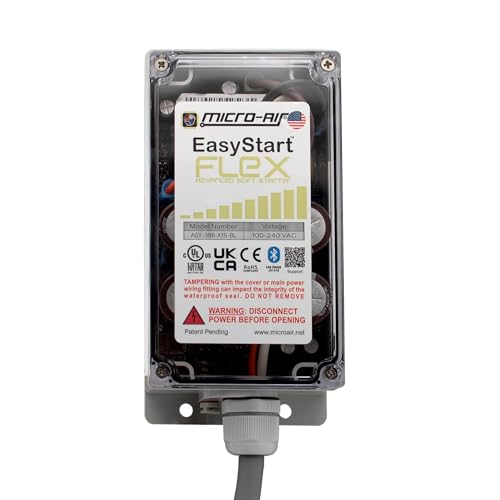
MICRO-AIR EasyStart 368 Bluetooth Soft Start Kit for Home Air Conditioner, RV & Commercial Use, Works with Generators, Reduces Power Surge, Efficient Start-Up - Up to 2-3.5 Tons(ASY-368-X48 BlueTooth) : Automotive
View on AmazonTwo common design strategies:
Essential-loads backup (1–2 Powerwalls): You back up critical circuits—refrigerator, lighting, outlets for medical devices, internet, a gas furnace blower, and possibly a 1–1.5 hp well pump. A single 13.5 kWh Powerwall can run a typical essential-loads panel for 12–24 hours depending on usage and whether the sun is replenishing the battery. This is the most cost-effective resilience option.
Whole-home backup (2–4 Powerwalls): Many Oklahoma homes have central AC units drawing 2–5 kW while running and higher during compressor startup. Two to four Powerwalls provide the surge and sustained power to run HVAC plus normal household loads. Systems may include soft-start kits on AC compressors to reduce inrush currents.
Sizing rule of thumb: A typical Oklahoma home uses ~25–35 kWh/day annually averaged (EIA). One Powerwall’s 13.5 kWh covers about half a day of average use, longer if you manage loads or have daylight solar production during an outage. Homes with electric resistance heating or large heat pumps should plan on multiple batteries for whole-home coverage.
The Powerwall app modes—"Backup-Only," "Self-Powered," and "Time-Based Control"—let you emphasize resilience, self-consumption, or bill savings. For many Oklahoma households, Time-Based Control provides the best year-round economics: charge during low-cost hours or sunny periods; discharge during peak windows.
Oklahoma utility rate structures and how Powerwall saves with time-of-use
Oklahoma’s two largest investor-owned utilities—OG&E (Oklahoma Gas & Electric) and PSO (Public Service Company of Oklahoma, an AEP company)—offer time-varying rates. Plan names and windows change, but typical patterns are:
- Summer on-peak hours on weekday afternoons (e.g., 2–7 p.m.) with much higher kWh prices
- Off-peak prices overnight, early mornings, and weekends
Savings mechanism with a Tesla Powerwall in Oklahoma:
- Peak shaving: Charge from solar or off-peak grid power, then supply 3–10 kWh during each on-peak period. If the on-peak to off-peak price spread is $0.15/kWh, shifting 10 kWh/day saves about $1.50/day (~$45/month over a 30-day summer month). If the spread is $0.25/kWh and you shift 12 kWh/day, savings approach
$3/day ($90/month) during peak summer. Real outcomes depend on your exact tariff. - Demand charge reduction: Some co-ops and specialty tariffs bill a monthly fee based on your highest 15–60 minute kW peak. Batteries can cap that peak, but your inverter must be configured for non-export and demand-limiting. Ask your installer whether your utility’s interconnection allows grid charging and demand management with export restrictions.
- Resilience value: It’s hard to price the benefit of riding through an ice storm or severe thunderstorm outage, but EIA reliability data show that weather drives outsized outage minutes in the Plains. Batteries deliver silent, instant backup without fuel or exhaust.
Note on interconnection rules: Utilities may restrict exporting energy that was charged from the grid. Modern Powerwall firmware can tag energy sources and prevent prohibited exports while still enabling TOU arbitrage behind the meter. Confirm policy details in your OG&E, PSO, or co-op interconnection agreement.
For another regional lens on time-of-use and battery strategy, see our guide to Tesla Powerwall in Missouri: Cost, Availability & Is It Worth It?.
Powerwall availability and certified installers in Oklahoma
Availability has improved since 2023, and most Oklahoma projects can be scheduled within 4–12 weeks once design and permits are approved. You can purchase a Powerwall:
- Through Tesla’s website, with installation by Tesla or a local certified partner
- Via independent, Tesla-certified installers operating in the Oklahoma City, Tulsa, and regional markets
What to look for in an installer
- Tesla certification and recent Powerwall 3 projects
- Load analysis that shows starting currents for AC units and pumps
- Clear interconnection plan with your utility (export rules, metering, non-export settings if required)
- A design that anticipates expansion (additional batteries or future EV charging)
Permitting and inspections typically involve your local authority having jurisdiction (AHJ) and your utility. Expect a site survey, single-line diagram, and occasionally panel/service upgrades for older homes.
Alternatives to Powerwall available in Oklahoma: Enphase, LG, Generac
Several strong competitors are widely available in Oklahoma. The right choice depends on your inverter ecosystem, backup needs, and budget.
Enphase IQ Battery 5P/10/3T family
- Usable capacity: modular 5 kWh blocks (5P) that can be combined for 10–20+ kWh
- Power: ~3.84 kW continuous per 5 kWh unit, strong surge capability
- Best for: Homes with Enphase IQ8 microinverters or those prioritizing granular module-level monitoring. Enphase excels at AC-coupled retrofits and flexible sizing. If you’re building an all-Enphase stack, the Enphase IQ8 Microinverters pair smoothly with IQ Batteries and represent strong value for resilience and uptime.
LG Energy Solution RESU Prime 16H
- Usable capacity: ~16 kWh
- Power: typically up to ~7 kW depending on inverter pairing
- Best for: Larger single-unit capacity in a compact footprint, often paired with SolarEdge inverters. Solid 10-year warranty and a long manufacturer track record in cells.
Generac PWRcell
- Usable capacity: modular, ~9–18 kWh depending on cabinet configuration
- Power: up to ~9 kW continuous with higher surge in some setups
- Best for: Whole-home backup with high surge loads, especially when paired with Generac’s automatic transfer equipment. Some homeowners also consider pairing solar+battery with a small standby generator for extended winter outages, though that reintroduces fuel dependence.
Cost note: Enphase and Generac system pricing varies widely with inverter and gateway requirements. In Oklahoma bids, they often price similarly to a Tesla Powerwall on a per-kWh basis, with differences driven by installer familiarity and inventory.
Smart electrical panels and monitoring
- Smart panels like the SPAN Smart Panel can enable dynamic load shedding and whole-home backup with fewer batteries—useful for large AC loads or well pumps. While an added cost, SPAN’s circuit-level control can stretch backup hours and smooth TOU optimization.
- An energy monitor such as the Emporia Vue helps you right-size your system by revealing real peak loads and daily kWh use before you buy.
By the numbers: what a Powerwall can run in Oklahoma
- Refrigerator: 1–2 kWh/day
- Gas furnace blower: 0.5–1.5 kWh/day during winter operation
- Wi-Fi, lights, device charging: 0.5–1 kWh/day
- 1 hp well pump (intermittent): ~1 kW while running; surge >3 kW
- Central AC (3–4 ton): 2–5 kW while running; higher surge on startup
One Powerwall (13.5 kWh) can comfortably back up essentials for a day and run short AC cycles. Two to three units generally support typical central AC plus household loads through peak evening hours, with solar refilling batteries during the day in summer.
Is the Tesla Powerwall in Oklahoma worth it?
Best-fit scenarios:
- Homes on time-of-use rates that can shift 8–15 kWh/day from peak to off-peak during summer
- Rooftop solar owners who want to capture more value than avoided-cost export credits provide
- Residences in outage-prone areas or with medical/home-office resilience needs
- Rural properties with well pumps and freezers where generator maintenance and fuel are pain points
Rough payback logic
- Summer TOU shifting: If you shift 10 kWh/day across a $0.20/kWh spread for 120 high-demand summer days, that’s ~$240/year; add spring/fall shoulder months at a smaller spread and winter storm arbitrage if offered. Annual savings can reach $300–$600 on TOU alone, more with large spreads or demand charge reduction.
- Solar self-consumption: For homes exporting a lot at avoided-cost rates, using an extra 1,500–2,000 kWh/year behind the meter at a $0.10–$0.14/kWh delta adds another $150–$280/year in value.
- Outage mitigation: Hard to monetize, but many homeowners assign significant value to avoiding food loss, preventing sump/well issues, and maintaining HVAC during extreme heat or cold.
On pure bill savings, a single Powerwall may have a long payback if TOU spreads are small. Coupled with solar, TOU, and resilience value, the combined case often becomes compelling—especially with the 30% ITC lowering net cost.
FAQ: common questions about Tesla Powerwall in Oklahoma
How many Powerwalls do I need for whole-home backup?
- Many Oklahoma homes land on two to three units for whole-home backup, depending on AC tonnage, well pumps, and electric heating. A professional load calculation that considers AC starting currents is essential.
Will a Powerwall run my air conditioner?
- Often yes, especially with Powerwall 3’s higher power output. Many installers add a soft-start on larger compressors. For multiple AC units, consider two or more batteries.
Can I charge the Powerwall from the grid to arbitrage time-of-use rates?
- In most cases yes, but rules vary. Powerwall firmware supports Time-Based Control and can prevent exporting grid-charged energy if your utility requires it. Confirm with OG&E/PSO interconnection policies.
What about Oklahoma’s heat and ice storms—does temperature matter?
- Powerwall is rated for -4°F to 122°F. Extreme cold reduces output and capacity, so outdoor units are best placed in shaded, protected locations. Many Oklahoma installs put batteries in garages to moderate temperature.
What’s the warranty?
- Tesla provides a 10-year warranty with at least 70% capacity retention under normal use. Solar-coupled self-consumption and backup cycling are covered; check the latest Tesla warranty document for any throughput terms that apply to grid-only charging.
Do I need a critical-loads subpanel?
- For essential-backup designs, yes—this keeps high-draw appliances off the backup circuit. If you want whole-home backup with smart, dynamic circuit control, consider a smart panel like SPAN to prioritize loads and extend runtime.
How long is installation?
- From contract to commission, many Oklahoma homeowners see 1–3 months depending on permitting, utility scheduling, and equipment lead times. The physical install is often 1–2 days for a single-battery project.
Can I add a Powerwall to my existing solar?
- Yes. Powerwall 2 integrates easily with most existing AC-coupled systems. Powerwall 3 is best installed with new or upgraded solar because it has an integrated inverter; retrofits may need configuration changes.
What about resale value?
- Appraisers increasingly recognize solar-plus-storage, especially where TOU and outage risks are salient. While data vary by market, national studies (Lawrence Berkeley National Laboratory) show solar can add value; batteries add buyer appeal for resilience.
Practical steps for Oklahoma homeowners
- Pull 15–30 minute interval data from your utility portal if available. Identify your highest kW peaks and daily kWh swings.
- Get two or three bids. Ask for:
- Essential vs. whole-home designs and modeled outage runtimes
- TOU and demand-charge savings projections
- Interconnection notes regarding grid-charging and export limits
- Right-size your system. Consider a smart panel or load management to reduce the number of batteries needed for AC and pumps.
- Claim the 30% ITC. Keep all itemized invoices. If you’re a rural small business or ag producer, explore USDA REAP.
Where this is heading: As battery pack prices continue trending down and Oklahoma utilities lean further into time-varying rates to manage summer peaks, the Tesla Powerwall in Oklahoma will shift from a resilience-first buy to a more mainstream bill-management tool. For now, its strongest case is solar-paired homes seeking both outage protection and smarter use of every kilowatt-hour.

Emporia Gen 2 Smart Home Energy Monitor with 16 50A Circuit Level Sensors | Real Time Electricity Monitor/Meter | Solar/Net Metering - Amazon.com
View on AmazonRecommended Products
The Homeowner's Guide to Renewable Energy - Revised & Updated Edition: Achieving Energy Independence through Solar, Wind, Biomass and Hydropower: Chiras, Dan
After beginning with the all important discussion about energy efficiency and conservation, <strong>Dan guides you through everything you need to choose which renewable options to integrate into your
Emporia Gen 2 Smart Home Energy Monitor with 16 50A Circuit Level Sensors | Real Time Electricity Monitor/Meter | Solar/Net Metering - Amazon.com
See how much electricity your home is using anywhere, anytime. ... <strong>Add individual 50A sensors to your Vue to monitor up to 16 individual circuits</strong> — providing accurate energy use for t
MICRO-AIR EasyStart 368 Bluetooth Soft Start Kit for Home Air Conditioner, RV & Commercial Use, Works with Generators, Reduces Power Surge, Efficient Start-Up - Up to 2-3.5 Tons(ASY-368-X48 BlueTooth) : Automotive
COMPATIBILITY WITH GENERATORS: ... power-limited locations. This Easy Start flex home ac soft starter is <strong>compatible with 2-stage compressors and heat pump units</strong>, making it a versatile