
Tesla Powerwall in South Dakota: Cost, Availability & Is It Worth It?
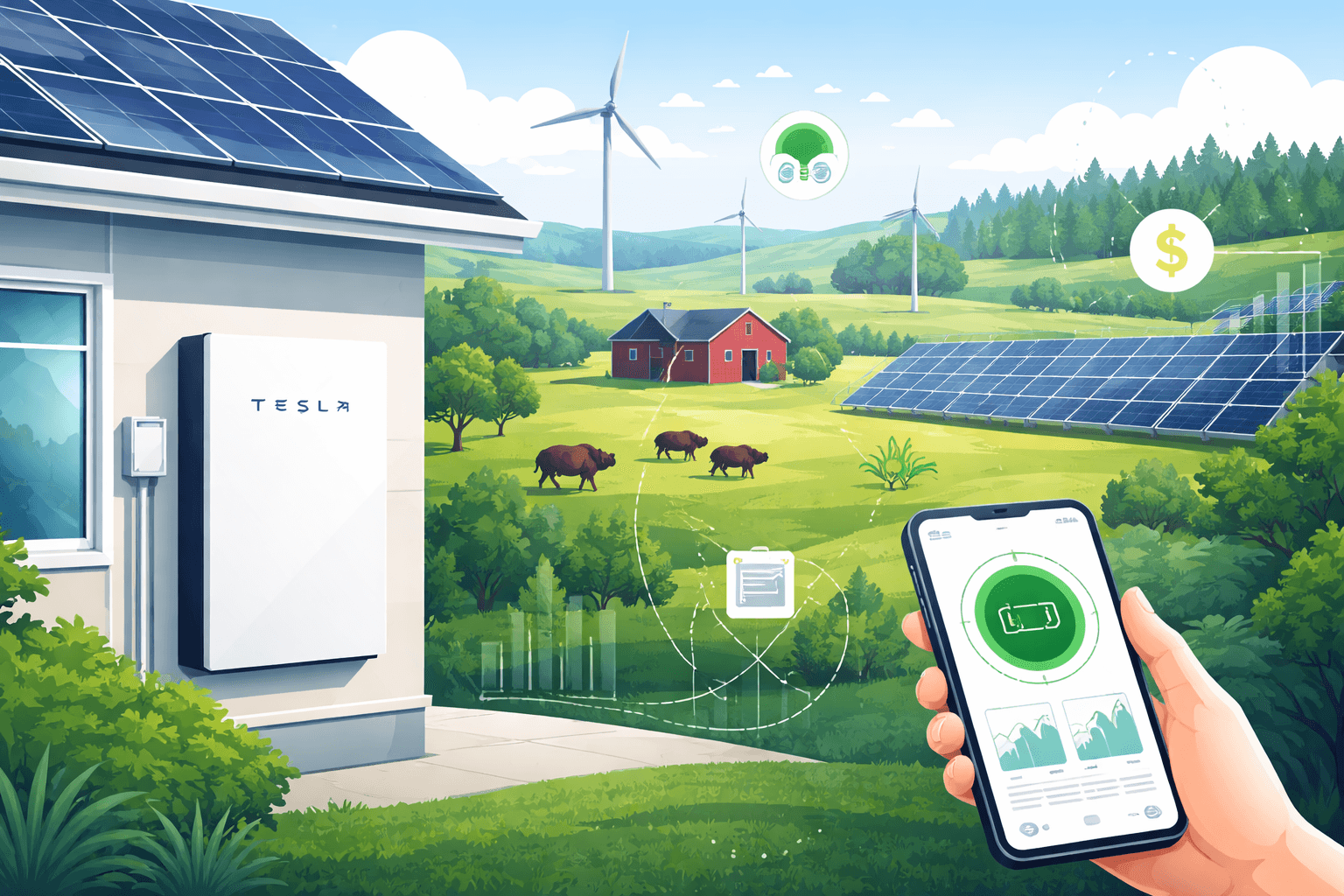
South Dakota homeowners are asking a simple question with a complex answer: is the Tesla Powerwall in South Dakota worth it? With a 30% federal tax credit now available for standalone batteries and increasingly extreme weather pushing backup power to the top of the wish list, storage is moving from nice-to-have to strategic. The Tesla Powerwall 2 and the newer Powerwall 3 each offer 13.5 kWh of usable storage, with the Powerwall 3 delivering significantly higher power output for whole-home backup. Whether it pencils out for your household depends on installed cost, your utility’s rate structure, and how you use it—backup, solar self-consumption, or demand charge reduction.
Below, we break down specifications, pricing in South Dakota, incentives, how batteries pair with solar, rate structures, availability, alternatives, and common FAQs—backed by data from the U.S. Energy Information Administration (EIA), the IRS, and manufacturer specs.
By the Numbers: Tesla Powerwall in South Dakota
- Usable storage: 13.5 kWh per unit (Powerwall 2 and Powerwall 3)
- Power output: Powerwall 2 ~5 kW continuous (7 kW peak); Powerwall 3 up to ~11.5 kW continuous (higher surge capability)
- Warranty: 10 years; at least 70% of nameplate capacity retained at end of warranty (Tesla warranty terms)
- Typical installed price in South Dakota: $11,000–$15,000 before incentives for one unit; multi-unit systems cost more but benefit from economies of scale
- Federal tax credit: 30% Investment Tax Credit (ITC) for standalone storage placed in service 2023 and after (IRS—Inflation Reduction Act)
- Average South Dakota residential electricity price: about 12–14 cents/kWh in recent EIA data (statewide average tends to be lower than the U.S. average)
- Solar resource: roughly 4.5–5.0 peak sun hours/day (NREL typical resource for the Northern Plains)
Tesla Powerwall overview: specs, capacity, and how it works
A home battery stores electricity and delivers it later when the grid is down or when rates are higher. The Tesla Powerwall family is among the most widely deployed residential batteries in the United States.
Solar Electricity Handbook - 2023 Edition: A simple, practical guide to solar energy – designing and installing solar photovoltaic systems: Boxwell, Michael
Solar Electricity Handbook - 2023 Edition: <strong>A simple, practical guide to solar energy – designing and installing solar photovoltaic systems</strong> [Boxwell, Michael] on Amazon.com. *FREE* shi
Check Price on Amazon- Capacity: Each Powerwall holds 13.5 kWh of usable energy. That’s roughly enough to run a refrigerator (~1 kWh/day), Wi-Fi, lighting, a gas furnace blower, and phone charging for multiple days, or to run a whole home for part of a day depending on loads.
- Power: Powerwall 2 is rated around 5 kW continuous (7 kW peak) while Powerwall 3 delivers significantly more output—around 11.5 kW continuous—making it better for whole-home backup, heat pumps, and well pumps with higher starting currents.
- Chemistry and thermal management: Lithium-ion battery with liquid thermal management. Operating range is broadly from about -4°F to 122°F (-20°C to 50°C); performance and charge rates are automatically managed in cold weather.
- AC vs. hybrid approach: Powerwall 2 is AC-coupled, meaning it works well with most existing solar systems (including microinverters). Powerwall 3 integrates a hybrid inverter so new solar arrays can connect directly (DC-coupled), reducing conversion losses and hardware count. Existing AC-coupled arrays may still require Powerwall 2 (or a careful design review for Powerwall 3 compatibility).
- Scalability: Up to 10 Powerwalls can be stacked for larger homes or small commercial sites.
- App and controls: The Tesla app supports backup reserve settings, time-based control, and storm watch features that pre-charge the battery when severe weather is forecast.
How it works day-to-day:
- Backup: When the grid fails, the Powerwall isolates your home and keeps selected circuits or the whole house powered, depending on your design.
- Load shifting: On time-of-use (TOU) tariffs, it can charge when rates are low and discharge when rates are high.
- Solar self-consumption: Store mid-day solar and use it in the evening, reducing exports that may be credited at low avoided-cost rates.
Powerwall pricing in South Dakota including installation costs
Installed costs vary with the site (panel upgrades, trenching, cold-weather enclosures, and whether you choose whole-home or essential-load backup). In South Dakota, labor and permitting tend to run lower than coastal markets, but rural installs can require longer travel and more electrical work.
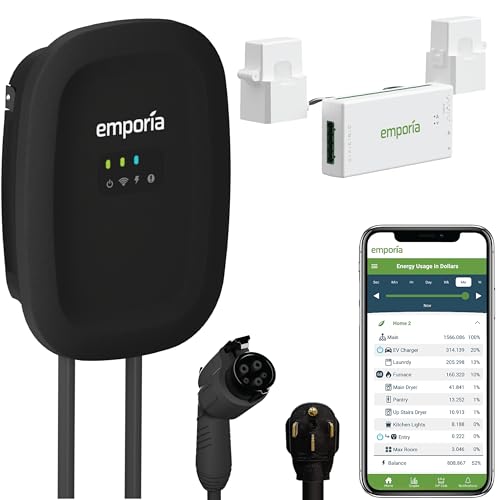
EMPORIA Level 2 EV Charger with PowerSmart Load Manager - Avoid Costly Panel Upgrades - Preconfigured for Hardwired Install with Whip, 240v Electric Car Charger, UL/Energy Star : Automotive
View on Amazon- Hardware: Powerwall hardware commonly prices around $9,000–$10,000 per unit. Powerwall 3 has an integrated inverter (which can lower total hardware count for new solar installs), while Powerwall 2 typically requires a Tesla Backup Gateway.
- Soft costs and labor: $2,000–$5,000 in South Dakota is typical for a straightforward install; service upgrades (e.g., from 100A to 200A), long conduit runs, or critical-load subpanels can add $1,000–$3,000.
- Sales tax: Expect state and local sales tax to apply to equipment and sometimes labor.
Indicative totals before incentives (one unit):
- Essential-load backup: $11,000–$14,000 installed
- Whole-home backup with service/panel work: $13,000–$17,000 installed
After the 30% federal ITC: Net cost often falls in the $7,700–$11,900 range for a single unit. Multi-battery systems benefit from shared labor but of course add hardware cost.
Two practical, data-backed ways to control project cost and performance:
- If you’re installing outdoors, an insulated battery enclosure can improve winter performance and reduce self-heating energy. A durable, weather-rated unit like the Cold-Climate Battery Enclosure can be a smart add-on in the Upper Midwest.
- If you want whole-home backup without oversizing batteries, a smart load-management panel lets you prioritize big loads dynamically. Based on field reports and load-shedding efficiency, a Smart Load Management Panel is often more cost-effective than adding a second battery just to cover occasional peaks.
South Dakota battery storage incentives: state rebates, SGIP, utility programs
- Federal ITC (applies in South Dakota): The 30% federal Investment Tax Credit now explicitly includes standalone storage (as of 2023). There is no minimum battery size in the statute, and it no longer has to be charged by solar to qualify. Homeowners should confirm eligibility and tax liability with a tax professional.
- Statewide rebates: As of late 2024, South Dakota does not offer a statewide SGIP-style storage incentive for residences. SGIP (Self-Generation Incentive Program) is a California program and does not apply in South Dakota.
- Utility incentives: South Dakota does not have a uniform battery rebate program. Some municipal utilities and rural electric cooperatives may pilot demand response or off-peak charging incentives. It’s worth asking your utility’s distributed energy resources (DER) or rates department about battery-specific programs.
- Property and sales tax: South Dakota does not have a widely advertised residential battery sales-tax exemption; standard state and local taxes generally apply. Property tax impacts for residential-scale storage are typically minimal, but confirm locally.
Pro tip: If your utility offers a time-of-day or demand tariff, the financial case for storage improves. Even a small monthly demand charge (e.g., $6–$12 per kW) can be partially mitigated by a battery configured for peak shaving.
How the Powerwall pairs with solar in South Dakota: backup vs. self-consumption
Pairing with solar determines both economics and resilience strategy:
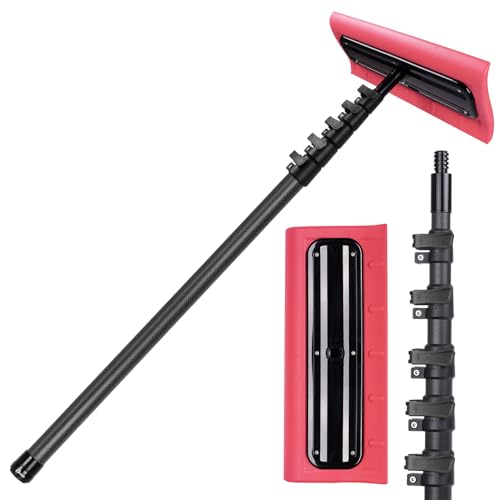
DOBEN Carbon Fiber Snow Roof Rake, 4.7-24FT Extendable Pole, EVA Foam Roof-Safe Head for Gentle Snow Removal, for Roofs, Solar Panels, RVs & Cars : Patio, Lawn & Garden
View on Amazon- Backup-first design: One Powerwall can back up essential loads (fridge, Wi-Fi, lighting, gas furnace blower, well pump) for 12–36 hours depending on usage. A second unit is often recommended if you want to include larger loads like electric ranges, central A/C, or whole-home coverage.
- Self-consumption focus: South Dakota does not mandate full-retail net metering across all utilities. Many utilities credit excess solar exports at avoided-cost rates, which are often below retail. Storing excess mid-day solar (instead of exporting it for a few cents per kWh) and using it in the evening can improve your solar ROI.
- AC vs. DC coupling: If you have existing solar with microinverters (e.g., Enphase), Powerwall 2 usually offers the cleanest fit (AC-coupled). For new systems, Powerwall 3’s integrated inverter can reduce equipment count and conversion losses and often lowers installed cost.
Winter operations matter in South Dakota. Snow cover can limit solar output for days. A battery sized for at least a day of essential loads improves resilience between sunny periods. If your array is ground-mounted or reachable, clearing snow can restore production—and the battery lets you store that energy when it returns.
Based on performance and cold-weather data, homeowners who install a Quick-Clear Solar Roof Rake often boost winter generation by keeping modules clear after storms—an inexpensive accessory that increases the value of your Powerwall-plus-solar setup.
South Dakota utility rate structures and how Powerwall saves with time-of-use
Electricity prices in South Dakota are lower than the U.S. average (EIA), but the structure of your tariff is pivotal:
- Flat residential rates: If your utility uses a flat cents/kWh rate without demand charges, batteries save money primarily via solar self-consumption and outage mitigation rather than pure arbitrage.
- Time-of-use (TOU) rates: Some municipal utilities and co-ops offer off-peak and on-peak pricing (often seasonally). Here, Powerwall can charge during off-peak and discharge during on-peak windows. Savings depend on the on/off-peak spread. A spread of 6–10 cents/kWh often creates a meaningful payback when combined with the federal ITC.
- Demand charges: While uncommon for standard residential service, several co-ops in the Upper Midwest use residential demand charges (e.g., a fee per kW of monthly peak). Configured correctly, the Powerwall can cap your peak demand by serving short bursts—like a well pump starting or an EV charger ramping—reducing the billed kW.
- Buyback for solar exports: Where export credits are at avoided cost, using the battery to shift evening usage off the grid (instead of exporting at low value midday) can materially improve your effective solar payback.
Practical modeling tip: Ask your installer to run a 12-month bill analysis using your interval data (if available) or hourly load profiles from NREL’s ResStock-like datasets. Compare: solar alone vs. solar + one Powerwall vs. solar + two Powerwalls under your exact tariff.
Powerwall availability and certified installers in South Dakota
Tesla sells and services Powerwall through direct installation teams and a network of certified installers. In South Dakota, coverage often comes from regional installers based in-city or in neighboring states. Lead times typically run 4–12 weeks after contract signing, subject to utility approval and permitting.
How to vet an installer for South Dakota conditions:
- Cold-climate experience: Ask how they handle outdoor mounts below -4°F. Look for insulated enclosures, garage placement, or conditioned-space installs. Confirm that the design maintains code-required clearances.
- Backup design scope: Decide on essential-loads vs. whole-home. Whole-home may require a higher-power unit (Powerwall 3), multiple batteries, or a smart load management panel.
- Main service rating: Many SD homes have 200A services, but older rural homes may have 100A. Confirm whether a service upgrade is needed and costed.
- Utility interconnection: Confirm your utility’s rules for batteries with or without solar. Some require a lockable AC disconnect or particular metering.
Regional context: If you’re comparing pricing and installer availability just across state lines, you may find additional insights in our neighboring state guides for the Upper Midwest, including Tesla Powerwall in North Dakota: Cost, Availability & Is It Worth It?, Tesla Powerwall in Minnesota: Cost, Availability & Is It Worth It?, and Tesla Powerwall in Nebraska: Cost, Availability & Is It Worth It?.
Alternatives to Powerwall available in South Dakota: Enphase, LG, Generac
Powerwall is strong on software, ecosystem, and serviceability, but alternatives may fit better depending on your solar equipment and goals.
- Enphase IQ Battery (e.g., IQ Battery 5P, IQ Battery 10T): AC-coupled and integrates cleanly with Enphase microinverter solar systems. Modular units (5–10 kWh blocks) allow right-sizing, with per-unit continuous power around 3.8–5 kW. Excellent for retrofits and granular monitoring.
- LG Energy Solution RESU Prime (10H/16H): Well-regarded DC-coupled units with 10–16 kWh capacities. Pairs with compatible third-party inverters (e.g., SolarEdge). Known for compact footprint; verify off-grid capability with your inverter model.
- Generac PWRcell: A DC-coupled platform that scales from roughly 9 kWh to the upper teens per cabinet. Strong surge performance and tight integration with Generac’s inverters and automatic transfer switches. Popular where whole-home backup and high surge loads (e.g., well pumps) are priorities.
Where each excels:
- Retrofitting existing microinverter solar: Enphase IQ Battery is typically the cleanest install.
- New DC-coupled solar with high power needs: Powerwall 3 or Generac PWRcell are compelling.
- Space-constrained installs: LG RESU Prime’s compact form factor can fit tight mechanical rooms.
Is a Tesla Powerwall in South Dakota worth it?
The value proposition hinges on your priorities and tariff:
- Backup reliability: For homes that experience weather-related outages or rely on well pumps, a Powerwall offers seamless backup without refueling and fumes associated with generators. Over 10 years, many households value this resilience alone.
- Solar economics: If your utility pays low avoided-cost credits for exported solar, a battery that shifts solar into the evening can increase your self-consumption and effective solar payback.
- TOU and demand savings: If you’re on a TOU or demand tariff, a properly configured battery can produce material bill savings—stacking with the federal ITC to improve payback.
A whole-home, always-on design with electric heating may require multiple batteries and raise costs substantially; a right-sized essential-loads design often delivers the best value.
FAQ: common questions about Tesla Powerwall in South Dakota
How many Powerwalls do I need?
- A single 13.5 kWh Powerwall typically covers essential circuits for a day or more with conservation. For whole-home backup—especially with central A/C, heat pumps, electric ranges, or well pumps—consider 2+ units or the higher-output Powerwall 3 paired with smart load management.
Does Powerwall qualify for a 30% tax credit in South Dakota?
- Yes. Under the Inflation Reduction Act, standalone residential batteries installed in 2023 and later qualify for the 30% federal ITC. Consult a tax professional to confirm eligibility for your situation.
Is Powerwall good for cold South Dakota winters?
- Yes, with proper placement. Tesla’s liquid thermal management maintains battery temperature, but extreme cold can reduce charge/discharge rates and slightly increase self-consumption for heating. Indoor or insulated outdoor mounting helps. An insulated Cold-Climate Battery Enclosure is a practical accessory for exposed sites.
Will it work with my existing solar system?
- Usually. AC-coupled solar (e.g., microinverters) pairs cleanly with Powerwall 2. New builds often favor Powerwall 3 for its integrated inverter. Your installer will evaluate compatibility and code requirements.
How long will a Powerwall back up my home?
- One 13.5 kWh unit running essential loads of 300–600 watts average can last 20–45 hours. High-power appliances shorten runtime; multiple units or load management extends it.
What about generators?
- Many South Dakota homeowners keep a portable or standby generator. Batteries and generators aren’t either/or: a hybrid design uses the generator sparingly to recharge the battery during extended outages, keeping indoor loads quiet and seamless while minimizing fuel use.
What maintenance is required?
- Minimal. No fuel, oil changes, or test runs. Keep the area dust-free, check for firmware updates (automatic), and ensure vents are clear.
How does Powerwall compare to propane or diesel generators on cost?
- Upfront, a battery usually costs more than a portable generator and is in the ballpark of a quality standby generator. Over time, fuel and maintenance tilt costs toward batteries—plus batteries provide daily bill savings and seamless operation.
What if my utility doesn’t offer TOU rates?
- Savings then come mainly from solar self-consumption and outage value. If your utility introduces TOU or demand charges (a trend among some co-ops), your battery can be reprogrammed for additional savings.
What’s the warranty?
- Tesla warrants Powerwall for 10 years. For solar-coupled operation, the warranty targets at least 70% of original capacity at year 10; for standalone use, Tesla specifies an energy-throughput limit in its warranty terms.
Practical next steps for South Dakota homeowners
- Pull 12 months of bills and ask your utility about TOU or demand options.
- Decide on essential vs. whole-home backup. List must-run circuits (well pump, fridge, furnace blower, internet, sump pump).
- Get two quotes: Powerwall 2 (if you have existing microinverters) and Powerwall 3 (for new builds). Request a savings model using your tariff and loads.
- Plan for winter: choose indoor placement or add an enclosure; consider a smart panel for large intermittent loads.
For a sense of regional pricing and installer networks, you can also compare neighboring markets in our guides for Minnesota, North Dakota, and Nebraska.
Where this is heading: As utilities in the Plains modernize tariffs and weather grows more extreme, storage will increasingly be valued for both grid services and home resilience. The 30% federal credit is a durable tailwind. For South Dakota homeowners who value backup power and want to boost solar self-consumption, a well-designed Tesla Powerwall system—especially when paired with smart load management—already makes strong practical and financial sense.
Recommended Products
Solar Electricity Handbook - 2023 Edition: A simple, practical guide to solar energy – designing and installing solar photovoltaic systems: Boxwell, Michael
Solar Electricity Handbook - 2023 Edition: <strong>A simple, practical guide to solar energy – designing and installing solar photovoltaic systems</strong> [Boxwell, Michael] on Amazon.com. *FREE* shi
EMPORIA Level 2 EV Charger with PowerSmart Load Manager - Avoid Costly Panel Upgrades - Preconfigured for Hardwired Install with Whip, 240v Electric Car Charger, UL/Energy Star : Automotive
UL Certified Vue 3 Energy Monitor Included: Installs in most homes with clamp-on sensors. <strong>Supports single-phase up to 240VAC line-neutral; single, split-phase 120/240VAC; and three-phase up to
DOBEN Carbon Fiber Snow Roof Rake, 4.7-24FT Extendable Pole, EVA Foam Roof-Safe Head for Gentle Snow Removal, for Roofs, Solar Panels, RVs & Cars : Patio, Lawn & Garden
This innovative snow rake features a <strong>strong, lightweight carbon fiber pole that prevents bending and minimizes fatigue during use</strong>. Its soft EVA foam head ensures safe snow removal fro