
Tesla Powerwall in North Dakota: Cost, Availability & Is It Worth It?
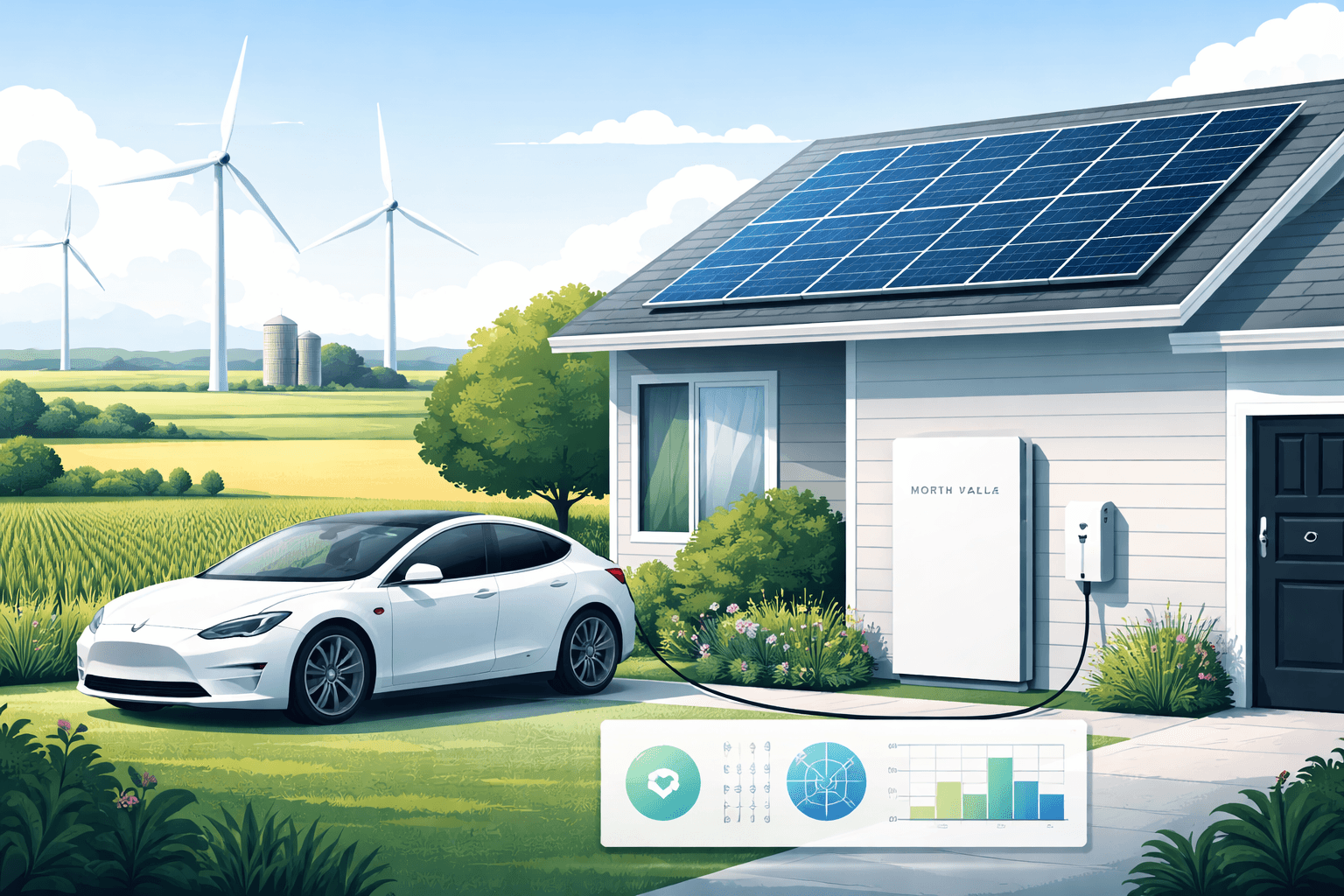
North Dakota homeowners are asking a practical question: is a Tesla Powerwall in North Dakota worth it for storm backup and energy savings? With the federal 30% clean energy tax credit now applying to standalone batteries, a Powerwall can be significantly more affordable than just a few years ago. But value also depends on local utility rates, incentives, and whether you pair storage with rooftop solar. Here’s a data-driven guide for North Dakota.
Tesla Powerwall overview: specs, capacity, and how it works
Tesla’s Powerwall is a residential lithium-ion battery that stores electricity for later use. You can charge it from rooftop solar or the grid and then power your home at night, during peak-rate windows, or when the grid goes down.
The Homeowner's Guide to Renewable Energy - Revised & Updated Edition: Achieving Energy Independence through Solar, Wind, Biomass and Hydropower: Chiras, Dan
After beginning with the all important discussion about energy efficiency and conservation, <strong>Dan guides you through everything you need to choose which renewable options to integrate into your
Check Price on AmazonKey specs (Powerwall 2 and Powerwall 3):
- Usable energy: 13.5 kWh per unit (both models)
- Power output: Powerwall 2 is 5 kW continuous (higher for short peaks); Powerwall 3 provides higher power (up to roughly 11.5 kW continuous), making it better for whole‑home backup and heavy motor loads
- Scalability: Stack multiple units (commonly 2–4) for larger homes or longer outages
- Warranty: 10 years, typically to 70% of original capacity; Tesla allows unlimited cycles when the unit is charged primarily by solar for self-consumption and backup (per Tesla warranty terms)
- Operating temperature: about -4°F to 122°F (-20°C to 50°C). In very cold weather, the system can self-heat but will perform best indoors or in semi-conditioned spaces
How it works, in plain terms:
- With solar: Your panels first power your home; excess solar fills the battery; any remaining surplus may export to the grid. At night or during clouds, the battery discharges to run your home.
- Without solar: The battery charges from the grid (e.g., off-peak times) and discharges when electricity is more expensive or during outages. Since 2023, standalone batteries ≥3 kWh qualify for the 30% federal tax credit under the Inflation Reduction Act (U.S. Department of Energy guidance).
What 13.5 kWh actually covers:
- Essentials for ~12–24 hours: fridge (1–2 kWh/day), Wi‑Fi/lights (0.5–1 kWh/day), sump pump or well pump intermittently, a high-efficiency gas furnace blower (a few hundred watts while running). Electric resistance heat or central A/C may require multiple batteries.
Powerwall pricing in North Dakota including installation costs
Installed cost varies by home electrical conditions (panel upgrades, trenching, code requirements) and installer margins. Based on market quotes reported across the Upper Midwest in 2024–2025:
- Single Powerwall installed: $12,000–$14,500 before incentives
- Two Powerwalls installed: $20,000–$26,000 before incentives
- Adders: Main panel upgrade ($1,500–$3,000), long wire runs, whole‑home transfer equipment, and cold‑climate weatherproofing can increase costs
Apply the 30% federal clean energy tax credit (Section 25D):
- Net cost estimate, single unit: ~$8,400–$10,150 after tax credit
- Net cost estimate, two units: ~$14,000–$18,200 after tax credit
Note: The federal credit applies to both hardware and “reasonable” installation costs. Always consult a tax professional.
Financing: Many North Dakota installers offer loans in the 5–12 year range. With average ND residential electricity prices near 10–11 cents/kWh (U.S. Energy Information Administration, 2024), monthly bill savings alone may not fully offset a financed battery payment unless you benefit from demand reduction or time-of-use arbitrage. Most buyers in ND cite resilience—keeping the heat, well pump, and fridge on during winter storms—as the primary value driver.
North Dakota battery storage incentives: state rebates, SGIP, utility programs
- State rebate: None specific to residential batteries as of 2026. North Dakota does not offer a statewide battery rebate program.
- SGIP: The Self-Generation Incentive Program is a California program; it does not apply in North Dakota.
- Property and sales tax: North Dakota has offered property tax exemptions for certain renewable energy devices historically, but there is no clear, current statewide exemption specifically for residential batteries. Check with your county assessor for any local rules on renewable improvements.
- Utility programs: Some North Dakota electric cooperatives run load management or off-peak programs (especially for electric heating) that might pair indirectly with storage. Direct battery rebates are uncommon. Always check your specific utility’s current offerings.
Primary incentive today: the 30% federal clean energy tax credit for standalone or solar‑charged batteries ≥3 kWh (U.S. Department of Energy / IRS guidance under the Inflation Reduction Act).
How the Powerwall pairs with solar in North Dakota: backup vs. self-consumption
North Dakota solar resource is moderate (roughly 4.3–4.7 average peak sun hours per day depending on location and tilt, per NREL PVWatts). That’s enough to meaningfully charge a battery most months, though winter production is lower due to short days, snow cover, and low sun angle.
Two common operating modes:
- Backup-first: Keep a reserve (e.g., 20–50%) so you always have energy set aside for outages, then use the remainder for daily cycling. Many ND homeowners choose this because the main value is storm resilience.
- Self-consumption: Maximize use of your own solar instead of exporting. This can add value if your net metering credits are at “avoided cost” (wholesale-like rates) rather than full retail. A battery lets you store midday surplus and use it in the evening, effectively raising the value of your solar kilowatt-hours.
Performance notes for cold climates:
- Location matters. Install the Powerwall in a garage, mechanical room, or insulated enclosure to reduce efficiency losses and maintain output in sub-zero weather.
- Snow management. Keeping panels clear after storms helps recharge the battery during outage‑prone periods.
If you’re comparing across the region, see our neighboring state guides for pricing and installer context: Tesla Powerwall in Minnesota: Cost, Availability & Is It Worth It? and Tesla Powerwall in Montana: Cost, Availability & Is It Worth It?.
North Dakota utility rate structures and how Powerwall saves with time-of-use
Powerwall economics depend heavily on your rate plan:

Emporia Vue 3 Home Energy Monitor - Smart Home Automation Module and Real Time Electricity Usage Monitor, Power Consumption Meter, Solar and Net Metering for UL Certified Safe Energy Monitoring - Amazon.com
View on Amazon- Flat/seasonal rates: Many ND customers pay a flat or seasonal rate around 10–11 cents/kWh (EIA, 2024). In this case, a battery adds limited bill savings beyond backup value, because there’s little price difference between charging and discharging times.
- Time-of-use (TOU) rates: Some ND utilities and co-ops offer optional time-of-day pricing. If peak power is notably higher (for example, 15–18 cents/kWh) and off-peak is lower (e.g., 6–9 cents/kWh), a Powerwall can charge off-peak and discharge during peak windows. This “arbitrage” can yield measurable savings, but check enrollment availability and peak/off-peak spreads.
- Residential demand charges: A few co-ops in the Upper Midwest use demand-based residential tariffs that charge for your highest 15–60 minute kW peak each month. If your utility allows using batteries to reduce measured demand, programming a Powerwall to clip peaks (e.g., A/C compressor + dryer + well pump starting at once) can reduce the demand portion of your bill. Policies vary by utility; some explicitly prohibit battery demand shaving.
- Net metering credit rates: North Dakota’s net metering compensation is often closer to avoided-cost rates rather than full retail for excess annual production. If you’re credited at, say, 3–5 cents/kWh for exports but pay 10–11 cents to buy, a battery increases the value of your solar by letting you “self-consume” more of your generation.
Action items:
- Request your utility’s current residential tariffs and any TOU or demand options.
- Ask specifically whether batteries can be used for demand reduction on your rate.
- Pull 12 months of interval usage (if available) to see your peak demand and daily load profile; your installer can model battery savings under your exact tariff.
Powerwall availability and certified installers in North Dakota
Availability has improved. Tesla’s installer network in North Dakota is smaller than in coastal markets, but Powerwall 2 and Powerwall 3 are increasingly available through:
- Tesla’s direct ordering portal (availability varies by ZIP code)
- Regional solar + storage firms serving Fargo, Grand Forks, Bismarck, Minot, Dickinson, and Williston
- Cross-border installers based in Minnesota or Montana that are Tesla Certified and will travel for projects
What to ask prospective installers:
- Are you Tesla Certified for Powerwall 3 and Powerwall 2/Powerwall+? How many installs have you completed in cold climates?
- Where will you mount the unit to mitigate sub-zero impacts? Do you recommend an insulated enclosure or garage placement?
- Will you set up Storm Watch (Tesla’s weather-triggered pre-charging) and assist with utility interconnection paperwork?
- What whole-home loads can a single Powerwall handle on my panel? Do I need a smart load panel for selective backup?
Practical add-ons:
- Smart load panels like Span Smart Panel or Emporia Smart Home Energy Monitor can improve visibility and let you prioritize critical loads during outages.
Alternatives to Powerwall available in North Dakota: Enphase, LG, Generac
Powerwall is popular, but not the only option. Consider:
Enphase IQ Battery 5P/10T/3T
- Modular 5 kWh building blocks (IQ Battery 5P) with roughly 3.84 kW continuous per 5 kWh unit and high surge capability
- Strong integration with Enphase microinverters and native backup
- Cold-climate performance is solid when installed indoors; software is mature
- Good fit if you already have Enphase microinverters or want fine-grained monitoring
- Value pick: The Enphase IQ Battery 5P is a flexible starter size for smaller homes or cabins
LG Energy Solution RESU Prime 16H
- 16 kWh usable capacity; pairs with hybrid inverters (e.g., SolarEdge)
- Around 5 kW continuous, higher short-duration output
- Compact footprint; strong brand, 10-year warranty
- Better for longer-duration needs when paired with solar, but may require more careful load management for large motor starting
Generac PWRcell
- Modular 9–18 kWh battery packs with Generac’s hybrid inverter
- Up to ~9 kW continuous output at higher capacities; good whole-home potential
- Integrates with home standby ecosystems; reputable service network in the Midwest
- Particularly appealing if you’re also considering a propane or natural gas standby generator for extended winter outages
Comparing on key metrics:
- Energy (kWh) determines outage duration, while power (kW) determines what you can run at once. Powerwall 3’s higher output is a standout for whole‑home backup.
- Integration matters: If your roof uses Enphase microinverters, an Enphase battery is a seamless fit. If you want an all‑Tesla ecosystem (vehicle + app + solar), Powerwall shines.
- Warranty and service: All major brands offer 10-year warranties; installer quality and local service access are just as important.
By the numbers: Tesla Powerwall in North Dakota
- 13.5 kWh: Usable energy per Powerwall unit (Tesla)
- Up to ~11.5 kW: On-grid continuous output for Powerwall 3; 5 kW for Powerwall 2 (Tesla)
- 10 years: Warranty term to 70% capacity, unlimited cycles when charged by solar (Tesla warranty)
- 30%: Federal clean energy tax credit for standalone or solar-charged batteries ≥3 kWh (DOE/IRS)
- ~10–11 cents/kWh: Average ND residential rate (EIA, 2024)
- ~4.3–4.7 sun hours/day: Typical ND solar resource at optimal tilt (NREL PVWatts)
Is a Tesla Powerwall in North Dakota worth it?
When it pencils out best:
- You experience periodic outages from blizzards, ice, or wind and value keeping heat, water, and communications online.
- Your utility offers TOU rates or residential demand charges that a battery can mitigate.
- You have or plan to add solar and receive low export credits (avoided-cost), so storing your surplus adds more value than exporting it.
When it’s a tougher sell:
- Your rate is flat with a small spread between peak and off-peak, and you rarely lose power.
- You’re primarily seeking monthly bill savings without solar; with ND’s relatively low rates, pure arbitrage often doesn’t cover financing costs.
Resilience often carries the day in North Dakota. Many households opt for one or two Powerwalls for essential loads and combine them with efficient heating (e.g., gas furnace with ECM blower) rather than backing up electric resistance heat.
Practical installation tips for cold-climate performance
- Choose the right location: An attached garage, basement, or utility room reduces cold-weather derating and preserves capacity.
- Consider selective backup: A critical loads subpanel or a smart load management system ensures your battery isn’t overtaxed by large nonessential appliances during outages.
- Winter readiness: Enable Tesla’s Storm Watch so the battery pre-charges ahead of forecasted weather. Keep a snow rake handy for panels.
- Pair with efficient appliances: High‑efficiency fridges, LED lighting, and heat pump water heaters extend runtime. The EcoFlow Wave 2 portable heat pump can provide spot heating/cooling with lower draw if you need targeted comfort during outages.

EF ECOFLOW Wave 2 Portable Air Conditioner, Air Conditioning Unit with Heat, Air Portable AC for Outdoor Tent Camping/RVs or Home Use (Battery Not Included)
View on AmazonFAQ: common questions about Tesla Powerwall in North Dakota
Does Powerwall work in sub-zero temperatures?
- Yes, but output and charging can derate in extreme cold. Install in an insulated location when possible. The unit can self-heat to protect itself but uses some stored energy to do so.
Will a Powerwall run my furnace?
- If you have a gas furnace, the electrical load is mainly the blower and controls, typically a few hundred watts while running. A single Powerwall can usually handle this. Electric resistance heating or large heat pumps may require multiple units and careful load management.
How long will one Powerwall last during an outage?
- It depends on what you power. Essentials-only homes often see 12–24 hours per 13.5 kWh battery. Add a second unit for multi-day resilience, especially in winter.
Do I need solar to get the tax credit?
- No. As of 2023, standalone batteries ≥3 kWh qualify for the 30% federal clean energy tax credit, even without solar. Many ND buyers still pair with solar to recharge during extended outages.
Can I use Powerwall to avoid demand charges?
- Possibly. Some co-ops allow it; others don’t. Ask your utility whether battery discharge is permitted for demand reduction and how demand is measured (15-minute vs. 60-minute intervals).
What maintenance is required?
- Little to none. Keep the area clear, ensure firmware updates are enabled, and check the app periodically. Have your installer verify operation annually alongside your solar checkup.
How many Powerwalls do I need for a well pump or A/C?
- For 1–1.5 HP well pumps and central A/C compressors, Powerwall 3’s higher power can start motors more reliably. With Powerwall 2, installers often recommend two units for better surge handling.
Is permitting difficult in North Dakota?
- Most jurisdictions have straightforward electrical permits. Your installer handles interconnection paperwork with your utility.
What this means for North Dakota homeowners
- Backup first: In a low-rate, largely flat-tariff state, the strongest case is resilience. A single Powerwall backing up a critical loads panel is the most common approach.
- Solar + storage synergy: Storing your own solar to offset evening use makes more sense if your export credit is low. Batteries can lift the effective value of each kWh your array produces.
- Check your tariff: TOU or residential demand rates can materially improve payback. Without these, financial returns hinge on outage avoidance rather than bill savings.
- Get multiple bids: Prices vary. Ask for Powerwall 3 vs. 2 comparisons, and model one vs. two units under your actual loads.
For comparisons across the region, see: Tesla Powerwall in Minnesota: Cost, Availability & Is It Worth It? and Tesla Powerwall in Montana: Cost, Availability & Is It Worth It?.
Forward look: storage is getting better for cold climates
- Falling costs: BloombergNEF and IEA tracking show continued declines in lithium-ion battery pack prices driven by scale and supply chain maturation. While installer labor and BOS (balance of system) costs remain, hardware is trending down.
- Smarter controls: Load controllers, heat pump adoption, and EV integration are enhancing whole-home energy orchestration. Expect better cold‑weather algorithms and preheating strategies.
- Policy evolution: As more Midwestern utilities pilot TOU and residential demand structures, the bill-savings case for batteries is likely to improve.
Bottom line: A Tesla Powerwall in North Dakota is primarily a resilience investment with upside from solar self-consumption and, in some cases, tariff optimization. For many households, one or two batteries, placed in the right indoor location and paired with a sensible critical loads strategy, deliver strong peace of mind during the state’s toughest weather—now at a net price meaningfully reduced by the 30% federal tax credit.
Recommended Products
The Homeowner's Guide to Renewable Energy - Revised & Updated Edition: Achieving Energy Independence through Solar, Wind, Biomass and Hydropower: Chiras, Dan
After beginning with the all important discussion about energy efficiency and conservation, <strong>Dan guides you through everything you need to choose which renewable options to integrate into your
Emporia Vue 3 Home Energy Monitor - Smart Home Automation Module and Real Time Electricity Usage Monitor, Power Consumption Meter, Solar and Net Metering for UL Certified Safe Energy Monitoring - Amazon.com
<strong>Add individual 50A sensors to your Vue to monitor up to 16 individual circuits</strong> — providing accurate energy use for the appliances and equipment that is important to you. No guesswork.
EF ECOFLOW Wave 2 Portable Air Conditioner, Air Conditioning Unit with Heat, Air Portable AC for Outdoor Tent Camping/RVs or Home Use (Battery Not Included)
Charge EcoFlow Wave2, <strong>the ultimate air cooler and heater, quickly with AC, solar, car, and power stations</strong>. Its swappable battery allows for cool or warm air anytime, anywhere, with th