
Tesla Solar in North Carolina: Panels, Roof & Pricing Guide (2026)
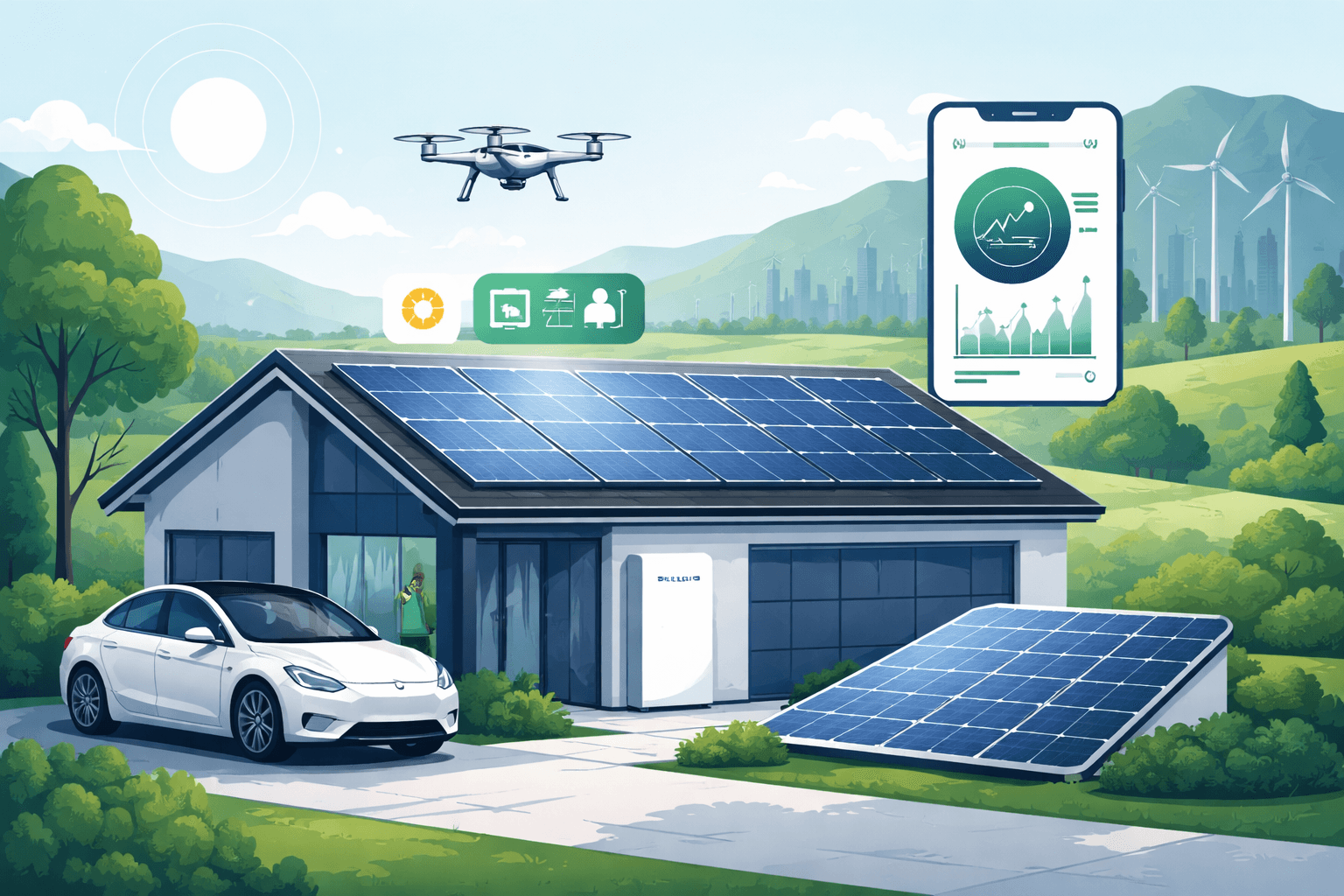
North Carolina consistently ranks among the top U.S. states for installed solar capacity, with more than 8 GW online across utility-scale and rooftop projects, according to SEIA’s 2024 market outlook. For homeowners evaluating Tesla Solar in North Carolina, falling module prices (NREL’s 2023 residential benchmark dipped to roughly $3.28/W installed, with many NC quotes below that) and the 30% federal tax credit through 2032 make 2026 an attractive window to go solar—especially if you pair it with a battery to ride through storm-related outages. This guide breaks down Tesla panels, Solar Roof, and Powerwall in North Carolina, how pricing really pencils out, and how state-specific policies affect your savings.
By design, this guide targets buyers searching specifically for “Tesla Solar in North Carolina”—you’ll find state-relevant pricing, incentive stacking, and utility rules that often differ from national pages.
Tesla Solar products available in North Carolina: panels, Solar Roof, and Powerwall bundles
Tesla sells two solar generation options in North Carolina, both of which can be paired with a Powerwall home battery:
Solar Electricity Handbook - 2023 Edition: A simple, practical guide to solar energy – designing and installing solar photovoltaic systems: Boxwell, Michael
Solar Electricity Handbook - 2023 Edition: <strong>A simple, practical guide to solar energy – designing and installing solar photovoltaic systems</strong> [Boxwell, Michael] on Amazon.com. *FREE* shi
Check Price on AmazonTesla Solar Panels
- All-black, monocrystalline panels typically rated around 400–440 W with 19–21% module efficiency (varies by batch and supplier).
- Sleek, low-profile mounting and integrated skirt options to minimize roofline gaps.
- Paired with the Tesla Solar Inverter (string inverter with rapid shutdown and app-based monitoring). If you add Powerwall 3, its integrated inverter can accept PV inputs, simplifying the system design.
Tesla Solar Roof
- Glass solar tiles that replace your roof while generating electricity. Solar and non-solar tiles are mixed to match your energy needs and architecture.
- Best suited for homeowners who need a new roof and want an integrated aesthetic; pricing is more variable than panels because roofing scope drives costs.
Tesla Powerwall (recommended with either option)
- Usable storage: 13.5 kWh per unit; 10-year warranty with performance retention.
- Supports whole-home or partial-home backup, time-of-use (TOU) arbitrage, and solar self-consumption.
- Powerwall 3 includes an integrated solar and battery inverter, reducing component count on new installs. Multiple units can be stacked for higher storage and backup power.
What’s included with a typical Tesla solar installation
- Design, permitting, and interconnection paperwork
- Mounting hardware, inverter(s), electrical balance-of-system (BOS)
- Monitoring through the Tesla app (production, consumption with Powerwall/CTs, and grid usage)
- Utility coordination for PTO (permission to operate)
Tesla Solar pricing in North Carolina: panels vs. Solar Roof cost comparison
Installed solar pricing in North Carolina is generally below the U.S. average thanks to competitive local markets and strong solar resource. While quotes vary by roof complexity, electrical upgrades, and utility territory, here’s what homeowners typically see for Tesla Solar in North Carolina:
Panels (before incentives)
- Price per watt (PPW): roughly $2.40–$3.10/W for standard Tesla panel packages in NC, based on recent regional quotes and national cost benchmarks from NREL’s 2023–2024 reporting.
- Typical system sizes: 6–12 kW for most single-family homes.
- Example budgets (before the 30% federal tax credit):
- 6 kW: $14,400–$18,600
- 8 kW: $19,200–$24,800
- 10 kW: $24,000–$31,000
After the 30% federal tax credit (ITC), the net cost drops proportionally. For example, an 8 kW system at $2.70/W ($21,600 gross) nets to about $15,120 after the ITC, assuming sufficient tax liability. NREL and EnergySage data show North Carolina’s residential quotes commonly land in this range.
Powerwall adders
- One Powerwall: commonly $10,000–$13,500 installed before the ITC.
- Each additional Powerwall: incremental cost typically a bit lower per unit when installed together.
- Thanks to the IRA (effective 2023), standalone batteries also qualify for the 30% ITC—even without solar—provided other IRS criteria are met.
Solar Roof pricing
- Highly project-specific because it’s both a roof and a PV system. For simple roofs, published owner reports often cluster between $30–$50 per square foot of total roof area; complex roofs (hips, dormers, skylights, steep pitch) can run $50–$70+ per square foot.
- Total project budgets in North Carolina often pencil in the $60,000–$120,000+ range before incentives, depending on roof size and complexity. If you must replace your roof anyway, the incremental cost vs. premium roofing plus panels may be more favorable.
Which pencils out better?
- If your existing roof is in good shape (10+ years of life), panels usually deliver the best payback. In North Carolina’s 12–14¢/kWh utility rates (EIA 2024 range), many homeowners see 7–11 year simple paybacks for panels (site- and rate-dependent).
- If you need a new roof and want the integrated look, Solar Roof can make sense, but it’s rarely the lowest-cost path to kWh savings.
How to order Tesla Solar in North Carolina: timeline, site assessment, and installation
Ordering
- Configure online: Enter your address, past utility bills, and home details to size your system.
- Deposit: Tesla typically requires a small, refundable deposit to proceed with design (amount subject to change).
Design and site assessment (1–3 weeks)
- Remote pre-design using aerial imagery and your historical kWh data.
- Virtual or in-person site assessment to confirm roof measurements, shading, main panel capacity, and conduit routes.
Permitting and interconnection (4–12+ weeks)
- Tesla submits permit sets to your Authority Having Jurisdiction (AHJ) and interconnection applications to the utility (Duke Energy Carolinas or Duke Energy Progress for most of NC; municipal/co-ops vary).
- Timelines vary widely by county and utility queue volume. Duke interconnection can add several weeks for review.
Installation (1–3 days for panels; longer for Solar Roof)
- Roof work, racking, modules, inverter(s), Powerwall, and commissioning.
- City/County electrical and building inspections typically follow within days.
Permission to Operate (PTO) (1–8 weeks)
- Your utility installs a bi-directional meter if applicable, finalizes rate changes, and issues PTO.
Total timeline
- Many North Carolina panel projects complete in 8–14 weeks; Solar Roof often runs longer due to roofing scope and logistics. Weather and utility backlogs can extend timelines.
Pro tip for TOU and batteries
- If you’re moving to a time-of-use structure, set up Powerwall’s Time-Based Control in the Tesla app to prioritize charging from solar off-peak and discharging on-peak. Adding a home energy monitor like the Sense Home Energy Monitor can also help pinpoint loads to shift for better self-consumption.
North Carolina solar incentives that apply to Tesla installations
30% Federal Investment Tax Credit (ITC)
- Applies to Tesla panels, Solar Roof’s solar components, and Powerwall. Under the IRA, standalone batteries qualify even without PV.
- Subject to tax liability and IRS rules. Consult a tax professional.
North Carolina property tax exclusion
- North Carolina law provides a property tax exclusion for most solar energy systems, reducing the assessed value attributable to the PV equipment (commonly cited as up to an 80% exclusion under N.C. Gen. Stat. § 105-275(45)). Check with your county assessor for how the exclusion is applied locally.
Net metering / export crediting
- Net metering in Duke Energy territories has transitioned away from older 1:1 structures into updated time-of-use-based export and rate options approved by the North Carolina Utilities Commission. Credit rates, fixed charges, and eligibility windows can vary by utility and tariff.
- Batteries can improve savings by shifting solar to peak periods and reducing grid imports. Always review the most current Duke Energy tariff sheets before you finalize system sizing and economics.
Local and municipal programs
- Municipal utilities and electric co-ops in NC set their own interconnection and compensation rules. Check for any local rebates or special rates in your service area.
For a deeper dive on statewide incentives, interconnection, and top local companies, see Solar in North Carolina: Costs, Incentives & Top Installers (2026).
Tesla Solar reviews from North Carolina customers: what owners actually report
Common positives
- Price transparency and competitive quotes: Many NC buyers report Tesla’s per-watt pricing beats local bids, especially on standard roofs.
- Clean aesthetics and solid app experience: The Tesla app integrates PV, Powerwall, and grid data with straightforward controls.
- Outage performance with Powerwall: During storms, homeowners value seamless backup and the ability to keep refrigerators, Wi‑Fi, critical lights, and well pumps running.
Common pain points
- Scheduling and communication: Owners sometimes cite gaps in proactive communication around permitting delays, inspections, and PTO.
- Less customization: Tesla sticks to a standardized product stack, which can be limiting if you want microinverters on partial-shade roofs or specific premium panel brands.
- Solar Roof lead times: Roofing logistics can add months vs. panel installs.
What matters most for satisfaction
- Accurate production estimates: In North Carolina, NREL’s PVWatts suggests a 1 kW south-facing array can produce roughly 1,350–1,550 kWh/year depending on tilt and shading. Ensure your design assumptions (azimuth, tilt, shade) reflect your actual site.
- Interconnection literacy: Pick a team that understands your exact utility tariff and optimizes battery settings for TOU. The Tesla app plus a thoughtful control strategy often closes much of the value gap created by post-1:1 net metering rules.
Tesla vs. local North Carolina installers: pros, cons, and price comparison
Where Tesla shines
- Economies of scale and pricing: Standardized designs and supply chain buying power can produce lower PPW quotes.
- Integrated ecosystem: Powerwall, Tesla Solar Inverter, and the app function as a cohesive system, simplifying support.
- Streamlined ordering: Quote-to-install workflow is digital first.
Where local installers shine
- Custom engineering: Complex roofs, heavy shade, or unique electrical constraints may benefit from microinverters, DC optimizers, or premium modules from specific brands.
- Local utility expertise: Longstanding relationships with inspectors and utility interconnection teams can speed up friction points.
- Service responsiveness: Smaller teams sometimes offer faster on-site troubleshooting post-PTO.
Typical price ranges in North Carolina (all before ITC; your quote may differ)
- Tesla panels: ~$2.40–$3.10/W
- Local installer panels: ~$2.60–$3.60/W (wider component choices; premium gear often pushes the top end)
If your priority is the lowest cost per kWh and a clean aesthetic, Tesla often wins. If you value bespoke component choices (e.g., Enphase microinverters, REC/Qcells premium modules) or need advanced shade mitigation, a reputable local installer is compelling—even at a modest price premium. For a curated list of firms and current pricing in your area, visit Solar in North Carolina: Costs, Incentives & Top Installers (2026).
Monetization note: If you’re aiming to maximize bill savings under TOU, consider a smart EV charger like the Emporia Level 2 EV Charger that can schedule charging off-peak, and a learning thermostat such as the Ecobee Smart Thermostat Premium to trim HVAC loads during on-peak windows. Both pair well with solar and Powerwall strategies.
Tesla Solar warranty and what it covers in North Carolina
Panels
- 25-year performance warranty (typical industry standard): panel output guaranteed to a stated percentage at year 25 (refer to your agreement for the exact retention rate).
- Product and workmanship warranties cover defects; details are model-specific.
Inverters
- Tesla Solar Inverter and Powerwall-integrated inverters carry product warranties typically around 10 years (check your contract).
Powerwall
- 10-year warranty, with a throughput or capacity-retention spec that ensures a minimum usable capacity at the end of term.
Solar Roof
- Tile and power production warranties typically 25 years, with separate coverage for installation workmanship. Roofing warranties can be nuanced—confirm weatherization and labor terms in writing.
As always, warranty documents attached to your specific purchase govern. Keep copies of all agreements and serial numbers; register equipment in the Tesla app.
By the Numbers: North Carolina + Tesla Solar
- Solar potential: 1 kW of south-facing PV in NC can generate roughly 1,350–1,550 kWh/year (NREL PVWatts), depending on tilt, azimuth, and shading.
- Utility rates: Residential retail rates in North Carolina average roughly 12–14¢/kWh (EIA 2024 monthly data range).
- Payback window: Panels commonly 7–11 years; battery value depends on outage frequency and TOU differentials.
- Battery sizing: One Powerwall (13.5 kWh) typically covers critical loads; two or more may be needed for whole-home backup or homes with well pumps and HVAC.
FAQ: common questions about Tesla Solar in North Carolina
Is Tesla Solar available statewide?
- Yes. Availability spans Duke Energy Carolinas, Duke Energy Progress, and many municipal/co-op territories, but interconnection rules differ. Always verify tariff and metering rules for your specific utility.
Will Tesla Solar work on my roof?
- Asphalt shingle, metal standing seam, and many tile roofs are compatible with panels. Very complex roofs or slate may require special hardware or push you toward Solar Roof if you’re replacing the roof anyway.
How does net metering work now in NC?
- Duke Energy has moved to updated time-of-use-based export crediting and rate designs following NCUC approvals. Credit rates vary by season and time window. Batteries help you self-consume more solar and reduce imports during on-peak hours. Check current Duke tariff sheets before you sign.
Can I add Powerwall later?
- Yes, but it’s often cheaper and cleaner to add it during the initial install (shared labor and electrical work). If you plan to add later, size your PV inverter and main panel with that future expansion in mind.
How many Powerwalls do I need?
- For critical loads (lighting, outlets, internet, fridge), many NC homes start with one. For central HVAC or well pumps, two or more may be justified. Your installer should model peak power and load priorities.
What about hurricanes and severe storms?
- Tesla systems meet applicable code requirements for wind and roof attachment when designed and permitted correctly. Work with your installer to confirm local wind-load calculations and attachment schedules approved by your AHJ.
Does Solar Roof qualify for the ITC?
- The solar-generating portion qualifies; purely roofing costs (non-solar tiles, structural repairs) do not. Tesla’s contract typically breaks out eligible vs. ineligible costs for tax purposes.
How long will installation take?
- Panel projects: commonly 8–14 weeks from order to PTO in NC, depending on permits and utility timing. Solar Roof: longer due to roofing scope.
What maintenance is required?
- Panels are low-maintenance. Keep arrays clear of debris, ensure inverters are in a shaded, ventilated spot, and monitor performance in the app. Powerwall firmware updates occur over-the-air.
What if I already have solar—can I add Tesla Powerwall?
- Often yes. Powerwall can be retrofit as AC-coupled storage. Compatibility and interconnection details depend on your existing inverter brand and utility rules.
Practical next steps for North Carolina homeowners
- Get at least two quotes: Compare Tesla’s online design to a reputable local installer’s proposal to gauge component differences and projected savings under your actual tariff.
- Model TOU carefully: If you’re in a modernized net metering structure, stress-test savings with and without a battery. Batteries often increase bill savings and resilience.
- Align system size to your loads: Right-sizing beats “maxing out” the roof, especially under export crediting that’s below retail.
- Consider load flexibility upgrades: A smart EV charger and thermostat can stack incremental savings by shifting consumption off-peak.

ecobee Smart Thermostat Premium with Smart Sensor and Air Quality Monitor - Programmable Wifi Thermostat - Works with Siri, Alexa, Google Assistant - Amazon.com
View on AmazonIf you’re leaning toward a storage bundle, we’ve detailed costs, specs, and value drivers in Tesla Powerwall in North Carolina: Cost, Availability & Is It Worth It?
Forward look: As NREL and IEA track ongoing declines in module and storage costs, and as utilities refine TOU windows and export rates, the value of pairing solar with intelligent controls will keep rising. Expect Tesla’s software (load forecasting, storm watch, and TOU optimization) and battery hardware integration to play a growing role in North Carolina homes seeking both savings and resilience.

Sense Energy Monitor with Solar – Track Electricity Usage and Solar Production in Real Time
View on AmazonRecommended Products
Solar Electricity Handbook - 2023 Edition: A simple, practical guide to solar energy – designing and installing solar photovoltaic systems: Boxwell, Michael
Solar Electricity Handbook - 2023 Edition: <strong>A simple, practical guide to solar energy – designing and installing solar photovoltaic systems</strong> [Boxwell, Michael] on Amazon.com. *FREE* shi
Sense Energy Monitor with Solar – Track Electricity Usage and Solar Production in Real Time
KNOW WHAT’S ON: Track how much electricity you’re using, what time your kids got home, or when someone leaves the basement light on. Sense <strong>identifies patterns in your energy use to help your f
ecobee Smart Thermostat Premium with Smart Sensor and Air Quality Monitor - Programmable Wifi Thermostat - Works with Siri, Alexa, Google Assistant - Amazon.com
ecobee Smart Thermostat Premium with Smart Sensor and Air Quality Monitor - Programmable Wifi Thermostat - <strong>Works with Siri, Alexa, Google Assistant</strong> - Amazon.com