
Solar in North Carolina: Costs, Incentives & Top Installers (2026)
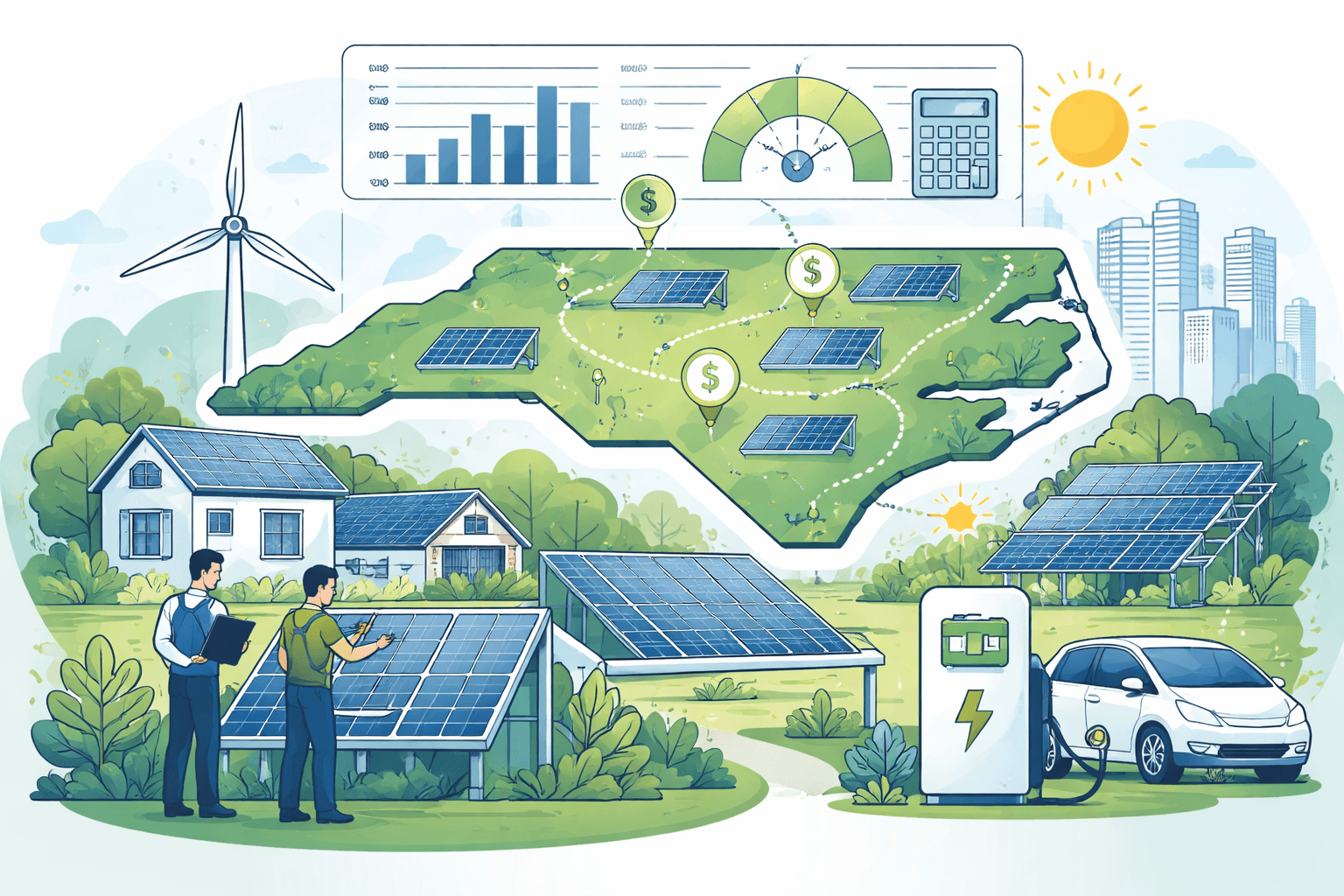
North Carolina added more than 1.4 GW of new solar in 2023 and now ranks among the top five U.S. states for total installed capacity, driven largely by utility-scale projects (SEIA/Wood Mackenzie). For homeowners, solar in North Carolina offers solid sunlight, competitive installation prices, and evolving time-of-use net metering. This 2026 guide covers costs, incentives, the best local installers, and what payback looks like with today’s rates and policies.
Why solar in North Carolina matters now
- Electricity prices have climbed 15–25% across many Southeast utilities since 2020 (U.S. EIA), improving the savings case for rooftop PV.
- The 30% federal Investment Tax Credit (ITC) is locked in through 2032 (U.S. Treasury/IRS), and batteries now qualify on their own.
- Duke Energy’s updated net metering and pilot storage programs reward self-consumption and smart controls, aligning with modern solar-plus-storage designs approved by the NC Utilities Commission (NCUC).
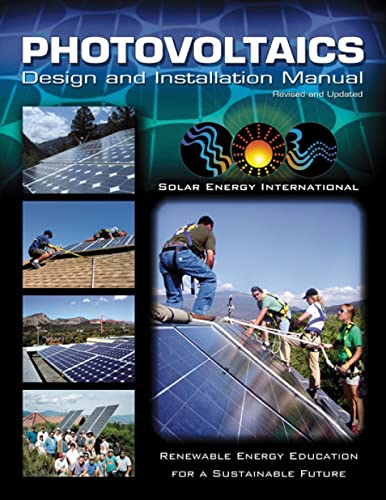
Photovoltaics: Design and Installation Manual: Solar Energy International
It also includes chapters on sizing photovoltaic systems, analyzing sites and installing PV systems, as well as detailed appendices on PV system maintenance, troubleshooting and solar insolation data
Check Price on AmazonSolar in North Carolina: sun hours, irradiance, and climate factors
North Carolina’s solar resource is stronger than most of the Mid-Atlantic and slightly below the Desert Southwest. NREL’s PVWatts/NSRDB data shows average global horizontal irradiance around 4.5–5.0 kWh/m²/day for much of the state, translating to roughly 4.3–5.0 “peak sun hours” per day.
Typical first-year production estimates per 1 kW of DC capacity (fixed-tilt, south-facing, minimal shade):
- Raleigh/Durham: ~1,350–1,420 kWh/year
- Wilmington/Coastal Plain: ~1,400–1,480 kWh/year
- Charlotte/Piedmont: ~1,320–1,400 kWh/year
- Asheville/Mountains: ~1,220–1,300 kWh/year
What this means: a 7 kW home system in Raleigh will often generate 9,000–10,000 kWh per year, covering most to all usage for an efficiency-minded household.
Climate considerations
- Heat and humidity: High summer temperatures can slightly reduce module efficiency. Choose panels with strong temperature coefficients (around −0.30 to −0.35%/°C) and robust warranties.
- Hurricanes and wind: Coastal counties have strict wind-load requirements; quality racking and code-compliant attachments mitigate risk. Insurers often require engineering letters for coastal installations.
- Hail: Large hail is less frequent than in the Plains. Tier-1 modules typically carry IEC 61215 hail certification; installer mounting practices also matter.
Average cost of solar panels in North Carolina (price-per-watt)
Based on 2024–2025 installer quotes, residential systems in North Carolina generally price at $2.50–$3.20 per watt (DC) before incentives for standard rooftop arrays (NREL benchmark; regional installer reports). Costs vary with roof complexity, equipment choices (microinverters vs. string inverters), and add-ons like batteries.
Example budgets before the 30% federal credit:
- 6 kW: $15,000–$19,200
- 8 kW: $20,000–$25,600
- 10 kW: $25,000–$32,000
After the 30% ITC, net costs effectively drop to:
- 6 kW: ~$10,500–$13,440
- 8 kW: ~$14,000–$17,920
- 10 kW: ~$17,500–$22,400
Batteries add roughly $900–$1,400 per kWh installed, depending on brand, labor, and grid-program enrollment. A typical 13–15 kWh unit often prices $10,000–$16,000 before the 30% ITC (which applies to standalone storage as well).
Comparing across the Southeast? Our cost breakdowns for neighboring markets can help contextualize quotes: see Solar in Georgia: Costs, Incentives & Top Installers (2026) and Solar in Florida: Costs, Incentives & Top Installers (2026).
By the numbers: North Carolina solar snapshot
- Rank by cumulative solar capacity: Top 5 (SEIA, 2023)
- Typical residential installed cost: $2.50–$3.20/W (NREL + installer data)
- Average residential electricity price: ~13–16¢/kWh (EIA state averages, 2024–2025 rate cases)
- Annual output per 1 kW DC in Raleigh: ~1,350–1,420 kWh (NREL PVWatts)
- Federal tax credit: 30% through 2032 (IRA/IRS)
- Rooftop lifespan: 25–30+ years; inverters 10–25 years depending on type
North Carolina solar incentives: state programs, net metering, and SRECs
State tax credits and rebates
- State tax credit: North Carolina’s former state solar tax credit expired in 2015. There is no current statewide personal income tax credit for residential PV (DSIRE).
- Utility rebates: Duke Energy’s residential “NC Solar Rebate” ended in 2022. In 2024, Duke launched a limited-capacity solar-plus-storage “PowerPair” pilot that offered upfront incentives for paired systems; program capacity and terms are subject to change and may be fully subscribed (Duke Energy filings/NCUC). Check current availability during your quote process.
Property tax treatment
- Residential property tax exclusion: North Carolina excludes the added value of a residential solar energy system from property tax assessment, meaning your home’s taxable value generally won’t increase due to PV (N.C. Gen. Stat. § 105‑275(45)). Commercial systems typically receive an 80% exclusion.
Sales tax
- As of this writing, there is no statewide sales tax exemption for residential solar equipment; standard state and local sales taxes typically apply (DSIRE).
Net metering and export credits (Duke Energy territories)
- Legacy plans: Customers who interconnected before the recent policy changes may retain traditional net metering terms for a defined period.
- New/Bridge structures: For new applicants, the NC Utilities Commission approved updated net metering frameworks that incorporate time-of-use (TOU) rates and shift toward “net billing” where exported energy is credited below the full retail rate, often closer to avoided cost. A temporary “bridge rate” has been available, preserving elements of monthly netting during a transition window, paired with TOU requirements (NCUC, Docket E‑100 Sub 180). Specifics vary by utility (Duke Energy Carolinas vs. Duke Energy Progress) and enrollment date.
- Practical takeaway: Your savings increasingly come from maximizing on-site consumption—running appliances during solar hours, using smart thermostats, precooling, and adding batteries to shift solar into evening peaks. Ask installers to model your bill under today’s TOU/export rules.
Solar Renewable Energy Certificates (SRECs)
- North Carolina does not have a homeowner-accessible, tradable SREC market like New Jersey or the District of Columbia. While RECs exist in utility procurement, residential sellers typically cannot rely on SREC income to improve ROI (DSIRE; state REPS history).
The 30% federal ITC for North Carolina homeowners
The Residential Clean Energy Credit (Internal Revenue Code § 25D) provides a 30% tax credit for eligible costs of solar PV, batteries 3 kWh or larger, and related equipment through 2032, stepping down after. Key points (IRS/Treasury guidance):
- The credit reduces your federal income tax liability; it is not refundable, but unused amounts can usually carry forward.
- Applies to primary and secondary residences you own in the U.S.
- Includes contractor labor, permitting fees, balance-of-system components, and energy storage (standalone or paired with solar).
- Keep all itemized receipts and Form 5695 with your tax records; consult a tax professional for eligibility and carryforward specifics.
Best solar installers and companies serving North Carolina
North Carolina has a mature solar market with strong local firms and reputable national providers. Always collect 2–3 quotes, verify NABCEP-certified professionals on the design/installation team, and confirm workmanship and roof-penetration warranties in writing.
Notable North Carolina–focused installers (based on public reviews, years in business, and service footprints):
- Southern Energy Management (Triangle + statewide): Residential/commercial PV and batteries; long-standing local presence; NABCEP credentials.
- 8MSolar (Triangle + Triad): Residential and commercial design-build; strong engineering focus and storage experience.
- Yes Solar Solutions (Cary/ statewide): Residential PV, storage, and EV charging; NABCEP-certified; local service department.
- Cape Fear Solar Systems (Wilmington/Coastal): Coastal expertise, hurricane-code experience, and service coverage along the coast.
- NC Solar Now (Raleigh + statewide): Turnkey residential PV and battery installs with in-house crews.
Reputable nationals with NC coverage:
- Sunrun, Tesla, ADT Solar, Momentum Solar, and Palmetto operate in many NC metros. Compare equipment options, contract types, and service response times before committing.
Installer selection checklist
- Licensing/insurance in NC, NABCEP certifications
- Roof and electrical warranties (10+ years preferred), module/inverter warranties (20–25 years modules; 10–25 years inverters)
- Shade analysis and production modeling (NREL PVWatts or equivalent)
- Clear net metering/export and TOU modeling based on your actual tariff and usage
- Post-install service commitments and monitoring platform details
ROI and payback period for solar in North Carolina
Step 1: Estimate production. A 7 kW system in Raleigh typically generates ~9,300–9,900 kWh/year (NREL PVWatts). In Charlotte, ~9,000–9,600 kWh; in Asheville, ~8,500–9,100 kWh.
Step 2: Value the kilowatt-hours. With average residential rates around 13–16¢/kWh (EIA), each self-consumed kWh avoids that retail cost. Under modern net billing, exported kWh receive a lower credit—often near avoided cost—so designs that increase self-use (smart loads or batteries) improve ROI.
Step 3: Compare against system cost. Using $2.70/W as a mid-range installed price:
- 7 kW gross cost: ~$18,900
- Less 30% ITC: −$5,670
- Net out-of-pocket (before any utility pilot incentives): ~$13,230
Annual bill savings can range widely based on TOU/export rules and behavior:
- Without a battery, typical savings might be $1,000–$1,400/year if most generation coincides with your usage and TOU periods.
- With a properly sized battery shifting solar to evenings and peaks, modeled savings can rise 10–30% relative to solar-only, plus resiliency value during outages.
Indicative payback periods
- Solar-only: ~8–12 years
- Solar + battery: ~10–14 years (can shorten if you participate in utility battery programs or face steep TOU peaks)
Long-term returns
- Panels often carry 25-year performance warranties guaranteeing ~84–92% of original output in year 25. With modest maintenance, systems commonly operate 30 years, producing strong post-payback value.
- Multiple studies (including LBNL’s “Selling Into the Sun”) have found homes with owned solar sell at a premium, often on the order of $3–4 per installed watt, though results vary by market and system age.
North Carolina-specific permitting, HOA rules, and interconnection
Permitting timelines
- Local AHJs (Authorities Having Jurisdiction) typically turn around residential solar permits in 1–4 weeks for standard roofs; complex structures may take longer. Permit fees often range from ~$50 to a few hundred dollars.
HOA restrictions
- North Carolina’s solar access law (N.C. Gen. Stat. § 22B‑20) limits homeowners’ associations from prohibiting solar, especially on roof planes that do not face a public street. HOAs may impose “reasonable” aesthetic restrictions, and covenants can still restrict front-facing installations unless the governing documents explicitly allow them. Always submit an architectural review packet before installation and ask your installer for site drawings tailored to your HOA’s rules.
Interconnection with Duke Energy
- Most residential systems use the NC Interconnection Procedures (NCIP) with Duke Energy Carolinas or Duke Energy Progress. Level 1 applications (typically up to 20 kW, certified equipment) have simplified reviews and modest application fees; larger or non-standard systems undergo additional study.
- After municipal inspections, your installer submits the Certificate of Completion; Duke then installs a bidirectional meter and issues Permission to Operate (PTO). Turnaround for PTO is commonly 2–6 weeks once inspections are complete, though timelines vary with workload.
Third-party ownership and financing
- Loans and cash purchases: Widely available via local credit unions, national lenders, and installer financing.
- Leases: Authorized in NC with NCUC oversight since 2018 (HB 589 implementation). Review escalation clauses, production guarantees, and end-of-term options.
- PPAs: Traditional third-party PPAs remain limited under NC law except for utilities and specific cases.
Equipment picks for North Carolina homes
Based on NC’s heat, humidity, and evolving TOU/export rules, prioritize reliable modules, high-uptime inverters, and storage options that integrate well with utility programs and smart load controls.

ecobee Smart Thermostat Premium with Smart Sensor and Air Quality Monitor - Programmable Wifi Thermostat - Works with Siri, Alexa, Google Assistant - Amazon.com
View on Amazon- High-efficiency panels with strong heat performance: Qcells Q.PEAK DUO or Q.TRON lines pair 20–22% efficiency with 25-year product and performance warranties. Based on these efficiency ratings and U.S. manufacturing footprint, the Qcells Q.PEAK DUO represents strong value for residential installations.
- Microinverters for shade/complex roofs: Enphase IQ8-series microinverters provide module-level optimization, long warranties, and fast monitoring. Their “Sunlight Backup” capability (limited daytime backup without a battery) is a bonus in outage-prone areas. The Enphase IQ8 Microinverter is a robust choice for most NC roof layouts.
- Battery for TOU shifting and resilience: A 10–15 kWh unit covers evening peaks and critical loads overnight. The Tesla Powerwall 3 offers ~13.5 kWh storage with integrated inverter and strong software—useful for shifting solar into on-peak windows and riding out storms.
Ask installers to model these against your actual tariff and usage profile; in many NC homes, a small battery plus smart load controls can materially improve economics under net billing.
FAQ: common questions about going solar in North Carolina
- Will solar work after hurricanes or ice storms? Roof-mounted PV is durable when installed to code, but grid-tied systems shut off during outages for safety. Add a battery plus backup circuitry for seamless resilience. Some inverter models can provide limited daytime power without a battery.
- How much roof area do I need? Roughly 75–150 square feet per kW depending on panel wattage and layout. A typical 7–9 kW array uses ~400–700 square feet.
- What if my roof is older? If your roof is >12–15 years old (asphalt shingles), consider re-roofing before installation so panels don’t need removal during the roof’s remaining life. Many installers coordinate re-roofs.
- Are ground mounts allowed? Most counties allow them with standard setbacks. They add racking cost but enable optimal orientation and easy maintenance.
- Do I need a south-facing roof? South is best, but east/west roofs often perform within ~10–15% of south at similar tilt. Installers can model exact differences.
- Can I sell SRECs? There’s no homeowner SREC market in NC. Don’t count on SREC revenue to justify a project.
- Are there income-based incentives? For residential projects, the main federal benefit is the 30% ITC. Some utilities or local programs may run limited pilots or income-qualified offerings for efficiency or demand response—ask during quoting.
- What’s the warranty outlook? Look for 25-year module and 10–25-year inverter warranties, plus at least 10 years on workmanship/roof penetrations.
Practical steps for homeowners
- Gather a recent electric bill and 15-minute interval data if available; identify your rate plan.
- Get at least two bids with TOU/export modeling and battery options.
- Confirm structural attachment details, wind/hail ratings, and coastal code compliance where relevant.
- Ask about interconnection timelines, meter-change steps, and any current Duke pilot enrollments.
- Verify post-install monitoring and service response times.
What’s next for solar in North Carolina
- Policy: Expect continued refinement of net metering and grid services that reward flexible, battery-enabled homes. The NCUC is aligning distributed energy with capacity and peak reduction needs.
- Technology: Module efficiencies continue to inch up, and battery prices trend down with growing U.S. manufacturing. Smart inverters, heat pump water heaters, and EV chargers will increasingly coordinate to maximize on-site use.
- Markets: As more households adopt TOU-aware solar-plus-storage, average paybacks should remain in the high single to low double digits—even without state tax credits—while resilience gains become a standard part of the value proposition.
If you’re evaluating bids today, anchor your decision in modeled bill impacts under your actual tariff, not just total kWh. In North Carolina’s modern net billing era, design details and smart controls often make the difference between a good system and a great one.

Emporia Gen 2 Smart Home Energy Monitor with 16 50A Circuit Level Sensors | Real Time Electricity Monitor/Meter | Solar/Net Metering - Amazon.com
View on AmazonRecommended Products
Photovoltaics: Design and Installation Manual: Solar Energy International
It also includes chapters on sizing photovoltaic systems, analyzing sites and installing PV systems, as well as detailed appendices on PV system maintenance, troubleshooting and solar insolation data
Emporia Gen 2 Smart Home Energy Monitor with 16 50A Circuit Level Sensors | Real Time Electricity Monitor/Meter | Solar/Net Metering - Amazon.com
See how much electricity your home is using anywhere, anytime. ... <strong>Add individual 50A sensors to your Vue to monitor up to 16 individual circuits</strong> — providing accurate energy use for t
ecobee Smart Thermostat Premium with Smart Sensor and Air Quality Monitor - Programmable Wifi Thermostat - Works with Siri, Alexa, Google Assistant - Amazon.com
ecobee Smart Thermostat Premium with Smart Sensor and Air Quality Monitor - Programmable Wifi Thermostat - <strong>Works with Siri, Alexa, Google Assistant</strong> - Amazon.com