
Tesla Solar in North Dakota: Panels, Roof & Pricing Guide (2026)
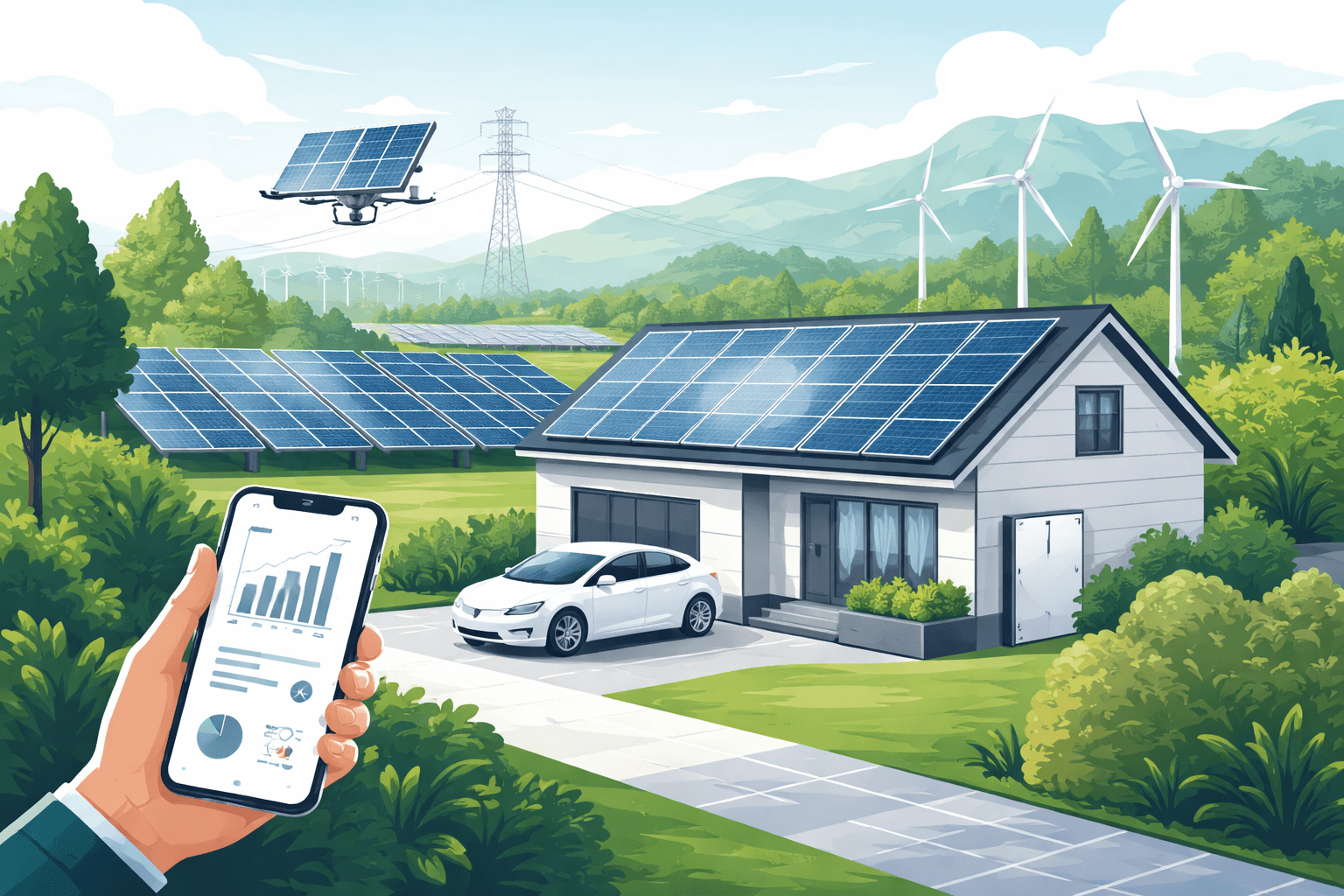
North Dakota has been a wind powerhouse for years, but residential solar is starting to catch up as equipment costs fall and federal incentives hold steady. Hardware and soft costs for residential PV have dropped roughly 40% since the mid-2010s (NREL, U.S. Solar Photovoltaic System and Energy Storage Cost Benchmark), while the 30% federal clean energy tax credit remains in place through 2032 under the Inflation Reduction Act. That’s pushing more homeowners to price out Tesla Solar in North Dakota, even in a state with relatively low retail electricity prices.
This guide covers what Tesla offers in North Dakota, current price ranges for panels versus the Solar Roof, incentives and net metering, installation timelines, and how Tesla stacks up against local installers in a cold-climate, snow-heavy market.
What Tesla offers in North Dakota: panels, Solar Roof, and Powerwall bundles
Tesla currently sells three core residential products relevant to North Dakota:
Solar Electricity Handbook - 2023 Edition: A simple, practical guide to solar energy – designing and installing solar photovoltaic systems: Boxwell, Michael
Solar Electricity Handbook - 2023 Edition: <strong>A simple, practical guide to solar energy – designing and installing solar photovoltaic systems</strong> [Boxwell, Michael] on Amazon.com. *FREE* shi
Check Price on Amazon- Tesla solar panels (roof-mounted, all-black monocrystalline modules)
- Tesla Solar Roof (building-integrated PV shingles, not just panels)
- Tesla Powerwall (home battery) bundled with either PV option
Tesla solar panels
- Efficiency and look: Tesla specifies all-black monocrystalline panels in the ~420–440 W range with module efficiencies around 20% (Tesla panel datasheets). They’re paired with the Tesla Inverter (3.8–7.6 kW models) that delivers rapid shutdown, arc-fault protection, and app-based monitoring.
- Cold-climate performance: Modern modules handle severe weather. PV panels certified to IEC 61215 are tested for hail and thermal cycling; production does fall in winter due to shorter days and snow coverage, but cold air boosts voltage and can slightly improve efficiency on clear days.
Tesla Solar Roof
- What it is: A full roof replacement that embeds PV generation into tempered-glass shingles. It’s most compelling if you already need a new roof. If your existing roof is in good shape, conventional panels are usually more cost-effective per watt.
- Availability and complexity: In snow and hail-prone regions, Tesla may adjust pricing, engineering, and availability based on roof complexity (multiple planes, dormers) and structural requirements for snow and wind loads.
Tesla Powerwall bundles
- Why it matters in ND: North Dakota experiences winter storms and outages. Pairing PV with storage lets you run essential loads during grid failures and store mid-day solar for evening use.
- Specs to know: Powerwall 3 integrates a solar inverter, provides 13.5 kWh usable energy, and can deliver up to ~11.5 kW continuous power for whole‑home backup when properly configured (Tesla specifications). Multiple units stack for higher backup power and capacity.
- Learn more: For state-specific pricing and practical pros/cons, see our detailed guide: Tesla Powerwall in North Dakota: Cost, Availability & Is It Worth It?
Tesla Solar pricing in North Dakota: panels vs. Solar Roof
Residential installed costs vary with system size, roof complexity, labor, and interconnection fees. Here’s what reputable data sources and recent quotes suggest:
- National context: NREL’s 2023 cost benchmark puts a typical U.S. residential rooftop PV system around the low‑$3 per watt (Wdc) range before incentives. EnergySage marketplace data in 2024–2025 shows many quotes between roughly $2.70–$3.30/W before incentives, depending on market.
- Tesla panels in ND: In lower-volume states like North Dakota, Tesla’s online quotes often land near the lower end of local market pricing thanks to standardized designs—roughly $2.40–$3.00/W before incentives for conventional panels is a reasonable expectation, though rural travel and winter scheduling can push quotes higher.
- Typical system sizes: Most ND homes price out 6–10 kWdc systems. At $2.70/W, a 7 kW system is about $18,900 before incentives; the 30% federal tax credit would reduce net cost to roughly $13,230 (excluding any storage, electrical upgrades, or roof work).
- Powerwall adders: Expect roughly $9,000–$12,000 per Powerwall 3 installed in mixed U.S. markets, with per‑unit pricing sometimes lower when installed in pairs due to shared labor. Exact ND quotes vary by distance, panel size, and main panel upgrade needs.
- Solar Roof: Third‑party analyses place Solar Roof projects frequently in the $6–$10 per watt of PV range when including the roofing scope, with wide swings based on roof complexity and local labor. In practice, many Solar Roof projects fall between $45,000 and $90,000 before incentives for mid‑sized homes needing a full tear‑off and underlayment. If you don’t need a roof replacement, conventional panels almost always deliver a lower $/W and faster payback.
By the Numbers: North Dakota production, bills, and payback
- Solar resource: NREL’s PVWatts shows that a fixed‑tilt, south‑facing 7 kW system in central/eastern North Dakota can generate on the order of 9,500–10,500 kWh per year, depending on shading, tilt, and snow cover. That implies a capacity factor roughly in the mid‑teens (typical for upper‑Midwest rooftops).
- Electricity prices: EIA data puts North Dakota residential rates around 10–11 cents/kWh in recent years—below the U.S. average. Lower rates lengthen payback vs. coastal states.
- Annual bill offset: At 10.5 cents/kWh, 10,000 kWh/year of solar output offsets about $1,050/year before any time‑of‑use differential or fixed charges. Battery storage can increase self‑consumption but does not increase generation.
- Simple payback (panels only): A $13,230 net cost (post‑ITC) divided by ~$1,050/year avoided bills suggests ~12–13 years, assuming stable rates, minimal snow losses, and standard utility credits. Actual outcomes vary with utility rate structures, winter snow cover, and any roof or electrical upgrades.
- Winter production: Expect significant seasonal swings. Output in December/January can be a fraction (20–35%) of July production due to shorter days and snow.
How to order Tesla Solar in North Dakota: timeline and steps
- Online design and quote
- Enter your address on Tesla’s site. The tool uses satellite imagery to estimate roof planes, shading, and system size. You’ll see a preliminary system size, modeled annual kWh, and an estimated price.
- Virtual or in‑person site assessment
- Tesla or a certified installer confirms roof condition, rafter spacing, electrical panel capacity, and any trenching or conduit runs. In North Dakota, winter assessments may be limited by snow and ice—spring/fall visits can be faster.
- Engineering, permits, and interconnection
- Tesla prepares stamped electrical/structural plans and submits permits to your authority having jurisdiction (city/county) and an interconnection application to your utility (e.g., Xcel Energy in Fargo/Moorhead service areas, Montana‑Dakota Utilities, or Otter Tail Power). Approval times vary widely; 2–8 weeks is common in many U.S. markets, but rural co‑ops can run longer.
- Installation day(s)
- Most 6–10 kW systems install in 1–2 days. Solar Roofs take longer due to tear‑off and underlayment. Winter installs are possible, but extreme cold, high winds, or snow/ice on steep slopes can trigger rescheduling.
- Inspection and Permission to Operate (PTO)
- After local inspection, your utility swaps the meter (if needed) and issues PTO. Many ND homeowners report 2–6 weeks from install to PTO, but timelines depend on utility workload and season.
- App monitoring and fine‑tuning
- You’ll see real‑time production and consumption in the Tesla app (and Powerwall state of charge if installed). Configure backup reserve levels and time‑based control if your utility has time‑of‑day pricing.
North Dakota solar incentives that apply to Tesla installations
Federal Clean Energy Tax Credit (ITC): 30% credit on eligible solar (and battery if installed with or after solar and charged primarily from solar). Claim via IRS Form 5695; unused credit can typically carry forward. Applies to Tesla panels and Solar Roof PV components.
Net metering: North Dakota requires investor‑owned utilities to offer net metering for systems up to a certain size threshold (often up to 100 kW for residential/small commercial), administered in each utility’s tariff (DSIRE, Net Metering – ND). Credit rates and annual true‑up practices vary by utility and can include credits at retail rates with annual excess reconciled at an avoided‑cost rate. Always confirm details with your specific utility.
Property tax treatment: North Dakota statutes provide property tax relief for certain renewable energy systems by excluding added solar value from assessed value for a defined period in many jurisdictions (DSIRE, Renewable Energy Property Tax Exemption – ND). Implementation is local—ask your county assessor how rooftop PV is handled.
USDA REAP (farms and rural small businesses): The Rural Energy for America Program can cover up to 50% of eligible project costs for qualifying agricultural producers and rural small businesses, with competitive application windows (USDA). Many North Dakota farms and small businesses use REAP to make PV pencil out in low‑rate territories.
Utility rebates: Limited in North Dakota. Check your utility’s current programs; most incentives are concentrated in energy efficiency rather than rooftop solar.
Tesla Solar reviews from North Dakota customers: what owners report
Because North Dakota’s residential solar market is still small, in‑state reviews are fewer than in high‑adoption states. Trends from cold‑climate customers and broader Tesla owner feedback include:
What owners like
- Competitive pricing and clean aesthetics (flush mounts, black hardware)
- Simple app that unifies solar and Powerwall monitoring
- Strong long‑term performance warranties on panels
What to watch
- Scheduling and communication can be uneven in low‑volume states, especially around winter weather windows
- Solar Roof quotes can rise with complex roofs; panels are more predictable and typically cheaper per watt
- Post‑install service may be slower in rural areas served by traveling crews
Cold‑climate notes
- Snow shed: Panels at steeper tilts shed snow faster after sunny breaks; micro‑ridges (module frames) can briefly dam snow. Snow guards may be advisable above walkways.
- Batteries in the cold: Powerwall units include thermal management and are rated for cold climates; extreme cold can temporarily limit charge acceptance until the unit warms itself.
For a regional look at Tesla’s pricing and performance in a similar climate, see our neighboring guide: Tesla Solar in Minnesota: Panels, Roof & Pricing Guide (2026).
Tesla vs. local North Dakota installers: pros, cons, and price comparison
Tesla advantages
- Price discipline: Standardized designs frequently produce lower $/W quotes than bespoke local bids
- Integrated ecosystem: Panels, inverter, Powerwall, and app are designed to work together
- Brand‑backed warranties and widely available hardware
Local installer advantages
- Customization: Choice of panel brands (e.g., high‑efficiency or specialty modules), racking for steep/complex roofs, and microinverters vs. string inverters
- Faster service calls: Local techs can respond quickly, important in rural or winter settings
- Roofing partnerships: Strong relationships with roofers for tricky underlayment, snow/ice‑dam mitigation, and structural retrofits
Price ranges observed in the Upper Midwest (before incentives)
- Tesla panels: often ~$2.40–$3.00/W in smaller markets, subject to site conditions
- Local installers: commonly ~$2.80–$3.60/W depending on equipment (e.g., microinverters, premium modules) and travel
Which to choose?
- If you value the lowest price and a streamlined app experience, and your roof is straightforward, Tesla frequently wins on cost.
- If you have a complex roof, want specific equipment (e.g., microinverters on every module), or prioritize rapid post‑install service, a top local installer is a strong option—ask for module‑level shade analysis and a 25‑year performance guarantee.
Practical add‑ons for ND homes
- Snow management: Consider snow retention hardware where slides could threaten gutters or walkways. Products like S‑5! snow guards are designed for metal and shingled roofs—ask your installer to specify and engineer correctly.
- Energy monitoring: An Emporia Vue energy monitor can help quantify winter electric heat loads and right‑size your solar+storage.
- EV charging: Pairing solar with a smart Level‑2 charger such as the ChargePoint Home Flex can automate off‑peak or solar‑preferred charging to improve self‑consumption.
Tesla Solar warranty in North Dakota: what it covers
- Tesla panels: Typically 25‑year performance warranty (e.g., at least ~85% nameplate power at year 25) and product warranty up to 25 years per datasheet.
- Tesla Inverter: Limited warranty commonly 12.5 years (check your model’s specific terms).
- Powerwall: 10‑year warranty with guaranteed energy retention (often 70% of usable capacity at year 10 for normal residential cycling), with unlimited cycles when primarily charged from solar under U.S. terms.
- Workmanship: Tesla provides a limited workmanship warranty that covers roof penetrations and installation defects for a defined term. Request the current warranty booklet with your quote for exact coverage and transferability.
FAQ: Tesla Solar in North Dakota
Q: Is Tesla Solar Roof actually available in North Dakota? A: Availability can vary by ZIP code and roof complexity. Use Tesla’s configurator to check; if Solar Roof isn’t offered for your home, conventional panels almost always are.
Q: How does snow affect production? A: Snow temporarily blocks production until it sheds or melts. Over a full year, studies in snowy climates find total losses from snow in the single‑digit to low‑teens percent for well‑sited arrays, but this varies. Steeper, south‑facing roofs clear faster.
Q: What panel tilt is best for North Dakota? A: A tilt roughly near your latitude (mid‑40s degrees) maximizes total annual output, but your roof pitch will usually dictate tilt. Installers often prioritize south or near‑south orientation and minimizing shade.
Q: Are Tesla panels hail‑rated? A: Yes. Tesla modules carry IEC 61215 certification, which includes hail impact tests using 25 mm ice balls at speed. No module is hail‑proof; insurance coverage for severe hail is still essential.
Q: How long from order to PTO? A: Commonly 6–12 weeks in many U.S. markets, but winter weather, permitting backlogs, and rural utility scheduling can extend timelines in North Dakota.
Q: Will my HOA allow Tesla solar? A: Many states protect the right to install solar with reasonable restrictions; check your HOA covenants. Low‑profile rail systems and black panels typically meet aesthetic standards.
Q: Can I back up my whole house with one Powerwall? A: It depends on your peak loads. A single Powerwall 3 can deliver high continuous power, but large homes with electric heat, well pumps, or AC often need two or more units or a managed‑loads panel. A home energy audit helps right‑size storage.
Q: Does Tesla work with time‑of‑use (TOU) rates in ND? A: If your utility offers TOU, the Tesla app can optimize battery charge/discharge to reduce peak charges. Most North Dakota utilities have flat residential rates, but check your tariff.
What this means for North Dakota homeowners
- Panels vs. Solar Roof: If you don’t need a new roof, Tesla’s conventional panels generally deliver the fastest payback in North Dakota’s low‑rate environment.
- Storage adds resilience: For rural feeders and winter storms, a Powerwall can be as much about peace of mind as economics—especially for homes with wells, sump pumps, or medical equipment.
- Incentives matter: The 30% federal tax credit is the big lever. Net metering policies and any property tax treatment at the county level help tilt the math.
- Shop two ways: Get a Tesla online quote and at least one detailed local bid with shading analysis and equipment spec sheets. Compare $/W, warranties, and service promises—not just headline prices.
Where it’s heading: Module efficiencies continue to tick up, inverters are getting smarter about grid support and rapid shutdown, and batteries like Powerwall 3 are consolidating hardware. As permitting and interconnection modernize, North Dakota’s solar uptake should rise—from today’s small base—to complement the state’s nation‑leading wind portfolio.

Emporia Gen 2 Smart Home Energy Monitor with 16 50A Circuit Level Sensors | Real Time Electricity Monitor/Meter | Solar/Net Metering - Amazon.com
View on Amazon
ChargePoint HomeFlex Level 2 EV Charger J1772 - Fast Smart Battery Power Charging at Home for Electric Automobile Vehicles - NEMA 14-50 Plug for Electric Car : Automotive
View on AmazonRecommended Products
Solar Electricity Handbook - 2023 Edition: A simple, practical guide to solar energy – designing and installing solar photovoltaic systems: Boxwell, Michael
Solar Electricity Handbook - 2023 Edition: <strong>A simple, practical guide to solar energy – designing and installing solar photovoltaic systems</strong> [Boxwell, Michael] on Amazon.com. *FREE* shi
Emporia Gen 2 Smart Home Energy Monitor with 16 50A Circuit Level Sensors | Real Time Electricity Monitor/Meter | Solar/Net Metering - Amazon.com
See how much electricity your home is using anywhere, anytime. ... <strong>Add individual 50A sensors to your Vue to monitor up to 16 individual circuits</strong> — providing accurate energy use for t
ChargePoint HomeFlex Level 2 EV Charger J1772 - Fast Smart Battery Power Charging at Home for Electric Automobile Vehicles - NEMA 14-50 Plug for Electric Car : Automotive
Home Flex Hardwired offers the fastest charge at up to 50A. NEMA 6-50 and 14-50 versions <strong>provide up to 40A and work with existing 240V wall outlets</strong>. Yes! Choose from our list of prefe