
Tesla Solar in West Virginia: Panels, Roof & Pricing Guide (2026)
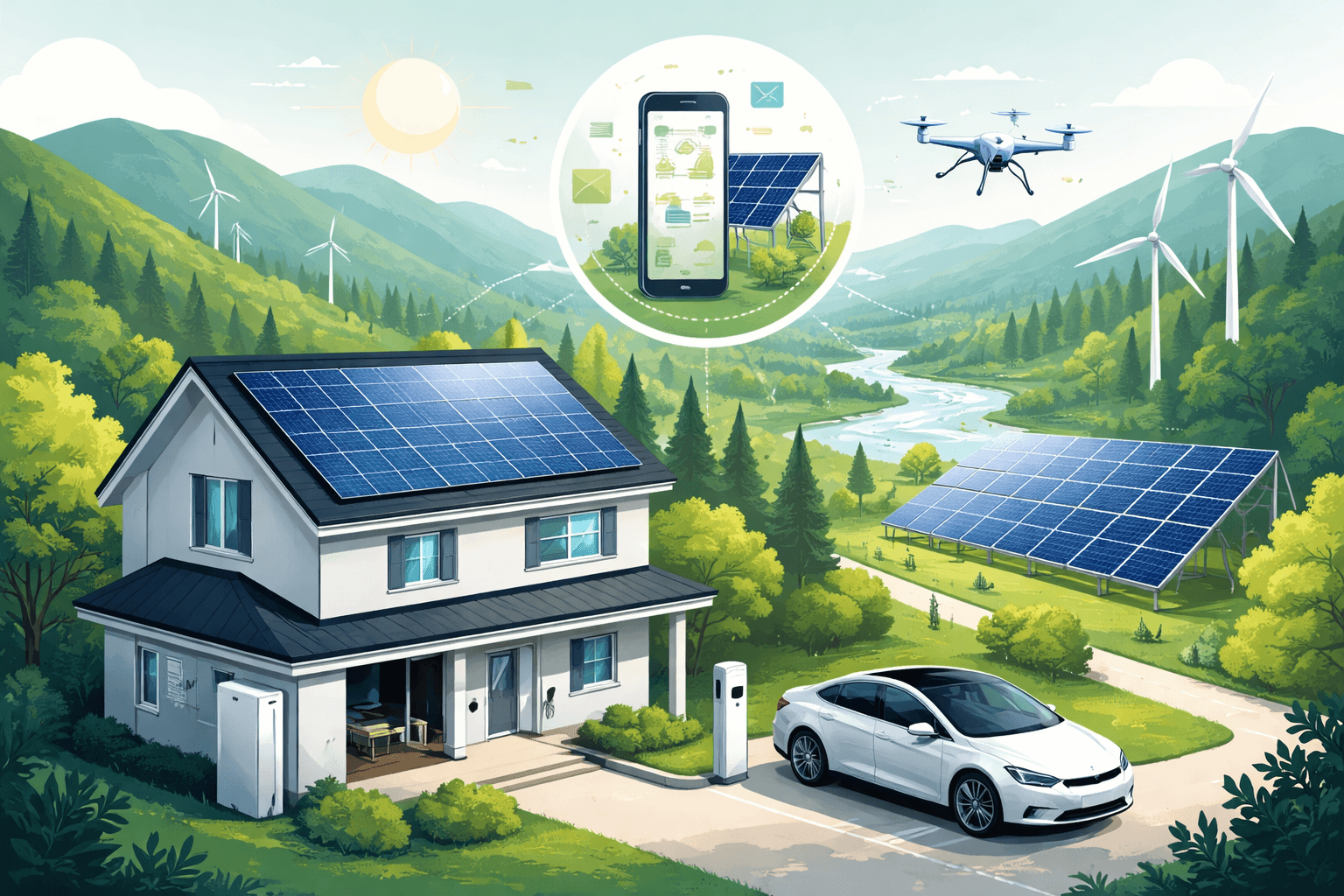
West Virginia homeowners are kicking the tires on Tesla Solar in West Virginia for a simple reason: the economics have sharpened. Residential rates rose across much of Appalachia in 2024–2025 (U.S. EIA), and a typical 8 kW array in West Virginia can offset roughly 9,500–10,800 kWh per year based on NREL PVWatts data for Charleston and Morgantown. With the 30% federal tax credit in place through at least 2032 (IRS/Inflation Reduction Act), Tesla’s standardized pricing plus bundled Powerwall backup makes the package more competitive than it was just a few years ago.
Below, we break down Tesla’s products, realistic 2026 pricing in the Mountain State, incentives, how the install process works, and what West Virginians report after living with the systems.
Tesla Solar products available in West Virginia
Tesla sells three core options in West Virginia:
Solar Electricity Handbook - 2023 Edition: A simple, practical guide to solar energy – designing and installing solar photovoltaic systems: Boxwell, Michael
Solar Electricity Handbook - 2023 Edition: <strong>A simple, practical guide to solar energy – designing and installing solar photovoltaic systems</strong> [Boxwell, Michael] on Amazon.com. *FREE* shi
Check Price on Amazon- Tesla Solar Panels (roof-mounted modules + Tesla Solar Inverter)
- Tesla Solar Roof (building‑integrated photovoltaic shingles)
- Tesla Powerwall home battery (often bundled with panels or Solar Roof)
What each includes
- Tesla Solar Panels: All‑black monocrystalline modules with low‑profile mounting, a Tesla Solar Inverter, wiring, monitoring in the Tesla app, and production guarantees. Tesla’s inverters support rapid shutdown and module‑level monitoring for safety and troubleshooting.
- Tesla Solar Roof: Glass solar tiles integrated with non‑solar glass tiles to fully replace your roof. Includes underlayment, flashings, fire/wind/hail‑rated tiles, the Tesla inverter, and the same app‑based monitoring. Roof geometry and complexity (valleys, dormers, pitch) strongly influence price.
- Tesla Powerwall (current generation): 13.5 kWh usable storage per unit, with higher peak power output than earlier models and an integrated solar-ready inverter. Multiple units can be stacked for more runtime and whole‑home backup. Powerwall pairs with either Tesla panels or the Solar Roof and enables backup, self‑consumption, and time‑of‑use arbitrage if and when TOU rates become available.
Availability and grid compatibility
- Utility interconnection for residential systems in West Virginia is supported by major investor‑owned utilities such as Mon Power and Appalachian Power. Tesla (and its certified partners) handle the paperwork and NEC/UL compliance for anti‑islanding protection required by the West Virginia Public Service Commission (PSC) interconnection rules.
Why West Virginia homes are a good fit
- NREL’s PVWatts estimates show 1 kW of south‑facing solar in central West Virginia produces roughly 1,200–1,350 kWh per year depending on tilt and shading. That means an 8 kW array can cover a substantial share of an average home’s annual load.
- Many counties face storm‑related outages. Powerwall can keep critical loads running, which is increasingly valued in rural service territories.
Tesla Solar pricing in West Virginia: panels vs. Solar Roof cost comparison
The big question is cost. While quotes vary by roof, service territory, and supply chain conditions, these 2026 ballpark figures reflect current marketplace data from national trackers (LBNL’s Tracking the Sun, EnergySage marketplace reports) and regional quoting we’ve seen across Appalachia.
Panels (roof‑mounted)
- Typical system sizes: 6–12 kW for most single‑family homes
- Pre‑incentive installed price: roughly $2.40–$3.10 per watt in West Virginia for Tesla panels
- Example: 8 kW x $2.75/W = $22,000 before incentives
- Federal tax credit (30%): reduces net cost to ~$15,400 in the example
- Optional Powerwall: add ~$8,500–$10,500 per unit before the 30% credit (final net ~$6,000–$7,400 each)
Solar Roof (building‑integrated)
- Solar Roof replaces your roofing material and embeds PV into glass tiles
- Project pricing depends heavily on roof complexity and non‑solar tile area
- 2026 pre‑incentive all‑in price for a mid‑complexity roof commonly lands around $45,000–$75,000 for a 6–10 kW Solar Roof, including the roofing scope and PV equipment
- The 30% federal credit applies to the solar‑producing portion and eligible related costs; Tesla’s proposals typically break this out. The effective per‑watt cost of a Solar Roof is generally higher than panels, but can make sense if you already need a high‑quality roof replacement within the next few years
How fast it pays back
- Production: 1 kW yields ~1,200–1,350 kWh/year (NREL). An 8 kW system: ~9,600–10,800 kWh/year
- Bill offset depends on your rate. EIA shows West Virginia residential rates trending around the low‑to‑mid‑teens cents per kWh in 2025. At $0.14/kWh, an 8 kW system could offset ~$1,350–$1,500/year before any fixed charges
- Simple payback for Tesla panels tends to fall in the 8–12 year range in West Virginia, depending on shading, precise rate, and whether you add a battery. Solar Roof payback is usually longer unless you were planning a premium roof replacement anyway
How to order Tesla Solar in West Virginia: timeline, site assessment, and installation
Ordering steps
- Online design and pricing: You’ll enter your address and typical bill. Tesla generates a preliminary design and cost, including recommended system size and optional Powerwall(s).
- Remote assessment: You upload recent utility bills and roof photos. Tesla refines the layout using satellite imagery and, if needed, schedules a site visit.
- Contract and permitting: You e‑sign; Tesla handles county/municipal permits and utility interconnection applications.
- Installation: A Tesla crew or Tesla‑certified installer completes the build.
- Inspections and permission to operate (PTO): Local inspectors sign off, the utility completes its meter work, and you go live. Monitoring activates in the Tesla app.
Typical West Virginia timeline
- Design, contract, and loan processing: 1–2 weeks
- Permitting and interconnection approval: 2–6 weeks depending on jurisdiction and utility workload
- Installation: Panels 1–2 days on site; Solar Roof 5–10+ days depending on complexity
- Inspections and PTO: 2–8 weeks after install. Rural service territories sometimes move faster; metro areas can see seasonal backlogs
Practical tips
- Prioritize shading analysis. Valleys and mountain tree cover can reduce output; ask Tesla to provide expected annual kWh from PVWatts and confirm the tilt/azimuth assumptions match your roof planes.
- Panel placement matters. S arrays often beat W/E planes on annual yield; split‑arrays with optimizers help if you have multiple roof faces.
- If you want backup, specify critical loads early (fridge, well pump, heat pump air handler) for a right‑sized Powerwall design.
For deeper battery specifics and real‑world pricing in the state, see our dedicated page: Tesla Powerwall in West Virginia: Cost, Availability & Is It Worth It? (/renewable-energy/tesla-powerwall-in-west-virginia-cost-availability-worth-it)
West Virginia solar incentives that apply to Tesla installations
- Federal Investment Tax Credit (ITC) — 30%: Applies to eligible project costs for Tesla panels, Solar Roof (solar‑producing components and eligible related costs), and Powerwall when installed with solar for storage of on‑site generation. Consult a tax professional.
- Net metering: West Virginia’s net metering policy, overseen by the WV Public Service Commission, allows residential systems up to a defined capacity limit to receive bill credits for excess generation exported to the grid. As of 2026, investor‑owned utilities continue to support net metering for residential customers, with crediting details set by utility tariff. Always confirm your utility’s current tariff language and any annual true‑up rules when you apply.
- Property and sales tax: West Virginia does not currently offer a statewide solar income tax credit, sales tax exemption, or property tax exemption for residential PV (DSIRE). Check your county assessor for how PV is treated locally and whether assessments reflect added value.
- Financing: National solar loans (secured and unsecured) remain widely available; credit unions in the region sometimes offer competitive APRs for energy improvements.
If you’re still comparing incentives and installer options statewide, here’s a practical overview tailored to the Mountain State: Solar in West Virginia: Costs, Incentives & Top Installers (2026) (/renewable-energy/solar-in-west-virginia-costs-incentives-installers-2026)
Tesla Solar reviews from West Virginia customers: what owners actually report
Tesla’s customer feedback in West Virginia largely mirrors national trends reported on third‑party review platforms and consumer forums:
What owners like
- Competitive, transparent pricing: Tesla’s online quotes are typically among the lower bids in a multi‑bid comparison, a pattern noted in marketplace data (EnergySage).
- Clean aesthetic: All‑black panels and low‑profile racking score well with HOAs and homeowners.
- The app and ecosystem: A single app for live solar production, battery state‑of‑charge, and backup events is a consistent positive. Powerwall storm‑watch functionality is a frequent highlight during Appalachian storms.
What owners flag as challenges
- Scheduling and communication: Some projects experience long gaps between permit approval and crew availability, especially for Solar Roof. Communication cadence can vary by local partner.
- Service queues: Warranty or troubleshooting visits can take time in rural counties, where fewer crews cover larger areas.
- Solar Roof complexity: Homes with multiple dormers, steep pitches, or intricate flashing details tend to see higher bids and longer timelines.
Net, West Virginians who prioritize the lowest cost per watt and bundled backup tend to rate their Tesla panel systems highly. Those pursuing Solar Roof do so for the integrated look or a needed roof replacement—and should budget extra time for design and installation complexity.
Tesla vs. local West Virginia installers: pros, cons, and price comparison
Tesla strengths
- Price discipline: Standardized designs and national purchasing often deliver quotes ~5–15% below many local bids for similar equipment, based on marketplace medians.
- Integrated battery: Powerwall is a known quantity with strong app integration and widely available replacement parts.
- Streamlined process: Online design, e‑contracts, and in‑app updates simplify the path from quote to PTO.
Where local installers shine
- Customization: Local EPCs may offer premium module choices, microinverters (e.g., Enphase), or black‑on‑black modules from specific brands, and can tailor around unusual rooflines or ground‑mounts.
- Service responsiveness: Proximity matters for same‑week truck rolls, O&M, and snow/ice‑related follow‑ups.
- Roof work bundling: Roofers with in‑house solar can be cost‑effective if you need sheathing repairs, skylight changes, or metal‑roof attachment expertise.
Expected price spread (2026)
- Tesla panels in WV: ~$2.40–$3.10/W before the federal tax credit
- Local installers: ~$2.90–$3.80/W before credit for similar DC capacity, with more variability by equipment brand and inverter type
Practical approach
- Get at least three bids, verify kWh/year estimates against NREL PVWatts, and compare total lifetime cost of energy ($/kWh) rather than just $/W. Include service response time and warranty labor coverage as decision factors.
If you live along the Virginia border and are cross‑shopping incentives and availability, you can also scan our Virginia‑specific Tesla guide: Tesla Solar in Virginia: Panels, Roof & Pricing Guide (2026) (/renewable-energy/tesla-solar-in-virginia-panels-roof-pricing-2026)
Tesla Solar warranty and what it covers in West Virginia
- Panels and power production: Tesla provides a 25‑year performance warranty on solar panels, typically guaranteeing at least 80–85% of nameplate output at year 25. Module product warranties generally run 12–25 years depending on the specific panel sourced at the time of install.
- Solar Roof: Coverage includes weatherization on roofing tiles and a 25‑year power production warranty on the solar tiles. Exact terms and wind/hail ratings are listed in Tesla’s project‑specific documents.
- Inverter: Tesla Solar Inverter carries a product warranty (commonly 12.5 years). If a later‑generation inverter is used with Powerwall 3, you may see combined coverage language—review your agreement.
- Powerwall: 10‑year warranty with guaranteed energy retention (commonly 70% at year 10 under normal residential use). The warranty applies in West Virginia identically to other U.S. states.
Ask your advisor for the current warranty PDFs at contracting; terms can update with new hardware revisions.
By the Numbers: Tesla Solar in West Virginia
- 1 kW of rooftop PV in WV: ~1,200–1,350 kWh/year (NREL PVWatts)
- Typical residential system: 6–12 kW; 8 kW offsets ~9,600–10,800 kWh/year
- Installed cost (panels): ~$2.40–$3.10/W before incentives (2026 quotes)
- Federal credit: 30% through at least 2032 (IRS/IRA)
- Battery: ~13.5 kWh per Powerwall; 1–3 units common for whole‑home or critical‑load backup
- Payback: Often 8–12 years for panels in WV, longer for Solar Roof unless replacing a roof anyway
Practical add‑ons that improve value
- Load monitoring: High‑resolution circuit‑level data can right‑size your system and battery. Based on accuracy and app features, the Sense Energy Monitor represents strong value for residential installations.
- EV charging: If you’re adding an EV soon, level‑2 charging lets you soak up solar midday and shift less to the evening. With high efficiency and flexible scheduling, the Emporia Level 2 EV Charger pairs well with solar‑first charging strategies.
- Hot‑water efficiency: Water heating is often a home’s #2 or #3 load. NREL finds heat pump water heaters cut water‑heating energy use by ~60%. The Rheem Hybrid Heat Pump Water Heater can materially reduce evening demand, extending Powerwall runtime.

EMPORIA Level 2 EV Charger w/ J1772 Charger, 48 amp ...
View on Amazon
Sense Flex/Solar Add-on Sensors : Patio, Lawn & Garden
View on AmazonFAQ: common questions about Tesla Solar in West Virginia
Is Tesla Solar available across West Virginia?
- Yes. Tesla and Tesla‑certified installers operate statewide, including Charleston, Huntington, Morgantown, Wheeling, Beckley, and many rural counties, subject to roof and interconnection feasibility.
Do I need a new roof before installing Tesla panels?
- If your asphalt roof has less than ~10–12 years of life, most installers recommend re‑roofing first. Solar panels can last 25+ years; it’s cheaper to align timelines than to remove/reinstall later.
How does snow and ice affect output in West Virginia winters?
- Production dips during short winter days. Light snow usually slides off on sunny days due to panel heat gain and slick glass. Designs with higher tilt and minimal obstructions clear faster. Annual yield estimates already account for seasonal variation.
Is Tesla Solar Roof worth it here?
- It can be—if you value the integrated look and need a roof replacement. For pure payback, conventional panels generally win on $/W. Request both a panel and Solar Roof proposal for your address to compare $/kWh over 25 years.
Will I get retail credit for excess generation?
- West Virginia maintains net metering via PSC rules and utility tariffs. Credit structures and true‑ups can differ by utility and rate class. Confirm your specific tariff at the time of application with Mon Power or Appalachian Power.
How many Powerwalls do I need for backup?
- One Powerwall (13.5 kWh) typically supports critical loads (refrigeration, lighting, networking, gas‑furnace blower) for 12–24 hours depending on usage. All‑electric homes or well pumps often justify 2–3 units to ride through longer outages or power HVAC.
What if I live in a hollow with tree cover?
- Ask Tesla to run PVWatts with shade factors measured on site. If south‑facing roof planes are limited, a ground mount or a smaller array may produce better value than forcing modules onto shaded planes.
Can I pair Tesla panels with non‑Tesla batteries later?
- Tesla panels work with many inverters, but Tesla’s ecosystem is optimized around its own inverter and Powerwall. If cross‑brand flexibility is a must, clarify inverter choice and battery compatibility before signing.
Does Tesla handle SRECs in West Virginia?
- West Virginia does not have a statewide renewable portfolio standard with residential SREC markets like some neighboring states. If you’re near a border and exploring cross‑state SREC eligibility, discuss with your installer; administrative overhead may outweigh value.
What financing options does Tesla offer?
- Tesla typically offers cash purchase and loans with various APRs and terms. Compare with local credit union loans and confirm whether early prepayment carries any fees.
What this means for West Virginia homeowners
- If you’ve been on the fence, a 2026 quote is worth your time: the 30% federal credit holds, hardware is mature, and Tesla’s price per watt is competitive in WV.
- Pairing 1–2 Powerwalls is increasingly common in storm‑prone counties; higher‑power new‑gen hardware improves whole‑home backup feasibility.
- For pure economics, conventional Tesla panels generally beat Solar Roof. Pick Solar Roof when you value the look and already need a premium roof replacement.
Next steps
- Pull a Tesla online quote and a couple of local bids. Verify kWh/year estimates using NREL PVWatts assumptions, and compare lifetime $/kWh and service terms—not just sticker prices.
- Read our deeper state context on rates, installer options, and incentive fine print: Solar in West Virginia: Costs, Incentives & Top Installers (2026) (/renewable-energy/solar-in-west-virginia-costs-incentives-installers-2026)
- If backup is a priority, review specs, wiring options, and pricing here: Tesla Powerwall in West Virginia: Cost, Availability & Is It Worth It? (/renewable-energy/tesla-powerwall-in-west-virginia-cost-availability-worth-it)
Recommended Products
Solar Electricity Handbook - 2023 Edition: A simple, practical guide to solar energy – designing and installing solar photovoltaic systems: Boxwell, Michael
Solar Electricity Handbook - 2023 Edition: <strong>A simple, practical guide to solar energy – designing and installing solar photovoltaic systems</strong> [Boxwell, Michael] on Amazon.com. *FREE* shi
Sense Flex/Solar Add-on Sensors : Patio, Lawn & Garden
We make it easier for people to ... future. ... Flex sensors <strong>enable tracking of 400A split-service panels, monitoring of your standby generator, dedicated circuit monitoring, or solar monitori
EMPORIA Level 2 EV Charger w/ J1772 Charger, 48 amp ...
Explore a wide selection of hardwired Level 2 EV charging stations. Features include 25-foot cables, app control, and weather-resistant construction.