
Tesla Powerwall in Virginia: Cost, Availability & Is It Worth It?

Virginia households used about 1,100–1,200 kWh of electricity per month in 2024, according to the U.S. Energy Information Administration (EIA)—roughly 25–30% higher than the U.S. average, driven by heating and cooling loads. That makes home energy resilience and bill control especially valuable. Enter the Tesla Powerwall in Virginia: a 13.5 kWh home battery that can keep critical loads running during storms and arbitrage time-of-use (TOU) rates when they’re available. With the 30% federal clean energy tax credit now applying to standalone batteries, interest is surging.
This guide explains Powerwall specs, real-world installed costs in Virginia, the incentives that exist (and those that don’t), how savings pencil out under local utility rates, installer availability, and worthy alternatives.
Powerwall overview: specs, capacity, and how it works
Tesla makes two current residential storage systems you’ll encounter in Virginia: Powerwall 2/Powerwall+ and the newer Powerwall 3.

Electrify: An Optimist's Playbook for Our Clean Energy Future
In Electrify, <strong>Griffith lays out a detailed blueprint—optimistic but feasible—for fighting climate change while creating millions of new jobs and a healthier environment</strong>. Griffith’s pl
Check Price on Amazon- Usable energy: 13.5 kWh per unit (both generations)
- Output power:
- Powerwall 2: up to 5 kW continuous, ~7 kW peak for short bursts
- Powerwall 3: higher-output integrated inverter; many installations support whole‑home backup with up to ~11 kW continuous from a single unit (exact configured output depends on code and design)
- Round-trip efficiency: about 90%
- Stackability: up to 3–10 units in parallel (Powerwall 3 commonly stacked to 40.5 kWh with three units)
- Operating temperature: roughly −4°F to 122°F (requires appropriate placement or enclosure)
- Warranty: 10 years, typically to 70% of original usable capacity, subject to cycle and usage conditions
How it works
- AC‑coupled (Powerwall 2/+) or DC‑coupled (Powerwall 3) to your home electrical system
- Charges from solar (and, under the Inflation Reduction Act, it can also charge from the grid and still qualify for the 30% tax credit if capacity is 3 kWh or larger)
- Discharges to your home during outages or peak‑price windows
- Uses a Backup Gateway (or integrated controller) to island your home safely during grid failures
In Virginia’s mixed climate—summer thunderstorms, winter ice, and coastal Nor’easters—backup value is a major driver. The EIA reports U.S. customers experienced an average of 5–7 hours of outage time in 2022 when major events are included; coastal and Mid‑Atlantic states often see more. A single 13.5 kWh Powerwall can typically cover essentials (refrigeration, lights, Wi‑Fi, some outlets, a gas furnace blower) for 12–24 hours depending on load. Whole‑home backup for heat pumps or well pumps often requires two or more units and thoughtful load management.
By the numbers: Tesla Powerwall in Virginia
- 13.5 kWh usable storage per unit; 90% round‑trip efficiency
- 5–11 kW continuous output depending on model/design
- Typical fully installed cost in Virginia: $11,000–$14,000 per unit before incentives; $7,700–$9,800 after the 30% federal tax credit
- Average Virginia residential rate: ~14–15¢/kWh in 2024 (EIA)
- Solar potential: 1 kW of rooftop PV in Richmond produces ~1,300–1,450 kWh/year (NREL PVWatts), supporting strong self‑consumption with a battery
Powerwall pricing in Virginia, including installation costs
Based on installer quotes across the Mid‑Atlantic in 2025–2026 and Tesla’s published equipment pricing, here’s what Virginia homeowners can expect:
- Standalone Powerwall (no new solar): $11,000–$14,000 per unit turnkey. This includes the battery, Backup Gateway, permits, labor, and standard electrical work. Complex main‑panel upgrades add $1,000–$3,000.
- With new solar: incremental $9,000–$12,000 per Powerwall when bundled with a PV installation, due to shared mobilization and inverter/gateway consolidation (especially with Powerwall 3’s integrated inverter).
- Multi‑unit installs: expect modest per‑unit discounts (often $500–$1,000 less per additional unit) because labor and balance‑of‑system costs scale more slowly than hardware.
Federal incentive
- 30% Residential Clean Energy Credit (Internal Revenue Code §25D), available through 2032, applies to standalone batteries ≥3 kWh and to solar‑paired systems. A $12,500 installed Powerwall yields a $3,750 federal credit.
Financing
- Many Virginia installers offer 10–25 year loans for solar+storage; note that low‑APR loans often include dealer fees that inflate project cost. If cash flow matters, compare the true APR and total paid over term vs. the tax credit timing.
Virginia battery storage incentives: state rebates, SGIP, utility programs
- Statewide rebates: None for residential batteries at this time. Unlike California’s Self‑Generation Incentive Program (SGIP), which offers $150–$1,000+/kWh for distributed storage, Virginia has no analogous statewide rebate as of 2026 (see DSIRE for updates).
- Property tax: Virginia law allows localities to exempt or reduce property taxes on solar energy equipment; some jurisdictions extend favorable treatment to energy storage when installed with solar. Because adoption is local‑option, verify with your county assessor whether a battery paired with PV is covered.
- Sales tax: No statewide sales‑tax exemption specifically for residential storage.
- Utility programs: Utility‑run battery incentives in Virginia are limited and pilot‑driven. Check with Dominion Energy Virginia and Appalachian Power for active demand response or virtual power plant (VPP) enrollments that may offer bill credits in exchange for occasional control of your battery during peak events. Programs change frequently and may be capacity‑limited.
Resources to track
- Database of State Incentives for Renewables & Efficiency (DSIRE) lists Virginia‑specific programs and local property‑tax treatment.
- Your installer should confirm whether current utility pilots or load‑control incentives can stack with the federal credit.
How the Powerwall pairs with solar in Virginia: backup vs. self‑consumption
Pairing Powerwall with rooftop solar in Virginia changes the value proposition:
- Backup power: With solar+Powerwall, your system can produce and store energy when the grid is down. On sunny days, a right‑sized array can extend multi‑day outages. NREL’s PVWatts indicates a 7 kW system in Richmond will average ~25–30 kWh/day across the year; combined with 13.5–27 kWh of storage, many homes can operate essential loads indefinitely, weather permitting.
- Self‑consumption: Virginia’s net metering provides credits for excess solar exported to the grid, but annual true‑ups may value leftover credits at the utility’s avoided cost rather than the full retail rate. Storing noon solar and using it in the evening increases onsite consumption, reducing exposure to non‑retail credits at true‑up.
- TOU arbitrage: On residential TOU rates, the Powerwall can charge when prices are low (overnight or midday) and discharge when prices are highest (late afternoon/evening). Even without solar, this can cut bills; with solar, it further boosts value by aligning solar output with peak pricing.
Rule of thumb for sizing in Virginia
- One Powerwall per 5–7 kW of solar for backup of essentials and modest TOU savings.
- Two or more Powerwalls for whole‑home backup (heat pumps, well pumps, EV charging) or larger 8–12 kW PV systems.
- Add a smart load‑management device or critical‑loads subpanel to stretch runtime and avoid oversizing.
Virginia utility rate structures and how Powerwall saves with time‑of‑use
Dominion Energy Virginia and Appalachian Power both offer optional time‑differentiated residential rates in parts of their service territories. While the exact windows and differentials change by season and tariff, Virginia homeowners commonly see peak/off‑peak spreads of 5–10¢/kWh on TOU plans.
Illustrative TOU savings math
- Assume a spread of 8¢/kWh between off‑peak and on‑peak energy.
- A Powerwall discharging 10 kWh daily during peak periods avoids 10 kWh × $0.08 = $0.80/day in energy charges.
- Accounting for 90% round‑trip efficiency, you must buy/generate ~11.1 kWh off‑peak to get 10 kWh back, slightly reducing the net spread. Effective arbitrage: ~7.2–7.5¢/kWh in many cases.
- Annualized: ~$260–$300/year per 10 kWh/day of consistent peak discharge. More with demand charges or higher spreads, less without TOU.
When TOU savings are strongest
- Homes on Dominion’s residential TOU schedule (or EV‑optimized TOU) with larger evening peaks
- Homes with solar that otherwise forfeit value at annual true‑up
- Customers who enable utility demand response or VPP events for extra bill credits
Caveats
- If you remain on a flat residential rate (no TOU), arbitrage savings are limited. The main economic drivers become outage protection and solar self‑consumption optimization.
- If your home’s evening load is small, savings cap out quickly; consider a smaller battery or focus on right‑sizing PV first.
Powerwall availability and certified installers in Virginia
Availability
- As of 2026, Powerwall 3 supply has improved compared with early 2024. Typical lead times in Virginia run 4–10 weeks from contract to install, longer if a main‑panel upgrade or complex trenching is needed.
Installers
- Virginia homeowners can buy through Tesla (direct) or through Tesla Certified Installers. Use Tesla’s online configurator and “Find an Installer” tool to compare quotes.
Permitting and interconnection timeline
- Permitting: 2–6 weeks depending on your Authority Having Jurisdiction (AHJ). Virginia follows modern electrical and fire codes for energy storage, including clearance and outdoor siting requirements.
- Utility interconnection: 2–4 weeks for solar+storage net‑metering approvals after permit sign‑off in many localities. Standalone storage that doesn’t export can be faster.
- Inspections: Plan for one electrical inspection and, if paired with solar, a separate final or utility inspection.
Placement best practices in Virginia
- Avoid unconditioned attics; garages or shaded exterior walls are common.
- Maintain code clearances; keep above known flood levels, especially in coastal zones.
- Consider a smart panel or critical‑loads subpanel to simplify backup design.
Alternatives to Tesla Powerwall in Virginia
Several strong competitors are widely available through Virginia installers. The right choice depends on inverter ecosystem, output needs, and budget.
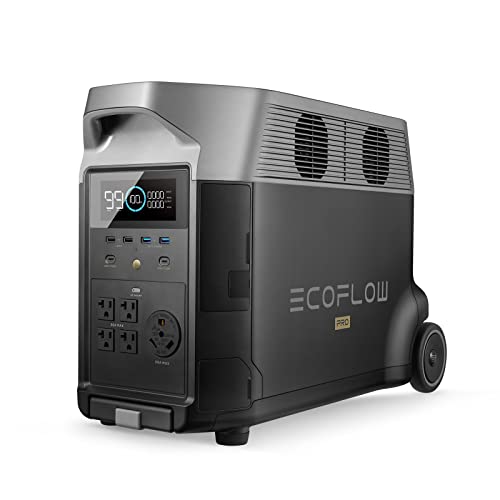
EF ECOFLOW Portable Power Station 3600Wh DELTA Pro, 120V AC Outlets x 5, 3600W, 2.7H Fast Charge, Lifepo4 Power Station, Solar Generator for Home Use, Power Outage, Camping, RV, Emergencies : Patio, Lawn & Garden
<strong>Fully recharge the lifepo4 battery in 1.8 hrs with 240V outlets(3000W), 2.7 hrs with 1800W wall outlets or solar charged in 2.8 hours with 4*400W solar panels</strong> thanks to the industry-l
Check Price on AmazonEnphase IQ Battery 5P/10T/3T
- Modular 5 kWh usable building blocks; high power density (~3.84 kW continuous per 5P module)
- Tight integration with Enphase microinverters; excellent app and reliability record
- Especially compelling if your roof uses Enphase IQ8 microinverters already
- Based on these power specs and ecosystem fit, the Enphase IQ Battery 5P represents strong value when you want flexible sizing and high peak output per kWh.
LG Energy Solution RESU Prime (10H/16H)
- 9.6–16 kWh usable; ~5 kW continuous output
- DC‑coupled with compatible string inverters; solid warranty and brand support
Generac PWRcell
- Modular 9–18 kWh usable; up to ~9 kW continuous with larger stacks
- Strong whole‑home backup capability when paired with Generac load management
- If your priority is high‑power whole‑home backup with modular capacity, Generac PWRcell is a credible alternative to compare against multi‑Powerwall stacks.
Portable/backup generators and hybrid “solar generators”
- For outage‑only use cases, a well‑installed standby generator can be lower‑cost upfront than a whole‑home battery, though it requires fuel and maintenance and emits CO₂.
- Quiet, indoor‑safe battery power stations can bridge brief outages and complement rooftop solar. The EcoFlow DELTA Pro is a capable option for mobile or backup use without permanent wiring.
Is a Tesla Powerwall worth it in Virginia?
Worth it for
- Homes experiencing seasonal outages where refrigerated food loss, medical devices, or sump/well pumps create risk
- Solar owners on TOU or facing non‑retail credits at annual net‑metering true‑up
- EV owners on EV‑optimized TOU tariffs seeking to shift household load out of peak windows
Borderline economics when
- Your utility offers only flat residential rates, you have few outages, and your evening loads are modest
- You’re installing storage solely for bill savings without solar or TOU—payback may extend beyond 10–12 years unless paired with incentives or VPP credits
Back‑of‑envelope payback example (solar+storage)
- 7 kW PV in Richmond (~9,800 kWh/year) offsets ~$1,400–$1,500/year at 14–15¢/kWh.
- One Powerwall shifting 10 kWh/day on TOU adds ~$260–$300/year, plus improved annual true‑up value if retail netting doesn’t fully apply.
- If backup value (avoided food loss, lost work time, and peace of mind) is material, many homeowners judge the package “worth it,” even if strict payback crosses 10 years. If you value pure ROI, prioritize PV first, then add storage when rates or incentives sweeten.
Practical tips for Virginia homeowners
- Start with a utility bill analysis: Identify peak hours and your winter/summer load profiles. Ask your installer to model TOU arbitrage using at least 15‑minute data if available from your utility portal.
- Right‑size for backup, not just kWh: Whole‑home heat pumps can draw 3–6 kW each; a single Powerwall’s output could be the bottleneck. Consider two units or managed loads.
- Plan for code‑compliant placement: Avoid flood‑prone areas; outdoor wall mounts on the leeward side of the home perform well in Virginia’s climate.
- Consider smart panels or load controllers to stretch runtime and avoid the cost of a second battery.
- Verify interconnection and net‑metering details with Dominion or Appalachian before signing; small tariff nuances can change the savings math.

Emporia Gen 2 Smart Home Energy Monitor with 16 50A Circuit Level Sensors | Real Time Electricity Monitor/Meter | Solar/Net Metering - Amazon.com
View on AmazonFAQ: Tesla Powerwall in Virginia
Q: How much does a Tesla Powerwall cost in Virginia? A: Most homeowners see $11,000–$14,000 per unit fully installed before incentives. After the 30% federal tax credit, net cost is typically $7,700–$9,800. Bundling with solar can lower the incremental cost per unit.
Q: Does Virginia offer a rebate like California’s SGIP? A: No statewide battery rebate exists in Virginia. California’s SGIP does not apply. Check DSIRE and your local utility for pilot programs or property‑tax treatment when paired with solar.
Q: Can I get the 30% federal tax credit for a standalone Powerwall with no solar? A: Yes. Under the Inflation Reduction Act, standalone residential batteries of 3 kWh or larger qualify. Consult a tax professional for your specific situation.
Q: How many Powerwalls do I need? A: For essential‑loads backup, one may suffice. For whole‑home backup or heat pumps, plan on two or more, or use smart load shedding. Your installer should run a load calculation by season.
Q: Will a Powerwall run my central air or heat pump? A: Possibly, but it depends on system size and startup current. A single Powerwall 3 can support higher continuous power than Powerwall 2, but multiple units are often recommended for HVAC.
Q: How long will a Powerwall last during an outage? A: With a 13.5 kWh battery, essential loads drawing 400–700 W could run 12–24 hours. High‑draw appliances (HVAC, well pumps) shorten runtime substantially. Solar can recharge the battery during daylight.
Q: What maintenance is required? A: Little to none. Keep the unit clear of debris, ensure ventilation per code, and maintain a reliable internet connection for firmware updates and monitoring.
Q: Is Powerwall 3 available in Virginia? A: Yes. Supply has improved and most certified installers can quote Powerwall 3. Lead times vary from ~1–2.5 months depending on permitting, panel upgrades, and seasonal demand.
Q: What if I live near the Maryland or North Carolina border—are incentives different? A: Programs vary by state and utility. If you’re comparison‑shopping regionally, see our state‑specific guides for Tesla Powerwall in Maryland and Tesla Powerwall in North Carolina. Tennessee customers can start with our Tesla Powerwall in Tennessee overview as well.
Where this is heading
- Rate design: Expect wider TOU spreads and more residential demand charges as Virginia utilities modernize grids and electrification grows. Wider spreads improve storage economics.
- Virtual power plants (VPPs): As PJM and utilities seek flexible capacity, homeowner batteries are prime candidates for demand response. VPP participation could add $100–$500/year in future bill credits in exchange for a few discharge events—watch for new programs.
- Hardware: Powerwall 3’s higher power output and integrated inverter simplify whole‑home backup. Competitors are responding with higher‑power modular systems and faster commissioning software.
- Software: Smarter controls will align batteries with carbon‑aware dispatch and real‑time prices where available—stacking bill savings with emissions reduction.
Bottom line: The Tesla Powerwall in Virginia delivers high resilience value and modest, scenario‑dependent bill savings today. If outages are costly or stressful for your household—or you’re on TOU and pairing with solar—the case is strong. If you’re purely chasing payback on a flat rate, install solar first, and add storage when utility programs or your load profile tip the math in your favor.
Recommended Products
Electrify: An Optimist's Playbook for Our Clean Energy Future
In Electrify, <strong>Griffith lays out a detailed blueprint—optimistic but feasible—for fighting climate change while creating millions of new jobs and a healthier environment</strong>. Griffith’s pl
EF ECOFLOW Portable Power Station 3600Wh DELTA Pro, 120V AC Outlets x 5, 3600W, 2.7H Fast Charge, Lifepo4 Power Station, Solar Generator for Home Use, Power Outage, Camping, RV, Emergencies : Patio, Lawn & Garden
<strong>Fully recharge the lifepo4 battery in 1.8 hrs with 240V outlets(3000W), 2.7 hrs with 1800W wall outlets or solar charged in 2.8 hours with 4*400W solar panels</strong> thanks to the industry-l
Emporia Gen 2 Smart Home Energy Monitor with 16 50A Circuit Level Sensors | Real Time Electricity Monitor/Meter | Solar/Net Metering - Amazon.com
See how much electricity your home is using anywhere, anytime. ... <strong>Add individual 50A sensors to your Vue to monitor up to 16 individual circuits</strong> — providing accurate energy use for t