
The Real Benefits of Sustainable Living: Health, Savings, and Environmental Impact
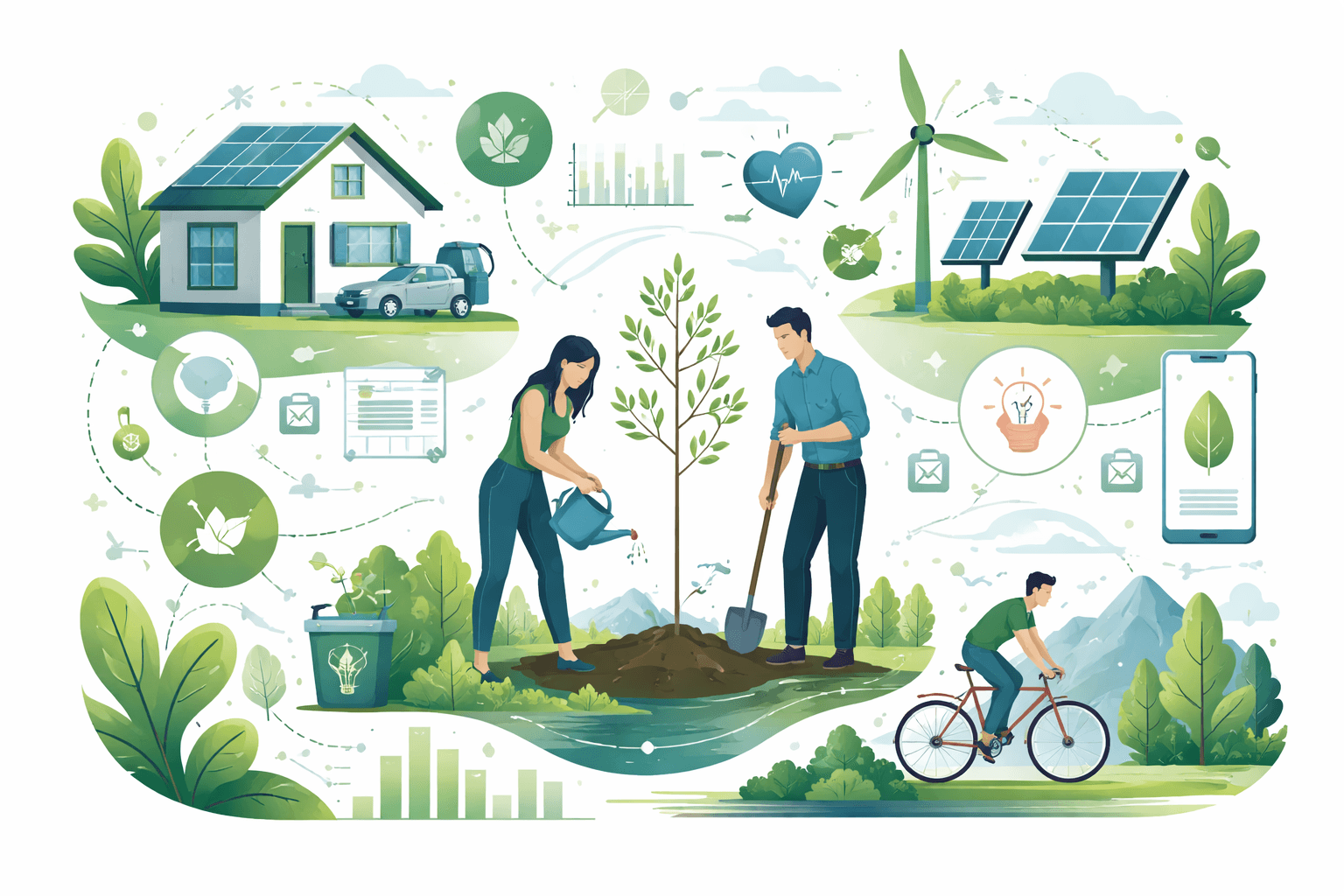
Sustainable living isn’t just a moral choice—it’s a practical one backed by data. The benefits of sustainable living show up on your utility bill, in cleaner air and water, and in stronger, more resilient communities. Research indicates household consumption drives a major share of global emissions; one meta‑analysis estimated that household consumption is associated with roughly 60–70% of global greenhouse gas (GHG) emissions when measured on a consumption basis (Ivanova et al., 2016, Journal of Industrial Ecology). The good news: common behavior and technology changes can cut an individual household’s footprint 30–60% over time while improving health and saving money.
Environmental benefits of sustainable living

Drawdown: The Most Comprehensive Plan Ever Proposed to Reverse Global Warming: Hawken, Paul
Drawdown: <strong>The Most Comprehensive Plan Ever Proposed to Reverse Global Warming</strong> [Hawken, Paul] on Amazon.com. *FREE* shipping on qualifying offers. Drawdown: <strong>The Most Comprehens
Check Price on AmazonLower greenhouse gas emissions: transport, diet, energy
- Transport
- Electric vehicles (EVs) cut lifetime carbon emissions substantially compared with gasoline cars. The International Council on Clean Transportation (ICCT, 2021–2023 updates) finds battery‑electric cars produce about 60–70% lower life‑cycle GHG emissions in regions with cleaner grids and remain lower in all major markets as grids decarbonize.
- Replacing 10 miles of solo car driving per day with biking, walking, or public transit can avoid about 1.3 metric tons of CO2e per year (assuming 25 mpg and 8.89 kg CO2/gallon of gasoline). Active travel not only reduces fuel use; it also mitigates local air pollution and congestion.
- Diet
- The largest food‑system impacts come from red meat and dairy. A global analysis of 38,700 farms showed beef averages ~60 kg CO2e per kilogram of meat; many plant proteins are 1–4 kg CO2e/kg (Poore & Nemecek, 2018, Science). Shifting to more plant‑rich meals can roughly halve diet‑related emissions for high‑meat consumers while lowering land, fertilizer, and water demand.
- Home energy
- Efficiency measures—insulation, air sealing, heat‑pump space and water heating, and high‑performance windows—typically reduce household energy use 20–40% (U.S. DOE/NREL). Electrifying appliances on a decarbonizing grid amplifies those gains, because each kWh gets cleaner over time as wind and solar expand. For a primer on options and how to adopt them, see Green Energy Explained: Types, Benefits, and How to Adopt (/sustainability-policy/green-energy-explained-types-benefits-how-to-adopt).
What “lifecycle” really means: Life‑cycle assessment (LCA) totals emissions from raw materials through manufacturing, use, and end‑of‑life. For example, EV batteries add manufacturing emissions up front, but far lower use‑phase emissions dominate over the vehicle’s life, especially as the grid gets cleaner. The same logic applies to building upgrades: materials have embodied carbon, but long‑term operational savings generally deliver large net reductions.
Lower resource and water use
- Water: EPA WaterSense‑labeled toilets can save about 13,000 gallons per household per year; efficient showerheads save ~2,700 gallons/year. Outdoors, smart irrigation and native landscaping can cut yard water use 20–50% depending on climate.
- Energy intensity: Heat pumps move heat rather than create it, delivering 2–4 units of heat per unit of electricity (coefficient of performance, COP), dramatically lowering energy demand compared with resistance heating or inefficient furnaces.
Waste and pollution reduction
- Waste: The EPA estimates that recycling and composting diverted roughly 94 million tons of municipal solid waste in 2018, avoiding significant methane and CO2e compared with landfilling. Globally, about 8–10% of GHG emissions are linked to food loss and waste (IPCC/UNEP). Home composting and better meal planning directly cut methane from landfills and reduce upstream resource use.
- Air quality: Residential energy use (heating/cooking) and tailpipe emissions contribute to local pollutants like PM2.5 and NOx. The World Health Organization attributes approximately 4.2 million premature deaths annually to ambient outdoor air pollution and 3.2 million to household air pollution from solid fuels. Switching to clean, efficient appliances and active/clean transport improves local air.
Biodiversity protection and healthier ecosystems
- Land use: Diet shifts away from high‑impact meats reduce pasture and feed crop demand, easing pressure on forests and grasslands. Sustainable forestry and recycled paper lower logging intensity.
- Urban ecology: Planting native species, reducing pesticides, and creating habitat corridors in yards and on rooftops improve pollinator abundance and bird diversity. A 2019 Science study documented a net loss of nearly 3 billion birds in North America since 1970; backyard habitat and bird‑safe practices are practical steps to help reverse declines. For more on ecosystem outcomes, see Ecological Benefits of Sustainability: How Sustainable Choices Restore Ecosystems and Build Resilience (/sustainability-policy/ecological-benefits-of-sustainability).
By the numbers: environmental gains
- 30–60%: Potential household emissions reduction with combined measures over time (multiple sources; consistent with Drawdown‑aligned pathways).
- 60–70%: Lower life‑cycle emissions for battery‑electric cars vs. gasoline (ICCT).
- ~50%: Lower diet‑related emissions when shifting from high‑meat to plant‑rich eating (Poore & Nemecek).
- 13,000 gallons/year: Water saved with WaterSense toilets (EPA).
- 20–40%: Typical reduction in home energy use from envelope upgrades and efficient systems (DOE/NREL).
Economic advantages and incentives
Household cost savings and ROI
Energy is a top recurring expense. The average U.S. household uses roughly 10,000–12,000 kWh of electricity per year (EIA). Cutting energy use 20–30% through insulation, air sealing, heat‑pump water heaters, smart thermostats, and LEDs can save $300–$800 annually, depending on rates and climate. Many upgrades have clear paybacks:
- LEDs: Use up to 75% less electricity and last 15–25 times longer than incandescent bulbs (DOE). Payback is typically months.
- Insulation and air sealing: Often 3–7 year paybacks in colder climates; faster when combined with air sealing to reduce infiltration.
- Heat‑pump space heating: Replaces oil/propane furnaces with 20–50% lower heating costs in many regions; payback can range 5–10 years, faster with rebates and high fuel prices.
- Heat‑pump water heaters: 2–4× more efficient than resistance units; typical 3–6 year payback with incentives.
For a deeper look at upgrade choices, performance, and incentives, see Sustainable Home Improvements: Tech‑Forward Upgrades with ROI & Incentives (/ai-technology/sustainable-home-improvements-tech-forward-upgrades-roi-incentives) and Smart Home Technology for Sustainability: High‑Impact Upgrades, Integration, and Real‑World Guidance (/sustainability-policy/smart-home-technology-for-sustainability-upgrades-integration-guide).
Solar economics
Residential solar costs have fallen more than 60% since 2010 (IEA/IRENA). In the U.S., typical installed prices are in the range of $2.50–$3.50 per watt before incentives, with a 30% federal investment tax credit (policy‑dependent). In many markets, simple payback is 6–10 years with 20–25 years of production, often yielding $10,000–$30,000 in lifetime bill savings depending on rates and system size (LBNL Tracking the Sun; NREL). Pairing solar with battery storage increases resilience and can optimize time‑of‑use rates where applicable.
Transport costs
- EV fueling is typically equivalent to paying about $1–$2 per “gasoline‑gallon” depending on electricity prices and charging mix (DOE). Drivers can save $800–$1,000+ per year on fuel compared with a 25‑mpg gasoline car at $3.50/gal and 12,000 miles/year.
- Maintenance costs for EVs are often 25–50% lower due to fewer moving parts and no oil changes (Consumer Reports; DOE). Public transit, car‑share, and e‑bikes can sharply reduce or eliminate fixed vehicle costs like insurance and parking.
Water, food, and waste
- Water: Low‑flow fixtures and leak repairs can reduce water bills 10–30%. Outdoor water‑wise landscaping can cut irrigation costs dramatically in arid regions.
- Food: Planning, bulk buying, and reducing food waste can trim grocery bills by 10–20%. Globally, households waste ~17% of food (UNEP Food Waste Index); keeping more of what you buy is a direct savings.
- Waste fees: Right‑sizing trash service, composting, and recycling can lower municipal solid waste charges where pay‑as‑you‑throw pricing exists.
Incentives and typical timelines
- Many countries and regions offer rebates, tax credits, grants, and low‑interest financing for efficiency, electrification, EVs, and solar. These can reduce upfront costs 10–50% and shorten paybacks by several years. Typical timelines:
- LEDs, smart thermostats, weather‑stripping: immediate to <2 years
- Insulation/air sealing, heat‑pump water heater: ~3–6 years
- Heat‑pump HVAC: ~5–10 years
- Solar PV: ~6–10 years (site‑ and policy‑dependent)
Policies evolve; check local utility and government programs. For a broad overview of clean energy adoption pathways, see Green Energy Explained (/sustainability-policy/green-energy-explained-types-benefits-how-to-adopt).
Health and wellbeing co‑benefits
Cleaner indoor and outdoor air
- Outdoor: Shifting trips to active modes and EVs lowers PM2.5 and NOx, reducing risks of heart disease, stroke, lung cancer, and asthma (WHO). Urban tree planting and reduced combustion lower peak heat and ozone formation.
- Indoor: Ventilation, induction cooking, and eliminating unvented combustion reduce indoor NO2 and particulate exposure. Emerging evidence links gas stove pollution to childhood asthma; one analysis estimated 12.7% of current childhood asthma in the U.S. could be attributable to gas stove use (Seals & Ghosh, 2022, IJERPH), though risk varies by ventilation and use patterns. Swapping to electric/induction and improving ventilation meaningfully cuts exposure.

Duxtop 1800W Portable Induction Cooktop Countertop Burner, Gold 8100MC/BT-180G3: Electric Countertop Burners
View on AmazonBetter nutrition from local, plant‑rich foods
Dietary patterns with more whole grains, legumes, fruits, and vegetables are associated with lower risks of cardiovascular disease and certain cancers (multiple meta‑analyses). Seasonal, local produce can be fresher and more nutrient‑dense when supply chains are shorter, though nutrition depends on variety and preparation rather than “local” status alone.
More physical activity built into daily life
A landmark study in the BMJ (2017) using UK Biobank data found people who cycled to work had a 41% lower risk of death from all causes and significantly lower risks of cancer and cardiovascular disease compared with non‑active commuters. Designing for walkability and cycling integrates moderate activity into routine rather than relying on separate exercise time.
Mental health and wellbeing
Exposure to nature is strongly linked to improved wellbeing. A 2019 study in Scientific Reports found that at least 120 minutes per week in nature was associated with higher self‑reported health and wellbeing. Greener neighborhoods also mitigate urban heat islands—EPA analyses show tree canopy can reduce local peak temperatures by 2–9°F—reducing heat stress during heat waves.
Social and community outcomes
Local resilience and reliability
- Weatherization and high‑performance envelopes keep homes comfortable longer during outages and heat waves. Solar‑plus‑storage or neighborhood microgrids can maintain critical loads and community cooling centers during grid disruptions (NREL field studies).
- Diversified transport (transit, walking, cycling) reduces dependence on a single mode and eases congestion during emergencies.
Stronger local economies and jobs
- Clean energy and efficiency are labor‑intensive. IRENA estimates 13.7 million renewable energy jobs globally in 2022 and steady growth as deployment accelerates. In the U.S., energy efficiency employs over 2 million people (U.S. Energy & Employment Report, 2023). Dollars saved on imported fuels often recirculate locally through goods and services.
Social cohesion and shared infrastructure
- Community composting, tool libraries, shared EV charging, and community gardens foster social ties and reduce per‑capita resource use. Neighborhood‑scale solutions lower costs through pooling and create visible norms that encourage participation.
Individual choices scale up to policy change
- Behavioral diffusion matters: a classic study on rooftop solar found strong peer effects—new installations clustered near existing ones (Bollinger & Gillingham, 2012). Visible adoption of sustainable practices increases social acceptance and can spur local policies on bike lanes, zoning for infill housing, building codes, and distributed energy.
Practical measurement and progress guidance
Measuring progress turns intentions into outcomes. Start with a baseline, pick a few high‑impact metrics, track monthly, and iterate.
Key metrics to track
- Carbon footprint (tCO2e/year): Break down by home energy, transport, and food. Set a trajectory (e.g., 50% reduction by 2030) aligned with climate goals.
- Electricity: kWh per month and per square foot; aim for 15–30% reduction year over year after upgrades.
- Heating fuel: Therms (gas) or gallons (oil/propane) per heating‑degree‑day to normalize for weather.
- Water: Gallons per person per day (typical U.S. indoor use ~60–82); target a 20–30% cut via fixtures and fixes.
- Waste: Pounds of trash per person per week (EPA national average ~4.9 lb/person/day across waste streams); target a 50% diversion rate via recycling and composting. Track recycling contamination (non‑recyclables in the bin) and reduce it over time.
- Mobility: Vehicle miles traveled (VMT) per person; share of trips by walking, cycling, transit; fuel/charging costs per mile.
- Food: Percentage of plant‑based meals per week; pounds of food wasted per month.
Tools and methods
- Carbon calculators: University‑affiliated tools like UC Berkeley’s CoolClimate Calculator provide granular household estimates and prioritize actions.
- Utility data: Smart meter portals/apps show hourly/daily usage. Simple CSV exports let you build custom dashboards.
- ENERGY STAR Portfolio Manager (for buildings): Useful for multi‑family or small business benchmarking.
- Water tracking: Municipal portals, WaterSense budget calculators, and smart leak alerts where available.
- Waste audits: Weigh weekly trash/recycling/compost for a month to establish a baseline; repeat quarterly.

Emporia Vue 3 Home Energy Monitor - Smart Home Automation Module and Real Time Electricity Usage Monitor, Power Consumption Meter, Solar and Net Metering for UL Certified Safe Energy Monitoring - Amazon.com
View on AmazonGoal‑setting frameworks
- Focus first on big‑ticket items: building envelope, HVAC, water heating, vehicle choice, and major commuting patterns.
- Use SMART goals: Specific, Measurable, Achievable, Relevant, Time‑bound. Example: “Cut home heating energy 25% within 18 months by air sealing, adding R‑30 attic insulation, and installing a heat‑pump water heater.”
- Sequence actions to avoid lock‑in: Weatherize before sizing a heat pump; improve efficiency before sizing solar; consider future EV charging when upgrading panels.
Realistic milestone examples (12–36 months)
- Months 0–6: Switch remaining bulbs to LEDs; seal obvious air leaks; adjust water heater to 120°F; set thermostat schedules; start tracking kWh, therms, gallons, and VMT.
- Months 6–12: Replace the oldest appliance with an ENERGY STAR model; install low‑flow showerheads and faucet aerators; begin a weekly meal plan and compost system; swap two meat‑heavy dinners per week with plant‑rich meals.
- Year 2: Add attic/crawlspace insulation and comprehensive air sealing; electrify cooking (induction) if replacing a stove; adopt a bike/transit commute 1–3 days/week; consider a used/new EV or car‑light lifestyle changes.
- Year 3: Install heat‑pump HVAC and/or water heater at end of life; evaluate rooftop or community solar; add battery storage if outages are frequent; participate in a community garden or tool library.
For hands‑on, practical steps to integrate into daily life, see Everyday Sustainable Living: Practical Tips to Save Money, Reduce Waste, and Lower Your Carbon Footprint (/sustainability-policy/everyday-sustainable-living-tips-save-money-reduce-waste-lower-carbon-footprint). For planning and execution across home and community, visit How to Implement Sustainable Practices: A Practical Guide to Assessment, Action and Scaling (/sustainability-policy/how-to-implement-sustainable-practices-assessment-action-scaling).
What this means for households, businesses, and policymakers
- Households: Prioritize efficiency and electrification at equipment replacement, cut the most car miles you can, and make plant‑rich the default. Track a few metrics and keep momentum with visible wins.
- Businesses: Efficiency and fleet electrification reduce operating expenses and risk; supplier engagement on packaging and food waste can deliver fast returns and brand benefits.
- Policymakers and utilities: Stable, well‑publicized incentives; building codes that support efficient, electric equipment; and safe, connected active‑transport networks unlock household adoption at scale.
The road ahead
Costs for heat pumps, batteries, and solar continue to fall; grids are adding record amounts of wind and solar (IEA reported over 440 GW of new renewable capacity in 2023, led by solar). As zero‑emission technologies scale, the benefits of sustainable living compound: every efficient appliance runs on an ever‑cleaner grid, every mile not driven frees congested streets and lungs, and every dollar not spent on wasted energy can be reinvested in comfort and resilience. The household actions that pencil out today are the same ones that align with climate science and public health. Start where the numbers are biggest, measure progress, and let data guide the next step.
Recommended Products
Drawdown: The Most Comprehensive Plan Ever Proposed to Reverse Global Warming: Hawken, Paul
Drawdown: <strong>The Most Comprehensive Plan Ever Proposed to Reverse Global Warming</strong> [Hawken, Paul] on Amazon.com. *FREE* shipping on qualifying offers. Drawdown: <strong>The Most Comprehens
Emporia Vue 3 Home Energy Monitor - Smart Home Automation Module and Real Time Electricity Usage Monitor, Power Consumption Meter, Solar and Net Metering for UL Certified Safe Energy Monitoring - Amazon.com
<strong>Add individual 50A sensors to your Vue to monitor up to 16 individual circuits</strong> — providing accurate energy use for the appliances and equipment that is important to you. No guesswork.
Duxtop 1800W Portable Induction Cooktop Countertop Burner, Gold 8100MC/BT-180G3: Electric Countertop Burners
Duxtop Built-in Induction Cooktop, <strong>Portable Countertop Burner, Sensor Touch Induction Burner, 170-Minute Timer, Safety Lock, 1800W BT-200T1/8600BI</strong>
More in Sustainability Policy
- Everyday Sustainable Living: Practical Tips to Save Money, Reduce Waste, and Lower Your Carbon Footprint
- How to Live Sustainably: Practical, High‑Impact Actions for Everyday Life
- Tech-Driven Sustainable Living: A Practical Guide to Lower Your Footprint
- Practical Ways to Live Sustainably: Everyday Actions, Priorities, and Measurable Impact