
Everyday Sustainable Living: Practical Tips to Save Money, Reduce Waste, and Lower Your Carbon Footprint
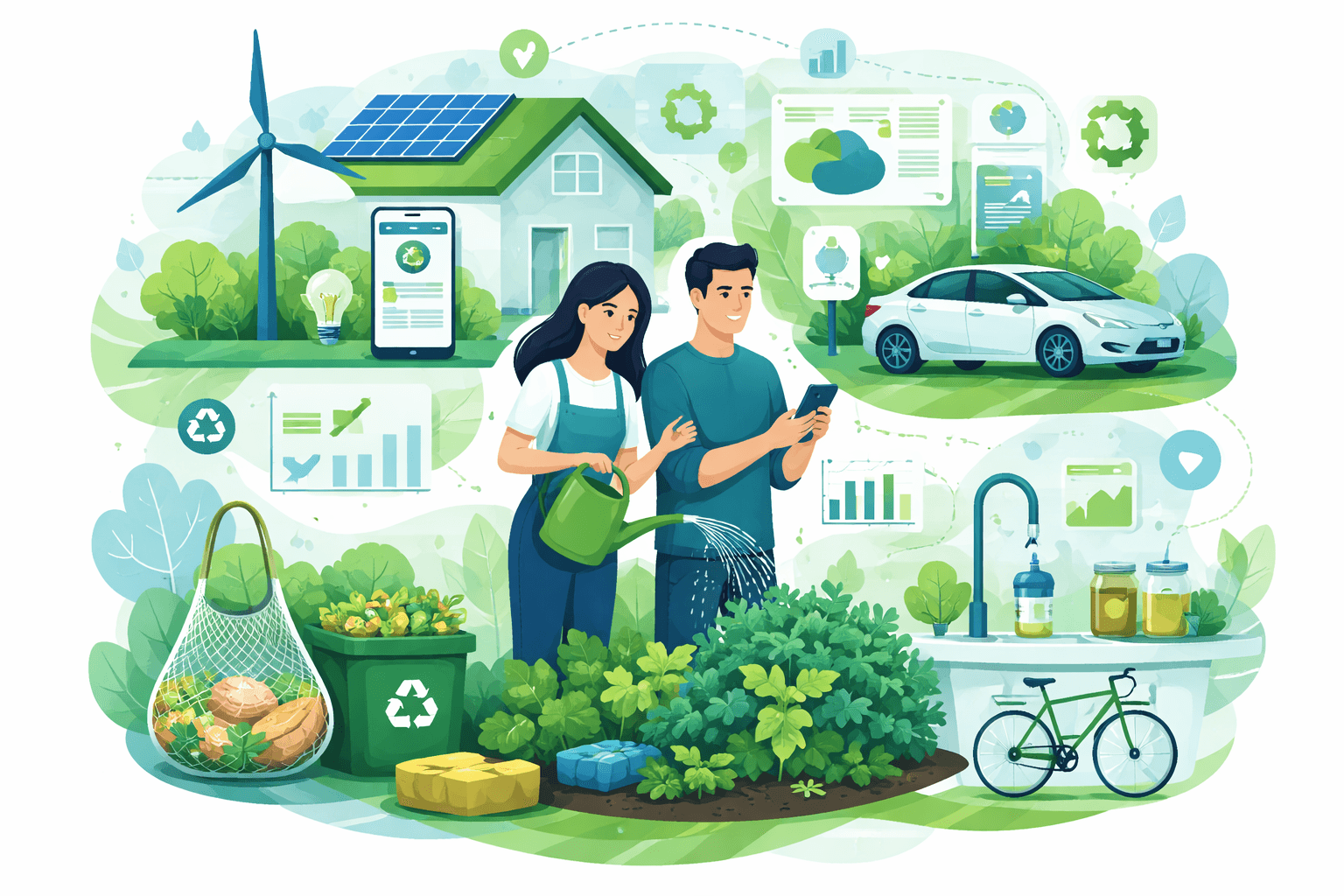
Household choices add up. Studies of consumption-based emissions suggest lifestyle and purchasing decisions drive a majority of global climate impacts, and analysis by the IEA finds efficiency and behavior changes could deliver more than 40% of the emissions reductions needed by 2030 in a net‑zero pathway. This guide compiles evidence-based sustainable living tips that reduce bills, cut waste, and lower your carbon footprint—starting today and often at little or no cost.
What follows: core principles and measurable targets, high‑impact actions across energy, transportation, food, and waste (with estimated environmental and financial impacts), behavior-change strategies that stick, and tools to help you track and scale progress.
Core principles and measurable goals for sustainable living
Sustainability works best when it’s specific and trackable. Four household metrics cover most impacts: carbon, energy, water, and waste. Set a baseline, then pick realistic targets.

How Bad Are Bananas?: The Carbon Footprint of Everything: Berners-Lee, Mike
Mike Berners-Lee is <strong>author of the timely best-sellers 'There Is No Planet B' and 'How Bad Are Bananas? The Carbon Footprint of Everything'</strong>. An expert in sustainabi
Check Price on Amazon- Carbon (CO2e): If you’re in a high‑income country, your personal carbon footprint likely sits between 8–20 t CO2e/year. The IPCC’s 1.5°C pathway implies steep declines this decade; a practical household goal is a 30–50% cut within 3–5 years. As a directional benchmark, target under 5 t CO2e/person‑year by 2030 in the U.S. or Canada, and ~2–3 t by 2040.
- Energy: The average U.S. home uses ~10,500 kWh of electricity per year (EIA). Aim to cut electricity and heating fuel use by 10–25% in 12 months through low‑cost measures. Track monthly kWh and therms (or liters of heating oil) from your utility.
- Water: U.S. indoor residential water use averages ~82 gallons per person per day (EPA WaterSense). Aim for ≤50 gpcd indoors via leak fixes and efficient fixtures.
- Waste: Municipal solid waste averages ~4.9 lb/person/day in the U.S. (EPA). A strong goal is to halve weekly trash volume and reduce food waste by ≥50%.
Why these metrics matter
- Carbon: Every ton avoided directly reduces warming. The EPA estimates 404 g CO2/mile for a typical gasoline vehicle; electricity emissions average ~0.4 kg CO2/kWh in the U.S. (EPA eGRID), so efficiency translates predictably into CO2 savings.
- Energy: Lower use saves money, improves grid reliability, and cuts upstream extraction and pollution.
- Water: Reducing hot water saves both water and energy; many regions face tightening water stress (UN-Water).
- Waste: Cutting and composting waste slashes methane from landfills, a potent greenhouse gas (IPCC), and preserves materials.
By the numbers: quick wins with big impact
- Thermostat setbacks of 7–10°F for 8 hours/day can save up to 10% on heating/cooling (U.S. DOE).
- Cold-water laundry avoids ~90% of the energy used to heat wash water (ENERGY STAR) — up to ~$60/year savings per household.
- Replacing a single 60W incandescent with a 9W LED saves ~56 kWh/year, about $8 and ~22 kg CO2 per bulb; swap 20 bulbs to save ~$160 and ~0.44 t CO2 annually.
- WaterSense showerheads can save ~2,700 gallons and ~330 kWh per year (EPA WaterSense), roughly $60–$90 in combined water and energy.
- Cutting a weekly beef meal (one quarter‑pound burger) avoids ~3 kg CO2e (Poore & Nemecek, Science 2018) — ~156 kg/year.
- Teleworking one day/week on a 30‑mile round‑trip commute can avoid ~0.5–0.6 t CO2/year (EPA), saving ~$200+ in fuel at typical prices.
High-Impact Sustainable Living Tips You Can Start Today
Below, each tip lists practical steps, estimated environmental impact, and typical cost savings. Impacts vary by region, energy mix, home, and habits—use them as directionally accurate ranges.
Home energy: low-cost moves with fast paybacks
- Dial in your thermostat (and use schedules)
- What to do: In heating season, set to 68°F (20°C) when home/awake and 60–62°F (15–17°C) when away/asleep; in cooling season, 78°F (26°C) when home and 82–85°F (28–29°C) when away. Program schedules or use a smart thermostat’s auto‑away.
- Impact: Up to 10% heating/cooling energy savings (DOE). In a typical home, that’s ~0.2–0.6 t CO2/year and $50–$200.

ecobee Smart Thermostat Premium with Smart Sensor and Air Quality Monitor - Programmable Wifi Thermostat - Works with Siri, Alexa, Google Assistant - Amazon.com
ecobee Smart Thermostat Premium with Smart Sensor and Air Quality Monitor - Programmable Wifi Thermostat - <strong>Works with Siri, Alexa, Google Assistant</strong> - Amazon.com
Check Price on Amazon- Seal air leaks and weatherstrip
- What to do: Caulk gaps around windows/doors, add door sweeps, seal attic hatches and rim joists; use smoke pencil or incense to find drafts.
- Impact: 10–20% HVAC energy savings (DOE). $50–$300/year, 0.2–0.8 t CO2 depending on climate. Materials can cost <$100.
- Swap in LED bulbs everywhere you still can
- What to do: Replace any remaining incandescent/halogen bulbs with ENERGY STAR LEDs; choose 2700–3000K for warm light.
- Impact: Per bulb: ~56 kWh, ~$8, ~22 kg CO2/year. Whole‑home: $80–$200/year and ~0.2–0.6 t CO2.
- Wash cold, air‑dry when possible
- What to do: Use cold cycles for laundry; clean dryer lint screen; line‑dry or use drying racks for at least 25–50% of loads.
- Impact: Cold wash can save up to $66/year (ENERGY STAR). Line‑drying half of 300 loads can save ~375 kWh, ~$55, ~0.15 t CO2/year.
- Cut hot-water energy: 120°F setpoint, low‑flow showerheads, insulate pipes
- What to do: Set water heater to 120°F (49°C); install WaterSense 1.8 gpm showerheads and faucet aerators; insulate first 6–10 ft of hot‑water pipes.
- Impact: Showerheads can save ~2,700 gallons and ~330 kWh/year (EPA WaterSense), ~$60–$90 and ~0.13 t CO2. Lowering setpoint reduces heat losses and scald risk; pipe insulation adds 3–4% water‑heating savings (DOE).
- Tame plug “vampire” loads
- What to do: Use advanced power strips for TV/game setups and office gear; unplug infrequently used devices; enable sleep modes.
- Impact: Standby/always‑on loads are often 5–10% of home electricity (LBNL). Savings: ~$50–$150/year, 0.1–0.3 t CO2.
- Keep air flowing efficiently
- What to do: Replace HVAC filters every 1–3 months during heavy use; use ceiling fans to feel 2–4°F cooler and raise AC setpoint.
- Impact: Clean filters can cut AC energy 5–15% (ENERGY STAR). Fans use ~1/50th the energy of central AC for perceived comfort gains.
For a deeper dive on home performance and step‑up upgrades, see our guide: How to Make Your Home More Energy Efficient: Practical Steps & Savings (/sustainability-policy/how-to-make-your-home-more-energy-efficient-practical-steps-savings).
Transportation: cut miles, drive smarter
- Skip a commute day (or two)
- What to do: Telework 1–2 days/week or compress your workweek.
- Impact: One 30‑mile round trip avoided weekly for 48 weeks is ~1,440 miles — ~0.58 t CO2 and ~$200–$300 in fuel at 25 mpg.
- Smooth out your driving
- What to do: Accelerate gently, anticipate stops, and keep speeds at or below posted limits; remove roof racks when not in use.
- Impact: Aggressive driving can cut fuel economy by 10–40% (DOE). Real‑world improvements of 10–15% can save 40–60 gallons/year on 10,000 miles (~0.36–0.54 t CO2 and $140–$210).
- Keep tires properly inflated
- What to do: Check monthly; inflate to door‑jamb spec.
- Impact: Under‑inflation can reduce mpg by ~0.2% per psi; proper inflation often yields 1–3% savings (DOE) — ~0.03–0.1 t CO2 and $15–$45/year.
- Swap short car trips for walking/biking (or a bus)
- What to do: Replace two 3‑mile round trips each week.
- Impact: ~300–350 miles/year avoided (~0.12–0.14 t CO2) and ~$40–$60 in fuel. Bonus: better health.
- When you must drive, choose efficiency
- What to do: Carpool, choose the most efficient vehicle available to you, and avoid idling.
- Impact: Carpooling halves per‑person emissions for the trip; eliminating 10 minutes/day of idling saves ~30–60 gallons/year depending on engine size.
Curious about clean electricity for mobility and home? Explore options in Green Energy Explained: Types, Benefits, and How to Adopt It (/sustainability-policy/green-energy-explained-types-benefits-how-to-adopt).
Food: less waste, smarter protein, seasonal choices
- Make one day a week plant‑based (or swap beef)
- What to do: Start with one meatless day, or swap beef for chicken/eggs/beans when possible.
- Impact: Beef averages ~27 kg CO2e/kg, while legumes are ~2–3 kg (Poore & Nemecek, Science 2018). Replacing one quarter‑pound beef meal/week saves ~156 kg CO2e/year. Food budget impact: often saves money, as plant proteins are typically cheaper per serving.
- Halve household food waste
- What to do: Plan meals, store food correctly, cook “first‑in‑first‑out,” and keep an “eat me first” bin. Freeze extras.
- Impact: U.S. households waste hundreds of dollars per person annually; NRDC’s Wasted report estimates a family of four can lose ~$1,500/year to food waste. Cutting waste by 50% can save ~$750 and ~0.3–0.6 t CO2e/year (Project Drawdown and ReFED analyses).
- Choose seasonal and avoid air‑freighted produce
- What to do: Favor in‑season local options; check labels for “product of” and avoid out‑of‑season items commonly shipped by air (e.g., berries, asparagus). Ship emissions by air can be tens of times higher than by sea or truck (UK DEFRA/Our World in Data).
- Impact: Avoiding a few pounds/month of air‑freighted produce can save tens of kg CO2e annually with little to no cost premium in season.
- Right‑size appliances and habits
- What to do: Use lids to boil faster, match pot size to burner, pressure‑cook beans instead of canned when time allows.
- Impact: Small per‑meal energy savings add up; pressure cooking can reduce cook energy by 50–70% compared with simmering.
Stuff and waste: buy less, use longer, recycle and compost right
- Extend device and clothing lifespans
- What to do: Keep your phone and laptop an extra year; repair and resole shoes; mend clothes.
- Impact: Extending smartphone life by one year can cut lifecycle emissions ~31% (European Environmental Bureau). Keeping clothes in use nine months longer can lower carbon, water, and waste footprints 20–30% (WRAP).
- Money: Delaying upgrades often saves hundreds of dollars per year.
- Buy used or refurbished first
- What to do: Try local buy‑nothing groups, thrift stores, and reputable refurbishers.
- Impact: Avoids most manufacturing emissions; reduces demand for virgin materials.
- Compost kitchen scraps
- What to do: Backyard compost where feasible or join a curbside/community program. Include fruit/veg scraps, coffee grounds, and yard waste; avoid meat/dairy unless your system allows.
- Impact: Diverting ~5 lb/week of food scraps can avoid ~0.1–0.2 t CO2e/year by preventing landfill methane (EPA WARM factors). Produces soil‑boosting compost.
- Reduce single‑use items
- What to do: Use durable bottles, mugs, and bags; opt out of utensils and napkins in takeout apps.
- Impact: Avoids thousands of disposables per year; if you buy bottled water, switching to tap can save ~$300–$500/year.
- Recycle correctly
- What to do: Follow your city’s rules; keep plastic bags, cords, and food out of the bin; avoid “wish‑cycling.”
- Impact: Cuts contamination that otherwise sends whole loads to landfill; preserves materials for true circularity.
For home upgrades with strong returns (from aerators to light retrofits), see Sustainable Home Improvements: Tech‑Forward Upgrades with ROI & Incentives (/ai-technology/sustainable-home-improvements-tech-forward-upgrades-roi-incentives). Smart controls can also help; see Smart Home Technology for Sustainability: High‑Impact Upgrades, Integration, and Real‑World Guidance (/sustainability-policy/smart-home-technology-for-sustainability-upgrades-integration-guide).
Behavior-change strategies that stick
Information is necessary but not sufficient. Evidence from behavioral science shows that feedback, social norms, and structured goals drive lasting change.
- Establish baselines and set SMART goals: Pull 12 months of utility bills and weekly trash volumes. Example: “Reduce electricity 15% in 6 months; cut trash by 50%.”
- Track and visualize: Use your utility’s dashboard or a simple spreadsheet to log kWh, therms, gallons, miles, and waste volume each month. Households receiving regular usage feedback often cut 5–15% (ACEEE meta‑analyses and Opower field trials show 1.5–2.5% average from home energy reports, and higher when combined with real‑time displays).
- Habit stacking and cues: Tie new actions to existing routines. Example: “After I start the coffee, I’ll check tire pressure on the first Saturday each month.” Implementation‑intention research shows specific if‑then plans greatly increase follow‑through.
- Design for defaults: Set thermostats to schedules, appliances to eco modes, printers to double‑sided, and power strips to auto‑off. Defaults reduce decision fatigue.
- Make it social: Share goals with a neighbor, set up a carpool, or join a workplace “Kilowatt Cup.” Social proof drives participation and persistence.
- Start small and iterate: Habits typically take weeks to form; research suggests a median of ~66 days for automaticity (Lally et al., European Journal of Social Psychology). Stack wins rather than aiming for perfection on day one.
- Prevent rebound: When you save money from efficiency, pre‑commit to bank part of it (e.g., auto‑transfer $20/paycheck) or fund a home upgrade to lock in emissions cuts rather than spending on new consumption.
For a broader framework on prioritizing actions by impact, see How to Reduce Your Carbon Footprint: Practical Steps for Every Household (/sustainability-policy/how-to-reduce-your-carbon-footprint-practical-steps).
Tools, resources, and next steps
Calculators and planning
- EPA Household Carbon Footprint Calculator: Estimate home energy, transportation, and waste emissions; set reduction targets.
- CoolClimate Network Calculator (UC Berkeley): Detailed modeling by location, income, and lifestyle with action recommendations.
- Utility portals: Most utilities offer interval data, usage comparisons, and bill disaggregation; enroll in alerts and budget billing to smooth cash flow.
Apps and trackers
- Energy and water: Use your utility’s mobile app, or log monthly reads manually. Smart plugs with built‑in meters can pinpoint always‑on devices.
- Travel: Track commute miles with a phone-based trip logger or calendar reminders to quantify avoided miles.
- Food and waste: Meal‑planning apps and shared family shopping lists reduce overbuying; weigh or estimate weekly trash volume to visualize reductions.
Programs and incentives
- Rebates and incentives: Check the Database of State Incentives for Renewables & Efficiency (DSIRE, U.S.) and your utility’s website for appliance rebates, demand‑response programs, and free efficiency kits.
- Community resources: Find a local “fix‑it clinic,” tool library, or community composting program—often run by municipalities or nonprofits.
- Transit benefits: Ask your employer about pre‑tax commuter benefits and transit subsidies.
DIY projects for weekend wins
- Draft‑proofing: Door sweeps, outlet gaskets on exterior walls, and rope caulk on leaky window sashes.
- Hot‑water efficiency: Insulate exposed hot‑water pipes; install 1.5–1.8 gpm showerheads and 1.0–1.5 gpm bathroom aerators.
- Windows: Apply removable interior window film in winter for leaky single panes.
- Appliances: Vacuum refrigerator coils; set fridge/freezer to ~37–40°F/0°F; test door gaskets with a paper‑slip test.
- Laundry: Install a retractable clothesline; clean dryer vents to improve airflow and reduce fire risk.
Where this is heading
- Electrification and clean grids are accelerating (IEA/IRENA), but demand‑side efficiency and smarter habits remain the fastest, cheapest decarbonization levers. Expect more utility programs that pay you to reduce peak use, easier opt‑in green power, and community composting expansion. Households that combine low‑cost behavior change with targeted upgrades consistently save hundreds of dollars per year while cutting 1–3 t CO2e—measurable progress you can build on.
Additional resources on our site
- Green Energy Explained: Types, Benefits, and How to Adopt It (/sustainability-policy/green-energy-explained-types-benefits-how-to-adopt)
- Smart Home Technology for Sustainability: High‑Impact Upgrades, Integration, and Real‑World Guidance (/sustainability-policy/smart-home-technology-for-sustainability-upgrades-integration-guide)
- How to Make Your Home More Energy Efficient: Practical Steps & Savings (/sustainability-policy/how-to-make-your-home-more-energy-efficient-practical-steps-savings)
- How to Reduce Your Carbon Footprint: Practical Steps for Every Household (/sustainability-policy/how-to-reduce-your-carbon-footprint-practical-steps)

High Sierra® - CLASSIC™ Solid Lead-Free Metal 1.5 GPM Award Winning. Ultra Low Flow Shower Head. Patented Nozzle Never Clogs - Polished Chrome Finish - Fixed Showerheads - Amazon.com
View on AmazonRecommended Products
How Bad Are Bananas?: The Carbon Footprint of Everything: Berners-Lee, Mike
Mike Berners-Lee is <strong>author of the timely best-sellers 'There Is No Planet B' and 'How Bad Are Bananas? The Carbon Footprint of Everything'</strong>. An expert in sustainabi
ecobee Smart Thermostat Premium with Smart Sensor and Air Quality Monitor - Programmable Wifi Thermostat - Works with Siri, Alexa, Google Assistant - Amazon.com
ecobee Smart Thermostat Premium with Smart Sensor and Air Quality Monitor - Programmable Wifi Thermostat - <strong>Works with Siri, Alexa, Google Assistant</strong> - Amazon.com
High Sierra® - CLASSIC™ Solid Lead-Free Metal 1.5 GPM Award Winning. Ultra Low Flow Shower Head. Patented Nozzle Never Clogs - Polished Chrome Finish - Fixed Showerheads - Amazon.com
<strong>SAVES WATER AND THE ENERGY to heat it (up to 40%)</strong> — Independently tested and certified to WaterSense and WaterMark. California Compliant. GUARANTEED TO NEVER CLOG — Hard water, sand,
More in Sustainability Policy
- Everyday Sustainability: Practical, High-Impact Steps to Reduce Your Environmental Footprint
- Tech-Driven Sustainable Living: A Practical Guide to Lower Your Footprint
- How to Live Sustainably: Practical, High‑Impact Actions for Everyday Life
- Sustainable Living for Families: Practical Tips to Save Money, Cut Waste, and Teach Kids to Care for the Planet