
Essential Guide to Electric Vehicle Maintenance: Care, Safety, and Battery Longevity
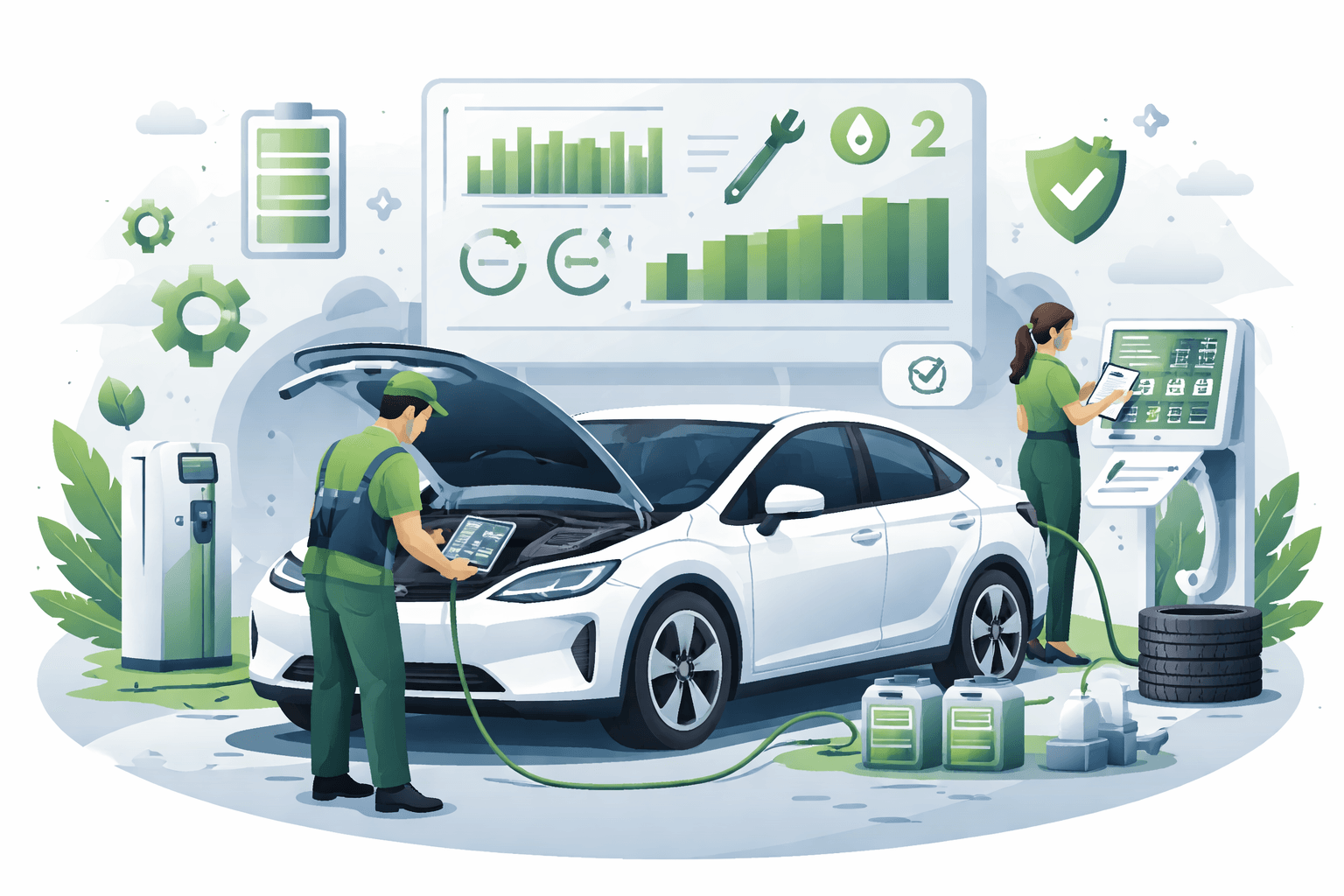
Electric vehicle maintenance is simpler and typically cheaper than for gas cars, but it’s not maintenance‑free. Consumer Reports estimates EV owners spend about half as much on maintenance and repairs over a vehicle’s life as internal‑combustion owners (roughly $0.03 vs $0.06 per mile), primarily because EVs have far fewer moving parts and no oil changes (Consumer Reports, 2020). This guide to electric vehicle maintenance lays out a practical, data‑driven care plan—what to do, how often, warning signs to watch, and when to call a high‑voltage professional—so you protect range, safety, and warranty.
If you’re new to EVs and want a broader primer on types, charging, and incentives, see Electric Vehicles Explained: Types, Costs, Benefits & Impact (/green-business/electric-vehicles-explained-types-costs-benefits-impact).
By the numbers: EV reliability, wear, and warranties
- Maintenance and repair costs: ~50% lower vs ICE over lifetime (Consumer Reports, 2020)
- Average battery capacity fade: ~2–3% per year across fleets, model‑dependent (Geotab, 2019; Recurrent, 2024)
- Cold‑weather range impact: up to ~40% loss at 20°F when using cabin heat (AAA, 2019; improvements vary by model year)
- Brake wear reduction with regen: up to ~50–70% less friction‑brake use (NREL, 2017 fleet analyses)
- Typical battery warranty: 8 years/100,000–150,000 miles to ~70% capacity retention (varies by automaker)

Batteries in a Portable World: A Handbook on Rechargeable Batteries for Non-Engineers, Fourth Edition: Isidor Buchmann
Isidor wanted to share his battery knowledge and he condensed Batteries in a Portable World into <strong>short, easy-to-read essays for web use</strong>. Today, www.BatteryUniversity.com is an importa
Check Price on AmazonCore EV maintenance checklist and intervals
Service intervals vary by model—always confirm with your owner’s manual—but these guidelines reflect common manufacturer schedules and field data.
Battery health and thermal management
- What to do: Keep daily state of charge (SoC) in a moderate band; enable battery thermal management; apply software updates; visually check coolant reservoirs and underbody for leaks.
- Typical intervals: Software updates as available; coolant inspection at every service; coolant replacement commonly 10–15 years or 100,000–150,000 miles for many liquid‑cooled packs; some models specify “inspect only.”
- Warning signs: Sudden, persistent range loss unrelated to weather; repeated DC fast‑charge throttling; battery temperature warnings; sweet/chemical smell or visible coolant under vehicle; diagnostic trouble codes (DTCs).
- Why it matters: Liquid cooling keeps cell temperatures in the optimal ~20–35°C band. Elevated heat accelerates degradation; deep cycles also stress cells.
Charging port and equipment care
- What to do: Inspect the charge port, latch, dust cap, rubber seals, and inlet pins monthly. Keep connectors clean and dry; use a soft, dry cloth or gentle compressed air to remove debris. Avoid lubricants on pins. Ensure wall connectors and receptacles are tight, properly grounded, and not heat‑discolored.
- Typical intervals: Monthly visual checks; annual electrician inspection of home circuits/EVSE if heavily used.
- Warning signs: Burned plastic smell, heat at plug or receptacle, intermittent connections, moisture in the port, or charge errors.
- Learn more: Charging Stations for Electric Cars: Types, Costs, Networks, and How to Choose (/sustainability-policy/charging-stations-for-electric-cars-types-costs-networks-how-to-choose) and Best EV Home Charger 2026: Top Level 2 Picks & Buying Guide (/green-business/best-ev-home-charger-2026-top-level-2-picks-buying-guide) for configuration and safety basics.

EMPORIA Level 2 EV Charger - NEMA 14-50 EVSE w/ J1772 Connector - 48 amp EV Charger Level 2, 240v WiFi Enabled Electric Vehicle Charging Station, 25ft Cable, White : Automotive
View on AmazonRegenerative braking and brake‑pad wear
- What to do: Enable regenerative braking for normal driving. Perform occasional firm stops from moderate speed to clear rotor surface rust, especially in humid or salty climates. Test brake fluid and flush per schedule.
- Typical intervals: Brake inspection every 12 months/12,000 miles; brake fluid test every 2 years, replace as needed (many OEMs recommend 2–3 years); pads and rotors may last 2–3× longer than ICE due to regen.
- Warning signs: Pulsation, grinding, pulling to one side, corroded rotors, or brake warnings.
- Data: Fleet studies report 50–70% less friction‑brake use with regen (NREL). Even so, low‑use brakes can corrode—regular inspections matter.
Coolant and HVAC (including heat pumps)
- What to do: Check coolant level in the battery/power‑electronics loop; keep the HVAC filter clean; service A/C desiccant bag on schedule; monitor heat‑pump performance in cold weather.
- Typical intervals: Coolant inspection every service; replacement often 100,000–150,000 miles or 10–15 years (model‑specific). Cabin filter every 1–2 years; HEPA filters may be 2–3 years. A/C desiccant bag service every 4–6 years on many models.
- Warning signs: Reduced cabin heating/cooling, unusual compressor noise, musty smells, oily residue at fittings, or HVAC codes.
Tires, rotation, and alignment
- What to do: Check pressures monthly and before trips. Rotate on schedule; align at least annually or after impacts. Many EVs specify higher pressures and XL‑rated tires for load.
- Typical intervals: Rotate every 5,000–7,500 miles (or per manual); alignment annually. Expect 10–30% faster wear vs ICE due to weight/torque (Consumer Reports, 2022).
- Warning signs: Uneven wear (inside/outside edges), cupping, feathering, vibration, or persistent TPMS alerts.
Cabin filters and windshield wipers
- What to do: Replace cabin filters to protect HVAC efficiency and air quality; change wiper blades as soon as they streak or chatter.
- Typical intervals: Cabin filter every 12–24 months; wiper blades every 6–12 months or as needed.
- Warning signs: Reduced airflow, odors, fogging windows (filter); streaks, noise (wipers).
Battery care and charging best practices
Battery care is the heart of electric vehicle maintenance. The following practices balance day‑to‑day convenience with long‑term capacity retention.
Daily state‑of‑charge (SoC)
- Target 20–80% for daily use. Most OEMs consider 50–70% ideal for parking longer than a few days. Storing at 100% or near 0% for extended periods increases stress.
- For trips: Charge to 90–100% shortly before departure. Many vehicles offer “scheduled departure” to finish charging just in time, limiting high‑voltage dwell at 100%.
Fast charging frequency and temperature
- Occasional DC fast charging is fine. Recurrent’s 2023–2024 analyses show small average differences in degradation between cars frequently fast‑charged vs mostly AC‑charged, but impacts can grow in hot climates and with repeated back‑to‑back sessions.
- Keep it cool. Precondition the battery before fast charging (most EVs do this automatically when navigating to a charger) and avoid chaining multiple high‑power sessions on very hot days.
Balancing range and longevity
- Use eco/normal driving modes and regen to reduce energy use and brake wear.
- Highway speed dominates consumption. Slowing 5–10 mph can recover 10–15% range, reducing charging frequency and heat generation.
Software updates and diagnostics
- Install updates promptly. Automakers refine charging curves, thermal management, and state‑of‑charge estimation via over‑the‑air updates.
- Battery management system (BMS) calibration. Some OEMs recommend an occasional calibration (e.g., charging to 100% and letting the car rest plugged in for 1–2 hours, then driving to ~10–20% and recharging). Follow the model‑specific procedure.
Interpreting range loss vs degradation
- Seasonal vs permanent: Cold weather can temporarily cut range by 20–40% when you use cabin heat (AAA). That’s not permanent capacity loss.
- Long‑term trend: Fleet data suggests average capacity fade around 2–3% per year, with wide model variation (Geotab; Recurrent). A one‑time 5–10% drop in the first year is common as the BMS learns; the curve often flattens later.
Warranty‑preserving behaviors
- Keep logs: Record services, software versions, and charging patterns if possible.
- Use approved fluids and follow OEM thermal‑system service intervals.
- Avoid unauthorized battery modifications or tapping high‑voltage circuits.
- Ensure home charging equipment is properly installed on a dedicated circuit and meets SAE J1772/CCS/NACS standards.
Safety: what you can do vs what a pro should handle
Modern EVs use 350–800 volts in the traction system. Orange‑sheathed cables, battery packs, inverters, and onboard chargers should be serviced only by high‑voltage‑trained technicians.
Owner‑friendly tasks
- Tire pressure checks and rotations (if you have proper tools and torque specs)
- Cabin air filter and wiper blade replacement
- 12‑volt battery checks and, on some models, replacement (note some EVs require software resets or sleep procedures)
- Visual inspections: tires, charge port, coolant reservoirs, underbody for leaks
Typical costs (US, 2026 ranges):
- Tire rotation: $20–60
- Alignment: $100–180
- Cabin filter: $30–100
- Wiper blades: $20–40
- Brake fluid test/flush: $80–150
- A/C desiccant bag service: $100–300
- Coolant service (battery/power electronics): $150–400 (model‑dependent)
High‑voltage tasks for professionals
- Battery, inverter, onboard charger, DC‑DC converter, high‑voltage A/C compressor
- Battery coolant system repairs, high‑voltage contactors, and service isolation tests
- Traction motor and reduction‑gear service
How to find the right shop
- Look for ASE L3 (Light Duty Hybrid/Electric Vehicle Specialist) certification and OEM training.
- Ask about high‑voltage safety procedures: lockout/tagout, insulated tools, personal protective equipment (PPE), and OEM service manuals.
- Confirm they use the correct coolant/refrigerant, follow torque specs, and can read OEM diagnostic data.
Seasonal, long‑term, and emergency preparedness
EVs handle all seasons well with the right steps. Battery temperature and tire traction are the big variables.
Cold‑weather tips
- Precondition while plugged in to warm the battery and cabin. This restores regen sooner and improves charging speed.
- Use seat and steering‑wheel heaters; they consume less energy than heating cabin air.
- Keep SoC higher than usual (e.g., 30–80%) in extended cold snaps.
- Expect slower charging and limited regen until the pack warms.
- Consider winter tires if you face snow/ice; they dramatically shorten stopping distances versus all‑seasons.
Hot‑weather tips
- Park in shade or garages when possible; avoid leaving the pack at 100% in heat.
- Precondition the cabin before departure while plugged in.
- Allow the car to complete post‑drive battery cooling before unplugging at home if your model supports it.
Long‑term storage (weeks or months)
- Target ~40–60% SoC; avoid storing full or near empty.
- Leave the car plugged in if recommended by the OEM; otherwise, check SoC monthly and top up if it nears ~20–30%.
- Disable energy‑intensive features (Sentry/Guard modes) unless security requires them.
Pre‑trip checklist
- Update vehicle software and navigation maps.
- Check tire pressures (including the spare or repair kit), tread, and wheel torque.
- Inspect the charge port and clean connectors.
- Verify charging apps, RFID cards, and adapters are packed and working.
EV emergency kit
- Reflective triangles/vest, headlamp, gloves
- Tire repair kit and portable inflator
- Level 1 charging cord and any needed adapters
- Phone power bank, blanket, water, and basic tools
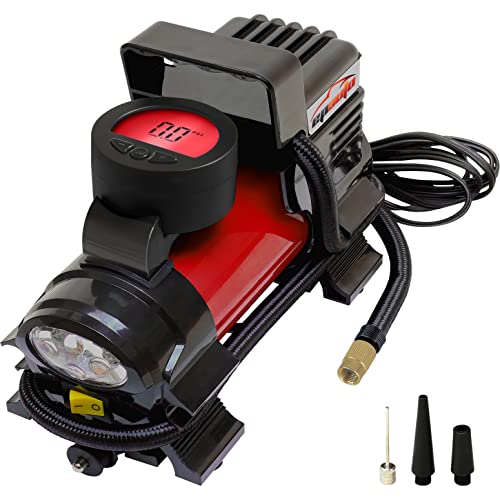
EPAuto 12V DC Portable Air Compressor Pump, Digital ...
View on AmazonTowing and roadside assistance
- Use a flatbed or wheel dollies per the owner’s manual; many EVs cannot be towed with drive wheels on the ground.
- Engage Transport/Tow Mode to release the parking pawl if required.
- Never lift by the battery tray; use designated lift points.
- Inform roadside providers it’s an EV; ensure they follow EV‑safe procedures.
Environmental end‑of‑life and recycling
- Battery recycling is scaling quickly. North American lithium‑ion recycling capacity surpassed 100,000 tons/year by 2023, with leading processes recovering >95% of nickel, cobalt, and copper (DOE and recycler reports).
- Policy is tightening material recovery. The EU Battery Regulation phases in recovery targets for lithium and critical metals between 2025 and 2031, and the US is funding domestic collection and processing.
- Many packs see second‑life use (stationary storage) before recycling, further reducing lifecycle emissions.
Putting it all together: a model maintenance plan
- Monthly: Check tire pressures and tread; inspect charge port and cable; look for leaks; review software update status.
- Every 6–12 months: Rotate tires; inspect brakes, suspension, and underbody; align annually; test 12‑volt battery.
- Every 2 years: Test/replace brake fluid as needed; inspect HVAC performance; consider BMS calibration if OEM recommends.
- Every 1–2 years: Replace cabin air filter; replace wiper blades as needed.
- 4–6 years: Service A/C desiccant bag (model‑specific); check for coolant service bulletins.
- 8–15 years or 100,000–150,000 miles: Battery/power‑electronics coolant service if specified by OEM.
Practical implications for owners and fleets
- Costs: Expect fewer line‑items but pay attention to tires. Extra EV mass and torque can increase tire spend 10–30% versus ICE; careful rotations, alignments, and proper XL‑rated tires narrow the gap.
- Downtime: OTA updates and longer brake intervals reduce shop time. Plan around tire and brake‑fluid service.
- Resale value: Documented battery health (BMS data, steady range, gentle charging habits) and complete service records support higher resale.
- Fleet policy: Train drivers to use regen, monitor telematics for harsh driving, and schedule seasonal preconditioning to stabilize range forecasts.
Where electric vehicle maintenance is heading
Battery chemistries are diversifying—LFP (lithium‑iron‑phosphate) favors long cycle life and high SoC operation, while NMC/NCA deliver higher energy density with more modest daily SoC targets. Heat‑pump HVAC, predictive thermal management, and smarter charging algorithms are cutting seasonal range swings and cell stress. On the shop side, ASE L3 certifications and OEM high‑voltage training are spreading, while standardized diagnostics make mixed‑brand EV fleets easier to maintain. As recycling capacity grows and second‑life markets mature, battery end‑of‑life will increasingly look like a closed loop rather than a waste problem.
With a light but regular maintenance rhythm—protect tires and brakes, keep the battery thermally comfortable, update software, and know when to call an EV‑trained pro—you’ll maximize range, safety, and longevity while keeping operating costs low.
Recommended Products
Batteries in a Portable World: A Handbook on Rechargeable Batteries for Non-Engineers, Fourth Edition: Isidor Buchmann
Isidor wanted to share his battery knowledge and he condensed Batteries in a Portable World into <strong>short, easy-to-read essays for web use</strong>. Today, www.BatteryUniversity.com is an importa
EMPORIA Level 2 EV Charger - NEMA 14-50 EVSE w/ J1772 Connector - 48 amp EV Charger Level 2, 240v WiFi Enabled Electric Vehicle Charging Station, 25ft Cable, White : Automotive
Buy EMPORIA Level 2 EV Charger - NEMA 14-50 EVSE w/ J1772 Connector - 48 amp EV Charger Level 2, <strong>240v WiFi Enabled Electric Vehicle Charging Station, 25ft Cable, White</strong>: Charging Stati
EPAuto 12V DC Portable Air Compressor Pump, Digital ...
Online shopping from a great selection at Automotive Store.
More in Sustainability Policy
- How to Care for Electric Cars: Essential Battery, Maintenance, Range and Safety Guidance
- Used Electric Car Buying Guide: What to Check Before You Buy
- How to Charge an Electric Vehicle: Practical Guide to Home, Public, Costs, and Best Practices
- Commercial EV Fleet Management: A Practical Guide to Running Electric Fleets