
How to Charge an Electric Vehicle: Practical Guide to Home, Public, Costs, and Best Practices
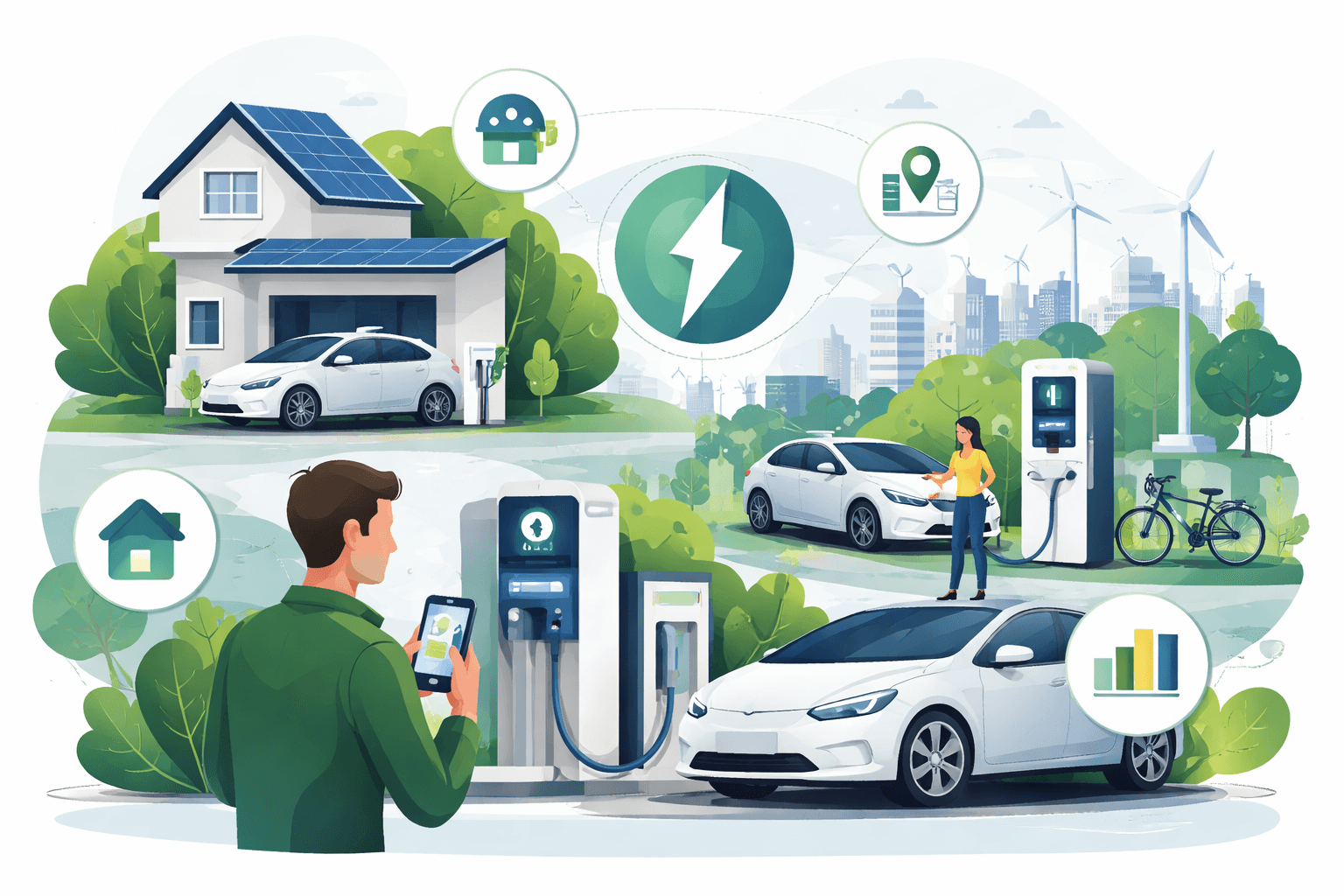
Electric vehicles are easiest to live with when you demystify charging. In the U.S., more than 80% of EV charging happens at home, according to the U.S. Department of Energy (DOE), while public charging ports surpassed 170,000 in 2024 (DOE Alternative Fuels Data Center). This guide explains how to charge an electric vehicle at home and on the road—what affects charging speed and cost, how to pick the right setup, and the habits that keep your battery healthy.
How to charge an electric vehicle: EV charging fundamentals
Charging levels and power
- Level 1 (120 V AC): Uses a standard household outlet. Typical power 1.2–1.4 kW, adding about 3–5 miles of range per hour. Best for low‑mileage drivers or overnight top‑ups.
- Level 2 (240 V AC): Uses a dedicated 240 V circuit and an EVSE (electric vehicle supply equipment). Typical power 3.8–11.5 kW in North America (16–48 A), adding roughly 12–45 miles of range per hour depending on vehicle efficiency. In Europe, 11 kW three‑phase is common; some sites offer 22 kW AC.
- DC fast charging (DCFC): Bypasses the onboard AC charger to feed DC power directly to the battery. Common rates: 50, 100–150, and 250–350 kW. A 10–80% charge can take ~20–45 minutes for many modern EVs, depending on battery and charger power.

Electric Vehicle Technology Explained: Larminie, James, Lowry, John
Electric Vehicle Technology Explained [Larminie, James, Lowry, John] on Amazon.com. *FREE* shipping on qualifying offers. Electric Vehicle Technology Explained
Check Price on AmazonPower (kW) vs. charging speed
- Kilowatts (kW) measure charging power (rate). Kilowatt‑hours (kWh) measure energy (battery capacity and energy delivered). A 7.2 kW Level 2 charger can add about 7.2 kWh per hour.
- Real‑world speed = the lower of charger power and the vehicle’s acceptance rate. An EV with an 11 kW AC onboard charger can’t take more than 11 kW from AC, even if the EVSE is rated higher.
State of charge (SOC), tapering, and temperature
- Charging is fastest when the battery is at a low SOC and properly warm. Most EVs taper (reduce power) as SOC rises—often after 60–80%—to protect the battery. Cold batteries also limit initial charge power; many EVs precondition (warm) the pack en route to a fast charger.
Battery size and charge time
- Example: A 60 kWh battery from 10% to 80% adds 42 kWh. At 7.2 kW AC, this takes roughly 6 hours (42/7.2). At a 150 kW DCFC, the average power during the session might be 70–110 kW because of tapering and temperature, so ~20–35 minutes is typical.
Connector types (regional differences)
- North America: CCS (Combined Charging System) and NACS (the Tesla connector) are the dominant DC fast standards. Most automakers announced a transition to NACS, with adapters enabling cross‑compatibility during the changeover. CHAdeMO (used by older Nissan LEAFs) is declining.
- Europe: Type 2 (Mennekes) for AC and CCS2 for DC fast charging. Tesla vehicles in Europe use Type 2/CCS2.
- Always carry any necessary adapters approved by your automaker and follow their power limits.
Home charging: setup, costs, and a daily routine that works
Electrical requirements
- Circuit: Level 2 typically needs a dedicated 240 V circuit. A 40 A circuit supports a 32 A (7.7 kW) EVSE; a 60 A circuit supports a 48 A (11.5 kW) unit. Your electrician will size the circuit to your panel capacity and the EVSE rating.
- Panel capacity: Many homes can add a 40 A circuit without a service upgrade; larger EVSE or multiple EVs may require a panel or service upgrade.
- Outdoor vs. indoor: Choose a weather‑rated EVSE (NEMA 3R or better) for outdoor installations.
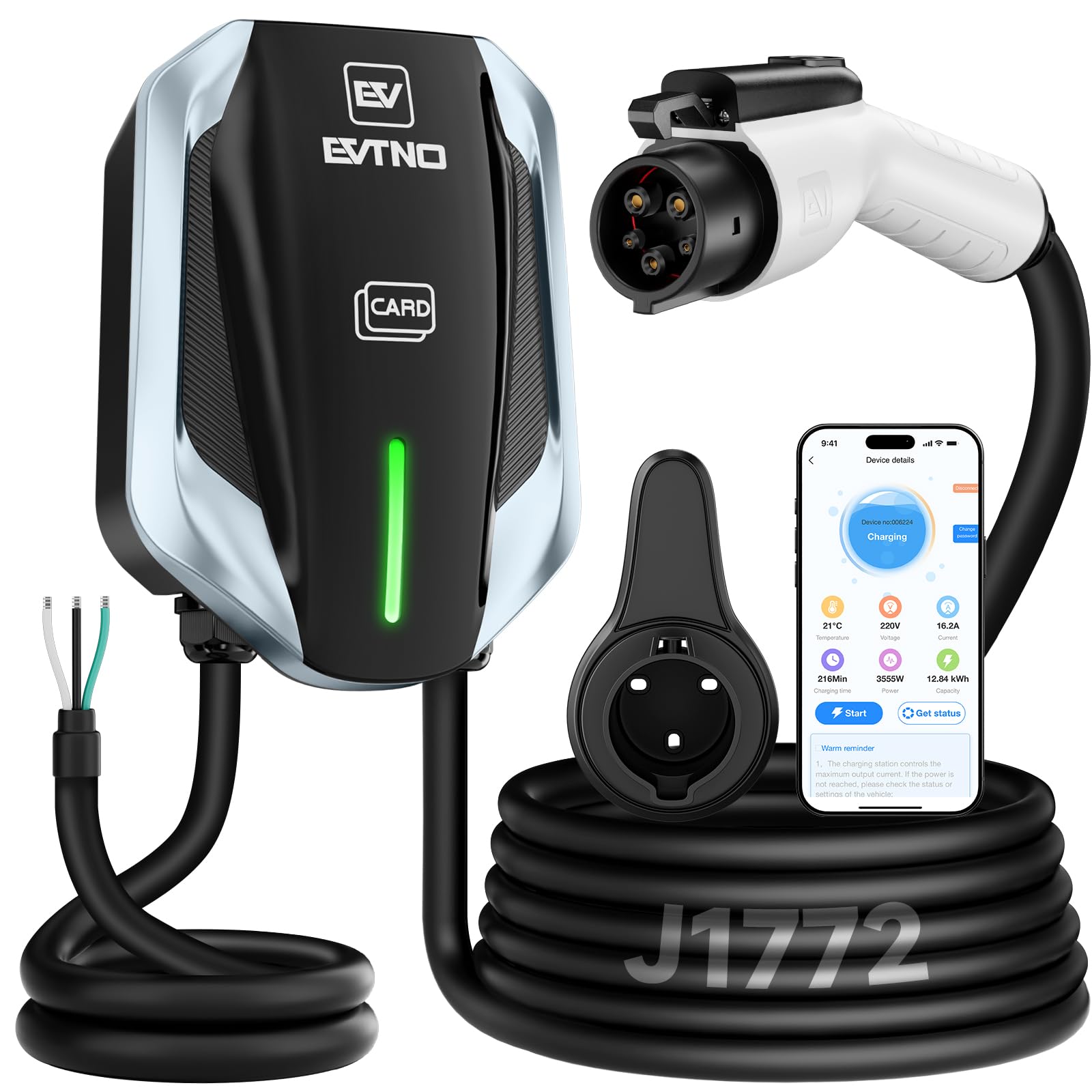
EVTNO Level 2 EV Charger 48A-11.5kW, Smart WiFi & Plug-Play EVSE, Hardwired J1772 Wall Home Electric Automobile Vehicles Charger Level 2, ETL Certified Electric Vehicle Charging Station : Automotive
View on AmazonPortable plug‑in vs. hardwired EVSE
- Plug‑in (NEMA 14‑50 or 6‑50): Easy to swap or relocate; limited to 40 A circuits (32 A continuous EVSE). Ensure the receptacle is industrial‑grade and installed per code.
- Hardwired: Cleaner install, higher maximum amperage (often up to 48 A), and fewer points of failure. Preferred for permanent setups and highest power.
Permitting, installation, and typical costs
- Permits: Many jurisdictions require a simple electrical permit; fees often range $50–$300.
- Installation labor: For a short run from panel to charger, many homeowners pay $500–$1,500. Long runs, trenching, or upgrades can push costs to $2,000–$3,500+.
- Incentives: Utilities and states frequently offer rebates or time‑of‑use (TOU) rates that cut costs. Check local programs and see Electric Vehicle Incentives by State for EVSE rebates and rate plans. (/sustainability-policy/electric-vehicle-incentives-by-state)
- For a deeper look at equipment and installation paths, see EV Charging Stations: What You Need to Know About Types, Costs, Installation, and Renewable Integration. (/sustainability-policy/ev-charging-stations-types-costs-installation-renewable-integration)
Smart features to consider
- Wi‑Fi/app control: Schedule off‑peak charging, set charge limits, track kWh.
- Load sharing: Split power safely between two EVSE on one circuit.
- Demand response: Some utilities pay you to reduce charging during grid peaks.
Nightly routines for convenience and battery health
- Plug in when you park, charge off‑peak: Let the car or charger delay start to your utility’s off‑peak window.
- Set a daily limit: 70–80% for nickel‑based chemistries (NMC/NCA) is a good default for daily use; 100% for trips. LFP batteries tolerate 100% more routinely but still benefit from leaving buffer if you don’t need full range.
- Precondition before departure: Use grid power, not the battery, to warm/cool the cabin and pack.
- Calibrate occasionally: Let the pack range between ~10–90% once in a while so the battery management system can maintain accurate readings.
Choosing equipment
- If you want model‑specific recommendations and pros/cons of top Level 2 units, see Best EV Home Charger 2026: Top Level 2 Picks & Buying Guide. (/green-business/best-ev-home-charger-2026-top-level-2-picks-buying-guide)
Using public and destination chargers like a pro
Finding chargers and checking availability
- Use your vehicle’s built‑in navigation, PlugShare‑style community maps, or network apps (e.g., Electrify America, EVgo, Tesla) to filter by connector, speed (kW), price, and real‑time availability.
- Destination charging: Hotels, workplaces, and parking garages often provide Level 2—ideal for overnight or multi‑hour stops.
- Reservations: Some networks allow reservations at select sites; more common with Level 2 than DCFC.
Authentication and payment
- Options include app‑based start, RFID cards, contactless credit cards, or “Plug & Charge” (ISO 15118), where your car authenticates automatically at supported stations.
- Pricing models: Per‑kWh billing is now allowed in most U.S. states; where not permitted, networks use per‑minute rates, sometimes tiered by power level (DOE AFDC).
Charger speeds and network differences
- Look for the station’s maximum kW and your car’s peak DC acceptance rate. A 350 kW unit won’t speed up a vehicle capped at 150 kW, though higher‑power sites may maintain better power at higher SOC or in parallel use.
- Reliability varies by site and network. J.D. Power’s 2023 data showed roughly 1 in 5 charging attempts ended without charging due to station or payment issues; networks and regulators are investing to improve uptime.
Trip planning for long drives
- Plan stops around the 10–80% SOC band to minimize taper time.
- Space fast charges 100–150 miles apart for compact EVs, 150–250 miles for long‑range models, adjusting for weather, terrain, and speed.
- Precondition: If your car supports it, set the charger as the destination to warm the battery for peak fast‑charge power.
- Trailers and roof boxes: Expect 20–40% higher energy use; plan more frequent stops.
- If you want a comparison of public networks and charger types, see Charging Stations for Electric Cars: Types, Costs, Networks, and How to Choose. (/sustainability-policy/charging-stations-for-electric-cars-types-costs-networks-how-to-choose)
Etiquette and best practices
- Don’t occupy a fast charger beyond your needed SOC or while not actively charging—idle fees often apply.
- Don’t unplug others without permission except in emergencies or at shared Level 2 spots signed for “ok to unplug at X%.”
- Park considerately: Avoid blocking drive aisles, respect accessibility spaces, and coil cables neatly.
Troubleshooting away from home
- If a session fails to start: Reseat the connector firmly, try another stall, reboot the app, and verify your charge limit/SOC settings and payment method.
- Check the car: Ensure DC charging is enabled, thermal preconditioning is active if needed, and no charge lock screen is active.
- Call support: The number is usually on the station; they can start a session remotely or flag a faulty unit.
Costs, energy sources, and environmental impact
What charging really costs
- Home: U.S. average residential electricity was roughly 15–17¢/kWh in 2023–2024 (EIA). An EV using 28 kWh/100 miles costs about $4.50 per 100 miles at 16¢/kWh. A 30‑mpg gasoline car at $3.50/gal costs ~$11.70 per 100 miles.
- Public Level 2: Often priced like commercial electricity plus a parking premium; $0.15–$0.30/kWh is common in many regions, sometimes free at workplaces or hotels.
- DCFC: Typically $0.30–$0.60/kWh in the U.S., with membership discounts or session fees. Some sites use per‑minute pricing that can penalize slower‑charging models; check published rates.
How to lower your charging bill
- Time‑of‑use (TOU) rates: Off‑peak charging can be 20–50% cheaper depending on utility and season; schedule your car or EVSE accordingly.
- Workplace charging: Often subsidized or free; daytime charging may align with solar‑heavy grid hours.
- Choose the right public charger: If priced per minute, use the highest power your car can accept; if per kWh, prioritize reliable sites even if slightly pricier.
- Bundled memberships: Network plans can cut DCFC costs if you travel frequently.
Energy sources and emissions
- Grid carbon intensity varies by location and time. Charging when the grid is cleaner (e.g., midday in solar‑heavy regions or windy nights in wind‑rich regions) can cut emissions substantially. Studies using grid data show timing can reduce an EV’s charging emissions by 20–40%.
- On‑site solar: Charging from home PV can push operational emissions near zero during sunny hours; pairing with a home battery can shift solar energy to nighttime charging.
- Smart charging: Many utilities and apps now expose real‑time emissions signals; aligning your charging with low‑carbon windows can maximize climate benefits.
- Lifecycle perspective: Even on fossil‑heavy grids, peer‑reviewed analyses (e.g., Argonne National Laboratory GREET model and IEA lifecycle assessments) consistently find EVs produce lower lifetime greenhouse‑gas emissions than comparable gasoline cars, with greater savings as grids decarbonize.
For more on integrating chargers with renewables and storage, see EV Charging Stations: What You Need to Know About Types, Costs, Installation, and Renewable Integration. (/sustainability-policy/ev-charging-stations-types-costs-installation-renewable-integration)
Safety, battery‑care best practices, and future trends
Battery‑friendly charging habits
- Daily SOC target: 70–80% for most nickel‑based chemistries; 90–100% only when needed for trips. LFP chemistries tolerate 100% more often but still benefit from not sitting full for long periods.
- Minimize unnecessary DC fast charging: Occasional fast charging is fine, but repeated high‑power sessions at high SOC and high temperatures can accelerate degradation over years.
- Temperature awareness: Precondition before DCFC in cold weather; avoid arriving with a very hot battery after extended high‑speed driving—short cooling breaks can help.
- Don’t store full: If parking for days, leave the car near 40–60% SOC and enable battery saver or long‑term storage mode if available.
Electrical and site safety
- Use a dedicated circuit with an EV‑rated breaker, GFCI protection as required, and UL‑listed (or equivalent) EVSE.
- Avoid extension cords; heat buildup at plugs is a fire risk. If an outlet is warm to the touch during Level 1 or plug‑in Level 2 charging, stop and consult an electrician.
- Keep connectors dry and off the ground; check cables for cuts or fraying.
- Label the circuit and post basic instructions for guests.
Maintenance and monitoring
- Occasionally inspect the charge port and EVSE contact pins; keep caps and dust covers in place.
- Update firmware: Vehicle and EVSE updates can improve charging reliability and safety.
What’s next: standards and bidirectional power
- NACS becomes mainstream: Most North American automakers are transitioning to the NACS connector, expanding cross‑network access and simplifying adapters.
- Faster architectures: 800‑V battery systems and improved thermal designs maintain higher fast‑charge power for longer, trimming 10–80% times.
- Plug & Charge (ISO 15118‑20): Wider adoption should cut failed sessions and streamline authentication.
- Bidirectional charging (V2H/V2G): New standards and pilot programs are enabling vehicle‑to‑home and vehicle‑to‑grid, turning EVs into flexible backup and grid resources. Always confirm warranty and compatible hardware before enabling.
- Medium‑ and heavy‑duty: Megawatt‑class charging for trucks is emerging at depots and corridors, with grid‑smart charging to manage demand.
By the Numbers
- 80%+: Share of EV charging done at home in the U.S. (DOE Office of Energy Efficiency & Renewable Energy).
- 170,000+: U.S. public charging ports as of 2024 (DOE Alternative Fuels Data Center).
- 20–45 minutes: Typical 10–80% DC fast‑charge window for many modern EVs at 150–250 kW, depending on taper and temperature (automaker specs; NREL test data show large variation).
- $4–$6 per 100 miles: Typical home‑charging energy cost at 14–20¢/kWh for an efficient EV using 27–30 kWh/100 miles (EIA average retail rates).
- ~1 in 5: Public charging attempts that ended without charging in 2023 due to station or payment issues (J.D. Power EV public charging study; reliability improving with new standards and maintenance targets).
Practical next steps
- Decide on Level 1 vs. Level 2 at home based on your daily miles and panel capacity; get an electrician quote and permit if needed.
- Enable scheduled charging to catch off‑peak rates and set a daily SOC limit appropriate to your battery chemistry.
- For trips, plan around your car’s peak DC rate, precondition to the charger, and target 10–80% SOC stop windows.
- Track costs and emissions with utility apps or third‑party tools; shift charging to cleaner hours when practical.
- If you want a deeper dive into network types and how to choose the right charger for your use case, see Electric Car Charging Options: How to Choose the Right Charger for Your Needs. (/sustainability-policy/electric-car-charging-options-choose-right-charger)
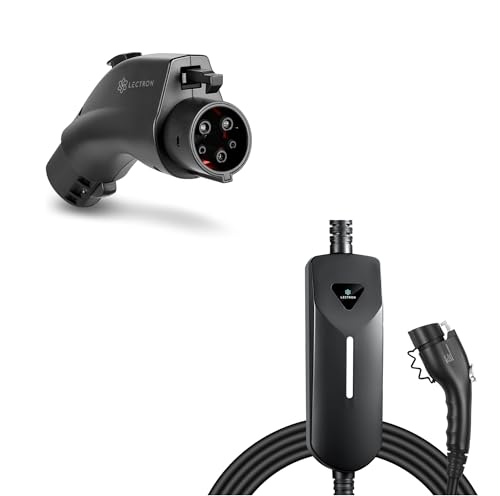
Lectron Tesla to J1772 EV Charging Adapter – NACS ...
View on AmazonRecommended Products
Electric Vehicle Technology Explained: Larminie, James, Lowry, John
Electric Vehicle Technology Explained [Larminie, James, Lowry, John] on Amazon.com. *FREE* shipping on qualifying offers. Electric Vehicle Technology Explained
EVTNO Level 2 EV Charger 48A-11.5kW, Smart WiFi & Plug-Play EVSE, Hardwired J1772 Wall Home Electric Automobile Vehicles Charger Level 2, ETL Certified Electric Vehicle Charging Station : Automotive
The CCS / J1772 charger <strong>works with all EV models except NACS/Tesla vehicles</strong>.
Lectron Tesla to J1772 EV Charging Adapter – NACS ...
Get Tesla to J1772 adapters with premium connectors and safety features. Compatible with various EV brands including Ford, Hyundai, and Chevrolet.
More in Sustainability Policy
- Best EV Home Charger 2026: Top Level 2 Picks & Buying Guide
- Electric Car Charging Options: How to Choose the Right Charger for Your Needs
- Charging Stations for Electric Cars: Types, Costs, Networks, and How to Choose
- EV Charging Stations: What You Need to Know About Types, Costs, Installation, and Renewable Integration