
Green Data Center Energy Efficiency: Practical Strategies for Sustainable Performance
Data centers consumed an estimated 460 TWh of electricity in 2022, about 1.5–2% of global demand, and could reach 620–1,050 TWh by 2026 as AI, cloud, and edge computing expand (IEA, 2024). Against that backdrop, green data center energy efficiency isn’t a nice-to-have — it’s central to emissions reduction, cost control, and long-term resilience. This guide translates the latest research and field-proven practices into an actionable playbook for facility leaders, SREs, and sustainability teams.
What makes a data center “green” — and why efficiency matters now
A green data center integrates energy-efficient design with low-carbon operations across its full lifecycle. At minimum, it prioritizes:
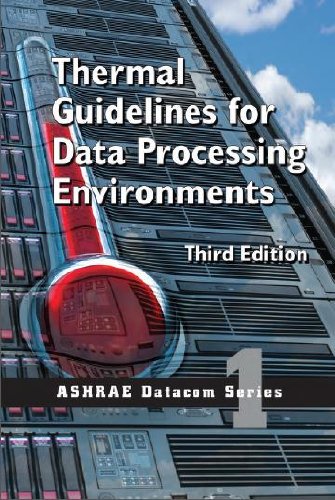
Thermal Guidelines for Data Processing Environments (Ashrae Datacom, 1): ASHRAE Technical Committee 9.9
Thermal Guidelines for Data Processing Environments (Ashrae Datacom, 1) [ASHRAE Technical Committee 9.9] on Amazon.com. *FREE* shipping on qualifying offers. Thermal Guidelines for Data Processing Env
Check Price on Amazon- High electrical efficiency from grid interconnection to the server motherboard
- Thermally efficient cooling with minimized water and refrigerant impacts
- High IT utilization (more work per watt) via virtualization and orchestration
- Low operational emissions through renewable energy, 24/7 carbon-free energy (CFE) strategies, and location optimization
- Transparent metrics: PUE, CUE, WUE, and energy reuse
Why this matters:
- Emissions: Electricity’s carbon intensity varies widely by grid and hour. Cutting energy use directly cuts Scope 2 emissions. Matching consumption with clean energy in real time amplifies the impact.
- Costs: Power is often the largest operating expense. Each 1% reduction in PUE can translate into six- or seven-figure annual savings at multi‑MW sites.
- Capacity and resilience: Efficiency frees electrical and cooling headroom for growing AI/HPC loads without re-building. It also reduces thermal risk during heatwaves and grid stress.
The main efficiency levers in green data centers
Green data center energy efficiency is multi-disciplinary. Improvements compound when implemented together.
1) Cooling optimization
Cooling can represent 25–40% of facility energy in legacy sites; in efficient facilities it’s much lower. Key tactics:
- Raise setpoints within ASHRAE TC 9.9 recommended ranges (typically 18–27°C server inlet). Every 1°C rise can cut chiller energy roughly 2–3% while remaining within vendor guidance (ASHRAE).
- Use economization (free cooling). Air- or water-side economizers can meet cooling needs for 60–80% of annual hours in many temperate climates (ASHRAE TC 9.9). That slashes compressor runtime.
- Optimize chilled water temperatures and differential pressure with variable-speed drives (VSDs) on pumps and CRAH/CRAC fans.
- Consider liquid cooling for high-density racks. Direct‑to‑chip and immersion systems reduce cooling energy 20–30% and enable 50–100+ kW/rack densities (NREL, Open Compute Project analyses), particularly relevant for GPU clusters.
2) Server utilization and workload management
Historically, average enterprise server utilization was just 12–18% (NRDC, 2014). Modern virtualization and container orchestration routinely achieve 40–60%+ without performance loss.
- Consolidate and decommission (“pick the zombies”). Identify idle or underutilized servers with DCIM/telemetry; decommissioning can cut IT energy 10–20% quickly.
- Right-size instance types and apply autoscaling. Schedule non‑urgent batch/analytics to off-peak hours or cleaner-grid windows.
- CFE-aware workload shifting. Google’s carbon-intelligent computing increased the share of low‑carbon energy serving workloads by ~7% in early deployments by shifting when and where jobs run (Google, 2020). Many schedulers can ingest marginal emissions signals.
3) Power management and electrical distribution
- Enable CPU and memory power management (P‑states, C‑states). Under variable loads, BIOS/OS power governors can reduce server energy 10–20% with negligible latency impact (EPA ENERGY STAR for Servers, SPECpower/SERT data).
- High-efficiency power supplies (80 PLUS Titanium) and high‑voltage distribution (415/240 V) reduce conversion losses 1–3% across the facility (The Green Grid).
- Modern UPS topologies. Double‑conversion UPS now exceed 97% efficiency; “eco-mode” can reach 99% in appropriate conditions, saving 1–3% facility energy. Evaluate tradeoffs with power quality.
4) Airflow and thermal containment
- Hot/cold aisle layout and full containment prevent mixing and improve delta‑T. Field studies report 10–25% cooling energy savings after containment and blanking panel installation (LBNL/ASHRAE case studies).
- Seal bypass paths: cable cutouts, floor penetrations, rack gaps. Use CFD to validate airflow.
- Instrument server inlet temperatures at the top‑of‑rack (ToR) and feed into control loops.
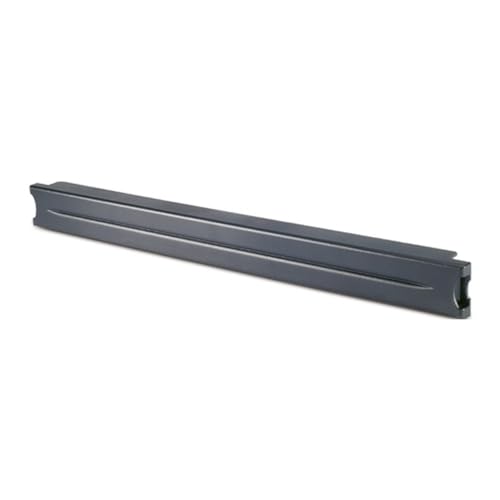
APC Rackmount Black Modular Toolless Airflow Management Blanking Panel, AR8136BLK, 1U 19", Quantity 10 : Electronics
View on Amazon5) Renewable energy and grid strategy
- On-site generation helps but rarely meets load (a 50 MW campus can host only a few MW of rooftop PV). The heavy lift is off-site procurement: utility green tariffs, virtual power purchase agreements (VPPAs), or direct PPAs.
- 24/7 CFE and hourly matching. Rather than annual “100% renewable” claims, leading operators target hourly matching to cut real-world emissions on the grid they use (e.g., Google, Microsoft). Energy attribute certificates with time/location granularity (e.g., EU GOs with timestamps, U.S. RECs with Hourly Matching) support this.
- Demand response and grid services. UPS batteries can provide frequency regulation while maintaining ride‑through, turning a cost center into a revenue stream and supporting grid stability (documented in European pilots).
6) Water and refrigerants
- Track WUE (liters/kWh). Evaporative systems are efficient electrically but water intensive; air‑cooled systems use little water but higher power. Balance WUE vs PUE based on local water scarcity and cost.
- Prefer low‑GWP refrigerants and minimize leaks; refrigerant losses carry outsized climate impacts.
7) Heat reuse
- Export low‑grade heat to district heating, greenhouses, or adjacent buildings. Nordic projects and hyperscale sites have demonstrated meaningful heat recovery at scale, improving Energy Reuse Effectiveness (ERE) (IEA case studies).
By the numbers
- 460 TWh: Global data center electricity use in 2022; projected 620–1,050 TWh by 2026 (IEA, 2024)
- 1.58: Average PUE reported across operators in 2023 (Uptime Institute Global Data Center Survey)
- 2–3%: Typical chiller energy reduction per 1°C increase in supply temperature (ASHRAE)
- 10–25%: Cooling energy saved with effective hot/cold aisle containment (LBNL/ASHRAE)
- 20–30%: Facility cooling energy reduction achievable with liquid cooling in high‑density deployments (NREL/OCP analyses)
- ~7%: Increase in low‑carbon energy share via carbon‑aware workload shifting (Google)
Key metrics for green data center energy efficiency
Knowing what to measure is half the battle. Standardize on these metrics (ISO/IEC 30134 and The Green Grid):
- PUE (Power Usage Effectiveness) = Total facility power / IT equipment power. Closer to 1.0 is better. Track PUE by season and load; report annualized and 15‑minute intervals.
- CUE (Carbon Usage Effectiveness) = Total CO2e emissions associated with facility energy / IT equipment energy. Use both location‑based (grid-average) and market‑based (your contracts) per the GHG Protocol.
- WUE (Water Usage Effectiveness) = Water used by the data center / total IT energy (L/kWh). Vital in water‑stressed regions.
- ERE (Energy Reuse Effectiveness) accounts for exported useful heat; ERE < PUE when heat is reused.
- ITUE (IT Equipment Utilization Effectiveness) and server utilization. Pair power telemetry with workload KPIs (e.g., kWh per inference/training epoch, kWh per transaction) to connect energy to service delivered.
- 24/7 CFE score. Percent of hourly load matched by zero‑carbon generation in the same grid. This goes beyond annual offsets.
Benchmarks:
- Average PUE ~1.58 (Uptime Institute, 2023). Efficient new builds target ≤1.2–1.3; ultra‑efficient campuses in cool climates with economization may reach ~1.1.
- WUE spans near‑zero (air‑cooled) to >1.5 L/kWh (evaporative) depending on climate/technology.
Practical strategies and technologies to cut energy waste now
These measures range from no‑regrets operational changes to capex projects. Sequence them to capture compounding gains.
Low‑cost, high‑impact operational steps (0–6 months)
- Enable server power management: BIOS/OS governors, c‑states, memory power features; verify with SERT or vendor tools.
- Raise inlet temperature setpoints toward 24–26°C within ASHRAE’s recommended envelope. Tighten humidity ranges only as needed.
- Install blanking panels, seal floor penetrations, and contain aisles. Verify with spot temperature sensors and smoke tests.
- Calibrate control loops: VSD fans and pumps responding to server inlet temperatures, not return air.
- Hunt “zombies”: Decommission or consolidate idle servers and orphaned volumes.
- Metering upgrade: Install revenue‑grade meters at the utility feed, UPS output, PDU/rPPDUs, and chiller plant. You can’t improve what you don’t measure.
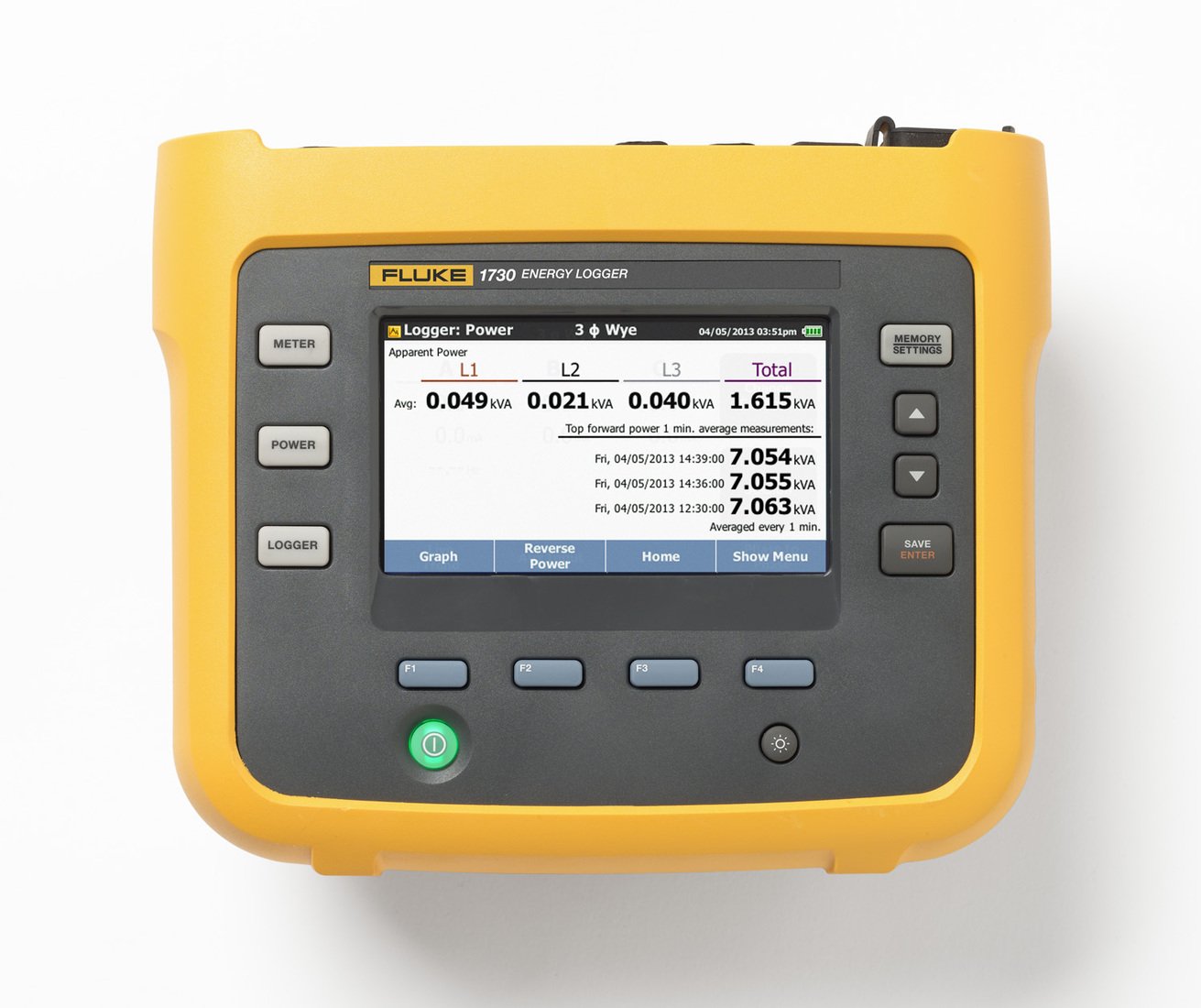
Fluke Portable Energy Logger, US Version: Precision Measurement Products: Amazon.com: Industrial & Scientific
View on AmazonSoftware and analytics (1–9 months)
- DCIM plus AI‑driven optimization: Use telemetry (IT, power, thermal) and machine learning to reduce overcooling and predict hotspots; feedback to setpoints saves 5–15% facility energy in many deployments. See our enterprise-focused primer on AI-enabled optimization at /sustainability-policy/using-ai-for-energy-efficiency-use-cases-benefits-risks-how-to-start.
- Carbon‑aware scheduling: Integrate marginal emissions signals (e.g., grid carbon intensity APIs) into job schedulers; shift flexible batch jobs to cleaner hours.
- Storage tiering and data hygiene: Move cold data to energy‑efficient tiers; delete duplicates/backups beyond policy. SSDs often deliver lower energy per IOPS for hot data.
Targeted retrofits and design upgrades (6–24 months)
- Economization retrofits: Add air‑ or water‑side economizers and expand free‑cooling hours.
- High‑efficiency UPS and PSUs: Retrofit legacy UPS; specify 80 PLUS Titanium server PSUs in refresh cycles.
- Higher voltage distribution and busway: Reduce step‑down conversions, improve flexibility.
- Liquid cooling pilots: Start with the highest‑density racks (e.g., GPU training clusters). Design for facility water loops that can later scale campus‑wide.
- Heat reuse integration: Couple with district heating where feasible; add heat pumps to elevate temperature if needed.
- Renewable procurement: Structure VPPAs or green tariffs to advance toward 24/7 CFE; incorporate hourly certificates where available.
For construction or major renovations, align with green building best practices for envelopes, MEP systems, and commissioning. See /sustainability-policy/how-to-create-a-green-building-practical-strategies for design‑phase guidance that complements data center specifics.
Assessing tradeoffs without sacrificing performance
Every site has unique constraints. Use a structured lens to avoid unintended consequences.
- Thermal risk vs. efficiency: Warmer setpoints reduce energy but narrow thermal margins. Mitigate with containment, granular sensing, and staged alarms. Validate with CFD and stepwise changes.
- Water vs. power: Evaporative cooling lowers PUE but increases WUE. In water‑stressed regions, air‑cooled or hybrid systems may be preferable despite modest power penalties.
- Reliability and SLAs: Eco‑mode UPS and higher temperatures must be matched to power quality and redundancy strategy (N, N+1, 2N). Pilot, monitor, then scale.
- Density planning: Liquid cooling supports high‑density AI/HPC but requires facility changes (manifolds, leak detection, maintenance procedures). Start with mixed air/liquid zones.
- Location and latency: Low‑carbon grids reduce CUE, but latency-sensitive workloads may need to remain near end users. Use regional workload placement to balance both.
- Refrigerants: Some high‑efficiency chillers use refrigerants with higher global warming potential; plan for low‑GWP alternatives and tight leak monitoring.
- Procurement claims vs. impact: Annual 100% renewable claims may overstate emissions benefits if power is consumed when the grid is fossil-heavy. Hourly matching improves climate integrity.
How to measure progress and build a sustainability roadmap
A credible roadmap grounds ambition in metered baselines and transparent KPIs.
- Establish the baseline
- Instrumentation: Verify metering at utility feeds, UPS outputs, PDUs, CRAH/CRAC branches, and chiller plant. Ensure synchronized timestamps.
- KPIs: PUE (rolling and seasonal), IT utilization, WUE, CUE (location‑ and market‑based), and 24/7 CFE score.
- Workload intensity metrics: kWh per inference, per training epoch, per transaction, per GB served — whatever maps best to your business.
- Set targets by horizon
- 6–12 months: Reduce PUE by 0.05–0.1 via setpoint optimization, containment, and power management; decommission 10–20% of idle IT.
- 1–3 years: Achieve PUE ≤1.3–1.35 (site‑dependent); deploy economization; pilot liquid cooling for >50 kW/rack zones; procure additional renewables with hourly matching pilots.
- 3–5 years: Expand liquid cooling where densities warrant; participate in grid services; integrate heat reuse where feasible; target 24/7 CFE in priority regions.
- Execute with governance and continuous improvement
- Commissioning and M&V: Treat optimization as a control project with IPMVP‑style measurement and verification. Re‑commission annually.
- Energy management system: Adopt ISO 50001 to institutionalize continuous improvement.
- Procurement standards: Specify efficiency requirements (80 PLUS Titanium PSUs, UPS efficiency curves, low‑GWP refrigerants, telemetry‑ready hardware). For broader certifications and how they apply to data center projects, see /sustainability-policy/green-building-certification-guide.
- Culture and operations: Train facilities and SRE teams on thermal policies, change control for airflow, and CFE‑aware scheduling. For organization-wide engagement on sustainability practices, explore /sustainability-policy/promote-sustainability-at-work-practical-strategies-metrics-engagement.
- Report with transparency
- Publish PUE, WUE, CUE, and 24/7 CFE by region. Differentiate location‑ and market‑based emissions per the GHG Protocol.
- Disclose additionality of renewable contracts and any grid‑services participation.
- Share lessons learned — the sector advances faster when operators compare notes.
Practical implications for operators, finance, and policymakers
- Operators: Start with no‑regrets actions (setpoints, containment, power management, metering). Pilot liquid cooling where rack density is the bottleneck. Integrate carbon signals into schedulers.
- Finance: Model total cost of ownership (TCO) including avoided capacity upgrades and demand charges. Many retrofits pay back in 1–3 years, faster in high‑cost energy markets.
- Policymakers and utilities: Facilitate 24/7 CFE with granular certificates, tariff designs that reward flexibility, and interconnection pathways for heat reuse and grid services.
Where green data center energy efficiency is heading
- AI‑era densities make liquid cooling standard practice for performance racks; mixed air/liquid campuses will dominate.
- Controls are becoming autonomous: model‑predictive and reinforcement learning will continuously tune thermal and electrical systems.
- 24/7 CFE will replace annual matching as the leadership bar, driving new PPA structures and siting choices.
- Waste heat will be monetized routinely in cold‑climate markets, improving ERE and urban decarbonization.
The operators that treat energy as an engineering constraint — measured hourly, optimized continuously, and aligned with grid decarbonization — will deliver more compute per watt, lower risk, and a durable cost advantage as electricity systems evolve.
Recommended Products
Thermal Guidelines for Data Processing Environments (Ashrae Datacom, 1): ASHRAE Technical Committee 9.9
Thermal Guidelines for Data Processing Environments (Ashrae Datacom, 1) [ASHRAE Technical Committee 9.9] on Amazon.com. *FREE* shipping on qualifying offers. Thermal Guidelines for Data Processing Env
APC Rackmount Black Modular Toolless Airflow Management Blanking Panel, AR8136BLK, 1U 19", Quantity 10 : Electronics
Amazon.com: APC Rackmount Black Modular Toolless Airflow Management Blanking Panel, AR8136BLK, 1U 19", Quantity 10 : Electronics
Fluke Portable Energy Logger, US Version: Precision Measurement Products: Amazon.com: Industrial & Scientific
<strong>Simplify the discovery of electrical energy waste with the Fluke 1730 Three-Phase Electrical Energy Logger</strong>. Easily uncover sources of energy consumption in your facility, from the ser
More in Sustainability Policy
- Green Living: Practical, Data-Backed Guide to a Low-Carbon Home
- How to Create a Green Building: Practical Strategies for Sustainable Design, Construction, and Operation
- Buildings That Incorporate Sustainability: Key Features, Technologies, and Impact
- AI Tools for Energy Efficiency: Practical Guide to Technologies, Benefits, and Real-World Implementation