
EV Charging Stations: What You Need to Know About Types, Costs, Installation, and Renewable Integration
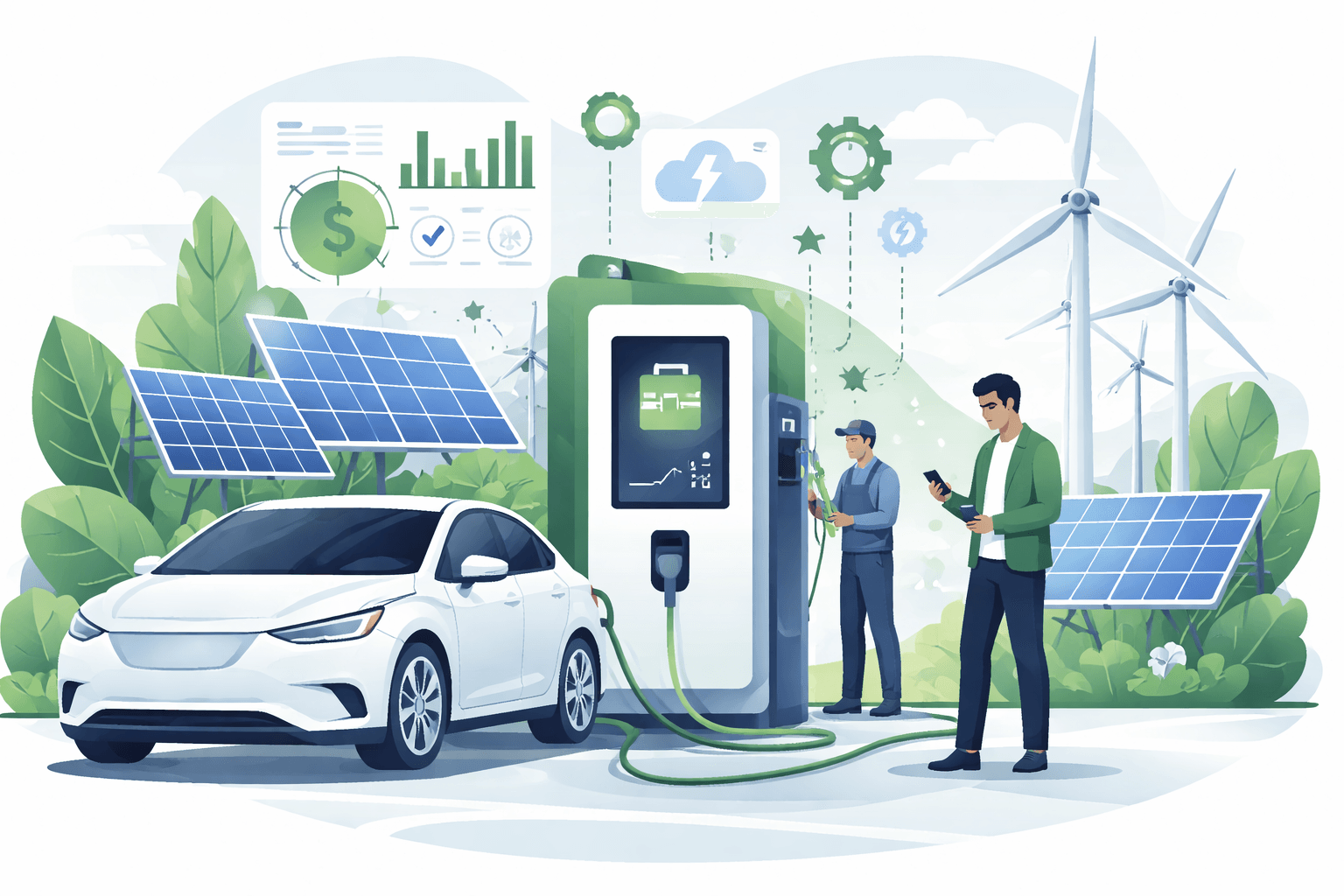
Electric vehicles are surging, and EV charging stations are racing to keep up. The International Energy Agency (IEA) reports 14 million EVs sold in 2023 and expects more than 240 million EVs on the road by 2030 if announced policies are met. Public charging is scaling too: global public charging points surpassed 2.7 million in 2023, with fast chargers growing 55% year-over-year (IEA Global EV Outlook 2024). In the U.S., the Department of Energy’s Alternative Fuels Data Center (AFDC) counted roughly 180,000+ public charging ports by mid‑2024, and federally funded NEVI corridor sites are coming online with a 97% uptime requirement.
For drivers, property owners, and fleet managers, the right EV charging station choice hinges on power level, connector standards, installation needs, incentives, and how you’ll manage energy costs. This guide breaks down the details with data-backed recommendations and plain-language explanations.
By the numbers
- Power levels: Level 1 (1.3–1.9 kW), Level 2 (3.8–19.2 kW), DC fast (50–350 kW+)
- Typical charge times: Level 1 adds ~3–5 miles of range/hour; Level 2 adds ~20–40 mi/hr; 150–250 kW DC fast can add ~150–200 miles in 20–30 minutes (vehicle and conditions dependent)
- U.S. public network reliability target: 97% uptime under the NEVI program (FHWA)
- Home charging costs: ~3–5¢/mile at $0.13–$0.20/kWh; gasoline at $3.50/gal and 30 mpg is ~12¢/mile
- Battery care: Field data suggest average EV battery capacity loss of ~2–3% per year, with high-fast-charge usage, extreme temperatures, and frequent 100% charging contributing to faster degradation (Geotab; Recurrent; DOE/INL)
Types of EV charging stations, power levels, and connector compatibility
Getting the right EV charging station starts with matching power and plug to your vehicle and use case.
Level 1 (120 V AC)
- Power: ~1.3–1.9 kW (typically 12–16 A on a standard U.S. household circuit)
- Best for: Overnight charging with low daily mileage (<30–40 miles/day), workplace trickle charge
- Charge rate: ~3–5 miles of range per hour
- Pros/cons: Lowest-cost, no new wiring in many homes; slow for larger batteries or high daily driving
Level 2 (208–240 V AC)
- Power: 3.8–19.2 kW depending on circuit (16–80 A); common home/worplace setups are 32–60 A (7.7–14.4 kW)
- Best for: Home charging, multifamily, workplace, destination sites
- Charge rate: ~20–40 miles/hour for most modern EVs
- Notes: Networked Level 2 allows access control, billing, and load management for multi‑port deployments
DC fast charging (DCFC)
- Power: 50–350 kW; some hubs aggregate multi‑megawatt capacity for fleets and corridors
- Best for: Long‑distance travel, high‑utilization commercial and fleet operations
- Charge rate: Many EVs add 10–80% in 18–35 minutes on 150–250 kW units; actual speed depends on battery size, state of charge, chemistry, and thermal conditions
- Considerations: Highest hardware, installation, and operating costs; demand charges can dominate utility bills without management
Connector standards and what fits your car
- J1772: The standard AC plug for Level 2 in North America; all non‑Tesla EVs include a J1772 inlet or adapter for AC charging.
- CCS1 (Combined Charging System): The most common non‑Tesla DC fast standard in North America (uses J1772 for AC and adds two DC pins for fast charging).
- NACS (SAE J3400): Tesla’s connector, opened and standardized by SAE in 2023–2024. Most major automakers announced North American adoption in 2025–2026. Many public networks are adding NACS cables; adapters enable cross‑compatibility during the transition.
- CHAdeMO: Legacy DC fast standard used by older Nissan LEAFs and a few models; declining availability in new infrastructure.
- International note: CCS2 in Europe, GB/T in China.
Compatibility tips:
- Check your vehicle’s DC fast standard (CCS or NACS) and maximum DC charge rate (kW). A 350 kW charger won’t speed up a car limited to 150 kW, though it can still deliver at the vehicle’s cap.
- For home Level 2, aim for a 40–60 A circuit (delivering ~9.6–14.4 kW) if your panel allows—future‑proofing for larger batteries and faster onboard chargers.
- Plug & Charge (ISO 15118) is rolling out across networks: with compatible cars, billing authenticates automatically when you plug in.
If you need a primer on EVs themselves—battery sizes, range, charging curves—see our overview: Electric Vehicles Explained: Types, Costs, Benefits & Impact.
Installation and siting: home, workplace, and public charging
Installing EV charging stations is straightforward when you plan for electrical capacity, code compliance, and user access.
Home charging
- Electrical capacity: A 240 V, 40–60 A circuit is a strong default. Many modern homes can support this without a service upgrade; older homes may need panel or service upgrades.
- Permitting and code: Local permits are common. Installations must meet NEC Article 625 (EVSE), GFCI protection rules, and manufacturer instructions. Outdoor units should be NEMA 3R or better; coastal sites benefit from NEMA 4X.
- Placement: Short cable runs reduce cost; avoid tripping hazards, and consider where the port is on your vehicle. Detached garages may require trenching.
- Networking: Not required at home, but “smart” features enable scheduling, load sharing between two chargers, and data tracking.
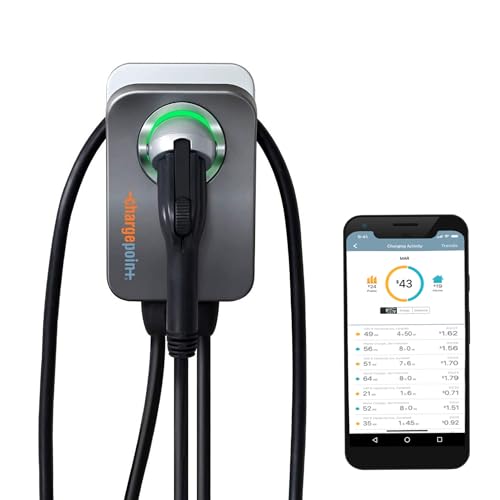
ChargePoint HomeFlex Level 2 EV Charger J1772
View on AmazonTypical costs (U.S.):
- Hardware (Level 2): $400–$1,200 for reliable, UL‑listed units with Wi‑Fi or cellular
- Installation: $500–$2,000 for straightforward installs; $1,500–$3,500 for panel upgrades; $2,000–$5,000+ for service upgrades or long trenching (sources: NREL cost benchmarking; utility program datasets; CALeVIP)
Payback: Home charging at $0.15/kWh and 3.5 mi/kWh costs ~4.3¢/mile. Versus gasoline at $3.50/gal and 30 mpg (~11.7¢/mile), you save ~7.4¢/mile—about $370/year at 5,000 EV miles, or $740/year at 10,000 EV miles. Even with a $1,500 install, simple payback can be 2–4 years depending on mileage and rates.
For model‑specific home unit picks and features, see: Best EV Home Charger 2026: Top Level 2 Picks & Buying Guide.
Multifamily and workplace
- Power sharing: Networked Level 2 with load management can serve 2–4 ports per circuit, reducing make‑ready costs and peak demand.
- Access and billing: RFID, app, or credit card options; consider employee rates vs. public access. Parking policy, signage, and time limits help turnover.
- ADA and site design: Provide accessible stalls, adequate aisle width, and clear signage. Mounting heights and cable reach should meet local codes and ADA guidance.
- Data and reliability: Target 97%+ uptime. Plan for preventative maintenance, remote diagnostics, and 3–5 year warranties.
Typical costs (per port):
- Level 2: Hardware $700–$2,500; installation $2,000–$10,000 depending on panel proximity, trenching, and permitting
- Network and O&M: $150–$300/port/year for software and cellular; routine site visits and cleaning add modest costs
Revenue and benefits:
- Workplace charging boosts employee satisfaction and EV adoption; employers often subsidize energy costs given modest load impacts under managed charging.
- Multifamily properties see higher occupancy and retention; modest user fees can offset O&M.
Public destination and corridor DC fast charging
- Utility coordination: Engage early. Transformer upgrades, new services, and demand mitigation strategies can make or break budgets and timelines.
- Site design: Easy ingress/egress, pull‑through options for towing, clear lighting, and amenities. Weather protection and cable management improve usability.
- Power and scalability: Consider 150 kW minimum per dispenser with 500–1,000 kVA site capacity for multi‑port hubs. Power sharing cabinets can optimize utilization while capping utility demand.
- Payment and interoperability: Credit card tap, EMV compliance, and roaming support. ISO 15118 Plug & Charge and OCPP‑based backends simplify operations.
- Reliability: Spares strategy, 24/7 support, and remote monitoring. NEVI requires 97% uptime per charging port and open standards.
Typical costs:
- DCFC hardware: $25,000–$120,000 per dispenser depending on kW and features; power cabinets add significant cost for high‑power arrays
- Construction: $50,000–$250,000+ per site depending on utility work, trenching, and civil upgrades
- Make‑ready and utility upgrades: $50,000–$200,000+ for service extensions and transformers at high‑power sites
- Total multi‑port hub: Commonly $300,000–$1 million+ for 4–8 high‑power dispensers (NREL Benchmarking; CALeVIP; utility filings)
Fleet note: Medium‑ and heavy‑duty depots face higher power needs (single sites at multi‑megawatt scale). Managed charging, battery‑buffered DC, and tariff design are critical. See our analysis: Charging the Fleet Revolution: Price Parity, Swapping, Smart Charging and Policy Support Are Converging for Medium‑ & Heavy‑Duty EVs.
Incentives, rebates, and financing: how to lower upfront costs
Public and private support can cover 30–70% of installed costs for qualifying projects.
Federal incentives (U.S.)
- Residential tax credit (IRC 30C): 30% of hardware and installation costs, up to $1,000 for home EVSE placed in service through 2032. Note: After 2022, eligibility is limited to homes in qualifying low‑income or non‑urban census tracts per the Inflation Reduction Act rules—check your address.
- Commercial tax credit (IRC 30C): For businesses and tax‑exempt entities, up to 30% of costs (6% base credit rising to 30% if prevailing wage and apprenticeship requirements are met), capped at $100,000 per charger item as of 2023. Public accessibility and location in qualifying tracts generally required.
- NEVI Formula Program: $5 billion (2022–2026) for highway corridor DC fast charging; sites must include at least four 150 kW ports, CCS/NACS compliance, 97% uptime, and open access (FHWA).
State, local, and utility programs
- State grants/rebates: Many states offer $2,000–$6,000 per Level 2 port and $30,000–$100,000 per DCFC dispenser for public sites, often with equity and rural siting priorities. Programs like California’s CALeVIP (evolving to new models) have published cost and incentive benchmarks.
- Utility make‑ready: Utilities may fund line extensions, transformers, and panel upgrades, or provide per‑port rebates ($500–$5,000 for residential Level 2; higher for commercial Level 2 and DCFC). Some offer special EV tariffs and off‑peak credits.
- Financing models: Turnkey providers offer leases, power‑as‑a‑service, and revenue‑share models. Public entities can leverage grants with in‑kind match and community benefits.
Application tips:
- Confirm site eligibility (census tract, public accessibility, corridor gaps) before design.
- Get itemized quotes separating hardware, installation, make‑ready, and network fees—some incentives only cover specific line items.
- Document prevailing wage and apprenticeship compliance to unlock the full 30C commercial rate.
- Stack incentives carefully; many programs prohibit double‑dipping for the same cost component.
To see what’s available near you, start here: Electric Vehicle Incentives by State: What’s Available, Who Qualifies, and How to Claim It.
Renewable integration, grid impacts, and smart charging
EV charging stations can cut operating costs and emissions when paired with smart controls and clean energy.

Electrify: An Optimist's Playbook for Our Clean Energy Future
In Electrify, <strong>Griffith lays out a detailed blueprint—optimistic but feasible—for fighting climate change while creating millions of new jobs and a healthier environment</strong>. Griffith’s pl
Check Price on AmazonTime‑of‑use (TOU) and managed charging
- TOU savings: Many utilities offer off‑peak rates that are 30–60% lower than on‑peak. Scheduling home charging after 9 p.m., for example, can save hundreds per year.
- Demand charges: For commercial sites, demand charges based on the month’s peak kW can dwarf energy costs. Load management—staggering sessions, capping per‑port kW, or using power‑sharing cabinets—can reduce peaks by 20–50% while meeting driver needs (NREL and utility pilots).
- Smart charging standards: OCPP enables vendor‑agnostic network control. OpenADR or direct utility APIs can automate response to grid signals. ISO 15118 supports Plug & Charge and future bidirectional features.
Vehicle‑to‑home (V2H) and vehicle‑to‑grid (V2G)
- V2H today: Several EVs and bidirectional home inverters now support V2H backup. A 60–100 kWh battery can power a typical U.S. home for 1–3 days depending on load. Interconnection and UL 9741/1741 SB‑listed equipment are required.
- V2G pilots: School buses and fleets are earning revenue participating in demand response and capacity markets. Studies show potential annual value of $700–$2,000 per vehicle in the right markets, with careful management to protect battery health (NREL; utility pilots in PJM, ISO‑NE, CAISO).
- Battery health: Limiting depth of discharge, avoiding high SOC dwell at hot temperatures, and minimizing very high C‑rate cycling help preserve longevity. Most OEMs set conservative V2G parameters accordingly.
Pairing EV charging stations with solar and storage
- Solar sizing: A 7–10 kW residential PV system can supply 8,000–14,000 kWh/year in many U.S. climates—enough for 20,000–40,000 miles of EV driving at 3–4 mi/kWh. Daytime workplace charging aligns well with solar output.
- Emissions impact: Charging when the grid is cleanest (often midday in high‑solar regions, overnight in wind‑rich regions) can cut marginal CO₂ per kWh by 20–50% compared with on‑peak fossil‑heavy hours (NREL grid mix analyses; WattTime data).
- Storage benefits: Battery storage can shave commercial charging peaks, reduce demand charges, and keep sites running during outages. For homes, a 10–15 kWh battery can time‑shift solar to overnight EV charging and support critical loads.
- Controls: Use solar‑following charge schedules, dynamic kW caps, and price‑based dispatch. For fleets, integrate chargers with energy management systems (EMS) and telematics to align arrivals/departures with grid‑friendly windows.

Emporia Gen 2 Smart Home Energy Monitor with 16 50A Circuit Level Sensors | Real Time Electricity Monitor/Meter | Solar/Net Metering - Amazon.com
View on AmazonPractical guidance: choosing and deploying the right EV charging stations
- Match power to dwell time: Homes and workplaces suit Level 2; highways and logistics hubs need DC fast. Oversizing beyond the vehicle’s capability yields limited benefit.
- Future‑proof connectors: In North America, select stations that support both CCS and NACS now or via swappable cables/adapters as SAE J3400 adoption accelerates.
- Plan electrical capacity: For homes, assess panel headroom and consider a 60 A circuit if feasible. For properties, plan for phased expansion, conduit oversizing, and spare breakers.
- Reliability first: Look for 97%+ uptime SLAs, remote diagnostics, and 3–5 year warranties. Stock spare parts for public sites.
- Data matters: Track kWh delivered, session times, and utilization. Use data to adjust pricing, dwell policies, and expansion plans.
- Permitting and safety: Follow NEC 625, local codes, and utility interconnection rules. Protect equipment with bollards, ensure ADA‑compliant access, and maintain clear signage.
- Budget realistically: For home Level 2, set aside $1,000–$3,000 all‑in unless major upgrades are needed. For commercial Level 2, plan $3,000–$12,000/port. For DC fast, six figures per site is common; incentives can close the gap.
Where to charge and how to find stations
- Apps and maps: The U.S. DOE Station Locator, automaker apps, and major networks show real‑time availability and connector types.
- Payment: Many sites accept credit cards, apps, and Plug & Charge. Check posted kWh and idle fees.
- Trip planning: For highway travel, space DC fast stops 100–150 miles apart and target 10–80% state of charge for fastest overall time.
What this means for drivers, businesses, and policymakers
- Drivers: Home Level 2 offers the best convenience and lowest cost. Use TOU schedules, limit frequent 100% fast charging, and consider solar if you own your roof.
- Businesses and multifamily: Start with networked Level 2, design for expansion, and apply for incentives early. Use managed charging to avoid demand spikes.
- Public charging providers: NEVI corridors set the reliability bar. Invest in robust O&M, dual‑standard connectors (CCS and NACS), and customer amenities to drive utilization.
- Policymakers and utilities: Clear, performance‑based incentives and modernized rates (demand charge alternatives, EV‑specific TOU) accelerate buildout while protecting the grid.
The buildout of EV charging stations is moving quickly and becoming smarter. With the right sizing, siting, and incentives—and by leaning into renewables and managed charging—drivers get lower costs and cleaner miles, while the grid gains a flexible, decarbonized load.
Further reading on this site:
- Electric Vehicles Explained: Types, Costs, Benefits & Impact
- Best EV Home Charger 2026: Top Level 2 Picks & Buying Guide
- Electric Vehicle Incentives by State: What’s Available, Who Qualifies, and How to Claim It
- Charging the Fleet Revolution: Price Parity, Swapping, Smart Charging and Policy Support Are Converging for Medium‑ & Heavy‑Duty EVs
Recommended Products
Electrify: An Optimist's Playbook for Our Clean Energy Future
In Electrify, <strong>Griffith lays out a detailed blueprint—optimistic but feasible—for fighting climate change while creating millions of new jobs and a healthier environment</strong>. Griffith’s pl
ChargePoint HomeFlex Level 2 EV Charger J1772
Discover the latest in EV charging technology. Explore a diverse selection of smart, efficient, and compatible charging solutions for your electric vehicle.
Emporia Gen 2 Smart Home Energy Monitor with 16 50A Circuit Level Sensors | Real Time Electricity Monitor/Meter | Solar/Net Metering - Amazon.com
See how much electricity your home is using anywhere, anytime. ... <strong>Add individual 50A sensors to your Vue to monitor up to 16 individual circuits</strong> — providing accurate energy use for t