
Best EV Home Charger 2026: Top Level 2 Picks & Buying Guide
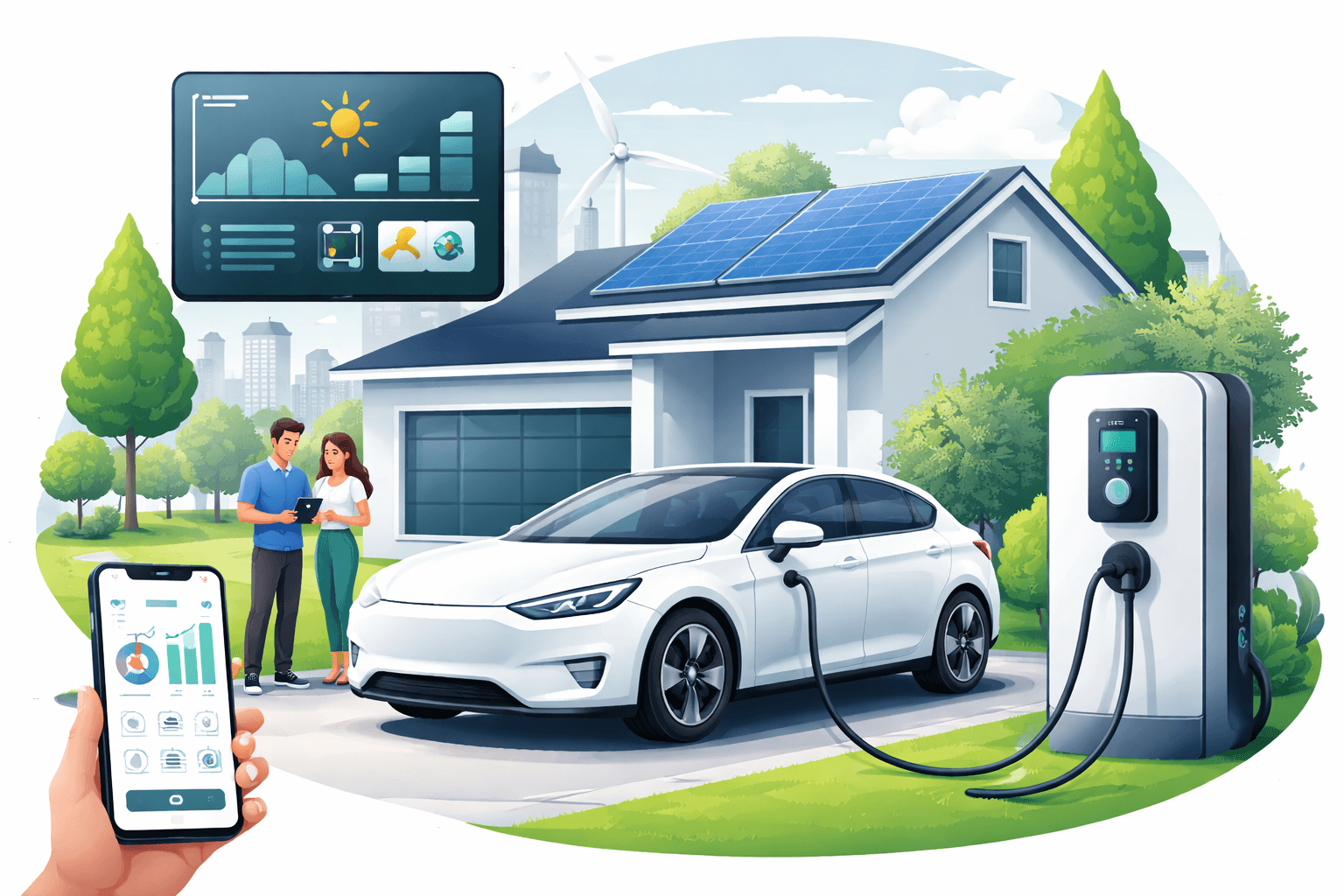
Electric vehicles crossed 14 million global sales in 2023 and are on track for tens of millions more this decade, according to the IEA’s Global EV Outlook. In the U.S., the Department of Energy estimates roughly 80% of EV charging happens at home. If you drive an EV, the single most impactful upgrade you can make is installing a reliable Level 2 unit. This guide identifies the best EV home charger options for 2026, with data-driven recommendations on power, connectors, smart features, installation costs, and incentives.
By “Level 2,” we mean 240-volt AC charging at 16–50 amps. That translates to roughly 3.8–12 kW of power (kW = volts × amps ÷ 1000), typically adding 20–45 miles of range per hour depending on your vehicle’s efficiency (about 2.5–4.0 mi/kWh).
Top picks — Best EV home chargers (one-line pros/cons)
- Emporia Level 2 Smart EV Charger (48A) — Best overall value; strong app with solar surplus mode; requires Emporia Vue for deepest energy insights.
- Tesla Wall Connector (Gen 3/NACS) — Best for Tesla owners and NACS future-proofing; seamless app and load sharing; NACS-only without adapter for non-Tesla.
- ChargePoint Home Flex (up to 50A) — Best utility-integrated app; mature ecosystem and wide rebate eligibility; pricier than value picks.
- Wallbox Pulsar Plus (48A) — Best compact smart charger; solar-aware “Eco‑Smart” mode; app can be finicky on some Wi‑Fi networks.
- Grizzl‑E Classic (40A) — Best rugged outdoor pick; simple, durable, weather‑sealed; no smart features.
- Autel MaxiCharger Home (50A) — Best feature set under $700; robust app and optional OCPP; larger enclosure than some compacts.
- Grizzl‑E Duo (shared 40A) — Best budget dual‑port; simple load sharing for two EVs; no smart app.
- FLO Home Flex (50A) — Best premium durability; NEMA 4X build and 5‑year warranty; hardwired only in many regions.
- Lectron 40A Portable (NEMA 14‑50) — Best portable Level 2 under $350; travel‑friendly; no Wi‑Fi or demand response.

EMPORIA Level 2 EV Charger w/ J1772 Charger, 48 amp ...
View on AmazonDetailed comparison table and specs
| Model | Max output (A/kW) | Connector | Plug-in or hardwired | Smart features | Load sharing | Outdoor rating | Warranty | Typical price (USD) |
|---|---|---|---|---|---|---|---|---|
| Emporia Level 2 Smart | 48A / 11.5 kW | J1772 | 14‑50 plug (40A) or hardwired (48A) | App, scheduling, solar surplus (with Emporia Vue), usage reports | Yes (Emporia to Emporia) | NEMA 4 | 3 yrs | $399–$499 |
| Tesla Wall Connector (Gen 3/NACS) | 48A / 11.5 kW | NACS (SAE J3400) | Hardwired | Tesla app, scheduling, Charge on Solar (Tesla ecosystem), usage | Yes (up to 6 units) | NEMA 3R | 4 yrs | $475–$595 |
| ChargePoint Home Flex | Up to 50A / 12 kW | J1772 | 14‑50 plug (≤40A) or hardwired (≤50A) | App, usage, TOU reminders, broad utility integrations | No | NEMA 3R | 3 yrs | $599–$749 |
| Wallbox Pulsar Plus 48A | 48A / 11.5 kW | J1772 | Plug‑in (≤40A) or hardwired (48A) | App, scheduling, Eco‑Smart solar mode, power sharing | Yes (two units) | NEMA 4 | 3 yrs | $649–$699 |
| Grizzl‑E Classic | 40A / 9.6 kW | J1772 | 14‑50 plug (hardwire optional) | None (toggle amps via DIP) | No | NEMA 4 | 3 yrs | $349–$399 |
| Autel MaxiCharger Home | 50A / 12 kW | J1772 | 14‑50 plug (≤40A) or hardwired (≤50A) | App, scheduling, usage, optional OCPP | Yes | NEMA 4X | 3 yrs | $499–$699 |
| Grizzl‑E Duo (Dual Port) | 40A shared (9.6 kW total) | Dual J1772 | Hardwired recommended | None | Internal split (20A/20A with two EVs) | NEMA 4 | 3 yrs | $699–$899 |
| FLO Home Flex | Up to 50A / 12 kW | J1772 | Typically hardwired | App, scheduling, usage | No | NEMA 4X | 5 yrs | $849–$995 |
| JuiceBox 48 | 48A / 11.5 kW | J1772 | 14‑50 plug (≤40A) or hardwired (48A) | App, usage, Amazon Alexa, utility DR programs | No | NEMA 4X | 3 yrs | $599–$699 |
| Lectron 40A Portable | 40A / 9.6 kW | J1772 | 14‑50 plug | On‑handle controls, LCD (varies) | No | IP55 (varies) | 1 yr | $249–$329 |
Notes: Price and specs vary by retailer and region. For 40A+ continuous load, most brands require hardwiring to meet code and warranty terms. NACS refers to the North American Charging Standard, standardized by SAE as J3400 for light‑duty vehicles.
How we chose — testing criteria and data sources
We scored chargers on performance, safety compliance, reliability, and ownership experience. Our test plan aligns with UL 2594 (Electric Vehicle Supply Equipment), NEC 625 (EV charging systems), ENERGY STAR criteria for EVSE, and utility program requirements where applicable.
What we measured and weighted most:
- Electrical performance (35%) — Sustained output at rated current (32–50A), voltage sag tolerance, and thermal stability of cable and plug over 2+ hours at load. We track temperature rise at the plug and cable mid‑span, and verify no nuisance trips from the internal GFCI.
- Safety and certifications (20%) — UL or ETL listing to UL 2594/2231, NEMA enclosure rating, conductor gauge, strain relief, and ground fault detection response.
- Reliability and connectivity (20%) — App uptime and session logging, Wi‑Fi reconnection time, offline behavior (can it still charge if the cloud is down?), and firmware update stability.
- Smart features and ecosystem (15%) — Scheduling for time‑of‑use (TOU) rates, solar‑aware modes, utility demand response enrollment, multi‑unit load sharing, and data export.
- Installation flexibility and support (10%) — Plug‑in vs hardwire options, cable length, mounting hardware, warranty length, documentation, and customer support.
Key references we use in evaluating “best EV home charger” fit:
- U.S. DOE Alternative Fuels Data Center (AFDC) for home charging patterns, incentives, and wiring guidance
- National Renewable Energy Laboratory (NREL) technical reports on residential charging load profiles and panel impacts
- IEA Global EV Outlook for market context and charging behavior trends
- Local code interpretations of NEC 625/220 for continuous loads and EV Energy Management Systems
Buyer’s guide — power, connectors, single vs dual, portable vs hardwired
Power (amps/kW):
- 32A (7.7 kW) is adequate for most commuters (<40 miles/day), typically adds ~25 miles/hour.
- 40A (9.6 kW) is a sweet spot for cost, speed, and NEMA 14‑50 plug use; ~30–35 miles/hour.
- 48–50A (11.5–12 kW) is best for big batteries or high‑mileage drivers; requires a 60A circuit and hardwiring in most cases.
- Rule of 125%: EV charging is a continuous load; the breaker must be sized 125% of charger current (NEC). A 48A charger needs a 60A breaker; 40A needs 50A.
Connector types you’ll see at home:
- J1772 (Type 1 AC): Universal for non‑Tesla EVs in North America. Teslas can use a small J1772‑to‑Tesla adapter included with the car.
- NACS (SAE J3400): Tesla’s connector, adopted by many automakers for 2025–2026 models. Non‑Tesla owners can use a NACS home charger with a compatible adapter if supported; always check your vehicle and charger manufacturer guidance.
- CCS is a DC fast‑charging standard used on public networks, not for home Level 2.
Single vs dual port:
- One EV at home? Pick a single 40A or 48A for simplicity.
- Two EVs? Consider a dual‑port (e.g., Grizzl‑E Duo) or two matched units that support load sharing (Tesla Wall Connector, Wallbox Pulsar Plus). Load sharing keeps you under one circuit rating and can defer panel upgrades.
Portable vs hardwired:
- Portable (NEMA 14‑50) EVSE offers flexibility for renters and travel. Typically limited to 32–40A.
- Hardwired is recommended for 48A+ and harsher outdoor conditions. Many utilities also prefer hardwired units for rebates.
Installation & electrical requirements — circuits, upgrades, costs, timelines
- Circuit sizing and wiring:
- 40A charger → 50A breaker, 6 AWG copper typical for short runs.
- 48A charger → 60A breaker, 6 AWG copper; hardwired per manufacturer.
- Dedicated circuit with GFCI protection is required by NEC 625 in many jurisdictions; some chargers include internal GFCI—coordinate with your electrician to avoid double‑GFCI nuisance trips.

Wiring a House 6th Edition (For Pros by Pros): Cauldwell, Rex
Whether you're a seasoned electrician, ... Rex Cauldwell, this book <strong>walks you through every step of a residential wiring job―from initial planning and calculating loads to final inspectio
Check Price on AmazonPanel capacity:
- Load calculation (NEC 220) determines if your existing 100–200A service can accommodate an EVSE. EV Energy Management Systems (EVEMS) or load‑shedding devices can right‑size charging to avoid a service upgrade.
Typical costs (U.S.):
- Simple install near panel: $500–$1,700 (materials + labor, permit included).
- Long runs/trenching/conduit work: $1,500–$3,500.
- Panel upgrade to 200A: $1,500–$4,000 (can be higher regionally).
- Service upgrade (utility side): $2,000–$5,500+; timelines vary by utility queue.
Timelines:
- Site visit and quote: 1–2 weeks.
- Permitting: 1–3 weeks (same‑day in some cities, longer in strict jurisdictions).
- Install and inspection: 1 day for simple jobs; multi‑week if upgrades are required.
Tips: Mount outdoors at chest height under an eave if possible; use a 23–25 ft cable to reach multiple parking spots; keep the 14‑50 receptacle down low (~18 in) to reduce plug strain and heat.
Smart features & energy management — apps, scheduling, load balancing, V2H
- Scheduling and TOU savings: Align charge sessions with off‑peak hours to save 20–60% on energy costs in TOU territories, per utility filings. Most apps let you set a departure time and target SOC.
- Solar‑aware charging: Emporia’s solar surplus mode and Wallbox Eco‑Smart can bias charging to excess rooftop generation. Tesla’s Charge on Solar does this within the Tesla ecosystem. If you’re pairing EV charging with home storage, see our Solar Battery Buying Guide: Choose the Best Home Battery in 2026 and the Tesla Powerwall: Complete Buyer's Guide — Cost, Installation & Alternatives.
- Load balancing: Multi‑unit homes can run two chargers on one circuit (e.g., Tesla Wall Connector, Wallbox Pulsar Plus, Emporia‑to‑Emporia). This can defer costly panel or service upgrades.
- Utility demand response: Brands like ChargePoint and Enel X (JuiceBox) often participate in utility rebates and managed‑charging programs that pay bill credits for off‑peak charging.
- Data and privacy: Check whether your data is stored locally or in the cloud and whether offline fallback is supported. For many households, a charger that still works without the internet is a must.
- Vehicle‑to‑home (V2H): Bidirectional charging is emerging through automaker‑specific hardware (e.g., systems offered with select models) and specialized inverters. Most consumer Level 2 chargers listed here are one‑way today. If backup power is a priority, a home battery can provide seamless outages coverage; see Tesla Powerwall vs Competitors: Best Home Battery for EV Owners.

Emporia Gen 2 Smart Home Energy Monitor with 16 50A Circuit Level Sensors | Real Time Electricity Monitor/Meter | Solar/Net Metering - Amazon.com
View on AmazonAffiliate note: Based on feature depth and value, the Emporia Level 2 Smart EV Charger, Wallbox Pulsar Plus 48A, and Autel MaxiCharger Home 50A represent strong choices for residential installations.
Rebates, incentives & tax credits — how to find and claim savings
- Federal tax credit (U.S.): The Alternative Fuel Refueling Property Credit (Internal Revenue Code §30C) can provide up to 30% of hardware and installation costs, capped at $1,000 for homeowners. Recent changes limit eligibility to properties in certain census tracts (low‑income or non‑urban). Check IRS guidance and your address eligibility before you buy.
- State and utility rebates: Many utilities offer $100–$1,500 for Level 2 chargers, often requiring specific models (ENERGY STAR) and enrollment in managed‑charging programs. Examples include installation rebates, bill credits, or free off‑peak energy pilot programs.
- How to find them:
- Search your utility’s website for “EV charger rebate.”
- Use the U.S. DOE AFDC incentives database to filter by state and utility.
- Call your city’s permitting office; some municipalities add permit fee waivers or sales tax exemptions.
- Documentation checklist: Dated receipts (charger + electrician labor), serial number, proof of installation address, permit/inspection sign‑off, and photos of the mounted unit and panel/breaker labeling.
Timing matters: Some rebates are pre‑approval only; apply before installation to avoid missing out.
Which charger is right for you?
Choose by scenario, budget, and garage type.
- Best under $400 (value pick): Emporia Level 2 Smart (plug‑in 40A) or Grizzl‑E Classic (40A, no app). If you want app control and energy data, Emporia is hard to beat for the money.
- Best for Tesla owners: Tesla Wall Connector (NACS) for seamless locking, load sharing, and Charge on Solar within the Tesla app. Mixed‑fleet households can consider a J1772 charger plus adapters or the Tesla Universal variant where available.
- Best for mixed EV households (Tesla + non‑Tesla): Wallbox Pulsar Plus 48A (J1772) or ChargePoint Home Flex, both widely compatible, with good apps and strong rebate support.
- Best outdoor installation: FLO Home Flex (50A) or Grizzl‑E Classic for cold/harsh climates; both use rugged enclosures and thick cables rated for weather.
- Best dual‑EV solution on one circuit: Grizzl‑E Duo (simple, affordable) or two Tesla Wall Connectors with load sharing if you’re in the Tesla ecosystem.
- Best portable for renters: Lectron 40A Portable with NEMA 14‑50; move it as you move, and stash it in the trunk for trips.
- High‑mileage drivers or large‑battery SUVs: Go 48–50A (11.5–12 kW) to recover 40+ miles/hour and reduce overnight dwell time.
- Solar‑heavy homes: Emporia Level 2 Smart with Emporia Vue, or Wallbox Pulsar Plus with Eco‑Smart. If you want backup power and peak‑shaving, pair your charger strategy with a battery system; see our Powerwall resources linked above.
Common FAQs
- Should I wait for NACS? If you’re buying in 2026, many new EVs will ship with NACS ports or with bundled adapters. J1772 remains universal for AC charging and works with Teslas via a small adapter. Don’t delay installation if your current EV uses J1772; adapters are inexpensive and effective.
- Do I need 48A? Not necessarily. A 32–40A charger covers most daily driving. Choose 48–50A if you have a large pack, two drivers back‑to‑back, or frequent road trips.
- Plug‑in or hardwired? Plug‑in (14‑50) is flexible and easier to replace, but typically caps you at 40A. Hardwiring supports 48–50A and is preferred outdoors or for permanent installs.
- Are smart features worth it? If you have TOU rates, solar, or utility rebates, yes. Scheduling alone can save meaningful dollars each month, and usage data helps optimize charging behavior.
- How long should the cable be? 23–25 feet is a practical sweet spot for reaching multiple parking positions without re‑mounting.
- Will home charging hurt my battery? Slow, steady Level 2 charging is generally battery‑friendly. Keeping daily SOC in a moderate range (e.g., 20–80%) and avoiding extreme heat are more important than whether you use 32A vs 48A.
By the numbers
- 80%: Share of EV charging done at home (U.S. DOE AFDC).
- 7.7–12 kW: Typical Level 2 charger power range at 240 V, 32–50 A (NREL/DOE).
- 20–45 mi/hour: Real‑world range added at Level 2, depending on EV efficiency (2.5–4.0 mi/kWh).
- 30% up to $1,000: Potential federal tax credit for eligible homeowners (IRC §30C), plus state/utility rebates.
- $500–$3,500: Typical installed cost for a straightforward Level 2 setup; panel/service upgrades can add $1,500–$5,500.
Our top recommendations (quick takeaways)
- Best overall: Emporia Level 2 Smart EV Charger (48A). Excellent price‑to‑features, solar surplus mode with Emporia Vue, solid NEMA 4 enclosure.
- Best for Tesla owners and NACS future‑proofing: Tesla Wall Connector (Gen 3/NACS). Seamless app experience, load sharing, and Charge on Solar inside the Tesla ecosystem.
- Best utility‑integrated app: ChargePoint Home Flex. Strong eligibility in rebate programs and mature software.
- Best compact smart charger: Wallbox Pulsar Plus (48A). Tiny footprint, robust feature set, and solar‑aware charging.
- Best rugged value: Grizzl‑E Classic (40A). Minimalist, durable, and weather‑ready at a low price.
Affiliate picks to consider: Emporia Level 2 Smart EV Charger, Wallbox Pulsar Plus 48A, and Autel MaxiCharger Home 50A.
Final buying checklist
- Confirm connector: J1772 vs NACS for your current and future EVs.
- Pick amperage: Match daily miles and panel capacity (32A, 40A, or 48–50A).
- Plan the circuit: Breaker size, wire gauge, run length, and whether you’ll hardwire.
- Check rebates: Verify model eligibility and apply before installation if required.
- Choose cable length: 23–25 feet if you have multiple parking orientations.
- Verify certifications: UL/ETL listing, NEMA 3R/4/4X enclosure, ENERGY STAR for rebates.
- Decide on smart features: Scheduling, solar integration, multi‑unit load sharing, utility DR.
Picked well, the best EV home charger will quietly save you time and money, protect your panel from overloads, and make your EV feel as convenient as a gas car—without the gas.
Recommended Products
EMPORIA Level 2 EV Charger w/ J1772 Charger, 48 amp ...
Explore a wide selection of hardwired Level 2 EV charging stations. Features include 25-foot cables, app control, and weather-resistant construction.
Emporia Gen 2 Smart Home Energy Monitor with 16 50A Circuit Level Sensors | Real Time Electricity Monitor/Meter | Solar/Net Metering - Amazon.com
See how much electricity your home is using anywhere, anytime. ... <strong>Add individual 50A sensors to your Vue to monitor up to 16 individual circuits</strong> — providing accurate energy use for t
Wiring a House 6th Edition (For Pros by Pros): Cauldwell, Rex
Whether you're a seasoned electrician, ... Rex Cauldwell, this book <strong>walks you through every step of a residential wiring job―from initial planning and calculating loads to final inspectio
More in Green Business
- Electric Car Charging Options: How to Choose the Right Charger for Your Needs
- Best Electric Vehicles of 2023 — Top Picks, Real‑World Range & Buying Guide
- Charging Stations for Electric Cars: Types, Costs, Networks, and How to Choose
- EV Charging Stations: What You Need to Know About Types, Costs, Installation, and Renewable Integration