
Electric Car Charging Options: How to Choose the Right Charger for Your Needs
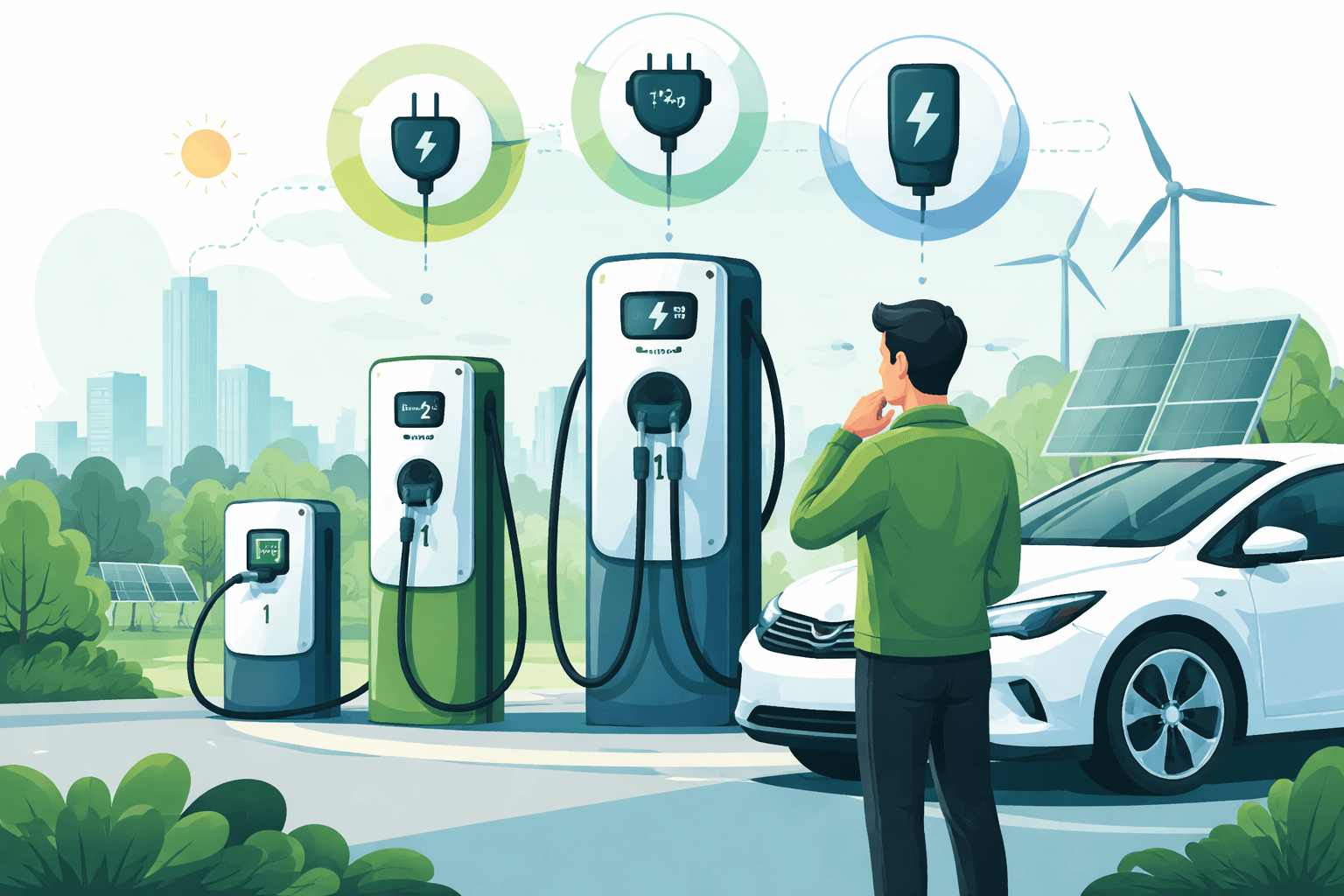
Electric vehicle adoption is surging, and so are the charging options for electric cars. Global public charging points reached roughly 3.5 million in 2023—up about 40% year-over-year—with roughly one-third of those being fast chargers, according to the IEA’s Global EV Outlook 2024. In the U.S., about 80% of charging still happens at home (U.S. DOE, Alternative Fuels Data Center), but corridor fast charging is expanding under the federal NEVI program ($5 billion for highways; $7.5 billion overall for EV charging via the Bipartisan Infrastructure Law).
This guide breaks down charging levels, connectors, home vs public trade-offs, costs, networks, and battery health so you can match charging speed and access to your driving—and avoid paying more than you need.
By the numbers: EV charging at a glance
- Level 1 (120 V AC, North America): ~1.2–1.9 kW; adds ~3–5 miles of range per hour (vehicle-dependent). Source: U.S. DOE AFDC
- Level 2 (240 V AC): Commonly 7.2–11.5 kW; adds ~20–45 miles per hour. Source: U.S. DOE AFDC; automaker specs
- DC fast charging: 50–150 kW common; 250–350 kW ultra-fast; 10–80% in ~20–40 minutes for many modern EVs (actual time varies with battery/temperature). Sources: IEA; automaker charging curves
- Public chargers worldwide (2023): ~3.5 million, up ~40% YoY. Source: IEA Global EV Outlook 2024
- Where charging happens (U.S.): ~80% at home. Source: U.S. DOE AFDC
- Average U.S. residential electricity price: ~16¢/kWh (2024). Source: U.S. EIA

Electric Cars For Dummies: Culp, Brian
<strong>Written by an insider in the electric vehicle industry, dive in to learn more about the tech that powers electric cars, the various electric car options, and how to purchase and maintain the p
Check Price on AmazonUnderstanding charging levels: match speed to your driving
Choosing among Level 1, Level 2, and DC fast charging is the core of evaluating charging options for electric cars. Power (kW) equals energy added per hour (kWh), so a 7.2 kW charger can add roughly 7.2 kWh per hour. Multiply by your vehicle’s efficiency (e.g., 3–4 mi/kWh) to estimate range added per hour.
Level 1 (120 V AC, ~1.2–1.9 kW)
- Typical hardware: Portable cord that ships with many cars (120 V, 12–16 A)
- Best for: Drivers averaging under ~30–40 miles/day who can plug in nightly; apartment dwellers with only a standard outlet; backup for road trips
- Real-world time examples (to go from ~10% to ~80% state of charge, SOC):
- 40 kWh pack: add ~28 kWh; at 1.4 kW ≈ 20 hours
- 60 kWh pack: add ~42 kWh; at 1.4 kW ≈ 30 hours
- Pros: Lowest cost, no electrician often needed
- Cons: Slow; may not keep up with high-mileage commutes
Level 2 (240 V AC, commonly 7.2–11.5 kW; up to 19.2 kW on some models)
- Typical hardware: Wall-mounted EVSE on a dedicated 240 V circuit (e.g., 40–60 A breaker)
- Best for: Most homeowners; drivers averaging 30–80+ miles/day; multi-EV households
- Real-world time examples (10%→80% SOC):
- 60 kWh pack (add ~42 kWh): at 7.2 kW ≈ 6 hours; at 11.5 kW ≈ 3.7 hours
- 77 kWh pack (add ~54 kWh): at 9.6 kW ≈ 5.6 hours
- Pros: Reliable overnight refueling; time-of-use (TOU) rates and smart scheduling can lower costs
- Cons: Requires installation; may need panel upgrades
DC fast charging (50–350 kW)
- Typical hardware: Public stations; bypass on-board AC charger to feed DC directly to the battery
- Best for: Road trips; drivers without home/work charging; quick top-ups
- Real-world time examples (10%→80% SOC):
- 60 kWh pack (add ~42 kWh): at 150 kW with an average charge rate of ~70–90 kW due to taper ≈ 25–35 minutes
- 77 kWh pack (add ~54 kWh): at 150 kW (avg ~90–110 kW) ≈ 30–40 minutes; at 250 kW (avg ~120–160 kW) ≈ 20–30 minutes
- 100 kWh pack (add ~70 kWh): at 250–350 kW (avg ~130–180 kW) ≈ 25–40 minutes
- Pros: Fast; expanding network coverage
- Cons: More expensive than home charging; repeated high-rate fast charging can accelerate battery wear if used as primary method (NREL)
Practical guidance:
- Daily commute under 40 miles? Level 1 can work if you plug in nightly.
- 40–100 miles/day or multiple drivers? Level 2 at home is the sweet spot.
- No home charging or frequent road trips? Plan around DC fast access and workplace charging.
- Check your car’s on-board AC charger rating (e.g., 7.2, 9.6, 11.5, or 19.2 kW). A 7.2 kW vehicle won’t benefit from a 19.2 kW wall unit.
For a deeper dive on hardware and installation, see our overview of EV charging stations and renewable integration: EV Charging Stations: What You Need to Know About Types, Costs, Installation, and Renewable Integration.
Connector types and standards: what plugs where
Connector choice affects which networks you can use—an important factor when comparing charging options for electric cars.
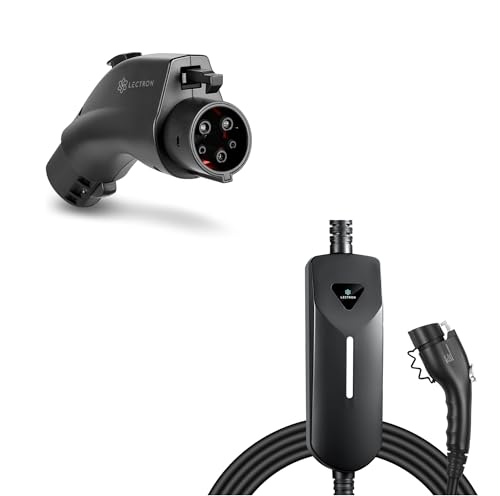
Lectron Tesla to J1772 EV Charging Adapter – NACS ...
View on AmazonAC connectors (Level 1/2)
- North America: SAE J1772 (Type 1). Nearly all non-Tesla EVs use J1772 for AC. Tesla vehicles use the Tesla/NACS inlet but are usually supplied with a J1772 adapter for Level 2.
- Europe: Type 2 (Mennekes). Three-phase AC up to 11–22 kW is common.
- China: GB/T (different AC and DC interfaces).
DC fast connectors
- North America:
- CCS1 (Combined Charging System). Widely deployed across public networks.
- Tesla NACS (now standardized by SAE as J3400). Most major automakers announced adoption in 2025–2026; networks are adding NACS cables.
- CHAdeMO: Used by older models (e.g., early Nissan LEAF). New models are moving away from CHAdeMO in North America.
- Europe: CCS2 is the DC standard; Tesla in Europe uses CCS2.
- Japan: CHAdeMO remains common for DC.
- China: GB/T DC; a new high-power ChaoJi standard is emerging in Asia.
Adapters and access:
- Many Tesla vehicles can use CCS with an approved adapter; many non-Tesla EVs will gain access to Tesla Superchargers via NACS cables or adapters as networks update. Always check your automaker’s guidance for approved adapters and supported networks.
- Connector compatibility dictates where you can fast charge on a road trip. If your region is transitioning (e.g., CCS1 to NACS in North America), choose vehicles and home EVSE that align with the growing network you’ll rely on.
Home vs public/workplace charging: gear, cost, and when each shines
Home charging (what you need and what it costs)
Equipment (EVSE):
- Level 1: Typically included with the car; plugs into a 120 V outlet (North America).
- Level 2: Wall-mounted EVSE on a dedicated 240 V circuit. Common unit ratings are 32–48 A (delivering ~7.7–11.5 kW). The National Electrical Code’s 80% rule means a 48 A EVSE requires a 60 A breaker. Some premium EVSEs support up to 80 A (19.2 kW) if your vehicle and wiring allow it.

EMPORIA Level 2 EV Charger - NEMA 14-50 EVSE w/ J1772 Connector - 48 amp EV Charger Level 2, 240v WiFi Enabled Electric Vehicle Charging Station, 25ft Cable, White : Automotive
View on AmazonInstallation and electrical upgrades:
- Typical installation (short run, existing capacity): ~$500–$1,500 for labor/materials, plus hardware (often $300–$800). U.S. DOE AFDC indicates many homeowners complete Level 2 for ~$1,000–$2,500 all-in under simple conditions.
- Panel or service upgrade: If you have a 100 A service or a full panel, expect $1,500–$5,000+ for upgrades depending on region and utility.
- Load management: Smart load-sharing EVSE, circuit-sharing devices, or utility load management can avoid a panel upgrade by limiting charging current.
- Permits: Many jurisdictions require an electrical permit and inspection for Level 2. Licensed electricians should perform the work.
Operating costs:
- Home electricity (U.S. average ~16¢/kWh) often equates to ~$4–$6 per 100 miles at 3–4 mi/kWh—well below public DC fast rates and typically cheaper than gasoline on a per-mile basis (EIA; DOE AFDC).
- TOU rates can cut costs 20–50% when charging during off-peak windows. Many EVSEs let you schedule charging.
Smart/home energy integration:
- Features to prioritize: Wi‑Fi/ethernet connectivity, scheduling, load sharing across multiple EVs, solar-aware charging, and utility demand response support (OpenADR or utility-branded programs).
- If you plan to pair charging with rooftop solar or a home battery, choose EVSE that can modulate charging based on solar surplus or utility price signals.
When home charging is most appropriate:
- You can park and plug in reliably overnight.
- Your daily driving fits within Level 1 or Level 2 replenishment.
- You want the lowest fueling costs and least hassle.
Shopping for a home unit? Start with our evaluator: Best EV Home Charger 2026: Top Level 2 Picks & Buying Guide.
Public and workplace charging
Workplace Level 2 can cover much or all of a typical commute. Public Level 2 is great for destinations (gyms, hotels, parking structures). DC fast is for quick en‑route refueling.
Costs:
- Level 2 public: Free to ~$0.30–$0.40/kWh; some sites charge by the hour (e.g., ~$1–$2/hour) or session fee plus kWh. Pricing varies by site owner and state regulations.
- DC fast: Commonly ~$0.25–$0.60/kWh, sometimes higher; per-minute pricing is still used in some states. Idle fees often apply if you stay plugged in after charging completes.
When public/workplace charging is most appropriate:
- You rent or lack home charging.
- You road trip frequently and need corridor fast charging.
- Your employer offers free or low-cost Level 2 during work hours.
The public charging ecosystem: networks, payments, roaming, and reliability
Major networks (varies by region): Tesla Supercharger, Electrify America, EVgo, ChargePoint, Shell Recharge, and utility/municipal networks. In Europe, Ionity and Fastned are common on corridors.
Payment models and access:
- App/RFID memberships can lower prices and enable roaming.
- Plug and Charge (ISO 15118) lets the car authenticate with no app/card; it’s increasingly supported on new EVs and DC networks.
- Per‑kWh vs per‑minute billing varies by state/country; many U.S. states now allow per‑kWh pricing, which is fairer across vehicle types.
- Credit card readers are more common on new stations, aided by federal funding requirements.
Roaming and compatibility:
- Roaming agreements (e.g., via Hubject or network partnerships) mean one account can unlock multiple networks, though fees can differ.
- Connector shift: In North America, networks are adding NACS plugs in 2024–2026 while maintaining CCS1. Check your route ahead of time.
Trip planning tools and tips:
- Use A Better Routeplanner (ABRP), PlugShare, and in‑car navigation to map chargers to your SOC and weather. Google Maps EV routing is improving in many cars.
- Precondition your battery before a DC fast stop to maximize charge rate; many EVs trigger automatic preconditioning when a fast charger is set as the destination.
- Prefer larger sites (6+ stalls) for redundancy.
Reliability and etiquette:
- A 2023 J.D. Power EV public charging study found roughly 1 in 5 charging attempts failed due to station issues or payment faults—check recent user check‑ins to verify uptime.
- Etiquette: Move when you’re done (especially on DCFC), avoid unplugging others, don’t occupy a fast charger if you only need Level 2, and keep cables tidy.
Want a deeper comparison of station types and networks? See: Charging Stations for Electric Cars: Types, Costs, Networks, and How to Choose.
Battery health and charging best practices
Lithium‑ion batteries are happiest at moderate temperatures and moderate states of charge. Fast charging pushes high current, which can raise battery temperature and stress cells—especially near full.
Best practices (supported by automaker guidance and NREL research):
- Daily SOC window: Keep between ~20% and ~80% for routine use; charge to 100% only for trips, and drive soon afterward.
- Use DC fast strategically: Occasional fast charging is fine; relying on it as your primary method can measurably accelerate aging, particularly in hot climates or if repeatedly charging to high SOC.
- Precondition: Warm or cool the pack before fast charging to improve speed and reduce stress.
- Avoid prolonged extremes: Don’t leave the battery at 0% or 100% for long periods. For storage, ~40–60% SOC is ideal.
- Temperature matters: High ambient temps and rapid fast charging together exacerbate aging; vehicles with robust thermal management fare better.
Incentives, permits, and utility programs
- Incentives: Many utilities and states offer rebates for Level 2 hardware, installation, or panel upgrades. Some provide off‑peak charging bill credits or reduced TOU rates. Check your locale, or start here: Electric Vehicle Incentives by State: What’s Available, Who Qualifies, and How to Claim It.
- Permits: Most jurisdictions require an electrical permit for Level 2. Condo/HOA rules may require approval. Some cities offer expedited EVSE permitting.
- Curbside and multifamily: Grants are increasingly available for shared charging in apartments and streetscape projects (e.g., via the U.S. DOE/LPO, state energy offices, or the federal Charging and Fueling Infrastructure program).
Emerging tech shaping future choices
- NACS/SAE J3400 standardization: As most North American automakers adopt NACS and networks add NACS cables, access to high‑reliability fast charging will broaden. Expect mixed CCS1 + NACS sites through the transition.
- Vehicle-to-grid (V2G), V2H, and V2L: Bidirectional charging can power homes or feed the grid. Standards like ISO 15118‑20 and safety certifications (e.g., UL 9741 for bidirectional EVSE) are maturing. Utilities are piloting V2G to pay drivers for capacity services.
- Wireless charging: Static inductive pads (typically 7–11 kW) are in pilots for taxis/fleets; dynamic in‑road charging corridors are being trialed in Europe and select U.S. projects. Efficiency is improving, but costs and standardization are still evolving.
- Smart charging at scale: Open Charge Point Protocol (OCPP) and utility integrations will make automated, price‑aware charging the default, shaving peak demand and lowering consumer bills.
How to choose: a quick decision framework
- Daily miles and parking access
- Under 40 miles/day and reliable overnight parking? Level 1 may suffice.
- 40–100+ miles/day or multiple drivers? Install Level 2 at home if possible.
- Vehicle limits
- Check your on‑board AC charger (kW). Size EVSE accordingly.
- Confirm your DC fast peak rate and real‑world charging curve for road trips.
- Electrical capacity and cost
- Get a load calculation; consider smart load management to avoid panel upgrades.
- Compare TOU rates, utility rebates, and installation quotes.
- Network coverage along your routes
- Map CCS1/NACS availability and reliability on your frequent corridors.
- Battery health preferences
- Plan to fast charge when needed, but rely on AC charging for routine use and keep daily SOC moderate.
Integrating these steps will help you right-size your charging solution, control costs, and protect your battery—all while making the most of the rapidly improving charging landscape.
Recommended Products
Electric Cars For Dummies: Culp, Brian
<strong>Written by an insider in the electric vehicle industry, dive in to learn more about the tech that powers electric cars, the various electric car options, and how to purchase and maintain the p
EMPORIA Level 2 EV Charger - NEMA 14-50 EVSE w/ J1772 Connector - 48 amp EV Charger Level 2, 240v WiFi Enabled Electric Vehicle Charging Station, 25ft Cable, White : Automotive
Buy EMPORIA Level 2 EV Charger - NEMA 14-50 EVSE w/ J1772 Connector - 48 amp EV Charger Level 2, <strong>240v WiFi Enabled Electric Vehicle Charging Station, 25ft Cable, White</strong>: Charging Stati
Lectron Tesla to J1772 EV Charging Adapter – NACS ...
Get Tesla to J1772 adapters with premium connectors and safety features. Compatible with various EV brands including Ford, Hyundai, and Chevrolet.
More in Sustainability Policy
- Charging Stations for Electric Cars: Types, Costs, Networks, and How to Choose
- EV Charging Stations: What You Need to Know About Types, Costs, Installation, and Renewable Integration
- Best EV Home Charger 2026: Top Level 2 Picks & Buying Guide
- EV Charging Station Installation Cost: What to Expect and How to Plan