
How to Recycle at Home: Practical Steps, What Belongs Where, and Easy Systems to Reduce Waste
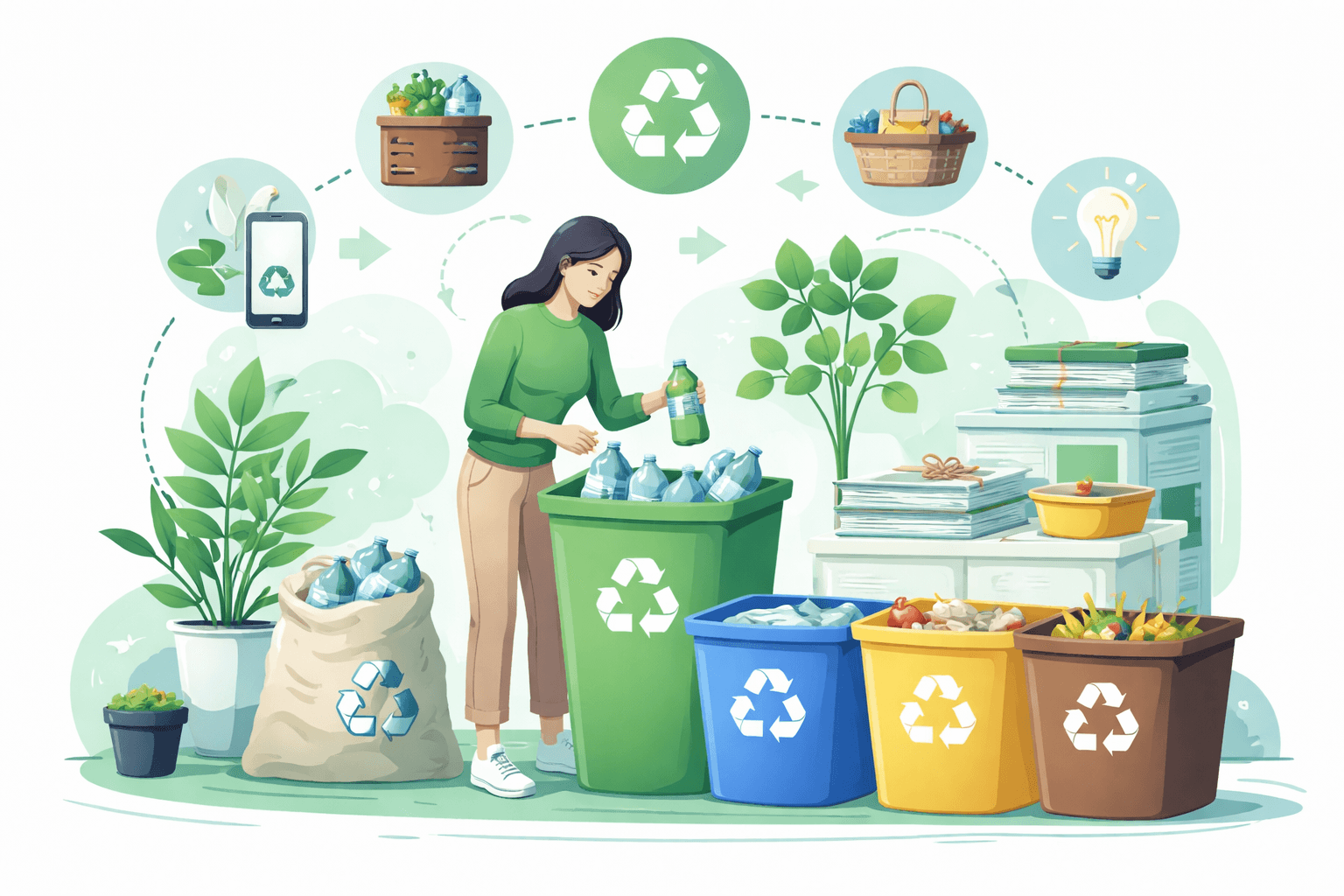
Recycling works best when households get the basics right. If you’ve wondered how to recycle at home—what belongs where, how clean things need to be, and what to do with tricky items—this guide distills the science, the rules, and simple systems that keep contamination low and materials flowing back into the economy.
Globally, only about 9% of plastic waste is recycled (OECD, 2022). In the United States, curbside programs report average contamination—non-recyclable items mixed into bins—around 17% by weight (The Recycling Partnership, 2020). Yet recycling and composting still divert tens of millions of tons of material annually, cut landfill methane, and lower energy use for manufacturing—recycling aluminum, for example, saves up to 95% of the energy required to make the same metal from ore (U.S. DOE). Getting household recycling right meaningfully boosts those outcomes.
By the Numbers
- 68%: Paper recycling rate in the U.S. (American Forest & Paper Association, 2022)
- ~31%: U.S. glass container recycling rate (EPA, latest available)
- 8.7%: Plastics recycling rate in U.S. municipal waste (EPA, 2018); ~9% globally (OECD, 2022)
- 95%: Energy saved when recycling aluminum vs. producing virgin aluminum (U.S. DOE)
- ~24%: Share of landfilled U.S. municipal waste that is food, a prime candidate for composting (EPA, 2018)
Core principles and goals
Recycling’s purpose is twofold: conserve resources and cut pollution. Making goods from recycled feedstocks typically uses less energy and water, and generates fewer emissions than making them from virgin materials. For example, recycled paper reduces energy use and preserves fiber resources; recycled metals displace mining and smelting. But recycling has limits:

Can I Recycle This?: A Guide to Better Recycling and How to Reduce Single-Use Plastics: Romer, Jennie, Young, Christie
Jennie Romer, Esq. is a lawyer, a sustainability expert, and author of Can I Recycle This?, <strong>an illustrated guide to better recycling and how to reduce single-use plastics</strong>.
Check Price on Amazon- Market reality: What’s “recyclable” depends on your local program and end markets. Materials are only recycled if they can be collected, sorted, sold, and reprocessed into new products at a net value. Programs may accept “bottles and jugs” but not clamshells because processing economics differ.
- Quality matters: Contamination—food residue, non-recyclables, tanglers like hoses—can jam sorting equipment, lower bale quality, and send otherwise good loads to disposal. Keeping items empty, dry, and loose boosts commodity value.
- Design and infrastructure: Some plastics, multi-layer packaging, and black-colored items are hard to sort or recycle with current technology. Policies (like extended producer responsibility) and advances in sorting (optical scanners, AI robots) are improving outcomes, but households still need to follow local rules.
If you want to go deeper on contamination and best practices, see our guide: How to Recycle Effectively: Practical Guidance to Reduce Waste and Avoid Contamination (/sustainability-policy/how-to-recycle-effectively-practical-guidance).
How to Recycle at Home: What Belongs Where
The most reliable rule: follow your city, county, or hauler’s list. When in doubt, leave it out of curbside and look for drop-off options. Below are common materials, where they typically go, and simple preparation steps.
Paper and cardboard
- Accepted curbside (commonly): Corrugated boxes, shipping boxes, paperboard (cereal/shoe boxes), magazines, catalogs, newspapers, office paper, junk mail, paper bags.
- Prep: Empty, dry, and flattened. Remove plastic air pillows, foam, or film. Tear off heavily food-soiled sections (e.g., greasy pizza box bottom) and recycle the clean parts. Avoid shredding if possible—shredded paper is too small for many sorting screens; if required for privacy, bag shreds in a paper bag and check local rules or use drop-off.
Glass
- Accepted curbside in many, but not all, programs: Glass bottles and jars.
- Prep: Rinse quickly; labels are fine. Caps and lids: metal can go with metals; plastic caps usually trash unless your program specifies otherwise. Don’t include window glass, mirrors, ceramics, or Pyrex—they melt at different temperatures and contaminate batches.
Metals (aluminum and steel)
- Accepted curbside: Aluminum beverage cans, steel/tin food cans. Many programs also accept clean foil and trays.
- Prep: Empty and quick rinse. For steel can lids, place the lid inside the can and crimp it closed to keep it contained. Ball clean aluminum foil together until it’s about the size of a tennis ball so it can be captured by sorting equipment. Empty, non-hazardous aerosol cans may be accepted—remove plastic caps. If the can contained paint, solvent, pesticide, or other hazardous material, treat as household hazardous waste (HHW) and do not place in curbside bins.
Plastics (#1–#7)
Most programs accept based on shape (“bottles, jugs, and tubs”) rather than the resin code alone. The resin identification code (numbers 1–7) indicates polymer type, not local recyclability.
- Widely accepted curbside:
- #1 PET: Clear beverage bottles, some food jars. Rinse; keep caps on (they’re usually #5 PP and are captured if attached).
- #2 HDPE: Milk jugs, detergent bottles. Rinse; keep caps on.
- #5 PP: Yogurt, margarine, and takeout tubs—acceptance is growing; check local list.
- Less commonly accepted curbside:
- #3 PVC: Pipes, siding, some packaging. Typically not accepted.
- #4 LDPE: Plastic bags and film—do not place in curbside; take to store drop-off if available.
- #6 PS: Polystyrene, including foam “Styrofoam” and rigid clamshells—rarely accepted curbside; look for specialty drop-off.
- #7 Other/multi-layer: Acceptance varies; often not accepted.
- Prep: Empty and quick rinse so paper labels don’t slough off wet and contaminate paper. Keep plastic caps on; discard pumps. Avoid crushing bottles if your program uses optical sorters that rely on 3D shapes.
Cartons (gable-top and aseptic)
- Often accepted curbside where markets exist: Milk, juice, soup, and broth cartons. Carton Council reports access for a majority of U.S. households.
- Prep: Empty and quick rinse; keep caps on.
Textiles (clothing, linens)
- Not accepted in curbside recycling. Donate wearable items through charities or retailer take-back; many textile recyclers accept worn/stained items for downcycling. Keep textiles dry and bagged for drop-off.
Electronics (e-waste)
- Do not place in curbside recycling or trash. Take to municipal e-waste events or certified recyclers (R2 or e‑Stewards). Remove personal data from devices. For detailed steps, see How to Recycle Electronics: A Practical Guide to Safe, Responsible E‑Waste Disposal (/sustainability-policy/how-to-recycle-electronics-practical-guide-safe-responsible-e-waste-disposal).
Batteries
- Never place lithium-ion batteries (from phones, laptops, e-bikes, power tools) in curbside bins or trash; they can spark fires at facilities (EPA). Use battery drop-off programs (often found at hardware stores) and tape terminals on lithium and 9‑volt batteries to prevent short circuits. Alkaline batteries: some areas allow trash disposal; many offer drop-off—follow local rules.
Bulbs and lighting
- CFLs and other lamps containing mercury: hazardous; take to HHW or retailer take-back. LEDs: non-hazardous; some retailers accept drop-off for materials recovery. Incandescent and halogen bulbs: usually trash.
Household hazardous waste (HHW) and liquids
- Never pour down drains or place in curbside bins: Oil-based paint, solvents, pesticides, automotive fluids, pool chemicals. Take to HHW events or facilities. Latex paint: if allowed locally, dry out fully (with cat litter or paint hardener) before placing in trash; many communities also accept for reuse or recycling. Used motor oil and filters: widely accepted at auto parts stores and municipal drop-off—keep uncontaminated.
“Tanglers” and problem items
- Keep out of curbside recycling: Hoses, cords, chains, string lights, hangers, plastic film and bags, diapers, PPE, propane tanks, needles. These jam sorting equipment and endanger workers. Many of these have dedicated drop-off or safe-disposal paths.
For safety-first handling of batteries, bulbs, and HHW, see Safer Recycling Methods: Practical Steps to Protect People, Property, and the Planet (/sustainability-policy/safer-recycling-methods-practical-steps-protect-people-property-planet).
Practical at-home systems that work
Building a simple, low-effort system is the single best way to prevent contamination and increase your diversion rate.

OXO Good Grips EASY-CLEAN COMPOST BIN - CHARCOAL - 1.75 GAL/6.62 L
View on Amazon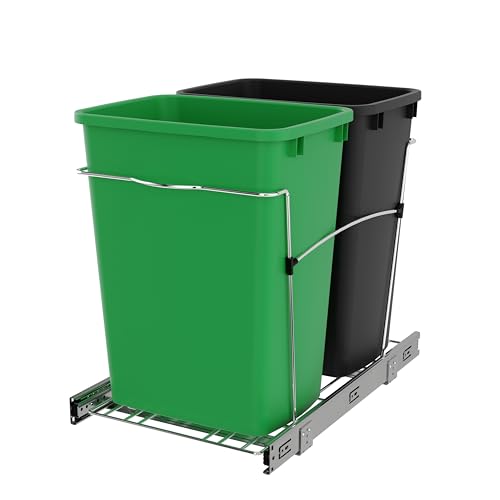
Rev-A-Shelf RV-18KD-18C S Double Pullout Trash Can for Kitchen Cabinets 35 Qt Garbage Recycling Bin on Full Extension Slides, Black : Industrial & Scientific
View on Amazon- Choose the right bins:
- Kitchen: Pair a covered trash bin with an open-top recycling bin labeled “empty, dry, loose.” Add a countertop caddy for compostables if you have access to curbside organics or backyard compost.
- Garage/utility: Staging bins for overflow cardboard, glass (if your program collects separately), and deposit containers.
- Small spaces: Use stacking bins or a two-compartment pull-out under the sink.
- Label for speed, not perfection:
- Use photo labels showing your local accepted items (e.g., bottles/jugs/tubs, cans, clean paper/cardboard). Add a “No” list: plastic bags/film, batteries, hoses, food, liquids.
- Keep it empty, dry, and loose:
- A quick 3–5 second rinse is enough for most containers. Drain liquids and let drip-dry. Don’t bag recyclables; items should be loose in the bin unless your program specifies otherwise.
- Set up a “film/bag” station:
- A reusable bag for clean, dry plastic film (store drop-off items like bread bags, shipping pillows, stretch wrap). If drop-off isn’t available, place film in trash—do not put it in curbside recycling.
- Avoid tanglers:
- Collect cords, string lights, and hangers for reuse or specialty drop-off. Never place them in curbside bins.
- Compost organics:
- Food scraps and yard trimmings are major landfill drivers of methane. If you have municipal organics service, use it. Otherwise, consider backyard composting for fruit/veg scraps, coffee grounds, and yard waste. Avoid meat/dairy in backyard piles unless you’re experienced. If you’re new to broader conservation at home, see How to Practice Conservation at Home: Practical Steps to Save Energy, Water, Waste and Support Wildlife (/conservation/how-to-practice-conservation-at-home-practical-steps-save-energy-water-waste-wildlife).
- Make donation/upcycling a habit:
- Keep a “donate” box for clothing, small appliances, and housewares. Offer clean moving boxes on neighborhood forums. Upcycle jars for storage; repurpose sturdy shipping boxes.
- Plan for occasional surges:
- After holidays or moves, break down boxes immediately, remove all foam/film, and schedule extra pickup or drop-off. Store glass safely if your program has separate collection.
Resources and troubleshooting
How to find your local recycling rules
- City/county solid waste pages: Search “[your city] recycling accepted materials.” Download your hauler’s app or fridge magnet list.
- State environmental agencies: Many publish materials databases and HHW guidance.
- National tools: Community databases and smartphone apps can help you find drop-off centers (e.g., for e-waste, chemicals, or film). Retailers often host battery and bulb collection.
- Labels that help: The How2Recycle label on packaging breaks down “widely recycled,” “check locally,” and “not yet recycled” plus preparation instructions.
Decoding recycling symbols
- Mobius loop (chasing arrows): Means “recyclable” in principle, not that it’s accepted where you live. Always check your local list.
- Resin identification codes (#1–#7): Identify plastic type, not recyclability. Shape-based rules (bottles/jugs/tubs) often reflect what can be sorted and sold.
Common myths and mistakes
- “If I’m not sure, I’ll toss it in and hope.” Wishcycling increases contamination and can send whole loads to landfill. When unsure, leave it out or look up.
- “Everything with a triangle is recyclable here.” Not necessarily—those are resin codes, not acceptance guarantees.
- “Containers must be spotless.” They should be empty and reasonably clean. A quick rinse is enough.
- “Pizza boxes are never recyclable.” Many programs accept pizza boxes if free of heavy grease and food; recycle clean portions.
- “Compostable plastic belongs in recycling.” No—compostable plastics are not recyclable in standard systems; they require industrial composting if accepted locally.
- “Black plastic is fine.” Black and very dark plastics can be invisible to optical sorters; many programs don’t accept them.
Simple ways to track your household diversion
- Do a one-week audit:
- Weigh or estimate volume of trash, recycling, and compost. Note top contaminants and biggest categories.
- Set 90-day goals:
- Example: Reduce contamination to under 5 items/week; shift 50% of food scraps to compost; direct all film to store drop-off.
- Use reminders:
- Post your local “accepted materials” list above bins. Set a monthly 10-minute “recycling tune-up” to purge tanglers and check labels.
- Monitor costs:
- If your city has pay-as-you-throw pricing, right-sizing your trash cart and improving diversion can lower your bill.
For a deeper dive on contamination control and sorting strategies, see How to Recycle Effectively: Practical Guidance to Reduce Waste and Avoid Contamination (/sustainability-policy/how-to-recycle-effectively-practical-guidance). For safe handling of batteries, bulbs, and HHW, consult Safer Recycling Methods: Practical Steps to Protect People, Property, and the Planet (/sustainability-policy/safer-recycling-methods-practical-steps-protect-people-property-planet). For device-specific guidance, see How to Recycle Electronics (/sustainability-policy/how-to-recycle-electronics-practical-guide-safe-responsible-e-waste-disposal).
Practical implications
- Households: A simple bin setup, quick rinsing routine, and a “when in doubt, look it up” mindset can raise your recycling capture rate while cutting contamination. Composting and film drop-off add significant impact.
- Businesses and property managers: Clear signage, centralized stations, and regular feedback to tenants reduce costly contamination fees. Consider adding carton and #5 plastics if your hauler supports them.
- Policymakers: Standardized labels, consistent regional acceptance lists, deposit-return systems (for beverage containers), and producer responsibility policies improve material quality and market stability.
What’s next: better design, better data, better recovery
Three trends will make home recycling simpler and more effective over the next few years:
- Smarter packaging: More mono-material designs, clearer on-pack labels, and easy-to-remove components will raise capture and yield. Brands are phasing out problematic additives and exploring refill/reuse systems.
- Upgraded sorting: AI-guided optical sorters and robotics are boosting recovery of PET, HDPE, and PP from mixed streams, even with challenging shapes. Facilities integrating these systems report higher bale purity and throughput (industry case studies via NREL and The Recycling Partnership).
- Policy alignment: States adopting standardized material acceptance lists and extended producer responsibility are funding upgrades and education, making it easier for households to put the right thing in the right bin.
Recycling isn’t a silver bullet, and the best waste is the waste you never create. But when households follow local rules, keep materials empty, dry, and loose, and route special items to safe drop-offs, recycling works measurably better—saving energy, reducing emissions, and keeping valuable materials in circulation.
Recommended Products
Can I Recycle This?: A Guide to Better Recycling and How to Reduce Single-Use Plastics: Romer, Jennie, Young, Christie
Jennie Romer, Esq. is a lawyer, a sustainability expert, and author of Can I Recycle This?, <strong>an illustrated guide to better recycling and how to reduce single-use plastics</strong>.
Rev-A-Shelf RV-18KD-18C S Double Pullout Trash Can for Kitchen Cabinets 35 Qt Garbage Recycling Bin on Full Extension Slides, Black : Industrial & Scientific
Rev-A-Shelf Pullout Trash Can for Kitchen Cabinets 27 Qt Garbage Recycling Bin with Full Extension Slides, Blue/Black, RV-15KD-2218C-S · Rev-A-Shelf Double Pullout for Under Kitchen Cabinets 35 Quart
OXO Good Grips EASY-CLEAN COMPOST BIN - CHARCOAL - 1.75 GAL/6.62 L
<strong>Designed to sit on countertops, bin is designed to keep composting bags tucked inside for a neat look</strong>. The 1. 75-Gallon/6. 62-Liter Capacity makes it perfect for culinary creatives, b
More in Sustainability Policy
- How to Recycle Effectively: Practical Guidance to Reduce Waste and Avoid Contamination
- How to Recycle Waste Effectively: Practical Guidance to Reduce Contamination and Maximize Recovery
- How to Set Up a Local Recycling Initiative: Practical Steps to Start, Run, and Sustain Community Recycling
- Composting at Home: A Practical Guide for Sustainable Living