
How to Recycle Effectively: Practical Guidance to Reduce Waste and Avoid Contamination
Why recycling matters now — and what “effective” really means
If you want to know how to recycle effectively, start with what the data says. In the United States, the recycling and composting rate for municipal solid waste has plateaued around 32% (U.S. EPA, Sustainable Materials Management). Contamination in single‑stream programs averages 17% by weight and can exceed 25% in some cities (The Recycling Partnership). Meanwhile, only about 5–8% of U.S. plastics are actually recycled, depending on the year and methodology (U.S. EPA; independent assessments by NGOs), while paper recovery tops ~68% (American Forest & Paper Association), corrugated cardboard ~93%, and glass containers ~30–33% (U.S. EPA; Glass Packaging Institute). Aluminum is the standout: recycling it saves ~95% of the energy required to make primary aluminum (U.S. EPA; The Aluminum Association) and carries strong end‑market demand.

Can I Recycle This?: A Guide to Better Recycling and How to Reduce Single-Use Plastics: Romer, Jennie, Young, Christie
Jennie Romer, Esq. is a lawyer, a sustainability expert, and author of Can I Recycle This?, <strong>an illustrated guide to better recycling and how to reduce single-use plastics</strong>.
Check Price on AmazonRecycling works best when two things are true: materials are clean and sortable, and there’s a viable market to buy the recovered feedstock. This guide focuses on practical steps to reduce contamination and prepare materials so more of what you set out actually gets recycled — and to help you use local rules and complementary actions to cut waste at the source.
By the numbers
- 32%: U.S. recycling and composting rate for municipal solid waste (U.S. EPA)
- 17–25%: Typical contamination in single‑stream recycling (The Recycling Partnership)
- ~68%: U.S. paper recycling rate; ~93% for corrugated cardboard (AF&PA)
- ~30–33%: U.S. glass container recycling rate (EPA/GPI)
- ~5–8%: Overall U.S. plastic recycling rate; PET bottles ≈ 28% (EPA; NAPCOR)
- 95%: Energy savings from recycling aluminum vs. making it new (EPA)
- 193 million metric tons CO2e: U.S. GHG reductions from recycling/composting in a recent EPA analysis — roughly the annual emissions of tens of millions of cars (U.S. EPA WARM/ASMM)
- 62 million tonnes: Global e‑waste generated in 2022; only ~22% formally collected and recycled (UN Global E‑waste Monitor 2024)
What actually gets recycled vs. what becomes contamination
- Markets drive outcomes. Paper, cardboard, metals, and some rigid plastics (#1 PET and #2 HDPE; #5 PP in many places) have relatively robust markets. Other plastics (#3 PVC, #4 LDPE film, #6 PS/foam, #7 “other”) are often excluded curbside.
- Sortation limits matter. Materials Recovery Facilities (MRFs) use screens, magnets, eddy currents, optical sorters, and manual picking. Small, flexible, dirty, or mixed‑material items are hard to sort and often become residue sent to landfill.
- “Wish‑cycling” backfires. Tossing questionable items “just in case” increases contamination, damages equipment (e.g., plastic bags wrapping screens), and can cause entire loads to be landfilled.
Key rule of thumb endorsed by many programs: empty, clean, and dry. If in doubt about curbside acceptance, check local rules — or leave it out.
How to recycle effectively: material‑by‑material guidance
Paper and cardboard
What to include (most programs):
- Newspapers, magazines, catalogs, office paper, mail (envelopes with plastic windows typically OK)
- Corrugated cardboard and paperboard (cereal/shoe boxes)
Preparation:
- Flatten boxes; remove plastic wrap/air pillows. Cut to fit cart if needed.
- Keep dry. Wet paper loses fiber strength and can contaminate bales.
- Shredded paper: usually not accepted in single‑stream (too small to capture). If allowed, bag in a paper envelope or take to a secure paper drop‑off.
Avoid:
- Food‑soiled paper (grease‑saturated pizza box tops, used napkins/towels) — compost if available.
- Thermal receipts (often contain BPA/BPS) — follow local guidance; many programs advise trash.
Tip: Pizza boxes are widely accepted if only lightly soiled; tear off greasy sections for compost or trash per local rules.
Glass
What to include (where accepted curbside):
- Glass bottles and jars
Preparation:
- Rinse, remove food residue.
- Metal lids can be recycled with metals if clean; plastic lids often trash unless local rules say otherwise.
Avoid:
- Drinking glasses, Pyrex/ceramics, window glass, light bulbs — different chemistries and melting points.
- Bags or boxes of broken glass — check local guidance; often trash for safety.
Note: Some cities collect glass separately or at drop‑off to reduce breakage and contamination.
Metals (aluminum and steel)
What to include:
- Aluminum beverage cans (high value); steel/tin food cans
Preparation:
- Empty and quick rinse. Labels are acceptable.
- Aluminum foil and trays are often accepted if clean and balled into a tennis‑ball‑sized lump so they don’t fall through screens.
Avoid:
- Pressurized containers (unless fully empty and explicitly accepted), sharp scrap, electronics with batteries attached.
Why it matters: Aluminum’s 95% energy savings and high market demand make it one of the most impactful items to recycle.
Rigid plastics
Most commonly accepted curbside:
- #1 PET/PETE bottles and jars (water/soda, some food tubs)
- #2 HDPE bottles/jugs (milk, detergent)
- #5 PP tubs, lids, and some cups are increasingly accepted, but check local rules
Preparation:
- Empty, quick rinse, reattach caps (Association of Plastic Recyclers guidance). Caps help containers get captured and are now commonly processed with the bottle.
- Do not bag recyclables. Place items loose in the cart.
Avoid:
- Foam polystyrene (#6), PVC (#3), bulky plastics, clamshells if not listed, black plastics (often invisible to optical sorters), and heavily food‑soiled containers.
- Small loose items (straws, utensils) — too small to sort.
Caution: “Compostable” or “bioplastic” packaging belongs in industrial composting only if your program accepts it, not in recycling. In curbside recycling, it is contamination.
Soft plastics and films
- Plastic bags, wrap, shipping pillows, and films tangle MRF equipment and are almost never accepted curbside.
- Some store drop‑off programs accept clean, dry film (look for in‑store bins and the How2Recycle Store Drop‑Off label), but availability has fluctuated; verify locally.
Preparation for drop‑off (if available):
- Remove labels/receipts; ensure completely clean and dry.
Textiles
- Donate wearable clothing and linens to reuse channels first.
- Textile recycling (rags/fibers) exists in many regions via drop‑off bins or municipalities, but curbside acceptance is rare.
- Keep textiles dry; bag for drop‑off to prevent mold.
Context: The U.S. landfilled over 11 million tons of textiles in a recent EPA accounting — a fast‑growing waste stream. Extending garment life by even nine months can cut carbon, water, and waste footprints significantly (WRAP, UK).
Electronics (e‑waste)
- Never place electronics in curbside carts. They contain valuable metals (copper, gold, rare earths) and hazardous components.
- Use certified recyclers (R2v3 or e‑Stewards), manufacturer take‑back programs, or municipal e‑waste events.
Preparation:
- Remove batteries (see below). Wipe personal data; use factory resets and device encryption where possible.
Why it matters: Globally, only ~22% of e‑waste is formally collected and recycled — a massive lost opportunity (UN Global E‑waste Monitor 2024).
Batteries
- Lithium‑ion and other rechargeable batteries are fire risks in trucks and MRFs. Do not place in curbside recycling or trash.
- Use dedicated drop‑off programs (e.g., municipal HHW sites, certified mail‑back, or battery collection partners).
Preparation:
- Tape terminals on 9‑volt and lithium batteries; bag individually to prevent shorting (Call2Recycle and fire safety guidance).
Hazardous household waste (HHW)
- Paints/solvents, pesticides, pool chemicals, propane cylinders, fluorescent tubes/compact fluorescents (contain mercury), and aerosols require HHW drop‑off or special events.
- Check your city or county environmental services pages for schedules and accepted items.
Avoid these common contamination errors
- Bagging recyclables. Most MRFs discard bagged material for safety; loose items only.
- Food residue. A quick rinse prevents mold and cross‑contamination.
- Plastic film in curbside carts. Take to verified store drop‑off or avoid.
- “Tanglers.” Hoses, cords, lights, and textiles jam machinery — take to special drop‑offs or reuse.
- Wrong glass. Ceramics, Pyrex, and drinking glass aren’t container glass.
- Small bits. Loose lids, straws, cutlery, and shredded paper get lost; follow local guidance.
Local rules vary — here’s how to find and use them
Recycling is local. Acceptance lists differ based on contracts, MRF capabilities, and end‑markets. To get accurate answers:
- Start with your address. Search: “[your city] recycling guidelines” or “[your hauler name] what goes where.” Prefer .gov sites and your contracted hauler over generic lists.
- Use municipal tools. Many cities offer “What Goes Where” search engines or service alerts for holiday schedules and contamination fines.
- Curbside vs. drop‑off. Some materials (glass, bulky metals, yard waste) may be drop‑off only. Others may have scheduled pickups (yard waste, bulky items, e‑waste days).
- Take‑back programs. Retailers and manufacturers often run programs for batteries, light bulbs, paint (PaintCare in participating states), and electronics. Always verify current participation and fees.
- Apps and directories. Earth911, Recycle Coach, Call2Recycle (batteries), and certification directories for e‑waste recyclers (R2v3/e‑Stewards) can help — but confirm details with local authorities.
- Read the fine print. Many programs accept “bottles, jugs, and tubs” rather than “all plastics.” Shape‑based rules often reflect sortation realities.
- Know contamination thresholds. Some haulers issue warnings, fees, or leave carts uncollected if contamination is visible. Understanding the rules avoids surprise charges.
For broader behavior changes at home, see our practical guide to daily choices that cut waste and energy: Everyday Sustainable Living: Practical Tips to Save Money, Reduce Waste, and Lower Your Carbon Footprint.
High‑impact complements to recycling
Recycling is critical — but source reduction typically delivers bigger environmental wins. Pair smart recycling with these actions:
Reduce, repair, and repurpose
- Choose durable, repairable products. Prioritize items with available parts and repair manuals.
- Buy concentrates and refills to cut packaging.
- Borrow, share, or rent rarely used tools and equipment.
Businesses: Design for disassembly and mono‑materials; specify recycled content where possible. Corporate demand for recycled feedstock is a key driver of market stability. Explore how leaders are building circularity into operations: Circular Economy Leaders: How Companies Are Eliminating Waste.
Compost organics
- Food scraps and yard trimmings make up a large share of household trash. If your city offers organics collection, use it; otherwise consider backyard composting for fruit/veg scraps, coffee grounds, and yard waste.
- Keep meat/dairy and compostable bioplastics out of backyard piles unless you have a system designed for them.
Climate impact: Diverting organics from landfills cuts methane — a potent greenhouse gas. For a broader strategy to cut household emissions, see How to Reduce Your Carbon Footprint: Practical Steps for Every Household.
Use take‑back and certified channels
- Electronics: R2v3/e‑Stewards certified recyclers or manufacturer programs.
- Mattresses: Many states have mattress stewardship programs; check state websites.
- Paint, batteries, bulbs, sharps: Use state or local stewardship and HHW programs.
Donate and resell
- Furniture, appliances, and building materials often have strong reuse markets (e.g., architectural salvage, Buy Nothing groups). Reuse frequently outperforms recycling on carbon and resource savings.
Step‑by‑step: a simple household system that works
- Get your rules in writing. Print your city/hauler’s latest acceptance list and hang it above the bin.
- Set up three stations: recycling (loose only), trash, and organics (if available). Add a fourth for “specials” (batteries/e‑waste/HHW) to take on errand days.
- Adopt “empty, clean, dry.” Quick rinse; air‑dry if needed before binning.
- Flatten cardboard; keep paper dry. Reattach plastic caps on bottles.
- Keep films out. Verify store drop‑off before collecting.
- Spot‑check weekly. If you’re unsure about an item, check the city’s tool or leave it out.

Joseph Joseph Totem Max 60 Liter/15.85 Gallon Waste Separation and Recycling Kitchen Trash Can with Odor Filter and Removable Compost Food Waste Caddy, Stone
View on AmazonFor small businesses and multifamily buildings
- Standardize signage. Use photos of accepted items from your hauler; place signs at eye level above every station. Consistent color coding reduces errors.
- Train and audit. Brief new staff/tenants; do quarterly spot checks. Provide feedback, not fines, first.
- Right‑size service. Match container volumes to your waste stream; too‑small recycling carts lead to overflow and contamination.
- Secure special streams. Lock battery/e‑waste boxes; schedule HHW pickups; keep docks clear of “tanglers.”
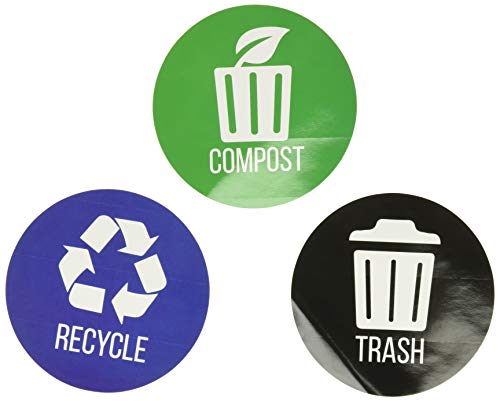
iTouchless Recycle, Trash & Compost Premium Vinyl Stickers for Trash Can/Recycle Bin/Compost Bin; 4" Round Waterproof, Reusable (Set of 3); Indoor/Outdoor (4"x4")
View on AmazonTroubleshooting guide: quick answers to common questions
- Do I crush cans and bottles? Lightly crush cans if space is tight; bottles can be left intact with caps on unless your program asks otherwise. The priority is that items aren’t so flat they get screened out as paper.
- Are black plastic trays recyclable? Often no; optical sorters struggle to detect black. Check local rules.
- Can I recycle coffee cups? Paper coffee cups are usually lined with plastic; many programs exclude them. Lids/sleeves may be accepted.
- What about clamshells? PET clamshell acceptance varies. If accepted, remove labels/liners. If not listed, leave them out.
- Is compostable packaging recyclable? No. Compostable plastics belong only in industrial compost streams that accept them.
Why your preparation matters to climate and resource goals
- Clean inputs increase bale quality and market value, keeping programs financially viable.
- Diverting high‑impact materials (aluminum, cardboard, paper) yields strong energy and CO2e savings.
- Avoiding contamination reduces MRF downtime and injuries from fires (often caused by lithium batteries in the wrong bin).
Recycling is one lever among many to cut environmental impact. Pairing effective recycling with reduction and composting is a force multiplier for emissions cuts and conservation.
What’s next: better design, smarter sorting, clearer labels
- Design for recyclability. Brands are moving to mono‑material packaging, clear PET, and standardized labels (e.g., How2Recycle) to improve sortability and end‑market value.
- Policy shifts. Extended Producer Responsibility (EPR) for packaging is expanding in North America and Europe, aiming to fund stronger collection and end‑markets. Deposit‑return systems (container deposits) raise aluminum, PET, and glass recovery rates dramatically where implemented (often >80%).
- Smarter facilities. MRFs are adding AI‑enabled optical sorters and robotics to capture more material and cut contamination.
- Standardization. National and state efforts to harmonize “what’s in/out” and truth‑in‑labeling rules should reduce confusion and wish‑cycling.
Learning how to recycle effectively today — and helping your household, workplace, or community follow the same playbook — means cleaner streams, stronger markets, lower emissions, and less pressure on land and oceans. The system works best when we put the right stuff, prepared the right way, in the right place.
Recommended Products
Can I Recycle This?: A Guide to Better Recycling and How to Reduce Single-Use Plastics: Romer, Jennie, Young, Christie
Jennie Romer, Esq. is a lawyer, a sustainability expert, and author of Can I Recycle This?, <strong>an illustrated guide to better recycling and how to reduce single-use plastics</strong>.
Joseph Joseph Totem Max 60 Liter/15.85 Gallon Waste Separation and Recycling Kitchen Trash Can with Odor Filter and Removable Compost Food Waste Caddy, Stone
Amazon.com: Joseph Joseph Totem <strong>Max 60 Liter/15.85 Gallon Waste Separation and Recycling Kitchen Trash Can with Odor Filter and Removable Compost Food Waste Caddy, Stone</strong> : Home &
iTouchless Recycle, Trash & Compost Premium Vinyl Stickers for Trash Can/Recycle Bin/Compost Bin; 4" Round Waterproof, Reusable (Set of 3); Indoor/Outdoor (4"x4")
Buy iTouchless Recycle, Trash & Compost Premium Vinyl Stickers for Trash Can/Recycle Bin/Compost Bin; <strong>4" Round Waterproof, Reusable (Set of 3); Indoor/Outdoor (4"x4"):</stro
More in Sustainability Policy
- How to Recycle Waste Effectively: Practical Guidance to Reduce Contamination and Maximize Recovery
- How to Recycle at Home: Practical Steps, What Belongs Where, and Easy Systems to Reduce Waste
- How to Set Up a Local Recycling Initiative: Practical Steps to Start, Run, and Sustain Community Recycling
- Practical Tips for Organizing a Successful Community Recycling Drive