
How to Recycle Electronics: A Practical Guide to Safe, Responsible E‑Waste Disposal
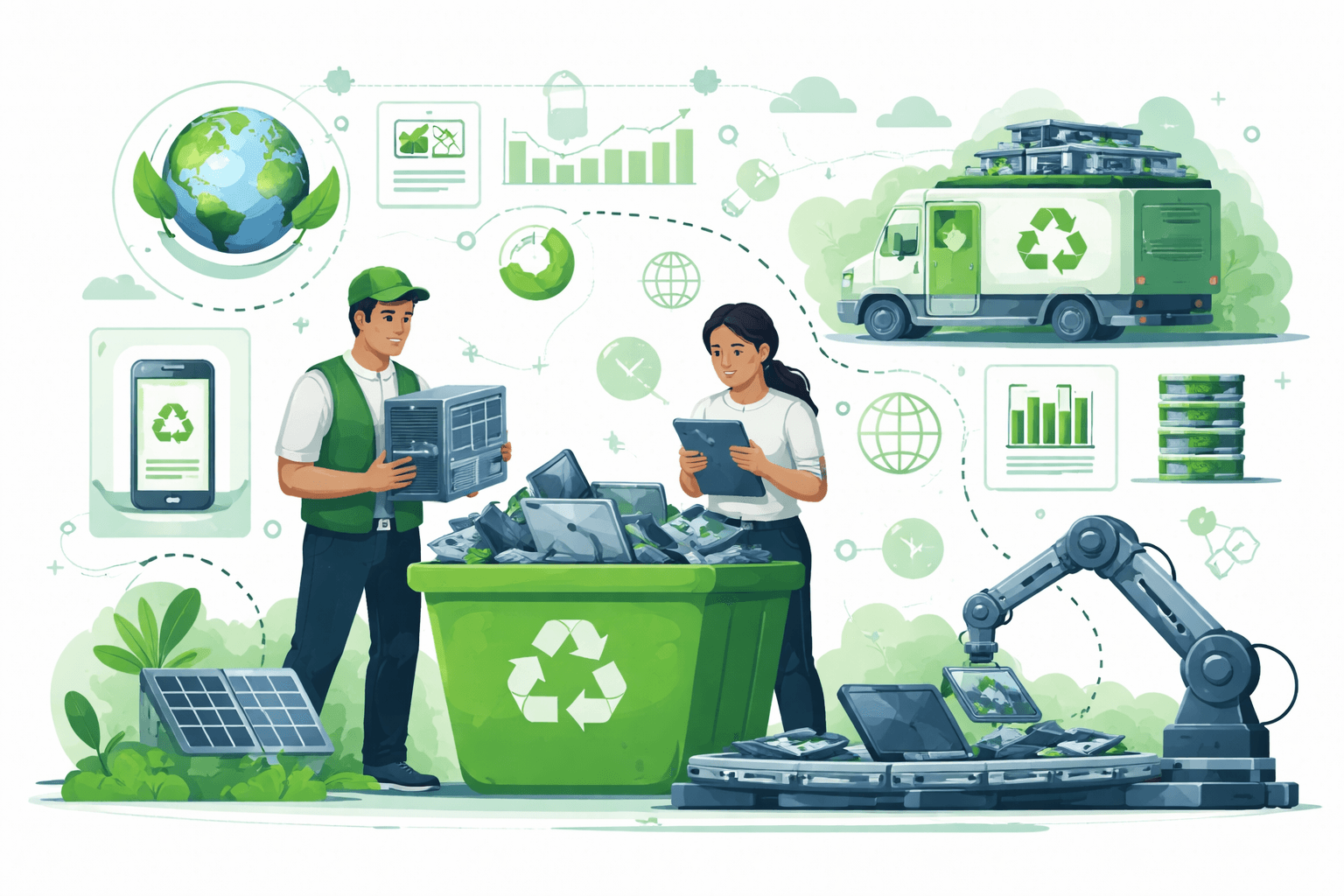
Electronics now outnumber people on the planet, and they don’t disappear when we upgrade. In 2019, the world generated 53.6 million metric tonnes of electronic waste (e‑waste), yet only 17.4% was formally collected and recycled, according to the UN’s Global E‑waste Monitor. Contained in that waste stream was an estimated $57 billion in recoverable materials—gold, copper, iron, and rare metals—most of which was lost. If you’re searching for how to recycle electronics, this guide distills the science, safety, and practical steps to turn an environmental liability into a materials win.
By the numbers
- 53.6 million tonnes of e‑waste generated in 2019; 17.4% formally recycled (UN Global E‑waste Monitor 2020)
- ~$57 billion in recoverable materials lost annually due to improper e‑waste handling (UNU/ITU/ISWA)
- Rare earth element recycling rates remain below 1% globally (International Energy Agency)
- Many CRT televisions/monitors contain leaded glass—up to ~20% lead by weight (U.S. EPA)
- Lithium‑ion batteries are a leading cause of fires at waste facilities when improperly discarded (U.S. EPA)
Why e‑waste recycling matters
The case for electronics recycling spans environmental protection, resource security, human health, and economic development.

Junkyard Planet: Travels in the Billion-Dollar Trash Trade
In Junkyard Planet, Adam Minter--<strong>veteran journalist and son of an American junkyard owner</strong>--travels deep into a vast, often hidden, five-hundred-billion-dollar industry that's tra
Check Price on Amazon- Environmental impact: Electronics contain hazardous substances—lead in cathode ray tubes (CRTs), mercury in some backlights and switches, brominated flame retardants in plastics, and refrigerants in cooling equipment. When dumped or dismantled poorly, these can leach into soil and water or release toxic fumes.
- Resource recovery: Smartphones, laptops, and servers are rich in “urban ore.” A tonne of discarded mobile phones often contains far more gold than a tonne of mined ore. Recovering copper, aluminum, gold, palladium, and increasingly lithium, cobalt, and nickel reduces mining burdens, energy use, and associated habitat disruption.
- Human health: Informal e‑waste processing exposes workers and nearby communities to lead, mercury, dioxins, and fine particulates. The World Health Organization has documented elevated risks to children’s neurological and respiratory development in communities near informal e‑waste sites.
- Economic and social benefits: Proper recycling and refurbishment are labor‑intensive, local job creators. Robust take‑back systems underpin a circular economy, keeping high‑value materials in use and stimulating repair and remanufacturing sectors.
For broader context on safe handling practices that protect people and property, see Safer Recycling Methods: Practical Steps to Protect People, Property, and the Planet (/sustainability-policy/safer-recycling-methods-practical-steps-protect-people-property-planet).
What counts as “electronics” and which parts are hazardous?
E‑waste covers devices with plugs, batteries, or circuit boards. Common categories include:
- Small electronics: phones, tablets, laptops, smartwatches, e‑readers, cameras, headphones, chargers and cables
- Large electronics: desktops, monitors, televisions, printers, home audio gear
- Appliances with electronics: microwaves, vacuum cleaners, toys with circuits
- Cooling equipment: refrigerators, freezers, air conditioners, dehumidifiers
- Power equipment: uninterruptible power supplies (UPS), power tools
- Energy products: solar panels (photovoltaic modules) and inverters
- Batteries: lithium‑ion (Li‑ion), nickel‑metal hydride (NiMH), lead‑acid, alkaline
Hazardous components to watch for (special handling required):
- Lithium‑ion batteries: Fire risk if punctured, crushed, or short‑circuited; can enter thermal runaway. Tape terminals, do not ship loosely, and use designated battery recycling.
- CRTs: Leaded glass (up to ~20% lead by weight) and phosphor coatings. Require specialized processors.
- Mercury: Found in some older LCD backlights (cold‑cathode fluorescent lamps), switches, relays, and thermostats.
- Refrigerants: CFCs/HCFCs/HFCs in fridges and A/C units; ozone‑depleting and/or high global‑warming‑potential gases. Must be recovered by certified technicians.
- PCBs and brominated flame retardants: Present in circuit boards and some plastic housings; must not be incinerated or landfilled.
If you’re new to sorting household recyclables, our primer on How to Recycle Effectively: Practical Guidance to Reduce Waste and Avoid Contamination (/sustainability-policy/how-to-recycle-effectively-practical-guidance) offers general best practices that also apply to electronics.
Your responsibilities before you recycle
Recycling electronics safely starts at home or the office. A few steps protect your data, reduce fire risk, and streamline processing.
1) Secure your data: backup, sign out, sanitize
- Back up: Save important files to an external drive or secure cloud service.
- Sign out and deactivate locks: Remove device associations (Apple ID/iCloud Activation Lock, Google accounts, Samsung accounts, Microsoft accounts) so the device can be refurbished.
- Remove SIM and memory cards: Eject any SIM, microSD, or other removable media.
- Sanitize storage per NIST guidance: The U.S. National Institute of Standards and Technology (NIST SP 800‑88 Rev. 1) outlines proven methods:
- Mobile devices: Encrypt, then factory reset and remove accounts. Many modern phones default to full‑disk encryption, so a reset effectively renders old data cryptographically inaccessible once keys are deleted.
- Hard disk drives (HDDs): Use software overwrite tools or the drive’s built‑in Secure Erase. For highly sensitive data, degauss or physically shred via a certified provider.
- Solid‑state drives (SSDs): Use the device’s crypto‑erase or manufacturer secure erase utility. Overwriting is less reliable on SSDs due to wear‑leveling.
- Business users: Obtain a Certificate of Data Destruction from your recycler, and align policies with GDPR/CCPA where applicable.

StarTech.com Single Bay Hard Drive Eraser, Standalone HDD/SSD Disk Wiper/Sanitizer, 4Kn, USB 3.0 to SATA III, 9 Erase Modes, LCD, RS232 Printer Port, Hardware Erasing Tool, TAA Compliant (SDOCK1EU3P2)
View on Amazon2) Handle and store batteries safely
- If removable, take out batteries before transport. Tape over terminals or exposed wires with non‑conductive tape.
- Place each battery in a separate bag or original packaging. Store in a cool, dry place away from flammable materials.
- Do not ship swollen or damaged batteries. Contact a certified battery collection point or hazardous waste program.
- Never throw batteries in household trash or curbside recycling—this is a leading cause of fires in collection trucks and materials recovery facilities.

Scotch 3M Super 33+ Vinyl Electrical Tape, .75-Inch x 66-Foot, Pack of 10 Rolls, Insulates and Protects Against Abrasion and Moisture, Protective Jacketing up to 600V Splice Insulation (6132-BA-10) : Industrial & Scientific
View on Amazon3) Gather documentation
- Proof of ownership and transfer: Keep receipts or serial numbers for higher‑value items.
- Warranties and trade‑in eligibility: Some manufacturers offer credit for recent models in good condition.
- Compliance: Businesses should document chain of custody, data sanitization, and downstream processing for audits and regulatory compliance.
For a deeper look at safe set‑up and handling practices across materials, see Safer Recycling Methods: Practical Steps to Protect People, Property, and the Planet (/sustainability-policy/safer-recycling-methods-practical-steps-protect-people-property-planet).
How to recycle electronics: options and how to choose
There isn’t a single best route for every device. Use the highest‑value pathway first—reuse and refurbishment—then responsible recycling.
1) Manufacturer take‑back and trade‑in programs
- What they are: Brand‑run channels to return devices for refurbishment, parts harvesting, or recycling. Many comply with extended producer responsibility (EPR) laws.
- Pros: Clear chain of custody; potential trade‑in credits; convenient mail‑back labels or in‑store drop‑off.
- Cons: Often limited to the brand’s own products; payouts vary; damaged items may be recycled without value.
- How to evaluate: Confirm data handling procedures, shipping rules for batteries, and downstream certifications (e‑Stewards or R2). Look for published annual recycling/repair results.
Companies leading closed‑loop initiatives are spotlighted in Circular Economy Leaders: How Companies Are Eliminating Waste (/green-business/circular-economy-leaders-companies-eliminating-waste).
2) Certified e‑waste recyclers (e‑Stewards or R2)
- What they are: Independent facilities certified to standards that govern environmental, health and safety (EHS), data security, and responsible downstream management.
- e‑Stewards: Prohibits export of hazardous e‑waste to developing countries; stringent controls on toxics and prison labor.
- R2 (Responsible Recycling, latest version R2v3): Focuses on quality, environmental performance, data security, and material recovery hierarchy.
- Pros: Audited systems, traceability, and reported outcomes; can handle complex items (CRTs, mixed streams).
- Cons: May charge fees, especially for older TVs/monitors; location availability varies.
- How to evaluate: Ask for current certificates, scope (which sites and processes are certified), downstream vendor lists, and sample Certificates of Recycling/Data Destruction. Business customers may also look for NAID AAA for data destruction services.
3) Municipal or regional drop‑off programs
- What they are: City/county collection sites or special e‑waste events, often subsidized by EPR fees.
- Pros: Low or no cost; local convenience; accepts a broad range of items.
- Cons: Limited hours and event schedules; may exclude certain items (e.g., appliances with refrigerants) or charge fees for CRTs.
- How to evaluate: Check your municipality’s website for accepted items, fees, and battery handling rules. Confirm whether the city’s vendor is certified.
4) Donation, resale, and repair
- What they are: Extending life through direct reuse—selling, donating to nonprofits, schools, or refurbishers, or repairing for continued use.
- Pros: Highest environmental benefit; potential tax deduction for donations; keeps complete devices in service.
- Cons: Requires working condition or refurbishable state; ensure complete data sanitization and functional testing.
- How to evaluate: Choose reputable refurbishers with data wiping protocols; for donations, obtain a receipt and ensure the recipient can responsibly handle end‑of‑life.
5) Special items and exceptions
- Appliances with refrigerants: Use certified HVAC technicians to evacuate gases before recycling the unit.
- Batteries: Use dedicated battery collection programs; many retailers and municipalities accept rechargeable batteries.
- Solar panels: Photovoltaic modules are a growing e‑waste stream with specialized recyclers emerging. For device‑specific guidance, see What Happens to Solar Panels at End of Life? Recycling, Reuse & Disposal (/renewable-energy/what-happens-to-solar-panels-at-end-of-life-recycling-reuse-disposal).
Verifying legitimate services and avoiding scams
- Check certifications: Verify e‑Stewards or R2 certification on the certifier’s website, not just the recycler’s marketing.
- Ask about export policies: Reputable firms disclose whether and how materials are shipped internationally and to which audited facilities.
- Demand documentation: For businesses, require serialized asset reports and certificates of data destruction/recycling.
- Beware of “free” pickups: Costs are real, especially for CRTs. Free services may be subsidized by repair/resale—or by exporting hazardous waste. Ask questions.
Costs, incentives, and regional rules
Potential costs
- Processing fees: Older TVs/CRTs, printers, and certain appliances often carry fees to cover safe handling. Expect modest per‑item charges.
- Business services: On‑site data destruction, serialized reporting, and specialized logistics add cost but reduce risk.
Incentives and value recovery
- Trade‑in credits or buyback: Newer smartphones, laptops, and tablets in good condition often yield credits toward new purchases.
- Tax deductions: In some countries (e.g., the U.S.), donating to qualified 501(c)(3) nonprofits may allow a deduction of fair market value—retain a receipt and consult tax guidance.
Regulatory differences
- European Union: The Waste Electrical and Electronic Equipment (WEEE) Directive mandates producer responsibility and collection targets across member states; consumers have broad access to take‑back.
- United States: E‑waste rules vary by state. More than 25 states and the District of Columbia have e‑waste laws, many establishing EPR systems and landfill bans for some electronics (National Conference of State Legislatures and state agencies).
- Canada and Australia: Provincial/state EPR programs cover many electronics categories; check local schemes for accepted items and fees (e.g., Canada’s provincial programs; Australia’s National Television and Computer Recycling Scheme).
- Batteries: The EU’s new Battery Regulation (2023) establishes binding recovery and recycled‑content targets for key metals like lithium, cobalt, and nickel over 2027–2031. Many U.S. states and countries now require stewardship programs for rechargeable batteries.
Common pitfalls to avoid
- Tossing electronics or batteries in household trash: Illegal or prohibited in many jurisdictions; creates fire and contamination risks.
- Incomplete data erasure: Factory resets without account removal, or failing to crypto‑erase SSDs. Follow NIST SP 800‑88 methods and verify.
- Shipping loose lithium batteries: Short circuits cause fires. Tape terminals and use designated battery recycling channels.
- Using uncertified processors: Without e‑Stewards or R2 safeguards, waste may be landfilled, incinerated, or exported to facilities with poor labor and environmental controls.
- Mixing e‑waste with curbside recyclables: Contaminates other materials and endangers workers.
For broader strategies to reduce waste and keep materials at their highest value, explore Circular Economy Leaders: How Companies Are Eliminating Waste (/green-business/circular-economy-leaders-companies-eliminating-waste).
A practical decision roadmap
Use this quick triage to choose the best path:
- Is it working and recent?
- Yes: Resell or donate after data sanitization and account removal. Consider manufacturer trade‑in for credit.
- No or needs minor repair: Consider repair if cost‑effective; if not, move to responsible recycling.
- Does it contain or connect to a battery?
- Yes, removable: Remove, tape terminals, and recycle the battery separately if required.
- Yes, non‑removable: Keep intact; use programs that accept devices with embedded batteries.
- Does it contain hazardous components (CRTs, refrigerants, mercury lamps)?
- Yes: Use certified recyclers or municipal programs that explicitly accept these items. Expect possible fees.
- Are you a business handling multiple assets or sensitive data?
- Yes: Contract with a certified recycler offering serialized tracking, data destruction certificates, and documented downstream due diligence.
- Need general recycling refreshers or safety tips?
- See How to Recycle Effectively: Practical Guidance to Reduce Waste and Avoid Contamination (/sustainability-policy/how-to-recycle-effectively-practical-guidance) and Safer Recycling Methods: Practical Steps to Protect People, Property, and the Planet (/sustainability-policy/safer-recycling-methods-practical-steps-protect-people-property-planet).
What this means for households, businesses, and policymakers
- Households: Prioritize reuse when safe, then certified recycling. Keep a small “electronics outbox” at home, and bring it to quarterly drop‑offs. Store batteries safely and never put them in curbside bins.
- Small businesses: Adopt an e‑waste policy: inventorize assets, standardize NIST‑aligned data sanitization, and set vendor requirements (e‑Stewards/R2 certification, downstream transparency). Schedule periodic pickups to reduce ad‑hoc disposal risks.
- Policymakers and program managers: Expand EPR coverage to more product categories, harmonize accepted items, and invest in public education about battery fire risks. Consider repair incentives and right‑to‑repair statutes to defer end‑of‑life and promote parts availability.
Where e‑waste recycling is heading
Three trends will shape the next decade:
- Design for disassembly and repair: More devices will be built with modular components, standardized fasteners, and accessible batteries, lowering processing costs and boosting reuse.
- Battery circularity: Regulatory targets for recovery and recycled content are accelerating investment in battery collection, transport, and hydrometallurgical refining capacity, especially for lithium, nickel, and cobalt.
- Traceability and digital product passports: Europe is leading on product labeling that tracks materials and repair information through a device’s life. Expect stronger chain‑of‑custody and verifiable recycled content claims.
Getting how to recycle electronics right is about more than decluttering. It’s a lever for resource security, public health, and climate progress. With a short checklist, reputable partners, and attention to data and battery safety, each device you retire can become the feedstock for the next generation of technology.
Recommended Products
Junkyard Planet: Travels in the Billion-Dollar Trash Trade
In Junkyard Planet, Adam Minter--<strong>veteran journalist and son of an American junkyard owner</strong>--travels deep into a vast, often hidden, five-hundred-billion-dollar industry that's tra
StarTech.com Single Bay Hard Drive Eraser, Standalone HDD/SSD Disk Wiper/Sanitizer, 4Kn, USB 3.0 to SATA III, 9 Erase Modes, LCD, RS232 Printer Port, Hardware Erasing Tool, TAA Compliant (SDOCK1EU3P2)
... This high-performance standalone USB 3.0 (USB 3.2 Gen 1) hard drive docking station eraser <strong>lets you wipe a SATA solid-state drive (SSD) or hard drive (HDD) without connecting to a host com
Scotch 3M Super 33+ Vinyl Electrical Tape, .75-Inch x 66-Foot, Pack of 10 Rolls, Insulates and Protects Against Abrasion and Moisture, Protective Jacketing up to 600V Splice Insulation (6132-BA-10) : Industrial & Scientific
Amazon.com: Scotch 3M Super 33+ Vinyl Electrical Tape, .75-Inch x 66-Foot, Pack of 10 Rolls, <strong>Insulates and Protects Against Abrasion and Moisture, Protective Jacketing up to 600V Splice Insula
More in Sustainability Policy
- Safer Recycling Methods: Practical Steps to Protect People, Property, and the Planet
- How to Recycle at Home: Practical Steps, What Belongs Where, and Easy Systems to Reduce Waste
- How to Recycle Effectively: Practical Guidance to Reduce Waste and Avoid Contamination
- How to Recycle Waste Effectively: Practical Guidance to Reduce Contamination and Maximize Recovery