
Beyond the Algorithm: How AI Is Transforming — and Challenging — Wildlife Protection
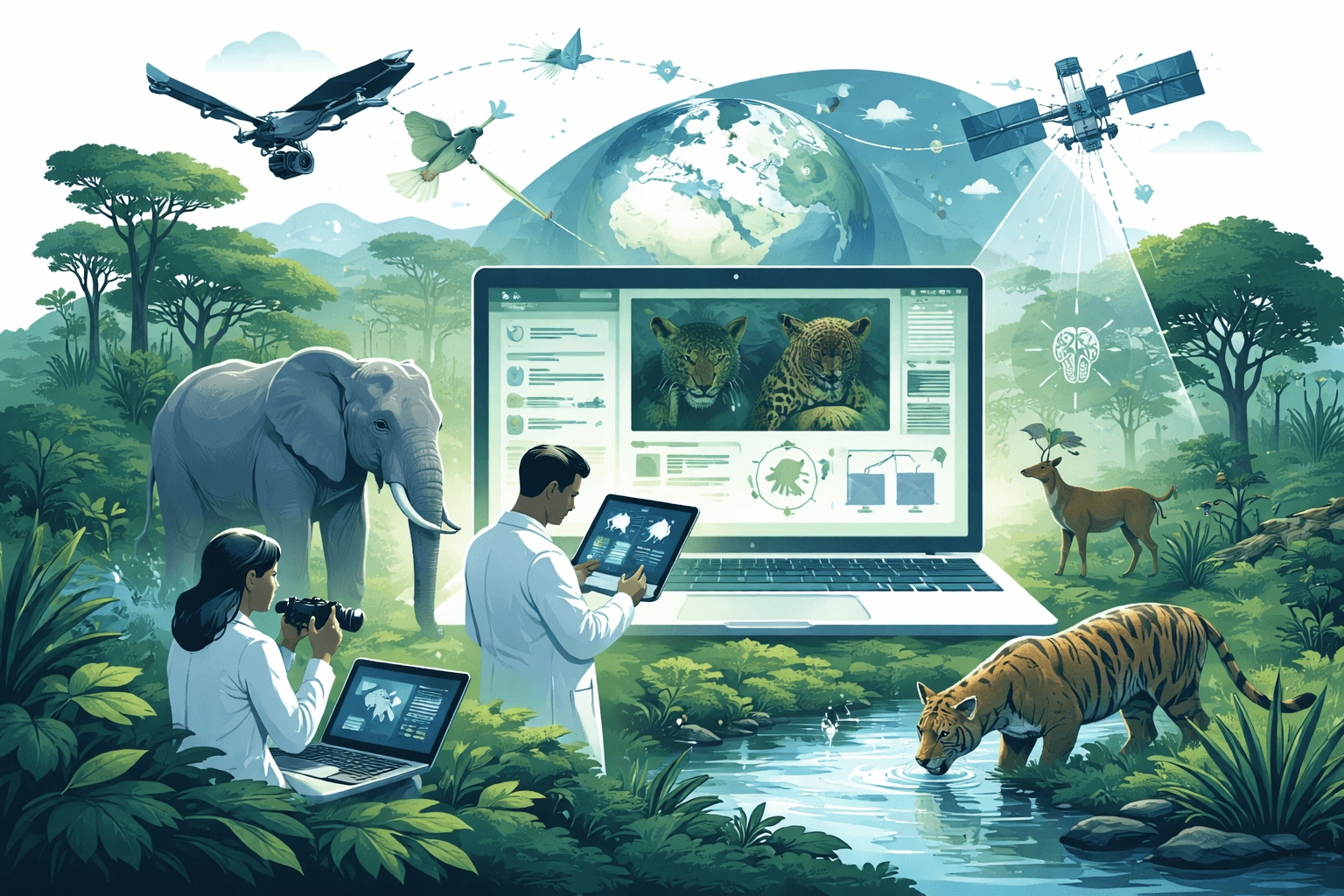
AI is changing wildlife protection faster than most field teams can swap batteries. Consider this: Wildlife Insights, a global camera‑trap platform led by Conservation International and partners, reports over 100 million images processed with AI triage that can cut human labeling time dramatically, from months to days across large datasets. Microsoft’s open MegaDetector model similarly reduces manual review by 75–90% in many projects by automatically filtering empty frames and flagging people versus animals (Microsoft AI for Earth). These workflow gains translate into more patrol hours, faster decision cycles, and, in some cases, measurable reductions in illegal activity. This article examines the impact of AI on wildlife protection—what’s working, where the risks lie, and what it will take to scale responsibly.
By the numbers
- 100M+: Camera‑trap images processed on Wildlife Insights, enabling near‑real‑time dashboards for protected areas (Conservation International/Wildlife Insights partners)
- 95%: Species‑level accuracy achieved on a large camera‑trap dataset using deep learning in a peer‑reviewed study, enabling automation of the vast majority of images with confidence thresholds (PNAS, 2018)
- 75–90%: Reduction in manual review time reported by multiple projects using MegaDetector to filter empty images and human presence (Microsoft AI for Earth)
- Minutes: Typical latency for edge‑AI acoustic systems to detect chainsaws or gunshots and send ranger alerts over cellular or satellite links (Rainforest-focused deployments reported by NGOs)
- Hundreds: Protected areas now using integrated situational‑awareness systems (e.g., EarthRanger, SMART) that combine AI‑enabled feeds with patrol data to guide responses (program reports)
The impact of AI on wildlife protection: where algorithms meet the field
AI’s impact on wildlife protection is most visible in four monitoring domains: camera traps, acoustic sensors, drones, and satellite imagery. Each adds speed, scale, or sensitivity that manual methods struggle to match.

Camera Traps in Animal Ecology: Methods and Analyses
Amazon.com: Camera Traps in Animal Ecology: Methods and Analyses: 9784431994947: O'Connell, Allan F., Nichols, James D., Karanth, K. Ullas: Books
Check Price on AmazonCamera traps: from image floods to actionable data
- Species identification and individual recognition. Convolutional neural networks trained on large, labeled datasets can classify species with high accuracy. A widely cited study using the Snapshot Serengeti dataset reported roughly 95% species‑level accuracy and demonstrated that, with confidence thresholds, 90%+ of images could be auto‑labeled at expert‑level performance (PNAS, 2018). For individually distinctive animals, systems like Wildbook use pattern‑matching and deep learning to identify individuals—cataloging, for example, more than 10,000 individual whale sharks globally, which underpins mark‑recapture population estimates (Wildbook program reports).
- Human/vehicle detection for anti‑poaching. Object‑detection models such as MegaDetector flag humans and vehicles, enabling rapid triage for potential incursions and automatic blurring for privacy. Field teams report 75–90% time savings in image review, freeing analysts and rangers to focus on real leads.
- Edge AI for real‑time alerts. New camera traps incorporate on‑device inference (e.g., Intel Movidius-class chips), sending alerts only when a target class (person/vehicle) is detected. This reduces bandwidth and allows near‑real‑time response without waiting for full image uploads.
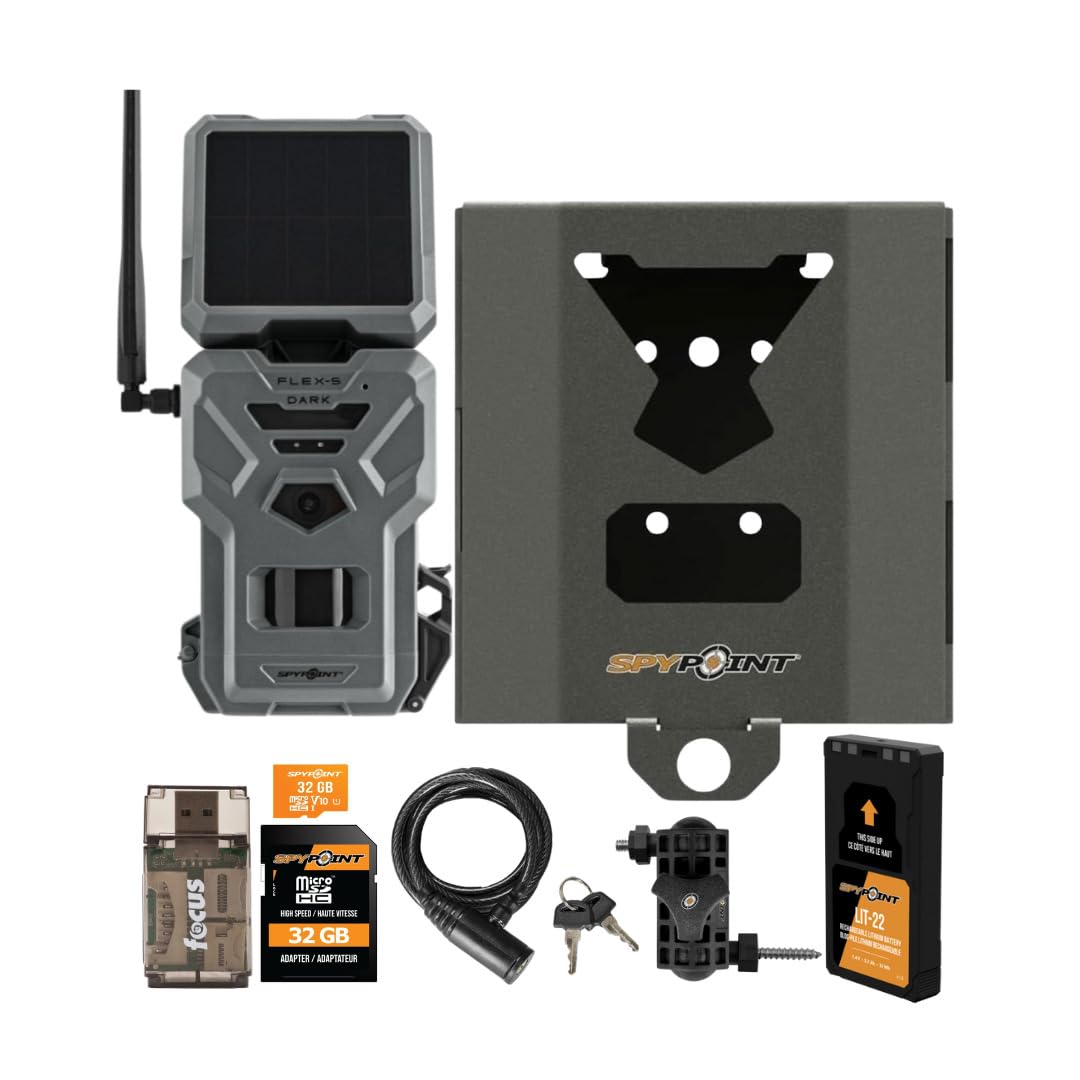
SPYPOINT Flex-S-Dark Solar Cellular Trail Camera – Built-in Solar Panel, 40MP Photos, 1080p Videos + Sound, No-Glow Game Camera, Night Vision, Motion Activated Trail Cam
View on AmazonFor a deeper dive into models, training data, and field integration, see: AI for Wildlife Monitoring: Technologies, Data Needs, and Practical Conservation Applications (/sustainability-policy/ai-for-wildlife-monitoring-technologies-data-needs-practical-conservation).
Acoustic sensors: hearing threats and rare species
- Illegal activity detection. Edge‑based models trained on chainsaws and gunshots can trigger alerts within minutes. These systems are effective in dense forests where visibility is limited and drones underperform. NGOs report successful real‑time interdictions when acoustic alerts cue rangers to specific locations.
- Biodiversity monitoring. Tools like BirdNET from the Cornell Lab of Ornithology use deep learning to identify bird species from soundscapes, turning weeks of expert listening into automated, timestamped detections. Continuous acoustic monitoring reveals seasonal presence, migration timing, and occupancy for cryptic or nocturnal species.
- Marine soundscapes. AI has improved detection of whales and dolphins on hydrophones, reducing ship-strike risks by enabling dynamic speed restrictions where endangered cetaceans are present.

FiveSky Wildlife Acoustics, Inc Echo Meter Touch 2 Bat Detector for iOS : Patio, Lawn & Garden
View on AmazonDrones and thermal imaging: closing gaps on land and at sea
- Poacher and wildlife detection. Drones with thermal cameras, paired with object detection, can locate warm‑bodied animals or people at night, a critical window for anti‑poaching in savannas. Automated flight planning lets small teams cover large areas rapidly. However, persistent drone patrols require trained pilots, clear legal permissions, and robust batteries.
- Nest and rookery surveys. AI‑assisted image counting from drones has streamlined seabird and marine‑mammal colony surveys, reducing disturbance and improving accuracy over manual counts.
Satellite imagery and ML: from hectares to continents
- Habitat change at scale. Machine learning on optical and radar satellites (e.g., Sentinel‑1/2, Landsat) powers near‑real‑time deforestation alerts. Studies show that coupling alerts with enforcement can reduce forest loss in targeted areas relative to controls (peer‑reviewed evaluations in Latin America and Africa).
- Illegal fishing detection. Vessel‑tracking data fused with satellite imagery and AI helps identify unlicensed or boundary‑violating fishing, indirectly protecting marine megafauna and seabird prey bases.
Measurable outcomes: what has AI delivered so far?
AI’s conservation value must be judged by outcomes, not only model scores. Evidence falls into three tiers: operational efficiency, enforcement results, and ecological impact.
Operational efficiency (strong evidence)
- Camera‑trap triage. Multiple programs report 75–90% reductions in manual image review time using object detection and species classifiers (Microsoft AI for Earth; Wildlife Insights partners). The 2018 PNAS study showed near‑expert automation for a majority of images at set confidence thresholds, with human review reserved for hard cases.
- Patrol planning. Integrations between AI outputs and platforms such as SMART and EarthRanger shorten the loop from detection to action—e.g., automatically generating patrol waypoints when suspicious detections occur.
Enforcement and protection (emerging but promising)
- Game‑theoretic patrol optimization. The PAWS/Green Security Games framework, developed by academic teams and tested with rangers in Asia and Africa, uses historical poaching data to optimize patrol routes. Field deployments reported higher snare detection rates on AI‑directed patrols compared with status‑quo heuristics (peer‑reviewed case studies led by USC/Harvard collaborators).
- Real‑time interdictions. Acoustic chainsaw and gunshot alerts have enabled timely ranger responses in multiple tropical forest sites, with NGO reports citing arrests, seizure of equipment, and deterrence effects shortly after deployment. Independent, peer‑reviewed quantification of incident reduction remains limited but growing.
- Human presence monitoring. Automatic human detection in camera‑trap streams has improved situational awareness along park boundaries and known ingress routes, letting teams focus on hotspots rather than broad patrol sweeps.
Ecological outcomes (limited but growing)
- Population and occupancy estimates. AI‑accelerated identification has expanded mark‑recapture datasets (e.g., individually marked felids, whale sharks), improving precision in population estimates and trend detection.
- Reduced habitat loss in targeted zones. Studies of satellite‑alert‑driven enforcement in parts of Latin America report statistically significant reductions in deforestation in treated areas versus controls during intervention periods, though effects depend on response capacity and governance context.
Real‑world conservation rarely isolates a single cause. Stronger results appear when AI is embedded in a broader practice: trained rangers, clear standard operating procedures (SOPs), functioning radios and vehicles, and community partnerships. For practical field strategies that pair tech with proven methods, see Effective Wildlife Conservation Practices: Practical Strategies, Monitoring, and Community-Led Solutions (/sustainability-policy/effective-wildlife-conservation-practices-guide).
Risks, biases, and technical challenges
AI failures in remote, noisy, and adversarial environments are not theoretical—they happen. Managing error modes and constraints is essential.
False positives and false negatives
- Operational fatigue. High false‑positive rates (e.g., wind mistaken for chainsaws, livestock mislabeled as target wildlife) can lead to alert fatigue and slower responses. Balanced thresholds are critical.
- Missed threats. False negatives—failing to detect a poacher or a rare species—carry high costs. Unknown‑species and open‑set recognition remain active research areas: models trained on limited species often misclassify novel fauna.
Mitigations: calibrated probability thresholds; human‑in‑the‑loop review for high‑stakes actions; uncertainty estimates; periodic, stratified ground‑truthing; and active learning to retrain on local edge cases.
Dataset bias and domain shift
- Geographic skew. Many training datasets over‑represent African savannas and temperate forests relative to tropical and montane biomes. Models can overfit backgrounds (e.g., vegetation type) rather than the animal itself.
- Hardware and placement differences. Changing camera models, heights, or angles causes domain shift that degrades performance.
Mitigations: local fine‑tuning with a small, labeled subset; domain adaptation techniques; standardized camera setups; cross‑site validation; and participation in open repositories (e.g., LILA BC, Snapshot Serengeti) to diversify training data.
Energy and compute constraints
- Power budgets. Edge devices must run on small solar panels and batteries. More accurate models are typically larger and more power‑hungry. Model compression (quantization, pruning) and efficient architectures (MobileNet‑class backbones) are key.
- Connectivity limits. Many sites rely on intermittent cellular or satellite links. Systems must cache data, send low‑bandwidth alerts (metadata first, images later), and fail gracefully.
Robustness and security
- Adversarial behavior. Poachers adapt: avoiding known camera lines, using thermal camouflage, or creating decoys. Transparent, randomized patrol plans and sensor placement help.
- Firmware and model integrity. Devices in the field are theft‑prone; encrypted storage and signed model updates protect sensitive data and prevent tampering.
For broader context on opportunities and pitfalls across conservation AI, see How AI Is Used in Conservation: Technologies, Real-World Uses, and Key Challenges (/sustainability-policy/how-ai-is-used-in-conservation-technologies-applications-challenges).
Social, ethical, and legal implications
Technology that watches wildlife often watches people. Responsible use demands consent, safeguards, and fair data governance.
- Community consent and FPIC. Monitoring on or near Indigenous and local community lands requires Free, Prior and Informed Consent (FPIC) under UNDRIP norms. Consent is a process, not a signature—covering purpose, data flows, retention, and tangible community benefits.
- Surveillance and privacy. Human detection is valuable for safety and enforcement but raises privacy risks. Best practices include on‑device human blurring; strict access controls; time‑bound retention; proportionality (collect only what’s needed); and clear SOPs for when human images trigger action.
- Data ownership and benefit‑sharing. Who owns the images, labels, and derived models? Agreements should specify rights to raw data, annotations, trained weights, and publication. Apply Indigenous Data Sovereignty principles (e.g., CARE—Collective Benefit, Authority to Control, Responsibility, Ethics) where applicable, alongside national law and the Nagoya Protocol for genetic resources where relevant.
- Labor and livelihoods. AI shifts workloads: fewer hours spent labeling, more on patrol and community engagement. Upskilling rangers and local technicians—rather than outsourcing analytics—keeps capacity and jobs in place.
- Sensitive species geoprivacy. Precise locations of nests or rare mammals can enable exploitation. Mask coordinates, apply spatial jittering, and adopt sensitivity classifications (e.g., GBIF data‑sensitivity frameworks) before sharing.
Scaling, governance, and future R&D priorities
To move from pilots to protection at scale, the conservation sector needs interoperability, sustained funding, and stronger evidence.
Interoperability and open standards
- Common schemas. Adopt camera‑trap metadata standards (e.g., the Camera Trap Metadata Standard), Darwin Core terms for biodiversity, and standardized event models for acoustic detections. Consistent schemas reduce friction in multi‑site analyses.
- APIs and integrations. Ensure two‑way interoperability between AI services and field platforms like SMART and EarthRanger via well‑documented APIs. Alerts must translate into patrol tasks, and outcomes should flow back to retrain models.
- Open datasets. Contribute to and leverage repositories such as the Labeled Information Library of Alexandria (LILA BC), Snapshot Serengeti, iNaturalist, and Xeno‑canto. The long tail of rare species will only be covered with pooled data.
Funding models and total cost of ownership
- Beyond pilots. Budget for the full lifecycle: hardware replacements, connectivity, cloud compute, retraining, field maintenance, and staff time. Annual opex often exceeds initial capex in remote deployments.
- Pooled compute and credits. Cloud credits from philanthropy are valuable but ephemeral. Programs should model steady‑state costs and invest in on‑device inference where feasible to cut bandwidth and cloud bills.
Capacity building
- Local ML and field tech skills. Train rangers and local partners to manage sensors, interpret outputs, and participate in continuous dataset curation. Co‑creation increases adoption and reduces downtime.
- Tooling for non‑experts. Low‑code labeling, active‑learning workflows, and uncertainty dashboards help field teams focus on the highest‑value decisions.
Policy and governance recommendations
- Human‑in‑the‑loop by design. Mandate human review for high‑risk actions (e.g., arrests) and document escalation paths.
- Privacy and ethics guardrails. Require on‑device human blurring where possible; set retention limits; and maintain auditable access logs. Publish data‑governance charters for each project.
- Impact evaluation. Treat AI deployments as testable interventions with counterfactuals. Use pre‑registered evaluation plans, randomized patrol assignments where ethical, and report precision/recall along with field outcomes (e.g., snares removed per patrol hour).
- Model and data cards. Publish documentation on training data sources, species coverage, geographic scope, known biases, and recommended thresholds. Include energy/compute footprints for transparency.
- Risk tiering and red‑teaming. Classify applications by harm potential (e.g., human surveillance, critical species) and conduct adversarial testing before scale‑up.
R&D priorities
- Open‑set and long‑tail recognition. Techniques that say “I don’t know” for unseen species reduce confident mistakes and support discovery of rare taxa.
- Self‑supervised and few‑shot learning. Cut labeling demands, especially for rare species and new sites.
- Energy‑efficient edge AI. Ultra‑low‑power inference and robust, solar‑friendly hardware for long deployments under canopy or cloud.
- Multi‑modal fusion. Combine acoustic, camera, and satellite signals to reduce uncertainty and improve localization.
- Uncertainty quantification. Calibrated scores that help non‑experts set thresholds for action; integrate with patrol‑risk models.
For program builders seeking broader tech‑policy context and practical tooling choices, see Using Technology for Environmental Protection: Tools, Impacts, and Practical Guidance (/sustainability-policy/using-technology-for-environmental-protection-tools-impacts-practical-guidance).
Practical implications for conservation teams and policymakers
- Resource allocation. Expect major time savings on data triage; reinvest those hours into patrols, community engagement, and maintenance.
- Procurement. Buy for interoperability and edge operation: support for standard metadata, local inference, and API integrations with your patrol platform.
- Governance. Write data‑rights clauses up front; require privacy features and model documentation; plan for recurring costs.
- Evidence first. Where possible, randomize patrol routes or stagger rollouts to measure causal impact. Report both model metrics and field outcomes.
- Community partnership. Build FPIC and benefit‑sharing into timelines and budgets; train local staff as co‑owners of the system.
What’s next
The impact of AI on wildlife protection is already visible in faster detections, smarter patrols, and richer population data. The next step is making these gains routine: interoperable systems, trustworthy models that know their limits, real safeguards for people and places, and rigorous, comparable evidence of ecological benefit. With those pieces in place, AI becomes less a flashy pilot and more a dependable part of conservation practice—one that helps frontline teams do what matters most: keep wildlife and habitats alive.
Related reading on our site:
- AI for Wildlife Monitoring: Technologies, Data Needs, and Practical Conservation Applications (/sustainability-policy/ai-for-wildlife-monitoring-technologies-data-needs-practical-conservation)
- How AI Is Used in Conservation: Technologies, Real-World Uses, and Key Challenges (/sustainability-policy/how-ai-is-used-in-conservation-technologies-applications-challenges)
- Effective Wildlife Conservation Practices: Practical Strategies, Monitoring, and Community-Led Solutions (/sustainability-policy/effective-wildlife-conservation-practices-guide)
- Using Technology for Environmental Protection: Tools, Impacts, and Practical Guidance (/sustainability-policy/using-technology-for-environmental-protection-tools-impacts-practical-guidance)
Recommended Products
Camera Traps in Animal Ecology: Methods and Analyses
Amazon.com: Camera Traps in Animal Ecology: Methods and Analyses: 9784431994947: O'Connell, Allan F., Nichols, James D., Karanth, K. Ullas: Books
SPYPOINT Flex-S-Dark Solar Cellular Trail Camera – Built-in Solar Panel, 40MP Photos, 1080p Videos + Sound, No-Glow Game Camera, Night Vision, Motion Activated Trail Cam
Buy SPYPOINT Flex-S-Dark Solar Cellular Trail Camera – <strong>Built-in Solar Panel, 40MP Photos, 1080p Videos + Sound, No-Glow Game Camera, Night Vision, Motion Activated Trail Cam</strong>: Game &am
FiveSky Wildlife Acoustics, Inc Echo Meter Touch 2 Bat Detector for iOS : Patio, Lawn & Garden
Amazon.com: FiveSky Wildlife Acoustics, Inc Echo Meter Touch 2 Bat Detector for iOS : Patio, Lawn & Garden
More in Sustainability Policy
- AI for Wildlife Monitoring: Technologies, Data Needs, and Practical Conservation Applications
- How AI Is Used in Conservation: Technologies, Real-World Uses, and Key Challenges
- How Technology Aids Conservation: Sensors, AI, and Renewable Solutions
- Using AI for Habitat Conservation: Practical Applications, Data Needs, and Ethical Implementation