
Latest Trends in Battery Storage: Tech, Markets, Sustainability, and Grid Integration
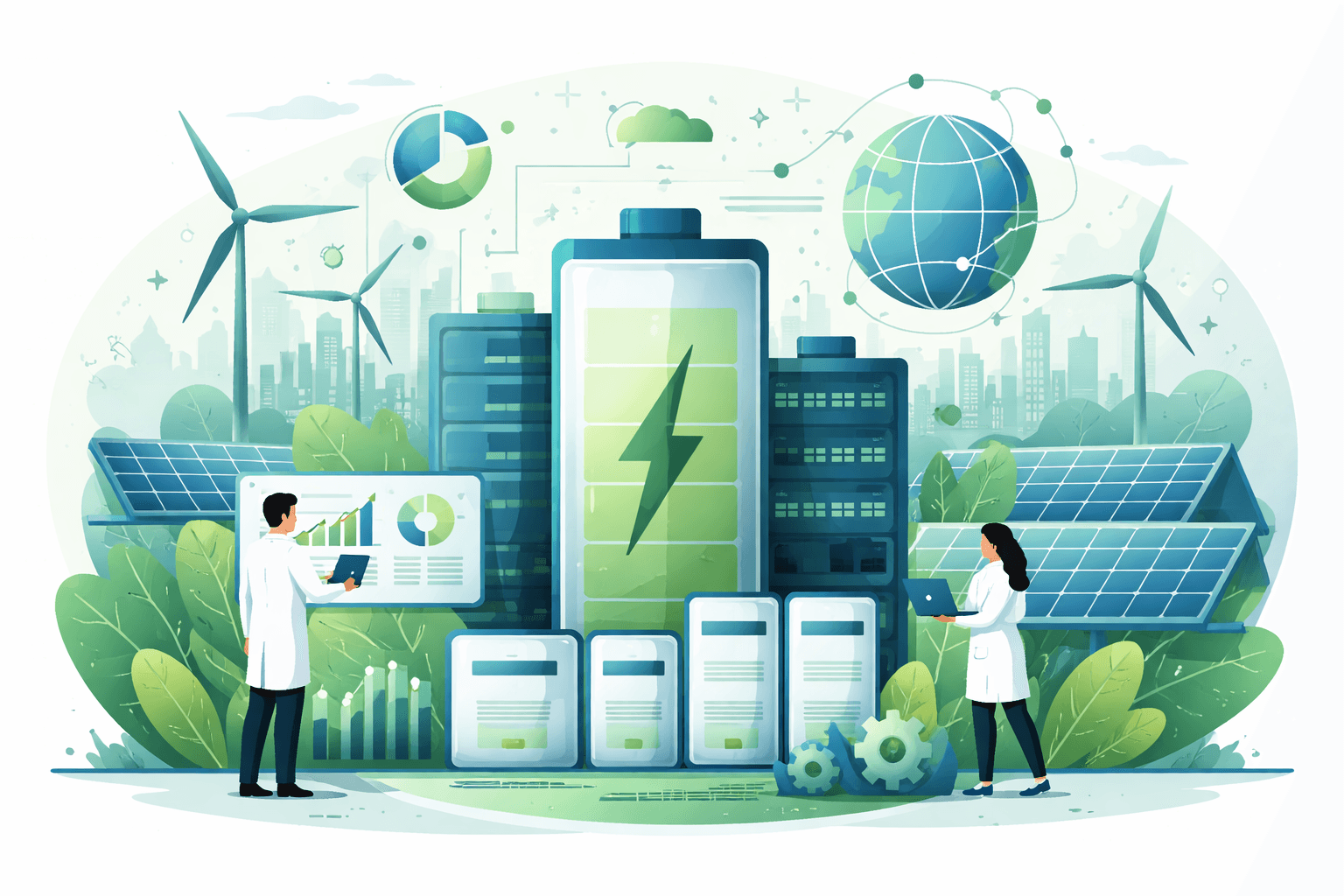
Battery storage crossed a tipping point over the last two years. According to the International Energy Agency (IEA), global battery storage additions more than doubled in 2023 to roughly 42 GW (about 97 GWh), with another surge expected through 2025 as supply chains loosen and policy support strengthens. This analysis distills the latest trends in battery storage—covering technology breakthroughs, market deployment, economics, sustainability, and digitalization—so readers can track where the sector is heading next.
Latest trends in battery storage: chemistry, commercialization, performance
The most important chemistry trend is the rapid ascent of lithium iron phosphate (LFP) in stationary storage. LFP avoids nickel and cobalt, offers strong thermal stability, and delivers long cycle life at lower cost—even if its energy density lags higher-nickel chemistries.
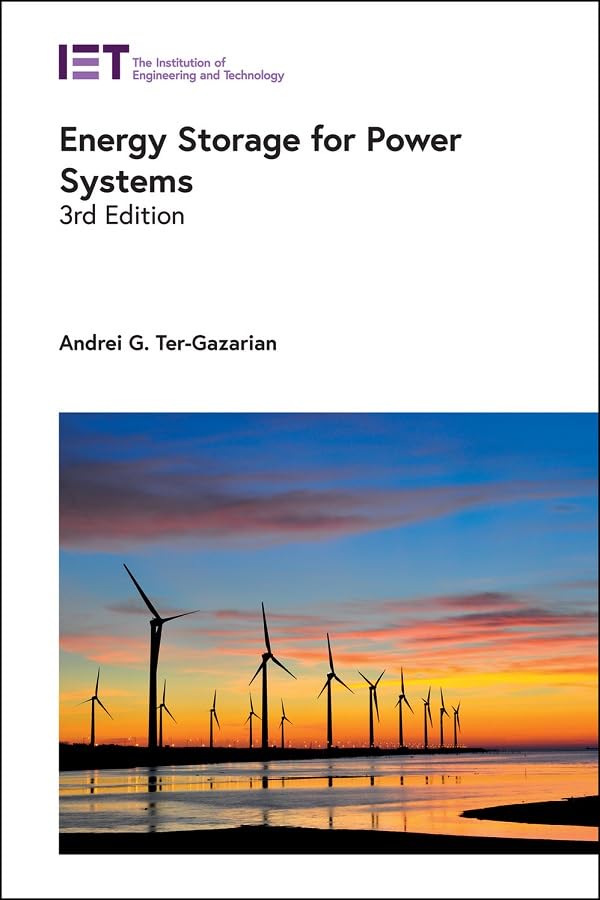
Energy Storage for Power Systems (Energy Engineering): Ter-Gazarian, Andrei G.
This classic book is <strong>a trusted source of information and a comprehensive guide to the various types of secondary storage systems and choice of their types and parameters</strong>. It is also a
Check Price on AmazonBeyond LFP, four technology lanes matter now:
- Solid-state lithium: Replaces liquid electrolytes with solid materials to improve safety and energy density. Multiple developers (including automotive OEMs and startups) target limited commercial introductions in the 2026–2028 window, primarily in vehicles and consumer devices. For stationary storage—where volumetric energy density matters less—solid-state’s near-term impact is modest, but its inherent safety and wide temperature tolerance are promising for urban sites and critical facilities. Trade-offs: pre-commercial costs, manufacturing scalability, and dendrite suppression at high currents.
- Sodium-ion: Commercial shipments began in 2023–2024, led by Chinese manufacturers. Typical cell-level energy density today is around 140–160 Wh/kg—below LFP—but sodium-ion can be 20–30% cheaper at scale, uses abundant materials (no lithium, nickel, or cobalt), and performs well at low temperatures with the latest hard-carbon anodes. Analysts (e.g., BNEF) expect rapid capacity build-outs in Asia with early stationary deployments, especially where cost and safety outrank density. Watch for sodium-ion in residential and commercial storage, two- to six-hour grid systems, and hybrid EV–stationary applications.
- Redox flow batteries: Vanadium redox flow (VRFB) and emerging iron-, zinc-, or bromine-based systems decouple power (stack size) from energy (tank volume), enabling 6–12+ hour durations with 10,000–20,000 cycle lifetimes. The 200 MW/800 MWh VRFB project in Dalian, China (with 100 MW/400 MWh commissioned first) is a visible benchmark. Flow systems have lower round-trip efficiency (typically 65–85%) and higher upfront cost per kWh than LFP today but excel when many deep cycles and long durations are required.
- Advanced lithium formulations: Innovations include LMFP (manganese-doped LFP) for higher energy density, high-voltage spinel LNMO to reduce cobalt and nickel, silicon-boosted anodes for fast charge, and next-gen electrolytes/additives for improved calendar life. In stationary systems, the biggest wins show up as longer lifetimes (7,000–12,000 cycles for some LFP variants), wider operating windows, and improved fast-response performance for ancillary services.
Performance trade-offs to track
- Energy density: Critical for vehicles and space-constrained urban sites; less vital for utility-scale systems where land is available. LFP and sodium-ion lag nickel-rich chemistries but are adequate for most stationary use cases.
- Cycle life and calendar life: Stationary value increases with thousands of deep cycles and minimal degradation. Flow batteries lead on cycle life; LFP’s steady improvements are extending project lifetimes to 15–20 years with proper thermal management.
- Safety: LFP and nonflammable electrolytes (including many flow systems) present lower thermal runaway risks. Safety remains a core selection criterion for behind-the-meter and indoor projects.
- Round-trip efficiency (RTE): Li-ion commonly delivers 88–92% RTE; flow technologies are typically lower. For markets dominated by short-duration arbitrage and frequency services, RTE strongly affects revenues.
Commercialization timelines
- Li-ion LFP: Fully commercial; cost leader for 2–8 hour applications today.
- Sodium-ion: Early commercial shipments; expect broader stationary deployments through 2025–2027 as supply chains scale.
- Flow batteries: Commercial with growing multi-MWh projects; expect faster growth in long-duration storage (LDS) procurement from utilities in the second half of the 2020s.
- Solid-state: Limited demos mid-decade; wider-scale commercialization likely late decade. Near-term impacts strongest in mobility; stationary benefits chiefly in safety-sensitive niches.
Market deployment and use cases: grid-scale, LDES, behind-the-meter, and hybrids
Grid-scale battery energy storage systems (BESS) are now a core grid asset. The U.S. Energy Information Administration (EIA) reports the United States added about 8.7 GW of utility-scale batteries in 2023 and expects another 14+ GW in 2024, a near-doubling of capacity in two years. Globally, IEA projects continued doubling rates as permitting, interconnection, and supply constraints ease.
Long-duration storage (LDES) is emerging. Today, most new BESS target 2–4 hours, with growing 6–8 hour builds in solar-heavy markets. But decarbonized grids will need multi-day flexibility to manage prolonged weather events and seasonal mismatches. The U.S. Department of Energy’s Long Duration Storage Shot targets a 90% cost reduction for 10+ hour systems by 2030 (down to about $0.05/kWh of storage). Expect a portfolio approach: iron-air and zinc-based chemistries for 50–100 hours, VRFB and iron-flow for 8–12 hours, thermal and pumped storage where geography allows. Multiple U.S. utilities have signed first-of-a-kind iron-air projects around the 10 MW scale, an early signal of commercial traction.
Behind-the-meter growth is accelerating. Outages, time-of-use tariffs, and PV self-consumption are driving residential and commercial storage adoption in markets like California, Germany, and Australia. In the U.S., rule changes to net metering (e.g., California’s NEM 3.0) increase the value of batteries for maximizing solar exports during evening peaks. Virtual power plants (VPPs)—aggregating thousands of small batteries—are now providing tens of megawatts of capacity and frequency response in places like California, Vermont, and Australia under new market participation rules (enabled in the U.S. by FERC Orders 841 and 2222).
Hybrid systems dominate new renewables. EIA expects around 60% of new U.S. utility-scale solar capacity in 2024 to be paired with batteries, up from near-zero in 2019. Co-location improves interconnection efficiency, smooths ramps, reduces curtailment, and earns capacity and ancillary revenues. Wind-plus-storage hybrids are following a similar—if slower—trajectory in high-wind regions, while microgrids that combine solar, storage, and backup generators are gaining traction for resilience.
For a primer on how storage types and durations align with grid needs, see Energy Storage Explained: Types, Costs, and How It Powers the Grid (/ai-technology/energy-storage-explained-types-costs-grid).
Economics and financing: costs, LCOS, and revenue stacking
Costs are falling again. BloombergNEF reports average lithium-ion pack prices declined to about $139/kWh in 2023, down 14% year over year, with even lower prices in China. The drop largely reflects easing commodity prices (lithium carbonate fell steeply from 2022 peaks), scaled LFP manufacturing, and improved pack designs. Stationary storage benefits from simpler pack engineering and relaxed weight constraints relative to EVs, keeping system costs on a downward trend despite BOS (balance of system) and interconnection pressures.
Levelized cost of storage (LCOS) continues to decline, especially for 2–4 hour LFP systems co-located with solar. While LCOS varies by market, analysts generally estimate a 60–70% reduction versus mid-2010s levels, with hybrid PV-plus-storage frequently outcompeting gas peakers on a net-cost basis when capacity and ancillary services are included.
Revenue stacking is essential to project viability:
- Energy arbitrage: Charge off-peak, discharge at peak; value scales with price volatility and RTE.
- Capacity payments/resource adequacy: Increasingly material in regions with tight reserve margins.
- Ancillary services: Frequency regulation, spinning reserve, ramping, black-start; batteries excel due to fast response.
- Congestion management and curtailment reduction: Especially valuable for hybrids at constrained nodes.
- Resilience and backup: Behind-the-meter systems monetize outage mitigation and demand charge reduction.
Policy tailwinds are significant. In the U.S., the Inflation Reduction Act created a 30% investment tax credit (ITC) for standalone storage, with potential adders for domestic content and siting in energy communities. FERC Order 841 (storage participation in wholesale markets) and Order 2222 (DER aggregation) expand revenue access. In Europe, market reform is clarifying capacity mechanisms and flexibility needs; the UK’s Dynamic Containment and other fast-frequency products have become major revenue sources for BESS.
Financing is maturing. Merchant risk remains in markets without long-term contracts, but tolling agreements, capacity contracts, and revenue floors are becoming more common. Performance guarantees (round-trip efficiency, availability, degradation) and robust O&M strategies are now standard in bankable term sheets.
Sustainability and supply-chain trends: materials, recycling, lifecycle impacts
Materials landscape
- Lithium: Prices corrected sharply from 2022 highs, easing near-term cost pressure. New projects and direct lithium extraction (DLE) pilots aim to diversify supply beyond Australia and South America.
- Nickel and cobalt: Price volatility and ESG concerns (especially for cobalt) accelerated the shift to LFP and high-manganese chemistries in stationary storage.
- Graphite: Anode-grade graphite supply tightness and export controls from major producers prompted investment in synthetic graphite and alternative anode materials (e.g., hard carbon for sodium-ion) in North America and Europe.
Lifecycle emissions
- Manufacturing emissions for lithium-ion packs depend heavily on electricity mix. Studies using the Argonne GREET model and IEA data place cradle-to-gate emissions typically in the 60–100+ kg CO2e/kWh range for production in coal-heavy grids, falling substantially with renewable-powered factories and recycled feedstocks.
- Operationally, batteries reduce grid emissions by shifting renewables into peak periods and displacing peaker plants; the net benefit depends on charge/discharge timing and grid mix. Advanced dispatch optimization and carbon-aware scheduling improve real-world impact.
Recycling and second life
- Policy is moving fast. The EU Battery Regulation (adopted 2023) phases in recycled-content requirements (e.g., by 2031: 16% cobalt, 6% lithium, 6% nickel in new batteries) and introduces mandatory battery passports and due diligence for supply chains.
- Commercial recyclers are scaling hydrometallurgical processes to recover lithium, nickel, cobalt, and manganese with high yields and lower energy than pyrometallurgy. Quality control on black mass and contamination management are active areas of innovation.
- Second-life EV batteries are entering stationary markets for lower-cost applications (e.g., 1–4 hour commercial storage). Standards such as UL 1974 (evaluation for reuse) and IEC 62933 frameworks support bankability, though performance variability, warranty terms, and testing costs are current constraints.
Circular-economy innovation
- Design for disassembly, cell-to-pack architectures that enable module-level reuse, and digital battery passports can cut lifecycle cost and improve traceability.
- Sodium-ion and LFP reduce reliance on scarce or high-ESG-risk minerals, simplifying recycling economics and supply assurance.
Digitalization, safety, and standards
Smarter controls and AI
- Battery management systems (BMS) now integrate physics-based models with machine learning to more accurately estimate state of charge (SOC) and state of health (SOH), reducing over-conservative buffers and extending usable capacity.
- AI-driven dispatch optimizes multi-market participation, co-optimizing arbitrage with frequency services while minimizing degradation. Digital twins help anticipate thermal hotspots and plan maintenance.
- Aggregation and VPPs: Portfolio-level optimization across thousands of behind-the-meter batteries is unlocking wholesale market participation. FERC Order 2222 enables DER aggregations to bid in U.S. wholesale markets, a structural shift that elevates residential and commercial storage from backup assets to grid resources.

Emporia Vue 3 Home Energy Monitor - Smart Home Automation Module and Real Time Electricity Usage Monitor, Power Consumption Meter, Solar and Net Metering for UL Certified Safe Energy Monitoring - Amazon.com
View on AmazonSafety and incident mitigation
- Codes and standards: UL 9540 (system safety), UL 9540A (thermal runaway test method), UL 1973 (stationary battery safety), and NFPA 855 (installation) now underpin permitting in North America. Similar IEC standards are developing globally.
- Lessons learned: Incidents at early grid-scale sites (e.g., 2019 Arizona) and subsequent thermal events drove upgrades: off-gas detection, improved ventilation/deflagration venting, aisle spacing, fire barriers, and system-level shutdown logic. LFP adoption and containerized designs with integrated fire suppression have significantly lowered risk profiles.
- Data sharing: Root-cause analyses and standardized reporting are improving designs across vendors, while insurers increasingly require UL 9540A test data for site approval.
By the Numbers
- 42 GW (≈97 GWh): Global battery storage additions in 2023, more than doubling year over year (IEA).
- $139/kWh: Average lithium-ion pack price in 2023, down 14% YoY (BloombergNEF); China often lower, with LFP leading.
- 14+ GW: New U.S. utility-scale battery capacity expected online in 2024 (EIA), after 8.7 GW in 2023.
- ~60–70%: Estimated LCOS reduction since mid-2010s for mainstream Li-ion systems (various analyses including NREL/Lazard).
- 200 MW/800 MWh: Capacity of the Dalian VRFB project; a milestone for long-duration flow storage deployments.
- 90% by 2030: DOE Long Duration Storage Shot cost-reduction target for 10+ hour systems.
Practical implications for stakeholders
- Utilities and grid operators: Treat 2–4 hour LFP as near-default for peaking, frequency response, and renewable integration; begin portfolios of 6–12 hour resources (including flow batteries) as LDES procurements ramp. Co-locate storage with new solar to reduce curtailment and interconnection queues.
- Developers and IPPs: Build merchant exposure carefully; prioritize markets with capacity payments and robust ancillary products. Co-optimize interconnection and tax credits (e.g., U.S. ITC with adders) and negotiate performance guarantees tied to degradation and availability.
- Commercial/industrial customers: Use storage to cut demand charges, improve power quality, and capture demand response incentives. Consider second-life systems for noncritical cycling where cost is paramount, but scrutinize warranties and certification.
- Homeowners: Outage mitigation and time-of-use optimization are primary value streams; VPP participation can add income in certain markets. For a deeper dive on sizing, value, and costs, see Home Solar Battery Storage: Complete Buyer’s Guide & Cost Calculator (/renewable-energy/home-solar-battery-storage-buyers-guide-cost-calculator). California readers can also explore local dynamics in Tesla Powerwall in California: Cost, Availability & Is It Worth It? (/renewable-energy/tesla-powerwall-in-california-cost-availability-worth-it).
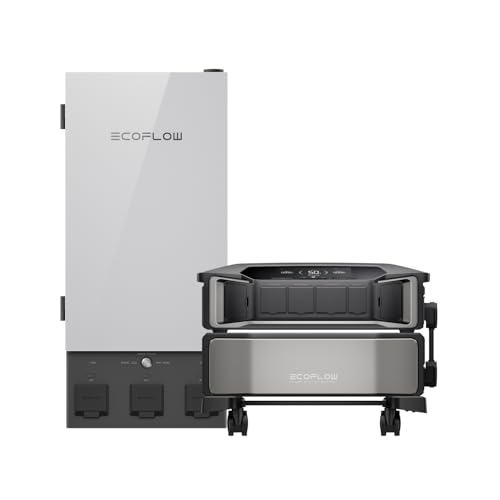
EF ECOFLOW DELTA Pro Ultra and Smart Home Panel, 6000Wh Power Station, Expandable to 90kWh, 7200W AC Output, 2-Hour Full Charge Lifepo4 Home Battery Backup Solar Generator for RV and Off-Grid Use : Patio, Lawn & Garden
Amazon.com : EF ECOFLOW DELTA Pro Ultra and Smart Home Panel, <strong>6000Wh Power Station, Expandable to 90kWh, 7200W AC Output, 2-Hour Full Charge Lifepo4 Home Battery Backup Solar Generator for RV
Check Price on AmazonFor broader context on storage roles and technologies, see Energy Storage Explained: Types, Costs, and How It Powers the Grid (/ai-technology/energy-storage-explained-types-costs-grid).
Where the sector is heading next
- The chemistry mix will diversify. LFP remains the workhorse, sodium-ion expands in cost-sensitive stationary niches, and flow batteries scale with LDES procurements. Solid-state advances will flow from EVs into selective stationary use cases later in the decade.
- Hybrids become standard. A majority of new solar will be paired with storage in leading markets; wind hybrids follow, especially where congestion and curtailment rise.
- Software eats volatility. AI-optimized dispatch and fleet-wide coordination will squeeze more value from each installed kWh while extending life, enabling more merchant exposure without sacrificing bankability.
- Policy will favor flexibility. Capacity mechanisms, fast-frequency products, and carbon-aware dispatch incentives will reward batteries as core grid infrastructure.
- Circularity gains teeth. Battery passports, recycled-content mandates, and advances in hydrometallurgy will cut embedded emissions and improve supply security, making batteries cleaner and cheaper to build.
The latest trends in battery storage point to a grid where flexibility is ubiquitous, renewable curtailment is a design choice—not a fate—and resilience is built into every feeder. Costs are falling, software is getting smarter, and sustainable supply chains are coming into view. The next phase is less about proving the technology and more about scaling it responsibly, safely, and everywhere it’s needed.
Recommended Products
Energy Storage for Power Systems (Energy Engineering): Ter-Gazarian, Andrei G.
This classic book is <strong>a trusted source of information and a comprehensive guide to the various types of secondary storage systems and choice of their types and parameters</strong>. It is also a
EF ECOFLOW DELTA Pro Ultra and Smart Home Panel, 6000Wh Power Station, Expandable to 90kWh, 7200W AC Output, 2-Hour Full Charge Lifepo4 Home Battery Backup Solar Generator for RV and Off-Grid Use : Patio, Lawn & Garden
Amazon.com : EF ECOFLOW DELTA Pro Ultra and Smart Home Panel, <strong>6000Wh Power Station, Expandable to 90kWh, 7200W AC Output, 2-Hour Full Charge Lifepo4 Home Battery Backup Solar Generator for RV
Emporia Vue 3 Home Energy Monitor - Smart Home Automation Module and Real Time Electricity Usage Monitor, Power Consumption Meter, Solar and Net Metering for UL Certified Safe Energy Monitoring - Amazon.com
<strong>Add individual 50A sensors to your Vue to monitor up to 16 individual circuits</strong> — providing accurate energy use for the appliances and equipment that is important to you. No guesswork.