
Smart Home Technology for Sustainability: High‑Impact Upgrades, Integration, and Real‑World Guidance
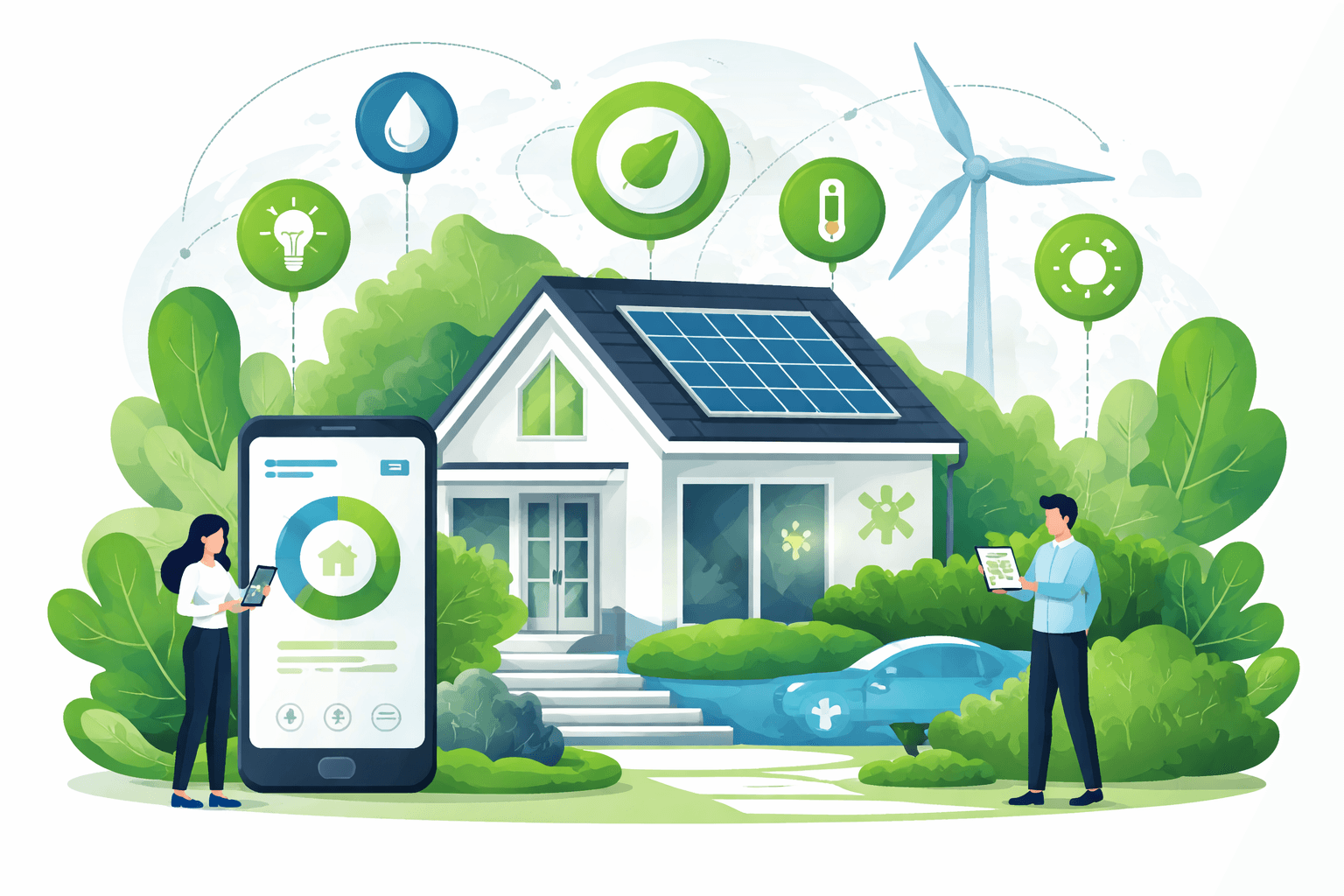
Smart home energy saving The buildings sector accounts for roughly 34% of global final energy demand and 37% of energy-related CO2 emissions when including construction; building operations alone are roughly 28% (GlobalABC/IEA 2023). In homes, targeted automation, real-time monitoring, and behavioral feedback can deliver fast, low-cost reductions while improving comfort and resilience.
Why smart home technology for sustainability matters now
- Energy use: The average U.S. home consumes ~10,500 kWh/year of electricity (EIA). A 15% reduction saves ~1,600 kWh—often $200–$400/year depending on rates—and about 0.6 metric tons of CO2 at an average 0.38 kg CO2/kWh (EPA eGRID).
- Peak demand: Heating, cooling, water heating, and EV charging drive evening peaks in many regions. Shifting these loads can reduce grid stress, bills, and emissions when peaker plants run.
- Water: Outdoor irrigation can be 30–60% of residential water use in arid regions. Smart controls routinely cut 20–50% without sacrificing landscape health (EPA WaterSense).
- Resilience: Connected sensors and controls pair with backup power and batteries to maintain comfort, avoid water damage, and prioritize critical loads during outages.

Electrify: An Optimist's Playbook for Our Clean Energy Future
In Electrify, <strong>Griffith lays out a detailed blueprint—optimistic but feasible—for fighting climate change while creating millions of new jobs and a healthier environment</strong>. Griffith’s pl
Check Price on AmazonHow smart automation cuts energy, water, and emissions
Smart systems deliver savings through four mechanisms:
- Monitoring and feedback
- High‑resolution data (from smart meters, plug monitors, or appliance telemetry) reveals waste and idle loads you can’t see on a monthly bill. Behavioral reports and feedback nudge persistent 1.5–3% savings (Allcott; multiple utility pilots).
- Scheduling and optimization
- Time‑aware control shifts flexible loads—EV charging, water heating, laundry—into lower‑cost, lower‑carbon hours, often with no comfort tradeoff.
- Load shedding and automation
- Occupancy sensors, geofencing, and setpoint logic reduce HVAC and lighting when spaces are empty.
- Integration with distributed energy
- Coordinating solar PV, batteries, and smart inverters increases self‑consumption and aligns household demand with clean generation.
High‑impact smart devices and systems to prioritize
- Impact: Heating and cooling often represent 40–60% of home energy. ENERGY STAR–certified smart thermostats deliver an average of ~8% HVAC savings; field studies show 10–15% is common with optimized schedules and setbacks (EPA; Nest field data).
- How it works: Learning schedules, geofencing, and occupancy sensors trim runtime; adaptive algorithms reduce overshoot; demand response pre‑cools/heat‑shifts ahead of peak hours.
- Extra benefits: Better comfort via staged/variable equipment control; alerts for filter changes and fault detection.

ecobee Smart Thermostat Premium with Smart Sensor and Air Quality Monitor - Programmable Wifi Thermostat - Works with Siri, Alexa, Google Assistant - Amazon.com
View on AmazonSmart lighting (LEDs, sensors, daylighting)
- Impact: LEDs use up to 75–80% less electricity than incandescents and last 10–25x longer (DOE). Occupancy and vacancy sensors can add 10–20% savings in living areas (LBNL meta‑analysis).
- How it works: Dimming and tunable white reduce power when full brightness isn’t needed; daylight sensors harvest free sunlight.
Efficient, connected appliances
- Impact: ENERGY STAR clothes washers use ~25% less energy and ~33% less water; connected dishwashers and washers can schedule cycles in off‑peak windows (DOE/EPA). Smart refrigerators surface failing seals or abnormal energy spikes.
- How it works: Telemetry plus HEMS (home energy management systems) coordinate cycles with solar output or time‑of‑use (TOU) rates.
Smart plugs and power strips
- Impact: Idle loads (“vampire power”) can be 5–10% of household electricity; an NRDC study found median idle loads around 23% in a sample of California homes. Smart plugs with schedules or occupancy control can cut a meaningful share of this.
- How it works: Monitor and auto‑shut off devices like entertainment centers, game consoles, and office peripherals when not in use.
smart irrigation and leak detection
- Impact: EPA WaterSense–certified smart irrigation controllers reduce outdoor water use by 20–50% by aligning schedules with weather and soil moisture. Whole‑home leak detection and auto‑shutoff valves prevent catastrophic leaks and curb chronic drips that can waste thousands of gallons annually.
- How it works: Weather and moisture data, flow sensing, and zone‑by‑zone optimization.
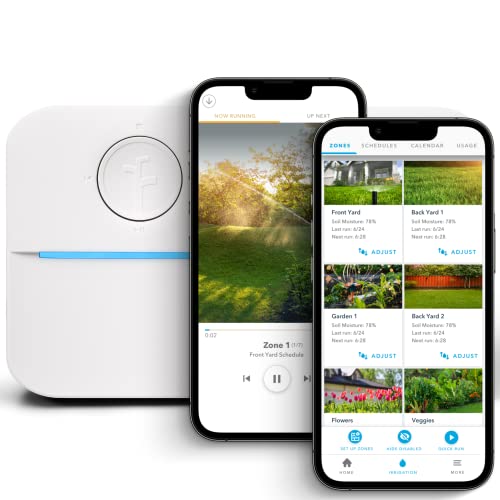
Rachio WiFi Smart Sprinkler Controller (8-Zone Irrigation Remote Control) – App-Based Scheduling, Local Weather Intelligence, Rain Skips, Easy DIY Install : Patio, Lawn & Garden
View on AmazonEV chargers (smart Level 2) and managed charging
- Impact: Managed charging can shift 80–90% of EV load to off‑peak, reducing peak demand and charging costs; NREL and utility pilots report emissions reductions of 8–40% depending on grid mix and timing.
- How it works: TOU‑aware schedules, direct utility signals, or carbon‑aware charging that selects hours with the lowest marginal emissions.
Smart meters and interval data access
- Impact: Hourly or 15‑minute usage data unlocks behavioral savings and enables HEMS optimization. Utility home energy reports typically deliver 1.5–3% persistent electricity savings across millions of households (multiple peer‑reviewed evaluations).
Home Energy Management Systems (HEMS)
- Impact: Orchestration across HVAC, water heating, EV charging, and appliances yields 5–15% whole‑home savings in studies where devices are integrated and schedules are tuned.
- How it works: A central logic engine uses price, carbon intensity, occupancy, and DER status to automate setpoints and schedules.
Solar PV + battery + smart inverters
- Impact: Rooftop PV displaces grid electricity; pairing with a battery can raise self‑consumption from ~30% to 60–80% in many markets, enhancing resilience. Smart inverters provide grid‑support functions (volt/VAR, frequency‑watt) per IEEE 1547‑2018.
- How it works: Smart inverters and HEMS prioritize critical loads during outages, charge when solar is abundant or prices low, and discharge during peaks.
- Learn more: See our primers on Solar Power Explained: How It Works, Costs, and Climate Benefits and Energy Storage Explained: Types, Costs, and How It Powers the Grid. For home batteries specifically, our Solar Battery Buying Guide: Choose the Best Home Battery in 2026 dives deep into options and sizing.
By the Numbers: typical savings and impacts
- Smart thermostats: ~8–15% HVAC energy reduction (EPA; field studies)
- LED lighting: 75–80% less electricity vs. incandescent; sensors add 10–20% (DOE; LBNL)
- Idle loads: 5–10% of home electricity; up to ~23% in some homes (DOE; NRDC)
- Smart irrigation: 20–50% less outdoor water use (EPA WaterSense)
- Behavioral feedback: 1.5–3% whole‑home electricity savings (utility evaluations)
- Managed EV charging: 8–40% lower charging‑related emissions; substantial peak load reduction (NREL; utility pilots)
- PV + battery: self‑consumption rises from ~30% to 60–80% with storage and smart control (NREL/IEA case studies)
Integration strategies with renewables and grid signals
Smart scheduling turns devices into a coordinated system that maximizes carbon and cost savings.
Time‑of‑use (TOU) optimization
- Definition: TOU rates offer lower prices in off‑peak hours and higher prices at peaks. Carbon intensity often follows similar patterns when peaker plants run.
- Strategy: Pre‑cool or pre‑heat the home and water heater during off‑peak; run laundry/dishwashers midday if you have solar; schedule EVs to charge overnight or at solar noon depending on region.
Demand response (DR)
- Definition: DR programs pay or credit customers to reduce load during grid stress events.
- Strategy: Enroll thermostats and EV chargers in utility DR. Large thermostat programs routinely shed 0.5–1.0 kW per home during events without comfort complaints (utility program evaluations; Brattle Group).
Solar self‑consumption and export value
- Strategy: Run flexible loads (EVs, washers, dryers, dishwashers) when solar is generating. In markets where export credits are lower than retail (common under newer net billing rules), self‑consumption increases value.
- Learn more: Policy details matter. See Net Metering Explained: How Solar Owners Get Credit for Excess Power.
Storage dispatch and resiliency
- Strategy: Charge batteries from excess PV or low‑price hours; discharge during peaks or outages. Prioritize critical circuits (refrigeration, communications, essential lighting) and pre‑condition the home ahead of storms or heat waves.
Vehicle‑to‑home/grid (V2H/V2G) and self‑consumption
- Definition: Bidirectional charging lets EVs power the home (V2H) or support the grid (V2G). Standards like ISO 15118‑20 and IEEE 1547‑2018, plus utility interconnection rules, govern safe export.
- Strategy: Early adopters can use V2H for resilience and, where allowed, V2G for grid services. Consider battery cycling limits and value streams (demand charge mitigation where applicable, DR payments, frequency regulation in pilot programs).
Practical guidance: choosing, installing, and protecting your system
Prioritize by ROI and carbon payback
- Start with controls on the largest loads: HVAC and water heating, lighting, EV charging, and irrigation.
- Typical simple paybacks:
- Smart thermostat: 1–3 years (faster with DR rebates)
- Smart plugs and advanced power strips: <1 year on high idle loads
- Lighting controls (after LED upgrades): 1–3 years depending on usage
- Smart irrigation controller: 1–3 years in high‑water‑rate areas
- HEMS: Value scales with number of controllable loads and presence of TOU/solar/battery
- Carbon payback: Controls have relatively low embodied carbon and generally repay their carbon “investment” within months to a couple of years via reduced energy use.
Compatibility and interoperability
- Home protocols: Prefer ecosystems that support Matter and Thread for cross‑vendor interoperability; Zigbee, Z‑Wave, and Wi‑Fi remain common.
- DER and grid standards: Look for inverters compliant with IEEE 1547‑2018 and UL 1741 SB; water heaters and thermostats with CTA‑2045 for modular DR; EVSE that support OpenADR (utility signaling) and, where relevant, ISO 15118 for Plug & Charge and future bidirectional features.
- Utility integration: Confirm your utility supports device enrollment for DR/TOU automation and that your smart meter data are accessible.
Installation and commissioning
- HVAC: Ensure thermostat compatibility with your equipment (heat pump staging, auxiliary heat lockout, humidity control). Verify wiring and commission with appropriate setbacks and schedules.
- Lighting: Pair occupancy sensors with the right spaces (hallways, baths, garages, offices). Calibrate timeout and daylight thresholds to avoid nuisance shutoffs.
- EV charging: Set maximum current to match circuit capacity; program charge windows that reflect TOU rates and desired departure times.
- HEMS: Map loads, name devices clearly, and test automations one by one. Use data to adjust schedules after a week or two.
Maintenance and data hygiene
- Keep firmware updated; review automations seasonally.
- Validate performance: compare monthly kWh/therms/gallons year‑over‑year, normalized for weather (heating/cooling degree days).
- Back up configurations and document device locations and circuit assignments.
Privacy and cybersecurity best practices
- Network hygiene: Place IoT devices on a separate SSID/VLAN; use strong, unique passwords and enable multi‑factor authentication where available.
- Router security: Keep firmware up to date; disable UPnP if not needed; prefer WPA2/WPA3.
- Data minimization: Share only necessary data with cloud services; favor local control options when feasible.
- Access control: Regularly prune third‑party integrations; review vendor privacy policies.
Incentives and rebates
- Utilities commonly offer $25–$100 rebates for smart thermostats and additional bill credits for DR participation.
- Smart irrigation controllers may qualify for WaterSense rebates in water‑stressed regions.
- EV smart charging programs often provide off‑peak bill credits or managed charging incentives.
- For solar+storage and broader electrification that smart systems enable, see our in‑depth guides: Solar Panel Technology in 2026: A Complete Guide to Modern Photovoltaics and Energy Storage Explained: Types, Costs, and How It Powers the Grid.
Tradeoffs, limits, and long‑term impacts
Embodied carbon and e‑waste
- Additional electronics have embodied carbon and create future e‑waste. Mitigate by choosing durable devices with over‑the‑air upgradability, replaceable batteries, and modular interfaces (e.g., CTA‑2045 for water heaters).
- End‑of‑life: Use certified e‑waste recyclers; in the EU, WEEE programs govern responsible recycling.
Realistic limits to savings
- Baselines matter: If you already have efficient hardware and disciplined habits, incremental savings from controls may be closer to the low end of ranges.
- Rebound effects: Energy saved via efficiency can sometimes be offset by increased usage (e.g., longer comfort hours). Tracking and occasional audits help keep gains.
- Comfort constraints: Aggressive setbacks or pre‑cooling may not suit every household; balance comfort with savings.
Monitoring and performance metrics that matter
Track a short list of metrics to verify impact and tune controls:
- Electricity: kWh/month and kW peaks; compare to a weather‑normalized baseline.
- Gas: Therms/month; CO2 factor ~5.3 kg CO2 per therm burned (EPA).
- Water: Gallons/month and irrigation share; leak alerts count and response time.
- Carbon: Use location‑ and time‑based emission factors where available (utility data, national inventories, or third‑party carbon‑intensity signals). Aim to shift flexible loads to the lowest‑carbon hours.
- Thermal comfort: Hours outside target temperature/humidity bands; filter replacement intervals; equipment runtime.
Near‑term trends to watch
- AI‑assisted controls: Reinforcement learning and model‑predictive control (MPC) for HVAC and HEMS are showing 10–20% additional savings over rules‑based logic in research pilots (NREL, academic studies).
- Digital twins: Virtual models of homes using measured data can forecast energy use and test control strategies before deployment.
- Smarter inverters and DER coordination: IEEE 1547‑2018 capabilities are becoming standard; grid‑interactive efficient buildings (GEB) research is converging on standardized control sequences and APIs.
- Carbon‑aware automation: Devices and HEMS that respond to marginal emissions signals, not just prices, to minimize real‑world CO2.
- Vehicle‑to‑home/grid: Growing support in standards and early products will expand resilience options and grid services.
Putting it all together: a staged roadmap
- Measure and fix the basics
- Access your smart meter data; identify high baseline or idle loads. Install LEDs everywhere; deploy a few smart plugs to tackle vampire power.
- Control the biggest loads
- Install a smart thermostat and set thoughtful schedules; add a smart irrigation controller; enable eco modes on major appliances.
- Align with prices and carbon
- Enroll in TOU and DR programs; set EV charging windows; explore carbon‑aware automations where available.
- Orchestrate and integrate
- Add a HEMS to coordinate HVAC, water heating, EV, and appliances with solar and (if present) storage. Use data to tune.
- Build resilience and future‑proofing
- If you add a battery, configure critical loads and outage automations; prefer standards‑based devices to keep options open as the ecosystem matures.
Smart home technology for sustainability is most powerful when it’s intentional: start with the highest‑impact loads, verify savings with data, and evolve your system as utility programs and home needs change. With the right strategy, your home can cost less to run, feel more comfortable, and emit significantly less carbon—today.
Recommended Products
Electrify: An Optimist's Playbook for Our Clean Energy Future
In Electrify, <strong>Griffith lays out a detailed blueprint—optimistic but feasible—for fighting climate change while creating millions of new jobs and a healthier environment</strong>. Griffith’s pl
ecobee Smart Thermostat Premium with Smart Sensor and Air Quality Monitor - Programmable Wifi Thermostat - Works with Siri, Alexa, Google Assistant - Amazon.com
ecobee Smart Thermostat Premium with Smart Sensor and Air Quality Monitor - Programmable Wifi Thermostat - <strong>Works with Siri, Alexa, Google Assistant</strong> - Amazon.com
Rachio WiFi Smart Sprinkler Controller (8-Zone Irrigation Remote Control) – App-Based Scheduling, Local Weather Intelligence, Rain Skips, Easy DIY Install : Patio, Lawn & Garden
Amazon.com : Rachio WiFi Smart Sprinkler Controller (8-Zone Irrigation Remote Control) – App-Based Scheduling, Local Weather Intelligence, Rain Skips, Easy DIY Install : Patio, Lawn & Garden
More in Sustainability Policy
- Sustainable Home Improvements: Tech-Forward Upgrades with ROI & Incentives
- Smart Home Energy Saving: A Practical Guide to Cut Bills with Tech
- Energy-Efficient Green Renovations: Practical Solutions to Cut Bills, Reduce Carbon, and Boost Home Value
- How to Make Your Home More Energy Efficient: Practical Steps & Savings