
Ocean Plastic Pollution Solutions: Practical Ways to Stop Waste from Reaching the Sea
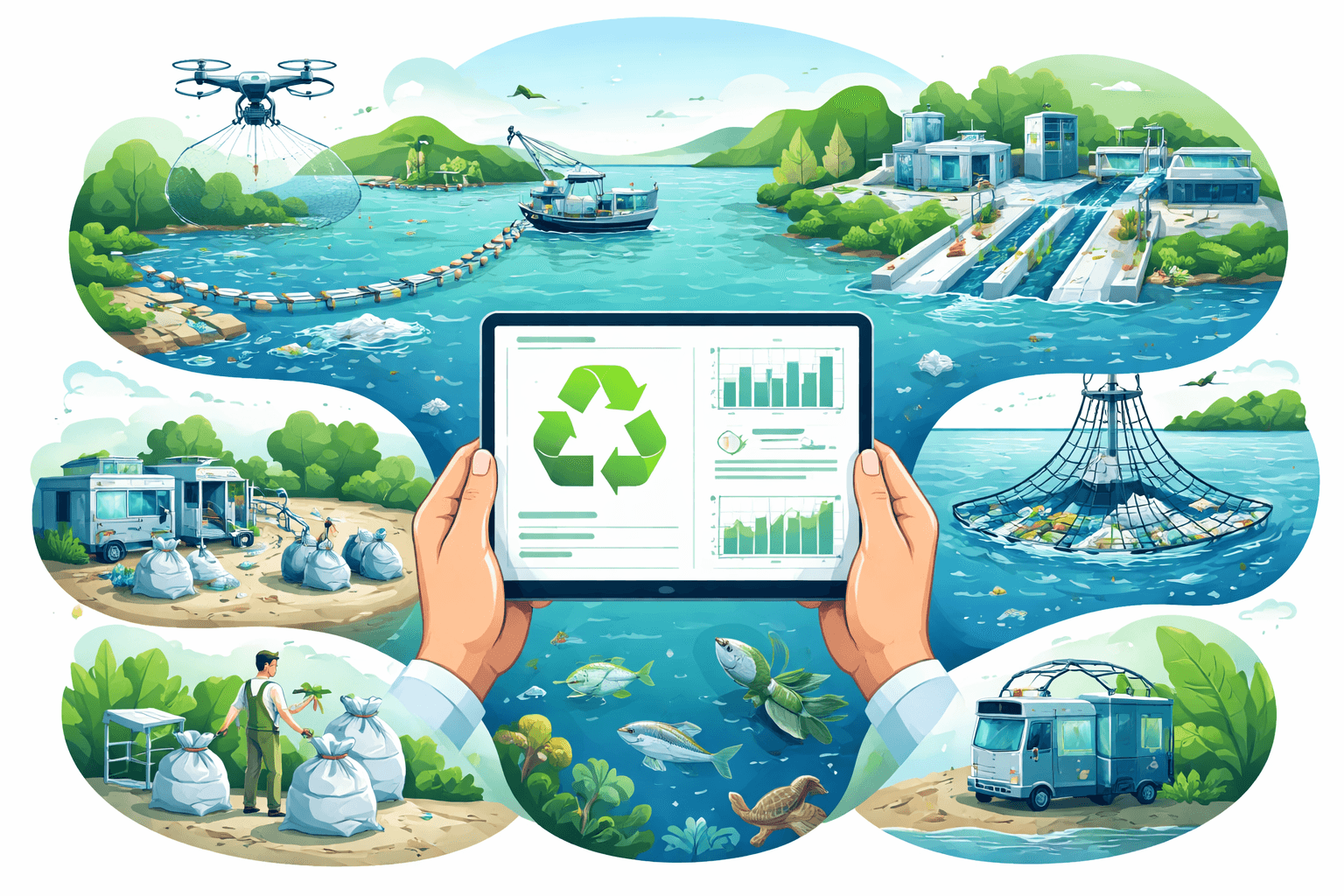
Plastic waste is entering the ocean at industrial scale, but ocean plastic pollution solutions exist—and they work best when deployed upstream. The UN Environment Programme (UNEP) estimates 11–14 million metric tons of plastic enter the ocean each year, a flow projected to nearly triple by 2040 without major action. The evidence is clear: preventing leakage on land and in rivers is more cost-effective and scalable than trying to catch plastics once they are at sea.
Why ocean plastic is a crisis now: scale and sources
- How much: UNEP’s 2021 assessment puts current ocean inputs at 11–14 million metric tons per year. The Pew Charitable Trusts’ “Breaking the Plastic Wave” (2020) projects annual flows could reach 23–37 million tons to aquatic ecosystems by 2040 under business-as-usual.
- Where it comes from: A 2021 Science Advances study found roughly 1,000 rivers are responsible for ~80% of riverine plastic emissions to the ocean, with many small, urban rivers as hotspots.
- Coastal waste: Inadequate collection and open dumping near coasts allow wind and stormwater to carry plastics directly into waterways; coastal mismanaged waste was identified as a key driver in earlier global leakage estimates.
- Fishing and aquaculture: In the North Pacific gyre, scientific sampling indicates that fishing nets and lines comprise a large share of floating macroplastics by mass; one 2018 analysis found about 46% of the Great Pacific Garbage Patch mass was discarded fishing nets. Global “ghost gear” losses are still poorly quantified, but FAO has highlighted gear loss as a significant source of entanglement and debris.
- Microplastics: Beyond bottles and bags, tiny particles are pervasive. The IUCN (2017) estimated 1.5 million metric tons per year of primary microplastics enter the oceans, with synthetic textiles (~35%) and tire wear particles (~28%) as dominant sources. Secondary microplastics—fragments from larger items—add to the total.

A Poison Like No Other: How Microplastics Corrupted Our Planet and Our Bodies: Simon, Matt
“Informed, utterly blindsiding ... “Journalist Matt Simon’s urgent new book A Poison Like No Other: <strong>How Microplastics Corrupted Our Planet and Our Bodies</strong> is classified as environmenta
Check Price on AmazonFor a primer on how plastics move from land to sea and the ecological impacts, see our explainer on Plastic Pollution Explained: Causes, Impacts, and What You Can Do.
Ocean plastic pollution solutions across the lifecycle
Solving ocean plastic pollution requires interventions at every stage—design, use, collection, and end-of-life—plus targeted measures that stop leakage before plastics reach the sea.
1) Reduce unnecessary plastic at the source
- Prioritize elimination: The Pew analysis found that eliminating avoidable plastic (e.g., certain single-use items and overpackaging) is one of the most impactful levers. The Ellen MacArthur Foundation reports that reuse and elimination can displace 20–30% of plastic packaging in selected categories without compromising function.
- Shift to reuse and refill: Returnable transport packaging, refill at home/on-the-go, and durable foodservice systems can cut litter-prone items substantially. Real-world pilots show double-digit reductions in single-use items and lower waste management costs for operators when reuse logistics are well designed.
- Smart substitution: Where plastic is hard to recover or frequently leaks (e.g., small-format sachets), shifting to soluble concentrates, paper with recyclable coatings, or bulk dispensers can reduce leakage risk. Substitution only helps if the alternative is low-impact and actually collected and recycled or composted in practice.
2) Redesign packaging for circularity
- Design for recyclability: Monomaterial formats (e.g., all-PE or all-PET) and avoiding carbon black, PVC, PS, and problematic multilayers dramatically improve recovery rates and reduce contamination. Clear PET bottles with tethered caps and standardized labels meet high-value recycling criteria in many markets.
- Make products easier to empty, compact, and sort: Features like easy-peel liners, standardized colors, and digital watermarks (being tested in Europe) can improve sortation yields by double digits in trials.
- Use more recycled content: Mandates and corporate targets for post-consumer recycled (PCR) content create demand that stabilizes recycling markets. Where 25–50% PCR content has been mandated (e.g., EU PET beverage bottles), collection and recycling rates rise as economics improve.
3) Expand and modernize waste collection, sorting, and recycling
- Universal collection is foundational: OECD’s Global Plastics Outlook (2022) found only 9% of plastic waste is recycled globally; 22% is mismanaged (dumped, burned in open, or leaked). Extending basic collection coverage to underserved urban and peri-urban areas can cut leakage sharply.
- Invest in sorting capacity: Optical sorters and improved material recovery facilities (MRFs) increase capture and purity. Where EPR financing is in place, recycling rates for packaging typically increase 10–30 percentage points compared with no EPR, according to OECD assessments.
- Support the informal sector: In many low- and middle-income countries, informal collectors already recover significant plastics. Integrating them with fair pay, safety, and stable offtake raises recovery while reducing leakage.
- Scale both mechanical and chemical recycling judiciously: Mechanical recycling delivers the best energy and emissions performance for clean, single-polymer streams. Advanced recycling can complement for hard-to-recycle fractions, but should be evaluated for real yields, emissions, and cost.
If you’re planning collection and processing programs, our Plastic Recycling Program Guide: Practical Planning, Operations, Markets, and Measurement provides step-by-step guidance.
4) Stop leakage before plastics reach the sea
- Close and remediate open dumps: The top global leakage nodes include uncontrolled dumpsites near waterways. Capping, gas management, and relocating waste to engineered landfills can reduce windblown and runoff-driven leakage by orders of magnitude.
- Capture stormwater-borne litter: Gross pollutant traps, curb inlet screens, and end-of-pipe nets intercept macroplastics during rain events. Cities report significant reductions in plastic load to rivers after installing networks of traps at outfalls.
- Secure logistics hotspots: Require zero-loss handling standards at ports, transfer stations, and industrial sites. Pellet containment (Operation Clean Sweep-style practices), covered transport, and spill response plans prevent “nurdle” and packaging losses.
5) Microplastics controls that work now
- Tire wear: Road runoff treatment, particle-capture devices in storm drains, and tire abrasion standards can reduce releases. Proper tire inflation and smoother driving also cut wear. Emerging on-vehicle capture devices show promise but need standardization.
- Synthetic textiles: France has mandated microfibre filters on new washing machines starting 2025. Retrofittable lint filters and wash practices (cooler cycles, full loads, liquid detergent) reduce fibre shedding by 20–70% in studies.
- Wastewater upgrades: Tertiary treatment (e.g., membrane bioreactors) can remove >90% of microplastics, though residual effluent still carries significant counts; sludge management must prevent re-release.
- Industrial pellet loss: Mandatory pellet containment, site certification, and spill reporting measurably reduce losses along the polymer supply chain.
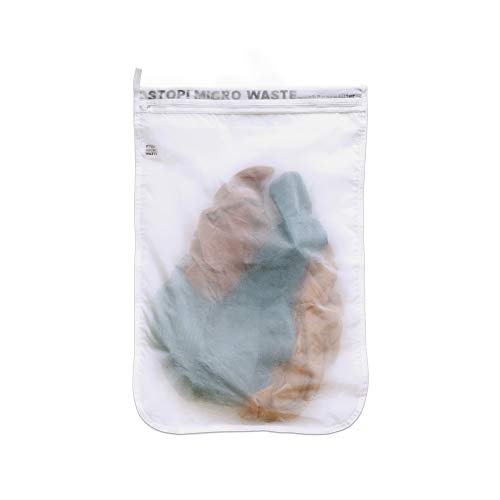
Washing Bag Guppyfriend
View on AmazonCleanup approaches: what works, where, and their limits
Cleanup is essential for legacy pollution and highly littered hotspots, but it cannot substitute for upstream prevention.
Beach and shoreline cleanups
- Role: Rapidly remove items before they fragment and harm wildlife, and generate local data to inform policies.
- Evidence: Ocean Conservancy’s International Coastal Cleanup mobilizes hundreds of thousands of volunteers annually and consistently finds that 7–10 of the top 10 items are single-use plastics (cigarette filters, bags, bottles, caps, utensils, wrappers). These data have underpinned bans and deposit systems.
- Limits: Cleanups are episodic and labor-intensive. They address symptoms, not sources, but are powerful for community engagement and local policy momentum.

Unger Professional 36” Nifty Nabber, Reacher Grabber Tool, Trash Picker Upper, Built-In Magnet and Ergonomic Grip, Outdoor Claw Pickup for Yard Clean Up, Reaching Assist for Seniors
View on AmazonRiver interception technologies
- Floating barriers, booms, and conveyor skimmers: Deployed on urban rivers, these systems can capture tons to thousands of tons per year depending on basin size and litter load. Baltimore’s “Trash Wheel” fleet reports over 2,000 tons captured since 2014 across multiple devices, preventing debris from reaching the Chesapeake Bay.
- Solar-powered barges and autonomous skimmers: Show promise where access and maintenance are reliable. Success depends on continuous operations and a plan for sorting and disposal of captured waste.
- Limits: Interceptors work best in medium-sized rivers with predictable flow and where waste services can handle the collected material. They do not address diffuse microplastics and can be overwhelmed in flood events without robust anchoring and design.
Ocean skimming and offshore removal
- Offshore systems: Large booms and nets targeting floating debris fields can remove macroplastics concentrated in gyres. They are useful for legacy waste that cannot be captured upstream.
- Limits: Even optimistic removal rates are small relative to annual inflows. Open-ocean operations are energy-intensive, weather-limited, and primarily recover large items; they do not solve nearshore leakage or microplastics.
Fishing gear retrieval and prevention
- Ports as hubs: Port reception facilities, buy-back or deposit-refund for end-of-life nets, and gear marking improve accountability and recovery. FAO and IMO guidance on gear marking and MARPOL Annex V enforcement reduce at-sea dumping.
- Alternative gear and FADs: Biodegradable or non-entangling fish aggregating devices (FADs) and weak-link designs lower entanglement risks.
- Rapid response: Funding derelict gear hotlines and retrieval patrols in high-risk regions prevents wildlife impacts and navigational hazards.
Why prevention beats cleanup
- Cost-effectiveness: The Pew “System Change” scenario indicates upstream interventions (elimination, reuse, design, and collection) can reduce annual ocean plastic flows by ~80% by 2040 at lower overall system cost than business-as-usual. Cleanup alone cannot match this scale.
- Fragmentation risk: The longer plastic stays in the environment, the more it fragments into microplastics that are harder and costlier to remove.
Policy, business, and community levers that drive change
Policy tools
- Extended Producer Responsibility (EPR): Shifts the cost of collection, sorting, and recycling to producers based on what they put on the market. OECD reviews show EPR increases recycling and collection rates and provides stable financing for system upgrades.
- Deposit Return Systems (DRS): Where deposits of 5–25 cents are used, beverage container return rates typically reach 70–95% (e.g., Germany and Nordic countries). High return rates translate directly into less litter and higher-quality recyclate.
- Targeted bans and standards: Bans on high-litter, low-utility items (e.g., certain single-use bags, straws, stirrers) reduce common shoreline litter. The EU Single-Use Plastics Directive also mandates 90% bottle collection by 2029 and tethered caps to curb cap litter.
- Wastewater and microfibre policies: Requiring washing-machine filters, setting effluent standards for microplastics, and managing sludge application limit microplastic releases.
- Global framework: UN member states are negotiating a legally binding global plastics treaty (UNEA 5/14 mandate). A robust treaty with upstream measures, design standards, and financing could harmonize action across borders.
Business actions
- Set absolute reduction targets: Commit to reduce virgin plastic use (not just intensity) and report progress transparently.
- Redesign for circularity: Shift to recyclable formats, eliminate problematic additives, and standardize materials. Specify PCR content and support supplier investments.
- Prevent facility leakage: Implement pellet loss prevention, covered storage, spill kits, and stormwater best management practices to achieve zero-loss sites.
- Finance the system: Participate in EPR schemes, fund collection in underserved markets, and support deposit systems where feasible.
- Pilot reuse at scale: Work with retailers and cities to test reuse logistics, measuring litter reduction and cost per use.
Community actions
- Local ordinances: Bag fees or bans, foodware reuse requirements for events, and litter-prevention bylaws reduce leakage-prone items.
- Build collection capacity: Community MRFs, transfer stations, and route optimization improve service quality. Our guide to Plastic Recycling Projects: Practical Ideas, Costs, and Measurable Impact covers pilots that communities can scale.
- Data-driven cleanups: Use standardized apps to record litter types and hotspots; share with city officials to inform interventions like DRS or targeted bins.
What you can do now: individuals, organizations, and governments
Individuals
- Reduce and reuse:
- Carry a reusable bottle, cup, and bag; say no to unnecessary extras (cutlery, sachets).
- Choose products in refillable or easily recyclable packaging (clear PET, HDPE) and with high recycled content.
- Prevent microplastics:
- Wash synthetics on cooler cycles, full loads; use a lint filter or microfibre catcher where available.
- Maintain tires (proper inflation, alignment); favor transit, cycling, or walking to cut tire wear.
- Avoid glitter and microbead-containing products.
- Dispose properly:
- Separate recyclables, compost organics where services exist, and never litter. Participate in local DRS if available.
- Engage civically:
- Join or organize river/beach cleanups to remove legacy waste and collect data.
- Support EPR and DRS policies; provide testimony using local litter data.
Organizations (schools, hospitals, venues, offices)
- Audit and set goals:
- Measure plastic use by category; set absolute reduction targets for single-use items.
- Redesign procurement:
- Specify reusable serviceware for dine-in; require recyclable formats and minimum PCR content for to-go.
- Eliminate problematic items (PS foam, black plastics, PVC) from purchasing.
- Prevent site leakage:
- Install storm drain screens and litter traps on premises; secure dumpsters; implement spill response.
- Close the loop:
- Contract for high-quality recycling; verify downstream outlets. Provide clearly labeled bins and staff training.
- Collaborate locally:
- Co-fund interceptors with municipalities in hotspot waterways; share cleanup and waste data publicly.
Governments
- Guarantee universal waste collection:
- Prioritize service to informal settlements and peri-urban areas near waterways; fund through EPR fees and fair user charges.
- Build infrastructure:
- Upgrade MRFs, deploy organics diversion to reduce container contamination, and add stormwater litter capture at outfalls.
- Use proven policies:
- Enact EPR for packaging, DRS for beverage containers, and targeted bans for high-litter items; set PCR content standards to drive markets.
- Tackle microplastics:
- Mandate washing-machine filters in new units; set tire abrasion standards and fund road-runoff treatment in hotspots; set WWTP microplastics monitoring and performance targets.
- Address fishing gear:
- Require gear marking, fund retrieval programs, and support port reception facilities; consider deposit-refund for end-of-life nets.
- Plan regionally:
- Map leakage hotspots; align watershed-scale action with river interception and cleanup logistics.
For broader context on restoring marine ecosystems alongside reducing pollution, see our guide to Ocean Conservation: A Guide to Protecting Marine Biodiversity.
By the numbers
- 11–14 million metric tons: Plastic entering the ocean each year (UNEP, 2021).
- ~80%: Share of riverine plastic emissions coming from about 1,000 rivers (Science Advances, 2021).
- ~80% reduction by 2040: Potential cut in annual ocean plastic flows using a system-change package of upstream solutions (Pew, 2020).
- 9%: Share of global plastic waste recycled in 2019; 22% mismanaged (OECD, 2022).
- 35% and 28%: Shares of primary microplastics from synthetic textiles and tire wear, respectively (IUCN, 2017).
- 70–95%: Typical return rates for beverage containers in deposit systems, depending on deposit value and design (container deposit program data in OECD/industry reports).
Ocean plastic pollution solutions: what matters most
- Start upstream: Eliminate unnecessary plastic, redesign for recyclability, and build universal collection and sorting. These deliver the largest, fastest reductions in leakage at the lowest system cost.
- Target hotspots: Intercept litter in rivers and storm drains that feed the sea, and close coastal dumpsites to shut off major leakage nodes.
- Fix microplastic pathways: Set and enforce standards for tire abrasion, washing-machine filtration, wastewater performance, and pellet loss prevention.
- Make polluters pay: EPR and deposit systems provide durable financing and accountability, aligning corporate incentives with circular design.
- Clean up legacy waste: Fund sustained shoreline and river cleanups and fishery gear retrieval to reduce wildlife harm while upstream systems come online.
Building circular systems is a multi-year effort, but measurable progress is possible quickly. Cities that pair deposit systems and EPR-funded collection with river interception often report visible reductions in litter within one to two years. Nationally, jurisdictions that adopt comprehensive packaging EPR and DRS achieve higher recycling, fewer littered containers, and more stable markets for recycled materials.
If you’re mobilizing locally, our resources on How to Set Up a Local Recycling Initiative can help translate policy into on-the-ground results.
The path ahead
Stopping plastic at the source is the only way to keep pace with global flows. The combination of upstream reduction and redesign, universal collection, smart interception, and clear producer responsibility can bend the curve this decade. With credible standards, transparent reporting, and investment—particularly in rapidly urbanizing regions—we can cut ocean-bound plastic dramatically while creating jobs, formalizing recycling economies, and improving public health. The ocean’s recovery will take time, but every kilogram kept out—and every policy that makes prevention the norm—moves us closer to cleaner coasts, healthier fisheries, and resilient marine ecosystems.
Recommended Products
A Poison Like No Other: How Microplastics Corrupted Our Planet and Our Bodies: Simon, Matt
“Informed, utterly blindsiding ... “Journalist Matt Simon’s urgent new book A Poison Like No Other: <strong>How Microplastics Corrupted Our Planet and Our Bodies</strong> is classified as environmenta
Washing Bag Guppyfriend
Shoe Washing Machine Bag: Laundry ... Guppyfriend washing bag is <strong>the pioneering solution to prevent microplastic fibers from polluting rivers and oceans during the washing of synthetic textile
Unger Professional 36” Nifty Nabber, Reacher Grabber Tool, Trash Picker Upper, Built-In Magnet and Ergonomic Grip, Outdoor Claw Pickup for Yard Clean Up, Reaching Assist for Seniors
This Unger Professional 36” Nifty Nabber is <strong>ideal for grasping items beyond your reach without stretching or bending</strong>. Great for yard clean up, trash and litter pickup, hanging outdoor
More in Conservation
- Plastic Pollution Explained: Causes, Impacts, and What You Can Do
- Plastic Recycling Projects: Practical Ideas, Costs, and Measurable Impact
- Plastic Recycling Program Guide: Practical Planning, Operations, Markets, and Measurement
- Why Recycling Plastic Matters: Environmental, Economic and Health Benefits