
The Environmental Impact of Solar Energy: Lifecycle Footprint, Trade-offs, and Practical Solutions
Solar is now the fastest-growing source of new electricity worldwide, adding an estimated 420–500 GW of new capacity in 2025 according to the IEA. That scale makes a data-driven look at the environmental impact of solar energy urgent: how clean is solar across its full lifecycle, what are the trade-offs on land, water, biodiversity, and materials—and which policies and practices best minimize harm while accelerating decarbonization?
This analysis quantifies lifecycle greenhouse gas (GHG) emissions and energy-payback times, assesses land and ecological effects, examines material sourcing and end-of-life challenges, and outlines practical solutions for industry and policymakers. The environmental impact of solar energy is overwhelmingly positive compared to fossil fuels, but the details matter for doing solar right.
By the numbers: lifecycle, land, water, materials
- Lifecycle GHG emissions (gCO2e/kWh, median ranges): utility-scale solar PV 15–50; onshore wind ~10–14; nuclear ~12; hydropower ~20–30; geothermal ~27–45; gas combined-cycle ~400–500; coal ~800–1,000 (IPCC AR6 WGIII; IEA, NREL harmonization)
- Energy payback time (EPBT): 0.5–1.5 years for utility-scale PV in sunny regions; 1–3 years in temperate zones; thin-film typically at the low end (Fraunhofer ISE; NREL)
- Land-use intensity: 5.6–7.9 acres per MWAC for fixed-tilt vs. tracking systems; 3–5.5 acres per annual GWh generated (NREL)
- Operational water use: 0.01–0.2 liters per kWh for panel washing (site/cleaning frequency dependent) vs. 0.7–2.7 liters per kWh consumption for gas/coal/nuclear with recirculating cooling (UCS, EIA)
- PV waste: 60–78 million metric tons cumulative by 2050 without robust reuse/recycling (IRENA)

Life Cycle Assessment Handbook: A Guide for Environmentally Sustainable Products: Curran, Mary Ann
Life Cycle Assessment Handbook: A Guide for Environmentally Sustainable Products [Curran, Mary Ann] on Amazon.com. *FREE* shipping on qualifying offers. Life Cycle Assessment Handbook: A Guide for Env
Check Price on AmazonLifecycle footprint: emissions and energy payback
Lifecycle assessment (LCA) sums impacts from raw materials and manufacturing through operation and end-of-life. For the environmental impact of solar energy, two metrics are most used: lifecycle GHG emissions per kilowatt-hour and energy payback time.
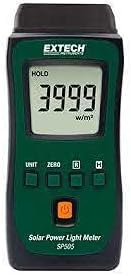
Extech SP505 Pocket Solar Power Meter - Amazon.com
View on Amazon- Monocrystalline silicon (mono c‑Si): Modern utility-scale arrays typically 25–45 gCO2e/kWh, depending on module efficiency, manufacturing energy mix, and system lifetime. Higher-efficiency TOPCon or heterojunction modules can lower per-kWh embodied carbon by spreading manufacturing impacts over more output (IEA PVPS Task 12; NREL LCA updates).
- Multicrystalline/polycrystalline silicon (multi c‑Si): 30–55 gCO2e/kWh; older technology with more energy-intensive wafering and historically lower efficiencies (IPCC AR6 medians; NREL harmonization).
- Thin-film (CdTe, CIGS): 12–30 gCO2e/kWh, largely from lower material intensity and higher energy yield in hot climates (First Solar sustainability reports; IEA PVPS Task 12).
For comparison, coal-fired power averages ~820 gCO2e/kWh and gas combined-cycle ~400–500 gCO2e/kWh on a lifecycle basis (IPCC AR6). Onshore wind and nuclear generally cluster around 10–15 gCO2e/kWh; hydropower varies by site but often 20–30 gCO2e/kWh.
Energy payback time (EPBT)—the time a system takes to generate the same energy used to make it—has fallen steadily as module efficiencies rose and wafer thickness fell. Contemporary estimates show:
- Utility-scale PV: ~0.5–1.5 years in high-irradiance regions (U.S. Southwest, Middle East, Australia); ~1–2 years in southern Europe; ~1.5–3 years in Germany or the U.K. (Fraunhofer ISE, 2023–2024 assessments; NREL).
- Rooftop PV: typically 1–3 years depending on location, tilt, and shading.
Because modules last 25–35 years with proper maintenance, PV produces 10–50 times the energy invested in its manufacture over its lifetime (energy return on energy invested, EROEI), even before repowering with higher-efficiency modules. For readers wanting a primer on system performance metrics used here, see our guide to Solar Energy Comparison Charts: Key Metrics, Data Sources & How to Read Them.
Land-use and ecology: where and how we build matters
Utility-scale solar requires land, and siting choices determine most ecological impacts.
- Land-use intensity: NREL’s survey of U.S. projects finds median direct area of 5.6 acres/MWAC for fixed-tilt and 7.9 acres/MWAC for single-axis tracking, with total generation-based area of about 3–5.5 acres per annual GWh. Translating roughly, a 100 MW tracking plant might occupy ~700–800 acres and generate 250–350 GWh/year depending on capacity factor.
- Distributed solar: Rooftop and parking-canopy PV add capacity with near-zero additional land use and minimal habitat disturbance.
Key ecological concerns include habitat loss, fragmentation, and species-specific conflicts in deserts and grasslands. Studies of the Mojave Desert, for example, document impacts on desert tortoise movement and vegetation communities when projects fence large contiguous areas. Glare and heat can affect local microclimates, and concentrated solar thermal (CSP) towers—not PV—have documented avian mortality from solar flux.
Mitigation and dual-use approaches now substantially reduce these trade-offs:
- Disturbed lands first: Prioritize brownfields, closed landfills, mine lands, highway rights-of-way, and retired agricultural fields to avoid intact habitats. Several states pair incentives with brownfield redevelopment to steer projects accordingly.
- Agrivoltaics: Co-locating PV with crops or grazing can deliver biodiversity and water benefits while preserving farm income. Research from the University of Arizona and Oregon State shows partial shade can boost yields of shade-tolerant crops (lettuce, peppers, berries) by 5–20% in hot climates and reduce irrigation by 14–29% by lowering evapotranspiration. In pastures, elevated racking with wider row spacing allows rotational grazing, while native pollinator plantings under arrays increase bee abundance and nearby crop pollination. Fraunhofer ISE’s Agri-PV pilots report 60–90% land-use efficiency gains when counting both kWh and kg of crops.
- Wildlife-friendly design: Maintain wildlife corridors across sites, use wildlife-permeable fencing where feasible, minimize night lighting, and implement vegetation management plans that avoid blanket herbicide use. Pre-construction surveys, adaptive management, and long-term monitoring are essential.
For a broader look at reconciling clean energy buildout with conservation, see Balancing the Scales: How Renewable Energy Impacts Conservation and How to Maximize Benefits and our data-driven piece on the Disadvantages of Solar Energy: Costs, Limits, and Environmental Trade-offs.
Materials, manufacturing, and end of life
Solar’s embodied impacts are front-loaded in materials and manufacturing. The good news: technology learning is pushing those impacts down; the challenge: some supply chains carry social and environmental risks that must be managed.
Materials and process hotspots
- Silicon: Polysilicon production (via Siemens or fluidized bed reactor processes) historically required 60–150 kWh of electricity per kg. Newer lines and cleaner grids have reduced this, but where coal-dominant power supplies upstream electricity, embodied carbon rises. Wafers have thinned from ~200 µm a decade ago to ~120–130 µm in mainstream production, lowering material intensity.
- Silver: Screen-printed silver paste forms cell contacts. The PV sector has become a major silver consumer—roughly 15–25% of global demand in 2023–2024, according to the Silver Institute—with average silver loadings now near or below 10 mg/W for TOPCon and trending toward 5 mg/W by 2030 (ITRPV). Copper plating and conductive foils are scaling to cut silver demand.
- Thin-film semiconductors: CdTe modules use cadmium and tellurium (a byproduct of copper refining); CIGS uses indium and gallium. These are used in very small quantities per watt but require strict controls and robust take-back to prevent releases.
- Chemicals and water: Cell lines use hydrofluoric acid (HF), nitric acid, sodium hydroxide, and solvents; modern fabs close-loop and recycle process water extensively. IEA PVPS Task 12 reports process water needs on the order of 2–5 m³ per kWp manufactured, with substantial reductions achievable via recycling.
Supply chain and labor risks
- Traceability: Investigations since 2020 identified forced-labor risks in parts of the polysilicon supply chain. Enforcement of the U.S. Uyghur Forced Labor Prevention Act (UFLPA) shifted procurement and spurred traceability standards from industry groups. Buyers increasingly require auditable chain-of-custody documents.
- Mining impacts: While silicon is abundant, silver, indium, and tellurium come with typical mining externalities—tailings, acid mine drainage, and habitat disruption. Certification schemes such as the Initiative for Responsible Mining Assurance (IRMA) and Responsible Minerals Initiative (RMI) provide frameworks for better practice.
End-of-life and circularity
- Scale of the challenge: IRENA projects 60–78 million metric tons of cumulative PV waste by 2050 without robust reuse/recycling—driven by early-replacement waves and end-of-warranty retirements. The EU already includes PV under the WEEE directive with producer responsibility and established recycling streams.
- What can be recovered: Glass and aluminum frames (which make up ~75–80% of module mass) are readily recyclable today. Recovery of silicon, silver, copper, and high-value films is advancing through mechanical, thermal, and chemical processes; specialized CdTe lines recover >90% of semiconductor material for reuse.
- Reuse before recycle: Second-life markets for functioning decommissioned modules extend lifetimes and defer waste where safety and performance remain adequate.
For a deeper dive on design, reuse, and policy, visit our guide: What Happens to Solar Panels at End of Life? Recycling, Reuse & Disposal.
Water, pollution, resilience, and community impacts
- Water footprint: PV has negligible operational water needs aside from cleaning (often 0.01–0.2 L/kWh depending on dust and cleaning frequency). This is one to two orders of magnitude lower than the consumptive water use of thermal power with wet cooling—typically ~0.7 L/kWh for gas combined-cycle, ~1–2.7 L/kWh for coal and nuclear (U.S. EIA; Union of Concerned Scientists). Dry-cleaning technologies and robotic wipers further reduce water use at desert sites.
- Air and local pollution: Unlike combustion plants, PV produces no NOx, SO2, or particulate emissions during operation. Manufacturing emissions are factory-contained; with proper controls, releases are minimal. Perfluorinated compound use in some toolsets is being phased down under climate regulations.
- Climate resilience: PV modules are certified under IEC 61215/61730 for hail, wind, UV, and thermal cycling; modern arrays incorporate hurricane-rated racking and stow strategies for trackers. Wildfire smoke can temporarily reduce output; soiling events require cleaning but not sustained water withdrawals like thermal plants. Distributed rooftop systems paired with storage can deliver critical resilience during outages.
- Environmental justice and land rights: Utility-scale siting can intersect with tribal lands and rural communities. Best practice includes early consultation, community benefits agreements, revenue-sharing with landowners, and avoidance of culturally significant sites. In manufacturing, fair-labor audits and traceable procurement are essential to ensure decarbonization does not externalize harms.

EF ECOFLOW Solar Generator DELTA 2 Max 2048Wh With 400W Solar Panel, LFP Battery Portable Power Station Up to 3400W AC Output Fast Charging 0-80% in 43 Min solar powered generator For Camping, RV : Patio, Lawn & Garden
[Fast Green Charging] Charge DELTA 2 Max wherever there's sun with portable solar panels. <strong>With a single 400W panel that has a high conversion efficiency of up to 23%, top-up in 5.1 hours<
Check Price on AmazonThe Environmental Impact of Solar Energy: key trade-offs and context
Several critiques of solar’s footprint are valid but context-dependent:
- Intermittency sometimes shifts emissions to gas turbines when grids lack storage or flexibility. However, lifecycle accounting still shows PV displacing high-carbon generation and cutting system emissions; storage, demand response, and transmission further amplify benefits.
- Land-use conflicts are real in biodiversity hotspots, but they are avoidable through siting on disturbed lands and agrivoltaics. Solar’s land-use per delivered energy is higher than wind’s but far lower than bioenergy’s on a per-kWh basis.
- Manufacturing impacts concentrate in specific regions; decarbonizing the upstream grid and enforcing environmental standards substantially lower embodied carbon. The U.S. Inflation Reduction Act’s 45X credits and similar policies in the EU are catalyzing lower-carbon, more transparent supply chains.
For a holistic decision framework that weighs pros and cons, readers may also find value in our Solar Panels Pros and Cons: A Data-Driven Guide to Decide If They’re Right for You.
Practical solutions: policy and industry best practices
Minimizing the environmental impact of solar energy while scaling fast requires action across the project lifecycle.
Smart siting and design
- Prioritize disturbed lands: Brownfields, landfills, reclaimed mines, and highway/rail corridors reduce habitat loss. Create clear permitting fast lanes for such sites.
- Dual-use standards: Codify agrivoltaic-friendly zoning, set minimum row spacing and height to accommodate machinery/grazing, and incentivize pollinator-friendly native plantings.
- Biodiversity safeguards: Require baseline ecological surveys, cumulative impact assessments, wildlife corridors, and adaptive management with third-party monitoring.
Clean manufacturing and responsible sourcing
- Low-carbon manufacturing: Incentivize production where electricity grids are clean; require supplier disclosure of embodied carbon (gCO2e/W) via Environmental Product Declarations (EPDs).
- Material thrift and substitution: Support rapid commercialization of copper metallization and silver thrift; encourage kerfless wafering and higher-efficiency cells to reduce per-watt material intensity.
- Responsible minerals: Adopt IRMA/RMI-aligned sourcing; require smelter/refiner audits for silver and copper; integrate due diligence and grievance mechanisms.
- Traceability: Mandate chain-of-custody documentation from quartz to module, aligned with SEIA traceability protocols or equivalent.
Circularity and end-of-life
- Extended Producer Responsibility (EPR): Implement take-back requirements and performance standards for material recovery (glass, aluminum, silicon, silver, CdTe/CIGS).
- Design for disassembly: Standardize fasteners and adhesives to speed separation; label materials; avoid hazardous additives that impede recycling; move to lead-free solders where feasible.
- Market development: Create recycled-content targets and procurement preferences for recovered glass, aluminum, and semiconductor materials; fund regional facilities to reduce transport impacts.
Grid integration and system-level impacts
- Storage and flexibility: Pair PV with batteries, demand response, and interregional transmission to reduce curtailment and fossil ramping.
- Data transparency: Require project-level reporting on embodied carbon, land-use intensity, water consumption, and biodiversity outcomes; integrate these into procurement scoring.
Community and justice
- Early engagement: Co-design projects with host communities; include community benefits agreements, job training, and local hiring targets.
- Land rights: Respect free, prior, and informed consent for Indigenous communities; avoid siting that creates or exacerbates land conflicts.
Decision metrics for lower-impact solar
Procurement and permitting should move beyond price-only decisions. A practical scorecard can include:
- Carbon intensity: gCO2e/kWh (projected) and gCO2e/W (embodied) via EPDs.
- Land-use intensity and co-benefits: acres/GWh/year and whether the project is dual-use (agrivoltaics, pollinator habitat) or on disturbed land.
- Water intensity: liters/kWh for construction and O&M; cleaning methods.
- Material risk profile: silver loading (mg/W), use of copper plating, presence of hazardous substances, responsible-minerals certifications.
- Circularity: EPR participation, take-back agreements, design-for-disassembly features, and proximity to certified recyclers.
- Community outcomes: documented engagement, local jobs, benefits agreements, and EJ screening results.
Where the technology is heading
Three trends will further shrink the environmental impact of solar energy this decade:
- Higher efficiency, less material per watt: TOPCon and heterojunction are mainstreaming; tandem perovskite–silicon cells in pilots could lift commercial efficiencies above 28%, cutting silicon, glass, and racking per kWh.
- Silver substitution and recycling: Copper-plated metallization is poised to scale, while silver recovery from end-of-life modules will move from niche to norm as volumes justify investment.
- Verified low-carbon supply chains: Standardized module EPDs, EPEAT for PV, and carbon-aware procurement will favor factories powered by renewables, reinforcing a virtuous cycle of cleaner manufacturing powering cleaner manufacturing.
Solar will not be impact-free. No energy source is. But on the metrics that matter—GHG per kWh, air and water pollution, and material and land intensity—well-sited and responsibly sourced PV delivers deep climate benefits with comparatively small ecological footprints. With smart siting, cleaner supply chains, and circular design, the environmental gains can be even greater—precisely the kind of compounding advantage the energy transition needs.
Recommended Products
Life Cycle Assessment Handbook: A Guide for Environmentally Sustainable Products: Curran, Mary Ann
Life Cycle Assessment Handbook: A Guide for Environmentally Sustainable Products [Curran, Mary Ann] on Amazon.com. *FREE* shipping on qualifying offers. Life Cycle Assessment Handbook: A Guide for Env
Extech SP505 Pocket Solar Power Meter - Amazon.com
Extech’s SP505 <strong>measures solar power level from outdoor sunlight to determine the best location of solar panel and solar water heater installations</strong>.
EF ECOFLOW Solar Generator DELTA 2 Max 2048Wh With 400W Solar Panel, LFP Battery Portable Power Station Up to 3400W AC Output Fast Charging 0-80% in 43 Min solar powered generator For Camping, RV : Patio, Lawn & Garden
[Fast Green Charging] Charge DELTA 2 Max wherever there's sun with portable solar panels. <strong>With a single 400W panel that has a high conversion efficiency of up to 23%, top-up in 5.1 hours<