
Solar in South Carolina: Costs, Incentives & Top Installers (2026)
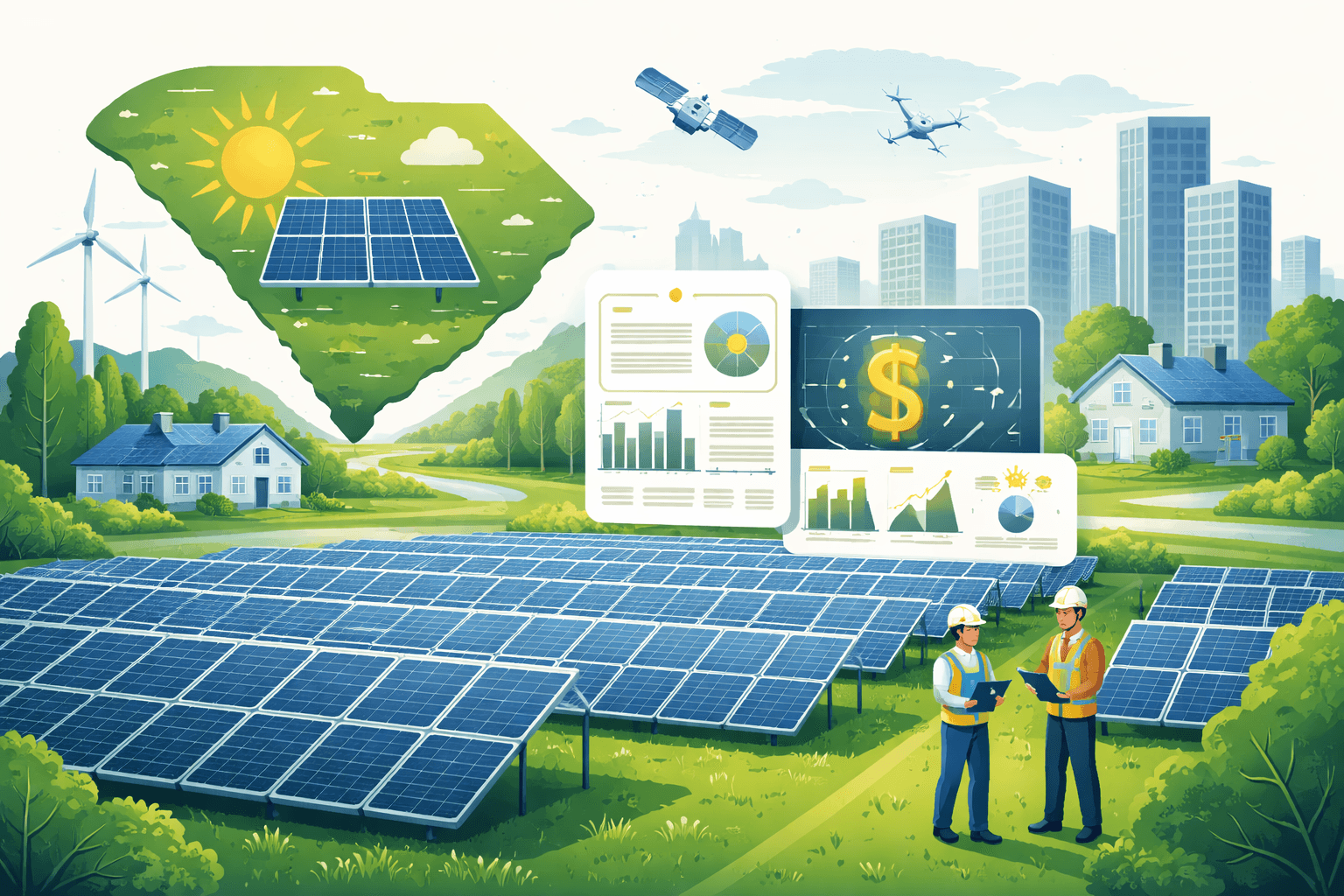
South Carolina homeowners are leaning into solar in 2026 for a simple reason: the economics look better than ever. Equipment prices fell 10–20% globally from 2022 to 2024 as module supply expanded (IEA, NREL), and the federal 30% Clean Energy Credit remains in place through at least 2032. Layer on South Carolina’s distinctive 25% state solar tax credit, and solar in South Carolina can deliver simple paybacks in the 6–10 year range with strong lifetime returns—especially for households with high summer cooling loads.
Below, we cover the state’s solar potential, real-world pricing, incentives, net metering, installers, interconnection, and a detailed ROI example for a typical home in the Palmetto State.
Solar energy potential in South Carolina: sun hours, irradiance, and climate factors
- Sunlight: South Carolina sits in a favorable solar belt, averaging roughly 4.7–5.3 peak sun hours per day depending on location and roof orientation. PV resource maps from NREL’s National Solar Radiation Database and PVWatts suggest:
- Upstate (Greenville–Spartanburg): ~4.7–4.9 peak sun hours/day
- Midlands (Columbia): ~5.0 peak sun hours/day
- Coast/Lowcountry (Charleston–Myrtle Beach–Beaufort): ~5.0–5.2 peak sun hours/day
- Annual production: A well-sited South Carolina rooftop array typically yields 1,350–1,600 kWh per kW of DC capacity each year, translating to a residential capacity factor of ~17–20% (capacity factor is the percentage of time a system would need to run at full output to produce its annual energy).
- Climate: The state’s humid subtropical climate means long AC seasons. Panels do run slightly less efficiently in high heat (crystalline silicon modules lose ~0.3–0.4% output per °C above 25°C), but high summer irradiance and longer days usually outweigh these losses. Coastal wind codes also drive robust mounting standards, which is a plus for durability and hurricane resilience.
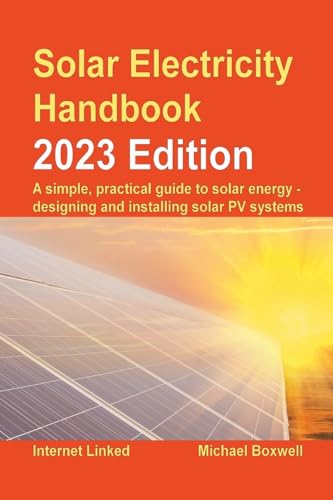
Solar Electricity Handbook - 2023 Edition: A simple, practical guide to solar energy – designing and installing solar photovoltaic systems: Boxwell, Michael
Solar Electricity Handbook - 2023 Edition: <strong>A simple, practical guide to solar energy – designing and installing solar photovoltaic systems</strong> [Boxwell, Michael] on Amazon.com. *FREE* shi
Check Price on AmazonContext: South Carolina’s solar resource is comparable to neighboring Georgia and stronger than the Mid-Atlantic. If you’re evaluating regional differences, see how pricing and incentives stack up next door in Georgia or north in North Carolina.
Average cost of solar panels in South Carolina and price-per-watt breakdown
Residential solar pricing is typically quoted in $/W (dollars per watt) before incentives. In 2026, homeowners in South Carolina generally see turnkey quotes in the $2.60–$3.20/W range before tax credits, depending on equipment, roof complexity, structural upgrades, and installer overhead. That aligns with recent NREL residential benchmarks (adjusted for 2025–2026 module price declines) and marketplace data.
- Typical system sizes: 6–10 kW for single-family homes; 7.5–8.5 kW is common for homes with significant summer cooling loads.
- Example before incentives: A 7.5 kW system at $2.90/W costs about $21,750 before tax credits.
- Equipment choices matter: Premium panels (higher efficiency, lower temperature coefficient), microinverters/optimizers (panel-level electronics), and integrated batteries add cost but can improve performance and resilience.
Equipment recommendations based on performance data and field reliability:
- High-efficiency modules: REC Alpha Pure-R or Qcells Q.TRON lines offer 21%+ module efficiencies with strong 25-year performance warranties. Based on these efficiency ratings and warranty terms, the REC Alpha Pure-R represents strong value for residential installations.
- Inverters: Enphase IQ8 microinverters deliver rapid shutdown and good shade tolerance; SolarEdge’s latest HD-Wave/“Home” inverters paired with optimizers offer robust monitoring and high DC/AC ratios at a competitive price.
- Batteries: For homeowners prioritizing backup, the Tesla Powerwall 3 or Enphase IQ Battery 10T integrate cleanly with new PV systems and can qualify for the 30% federal credit when installed with solar.
Note: Battery sizing should follow a load profile assessment—backup for critical loads (refrigeration, lighting, communications, small HVAC) is often achievable with 10–20 kWh of storage; whole-home backup with central AC or heat pumps typically requires 20–30+ kWh.
South Carolina solar incentives: state tax credits, rebates, net metering, and SRECs
State solar tax credit (25%)
South Carolina offers one of the most generous state-level incentives in the country: a 25% individual income tax credit for solar energy systems (South Carolina Code §12‑6‑3587; South Carolina Department of Revenue guidance).
- Credit amount: 25% of eligible system costs.
- Annual cap: Up to $3,500 per year or 50% of your tax liability for that year, whichever is less.
- Carryforward: Unused credit can be carried forward for up to 10 years.
- Stacking: This state credit is separate from the 30% federal credit. Many homeowners ultimately realize the full combined value over several tax years, subject to tax liability. Consult a tax professional for your situation.
There are no statewide residential rebates at this time. Some past utility rebates (e.g., Dominion Energy South Carolina’s programs) have closed; always check current utility offerings during your quote process in case limited-time incentives reappear.
Net metering in South Carolina
South Carolina reworked net metering after the 2019 Energy Freedom Act. The state’s large investor-owned utilities now offer “Solar Choice” or net metering successor tariffs that credit export energy based on time-of-use (TOU) periods and seasons rather than a flat retail rate.
- Dominion Energy South Carolina, Duke Energy Carolinas, and Duke Energy Progress all use TOU-based export credits and may include non-bypassable charges or minimum bills. Export values are generally lower than a full retail 1:1 credit but can be higher during on-peak hours when power is most valuable.
- Practical design implication: You’ll maximize bill savings by right-sizing your system to cover most of your daytime on-site usage, aligning loads with sunny hours (e.g., running dishwashers or EV charging in off-peak-to-midday windows), and considering batteries to shift solar to peak periods where tariffs reward it.
- Credit rollovers and true-ups vary by utility; review your chosen installer’s bill savings model for your specific rate schedule.
For readers comparing metering policies regionally, see our breakdown for neighboring North Carolina, where successor tariff structures are also in effect.
SRECs in South Carolina
South Carolina does not operate a statewide Solar Renewable Energy Certificate (SREC) market for residential systems, largely because the state lacks a mandatory renewable portfolio standard with a solar carve-out. Some historical utility programs purchased SRECs or paid upfront incentives, but there is no active, tradable, consumer-facing SREC market as of 2026. If an aggregator offers to buy your RECs, confirm contract terms and value—they’re usually modest in non-RPS states.
Federal ITC and how it applies to South Carolina homeowners
The federal Residential Clean Energy Credit—commonly called the Investment Tax Credit (ITC)—remains at 30% for eligible solar PV and batteries installed through 2032 (Inflation Reduction Act; IRS Form 5695 instructions).
- Eligible expenses: Solar panels, inverters, racking, balance-of-system, energy storage (standalone batteries qualify beginning in 2023), and associated labor/permits.
- Credit vs. deduction: It’s a dollar-for-dollar tax credit equal to 30% of eligible costs. It is nonrefundable but can carry forward to future years if your federal tax liability is lower than the credit amount.
- Stacking with South Carolina’s 25% credit: These credits are separate. In practice, homeowners often calculate each credit on the full project cost. State and federal tax guidance can be nuanced when rebates are present, so consult a tax professional.
Example: A $21,750 system yields a $6,525 federal credit and up to a $5,438 South Carolina credit (subject to annual caps and carryforward), substantially lowering the effective cost over time.
Best solar installers and companies serving South Carolina
South Carolina has a healthy mix of local specialists and national brands. Prioritize NABCEP-certified crews, proven track records, and bankable equipment partners.
Local and regional standouts
- Southern Current (Charleston): Established regional EPC with residential and commercial portfolios; known for custom roof- and ground-mounts, and utility interconnection fluency in Dominion and Duke territories.
- Renu Energy Solutions (Carolinas-based): NABCEP-certified crews, strong service footprint across the Upstate and Midlands; offers Enphase and SolarEdge platforms and battery integrations.
- Carolina Energy Conservation (Myrtle Beach): Coastal experience with wind-rated racking, attic efficiency upgrades, and service in the Grand Strand area.
- Yes Solar Solutions (Carolinas): Longstanding regional installer; strong project management and post-install service reputation.
- Renewable Energy Design Group (Triad–Upstate region): Boutique design-build focus, high-touch owner education, quality component selection.
National providers active in South Carolina
- Sunrun: Lease/PPA and cash/loan options; brings scale, broad monitoring platform, and battery pairing (often Powerwall). Note: Lease/PPAs can reduce upfront cost but change ownership economics—read terms closely.
- ADT Solar (formerly Sunpro): Wide equipment catalog and financing options; strong hurricane/wind-code experience from Gulf/Southeast operations.
- SunPower dealer network: High-efficiency modules with integrated microinverters; premium price point, strong 25-year comprehensive warranties through approved dealers.
What to look for in an installer
- Certifications and licensing: NABCEP PV Installation Professional certification signals advanced competency. Verify South Carolina contractor licensing and insurance.
- Bankable hardware: UL/IEC-listed components from Tier 1 module makers and reputable inverter brands with 10–25-year warranties.
- Performance modeling: Ask for PVWatts/PVSyst production estimates, shading analyses, and a cash flow model reflecting your specific rate schedule and “Solar Choice” export crediting.
- Roof and structural diligence: Wind uplift calculations, sealed penetrations, metal flashing, and corrosion-resistant hardware matter—especially in coastal counties.
- Service commitments: Clarify response times, monitoring platform access, workmanship warranty (10+ years is typical), and who services batteries/inverters under warranty.
ROI and payback period for solar in South Carolina
Electricity costs are the anchor for solar value. According to the U.S. Energy Information Administration (EIA), South Carolina residential electricity rates have hovered around the mid-teens cents per kWh in recent years—often 13–16¢/kWh depending on utility and year. With rooftop solar offsetting thousands of kWh annually, savings add up quickly.
Example system economics (illustrative)
- System size: 7.5 kW DC
- Installed price (before incentives): $2.90/W → $21,750
- Expected annual production: ~11,250 kWh (assuming ~1,500 kWh/kW-year; NREL PVWatts-consistent for good South Carolina sites)
- Retail electricity rate: $0.145/kWh (illustrative EIA-aligned average)
- First-year bill savings: ~$1,631 (before any TOU export credit considerations)
- Federal credit (30%): $6,525 (Form 5695; carryforward allowed)
- South Carolina state credit (25%): Up to $5,438 (subject to $3,500/year cap, 50% of tax liability, and 10-year carryforward)
Simple payback: If you can fully utilize both credits over time, the effective net cost is roughly $9,787. Dividing by first-year savings of ~$1,631 suggests a simple payback near 6.0 years. Real-world results vary with usage patterns, TOU credits, escalation in utility rates, equipment choices, shading, and maintenance.
- Typical range: 6–10 years for owner-occupied homes with average-to-high usage.
- 25-year savings: $25,000–$45,000 (NPV sensitive to rate escalation assumptions; a 2–3% annual rate increase materially boosts lifetime value).
- Home value: Multiple studies by Lawrence Berkeley National Laboratory (LBNL) indicate homes with owned PV often command sale price premiums, with historic averages in the $3–4/W range in several U.S. markets. Local appraisal practices vary; provide your buyer with system documentation.
Design tips to maximize ROI in successor-tariff net metering
- Size for self-consumption: Aim for annual production equal to 80–110% of your on-site usage to reduce low-value exports.
- Shift loads: Program EV charging, water heating, and pool pumps toward sunny or advantageous TOU periods.
- Consider batteries strategically: Storage can time-shift solar to peak periods and provide backup during outages. Evaluate the marginal benefit versus added cost.
- Maintain performance: Keep panels clear of debris, trim shading vegetation, and monitor system alerts to address underperformance early.
South Carolina-specific permitting, HOA rules, and interconnection process
Permitting
- Jurisdiction: Building and electrical permits are issued by your local authority having jurisdiction (AHJ)—city or county. South Carolina follows the International Residential Code (with state amendments); coastal counties also enforce stricter wind load requirements.
- Timelines and fees: Residential PV permits commonly turn around in 2–10 business days; combined permit fees often land between $50 and a few hundred dollars depending on jurisdiction and system complexity.
- Inspections: Expect at least one electrical inspection. Roof structural inspections or engineering letters may be required for older homes or high wind zones.
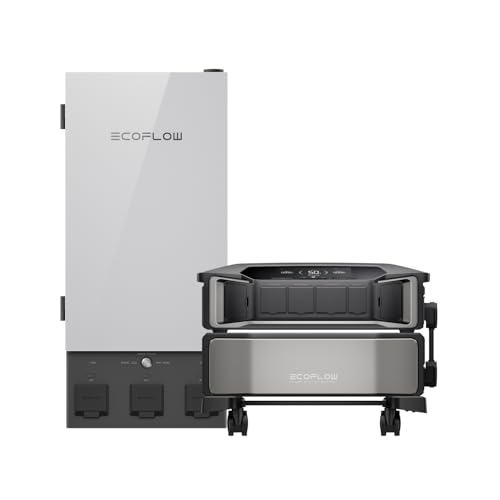
EF ECOFLOW DELTA Pro Ultra and Smart Home Panel, 6000Wh Power Station, Expandable to 90kWh, 7200W AC Output, 2-Hour Full Charge Lifepo4 Home Battery Backup Solar Generator for RV and Off-Grid Use : Patio, Lawn & Garden
Amazon.com : EF ECOFLOW DELTA Pro Ultra and Smart Home Panel, <strong>6000Wh Power Station, Expandable to 90kWh, 7200W AC Output, 2-Hour Full Charge Lifepo4 Home Battery Backup Solar Generator for RV
Check Price on AmazonHOA considerations
- Covenants: Many HOAs require architectural review for rooftop solar. South Carolina does not currently have a universal solar-rights law that fully prohibits HOAs from restricting PV placement; however, outright bans are uncommon, and most HOAs approve discreet, roof-flush arrays.
- Best practices: Submit a complete package (site plan, panel layout, spec sheets with black frames/backsheets if aesthetics matter, wind load compliance letters). Keep arrays below roof ridgelines and along a single plane where possible to ease approvals.
Interconnection
- Utilities: Dominion Energy South Carolina, Duke Energy Carolinas, Duke Energy Progress, and municipal/co-op providers each publish interconnection procedures. South Carolina uses standardized Generator Interconnection Procedures with “Level 1” fast-track review for small residential systems (often ≤20 kW).
- Steps:
- Application with single-line diagram and equipment spec sheets
- Utility review and approval to install
- City/county inspection(s)
- Utility meter swap or reprogramming
- Permission to Operate (PTO)
- Timeline: 2–8 weeks is common from contract to PTO for straightforward rooftop projects; plan longer lead times for battery systems, service upgrades, or transformer constraints.
- Hardware requirements: Some utilities require an external AC disconnect within line of sight of the meter. Your installer should confirm utility-specific rules.
Coastal resilience note: For hurricane season preparedness, ask about racking certified for local wind speeds, sealed roof penetrations, and battery backup for critical loads. For additional storm context and equipment hardening tips common in coastal markets, see our guide to Florida.
By the Numbers: Solar in South Carolina (2026)
- Peak sun hours: ~4.7–5.3/day (NREL PV resource)
- Typical residential PV output: 1,350–1,600 kWh/kW-year
- Installed cost: ~$2.60–$3.20/W before incentives
- Example system: 7.5 kW → ~$21,750 before credits
- Incentives: 30% federal credit; 25% South Carolina state credit (up to $3,500/year; 10-year carryforward)
- Average residential electricity price: commonly 13–16¢/kWh (EIA)
- Simple payback: ~6–10 years for owner-occupied homes
- Warranties: 25-year module performance typical; 10–25-year inverter/battery warranties depending on brand
FAQ: common questions about going solar in South Carolina
How does “Solar Choice” metering change my savings compared to old net metering?
- Successor tariffs credit exports by TOU and season and may include non-bypassable charges or minimum bills. Savings are still strong, but system sizing and load shifting matter more. A reputable installer should model your specific tariff.
Can I get SRECs in South Carolina?
- There’s no active statewide SREC market. Any REC payments are typically modest and utility- or aggregator-specific.
Is leasing or a PPA allowed in South Carolina?
- Solar leases are permitted under state law (2014 Act 236). Third-party PPAs—where a non-utility sells you power per kWh—are more constrained. Most households choose cash or loans; leases can reduce upfront cost but may affect home sale dynamics. Review terms carefully.
Do batteries qualify for incentives?
- Yes. Batteries paired with solar qualify for the 30% federal credit, and many homeowners include them in the South Carolina 25% state credit calculation as part of the solar energy system cost. Confirm with your tax advisor.
What maintenance do panels need in South Carolina’s climate?
- Minimal. Rain handles most cleaning. In coastal zones, a light rinse a few times a year can remove salt spray. Monitor production so issues (e.g., bird droppings or shade growth) are addressed promptly.
Will my roof handle solar and hurricane winds?
- Modern racking systems are engineered to local wind codes. Installers should provide stamped engineering when required and use corrosion-resistant hardware with flashed, sealed penetrations. Roof condition (age, decking, shingles/metal) is assessed during site survey.
How long does it take to go solar?
- From contract to PTO, most straightforward projects take 4–10 weeks, depending on permitting and utility timelines. Batteries and service upgrades can extend schedules.
What brands are reliable for South Carolina homes?
- Panel brands like REC, Qcells, and Canadian Solar; inverters from Enphase and SolarEdge; batteries from Tesla and Enphase are widely deployed with robust warranties. For value and high efficiency, the Qcells Q.TRON and Enphase IQ8 microinverters are a popular pairing.
Does solar increase my property value?
- Studies by LBNL and others indicate owned PV systems are often valued by buyers, with sale price premiums observed in multiple regions. Provide documentation of system size, production, and warranties to appraisers.
What permitting or HOA surprises should I anticipate?
- Most HOAs approve low-profile, dark-framed arrays after architectural review. Some may request concealment of conduit. Permits and inspections are routine but can require wind load documentation in coastal counties.
Where is solar headed in South Carolina?
- Module efficiencies continue to inch higher, batteries are improving and falling in price, and utilities are refining TOU structures. Expect more emphasis on smart load controls (EVs, heat pumps, water heaters) to boost self-consumption and payback.
Practical next steps
- Gather 2–3 quotes using the same baseline specifications (system size, panel/inverter brands, battery option) for apples-to-apples comparisons.
- Ask for production models using your last 12 months of usage and your actual utility tariff.
- Verify eligibility and timing to monetize the 25% South Carolina state credit alongside the 30% federal credit.
- Prioritize installers with NABCEP credentials, bankable equipment, and clear service/warranty policies.
Solar in South Carolina remains a compelling investment for homeowners, particularly those with high summer electricity use. With favorable sun, robust state and federal tax credits, and careful design under successor net metering, systems can pay for themselves in as little as six years and deliver decades of clean, low-cost power.

Emporia Gen 2 Smart Home Energy Monitor with 16 50A Circuit Level Sensors | Real Time Electricity Monitor/Meter | Solar/Net Metering - Amazon.com
View on AmazonRecommended Products
Solar Electricity Handbook - 2023 Edition: A simple, practical guide to solar energy – designing and installing solar photovoltaic systems: Boxwell, Michael
Solar Electricity Handbook - 2023 Edition: <strong>A simple, practical guide to solar energy – designing and installing solar photovoltaic systems</strong> [Boxwell, Michael] on Amazon.com. *FREE* shi
Emporia Gen 2 Smart Home Energy Monitor with 16 50A Circuit Level Sensors | Real Time Electricity Monitor/Meter | Solar/Net Metering - Amazon.com
See how much electricity your home is using anywhere, anytime. ... <strong>Add individual 50A sensors to your Vue to monitor up to 16 individual circuits</strong> — providing accurate energy use for t
EF ECOFLOW DELTA Pro Ultra and Smart Home Panel, 6000Wh Power Station, Expandable to 90kWh, 7200W AC Output, 2-Hour Full Charge Lifepo4 Home Battery Backup Solar Generator for RV and Off-Grid Use : Patio, Lawn & Garden
Amazon.com : EF ECOFLOW DELTA Pro Ultra and Smart Home Panel, <strong>6000Wh Power Station, Expandable to 90kWh, 7200W AC Output, 2-Hour Full Charge Lifepo4 Home Battery Backup Solar Generator for RV