
Tesla Powerwall in Alaska: Cost, Availability & Is It Worth It?
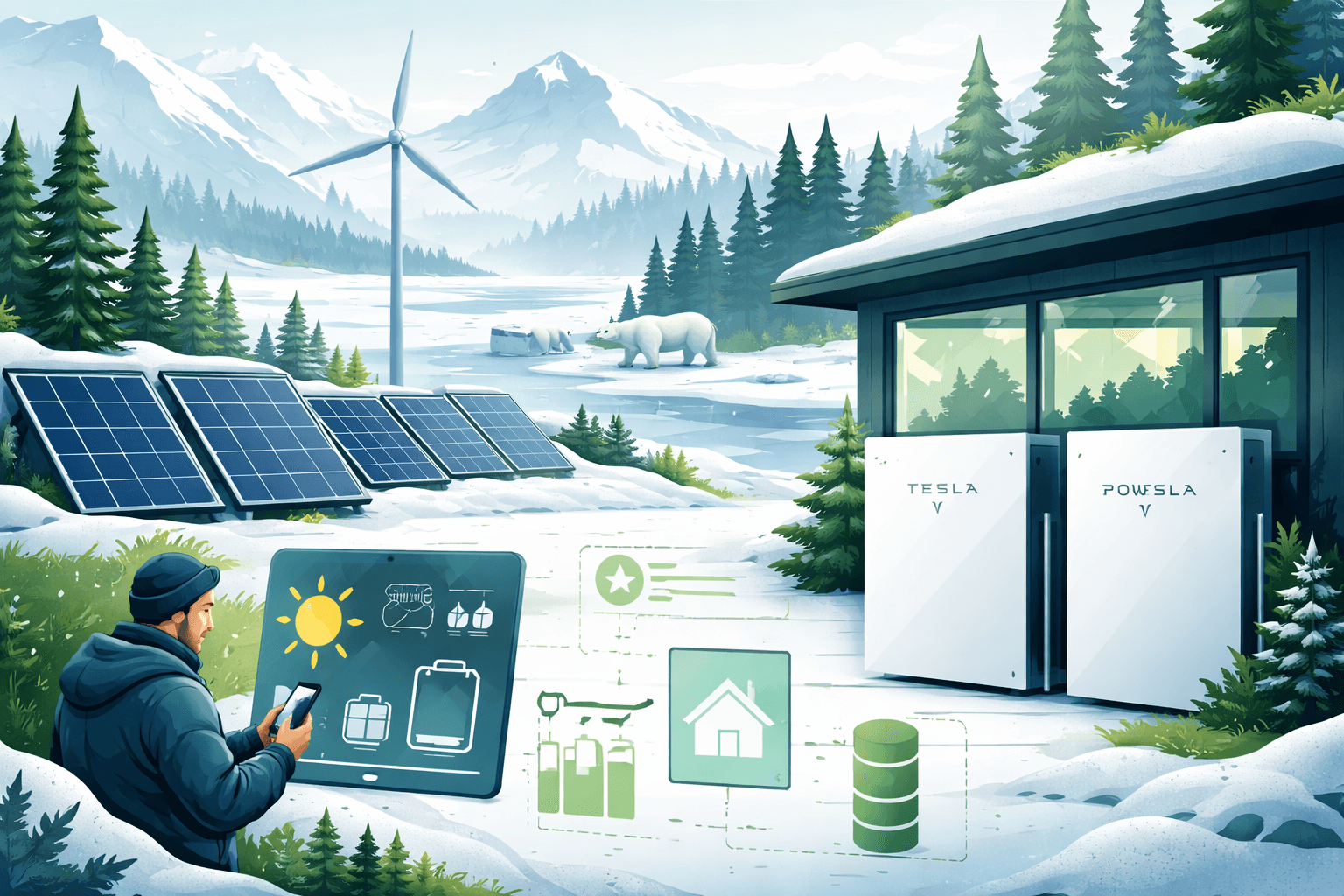
Alaska homeowners are asking a timely question: is a Tesla Powerwall in Alaska practical and worth the money? With residential electricity averaging about 22–24¢/kWh in 2023 (U.S. Energy Information Administration) and winter storms pushing reliability to the forefront, battery storage is moving from novelty to necessity. Thanks to the federal 30% clean energy tax credit for standalone batteries (Inflation Reduction Act, 2023), the economics have improved—especially for rural and high-cost service territories.
Tesla Powerwall overview: specs, capacity, and how it works
The Tesla Powerwall is a lithium-ion home battery designed to store solar or grid electricity for use during outages, at night, or when rates are high. Two current models are relevant:
Off Grid Solar: A handbook for Photovoltaics with Lead-Acid or Lithium-Ion batteries: O'Connor, Joseph P
With all the steps to build an ... technology needs rather than trust other's recommendations. Joe O'Connor, <strong>solar entrepreneur and product designer</strong>, has installed solar ene
Check Price on Amazon- Powerwall 2 (AC-coupled)
- Powerwall 3 (integrated solar inverter, DC-coupled)
Key performance specs (per Tesla product literature):
- Usable energy: 13.5 kWh per unit
- Continuous output: 5 kW (Powerwall 2) or up to ~11.5 kW (Powerwall 3)
- Peak output (short duration): ~7 kW (Powerwall 2) with higher bursts on Powerwall 3
- Round-trip efficiency: up to ~90% (AC basis)
- Warranty: 10 years with 70% remaining capacity, with generous cycle terms when paired to solar
- Operating temperature: about -20°C to 50°C (-4°F to 122°F), with internal thermal management
- Installation: indoor or outdoor, wall or floor mounted; integrates via Tesla Gateway (automatic transfer and grid isolation in under a second)
How it works in plain terms:
- Grid-tied, solar + battery: Solar powers the home first, excess charges the battery, remaining surplus exports to the grid. During outages, the Gateway isolates the home and the Powerwall keeps critical loads running.
- Grid-tied, battery-only: The battery charges from the grid and discharges during outages or high-rate periods (where time-of-use is available).
- Cold climate note: At very low temperatures, lithium-ion batteries limit charging/discharging to protect cells. Powerwall’s liquid thermal management preheats the pack when needed, drawing from solar or grid. In Interior Alaska where ambient temperatures can drop below -40°F, install in a conditioned space or insulated mechanical room for best performance and longevity.
By the numbers (Alaska context)
- 13.5 kWh per Powerwall = roughly 10–14 hours of typical essential-loads backup (fridge, lights, modem, furnace fan) depending on household efficiency
- 5 kW (PW2) or ~11.5 kW (PW3) continuous output = can start many well pumps and run most 120 V circuits; resistive electric heating or 240 V dryers may exceed a single unit’s capacity
- 22–24¢/kWh: average Alaska residential rate in 2023 (EIA); rural service territories can be higher
- 30% federal tax credit (Residential Clean Energy Credit) now applies to standalone batteries ≥3 kWh

Emporia Vue 3 Home Energy Monitor - Smart Home Automation Module and Real Time Electricity Usage Monitor, Power Consumption Meter, Solar and Net Metering for UL Certified Safe Energy Monitoring - Amazon.com
View on AmazonPowerwall pricing in Alaska: equipment and installation costs
Installed costs in Alaska are higher than the Lower 48 due to freight, limited installer networks, and longer project timelines. While U.S. national marketplace data (EnergySage and installer quotes) put a single Powerwall installed around $12,000–$16,500 in 2024, Alaskan quotes commonly land higher.
Typical Alaska ranges based on recent installer quotes and logistics premiums:
- First Powerwall (includes Tesla Gateway, permits, labor): about $14,000–$19,000
- Each additional Powerwall (no extra Gateway): about $10,000–$14,000
What drives the spread:
- Cold-climate installation details: insulated indoor location, heat trace/heater pads, and conduit routing can add labor
- Service upgrades: older homes may need a main panel or service upgrade to meet code (NFPA 70/855), which can add $1,000–$4,000
- Freight and remote access: off-road or ferry-accessible communities add mobilization costs
Applying the 30% federal tax credit:
- Example: $17,000 installed first unit → net ~$11,900 after 30% credit (consult a tax professional; interconnection fees and related electrical work integral to the battery system are often eligible under IRS guidance)
Affiliate pick: If you’re building a larger system or want a modular approach to hit a specific budget, the Enphase IQ Battery 5P (5 kWh blocks, high power per module) is a strong alternative with competitive cold-weather performance.
Alaska battery storage incentives: state rebates, SGIP, utility programs
- Federal: The 30% Residential Clean Energy Credit (IRC §25D) now covers standalone storage ≥3 kWh installed in 2023 or later. There’s no solar-charging requirement.
- State: Alaska does not currently offer a statewide battery storage rebate comparable to California’s SGIP. Historically, state support has focused on efficiency and rural power cost equalization rather than residential storage rebates.
- Local: Some boroughs/municipalities in the U.S. allow property tax exemptions for renewable energy improvements; availability in Alaska is local-policy dependent. Check with your local assessor.
- Utility: Alaska’s cooperatives and municipal utilities generally do not offer direct cash rebates for residential batteries as of 2024. A few utilities may pilot demand response or resilience programs; availability changes year to year—contact your provider (e.g., Chugach Electric Association, Matanuska Electric Association, Golden Valley Electric Association, Homer Electric Association).
- Net metering: The Regulatory Commission of Alaska requires many utilities to offer net metering for systems up to 25 kW for residential customers. Export credit methodologies vary by utility; most do not add a battery-specific credit. Batteries primarily boost self-consumption and resilience rather than net metering value.
Pairing a Powerwall with solar in Alaska: backup vs. self-consumption
Battery value in Alaska diverges seasonally more than in most states.
- Summer and shoulder seasons (April–September): Long daylight enables solar to fill a Powerwall most days. Batteries can increase self-consumption, reduce exports where credit is weak, and cover evening loads. Expect daily cycling and strong contribution to outage protection.
- Winter (October–March): Short days and low sun angles mean limited solar harvest, especially in Interior and Northern Alaska. Here, a Powerwall is primarily a backup device charged from the grid (or a generator in hybrid systems), not a daily arbitrage tool.
Choosing between backup and self-consumption modes in the Tesla app:
- Backup Reserve: Keeps a percentage (often 20–100%) of capacity in reserve. Good for storm seasons and rural feeders with frequent outages.
- Self-Powered/Time-Based Control: Prioritizes discharge during evenings or peak-rate periods (where TOU exists). In Alaska’s mostly flat-rate environment, set a lower reserve in summer to maximize solar self-use, then raise it in winter for reliability.
Designing the solar side in Alaska:
- Oversize PV for winter? Increasing array size helps, but even large arrays have sparse winter output at high latitudes. A south-facing tilt near latitude and snow-shedding racking help shoulder-season yield.
- Powerwall 2 (AC-coupled) vs. Powerwall 3 (DC-coupled): In cold climates, DC-coupling (PW3) can trim conversion losses when charging from PV. AC-coupling (PW2/+) is flexible for retrofit solar or mixed inverter brands.
Hybrid with generators and off-grid cabins:
- NREL’s microgrid research shows PV + battery + generator hybrids can cut fuel consumption 30–60% compared with generator-only systems by shaving peaks and reducing runtime.
- Tesla does not directly control third-party generators. Proper integration uses an external automatic transfer switch and careful setpoints so the generator supplies heavy loads while the Powerwall handles transients and light periods. Work with an experienced installer for this—especially critical in remote, cold climates.
Affiliate pick: For off-grid and generator-heavy cabins, a robust hybrid inverter like the Sol-Ark 12K can coordinate solar, batteries, and a generator with fine-grained controls suited to Alaska’s seasonality.
Alaska utility rate structures and how Powerwall saves with time-of-use
Most Alaska residential customers pay a flat volumetric rate plus fuel and riders; full-fledged residential time-of-use (TOU) tariffs are not widely available. That shapes how a Tesla Powerwall in Alaska creates value:
- Resilience value: Avoided food loss, frozen pipes (via powered heat tape or circulation pumps), work-from-home continuity, and medical equipment uptime. While hard to monetize, many households prioritize this over strict payback math.
- Self-consumption: Where net metering credit is modest and rates are high, using more of your own summer solar rather than exporting can yield incremental savings.
- Demand charges: Rare for residential but common for small commercial. If you’re on a small commercial tariff with demand charges, batteries can shave peaks and materially reduce bills.
Back-of-the-envelope economics under flat rates:
- Urban/co-op customers near 22–24¢/kWh: If a Powerwall enables you to shift or self-consume 6–8 kWh/day in summer and 1–3 kWh/day in winter, annual bill savings might land in the $250–$700 range—highly site dependent.
- Rural/high-cost customers (≥30–40¢/kWh effective rates): The same shifting could be worth $500–$1,500/year. Add resilience benefits and generator fuel savings in hybrid systems, and total value rises.
Without TOU, strict paybacks can run long in urban Alaska unless you value outage protection. In rural or diesel-heavy microgrids, the math improves substantially.
Powerwall availability and certified installers in Alaska
- Availability: Tesla’s supply constraints have eased compared with 2021–2022. Powerwall 2 is commonly available; Powerwall 3 rolled out in 2024 and is expanding market by market. Alaska availability is improving—lead times of 6–12 weeks are typical, longer for remote installs.
- Installers: Use Tesla’s “Find an Installer” tool to locate certified electricians in Anchorage, the Mat-Su, Kenai Peninsula, Fairbanks, and Southeast. Many established solar firms in these regions are Tesla-certified for storage, even if Tesla solar panels are not directly sold in Alaska.
- What to ask in bids:
- Cold-weather plan: indoor location, insulation, or low-temperature kit; expected de-rating at -20°F
- Critical loads subpanel design and surge loads (well pumps, freezers)
- Generator integration strategy and ATS wiring
- Interconnection and permitting timeline with your utility and AHJ
- Snow and ice management for any outdoor conduit runs
Affiliate pick: If your home already uses Enphase microinverters, the Enphase IQ Battery 10 integrates seamlessly at the branch-circuit level, reducing retrofit complexity.
Alternatives to Tesla Powerwall in Alaska
Several proven systems compete effectively in cold climates and may be more available in certain regions:

Sol-Ark 12K Hybrid Solar Inverter, Split-Phase 120/240 V : Patio, Lawn & Garden
12000W Hybrid Solar Inverter <strong>48V DC to 110V/120V AC Pure Sine Wave, 240V Split Phase, 200A MPPT Controller, Supports Grid-Tie/Off-Grid, Battery & Solar Charging for Home, RV, Backup Power<
Check Price on Amazon- Enphase IQ Battery 5P/10: Modular 5 kWh blocks, 3.84 kW continuous per 5P, stackable. Strong integration with Enphase microinverters, robust app, and good low-temperature behavior. Excellent for incremental expansions.
- LG Energy Solution RESU Prime (10H/16H): 10–16 kWh high-voltage packs with ~5–7 kW continuous output, 10-year warranty. Compact indoor installations are common in cold regions. Verify latest fire-code and firmware updates.
- Generac PWRcell: Cabinet-based system scalable from ~9 to 18 kWh with up to ~9 kW continuous output in larger configurations. Integrates well with whole-home backup and generator ecosystems.
- Hybrid inverters (Schneider Electric XW Pro, Sol-Ark): For cabins and remote properties, these can orchestrate solar, batteries, and generators with fine-tuned setpoints and black-start capability. Pair with compatible battery stacks for fully off-grid designs.
Selection tips for Alaska:
- Output power matters as much as kWh. Well pumps, freezers, and furnace blowers need sufficient surge and continuous kW.
- Temperature resilience: Favor indoor mechanical rooms. Check each battery’s low-temperature charging limits and whether preheat is available.
- Service ecosystem: Choose brands with parts and trained techs in Alaska; winter downtime is costly.
FAQ: common questions about Tesla Powerwall in Alaska
Will a Powerwall work in subzero temperatures?
- Yes, within limits. Tesla rates operation down to -4°F, and the battery will automatically warm itself. For Interior Alaska cold snaps below -20°F, plan for an indoor, insulated install to avoid performance throttling and to protect longevity.
How many Powerwalls do I need?
- Many homes choose 1–2 units for essential circuits. One 13.5 kWh unit can typically run a fridge, lights, internet, a furnace fan, and small appliances overnight. Electric resistance heat, electric water heaters, and 240 V dryers often require multiple units or should be excluded from the backup panel.
Can the Powerwall charge from a generator?
- Tesla doesn’t directly manage generator charging. In a properly designed hybrid with an external automatic transfer switch, the generator supplies loads and can indirectly allow the Powerwall to charge when islanded. Design and protection settings are critical—use an installer experienced with Tesla’s generator integration guidelines.
Does the 30% federal tax credit apply in Alaska if I don’t have solar?
- Yes. As of 2023, standalone residential batteries ≥3 kWh qualify for the 30% credit, regardless of solar. Consult a tax advisor for eligibility and documentation.
Is there time-of-use (TOU) in Alaska to arbitrage rates with a battery?
- Residential TOU options are limited. Most customers see flat energy charges plus riders. Batteries in Alaska primarily deliver resilience and self-consumption benefits rather than TOU arbitrage.
Will a Powerwall reduce my net metering credits?
- Typically, a battery helps you consume more of your solar onsite and export less. Where export credit is below retail, this can be favorable. Net metering rules are utility-specific—review your tariff.
How long does installation take?
- Site visit and design: 1–2 weeks; utility and permit approvals: 2–6 weeks (longer in peak season); installation: 1–2 days; inspection/commissioning: 1–2 weeks. Remote or ferry-accessible projects take longer.
Is Powerwall 3 available in Alaska?
- Rollout expanded through 2024–2025; some Alaska installers are onboarding. If you need retrofit flexibility today, Powerwall 2 remains widely supported.
Practical takeaways and who benefits most in Alaska
- Urban/suburban grid-tied homes: A Tesla Powerwall in Alaska delivers strong outage protection and moderate bill savings via self-consumption in summer. Simple paybacks can be long without TOU, but resilience often justifies the spend.
- Rural and high-cost service territories: Value improves markedly where energy costs exceed 30–40¢/kWh or where outages are frequent. In hybrid PV-battery-generator systems, fuel savings and quieter operation add tangible benefits.
- Off-grid or seasonal cabins: Consider hybrid inverter ecosystems and modular batteries designed for deep winterization and generator coordination; Tesla can work, but alternatives may offer more tunable controls for remote microgrids.
Where this is heading: As more Alaska utilities modernize tariffs, add demand response, and pilot microgrids, batteries will gain new revenue streams. On the technology side, cold-climate packaging and higher-power, DC-coupled architectures (like Powerwall 3) will squeeze more performance out of the same 13.5 kWh. For Alaska homeowners planning a solar-plus-storage system today, designing for resilience first—and optimizing for self-consumption second—delivers the most dependable, year-round value.
Recommended Products
Off Grid Solar: A handbook for Photovoltaics with Lead-Acid or Lithium-Ion batteries: O'Connor, Joseph P
With all the steps to build an ... technology needs rather than trust other's recommendations. Joe O'Connor, <strong>solar entrepreneur and product designer</strong>, has installed solar ene
Sol-Ark 12K Hybrid Solar Inverter, Split-Phase 120/240 V : Patio, Lawn & Garden
12000W Hybrid Solar Inverter <strong>48V DC to 110V/120V AC Pure Sine Wave, 240V Split Phase, 200A MPPT Controller, Supports Grid-Tie/Off-Grid, Battery & Solar Charging for Home, RV, Backup Power<
Emporia Vue 3 Home Energy Monitor - Smart Home Automation Module and Real Time Electricity Usage Monitor, Power Consumption Meter, Solar and Net Metering for UL Certified Safe Energy Monitoring - Amazon.com
<strong>Add individual 50A sensors to your Vue to monitor up to 16 individual circuits</strong> — providing accurate energy use for the appliances and equipment that is important to you. No guesswork.