
Tesla Powerwall in New York: Cost, Availability & Is It Worth It?
Tesla Powerwall in New York: Cost, Availability & Is It Worth It?
New York homeowners are asking whether a Tesla Powerwall is worth it as storms intensify and utility rates keep shifting. The short answer: paired with solar, a Powerwall can cut evening electricity costs and keep the lights on during outages. With the 30% federal clean energy tax credit now available for stand‑alone batteries starting in 2023 (IRS guidance), a typical New York installation’s net cost has fallen by thousands of dollars. However, state incentive blocks have been stop‑and‑go, and savings depend heavily on your utility’s time‑of‑use (TOU) pricing.
This guide breaks down Tesla Powerwall specs, pricing in New York, current incentives, utility tariffs, installer availability, and alternatives—plus a realistic savings model to help you decide.
Tesla Powerwall overview: specs, capacity, and how it works
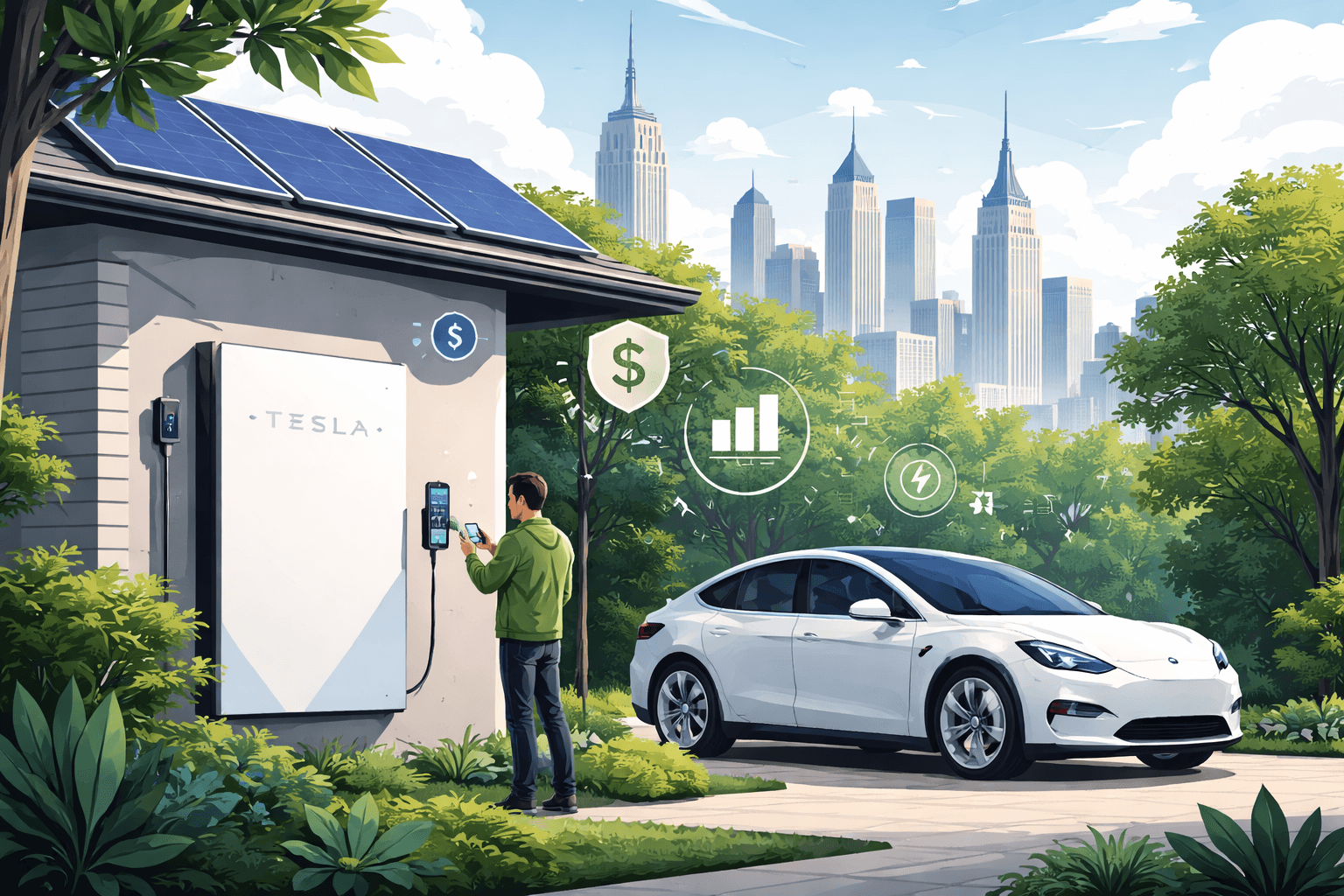
Tesla’s residential battery stores excess solar power or cheaper off‑peak grid power and discharges during expensive evening hours or outages. It sits wall‑mounted indoors or outdoors and integrates with your home’s electrical panel and, if present, rooftop solar.
The Homeowner's Guide to Renewable Energy - Revised & Updated Edition: Achieving Energy Independence through Solar, Wind, Biomass and Hydropower: Chiras, Dan
After beginning with the all important discussion about energy efficiency and conservation, <strong>Dan guides you through everything you need to choose which renewable options to integrate into your
Check Price on AmazonKey specifications (Tesla spec sheets, 2024):
- Usable energy: 13.5 kWh per unit (Powerwall 2 and Powerwall 3)
- Output power:
- Powerwall 2: ~5 kW continuous, ~7 kW peak (short duration)
- Powerwall 3: up to ~11.5 kW continuous for whole‑home backup (integrated solar inverter)
- Round‑trip efficiency: ~90% (AC‑coupled typical)
- Operating temperature: about −4°F to 122°F (−20°C to 50°C)
- Enclosure rating: outdoor‑rated (NEMA 3R equivalent)
- Warranty: 10 years, with at least 70% of nameplate capacity retained at year 10 under normal use (Tesla warranty)
- Stackability: multiple units can be combined (e.g., 2 units ≈ 27 kWh)
How it works
- Solar self‑consumption: Store daytime solar and use it after sunset, cutting grid purchases.
- Time‑based control: Charge when rates are low and discharge when they’re high under TOU tariffs.
- Backup power: Seamlessly powers critical loads or (with Powerwall 3 and adequate sizing) whole‑home circuits during outages via an automatic transfer switch.
AC vs. DC coupling in plain terms
- AC‑coupled (Powerwall 2): Battery connects on the AC side; compatible with almost any existing solar inverter. Slight efficiency penalty due to multiple conversions.
- DC‑coupled (Powerwall 3 / Powerwall+): Battery integrates a PV inverter; solar feeds battery directly with fewer conversions and often simpler permitting in new solar+storage installs.
Powerwall pricing in New York including installation costs
New York’s installed costs are higher than the national average due to labor, permitting, and electrical code requirements (especially in NYC suburbs and the city). Based on Tesla’s advertised equipment prices and recent installer quotes in the state (2024):
- Hardware (Powerwall 3 or Powerwall 2): typically $8,500–$9,500 per unit (Tesla order page ranges)
- Balance‑of‑system and labor: $3,500–$6,500 for a straightforward installation
- Potential service upgrades (new subpanel, main panel upgrade, trenching, NYC/Westchester permitting): +$1,000–$5,000
Typical all‑in prices before incentives:
- 1 Powerwall: $12,000–$16,000
- 2 Powerwalls: $20,000–$28,000 (additional units cost less per kWh due to shared labor)
After the 30% federal tax credit (see below), net homeowner costs often land near:
- 1 Powerwall: ~$8,400–$11,200
- 2 Powerwalls: ~$14,000–$19,600
Costs vary by utility territory (Con Edison vs. upstate), building type, and whether you’re adding storage to existing solar or installing new solar+storage together.
New York battery storage incentives: state rebates, “SGIP,” utility programs
Federal tax credit (nationwide): The Investment Tax Credit (ITC) covers 30% of installed cost for batteries ≥3 kWh starting in tax year 2023—stand‑alone or paired with solar (IRS, Inflation Reduction Act). Eligibility depends on tax liability; consult a tax professional.
NYSERDA Energy Storage Program: New York has offered behind‑the‑meter battery incentives via NYSERDA’s retail/Residential Energy Storage incentives (measured in $/kWh of usable capacity). Funding has been released in “blocks” by territory (e.g., Con Edison, Upstate, Long Island). Many residential blocks have been fully subscribed or paused at times. Incentive levels and availability change; check NYSERDA’s program dashboard or ask your installer whether a current block applies in your county. Historically, incentives ranged roughly $200–$350 per kWh in some territories when open (NYSERDA program materials).
Long Island (PSEG‑LI): PSEG‑LI has periodically offered residential battery incentives and demand response enrollments for solar‑paired batteries. Program years, enrollment caps, and payout structures vary. Ask your installer about current PSEG‑LI offerings.
Con Edison and other utilities (National Grid, NYSEG, RG&E, Orange & Rockland): Utilities in New York run demand response and TOU programs that pair well with Powerwall’s time‑based control. Some have piloted bring‑your‑own‑battery (BYOB) or virtual power plant aggregations that pay customers for discharging during peak events. Availability and compensation vary by year; your installer can confirm if a 2024–2025 enrollment is open in your area.
A note on SGIP: The Self‑Generation Incentive Program (SGIP) is a California‑only battery rebate. It does not apply in New York. For details on how SGIP works in California, see our state guide: Tesla Powerwall in California: Cost, Availability & Is It Worth It?
How the Powerwall pairs with solar in New York: backup vs. self-consumption
Backup first: If you prioritize resilience, size for critical loads you can’t do without—refrigeration, internet, lighting, well pump, and possibly a gas furnace blower or minisplit. One Powerwall (13.5 kWh, ~5–11.5 kW output depending on model) can cover essentials overnight for many homes. Electric resistance heat, central A/C, EV charging, and electric cooking are high‑draw; consider two units if those must run during an outage.
Self‑consumption/time‑shifting: With rooftop solar, Powerwall stores afternoon generation for evening use. In New York’s summer, a typical 7–10 kW solar array can easily refill a Powerwall daily on sunny days, turning evening purchases into “free” solar energy and reducing exposure to peak rates.
Export rules: Under New York’s evolving net metering/VDER rules, batteries generally shouldn’t export grid‑charged energy for credit. Installers configure systems accordingly (non‑export or “solar‑only charge” modes), keeping you in compliance with your interconnection agreement.
Winter nuance: Shorter days and snow reduce solar output. Batteries still add value for backup and TOU shifting, but expect fewer full daily cycles December–February. Heated enclosures aren’t required, but installers should maintain clearances and avoid shaded ice‑shedding zones.
New York utility rate structures and how Powerwall saves with time-of-use
Powerwall’s software automates arbitrage: charging when electricity is cheap (midday off‑peak or overnight) and discharging during expensive hours. Savings depend on your utility’s TOU spread (the difference between on‑peak and off‑peak prices), round‑trip efficiency (~90%), and how often the battery cycles.

Emporia Gen 2 Smart Home Energy Monitor with 16 50A Circuit Level Sensors | Real Time Electricity Monitor/Meter | Solar/Net Metering - Amazon.com
View on AmazonTypical New York TOU patterns (consult your specific tariff for current times and rates):
- Con Edison (NYC/Westchester): Optional residential TOU plans generally feature summer weekday peaks concentrated in late afternoon to late evening; off‑peak covers overnight hours and most weekends. The summer peak vs. off‑peak spread can exceed 15–25 cents/kWh in some seasons when delivery and supply are combined (Con Edison tariff filings).
- PSEG Long Island: TOU plans with a summer weekday peak (often 3–7 p.m.) and off‑peak most other hours. The spread can be material during summer (PSEG‑LI tariffs).
- Upstate utilities (National Grid, NYSEG, RG&E, O&R): Optional TOU or Day/Night rates with lower off‑peak overnight rates and higher daytime/evening rates; spreads vary seasonally.
Illustrative savings math
- Assume off‑peak is $0.14/kWh and on‑peak is $0.38/kWh (combined energy + delivery), a $0.24 spread. With 90% round‑trip efficiency, each shifted kWh saves about $0.216.
- If your Powerwall shifts 8 kWh per weekday through summer and shoulder months (say 220 days), that’s ≈1,760 kWh shifted and ≈$380 in bill savings. Add some winter/weekend shifting and demand‑response event payouts, and annual value can reach $400–$900 depending on rates, cycling, and programs.
Reliability value
- The average U.S. customer experienced roughly 5–8 hours of interruptions in 2022, including major events (EIA reliability data). Downstate New York is vulnerable to summer thunderstorms and coastal storms; multi‑day outages, while infrequent, carry high household costs (spoiled food, sump pump failures). Valuing outage protection at even a few hundred dollars per year in avoided losses can tip the scales.
Powerwall availability and certified installers in New York
- Coverage: Tesla sells and installs Powerwalls directly in much of New York, and there is a large network of Tesla Certified Installers statewide. Lead times are typically 4–12 weeks depending on utility approvals and permitting.
- NYC specifics: The Fire Department of New York (FDNY) has stringent rules for stationary storage systems. Residential installations often must be outdoors with approved clearances and products listed for use in the city. Your installer should confirm the latest FDNY certificates of approval and local amendments to the Electrical and Fire Codes.
- Interconnection: New York’s Standardized Interconnection Requirements (SIR) cover small‑scale DER. Your installer will submit a simplified or expedited application to your utility, indicating non‑export settings where required.
What to ask an installer
- Will my system be configured to avoid exporting grid‑charged energy (to preserve solar credits)?
- Can the system participate in any current demand response or virtual power plant enrollments?
- Do you anticipate a main‑panel upgrade or service upgrade? If so, what’s the cost range?
- Are any NYSERDA or utility battery incentives currently open in my territory? Can you secure a reservation number?
Alternatives to Powerwall available in New York: Enphase, LG, Generac
Powerwall is popular, but strong alternatives may fit certain homes, especially with brand‑specific solar inverters or space constraints.

EF ECOFLOW Smart Home Panel 2, the Center of the Whole
Alternatively connect <strong>3 x EcoFlow DELTA Pro 3 units with 6 x Extra Batteries for energy storage up to 36kWh</strong>. It's not just for longer backup but lets you to control and run every
Check Price on AmazonEnphase IQ Battery 5P/10P: Modular 5 or 10 kWh units with ~5 kW continuous output per 10 kWh stack, excellent integration with Enphase microinverters and app. Known for rapid serviceability and granular monitoring. For homes already using Enphase microinverters, the Enphase IQ Battery 5P is a strong value based on its high peak power and robust cold‑weather performance.
LG Energy Solution RESU Prime 10H/16H: 10–16 kWh systems, 7 kW peak output (model‑dependent), compact footprint. Good match with SolarEdge inverters in DC‑coupled designs.
Generac PWRcell: Highly modular 9–18 kWh cabinets with 4.5–9 kW continuous output (depending on battery modules), integrated with Generac inverters. Particularly attractive for new solar+storage installs where whole‑home backup is desired.
FranklinWH aPower + aGate: 13.6 kWh battery with 5 kW continuous output plus a smart home power control panel (good for load management when service upgrades are costly in New York).
SolarEdge Home Battery: 10 kWh DC‑coupled option optimized for SolarEdge HD‑Wave systems.
If you’re leaning toward new solar+storage (not retrofit), an integrated DC‑coupled system can reduce conversion losses and simplify permitting. For retrofits on existing PV with a third‑party inverter, AC‑coupled batteries like Powerwall 2 or Enphase are plug‑and‑play.
Affiliate note: For homes with limited wall space, the compact LG RESU Prime 16H offers one of the best kWh‑per‑square‑foot ratios. If you anticipate heavy TOU cycling, a smart panel like the Span Panel can maximize backup runtime by automatically shedding non‑essential loads.
By the Numbers: Tesla Powerwall in New York
- 13.5 kWh: Usable energy per Powerwall unit (Tesla)
- Up to ~11.5 kW: Powerwall 3 continuous output, enabling more whole‑home backups (Tesla)
- 30%: Federal tax credit for batteries ≥3 kWh starting in 2023 (IRS)
- $12k–$16k: Typical pre‑incentive cost for one Powerwall installed in New York (2024 quotes)
- 90%: Approximate round‑trip efficiency in AC‑coupled mode (Tesla/NREL ranges)
- 15–25¢/kWh: Representative summer TOU spread in parts of NY (utility tariffs; varies)
Practical implications for New York homeowners
- If you want outage protection first, size to your critical loads and consider two units if you run central A/C, a well pump, or have all‑electric space/water heat.
- If you want bill savings first, enroll in TOU (where available). The wider the on/off‑peak gap, the faster a Powerwall pays back.
- If you’re in NYC or Long Island, pick an installer fluent in FDNY/PSEG‑LI rules to avoid permitting delays.
- Ask about aggregator programs that pay for event discharge; stacking even modest grid‑service payments can add $100–$400 per year in value, depending on availability and participation.
Is a Tesla Powerwall worth it in New York?
Most compelling when:
- You have or plan to install solar (maximizes daily cycling and ITC value)
- Your utility offers a meaningful TOU spread (≥$0.18/kWh difference) or demand response payments
- You experience periodic outages that carry real costs or health/safety risks
More borderline when:
- You’re on flat rates with a small spread (<$0.10/kWh)
- You have limited solar production in winter and don’t value backup
- You rent or live in a building with battery restrictions (some co‑ops/condos)
As a rough benchmark: A solar‑paired Powerwall that reliably shifts 1,500–2,000 kWh/year from peak to off‑peak at a $0.20/kWh net spread produces $300–$400/year in bill savings; add outage value and potential grid‑service compensation, and total annual benefit can be $500–$1,000. That won’t “cash‑flow” a battery quickly on savings alone, but combined with the 30% ITC and the resilience premium many homeowners seek, it’s often a justified investment.
Powerwall availability and installer selection: New York checklist
- Verify current NYSERDA or utility incentives in your territory (Con Edison, PSEG‑LI, National Grid, NYSEG, RG&E, O&R)
- Confirm lead times and permitting steps (FDNY/Department of Buildings in NYC)
- Request a load calculation for backup and a TOU savings model based on your last 12 months of interval data
- Ask for a clear scope of work: critical loads panel vs. whole‑home backup, trenching, panel upgrades
- Compare Powerwall 3 (integrated PV inverter) vs. AC‑coupled options for your roof and inverter brand
Regional context: Curious how pricing and incentives compare next door? See our neighboring state guides for context on labor and program differences: Tesla Powerwall in New Jersey: Cost, Availability & Is It Worth It? and Tesla Powerwall in Connecticut: Cost, Availability & Is It Worth It?.
FAQ: common questions about Tesla Powerwall in New York
Q: Does New York have an SGIP‑style rebate for batteries? A: New York does not use California’s SGIP. Instead, NYSERDA periodically funds block incentives for behind‑the‑meter storage by territory. Many residential blocks have opened and closed as funds are subscribed. Ask your installer about current availability.
Q: Can I claim both the federal ITC and a New York state incentive? A: Yes. The 30% federal ITC applies to installed cost. If a NYSERDA or utility incentive is available, it typically reduces your net cost as well. New York also has a state personal income tax credit for residential solar equipment; whether storage qualifies depends on whether it’s installed with eligible solar equipment—confirm eligibility with your tax advisor and the latest NYS guidance.
Q: How many Powerwalls do I need for whole‑home backup? A: Many gas‑heated homes can back up critical loads with one Powerwall. Whole‑home backup (including A/C or electric water heating) often requires two units. An energy audit of your major loads (HVAC, well pump, range, dryer) helps right‑size.
Q: Will a Powerwall work without solar? A: Yes. Since 2023, stand‑alone batteries qualify for the 30% federal ITC. You can charge off‑peak and discharge on‑peak for savings. Pairing with solar typically improves economics.
Q: How long will a Powerwall last during an outage? A: Divide 13.5 kWh by your essential load. If you draw 1.5 kW on average (lights, fridge, Wi‑Fi, gas furnace blower), you’d get roughly 9 hours per unit. With efficient appliances and smart load control, many homes can stretch one unit overnight.
Q: Is Powerwall approved in NYC? A: FDNY has a certification process and strict siting rules. Tesla Powerwall models have been deployed in the city, but site‑specific constraints apply. Choose an installer well‑versed in FDNY approvals and plan for an outdoor location with required clearances.
Q: How does winter affect performance? A: Cold reduces available power temporarily until the system warms its cells. The unit is rated for New York winters and includes internal thermal management. Expect fewer full daily cycles due to shorter daylight and potential snow cover on panels.
Q: Can I participate in a virtual power plant (VPP) in New York? A: Some utilities and aggregators have piloted BYOB/VPP programs that pay for event‑based discharge on peak days. Enrollment windows and pay rates vary by year and territory; ask your installer about current opportunities in your zip code.
Looking for a state with richer direct storage rebates? California’s SGIP materially changes the math—see our detailed breakdown: Tesla Powerwall in California: Cost, Availability & Is It Worth It?
Where this is heading
New York set a 6 GW energy storage deployment goal by 2030, with a near‑term target of at least 1.5 GW of customer‑sited storage (state energy roadmap). Expect more frequent utility programs that pay homeowners for flexible capacity on the hottest and coldest days. As TOU rates expand and heat pumps/EVs raise evening peaks, batteries will increasingly complement rooftop solar to keep bills manageable and the grid stable. For homeowners, the strongest value proposition pairs a right‑sized solar array, a well‑configured battery, and an installer fluent in New York’s interconnection and fire code landscape.
Recommended Products
The Homeowner's Guide to Renewable Energy - Revised & Updated Edition: Achieving Energy Independence through Solar, Wind, Biomass and Hydropower: Chiras, Dan
After beginning with the all important discussion about energy efficiency and conservation, <strong>Dan guides you through everything you need to choose which renewable options to integrate into your
Emporia Gen 2 Smart Home Energy Monitor with 16 50A Circuit Level Sensors | Real Time Electricity Monitor/Meter | Solar/Net Metering - Amazon.com
See how much electricity your home is using anywhere, anytime. ... <strong>Add individual 50A sensors to your Vue to monitor up to 16 individual circuits</strong> — providing accurate energy use for t
EF ECOFLOW Smart Home Panel 2, the Center of the Whole
Alternatively connect <strong>3 x EcoFlow DELTA Pro 3 units with 6 x Extra Batteries for energy storage up to 36kWh</strong>. It's not just for longer backup but lets you to control and run every