
Tesla Solar in New York: Panels, Roof & Pricing Guide (2026)
Tesla Solar in New York: Panels, Roof & Pricing Guide (2026)
If you’re evaluating Tesla Solar in New York, 2026 is a strong year to run the numbers. Residential electricity prices in New York averaged roughly 22–24¢/kWh in 2023, according to the U.S. Energy Information Administration (EIA), among the highest in the U.S. That elevates the value of rooftop generation. With the 30% federal Clean Energy Credit in place through 2032 and New York’s 25% state tax credit (capped at $5,000), many homeowners are seeing 7–12 year simple paybacks on Tesla solar systems, depending on roof complexity, shading, and utility territory.
This guide covers Tesla Solar products, pricing, incentives, installation timelines, warranties, and how Tesla stacks up against local New York installers.
By the Numbers: New York solar in context
- 22–24¢/kWh: Average residential electricity price in New York in 2023 (EIA). Higher rates increase solar bill savings.
- 1,150–1,350 kWh per kW-year: Typical production for a well-sited rooftop in NYC/Long Island based on NREL PVWatts (capacity factor ~13–15%). Upstate sites vary with roof tilt and snow cover.
- 30%: Federal Clean Energy Credit (Investment Tax Credit) on residential solar and battery storage through 2032 (U.S. Treasury/DOE).
- 25% up to $5,000: New York State Solar Equipment Tax Credit for owned residential systems (NYS Dept. of Taxation and Finance).
- 6+ GW: New York’s installed solar capacity as of 2023–2024 across rooftop and community solar, with the state a national leader in community projects (SEIA; NYSERDA NY-Sun updates).
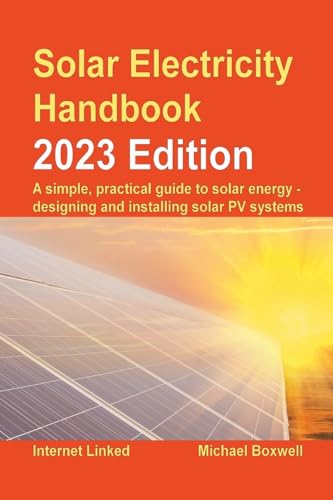
Solar Electricity Handbook - 2023 Edition: A simple, practical guide to solar energy – designing and installing solar photovoltaic systems: Boxwell, Michael
Solar Electricity Handbook - 2023 Edition: <strong>A simple, practical guide to solar energy – designing and installing solar photovoltaic systems</strong> [Boxwell, Michael] on Amazon.com. *FREE* shi
Check Price on AmazonTesla Solar in New York: panels, Solar Roof, and Powerwall bundles
Tesla offers three core options for New York homeowners:
Tesla Solar Panels
- Monocrystalline all-black modules typically in the 400–440 W range, with module efficiencies around 20–22% (Tesla product specs).
- A Tesla Inverter (7.6 kW or 3.8 kW units, stackable) for grid-tied operation and app-based monitoring.
- Integrated aesthetics with low-profile mounting and concealed conduit where feasible.
Tesla Solar Roof
- Building-integrated photovoltaic (BIPV) glass tiles that replace your roofing material and produce electricity.
- Designed for full-roof replacement; best suited when your existing roof requires replacement within ~5–10 years.
Tesla Powerwall (optional—but common—bundle)
- 13.5 kWh usable capacity per unit; Powerwall 3 includes an integrated solar inverter and 11.5 kW continuous output (Tesla specs, 2023).
- Provides backup during outages and can shift solar generation into evening hours on time-of-use (TOU) rates. In parts of New York, pairing storage can also qualify systems under evolving net metering and Value Stack structures.
For a deeper dive on battery economics and interconnection details specific to Empire State utilities, see our focused guide: Tesla Powerwall in New York: Cost, Availability & Is It Worth It?
When to choose panels vs. Solar Roof
- Choose Tesla Solar Panels if your roof is in good condition and you want lowest cost per watt and fastest payback.
- Choose Solar Roof if you must replace the roof anyway and prioritize aesthetics, weathering performance, and integrated design. Expect higher cost, but part replaces a necessary roofing expense.
Tesla Solar pricing in New York: panels vs. Solar Roof
Actual quotes vary by roof geometry, utility territory, and local labor/permits, but recent New York quotes provide the following ballpark ranges before incentives:
- Tesla Solar Panels: Approximately $2.50–$3.25 per watt direct-purchase pricing in many New York zip codes in 2024–2025 quotes. Complex roofs can push the high end. Standardized designs and economies of scale often make Tesla competitive versus the statewide average for residential solar.
- Tesla Solar Roof: Total project pricing is more variable, driven by roof size, pitch, facets, and obstructions. In recent public reports, Solar Roof projects commonly price in the $55,000–$90,000+ range for typical suburban homes, with larger/complex roofs higher. Only a portion of the Solar Roof (the solar tile portion and eligible electrical work) qualifies for tax credits; non-solar roofing components do not.
Example math for reference only (your design and incentives will differ):
- 8 kW Tesla panel system at $2.75/W = $22,000 gross system cost.
- Federal credit (30%): -$6,600
- New York State tax credit (25% up to $5,000): -$5,000
- Potential NY-Sun installer incentive: often already netted into the quote where available; ask your advisor whether your price reflects current block incentives.
- Net out-of-pocket (illustrative): about $10,400 before any utility interconnection fees or sales tax exemptions.
At an annual production of ~10,000 kWh (8 kW × 1,250 kWh/kW-year), and a blended utility offset of ~23¢/kWh, gross first-year bill savings could approximate $2,300—before considering Customer Benefit Contribution (CBC) charges and seasonal TOU impacts. Actual savings depend on your load profile and tariff.
For statewide averages across installers, see our companion guide: Solar in New York: Costs, Incentives & Top Installers (2026)
Where storage fits into the economics
- Backup: New York’s storm seasons and grid density make backup a popular driver. A single Powerwall can cover critical loads; two or more for whole-home backup with heat pumps or well pumps.
- Rate arbitrage: On TOU tariffs (e.g., some Con Edison and National Grid options), batteries can charge from mid-day solar and discharge during peak pricing windows.
- Interconnection: In some cases, pairing a battery can streamline export limits or manage service upgrade constraints.
How to order Tesla Solar in New York: timeline, site assessment, and installation
Tesla’s process is standardized but still subject to local permitting and utility timelines.
- Online design and order
- Enter your address and recent electric bill to model system size and savings.
- Place a small, typically refundable order fee to start engineering (Tesla periodically updates fee policies—verify at checkout).
- Remote and on-site assessment
- Tesla uses satellite imagery, drone/photogrammetry (where allowed), and architectural tools to design array layout, inverter placement, and conduit runs.
- For older homes or complex roofs, Tesla or a partner crew may conduct an on-site survey to verify attic access, main service panel rating, roof condition, and structural details. New York’s snow and wind load requirements (often 30–50 psf snow design loads upstate) may trigger rafter span checks or stamped structural letters.
- Permitting and utility approval
- Building permit: Filed with your local Authority Having Jurisdiction (AHJ)—town building department or NYC DOB. NYC applications must follow fire code setbacks on roof pathways and equipment clearances.
- Utility interconnection: Mass-market residential systems up to 25 kW typically fall under New York’s net metering framework with a Customer Benefit Contribution (CBC) charge, per NY Public Service Commission orders. Larger or more complex interconnections may use the Value Stack (VDER) methodology. Your Tesla design team files the interconnection application.
- Installation
- Most panel-only installs finish in 1–2 days. Solar Roofs can take 5–10+ working days depending on complexity.
- Electrical inspection and utility meter work occur after installation.
- Permission to Operate (PTO)
- After inspection sign-off, the utility issues PTO, allowing export of solar to the grid. New York PTO timeframes range from ~2 to 8 weeks depending on utility workload and season.
Typical end-to-end timeline in New York: ~6–12 weeks for panels; Solar Roofs can run longer due to roofing scope and inspections.
New York solar incentives that apply to Tesla installations
Federal Clean Energy Credit (ITC): 30% credit on residential solar and standalone storage placed in service through 2032 (U.S. Treasury/DOE). Applies to Tesla panels, Solar Roof’s eligible solar components, and Powerwall when charged primarily by solar. Consult a tax professional to confirm eligibility.
New York State Solar Equipment Tax Credit: 25% of net system cost up to a $5,000 cap for residential, owner-occupied properties paying New York State income tax (NYS Dept. of Taxation and Finance). Leases and PPAs typically do not qualify for the state tax credit, but direct ownership and many loans do.
NY-Sun incentives (NYSERDA): Block-based incentives to installers that reduce your out-of-pocket price. Availability and amounts vary by utility territory and block status. Ask Tesla whether your quote already reflects current NY-Sun incentives and any storage adders.
Sales tax: Solar equipment for residential use is exempt from New York State’s 4% sales tax. Many local jurisdictions also exempt their local sales tax; check your municipality.
Property tax: New York’s 15-year real property tax exemption (RPTL 487) can exempt the added value of a solar system from property taxes. Some jurisdictions have opted out—confirm with your assessor.
NYC-specific: The NYC Solar Property Tax Abatement (PTA) can offset a substantial share of eligible solar costs via your property tax bill over multiple years (commonly cited at up to 30% spread over 4 years in recent program updates). Check the NYC Department of Finance for the current percentage, eligibility, and filing windows, as rules and percentages can change.
Utility programs: Some utilities offer demand response or battery participation programs that provide bill credits to Powerwall owners in exchange for limited control during peak events. Program availability and compensation vary; consult your utility and Tesla app options.
For storage-specific economics and program participation, see: Tesla Powerwall in New York: Cost, Availability & Is It Worth It?
Tesla Solar reviews from New York customers: what owners report
Public reviews and owner forums from 2023–2025 point to common New York-specific themes:
What owners like
- Price competitiveness: Standardized designs and national procurement often yield lower $/W than many local bids—particularly for straightforward roofs.
- Aesthetics and app: All-black panels, tidy conduit, and a unified Tesla app for generation, consumption, and Powerwall control earn consistent praise.
- Fast installs once scheduled: Many New York panel-only projects complete in a day or two with minimal rework when homes have modern electrical service.
What draws criticism
- Communication and scheduling: Project updates can feel impersonal. Reschedules happen due to permitting backlogs, weather, or utility queue delays.
- Roof complexity and change orders: Dormers, slate, skylights, and older roofs can lead to design revisions or higher-than-initial estimates after site survey.
- Limited equipment choice: Tesla’s platform is standardized; homeowners wanting microinverters or premium third-party panel brands may prefer local installers.
As with any contractor, outcomes vary by crew and complexity. Ask your Tesla advisor for local references and review your final layout, wiring plan, and structural notes before install day.
Tesla vs. local New York installers: pros, cons, and price comparison
Tesla strengths
- Cost: Tesla’s scale and standardized BOM (bill of materials) often produce lower upfront prices for simple roofs.
- Integration: A single-brand ecosystem (panels/inverter/app/Powerwall) simplifies monitoring and service.
- Aesthetics: Low-profile mounting and hidden balance-of-system elements where feasible.
Local installer advantages
- Equipment flexibility: Choice of modules (e.g., high-efficiency N-type panels), microinverters or DC optimizers (helpful for complex shading), and custom racking solutions.
- Hands-on service: Dedicated project managers, local permitting relationships, and faster in-person follow-up.
- Specialized roofs: Experience with slate, metal standing seam, snow guards, and aggressive ice-dam mitigation.
Pricing snapshot
- Many New York local bids land around $3.00–$4.00/W for premium packages with microinverters and top-tier panels. Tesla often undercuts these by 5–20% on simpler jobs but can converge in price for complex roofs requiring additional electrical work or structural upgrades. Always compare line items, production estimates (kWh/year), and warranties—not just $/W.
If you want to compare broader market pricing and top regional firms, see: Solar in New York: Costs, Incentives & Top Installers (2026)
Tesla Solar warranty and what it covers in New York
Tesla publishes standardized warranties; confirm current documents with your proposal because terms can change.
- Panel product warranty: Typically 12–25 years against defects in materials and workmanship, depending on the exact panel model sourced for your project.
- Panel performance warranty: Linear power output warranty usually guaranteeing ~80–85% of original nameplate output at year 25.
- Tesla Inverter warranty: Commonly 12.5 years limited warranty.
- Powerwall warranty: 10 years, with throughput/energy guarantees and retention of a defined usable capacity at year 10 when used under normal residential cycling.
- Workmanship/roof penetrations: Tesla typically covers roof penetrations for a defined term (often around 10 years); review your paperwork for the precise coverage length and conditions.
New York service notes
- Ice and snow: Normal snow loading is covered by equipment standards (panels often rated to 5,400 Pa front load), but ice-dam or snow-slide damage to gutters/landscaping is generally not covered. Consider snow guards where appropriate.
- Fire and code compliance: Installations must meet NYC/State fire setbacks and electrical code. Code-driven design changes are not warranty defects.
FAQ: common questions about Tesla Solar in New York
How much does Tesla Solar cost in New York in 2026?
- Many panel quotes fall in the $2.50–$3.25/W range before incentives for straightforward roofs. Solar Roof pricing varies widely with complexity and roof size. Always obtain a site-specific quote.
What incentives can I combine with Tesla Solar?
- The 30% federal credit, New York’s 25% state tax credit (up to $5,000), NY-Sun installer incentives (embedded in price when available), sales tax exemptions, and property tax exemptions. NYC may offer a Solar Property Tax Abatement. Confirm stacking rules with a tax professional.
Do I get net metering with Tesla Solar in New York?
- Most mass-market residential systems up to 25 kW receive net metering credits close to the retail rate, plus a Customer Benefit Contribution (CBC) charge. Larger or post-cutover projects may fall under the Value Stack (VDER). Your utility interconnection approval determines the tariff.
How long does installation take?
- 1–2 days for most panel installs; 5–10+ working days for Solar Roof. Permitting and PTO often add 6–10 weeks to the overall timeline.
Should I add a Powerwall in New York?
- If you value outage protection or face TOU peaks, a Powerwall can add resilience and savings. See our dedicated analysis: Tesla Powerwall in New York: Cost, Availability & Is It Worth It?
Will snow hurt production?
- Snow temporarily reduces production; most arrays shed snow after sun exposure. NREL PVWatts includes monthly loss assumptions. Annual yields in NYC/Long Island often sit around 1,200–1,300 kWh per kW-year for unshaded arrays.
Can Tesla install in NYC’s historic districts or with slate?
- Historic district approvals and slate roofs add complexity and cost. Tesla may propose alternative mounting zones or decline certain roofs; local installers with slate expertise might be preferable.
Do I need a main panel upgrade?
- Homes with 100 A service or limited breaker space often need upgrades or load management. Tesla evaluates this during design; Powerwall 3’s integrated inverter can help optimize interconnections.
What financing options are available?
- Tesla typically offers cash purchase and third-party loans. Leases/PPAs may limit eligibility for New York’s 25% state tax credit. Compare APRs, dealer fees, and total lifetime cost.
Practical recommendations for New York homeowners
- Ask for two designs: a slightly undersized array that maximizes self-consumption and a full offset design. In New York, exporting excess generation has value but is shaped by net metering terms and CBC charges.
- Evaluate snow and shade explicitly: Request NREL PVWatts-based production tables by month and confirm snow loss assumptions.
- Get at least one local bid: A local installer offering microinverters or DC optimizers can beat Tesla performance on complex, shaded roofs even if $/W is higher.
- Storage sizing: One Powerwall (13.5 kWh) usually covers critical circuits; electrified homes with heat pumps might need two or more. Confirm load profiles and transfer switch strategy.

Sense Energy Monitor with Solar – Track Electricity Usage and Solar Production in Real Time
View on Amazon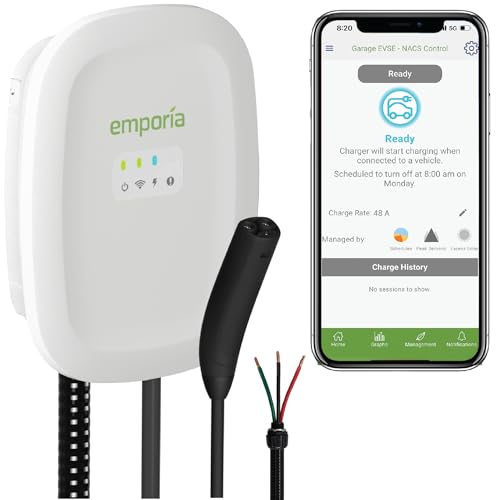
EMPORIA Level 2 EV Charger w/ J1772 Charger, 48 amp, Preconfigured for Hardwired Install with Whip, UL/Energy Star WiFi Enabled EVSE Level 2, 25ft Cable (Black) : Automotive
View on AmazonAffiliate picks that pair well with Tesla Solar
- For EV owners on TOU rates, a Wi‑Fi Level 2 charger with scheduled charging can boost savings; based on reliability and UL certification, the Emporia Level 2 EV Charger represents strong value.
- Tracking your loads helps right-size storage. The Sense Home Energy Monitor gives circuit-level insights that align with Tesla app data for smarter energy use.
- Electrify your water heating to consume mid-day solar: a high-efficiency 120V Heat Pump Water Heater can cut water heating energy 60–70% per DOE field studies.
Where Tesla Solar in New York is heading
- Standardization and faster PTO: As NYSERDA and utilities streamline residential queues, expect more predictable timelines.
- Smarter rate design: Growing TOU adoption increases the value of pairing solar with storage and load-shifting (EVs, heat pumps, water heaters).
- Higher-efficiency modules: N-type TOPCon and heterojunction tech in the 22–23% range are moving into mainstream price points, improving output on limited NYC roof space.
- Grid services: Aggregated Powerwalls may participate in utility programs that pay homeowners for peak support, improving storage ROI.
If you live near the state line, incentives and net metering rules differ by utility and state. For a neighboring comparison, see: Tesla Solar in New Jersey: Panels, Roof & Pricing Guide (2026)
Sources and references
- EIA (U.S. Energy Information Administration): State electricity price data, Residential sector, 2023.
- NREL PVWatts: Typical rooftop solar yields for NYC/Long Island and Upstate climates.
- U.S. Treasury/DOE: Residential Clean Energy Credit (30%) guidance under the Inflation Reduction Act.
- NYSERDA (NY-Sun): Program blocks, installer incentives, and storage adders (availability varies by territory).
- New York State Dept. of Taxation and Finance: Solar Equipment Tax Credit (25% up to $5,000) guidelines.
- NYC Department of Finance: Solar Property Tax Abatement program details and eligibility.
Recommended Products
Solar Electricity Handbook - 2023 Edition: A simple, practical guide to solar energy – designing and installing solar photovoltaic systems: Boxwell, Michael
Solar Electricity Handbook - 2023 Edition: <strong>A simple, practical guide to solar energy – designing and installing solar photovoltaic systems</strong> [Boxwell, Michael] on Amazon.com. *FREE* shi
EMPORIA Level 2 EV Charger w/ J1772 Charger, 48 amp, Preconfigured for Hardwired Install with Whip, UL/Energy Star WiFi Enabled EVSE Level 2, 25ft Cable (Black) : Automotive
Buy EMPORIA Level 2 EV Charger w/ J1772 Charger, 48 amp, <strong>Preconfigured for Hardwired Install with Whip, UL/Energy Star WiFi Enabled EVSE Level 2, 25ft Cable</strong> (Black): Charging Stations
Sense Energy Monitor with Solar – Track Electricity Usage and Solar Production in Real Time
KNOW WHAT’S ON: Track how much electricity you’re using, what time your kids got home, or when someone leaves the basement light on. Sense <strong>identifies patterns in your energy use to help your f