
Why the Circular Economy Pays Off: Economic, Environmental and Social Benefits
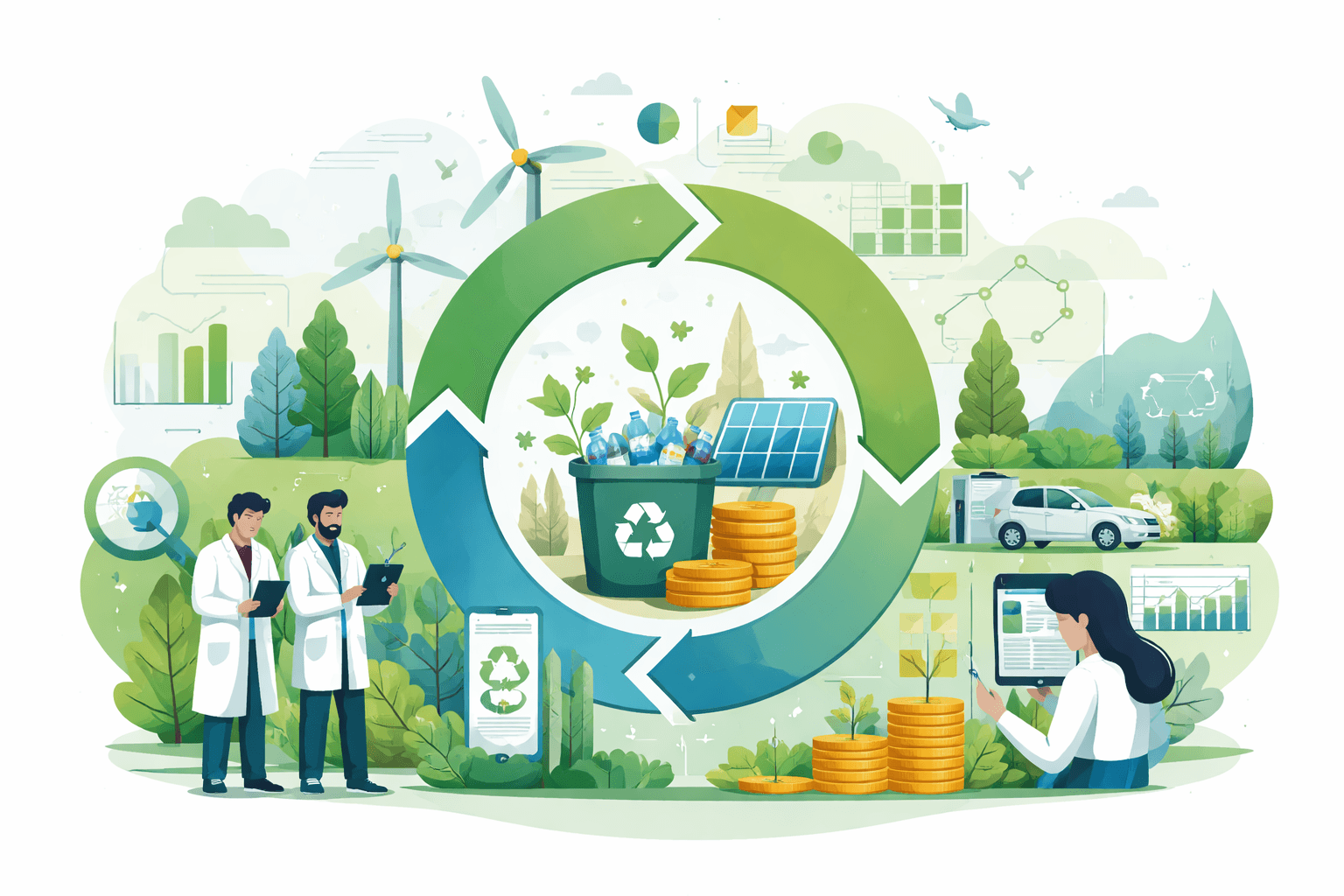
The benefits of circular economy strategies are moving from theory to the balance sheet. As material extraction and processing drive roughly 50% of global greenhouse gas emissions and over 90% of biodiversity loss and water stress (UN Environment Programme’s International Resource Panel, 2019), shifting from a take‑make‑waste system to a circular model offers a rare triple win: lower costs, lower risk, and lower emissions. With global municipal solid waste projected to rise from 2.01 billion tonnes in 2016 to 3.4 billion tonnes by 2050 (World Bank, 2018), timing matters.
What the circular economy is (and isn’t)
The linear economy follows a one‑way path: extract resources, manufacture products, use briefly, discard. The circular economy is a systems approach that designs out waste and pollution, keeps products and materials in use at their highest value, and regenerates natural systems (Ellen MacArthur Foundation, EMF). It aims to deliver outcomes across four core principles:

Cradle to Cradle: Remaking the Way We Make Things: McDonough, William, Braungart, Michael
<strong>Elaborating their principles from experience (re)designing everything from carpeting to corporate campuses</strong>, William McDonough and Michael Braungart make an exciting and viable case fo
Check Price on Amazon- Design for longevity and repair: Make products durable, modular, and easy to fix so they last longer and require fewer virgin inputs over their lifetime.
- Reuse and share: Enable secondary markets, rental, and sharing models so assets serve more users with less idle time.
- Remanufacture and refurbish: Recover components, restore them to like‑new performance, and return them to service at a fraction of the cost and footprint of new.
- Material cycling: Close the loop on materials through high‑quality recycling and composting, prioritizing circular inputs (recycled content and bio‑based renewables where appropriate).
Lifecycle thinking underpins all of this: assessing total impacts from raw material extraction to end‑of‑life (often called cradle‑to‑grave, or cradle‑to‑cradle in circular design) so interventions target the biggest levers.
The Benefits of Circular Economy: By the Numbers
- 1.8 trillion euros: Estimated net economic benefit for Europe by 2030 from circular adoption versus business‑as‑usual, with material cost savings and productivity gains (EMF/McKinsey, “Growth Within,” 2015).
- $4.5 trillion: Additional global economic output by 2030 from circular models across sectors (Accenture, 2015).
- 9.3 Gt CO2e/year: Potential global emissions reduction by 2050 from applying circular strategies to cement, steel, aluminum, plastics, and food systems (EMF, “Completing the Picture,” 2019).
- 700,000: Net new jobs in the EU by 2030 from circular activities like repair, reuse, and recycling (European Commission, 2018 Action Plan).
- 85%: Typical energy savings from remanufacturing versus making new (Remanufacturing Industries Council/USITC, 2012–2016 studies).
- Up to 95%: Energy saved by recycling aluminum compared with primary production (International Aluminium Institute).
- 10–20%: Share of battery minerals (cobalt, nickel, lithium) that recycling could supply by 2040 in IEA scenarios, easing supply risks (IEA, 2023).
- £700–800/year: Avoidable food waste cost per UK household—preventable through better planning, storage, and date‑label clarity (WRAP, 2022).
Economic upside for businesses and economies
Circular models create value by squeezing more utility from fewer resources, turning waste streams into inputs, and reducing exposure to commodity price swings.
Cost savings from material and energy efficiency
Manufacturers spend 40–70% of costs on materials, depending on the sector. Circular design and reverse logistics reduce these costs substantially. EMF estimated circular strategies could deliver hundreds of billions in annual material cost savings for EU manufacturers alone, by improving yield, enabling component reuse, and substituting recycled content where performance allows.
- Remanufacturing typically uses 80–90% less energy and 70–90% fewer materials than producing new, with cost reductions often in the 30–60% range (Remanufacturing Industries Council; USITC, 2012). In heavy equipment, automotive parts, and industrial machinery, component recovery and standardized cores preserve embedded value.
- High‑quality recycling of metals protects against energy and price volatility. Recycling aluminum saves up to 95% of energy, steel 60–74%, and copper ~85% versus primary production (International Aluminium Institute; US EPA). Those savings flow directly to lower cost per unit.
New revenue streams: Product‑as‑a‑Service and design for second lives
Product‑as‑a‑Service (PaaS) converts one‑time sales into recurring revenue and aligns incentives for durability. Lighting, tires, and engines have led the way: Philips’ “lighting as a service,” Michelin’s “tires as a service,” and Rolls‑Royce’s “Power by the Hour” monetize performance rather than volume, encouraging design upgrades, longer lifetimes, and take‑back.
- Refurbishment and certified pre‑owned programs open additional price tiers and customer segments. In electronics, where production drives most lifecycle emissions, extending device life by one year across the EU for common products (smartphones, laptops, washing machines, vacuum cleaners) would save several million tonnes of CO2e annually (European Environmental Bureau, 2019). That same longevity fuels profitable second‑life sales.
Jobs, skills, and supply‑chain resilience
Repair, refurbishment, materials recovery, and local remanufacturing are job‑intensive and geographically distributed. The European Commission estimates 700,000 net jobs in the EU by 2030 from circular activities. ILO research finds the broader green transition—including circular resource efficiency—could deliver a net 24 million jobs globally by 2030 (ILO, 2018), with targeted policies to support workers in affected sectors.
Resilience dividends are material: by reducing dependence on virgin inputs, companies become less exposed to commodity spikes. The International Energy Agency projects that end‑of‑life battery recycling could supply 10–20% of cobalt, nickel, and lithium demand by 2040 in its scenarios, dampening exposure to volatile mining supply chains (IEA, 2023). Circular inputs also shorten lead times by sourcing locally from returns, scrap, and take‑back schemes.
For leaders operationalizing this shift, building circularity into corporate strategy is no longer optional—see why in our guide: Why Every Business Needs a Sustainability Strategy — Not Just the Big Ones.
Environmental and climate gains
Cutting extraction, waste, and pollution
Resource extraction has grown from 27 billion tonnes in 1970 to 92 billion tonnes in 2017, and is on track to reach 167 billion tonnes by 2060 (IRP, 2019; OECD, 2019). The environmental load is not linear—it accelerates as lower‑grade ores and more fragile ecosystems are tapped. Circular strategies reduce pressure at the source.

Vitamix FC-50 - Convenient Home Food Processor and Recycler
Click here to make a request to customer service. ... The FoodCycler FC-50 is <strong>a compact food recycler that reduces food waste and eliminates food scrap odors</strong>, making it ideal for indo
Check Price on Amazon- Preventing waste through design and reuse avoids the embedded impacts of new production. Waste prevention remains the highest priority on the waste hierarchy because it abates upstream extraction, energy use, and emissions simultaneously.
- Where materials must be cycled, quality matters. Closed‑loop recycling of metals and some polymers displaces carbon‑intensive virgin production and keeps toxics out of air and water. Composting organic waste diverts methane‑forming material from landfills.
Methane from solid waste and wastewater accounts for about 20% of anthropogenic methane emissions globally (UNEP/CCAC Global Methane Assessment, 2021). By boosting organics diversion, landfill gas capture, and robust recycling systems, cities can cut near‑term warming while saving disposal costs.
For households, getting recycling right prevents contamination that downgrades material value. Practical steps are here: How to Recycle Effectively: Practical Guidance to Reduce Waste and Avoid Contamination.
Lifecycle emissions reductions at scale
Even with rapid renewable energy adoption, material‑heavy sectors (cement, steel, aluminum, plastics, food) are hard to decarbonize with energy measures alone. EMF estimates that applying circular economy measures—material efficiency, reuse, longer lifetimes, recycling, alternative feedstocks—across these five value chains could reduce global emissions by 9.3 Gt CO2e per year by 2050. That is roughly equivalent to eliminating the current emissions of the entire U.S. power sector several times over.
Product‑level analyses show why:
- Extending the lifetime of electronics and appliances cuts emissions because manufacturing dominates their footprints. Refurbished smartphones can avoid 50–80% of the emissions of new devices, depending on the model and energy mix (various LCAs; EEB, 2019).
- In construction, material efficiency—designing with less material, substituting lower‑carbon cementitious materials, and reusing structural steel—can cut embodied emissions 20–50% with today’s practices (IPCC AR6 WG3; IEA). Reuse of structural components compounds those gains.
- In food systems, reducing loss and waste (roughly one‑third of food produced globally) could avoid 3–4 Gt CO2e annually while easing pressure on land and water (FAO; Project Drawdown).
Social and community co‑benefits—and equity concerns
Circular economy strategies are labor‑intensive, local, and health‑relevant:
- Local employment and skills: Repair cafés, community reuse centers, and municipal deconstruction programs generate skilled jobs that are harder to offshore. WRAP finds that reuse and repair typically support more jobs per 1,000 tonnes of material than landfilling or incineration.
- Health improvements: Less open burning and fewer poorly managed dumps reduce particulate matter exposure and toxic leachate. Better organics management lowers landfill methane and co‑pollutants.
- Consumer savings: Repair, rental, and buying refurbished reduce total cost of ownership. Food‑waste prevention alone can save households hundreds of dollars annually (WRAP’s UK estimate is £700–800 per household).
- Access and affordability: PaaS models can lower upfront costs for essential goods—lighting, appliances, mobility—by spreading payments over time and bundling maintenance.
Equity considerations need attention:
- Deposit‑return systems, eco‑fees, or repair subsidies should be designed to avoid regressive effects, for example by offering fee waivers or targeted rebates for low‑income households.
- Right‑to‑repair policies must ensure affordable parts, manuals, and diagnostic tools for independent repairers, not just authorized networks.
- Workforce transitions: Policies should include reskilling and social protection for workers in linear value chains that will contract.
Practical pathways, policy levers, and measurement
The benefits of circular economy approaches materialize fastest when business, policy, and finance pull together around concrete targets, standards, and incentives.
What companies can do now
- Design for circularity: Specify durability, modularity, and standardized fasteners; publish repairability scores; plan for safe disassembly and material separation.
- Build reverse logistics: Incentivize returns with deposits or buy‑backs; develop in‑house remanufacturing and refurbishment lines; partner with third‑party repair networks.
- Switch inputs: Increase recycled content where performance allows; qualify bio‑based inputs that meet sustainability criteria; phase out hazardous additives that impede recycling.
- Pilot circular business models: Test rental, subscription, and outcome‑based contracts; track unit economics and retention to prove scalability.
- Set KPIs: Track product lifetime, repair rates, return rates, recycled content, and Material Circularity Indicator (MCI) scores. Align with WBCSD’s Circular Transition Indicators (CTI) and report progress via GRI 301 (Materials) and climate disclosures.
For examples of companies already delivering results, see: Circular Economy Leaders: How Companies Are Eliminating Waste.
What governments can do
- Extended Producer Responsibility (EPR): Require producers to finance and organize end‑of‑life collection and high‑quality recycling, with eco‑modulated fees that reward better design.
- Product standards and right to repair: Mandate repairability scores, spare‑parts availability, and software support periods. The EU has proposed a Right to Repair directive; several U.S. states have enacted electronics repair laws.
- Fiscal shifts: Reduce VAT on repair and refurbishment (as Sweden did for certain goods) and consider shifting taxes from labor to resource use to make repair more competitive than replacement.
- Public procurement: Use purchasing power to require remanufactured parts, recycled content, and service‑based contracts in public projects.
- Waste policy upgrades: Standardize collection, invest in sorting infrastructure, and adopt deposit‑return systems for beverage containers to achieve 80–90% return rates seen in best‑practice regions.
What investors and lenders can do
- Tie capital to outcomes: Use sustainability‑linked loans with circular KPIs (e.g., recycled content, take‑back rates) and green bonds earmarked for circular infrastructure.
- Diligence material risks: Evaluate exposure to commodity price swings and stranded‑asset risk in linear business models; value circular revenue streams and customer lifetime value.
Measurement and standards to avoid greenwash
- ISO and frameworks: Use ISO 59020:2023 for measuring circularity, ISO 59010:2024 for circular business models, and ISO 59004:2024 for a common CE framework.
- Sector guidance: Apply WBCSD CTI v3.0 and EMF’s Material Circularity Indicator. For climate alignment, set Science Based Targets (SBTi) and include Scope 3 purchased goods and end‑of‑life in inventories.
- Metrics that matter: Material intensity (kg per unit output), lifetime/reuse cycles per product, repair rate, collection rate, recycled content share, and value‑retention (share of revenue from repair/refurb/reman/PaaS).
Real‑world examples with measurable results
- Renault remanufacturing: At its Choisy‑le‑Roi plant, Renault reported remanufactured engines and components used around 80% less energy, 88% less water, and produced 70% less waste than manufacturing new parts, while meeting performance specs (Renault case studies).
- Philips lighting‑as‑a‑service: By selling light, not bulbs, Philips designs for long life, easy maintenance, and take‑back. In large deployments (e.g., airports, offices), energy savings from efficient fixtures are paired with take‑back commitments, closing material loops.
- Carpet tile take‑back: Leading flooring companies have shown that closed‑loop nylon and backing recovery can substantially cut product embodied carbon compared with virgin inputs, while anchoring customer loyalty via end‑of‑life services.
Many of these solutions ride alongside enabling technologies—digital twins for asset tracking, AI‑enabled sorting robotics, additive manufacturing for spare parts—that are scaling quickly. Explore more in Green Tech Innovations: 10 Technologies Shaping a Sustainable Future.
What this means for consumers, businesses, and policymakers
- Consumers: Choose durable and repairable products, buy refurbished where quality is verified, and use municipal reuse and recycling services correctly. Food‑waste reduction offers the fastest household savings.
- Businesses: Treat circularity as a growth strategy, not just waste reduction. Start with products where reman/refurb unit economics are already favorable, and integrate circular KPIs into product management and finance.
- Policymakers: Set clear, long‑term signals—EPR, repairability standards, fiscal incentives—that reward value retention over throughput. Invest in data systems so materials can be traced and recovered efficiently.

iFixit Pro Tech Toolkit - Electronics, Smartphone, Computer ...
View on AmazonWhere the circular economy is heading
The next five years will likely bring sharper definitions, stronger policy, and clearer accounting for material flows. Expect to see:
- Product‑level repairability and durability scoring normalized in major markets.
- Mandatory recycled‑content standards for packaging and key materials.
- Growth in PaaS contracts in equipment‑intensive sectors as CFOs internalize total cost of ownership and residual value.
- Rapid expansion of advanced sorting and digital product passports that make reverse logistics economical at scale.
- Integration of circular metrics into climate and nature reporting, aligning procurement with net‑zero and nature‑positive goals.
The benefits of circular economy strategies are quantifiable: lower costs and new revenue, lower emissions and waste, and more resilient local jobs. With credible standards, targeted policy, and data‑driven management, circularity is moving from niche pilots to core operating strategy—delivering returns for businesses, communities, and the planet.
Recommended Products
Cradle to Cradle: Remaking the Way We Make Things: McDonough, William, Braungart, Michael
<strong>Elaborating their principles from experience (re)designing everything from carpeting to corporate campuses</strong>, William McDonough and Michael Braungart make an exciting and viable case fo
iFixit Pro Tech Toolkit - Electronics, Smartphone, Computer ...
Discover iFixit's versatile tool kits, offering a curated selection of bits and tools to tackle a wide range of electronics repair and maintenance tasks.
Vitamix FC-50 - Convenient Home Food Processor and Recycler
Click here to make a request to customer service. ... The FoodCycler FC-50 is <strong>a compact food recycler that reduces food waste and eliminates food scrap odors</strong>, making it ideal for indo
More in Sustainability Policy
- Circular Economy Business Models: How Companies Create Value by Doing More with Less
- Circular Economy Leaders: How Companies Are Eliminating Waste
- The Real Benefits of Sustainable Living: Health, Savings, and Environmental Impact
- Why Recycling Plastic Matters: Environmental, Economic and Health Benefits