
Designing Green Homes: Practical Strategies for Sustainable, Healthy, Cost‑Effective Living
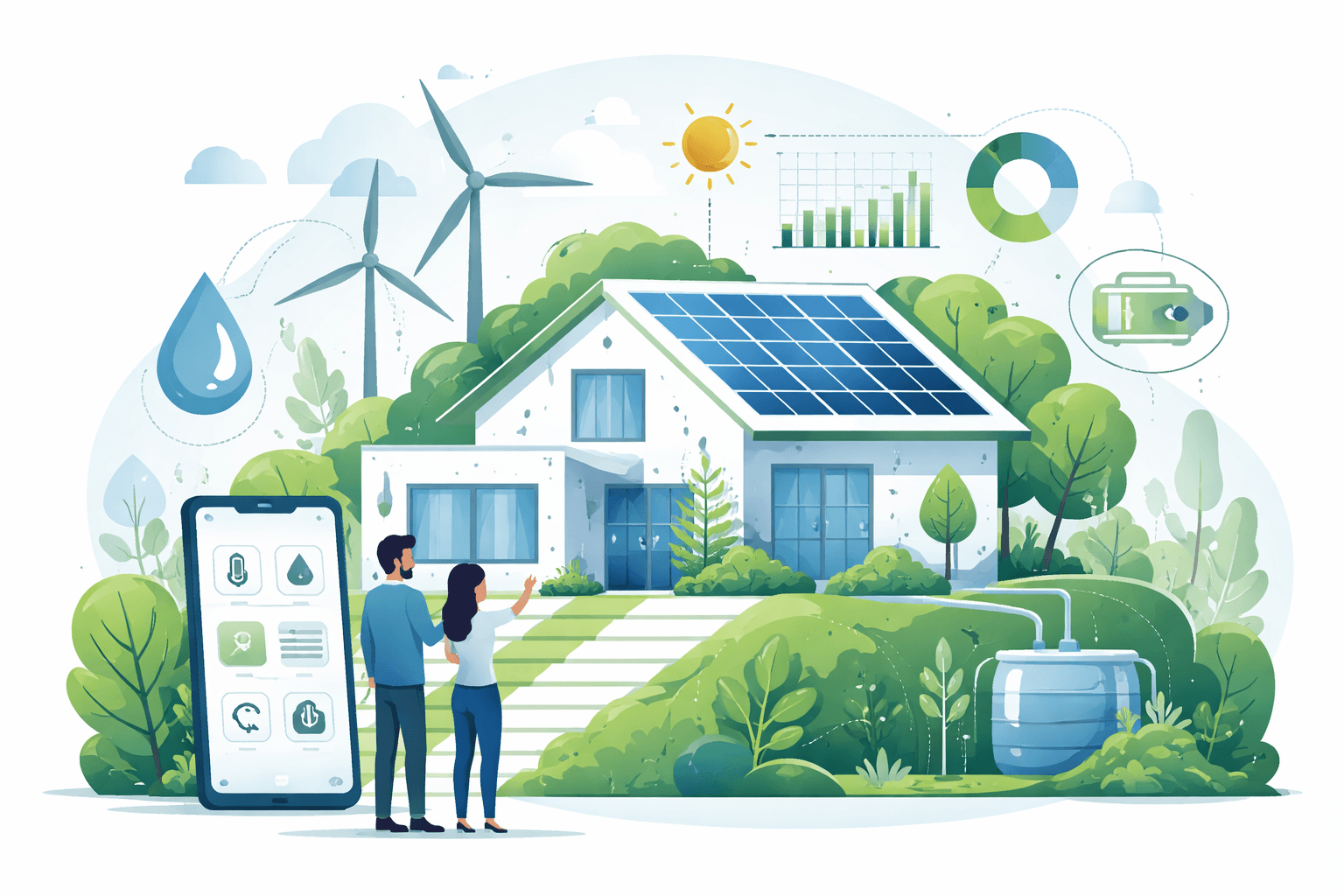
A net‑zero home cuts operating energy use by 60–90% compared with typical construction when envelope and equipment are designed together, according to the U.S. Department of Energy (DOE) case studies and Passive House Institute performance data. Buildings already account for roughly 28% of global energy‑related CO₂ emissions from operations, plus about another 10% from materials and construction (GlobalABC, IEA). Designing green homes is therefore one of the highest‑leverage climate and health moves a household can make—often with lifetime cost savings.
This guide distills the core principles, tradeoffs, and numbers behind designing green homes—covering passive design, low‑carbon materials, high‑efficiency systems, water strategies, and verifiable performance.
Principles of passive, climate‑responsive design
Passive design reduces heating, cooling, and lighting demand by leveraging the site and building envelope before adding equipment. Getting this right shrinks system sizes and costs downstream.
Site orientation and glazing
- Orient the long axis east‑west where feasible to control solar gain. In most temperate and cold climates, prioritize south‑facing windows for winter sun, while minimizing west glazing (the hardest to shade and a frequent source of overheating).
- Target a window‑to‑wall ratio of roughly 15–25% (varies by climate and daylight goals). Use high‑performance windows: U‑factor ≤ 0.25–0.28 (Btu/hr·ft²·°F) in colder zones and ≤ 0.30 in milder zones; Solar Heat Gain Coefficient (SHGC) ~0.5–0.6 for south windows in cold climates and ~0.2–0.3 in hot climates to limit unwanted gain.
- Daylighting: place glazing high on walls, use light shelves, and maintain interior surface reflectance to reduce artificial lighting demand. A properly daylit space can cut lighting electricity by 20–60% (NREL).
Shading design
- Fixed overhangs on south façades are simple and durable. A basic rule of thumb: overhang depth ≈ 0.5–0.7 × window height, tuned using solar charts for your latitude. Use vertical fins or exterior shades on east/west windows.
- Deciduous trees on the west and southwest can drop peak cooling loads by 10–30% through shading and evapotranspiration (U.S. EPA Urban Heat Island studies).
Superinsulation and thermal‑bridge control
- Insulation slows heat flow; thermal bridges (conductive short‑cuts through studs, slab edges, balconies) defeat it. Use continuous exterior insulation and thermally broken connectors.
- DOE climate‑zone‑typical whole‑assembly targets (walls/attic/slab‑edge) often land near: R‑25 to R‑35 walls, R‑49 to R‑60 attics, and R‑10 to R‑15 slab/edge in cold and mixed climates. In hot climates, prioritize roof/attic insulation and reflective roofing.
- Dense‑pack cellulose or mineral wool provide high R‑value per dollar and excellent fire and sound performance; closed‑cell spray foam offers air/vapor control but has higher embodied carbon unless specified with low‑GWP blowing agents.
Airtightness and ventilation
- Airtightness is the foundation of comfort and energy performance. The 2021 IECC targets 3 ACH50 (air changes per hour at 50 Pa) in most U.S. climate zones; Passive House targets 0.6 ACH50. Blower‑door testing during construction is essential.
- Pair tight envelopes with balanced mechanical ventilation (HRV/ERV). Energy recovery ventilators capture 60–90% of heat (and ERVs also manage moisture), maintaining indoor air quality with minimal penalty.

Panasonic Intelli-Balance 100 Energy Recovery Ventilator (ERV), 30-100 CFM, Standard Plug-In, Cold Climate, FV-10VEC2 - Amazon.com
View on AmazonNatural ventilation and thermal mass
- Cross‑ventilation works best when operable windows comprise ≥4–8% of floor area, with inlet and outlet on opposing walls. In diurnal climates, exposed interior thermal mass (e.g., concrete slab or phase‑change materials) can flatten temperature swings.
What it delivers: Studies of Passive House projects in North America and Europe consistently report 70–90% reductions in space‑heating demand and markedly improved comfort (PHIUS, PHI). Even without full Passive House targets, envelope‑first design commonly cuts HVAC sizing by 25–50%, saving upfront cost.
Low‑impact materials and construction practices
Material choices determine a home’s upfront or “embodied” carbon—greenhouse gases emitted from extraction, manufacturing, and transport—plus indoor air quality and durability.
Embodied carbon, defined and measured
- Embodied carbon is often 200–500 kg CO₂e per m² of floor area for new low‑rise homes, depending on structure and finishes (LETI/RIBA benchmarks, regional LCA studies). Structure and foundation typically dominate.
- Use Environmental Product Declarations (EPDs) and whole‑building LCA tools (EC3, One Click LCA) to compare options at design stage. Favor products with third‑party verified EPDs.
Strategies to cut embodied impacts
- Structure: Consider mass timber or advanced‑framing wood systems sourced from FSC‑certified forests; specify high‑recycled‑content steel when steel is required.
- Concrete: Reduce cement content with supplementary cementitious materials (SCMs) such as slag or fly ash; where available, specify lower‑carbon cements or mixes with performance‑based specs instead of prescriptive high‑cement recipes. Mix changes alone can trim concrete CO₂ by 20–50% (WBCSD/IEA).
- Insulation: Favor cellulose (recycled paper) or mineral wool; if using foam, select low‑GWP blowing agents and right‑size thickness with exterior insulation to eliminate thermal bridges.
- Finishes and adhesives: Choose low‑ or no‑VOC products. Many green programs cap VOCs at ≤50 g/L for paints and ≤20 g/L for clear finishes. Look for GREENGUARD Gold, Green Seal, or CARB Phase 2 compliance for composite wood.
- Durability and moisture: Robust water management (sloped sills, rainscreens, flashing) often has the best climate ROI—avoiding repairs and replacements that carry high embodied emissions.
- Local sourcing: Shorter transport helps, but manufacturing emissions usually dominate. Prioritize low‑carbon production first, then local where feasible.
Evaluate tradeoffs with whole‑life thinking: a slightly higher‑carbon product that doubles service life can win environmentally. Use LCA to compare “kg CO₂e per year of service.”
For a deeper dive on specific material classes and specs, see our guide: Sustainable Materials for Construction: Practical Guide to Low‑Carbon, Durable, and Cost‑Effective Building Materials.
On‑site energy systems and efficiency measures
Envelope first, equipment second. After passive design lowers loads, specify right‑sized, high‑efficiency systems and, where appropriate, on‑site generation and storage.
Load calculations and modeling
- Use ACCA Manual J for room‑by‑room heating/cooling loads; Manual S for equipment selection; Manual D for duct design. Oversizing hurts comfort and efficiency.
- Home energy modeling tools—HERS (RESNET), BEopt, EnergyPlus/eQUEST, PHPP (Passive House), and WUFI Passive—let you compare envelope options, HVAC types, and solar before building.
High‑efficiency HVAC and water heating
- Air‑source heat pumps now outperform fossil systems in most climates. Seasonal efficiencies commonly reach COP 3–4 (i.e., 300–400% efficient). Cold‑climate models maintain 70–80% of capacity near −5°F (NEEP database), making them suitable across North America and Europe.
- Ducted or ductless mini‑splits work well in tight homes; place heads centrally, seal ducts to ≤4 cfm25 per 100 ft², and commission airflow.
- Heat‑pump water heaters (HPWH) deliver 2–4× the efficiency of resistance or gas water heaters (Uniform Energy Factor often ≥3), cutting water‑heating energy by 50–70% (U.S. DOE).
- Ventilation: Specify HRV/ERV units with sensible recovery efficiency ≥75% and ECM fans. Filter supply air at MERV‑13 or higher to remove fine particulates (ASHRAE).
Solar PV and solar thermal
- Residential PV systems typically range 6–10 kW. Production averages 1,200–1,600 kWh per kW per year in sunny U.S. regions and 900–1,200 kWh/kW in cloudier ones (NREL PVWatts). A 7 kW array might deliver ~9,000–10,000 kWh/year.
- Installed costs in the U.S. commonly fall around $2.5–$4.0/Wdc before incentives, depending on market and roof complexity (SEIA/Wood Mackenzie, NREL cost benchmarks).
- Incentives: The federal Investment Tax Credit is 30% for residential PV and batteries placed in service through at least 2032 (IRS, Inflation Reduction Act). Many states offer additional rebates or performance incentives; net metering policies vary.
- Solar thermal (domestic hot water) can be cost‑effective where fuel is expensive or roof area is constrained, but HPWHs plus PV often pencil better in many markets.
For context on renewable options and adoption pathways, see: Renewable Energy Sources: A Clear Guide to Solar, Wind & More.
Battery storage and resilience
- Home batteries (10–20 kWh) provide backup, time‑of‑use arbitrage, and solar self‑consumption. Round‑trip efficiency typically ~90–95%; most systems deliver 3–10 kW of continuous power.
- Sizing: Start with critical loads (fridge ~1–2 kWh/day, lighting 0.5–1 kWh/day, communications, well pump, medical devices). For multi‑day resilience without a generator, 20–40 kWh plus PV helps in sunny climates.
- Economics depend on time‑of‑use rates and incentives; storage adds resilience value not captured in simple payback. For product selection and system sizing considerations, see our Solar Battery Buying Guide: Choose the Best Home Battery in 2026. If you’re targeting full autonomy, our Off-Grid Solar: Complete Buyer’s Guide to Systems, Costs & Setup covers end‑to‑end design.
Controls and commissioning
- Smart thermostats, submetering, and smart panels can trim 5–15% from energy use by optimizing schedules and identifying anomalies (DOE field studies). Proper commissioning—verifying refrigerant charge, airflow, and controls—often delivers more savings than higher equipment specs on paper.
For a room‑by‑room look at connected efficiency measures, see: Smart Home Technology for Sustainability: High‑Impact Upgrades, Integration, and Real‑World Guidance.
Water conservation and landscape integration
Water‑smart design lowers bills, protects watersheds, and improves site resilience to droughts and storms.
Efficient fixtures and appliances
- EPA WaterSense‑labeled products use at least 20% less water than baseline. Targets: showerheads 1.5–2.0 gpm; bathroom faucets ≤1.0–1.2 gpm; toilets 1.1–1.28 gpf (dual‑flush or pressure‑assist for performance). ENERGY STAR clothes washers cut water use by ~35–50% compared with conventional models.
- The average U.S. household uses ~300 gallons/day, with about 70% indoors (U.S. EPA). Right‑sizing fixtures yields immediate savings.
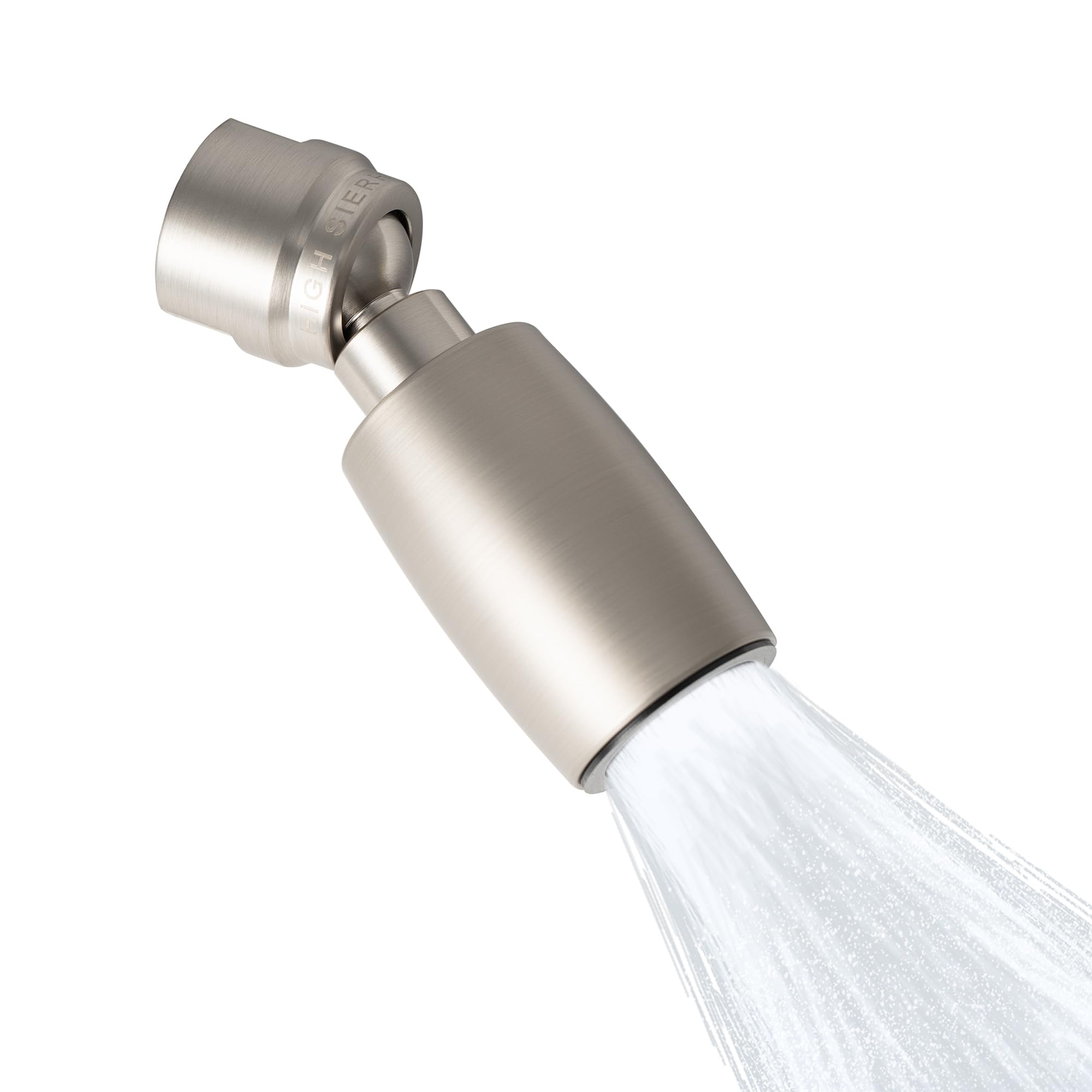
High Sierra® - CLASSIC™ Solid Lead-Free Metal 1.5 GPM Award Winning. Ultra Low Flow Shower Head. Patented Nozzle Never Clogs - Polished Chrome Finish - Fixed Showerheads - Amazon.com
View on AmazonGreywater and rainwater harvesting
- Greywater systems reuse lightly used water (showers, laundry) for subsurface irrigation or toilet flushing, offsetting 20–40% of potable demand in many homes. Check state/local codes; some allow simple laundry‑to‑landscape systems with minimal treatment.
- Rainwater: 1 inch of rain on 1,000 ft² of roof yields ~623 gallons. Cisterns sized 1–2 weeks of typical outdoor demand are practical; include a first‑flush diverter and leaf screens. Potable reuse requires additional treatment and careful material selection.
Drought‑tolerant planting and irrigation
- Prioritize native or climate‑adapted species, deep mulch, and soil organic matter to improve infiltration and reduce irrigation. Drip irrigation with weather‑based controllers can cut outdoor use by 30–50% (EPA WaterSense).
- Strategic tree canopy reduces cooling loads and urban heat. Aim canopy on west/southwest exposures and over hardscapes.
Stormwater management
- Integrate permeable pavements, rain gardens, and bioswales to slow, spread, and sink runoff. Properly sized green infrastructure can retain 50–80% of annual rainfall on-site in many climates (USGS and municipal LID studies), improving groundwater recharge and reducing flood risk.
Performance, cost, and occupant health outcomes
Green homes work best when performance is measured and managed over time—and when design choices explicitly consider health.
Energy modeling, testing, and monitoring
- Use blower‑door testing at rough‑in and final to find leaks early. Duct leakage testing should hit ≤4% of fan flow (or ≤4 cfm25/100 ft² of conditioned floor area) where codes apply.
- Commission HVAC and ventilation; verify HRV/ERV flow balancing and filter pressure drop.
- Post‑occupancy, monitor electricity and (if present) gas via smart meters; add submetering for major loads (heat pump, water heater, EVSE). Continuous data often reveals 5–10% easy savings through schedule tweaks.
Lifecycle cost and ROI
- Consider lifecycle cost analysis (LCCA): compare options over 20–30 years, factoring discount rate, maintenance, replacements, and fuel price escalation. Envelope upgrades with long service life (windows, insulation, airtightness) often show strong net present value because they enable smaller HVAC.
- Typical simple paybacks (market‑dependent):
- Heat‑pump water heater: 3–6 years versus electric resistance or propane.
- Space‑conditioning heat pumps replacing electric resistance or oil/propane: 5–10 years; longer if replacing efficient gas in mild climates.
- PV: 6–12 years depending on incentives, rates, and solar resource; batteries vary widely and are often driven by resilience or tariff arbitrage rather than pure payback.
Indoor air quality and health
- Ventilation to ASHRAE 62.2 with MERV‑13 filtration reduces fine particulate (PM2.5) and allergens. Maintain indoor relative humidity around 30–50% to limit mold and dust mites (U.S. EPA, ASHRAE).
- Low‑VOC materials and sealed combustion or all‑electric designs reduce exposure to NO₂, formaldehyde, and other irritants. Studies link improved IAQ to fewer asthma symptoms and better cognitive performance in schools and offices; similar mechanisms apply in homes.
- Radon: Test and, in high‑risk zones, include passive radon rough‑in (sub‑slab depressurization) during construction.
Codes, incentives, and certifications
- Codes: The 2021/2024 IECC raises envelope and equipment efficiency; many jurisdictions add “stretch codes.” CALGreen and regional codes may include low‑carbon and water measures.
- Incentives (U.S.):
- Federal ITC: 30% credit for residential PV and batteries.
- Section 25C tax credits for heat pumps, heat‑pump water heaters, insulation, windows/doors (annual caps apply).
- HOMES and Home Electrification rebates (Inflation Reduction Act) are rolling out state‑by‑state, with higher incentives for low‑/moderate‑income households and deep retrofits.
- 45L tax credit for builders meeting ENERGY STAR or DOE Zero Energy Ready Home.
- Certifications and labels:
- ENERGY STAR Certified Homes: proven envelope/duct tightness and efficient systems.
- DOE Zero Energy Ready Home (ZERH): adds IAQ, efficient hot‑water distribution, and PV‑ready requirements.
- Passive House (PHI/PHIUS): rigorous energy and comfort targets; typically 70–90% space‑heating demand reduction.
- LEED for Homes: holistic rating across energy, water, materials, and sites.
- Living Building Challenge (Petal/Full) and WELL: advanced health and regenerative design criteria.
By the numbers
- 28% + 10%: Global energy‑related CO₂ from building operations (~28%) plus construction and materials (~10%) (GlobalABC/IEA).
- 70–90%: Typical reduction in space‑heating demand for certified Passive House projects (PHI/PHIUS).
- 3 ACH50 vs. 0.6 ACH50: Common U.S. code airtightness versus Passive House target.
- 1,200–1,600 kWh/kW‑yr: PV energy yield in sunnier regions (NREL PVWatts).
- ≥20%: Water savings with WaterSense‑labeled fixtures (U.S. EPA).
- 623 gallons: Rain captured per inch on 1,000 ft² of roof.
Practical design sequence that works
- Set performance and carbon targets early (e.g., ZERH or Passive House; embodied carbon ≤ a chosen benchmark). Align the budget to these outcomes.
- Model loads and iterate massing, orientation, glazing, and shading to minimize heating/cooling demand.
- Detail a moisture‑robust, thermal‑bridge‑free envelope; specify low‑carbon assemblies using EPDs and LCA.
- Right‑size HVAC using Manual J/S/D; select heat pumps and HPWHs; design balanced HRV/ERV ventilation with MERV‑13 filtration.
- Evaluate PV and storage sizing against annual kWh, rate structures, and incentives; confirm electrical capacity and conduit pathways.
- Design water systems: efficient fixtures, compact hot‑water distribution, greywater/rainwater where allowed, and drought‑tolerant landscaping with permeable hardscapes.
- Commission and verify: blower door, duct leakage, ventilation balancing, refrigerant charge, and controls. Plan for monitoring and maintenance.
Where this is heading
Policy, tech, and markets are converging. Heat pumps are now the top‑selling residential HVAC in several major markets (AHRI data for the U.S.), PV costs continue their long decline, and low‑carbon concrete and mass‑timber supply chains are scaling. Codes are tightening airtightness and electrification, while IAQ and resilience rise in importance. The next big unlocks: standardized whole‑home retrofits, widespread state rebates under the Inflation Reduction Act, and digital twins that connect design intent to real‑world performance.
Designing green homes is no longer niche architecture—it’s best practice engineering and a health investment. With envelope‑first design, vetted materials, right‑sized electrified systems, water‑smart landscapes, and measured performance, households can achieve lower bills, lower emissions, and measurably better air.
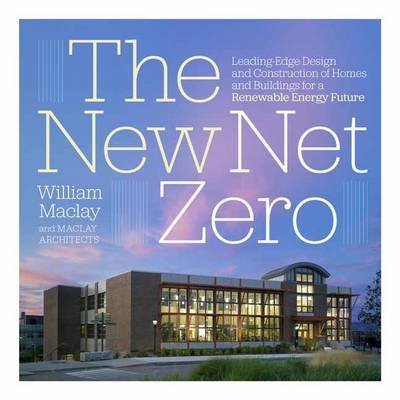
The New Net Zero: Leading-Edge Design and Construction of Homes and Buildings for a Renewable Energy Future: Maclay, Bill
The new threshold for green building is not just low energy, it’s net-zero energy. In The New Net Zero, sustainable architect Bill Maclay charts the path for designers and builders interested in explo
Check Price on AmazonRecommended Products
The New Net Zero: Leading-Edge Design and Construction of Homes and Buildings for a Renewable Energy Future: Maclay, Bill
The new threshold for green building is not just low energy, it’s net-zero energy. In The New Net Zero, sustainable architect Bill Maclay charts the path for designers and builders interested in explo
Panasonic Intelli-Balance 100 Energy Recovery Ventilator (ERV), 30-100 CFM, Standard Plug-In, Cold Climate, FV-10VEC2 - Amazon.com
Energy Recovery Ventilator (ERV): <strong>Remove moist, stale air and supply fresh, clean air in your home while balancing air pressure</strong>; Cold Climate Model is recommended for areas where temp
High Sierra® - CLASSIC™ Solid Lead-Free Metal 1.5 GPM Award Winning. Ultra Low Flow Shower Head. Patented Nozzle Never Clogs - Polished Chrome Finish - Fixed Showerheads - Amazon.com
<strong>SAVES WATER AND THE ENERGY to heat it (up to 40%)</strong> — Independently tested and certified to WaterSense and WaterMark. California Compliant. GUARANTEED TO NEVER CLOG — Hard water, sand,
More in Sustainability Policy
- Designing Energy‑Efficient Homes: Practical Strategies for Low‑Carbon, High‑Comfort Living
- Energy-Efficient Green Renovations: Practical Solutions to Cut Bills, Reduce Carbon, and Boost Home Value
- Green Living: Practical, Data-Backed Guide to a Low-Carbon Home
- Smart Home Technology for Sustainability: High‑Impact Upgrades, Integration, and Real‑World Guidance