
EV Charging Station Installation Cost: What to Expect and How to Plan
Electric vehicles are surging, and infrastructure is racing to keep up: public charging points grew roughly 40% globally in 2023, according to the International Energy Agency’s Global EV Outlook 2024. Whether you’re a homeowner adding a Level 2 unit or a business installing a bank of DC fast chargers, understanding EV charging station installation cost is the key to budgeting and making smart choices that hold up over time.
This guide breaks down the cost drivers, typical price ranges for home and commercial projects, hidden expenses to watch, ROI calculations, and incentives that can dramatically lower upfront cost.
What drives EV charging station installation cost
The single biggest determinant of EV charging station installation cost is charger type and power level, but site conditions and electrical capacity often dominate the final bill. If you’re new to charger types and speeds, start with our explainer on networks and hardware to ground the terminology: Charging Stations for Electric Cars: Types, Costs, Networks, and How to Choose.

Electrify: An Optimist's Playbook for Our Clean Energy Future
In Electrify, <strong>Griffith lays out a detailed blueprint—optimistic but feasible—for fighting climate change while creating millions of new jobs and a healthier environment</strong>. Griffith’s pl
Check Price on AmazonKey cost factors:
- Charger type and power rating
- Level 1 (120 V): Slow, usually plug-in, minimal install cost.
- Level 2 (208–240 V, 16–80 A): Fast home and workplace charging; most common for buildings.
- DC fast charging (50–350 kW): Highway and high-throughput sites; expensive hardware and grid upgrades.
- Electrical capacity on site
- Panel space (breaker slots) and ampacity (e.g., 100 A vs 200 A service) determine whether a simple breaker addition works or if you need a panel or service upgrade.
- Distance and construction method
- Conduit runs, trenching, directional boring, and coring through walls/slabs can dwarf hardware cost.
- Mounting and protection
- Wall vs pedestal, bollards, wheel stops, signage, striping, and lighting for safety/ADA compliance.
- Networking and payment
- “Smart” chargers add hardware and software costs but enable load management, billing, and data.
- Permitting, inspections, and utility coordination
- Local fees vary; some utilities require service studies or transformer upgrades.
- Labor market and wage rules
- Electrician labor ranges widely by region; public projects may trigger prevailing wage and apprenticeship rules.
Sources: U.S. DOE Alternative Fuels Data Center (AFDC), NREL cost benchmarking (2022–2024), Joint Office of Energy & Transportation guidance for NEVI sites.
Typical EV charging station installation cost ranges
The figures below reflect U.S. 2024–2026 conditions and recent utility and program data. Actual costs vary with location, labor rates, and site complexity.
Home charging (single‑family)
- Level 1 (120 V)
- Hardware: Often free with the car or $150–$300 for a cordset.
- Installation: $0 (use existing outlet) to $200–$400 for a dedicated GFCI outlet.
- Level 2 (240 V)
- Hardware: $400–$1,200 for a 32–48 A wall unit (Wi‑Fi models at the higher end). See options in our Best EV Home Charger 2026.
- Basic installation: $300–$1,500 if panel has capacity and the run is short (≤30 ft) with surface‑mounted conduit.
- Moderate complexity: $1,500–$3,500 with longer runs, drywall work, outdoor pedestal, or subpanel.
- Panel upgrade (if needed): $1,500–$3,000 for 200 A panel replacement; whole‑home service upgrade can be $2,500–$6,000+ depending on utility fees and meter/main configuration.
- Permitting: $50–$300 typical.
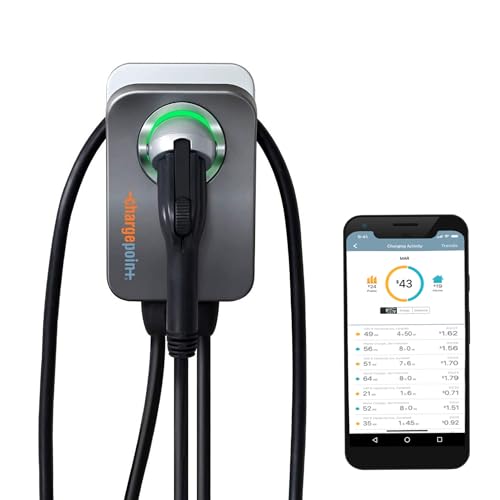
ChargePoint HomeFlex Level 2 EV Charger J1772
Discover the latest in EV charging technology. Explore a diverse selection of smart, efficient, and compatible charging solutions for your electric vehicle.
Check Price on AmazonTotal typical home Level 2 installed: $800–$2,500 for simple jobs; $2,500–$6,000 with upgrades; $6,000–$10,000 for complex outdoor pedestals or long trenching.
Multifamily and commercial Level 2 (workplaces, retail, parking)
Per‑port costs rise with networking, pedestals, and civil work.
- Hardware per port
- Non‑networked wall unit: $700–$1,800.
- Networked wall unit or pedestal head: $1,200–$4,000.
- Dual‑port pedestals: $3,000–$7,000 per pedestal (2 ports), excluding make‑ready.
- Installation per port
- Light‑touch retrofit (short runs, surface conduit): $2,000–$5,000.
- Typical garage/lot with coring/trenching and bollards: $4,000–$10,000.
- Complex sites (long trenching, panel/subpanel, ADA regrading): $10,000–$20,000+.
- Networking and software: $150–$350 per port per year (more with payment processing).
All‑in Level 2 per port: $3,000–$15,000 typical; $15,000–$25,000 for complex retrofits. California program data (CALeVIP) and NREL site surveys fall within these ranges when including civil work and make‑ready.
Public DC fast charging (50–350 kW)
- Hardware
- 50–75 kW: $20,000–$45,000 per dispenser.
- 150 kW: $50,000–$100,000 per dispenser.
- 350 kW high‑power: $80,000–$150,000 per dispenser.
- Site electrical and civil (make‑ready)
- Utility service/transformer upgrades: $25,000–$150,000+ depending on capacity and distance.
- Switchgear, distribution, and foundations: $20,000–$100,000+ per site.
- Trenching/boring, paving, ADA, lighting, canopies: highly variable, $20,000–$200,000+ per site.
- Installation labor and commissioning: $30,000–$150,000 per site depending on scope.
All‑in DCFC cost per port:
- 50–75 kW: $75,000–$150,000 typical.
- 150 kW: $100,000–$250,000 typical.
- 350 kW: $200,000–$500,000 at complex highway sites.
NEVI‑compliant stations (minimum four 150 kW ports, 97% uptime, open‑payment) commonly budget $500,000–$1.2 million per site, aligned with Joint Office project data and state awards. NREL’s recent benchmarking places many 150 kW installs in the low‑ to mid‑six figures per port when utility upgrades are needed.
By the Numbers: Quick cost benchmarks
- Electrician labor: $85–$150 per hour residential; $120–$200+ commercial prevailing wage regions.
- Trenching: $20–$40 per linear foot in soft ground; directional boring $60–$120/ft; asphalt saw‑cut and patch $15–$25/ft.
- Bollards and wheel stops: $200–$600 each, installed.
- Pedestal foundation: $1,000–$3,000 per pad for rebar/anchor, more if regrading is required.
- Annual maintenance budget: 2%–5% of installed cost for public sites, higher in harsh climates.
- Network fees: $150–$1,000 per port per year depending on features and transaction volume.
Hidden and overlooked expenses
- Panel and service capacity
- A 48 A Level 2 charger requires a 60 A breaker and roughly 11.5 kW; many older homes with 100 A service may need a panel or service upgrade. Load management devices ($400–$1,000) can defer upgrades by capping current.
- Utility fees and lead times
- New service or transformer upsizing can add months and tens of thousands of dollars. Early coordination with the utility can right‑size the design and avoid rework.
- Trenching and restoration
- Long conduit runs, crossing drive lanes, and ADA ramp changes drive civil costs quickly. Directional boring can reduce surface disruption but costs more per foot.
- Networking and payment processing
- Beyond annual software fees, payment processing and cellular service can add $0.05–$0.10 per kWh in effective cost.
- Demand charges (commercial/public)
- For DCFC, utility demand charges based on peak kW can dominate the utility bill, especially at low utilization. Many utilities offer EV‑specific rates or demand charge holidays—ask early.
- Signage, striping, and compliance
- ADA access, clear floor space, slopes, and wayfinding signage are enforceable requirements in many jurisdictions; budget $1,000–$10,000+ depending on site changes.
- Commissioning and inspections
- Factory commissioning, networking setup, and local inspections can add dedicated vendor time and fees.
- Spares and reliability
- Cables, holsters, and contactors are wear items; stocking spares improves uptime and can reduce emergency call‑out costs.
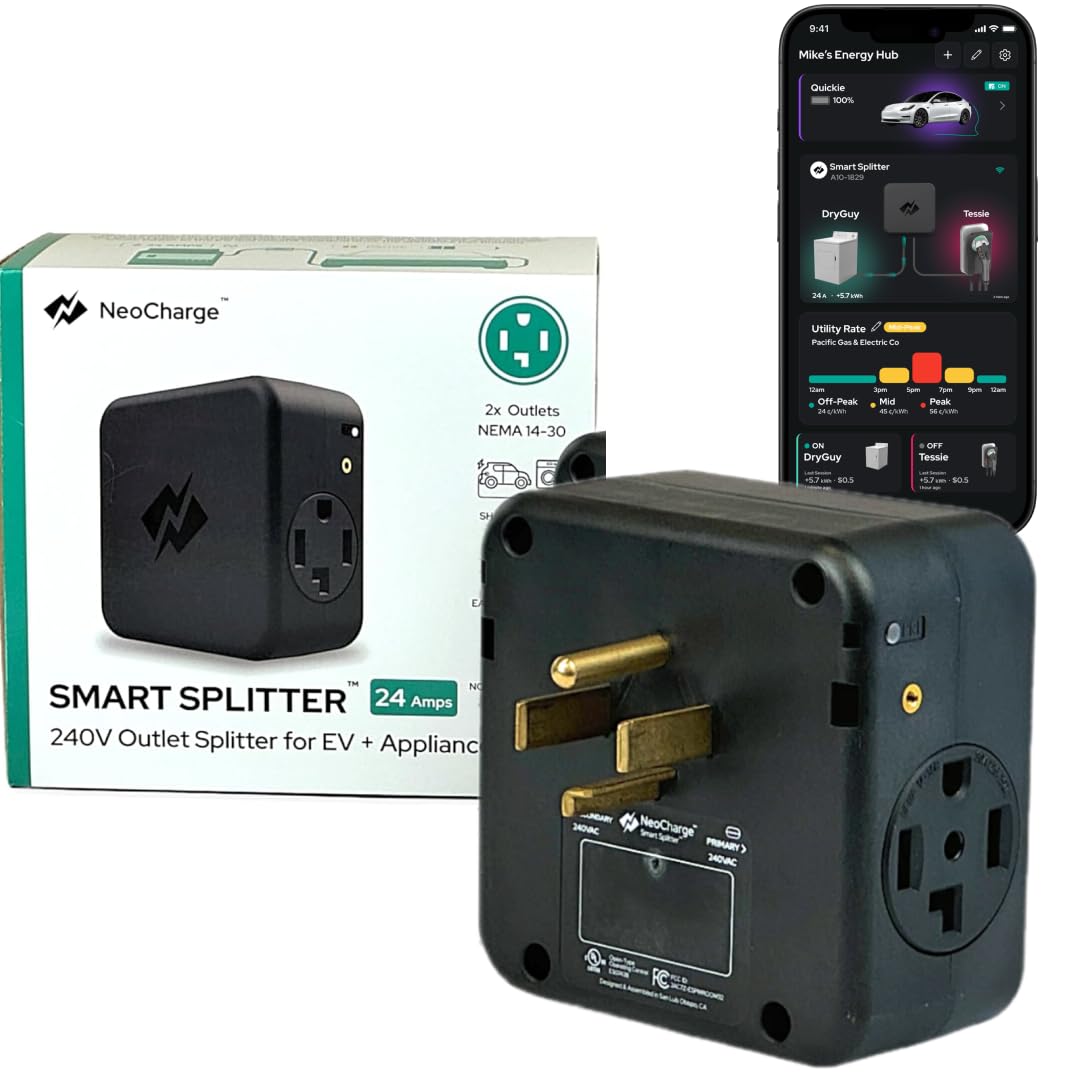
NeoCharge Smart Splitter 240V - Unlock Electric Vehicle (EV) Charging with Dryer, UL Certified, Auto-Switching, Avoid Panel Upgrades/Rewiring, Save Thousands (24 Amp, NEMA 14-30)… : Automotive
View on AmazonEstimating ROI and long‑term value
Return on investment depends on utilization (how often ports are in use), pricing, and operating costs. Two simple frameworks help estimate value: payback period (years to recoup cost) and total cost of ownership (TCO over 5–10 years).
Homeowner value
- Upfront cost: $800–$2,500 typical for Level 2; $2,500–$6,000 with upgrades.
- Operating cost: Negligible beyond small standby power; electricity cost for charging is the key driver.
- Fuel savings: If you pay $0.15/kWh at home and your EV averages 0.30 kWh/mile, fuel is ~$0.045/mile. At $3.80/gal gasoline and 30 mpg, fuel is ~$0.127/mile. That’s ~$820/year saved at 10,000 miles, which can pay back installation in 1–4 years.
- Resale and convenience: Garages with dedicated EV circuits can be a selling point; time savings and off‑peak charging can lower household bills with time‑of‑use rates.
For home charging best practices and cost control, see How to Charge an Electric Vehicle: Practical Guide if you want a step‑by‑step routine and rate tips.
Commercial Level 2 example (workplace/retail)
Assume two dual‑port networked pedestals (4 ports) in a parking lot.
- Capex: $12,000 hardware + $24,000 installation/civil + $1,000 signage/bollards = $37,000.
- Annual costs: $1,000 networking + $1,000 maintenance = $2,000.
- Utilization: 4 sessions/port/day, 10 kWh/session average, 300 days/year → 48,000 kWh/year.
- Pricing and revenue: $0.30/kWh to drivers → $14,400/year gross.
- Energy cost: $0.14/kWh blended → $6,720/year.
- Net operating margin: ~$14,400 − $6,720 − $2,000 = $5,680/year.
- Simple payback without incentives: $37,000 / $5,680 ≈ 6.5 years.
Levers to improve ROI: prioritize locations with high dwell time, use load management to avoid panel upgrades, and negotiate EV‑specific rates or demand‑charge exemptions with the utility. For fleets and depots, smart charging and right‑sizing power are essential; our analysis of depot trends explores price parity and operational strategies: Charging the Fleet Revolution.
DC fast charging example (public corridor site)
Assume a NEVI‑style site with four 150 kW chargers at $900,000 total installed.
- Annual O&M: 3% of capex → ~$27,000 (maintenance, networking, cellular, snow removal).
- Energy delivered at 15% average utilization (typical early years):
- Site capacity: 600 kW; 15% capacity factor → 0.15 × 600 × 8,760 ≈ 788,400 kWh/year.
- Revenue at $0.40/kWh: ~$315,000/year gross.
- Energy cost at $0.16/kWh: ~$126,000/year.
- Demand charges and fixed fees: Varies widely—budget $40,000–$120,000/year unless on EV tariff with mitigations.
- Net operating margin (illustrative): ~$315,000 − $126,000 − $80,000 (demand/fees) − $27,000 (O&M) ≈ $82,000/year.
- Simple payback: ~$900,000 / $82,000 ≈ 11 years, before financing and taxes.
Utilization and tariff design dominate DCFC economics. Many states are reforming rates for public charging; smart energy management (battery buffering, power sharing) can reduce demand charges and connection sizes.
How incentives lower EV charging station installation cost
Federal, state, and utility programs can cut 30%–80% from project costs if you meet eligibility and documentation requirements. Gather quotes, site plans, and W‑9/EIN details before you apply, and verify program rules before you order equipment.
- Federal tax credit (U.S. Internal Revenue Code §30C)
- Residential: 30% of hardware and installation up to $1,000 per dwelling unit through 2032.
- Commercial: Up to 30% of eligible costs, capped at $100,000 per charger for projects placed in service through 2032. To claim the full 30%, projects must be in eligible census tracts (non‑urban or low‑income) and meet prevailing wage and registered apprenticeship rules; otherwise, the credit is 6%.
- NEVI grants (Infrastructure Investment and Jobs Act)
- Covers up to 80% of eligible DCFC project costs on designated corridors, with Buy America, uptime, and open‑payment requirements. Expect competitive applications and reporting duties.
- State and local rebates
- Many states and air districts offer $1,000–$6,000 per Level 2 port and $20,000–$100,000+ per DCFC dispenser, often with caps per site and multi‑unit dwelling bonuses.
- Utility make‑ready and rate programs
- Utilities may fund service upgrades and conduit to the stub (make‑ready) and offer EV tariffs that reduce demand charges or reward off‑peak charging.
To see what’s available and how to qualify where you live, start with our state‑by‑state hub: Electric Vehicle Incentives by State: What’s Available, Who Qualifies, and How to Claim It.
Documentation checklists that speed approvals:
- Site plan with charger locations, ADA paths, and panel schedules.
- One‑line electrical diagram, load calcs, and breaker schedules.
- Utility pre‑application (if required) and estimated load profile.
- Contractor license and insurance; wage documentation if required.
- Equipment spec sheets with UL listings and network certifications.
- Buy America and commissioning plans for NEVI‑funded sites.
Planning tips to control cost without sacrificing reliability
- Choose the right power level
- For homes, a 32–40 A Level 2 (7.7–9.6 kW) is sufficient for most drivers overnight. Higher amperage adds cost and may require upgrades.
- For workplaces and multifamily, more ports at moderate power often beat fewer high‑power ports for throughput and cost.
- Minimize distance and concrete work
- Place chargers near electrical rooms/panels. In garages, align with existing conduits and avoid coring through post‑tension slabs where possible.
- Use load management and power sharing
- Networked Level 2 can share a circuit across multiple ports, deferring panel upgrades. For DCFC, power cabinets can dynamically allocate kW among dispensers.
- Standardize hardware and spares
- Common models reduce training and maintenance complexity; order spare cables and contactors with the initial purchase.
- Engage the utility early
- Ask for EV tariffs, demand charge mitigations, and transformer availability before finalizing equipment sizes.
- Plan for uptime
- NEVI targets 97% uptime. Budget for preventive maintenance and remote monitoring to avoid revenue loss and customer dissatisfaction.
Practical implications for homeowners, businesses, and fleets
- Homeowners
- Get a load calculation before committing to a panel upgrade; a load‑sharing EVSE may save thousands. Schedule charging off‑peak to cut energy costs.
- Businesses and multifamily
- Prioritize locations with consistent dwell time and clear amenities. Price to cover energy, network, and maintenance while remaining competitive.
- Public corridor operators and fleets
- Run sensitivity analyses on utilization and tariffs; a small change in demand charges can swing ROI. Consider battery buffering and solar canopies where land and incentives align.
Where costs are heading next
- Hardware learning curves
- Networked Level 2 hardware prices have trended down 10%–20% over the last few product cycles, and multi‑port architectures reduce per‑port electronics.
- Smarter load management
- IEEE‑2030.5, OCPP 2.0.1, and utility managed‑charging pilots are maturing, enabling lower connection sizes without sacrificing driver experience.
- Rate reform and reliability focus
- Many regulators are piloting EV‑specific tariffs to tame demand charges, while public funding ties payouts to verified uptime—pushing designs toward maintainability.
- Supply chain normalization
- Lead times for switchgear and transformers, which spiked in 2022–2023, are easing in many markets, which should help installation schedules and bids.
The bottom line: EV charging station installation cost is highly site‑specific, but careful scoping, early utility engagement, and smart hardware choices can reduce capital outlays by 20%–40% while boosting long‑term reliability. Use cost ranges above to ballpark your project, then sharpen estimates with a site walk, one‑line diagram, and at least two competitive bids. With incentives layered in, many home Level 2 installs land under $1,500 out‑of‑pocket, commercial Level 2 projects can pencil to 5–7 year paybacks at modest utilization, and DC fast charging becomes financeable on corridors with supportive tariffs and NEVI‑style cost share.
Recommended Products
Electrify: An Optimist's Playbook for Our Clean Energy Future
In Electrify, <strong>Griffith lays out a detailed blueprint—optimistic but feasible—for fighting climate change while creating millions of new jobs and a healthier environment</strong>. Griffith’s pl
ChargePoint HomeFlex Level 2 EV Charger J1772
Discover the latest in EV charging technology. Explore a diverse selection of smart, efficient, and compatible charging solutions for your electric vehicle.
NeoCharge Smart Splitter 240V - Unlock Electric Vehicle (EV) Charging with Dryer, UL Certified, Auto-Switching, Avoid Panel Upgrades/Rewiring, Save Thousands (24 Amp, NEMA 14-30)… : Automotive
NO REWIRING REQUIRED: <strong>Easy to plug into your existing dryer outlet in minutes to setup home EV charging</strong>. Tap into simple and effortless home EV charging access, no panel upgrades, no
More in Green Business
- EV Charging Stations: What You Need to Know About Types, Costs, Installation, and Renewable Integration
- Charging Stations for Electric Cars: Types, Costs, Networks, and How to Choose
- Electric Car Charging Options: How to Choose the Right Charger for Your Needs
- Best EV Home Charger 2026: Top Level 2 Picks & Buying Guide