
Passive House Design Principles: What They Are and Why They Matter
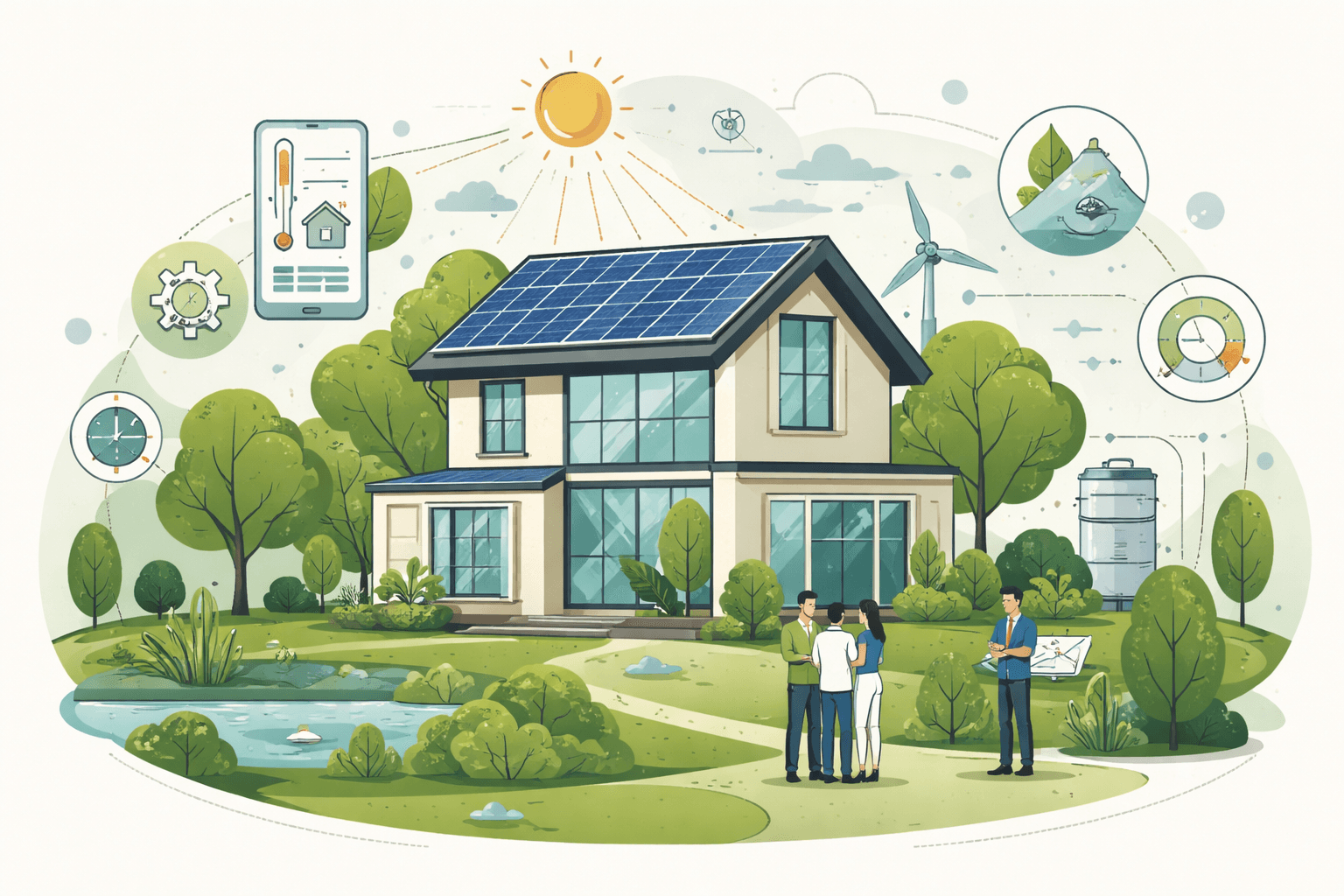
Passive house design principles cut heating and cooling energy use by 60–90% while delivering exceptionally stable indoor temperatures and clean air. According to the Passive House Institute (PHI) and Passive House Institute US (PHIUS), certified buildings typically cap annual space-heating demand at about 15 kWh/m² (≈4.75 kBtu/ft²) and achieve airtightness of ≤0.6 air changes per hour at 50 pascals (ACH50). Heat-recovery ventilation with ≥75% efficiency further trims losses. For occupants, that translates to steady comfort, very low utility bills, and superior indoor air quality.
This guide explains the core passive house design principles, how they’re implemented in practice, the benefits and tradeoffs, and how these strategies support broader sustainability and resilience goals.
What is a passive house?
A passive house (lowercase “p,” lowercase “h”) is a building that achieves ultra-low operational energy while maintaining high comfort and healthy air quality through envelope-first design, extreme airtightness, high-performance windows, and balanced mechanical ventilation with heat/energy recovery. “Passive House” (capitalized) refers to formal certification by PHI or PHIUS, which verify performance targets using rigorous energy modeling and on-site testing.
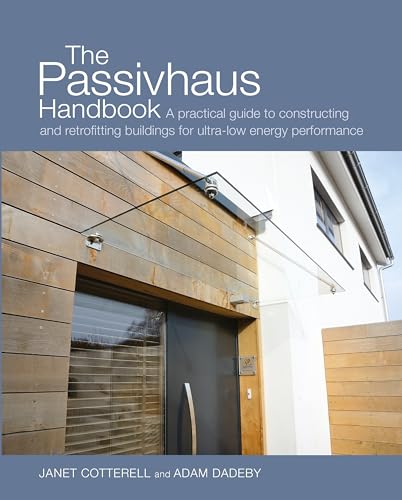
The Passivhaus Handbook: A practical guide to constructing and retrofitting buildings for ultra-low energy performance (Sustainable Building): Cotterell, Janet, Dadeby, Adam
Janet Cotterell has wide experience of working in sensitive settings (conservation areas, listed buildings, historic parks), so is familiar with the use of traditional and natural materials. Her focus
Check Price on Amazon- PHI classic benchmarks: space-heating demand ≤15 kWh/m²·year (≈4.75 kBtu/ft²·year), cooling demand of similar magnitude (climate-dependent), airtightness ≤0.6 ACH50, and high-efficiency heat recovery (≥75%).
- PHIUS+ 2021 sets climate-specific targets for heating, cooling, and peak loads, plus airtightness (≤0.06 cfm50/ft² of enclosure) to reflect North American construction and climate diversity.
Across programs, the goal is consistent: minimize heat losses and gains so small, efficient HVAC can keep spaces comfortable with a fraction of the usual energy.
The five core passive house design principles
1) Superinsulation
Superinsulation means increasing the thermal resistance (R-value) of walls, roofs, and slabs well beyond code minimums. In cold climates this often yields wall assemblies in the R-30 to R-60 range and roofs at R-60 to R-100, using continuous exterior insulation to interrupt framing losses. In warmer climates, roof and slab insulation and strategic wall insulation still matter to limit peak loads and manage moisture flows.
- Why it works: Heat flows from warm to cool through building components. Higher R-values (or, equivalently, lower U-values) slow that flow, so indoor temperatures drift much more slowly. With a highly insulated envelope, a building coasts through cold nights or hot afternoons with minimal active heating or cooling.
- Practical note: Continuous exterior insulation reduces thermal shorts through studs. Mineral wool, rigid foam, wood-fiber boards, and cellular glass are common; each has unique moisture, fire, and embodied-carbon profiles.
2) Airtight construction
Airtightness limits uncontrolled air leakage through cracks, gaps, and penetrations. PH requires ≤0.6 ACH50 (measured via blower-door test). PHIUS uses ≤0.06 cfm50/ft² of enclosure area. For context, the U.S. Department of Energy estimates that air leakage can account for 25–40% of heating and cooling energy in existing homes.
- Strategy: Establish a continuous air barrier layer—often sheathing membranes or interior smart vapor retarders—detailed at all transitions (foundation-to-wall, wall-to-roof, around windows, and service penetrations). Use tapes, gaskets, and liquid-applied air barriers; minimize penetrations; and plan services inside a dedicated chase.
- Quality assurance: Blower-door tests during construction (at rough-in and at completion) allow teams to find and fix leaks before finishes conceal them. Infrared thermography and smoke tools help locate bypasses.
3) High-performance windows and doors
Windows are the weakest part of most envelopes, so passive buildings use insulated frames and triple glazing with warm-edge spacers and low-emissivity (low‑e) coatings. Certified windows in cold climates often achieve whole-window U-values around 0.8 W/m²·K (≈0.14 Btu/h·ft²·°F) with airtight, thermal-break frames. Solar heat gain coefficient (SHGC, called g‑value in Europe) is tuned to climate and orientation: higher SHGC on south windows in cold climates to capture winter sun, lower SHGC on west/east to reduce summer gains.
- Installation matters: Set units in the insulation layer, use sloped sills and back dams for water management, and detail tapes and gaskets to the air barrier. Poor installation can erase the benefits of great glass.
4) Thermal bridge reduction
Thermal bridges are conductive paths that short-circuit insulation—think slab edges, balcony penetrations, steel beams, and uninsulated window frames. They create cold spots, energy losses, and potential condensation risks.
- Solutions: Use continuous exterior insulation; thermally broken balcony connectors; insulated headers; and careful window bucks. Model linear and point bridges (psi- and chi-values) in the energy model and simplify geometry to reduce bridges by design.
5) Balanced mechanical ventilation with heat/energy recovery
Because passive buildings are airtight, they rely on continuous, balanced ventilation to deliver fresh air and exhaust stale air while recovering energy from the airstreams.

Panasonic Intelli-Balance 100 Energy Recovery Ventilator (ERV), 30-100 CFM, Standard Plug-In, Cold Climate, FV-10VEC2 - Amazon.com
Energy Recovery Ventilator (ERV): <strong>Remove moist, stale air and supply fresh, clean air in your home while balancing air pressure</strong>; Cold Climate Model is recommended for areas where temp
Check Price on Amazon- Heat-recovery ventilators (HRVs) transfer sensible heat; energy-recovery ventilators (ERVs) transfer heat and moisture—helpful in humid or very dry climates. PHI requires ≥75% sensible heat-recovery efficiency and very low fan energy (specific power around 0.45 Wh/m³ or better for certified units).
- Filtration and air quality: High-MERV filters (e.g., MERV 13 class) reduce particulates and pollen; dedicated kitchen range hoods (ducted to outside) handle cooking pollutants. Typical design ventilation ranges from 0.3–0.5 ACH at normal operation, or per-person flow rates around 25–35 m³/h, adjusted to meet local codes and standards such as ASHRAE 62.2.
How passive house planning works in practice
Right-sizing the building form
Compact shapes reduce surface area relative to floor area—often called the form factor or shape factor—cutting heat loss and complexity. Fewer corners and dormers mean fewer joints to detail for airtightness and fewer thermal bridges to solve. For retrofits, adding an insulated overcoat can smooth complex geometry.
Site orientation and passive solar control
In heating-dominated climates, orient the long axis east–west with most glazing facing true south to capture low-angle winter sun. Provide fixed overhangs calibrated to block high summer sun while admitting winter rays. In cooling-dominated climates, prioritize shading and low-SHGC glass to limit unwanted gains. See our deeper dive on Passive Solar Building Design: Essential Principles & Practical Strategies for shading geometry and seasonal sun-angle planning.
- West-facing glass drives late-day overheating in almost all climates; size it sparingly and use exterior shading (louvers, screens, vegetation) if necessary.
- Thermal mass (e.g., concrete slabs, interior masonry) can damp day–night swings in dry climates, but is not required for certification and must be balanced with embodied-carbon goals.
Climate-specific adaptations
- Cold and very cold: Increase insulation thickness, limit north glazing, and target higher window SHGC on south. Window U-values of 0.6–0.8 W/m²·K are common. Small, variable-speed heat pumps often meet loads.
- Hot-dry: Prioritize shading, low-SHGC glazing, night ventilation strategies where diurnal swings permit, and HRVs or ERVs with very low fan energy.
- Hot-humid: Choose ERVs to control indoor humidity, ensure continuous dehumidification capability (latent load management), and rigorously manage bulk water and vapor in assemblies with hygrothermal modeling.
- Marine/mild: Focus on airtightness, balanced ventilation, and shoulder-season comfort; overheating mitigation still matters during heat waves.
Energy modeling and verification
Passive designs are optimized with validated tools—PHPP (PHI) or WUFI Passive (PHIUS)—that account for climate files, solar geometry, assemblies, windows, shading, ventilation, and systems. Iterating early avoids costly redesigns on site. Commissioning includes:
- Blower-door tests (target ≤0.6 ACH50 or ≤0.06 cfm50/ft² enclosure)
- Ventilation balancing and verification of heat-recovery efficiency
- Thermal imaging to find bridges or insulation voids
- Functional testing of HVAC, controls, and hot water recirculation

FLIR ONE Pro LT - High resolution Thermal Imaging Camera for iOS Smartphones (iPhone w/Lightning Port Only) : FLIR: Industrial & Scientific
Amazon.com: FLIR ONE Pro LT - High resolution Thermal Imaging Camera for iOS Smartphones (iPhone w/Lightning Port Only) : FLIR: Industrial & Scientific
Check Price on AmazonDetails make or break performance
Every penetration (plumbing stacks, wires, fasteners) is an air-leak risk; every cantilever invites a thermal bridge. Teams use mockups, checklists, and site training so trades understand where the air and thermal barriers live. Many practitioners run dedicated “airtightness days” before insulation and drywall.
By the numbers: passive house design principles and performance
- Space-heating demand: ≤15 kWh/m²·year (PHI); PHIUS targets vary by climate but are of similar stringency on a per‑area basis.
- Airtightness: ≤0.6 ACH50 (PHI) or ≤0.06 cfm50/ft² enclosure (PHIUS).
- Heat/energy recovery: ≥75% sensible efficiency; very low fan power (≈0.45 Wh/m³ or better for certified units).
- Windows: Whole-window U ≈0.8 W/m²·K in cold climates; SHGC tuned by orientation and climate (e.g., 0.45–0.60 south; 0.25–0.35 west/east in cooling-prone zones).
- Energy savings: 60–90% less heating and cooling energy versus typical existing buildings; 40–75% versus code-minimum new construction, per PHI/PHIUS case studies and government program evaluations.
- Comfort: Surface temperatures within a few degrees of room setpoint reduce drafts and radiant asymmetry; operative temperatures stay stable even during power outages.
Benefits, tradeoffs, and what to expect on a project
Benefits
- Energy and cost savings: Deep envelope efficiency and right-sized HVAC translate into drastically lower utility bills. Many multifamily and commercial passive projects report 50–80% lower space-conditioning costs.
- Comfort and health: No cold corners, fewer drafts, and continuous filtered fresh air. Balanced ventilation can reduce indoor pollutants and allergens relative to naturally ventilated buildings.
- Durability: Warm interior surface temperatures reduce condensation risks at windows and corners; assemblies designed with hygrothermal analysis (e.g., WUFI) better manage seasonal moisture.
- Resilience: High-performance envelopes retain heat or cool longer during outages. Research from national labs and universities shows that well-insulated, airtight buildings maintain habitable temperatures for days during extreme events compared with code-minimum buildings.
Tradeoffs and challenges
- Upfront cost and learning curve: Cost premiums vary widely but often fall in the 0–10% range for new construction when passive is integrated from schematic design, with premiums shrinking as local supply chains and contractor experience mature. Retrofits are more variable.
- Design and constructability: Details are exacting. Window bucks, balcony breaks, and continuous air/thermal layers require coordination across trades and early procurement of certified or equivalent components.
- Space and aesthetics: Thicker walls change window reveals and usable floor area; careful detailing preserves daylight and exterior articulation.
- Commissioning and QA: Multiple blower-door tests, ventilation balancing, and documentation add soft costs—but they verify performance that otherwise goes unmeasured.
For homeowners considering upgrades rather than full certification, many passive strategies can be phased in as part of Energy-Efficient Green Renovations: Practical Solutions to Cut Bills, Reduce Carbon, and Boost Home Value. Planning sequences—windows before exterior insulation or vice versa—matter to avoid rework.
How passive house principles support broader sustainability goals
Large operational carbon cuts
Space heating and cooling are major loads in buildings. The International Energy Agency (IEA) reports buildings account for roughly 30% of final energy use and 26% of energy-related CO₂ emissions globally. By driving 40–90% reductions in space-conditioning energy, passive house design principles materially shrink operational carbon—especially when paired with heat pumps and clean electricity.
Health and equity
Filtered ventilation reduces particulate exposure; stable indoor temperatures protect vulnerable occupants during extreme heat or cold. Multifamily passive projects in North America and Europe consistently show lower energy burdens for residents.
Grid benefits
Smaller, variable-speed equipment and well-insulated envelopes flatten peaks. Passive buildings can preheat or precool with minimal penalty, enabling demand flexibility that supports renewables integration. Lower peak loads reduce stress on distribution networks during heat waves and cold snaps.
Embodied carbon alignment
Passive strategies should be balanced with low‑carbon materials and right-sizing. High-R assemblies can be delivered with wood-fiber, cellulose, and mineral wool, and with optimized structural design to minimize overuse of high‑carbon materials. For material choices and detailing guidance, see Sustainable Materials for Construction: Practical Guide to Low‑Carbon, Durable, and Cost‑Effective Building Materials.
Practical planning tips for teams
- Set targets early: Choose PHI or PHIUS and lock performance goals into the owner’s project requirements.
- Model iteratively: Adjust massing, orientation, glazing ratios, and shading first; then optimize assemblies and systems.
- Choose the right ventilation unit: HRV vs ERV based on climate and occupancy; verify certified efficiency and low specific fan power.
- Detail continuity: Draw the air and thermal control layers in contrasting colors through every section and detail; eliminate or thermally break penetrations.
- Procure early: Lead times for triple-glazed windows, ERVs, and tapes/membranes can be longer; align procurement with construction sequencing.
- Train trades: Hold on‑site mockups; run blower-door testing mid‑construction to find leaks while fixes are easy.
For a broader, room-by-room lens on high-performance homes that dovetails with passive fundamentals, see Designing Energy‑Efficient Homes: Practical Strategies for Low‑Carbon, High‑Comfort Living.
Where passive standards are heading
- Climate specificity: PHIUS has codified climate-adjusted targets to right-size insulation and windows in hot and mixed climates; similar adaptation is informing public policy and stretch codes.
- Heat waves and cooling: Historically heating-centric designs now emphasize overheating limits, external shading, and latent load management as summers warm.
- Quality ventilation as baseline: Post‑pandemic indoor air quality priorities are accelerating adoption of balanced ventilation with high filtration in mainstream codes.
- Integration with renewables: As grids decarbonize, passive envelopes paired with heat pumps and modest PV arrays can achieve net-zero operational energy without exotic systems.
- Performance verification: More jurisdictions are requiring blower-door testing and mechanical commissioning, bringing passive‑adjacent rigor to standard projects.
Passive house design principles are ultimately about doing the most important things extremely well—envelope, windows, airtightness, and ventilation—so buildings use far less energy and provide measurably better comfort and health. Whether you pursue certification or apply the principles in spirit, the result is the same direction of travel: lower bills, lower emissions, and buildings that work with, not against, the physics of heat, air, and moisture.
Recommended Products
The Passivhaus Handbook: A practical guide to constructing and retrofitting buildings for ultra-low energy performance (Sustainable Building): Cotterell, Janet, Dadeby, Adam
Janet Cotterell has wide experience of working in sensitive settings (conservation areas, listed buildings, historic parks), so is familiar with the use of traditional and natural materials. Her focus
Panasonic Intelli-Balance 100 Energy Recovery Ventilator (ERV), 30-100 CFM, Standard Plug-In, Cold Climate, FV-10VEC2 - Amazon.com
Energy Recovery Ventilator (ERV): <strong>Remove moist, stale air and supply fresh, clean air in your home while balancing air pressure</strong>; Cold Climate Model is recommended for areas where temp
FLIR ONE Pro LT - High resolution Thermal Imaging Camera for iOS Smartphones (iPhone w/Lightning Port Only) : FLIR: Industrial & Scientific
Amazon.com: FLIR ONE Pro LT - High resolution Thermal Imaging Camera for iOS Smartphones (iPhone w/Lightning Port Only) : FLIR: Industrial & Scientific
More in Sustainability Policy
- Passive Solar Building Design: Essential Principles & Practical Strategies
- Designing Energy‑Efficient Homes: Practical Strategies for Low‑Carbon, High‑Comfort Living
- Designing Green Homes: Practical Strategies for Sustainable, Healthy, Cost‑Effective Living
- Sustainable Home Improvements: Tech-Forward Upgrades with ROI & Incentives