
How Conservation Changes Ecosystems: Mechanisms, Evidence, Measurement, and Policy Trade‑offs
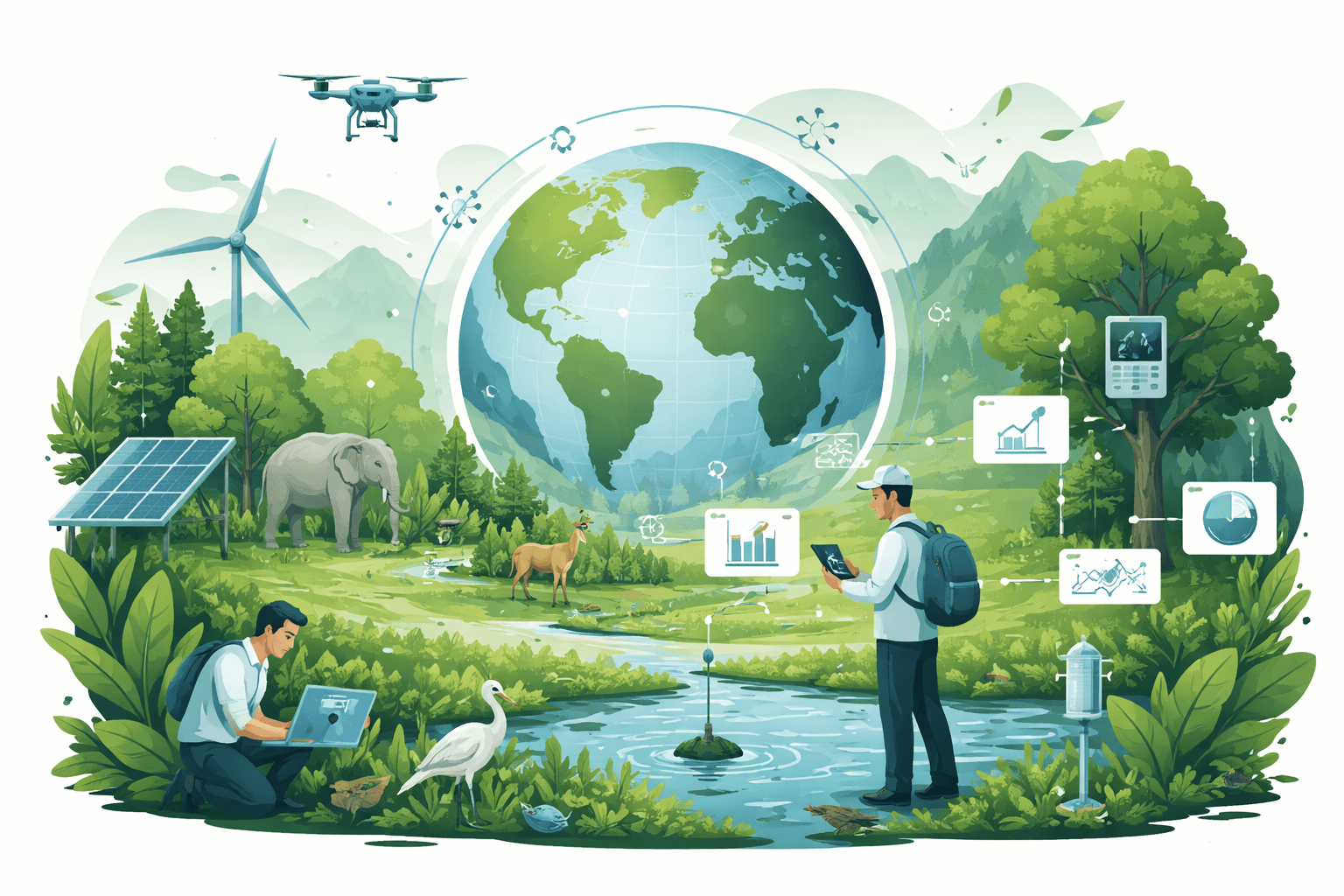
Conservation is no longer a niche effort; it’s a global policy priority. Protected and conserved areas now cover roughly 17% of land and 8% of the ocean worldwide (UNEP-WCMC/Protected Planet), yet biodiversity loss and ecosystem degradation continue. Understanding the impact of conservation on ecosystems—what changes, how fast, and under what conditions—has become essential for allocating scarce resources, meeting “30x30” targets, and delivering climate and livelihood benefits at scale.
This analysis synthesizes what we know about the impact of conservation on ecosystems, from the mechanisms that drive ecological change to the evidence base, measurement tools, and policy trade-offs that determine real-world outcomes.
What counts as “conservation,” and why scope clarity matters for measuring impact
“Conservation” spans multiple intervention types with different ecological goals and timescales:
- In-situ conservation: Safeguarding species and habitats in place through protected areas, Indigenous and community-managed lands, and Other Effective Area-Based Conservation Measures (OECMs). IUCN categories range from strict nature reserves (Category Ia) to areas allowing sustainable use (Category VI).
- Ex-situ conservation: Safeguarding genetic diversity off-site—seed banks, botanic gardens, aquaria, and captive breeding—often to complement in-situ efforts.
- Restoration and rewilding: Active recovery of degraded ecosystems (e.g., reforestation, wetland re-creation), or process-based restoration like reintroducing keystone species and allowing natural dynamics to resume. See our explainer on What Is Rewilding? How Ecosystem Restoration Is Changing Conservation.
- Sustainable use and stewardship: Managed forestry, fisheries, and rangelands that maintain ecosystem structure and function while generating livelihoods.
Clarity on scope matters because different tools act through different mechanisms and operate on different timelines. A no-take marine protected area (MPA) can increase fish biomass in 3–5 years, whereas reforestation may take decades to restore species composition and carbon stocks. Mixed interventions also complicate attribution. For robust impact assessment, analysts typically define the intervention type, ecological endpoints (e.g., species richness, trophic structure, carbon storage), spatial counterfactual (what would have happened otherwise), and timescale.
For a deeper dive into structuring evaluations and attributing impact, see our data-forward primer, Beyond Intentions: A Data‑Driven Analysis of the Impact of Conservation Efforts.
Mechanisms: how conservation changes ecosystems
Species composition and abundance
- Protection reduces direct pressures (harvest, habitat conversion), allowing populations to increase. A global meta-analysis of no-take MPAs found, on average, a 446% increase in fish biomass, 166% higher density, and 28% larger body size inside reserves relative to fished areas (Lester et al., PNAS 2009). Comparable effects are reported for benthic invertebrates when habitat is suitable and enforcement strong.
- On land, protected areas (PAs) generally reduce habitat loss and hunting relative to similar unprotected areas. Studies that correct for “location bias” (the tendency to site PAs on less-threatened lands) still find significant reductions in deforestation—often 20–40% lower—within PAs across the tropics (e.g., Andam et al., PNAS 2008; Blackman, PNAS 2015; Ferretti-Gallon & Busch, 2014 review).
- Community- and Indigenous-managed lands frequently perform as well as or better than state-run PAs in limiting deforestation and fire, especially where tenure is secure (IPBES 2019 Global Assessment).
Trophic interactions and ecosystem processes
- Reintroducing apex predators or large herbivores can trigger trophic cascades—changes that ripple through food webs. The reintroduction of wolves to Yellowstone altered elk browsing behavior, facilitating the recovery of riparian vegetation and associated species, though outcomes vary across sites and time (Ripple & Beschta, Biological Conservation 2012).
- In coastal systems, sea otter recovery reduces sea urchin overgrazing, allowing kelp forests to expand, with cascading benefits for biodiversity and carbon sequestration in detrital pathways (Estes et al., Science 1998).
- Rewilding with ecosystem engineers (e.g., beavers, bison) modifies hydrology and disturbance regimes, often increasing habitat heterogeneity and resilience to drought or fire.
Connectivity and gene flow
- Corridors and stepping-stone habitats facilitate movement, recolonization, and genetic exchange, especially under climate change as species track shifting climates. Empirical studies show that connected patches have higher species richness and genetic diversity than isolated patches of similar size. Our explainer on Understanding Wildlife Corridors: Why Connectivity Matters and How It Works details design principles and monitoring approaches.
Ecosystem services: carbon, water, and pollination
- Carbon storage: Intact forests and peatlands hold vast carbon stocks; conserving them avoids emissions and maintains sinks. “Natural climate solutions” could deliver up to ~11 GtCO2e per year of cost-effective mitigation by 2030, about one-third of the low-cost options needed for a 2°C pathway (Griscom et al., PNAS 2017). Coastal “blue carbon” ecosystems—mangroves, tidal marshes, seagrasses—store carbon per hectare at rates several times higher than many terrestrial systems (Donato et al., Nature Geoscience 2011).
- Water regulation: Watershed protection and wetland restoration improve infiltration, reduce sediment loads, and attenuate flood peaks. Urban flood risk modeling and empirical studies increasingly quantify avoided damages where floodplains and wetlands are restored.
- Pollination and pest control: Roughly 35% of global crop production depends on animal pollination (IPBES 2016). On-farm habitat restoration and nearby semi-natural vegetation increase wild pollinator richness and visitation, which can raise yields for pollination-dependent crops by 10–20% in several systems (Garibaldi et al., Science 2013), while diversified habitats can enhance natural pest control.
The evidence base: successes, failures, time lags, and context

What Works in Conservation: 2017: Sutherland, William J., et al.
Chapters cover the practical global conservation of amphibians, bats, birds and forests, conservation of European farmland biodiversity and some aspects of enhancing natural pest control, enhancing so
Check Price on AmazonPositive outcomes and spillovers
- MPAs: No-take reserves commonly show rapid gains in biomass and size structure within 3–5 years; spillover of adults and larvae can raise catches adjacent to reserves when design and enforcement are strong (Goñi et al., PNAS 2010).
- Forest PAs: Large-scale analyses in the Amazon, Congo Basin, and Southeast Asia find statistically significant reductions in deforestation and fire within PAs, with the strongest effects where governance capacity and monitoring are robust.
- Indigenous stewardship: In Canada and Australia, biodiversity outcomes in Indigenous Protected Areas are comparable to, or exceed, those in conventional PAs, reflecting effective fire management and culturally grounded stewardship (IPBES 2019; Garnett et al., Nature Sustainability 2018).
Common failures and “paper parks”
- Underfunding and weak enforcement erode effectiveness. One-third of terrestrial protected areas experience high human pressure incompatible with conservation objectives (Jones et al., Science 2018). Marine “protected” areas that permit bottom trawling show limited ecological gains compared to fully protected no-take zones.
- Leakage and displacement: Restricting deforestation in one area can displace activity elsewhere if underlying drivers (commodity demand, roads, tenure) persist, reducing net impact unless addressed at landscape or supply-chain scales.
- Location bias: PAs are often sited in high-elevation, low-agricultural-value areas; failure to account for this biases impact estimates upward. Modern evaluations use statistical matching or synthetic controls to correct this.
Time lags and ecological baselines
- Recovery timelines differ by metric. Fish biomass in MPAs may rebound within years, but full restoration of species composition and size structure can take decades. In forests, aboveground biomass can recover at 2–6 tC/ha/yr depending on climate and soils; old-growth structure and interior-forest specialists often require many decades to re-establish.
- Extinction debt and colonization credit: Species extinctions may continue after protection is established if critical thresholds were crossed; conversely, restored habitat may accumulate species over time as dispersal proceeds. Planning should anticipate these dynamics.
Metrics used to quantify impact
- Biodiversity: Species richness; Shannon/Simpson diversity; occupancy and abundance indices; Red List Index (IUCN); Living Planet Index (WWF). Functional metrics—functional richness, evenness, and redundancy—capture ecosystem roles and resilience.
- Ecosystem function/services: Aboveground biomass and soil carbon; evapotranspiration and baseflow; pollination visitation rates; pest predation rates. Modeling tools like InVEST and ARIES translate ecological states to service valuations (e.g., avoided flood damages, carbon storage value).
By the numbers: conservation impact at a glance
- 17% land and 8% ocean are in protected or conserved areas globally (UNEP-WCMC/Protected Planet).
- No-take MPAs: +446% fish biomass and +166% density inside reserves on average (Lester et al., PNAS 2009).
- Forest PAs: 20–40% lower deforestation than comparable unprotected areas across many tropical contexts (multiple quasi-experimental studies).
- Natural climate solutions: Up to ~11 GtCO2e/yr cost-effective mitigation potential by 2030 (Griscom et al., 2017).
- Finance gap: Global biodiversity finance shortfall estimated at roughly $700 billion per year (Paulson Institute, 2020).
For sector-specific guides, see our overview of Ocean Conservation: A Guide to Protecting Marine Biodiversity and our practical resource on Protecting Wildlife Habitats: A Practical Guide to Conservation, Technology, and Action.
Measuring the impact of conservation: tools and designs that work
Remote sensing and data fusion
- Land cover and deforestation: Free, global sensors (Landsat, Sentinel-1/2) and high-cadence commercial imagery enable near-real-time alerts of forest loss (e.g., GLAD and RADD alerts via Global Forest Watch). These data support counterfactual impact evaluations and enforcement.
- Biomass and structure: LiDAR (NASA GEDI), radar (BIOMASS mission), and photogrammetry estimate canopy height and aboveground biomass, improving carbon accounting for protected and restored areas.
- Aquatic and coastal: Ocean color and SAR detect algal blooms, turbidity, and mangrove extent; seascape mapping informs MPA zoning and restoration targeting.
eDNA, bioacoustics, and camera traps
- Environmental DNA (eDNA): Traces of DNA in water, soil, or air reveal species presence with high sensitivity, detecting rare or elusive taxa and improving occupancy estimates. Emerging methods quantify relative abundance indices.
- Acoustic monitoring: Autonomous recorders capture bird, bat, and amphibian activity; eco-acoustic indices track soundscape diversity as a proxy for biodiversity and disturbance. In marine systems, passive acoustics monitors cetaceans and vessel noise.
- Camera traps: Standardized networks measure occupancy and activity patterns for mammals and ground-dwelling birds; AI accelerates species identification and bias checks.

RECONYX HyperFire 2 Covert IR Camera (OD Green)
View on Amazon
FiveSky Wildlife Acoustics, Inc Echo Meter Touch 2 Bat Detector for iOS : Patio, Lawn & Garden
View on AmazonCitizen science and community monitoring
- Platforms like eBird now host over a billion bird observations, enabling fine-scale trend analysis when models correct for effort and detectability. Community monitoring enhances spatial coverage and strengthens stewardship.
Evaluation designs
- Before–After–Control–Impact (BACI): Compares trends at intervention sites against matched controls before and after implementation.
- Statistical matching and synthetic controls: Construct counterfactual trajectories accounting for confounders (road access, slope, soils) to estimate causal effects.
- Adaptive management: Monitoring feeds back into management through structured decision-making—updating patrol patterns, adjusting harvest rules, or modifying restoration plantings.
Trade-offs, socio-economics, and policy choices
Land-use conflicts and equity
- Competing demands for food, fiber, and energy shape conservation outcomes. Where agricultural opportunity costs are high, strict protection can face non-compliance unless paired with livelihood alternatives, fair compensation, or rights-based approaches.
- Indigenous rights and tenure security are central: evidence shows better ecological outcomes where communities have legal authority and benefit-sharing arrangements.
Climate change interactions
- Climate shifts alter species ranges and disturbance regimes, challenging static boundaries. Dynamic and climate-smart conservation plans emphasize elevational gradients, microrefugia, and movable protections (e.g., seasonal fisheries closures that follow species).
- Restoration can buffer climate impacts (e.g., mangroves reducing storm surge energy; floodplain reconnection lowering flood peaks), but species selection and seed sourcing must anticipate future climates.
Renewable energy co-benefits and conflicts
- Nature-positive pathways can align conservation with decarbonization—e.g., siting wind and solar on degraded lands, agrivoltaics that enhance habitat, and offsets that finance restoration. Poorly sited projects can fragment habitats or affect sensitive species. For practical strategies, see Balancing the Scales: How Renewable Energy Impacts Conservation and How to Maximize Benefits.
Policy implications and financing
- Targets: The Kunming–Montreal Global Biodiversity Framework’s “30x30” goal (protecting 30% of land and sea by 2030) emphasizes quality—effective, equitably managed, well-connected, and representative areas—over nominal coverage alone.
- Performance-based finance: Pay-for-results mechanisms, high-integrity carbon and biodiversity credits, and positive subsidy reform can close parts of the ~$700B annual biodiversity finance gap.
- Integration with production systems: Certification, regenerative practices, and fisheries co-management can deliver landscape-level gains when aligned with strong monitoring and enforcement.
Practical recommendations for practitioners
- Define the theory of change: Specify mechanisms (threat reduction, species reintroduction, connectivity), expected timelines, and measurable endpoints.
- Design for context: Use spatial planning to target high-biodiversity, high-risk areas; incorporate climate projections; and respect tenure and local governance.
- Monitor what matters: Pair remote sensing with field biodiversity sampling (eDNA, acoustics, camera traps). Track functional traits and ecosystem service indicators alongside species counts.
- Evaluate causally: Use BACI or matched-control designs; publish protocols and data for transparency and meta-analysis.
- Manage adaptively: Predefine triggers for changing patrol effort, restoration methods, or zoning as data arrive.
- Scale with partners: Align with Indigenous and local communities, and with fisheries/forestry managers; leverage citizen science to extend coverage.
Where the field is heading
The frontier is granular, rapid, and outcome-based. Satellite constellations and AI will make change detection continuous; eDNA and acoustics will mainstream multi-taxa biodiversity monitoring; and impact evaluations will move from “was a park created?” to “did species X, function Y, and service Z measurably improve relative to a counterfactual?” Financing will increasingly reward verified outcomes rather than activities, and conservation planning will integrate climate adaptation and renewable energy siting to minimize trade-offs and maximize co-benefits.
For practitioners building programs that deliver ecological gains and societal value, the imperative is clear: define the mechanism, measure the right things, evaluate causally, and manage adaptively. Done well, conservation measurably changes ecosystems—for the better.
Recommended Products
What Works in Conservation: 2017: Sutherland, William J., et al.
Chapters cover the practical global conservation of amphibians, bats, birds and forests, conservation of European farmland biodiversity and some aspects of enhancing natural pest control, enhancing so
FiveSky Wildlife Acoustics, Inc Echo Meter Touch 2 Bat Detector for iOS : Patio, Lawn & Garden
Amazon.com: FiveSky Wildlife Acoustics, Inc Echo Meter Touch 2 Bat Detector for iOS : Patio, Lawn & Garden
RECONYX HyperFire 2 Covert IR Camera (OD Green)
Buy RECONYX HyperFire 2 Covert IR Camera (OD Green): Game & Trail Cameras - Amazon.com ✓ FREE DELIVERY possible on eligible purchases
More in Conservation
- Beyond Intentions: A Data‑Driven Analysis of the Impact of Conservation Efforts
- Ways to Advocate for Conservation: Practical Actions from Local to Policy Level
- How Technology Is Transforming Conservation: Tools, Impacts, and Responsible Deployment
- Conservation Explained: Goals, Strategies, and How You Can Help