
Solar Powered Water Pumping: How It Works, Benefits, and What to Consider
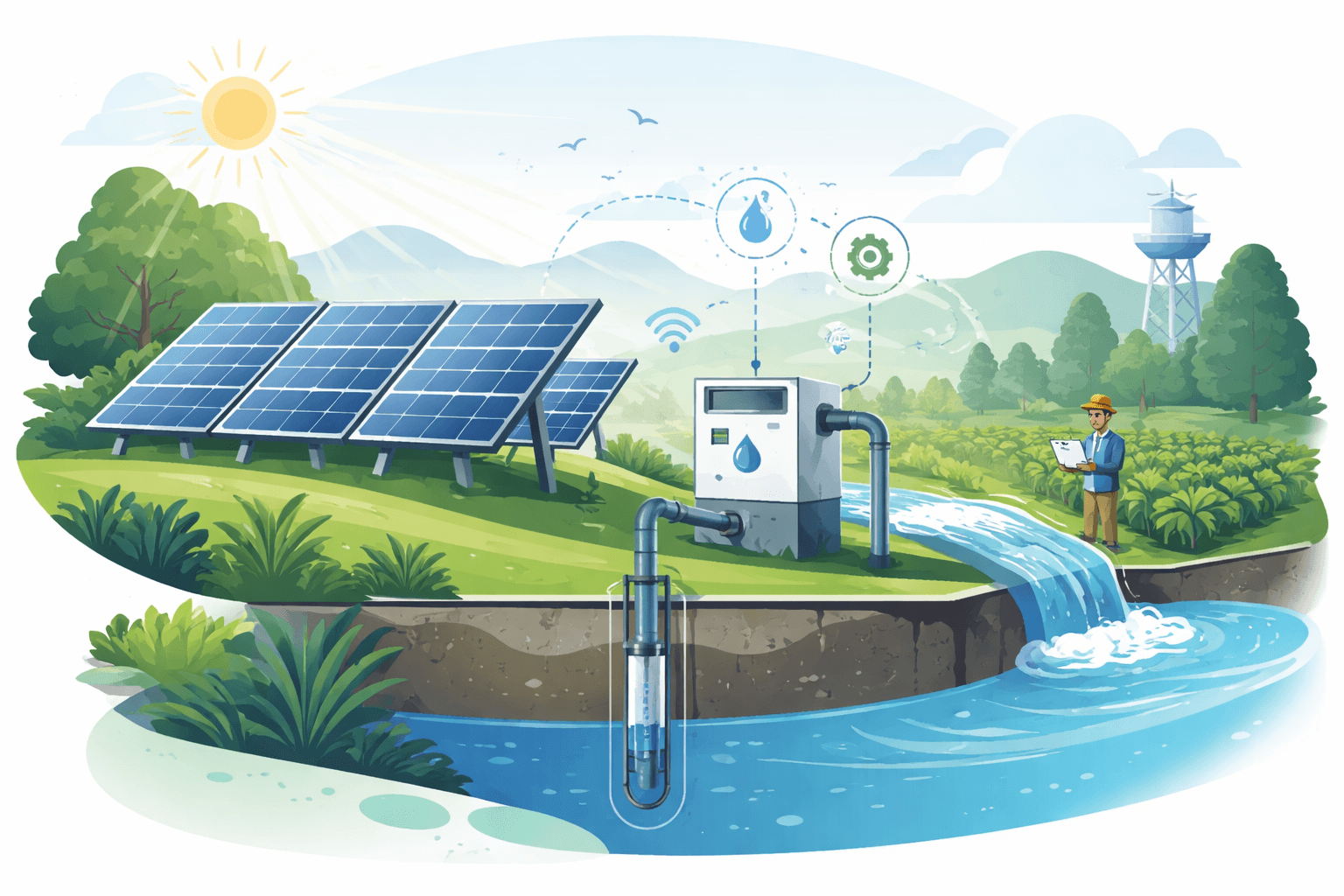
Solar powered water pumping is moving water using electricity generated by photovoltaic (PV) panels instead of diesel or grid power. As drought and fuel volatility sharpen the focus on water–energy efficiency, solar pumps are gaining traction because they cut operating costs and work well in remote areas. Agriculture accounts for about 70% of global freshwater withdrawals (FAO), so improving how we lift and move water has outsized impact on both budgets and emissions. Compared with remote diesel generation that typically costs $0.30–$0.70 per kWh (IEA; World Bank/ESMAP), the lifecycle cost of solar electricity can be a fraction of that—global utility-scale PV averaged $0.049 per kWh in 2022 (IRENA 2023), and small off‑grid systems are higher but still competitive when fuel and maintenance are included. This guide explains how solar powered water pumping works, where it fits, how to size systems, and how to keep them reliable.
See also: a primer on how solar electricity works and its climate benefits in our overview at Solar Power Explained: How It Works, Costs, and Climate Benefits.
By the Numbers
- 70%: Share of global freshwater withdrawals used by agriculture (FAO)
- $0.30–$0.70/kWh: Typical cost of diesel-generated electricity in remote sites (IEA; World Bank/ESMAP)
- $0.049/kWh: Global weighted-average utility-scale solar PV LCOE in 2022 (IRENA 2023)
- 2.68 kg CO2: Emissions per liter of diesel burned (EPA/IPCC emission factors)
- Rule-of-thumb energy for pumping: Energy (kWh/day) ≈ 0.002725 × Head (m) × Volume (m³/day) ÷ overall efficiency
How solar powered water pumping works
A solar pump system converts sunlight into electricity that drives a water pump. The core components are:

Solar PV Water Pumping: How to Build Solar PV Powered Water Pumping Systems for Deep Wells, Ponds, Creeks, Lakes, and Streams: Kinkaid, Christopher
Size your solar water pumping system with this <strong>Step-by-Step Guide to defining, and building your solar water pumping project</strong>. Solar water pumping systems include solar PV panels, a co
Check Price on Amazon- Solar panels (PV array): Convert sunlight to DC electricity. Array size (kWp) determines the maximum electrical power available for pumping.
- Pump controller (MPPT/VFD): Matches the variable power from PV to the pump. Modern controllers include maximum power point tracking (MPPT) to extract the most power under changing irradiance and can soft‑start and modulate pump speed. For AC pumps, a variable frequency drive (VFD)/inverter converts DC to AC and varies frequency to control motor speed.
- Pump and motor:
- Submersible vs. surface: Submersible pumps sit below the waterline (common for wells). Surface pumps lift from rivers, tanks, or shallow wells and push to the destination.
- Centrifugal vs. positive displacement: Centrifugal pumps favor higher flow at low-to-moderate head; positive displacement (e.g., helical rotor) excel at high head with lower flow.
- DC brushless motors are efficient and pair well with PV direct-drive. AC induction or permanent-magnet motors require an inverter/VFD.
- Power conditioning and protection: Disconnects, surge/lightning protection, fuses/breakers, ground fault protection, and adequate cabling to manage voltage drop.
- Storage: Either water storage (elevated tank, ground tank with booster) or batteries. Most systems avoid batteries to reduce cost and losses, using the tank as the “battery.”
- Sensors and controls: Float switches (to stop pumping when the tank is full), dry-run protection (to stop if the source runs low), pressure switches (for pressurized systems), and optional remote monitoring.
Two common architectures:
- Direct-drive with water storage: PV powers the pump when the sun shines; an elevated tank provides 1–3 days of water autonomy. This is simplest and cheapest.
- Battery-buffered: Batteries provide power when sun is weak and smooth starts; used where constant pressure/flow is required (e.g., clinics, households). Batteries add cost, complexity, and maintenance.
Common use cases
- Agricultural irrigation: Drip and sprinkler systems for small to mid-sized plots, especially in regions with high solar resource and weak grid access. Solar pumping paired with drip irrigation can cut water use 30–70% versus flood methods (FAO field studies), improving yields while reducing energy demand.
- Livestock watering: Pumps fill troughs or distributed tanks across rangelands. Float valves and gravity distribution keep operations simple and robust.
- Remote community supply: Village wells, boreholes, and small piped networks. Solar can replace or hybridize with diesel gensets, reducing fuel logistics.
- Off-grid domestic water: Household wells, rainwater tanks with booster pumps, and cabins. Modest systems can cover drinking, sanitation, and garden needs without grid connection.
- Emergency and resilience: Disaster relief or drought-response installations where fuel supply is disrupted or expensive.
For readers exploring broader autonomy and power systems for remote sites, see our Off-Grid Solar: Complete Buyer’s Guide to Systems, Costs & Setup.
Benefits and limitations
Benefits
- Lower operating cost: No fuel purchases and minimal routine maintenance. Over a 10–15 year life, PV-powered pumping often undercuts diesel by 50% or more in remote settings (World Bank/ESMAP analyses).
- Reliability in remote areas: Fewer moving parts than combustion engines; no fuel delivery risk; starts automatically with sun.
- Emissions and air quality: Replacing a diesel pump using ~0.3 L/kWh can avoid several tonnes of CO2 annually for medium-duty systems, plus eliminate noise and local pollutants.
- Modularity and scalability: Add panels to boost flow; start small and expand.
- Water and energy co-efficiency: Pairing with efficient distribution (drip, low-pressure sprinklers) reduces both water and energy use.
Limitations
- Intermittency and seasonal mismatch: Output varies with irradiance and season. Storage (water or batteries) or backup (grid/diesel) may be needed for peak demand or cloudy spells.
- Upfront investment: Higher capital cost than a used diesel pump, although payback can be short where diesel is costly or subsidized programs exist.
- Performance depends on site specifics: Deep wells, high heads, and poor solar resource require larger arrays and careful pump selection.
- Maintenance and water quality: Sand, silt, or aggressive water chemistry can abrade impellers and corrode components; panels still need cleaning.
- Groundwater sustainability: Cheap energy can lead to over‑pumping. FAO and national water agencies stress monitoring and governance to avoid aquifer depletion.
Choosing and sizing a solar pumping system
Right-sizing starts with the water job. The physics is straightforward: moving water requires energy proportional to the volume and the total head you lift against.
Step 1: Define water demand
- Daily volume (m³/day or gallons/day) for each season.
- Peak flow requirements (e.g., sprinkler pressure and flow during irrigation windows).
- Desired days of autonomy in storage (1–3 days is common; more in seasonal or cloudy regions).
Step 2: Calculate Total Dynamic Head (TDH)
TDH (m) = static lift (source water level to discharge point) + drawdown (drop in water level during pumping) + elevation gain + required pressure head at the outlet (1 bar ≈ 10 m) + friction losses in pipes/fittings.
- Measure or estimate friction losses using manufacturer charts; oversized, smoother pipes reduce friction dramatically.
- Don’t forget foot/check valves and filters—they add head.
Step 3: Estimate hydraulic energy and electrical energy
Hydraulic energy needed per day: Energy (kWh/day) ≈ 0.002725 × TDH (m) × Volume (m³/day) ÷ overall efficiency
Overall efficiency includes pump + motor + controller and often ranges 0.35–0.55 for small systems (FAO SPIS guidance). If unsure, use 0.45 as a starting point.
Example:
- Goal: 30 m³/day to 40 m TDH
- Assume overall efficiency = 0.45
- Energy ≈ 0.002725 × 40 × 30 ÷ 0.45 = 7.3 kWh/day (approx.)
Step 4: Size the PV array
PV production depends on your location’s solar resource and system losses. A quick rule:
- Daily PV energy (kWh/kWp/day) ≈ site’s average plane-of-array irradiance (kWh/m²/day) × system performance ratio (0.75–0.85)
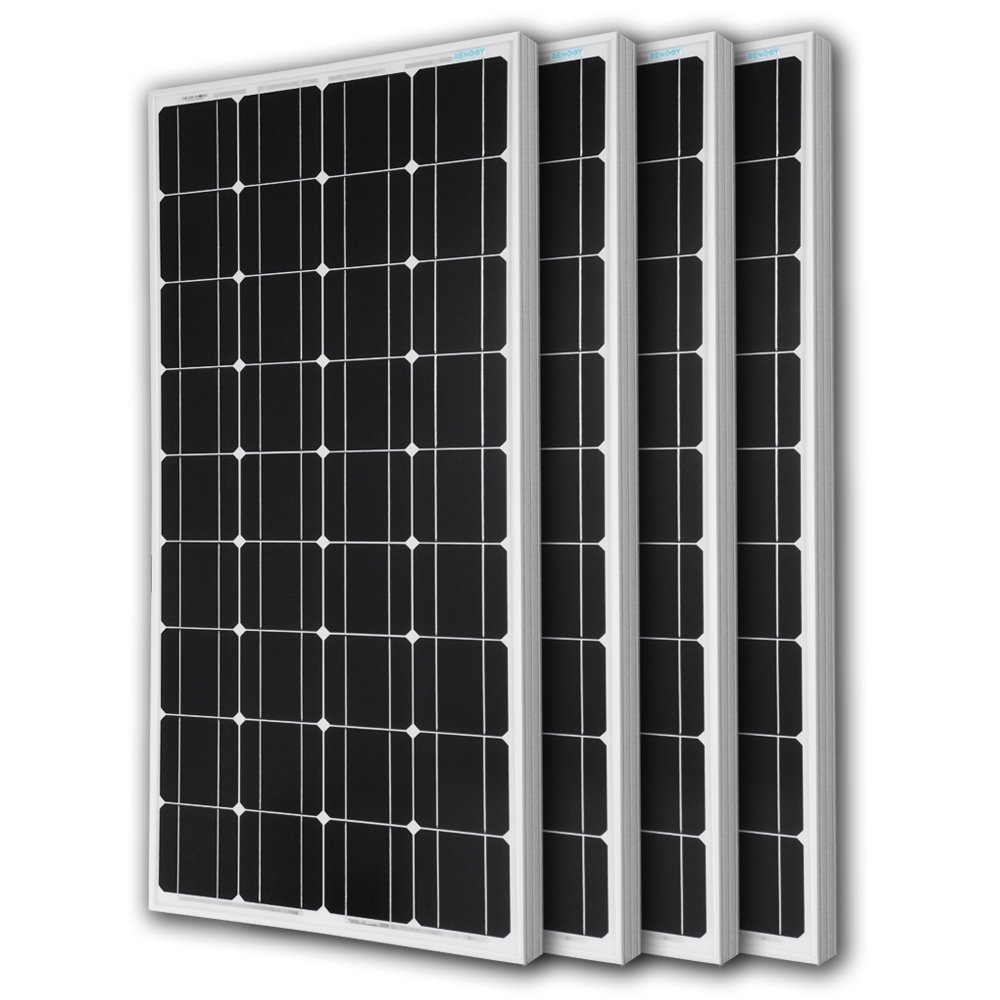
Renogy 4 Pieces 100W Monocrystalline Photovoltaic PV Solar Panel Module, 12V Battery Charging : Renogy : Patio, Lawn & Garden
View on AmazonMany sunny ag regions deliver 4–6 kWh/kWp/day annually (Global Solar Atlas; NREL PVWatts for the U.S.).
Continuing the example:
- Site yield: 5.5 kWh/kWp/day
- Performance ratio: 0.8 → net 4.4 kWh/kWp/day
- Required array: 7.3 ÷ 4.4 ≈ 1.7 kWp
- Add 15–25% margin for cloudy days and aging → target ~2.0 kWp
For more on translating energy needs into PV size, see How to Calculate Solar Panel Needs: Step-by-Step Guide & Examples.
Step 5: Pick the pump type
- Depth and flow dictate technology:
- Shallow, high flow, low head (lateral movement, surface lifts): Centrifugal pumps (surface or submersible) are efficient and cost-effective.
- Deep wells, high head, low-to-moderate flow: Helical rotor or other positive displacement submersibles shine; they maintain flow at high head with better efficiency.
- Motor and controller pairing:
- DC brushless pumps with dedicated PV controllers excel for direct-drive simplicity.
- Existing AC pumps can be driven by PV via an inverter/VFD; performance is good but adds conversion losses and cost.
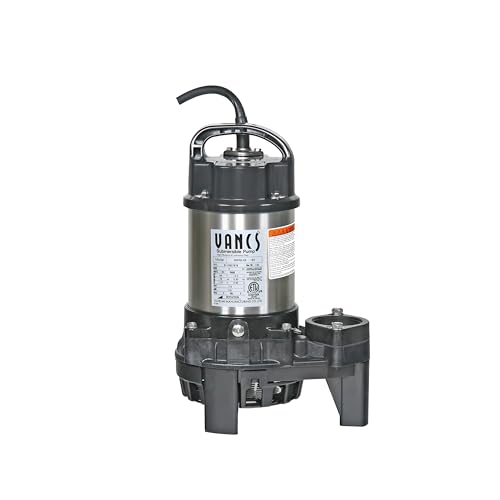
SHURFLO 9300 Submersible Pump 24V : Portable Power Water Pumps
View on AmazonStep 6: Decide on storage and controls
- Water storage: An elevated tank sized for 1–3 days demand often replaces batteries; gravity feeds fields or homes, smoothing intraday variability.
- Batteries: Consider only when constant pressure or nighttime pumping is essential; account for 10–20% efficiency penalty and replacement every 5–10 years (chemistry dependent).
- Controls: Float switches (tank full), dry-run probes (well low), pressure switches (for pressurized lines), and time-of-day scheduling for irrigation.
Step 7: Check site conditions and constraints
- Solar access: Unshaded area for array, proper tilt and azimuth.
- Water source: Sustainable yield of well/river; water quality (sand, iron, salinity) and need for filtration.
- Electrical and plumbing layout: Cable runs (minimize voltage drop), pipe sizing (limit friction), drainage and freeze protection, secure mounting.
- Codes and permits: Well drilling regulations, backflow prevention, water rights, and electrical safety codes.
Practical installation notes
PV array and electrical
- Orientation/tilt: Face panels toward the equator; consider slight west bias if peak pumping is afternoons. Tilt near latitude for annual average or seasonal tilt if irrigation is seasonal.
- Wiring and voltage drop: Use appropriately sized copper conductors; target <3–5% voltage drop on long runs to submersibles.
- Protections: DC disconnects, fuses/breakers, surge protection, grounding, and, where lightning risk is high, arrestors and robust earthing.
- Mounting: Use wind-rated racking; in livestock areas, protect arrays from animals and vehicles.
Pump, well, and hydraulics
- Intake and screening: Use screens to keep debris out; for sandy wells, develop the well and consider sediment traps or sand separators.
- Check valves: Install at appropriate intervals (especially deep wells) to prevent water hammer and backspin.
- Pipe sizing: Upsize pipes to reduce friction; small diameter may halve flow at the same power due to head losses.
- Freeze and heat: Bury or insulate lines in cold climates; provide shade/ventilation for surface pumps in hot climates.
- Elevation and tank siting: Place tanks high enough to provide needed pressure (10 m elevation ≈ 1 bar) without booster pumps.
Controls and automation
- Level control: Float switches in tanks to avoid spills and wasted energy.
- Dry-run and over-pressure protection: Prevent motor damage if the source runs low or a valve is closed.
- Remote monitoring: GSM/LoRa modules can report flows, tank levels, and faults for preventive maintenance—valuable for dispersed herds or village systems.
Maintenance and reliability over time
Solar pump systems are low-maintenance, but not maintenance-free.
- Panels: Keep clean in dusty regions; production losses from soiling can reach 5–20% without periodic cleaning (NREL/field studies). See our guide on Solar Panel Cleaning and Maintenance: How to Keep Your System Running at Peak Efficiency and Solar Panel Maintenance Tips: Maximize Output & Lifespan.
- Electrical: Inspect connections annually for corrosion or looseness; check for rodent damage to cables.
- Pump and motor: Submersibles may run for years, but water quality matters. Abrasive sand shortens life—monitor flow and current draw; retrieve and service if performance degrades.
- Valves and filters: Clean/replace on schedule to prevent head losses and cavitation.
- Tanks and lines: Inspect for leaks; even small leaks waste water and energy continuously.
Troubleshooting quick guide
- Low or no flow midday on a sunny day:
- Check PV array output and shading; test voltage at controller
- Inspect intake screen and filters for clogging
- Look for leaks or partially closed valves increasing head
- Worn impeller/rotor or slipping couplings—monitor motor current vs. nameplate
- Pump cycles on/off rapidly:
- Tank float malfunction or pressure switch chatter; add hysteresis or a small pressure tank
- Controller hitting low-voltage or over-current limits; review array sizing and wiring
- Pump runs but tank never fills:
- Actual TDH higher than design due to seasonal drawdown or friction; re-check well levels and pipe losses
- Air leaks on suction side of surface pumps; reseal fittings
- Controller faults:
- Over-temperature: Improve ventilation or shading
- Dry-run: Source depleted—reduce demand or increase storage, consider lower-flow pump better matched to well yield
Costs and economics
- Capex ranges widely by size and head. As a rough guide, small agricultural or community systems (0.5–5 kWp PV, shallow-to-moderate head) often fall in the low five figures (USD) including array, pump, controller, tank, and installation; deep-well or high-flow systems cost more.
- Operating costs are dominated by occasional parts replacement (valves, filters), periodic service, and eventual pump or controller replacement.
- Against diesel: Assuming 0.3 L/kWh fuel use and $1.10/L fuel, energy cost is ≈$0.33/kWh before maintenance. Where solar delivers an effective cost near $0.08–$0.20/kWh for small systems (higher than utility-scale but typical for off-grid), payback can be 2–5 years depending on runtime (IRENA; ESMAP case work). Actual economics vary by insolation, head, and fuel prices.
Environmental and resource considerations
- Groundwater stewardship: Size to agronomic need, not just available sun. Use soil moisture sensors and schedule irrigation to avoid overpumping; local regulations may cap withdrawals.
- Water quality: Corrosive or saline water favors corrosion-resistant materials (stainless 304/316, plastics). Iron/manganese may require treatment upstream of emitters.
- Biodiversity and siting: Keep arrays on already-disturbed land or integrate with shade structures; fence livestock away from riparian zones to reduce bank erosion when drawing from streams.
What this means for buyers, operators, and policymakers
- Farmers and ranchers: Start with accurate TDH and seasonal water profiles, choose pump types matched to head/flow, and prioritize water storage over batteries.
- Communities and utilities: Solar powered water pumping can anchor mini-water networks with low opex and high reliability; hybridize with grid or diesel only where service levels require.
- Policymakers and financiers: Pair capital subsidies or concessional finance with groundwater governance, metering, and efficient irrigation to capture emissions and water savings without resource depletion (FAO; World Bank guidance).
Where the technology is heading
- Higher-efficiency motors and MPPT/VFD controllers are pushing overall system efficiencies above 50% for small systems.
- Falling PV module prices and durable, modular helical rotor pumps broaden viability to deeper wells and larger schemes.
- Smarter controls—weather-aware pumping, tank telemetry, and soil moisture integration—will better align pumping with crop needs, cutting both water and energy use.
- In regions with strong solar resource and weak grids, solar powered water pumping is poised to displace a large share of diesel pumping as fuel price volatility and climate resilience pressures grow.
Recommended Products
Solar PV Water Pumping: How to Build Solar PV Powered Water Pumping Systems for Deep Wells, Ponds, Creeks, Lakes, and Streams: Kinkaid, Christopher
Size your solar water pumping system with this <strong>Step-by-Step Guide to defining, and building your solar water pumping project</strong>. Solar water pumping systems include solar PV panels, a co
SHURFLO 9300 Submersible Pump 24V : Portable Power Water Pumps
I bought a Shurflo 9300 submersible pump for my 120 foot well. The static water level was 70 feet. It <strong>produced about a gallon per minute on a single 24 volt solar panel</strong>. I had it at a
Renogy 4 Pieces 100W Monocrystalline Photovoltaic PV Solar Panel Module, 12V Battery Charging : Renogy : Patio, Lawn & Garden
Amazon.com : Renogy 4 Pieces 100W Monocrystalline Photovoltaic PV Solar Panel Module, 12V Battery Charging : Renogy : Patio, Lawn & Garden