
Practical Wind Turbine Maintenance Tips to Maximize Performance and Reduce Costs

Modern wind fleets routinely achieve 97–99% availability, but only when maintenance is systematic, data‑driven, and safety‑first. Well‑executed wind turbine maintenance tips don’t just prevent failures; they protect revenue and extend asset life. Operations and maintenance (O&M) can represent 20–30% of the levelized cost of electricity (LCOE) for onshore wind and more for offshore projects, according to IRENA’s Renewable Power Generation Costs analysis and the IEA Wind Technology Collaboration Programme (IEA Wind TCP). NREL’s 2024 Annual Technology Baseline (ATB) places fixed O&M for land‑based wind in the roughly $26–45 per kW‑year range, with variable O&M typically $0–$3 per MWh; offshore figures are substantially higher. Getting maintenance right is a direct lever on costs, availability, and lifetime energy output.
This guide translates best practices from NREL, IEA Wind TCP, DNV, ORE Catapult, and industry experience into an actionable plan to reduce unplanned downtime and keep turbines generating at their best.
By the numbers
- 97–99%: Typical availability target for modern land‑based wind fleets (NREL; WindEurope benchmarking)
- 20–30%: Share of LCOE attributable to O&M for onshore wind (IRENA; IEA Wind TCP)
- $26–45/kW‑yr: Typical fixed O&M range for onshore wind in the U.S. (NREL 2024 ATB)
- Up to 20%: Potential AEP loss from severe blade leading‑edge erosion if left untreated (ORE Catapult)
- 10–20%: Typical O&M cost reduction reported when moving from reactive to condition‑based/predictive strategies, with 1–3 percentage‑point gains in availability (IEA Wind TCP project summaries; operator case studies)

Wind Energy Handbook: Burton, Tony, Jenkins, Nick, Sharpe, David, Bossanyi, Ervin
"I highly recommend the classic and definitive reference book Wind Energy Handbook, Second Edition by Tony Burton, Nick Jenkins, David Sharpe, and Ervin Bossanyi, to any engineering students in u
Check Price on AmazonFor readers new to components and terminology, see our explainer on how turbines convert wind to electricity: How Do Wind Turbines Work? Simple Explanation, Components & Facts.
Routine inspection essentials: a practical checklist to catch wear early
A structured inspection program is the single most cost‑effective maintenance tool. Small, frequent checks prevent small defects from becoming large failures.
Inspection cadence guidelines (always follow OEM requirements):
- Remote checks: Daily via SCADA for alarms, power curve deviations, and temperatures
- Visual exterior checks: Monthly from ground or drone; after storms/high‑wind events
- In‑nacelle inspections: Quarterly to semi‑annual
- Comprehensive annual service: 12‑month interval or OEM schedule
- Special inspections: Post‑fault, after lightning strikes, or following curtailments/stoppages
Practical inspection checklist
- Blades and rotor
- Leading‑edge erosion, trailing‑edge cracks, gelcoat wear, lightning receptor condition, tip cap security
- Pitch bearings and seals: grease condition, play/backlash
- Balance indicators: vibration trends, uneven bug/ice accretion
- Hub and nacelle
- Oil leaks, filter differential pressure, hydraulic hose wear, accumulator pressure
- Yaw system: gear wear, motor current draw, slip ring brushes, yaw brake pad thickness and scorching
- Fasteners: torque/marking verification on critical joints; check for elongation or corrosion
- Cooling systems: radiator fin cleanliness, pump operation, coolant levels, cabinet fan filters
- Gearbox and drivetrain
- Oil level and color; sample port integrity; magnetic plug debris; online particle counter trends
- Coupling condition, alignment marks, shaft endplay
- Main bearing: grease purge condition, temperature trends, seal lips
- Generator and power electronics
- Stator/rotor temperature trends; insulation resistance (IR/megger) test as scheduled
- Converter IGBTs and DC link capacitors: thermal imaging for hotspots; cabinet cleanliness
- Transformer: oil level/condition (where applicable), thermography on bushings/terminations
- Tower and foundations
- Tower interior corrosion, condensation control, ladder and fall arrest integrity
- Anchor bolt tension or elongation readings; grout cracking; foundation drains
- External coating integrity, cathodic protection status (if installed)
- Balance of plant
- Cables and terminations, junction boxes, earthing/grounding continuity, meteorological mast alignment and sensor health
- Substation inspections, switchgear SF6 leak checks (or alternative gas systems), protection relay logs
Early‑warning red flags
- Persistent gearbox oil metallic particle counts rising (ISO 4406 code worsening)
- Power curve deviations >3–5% from baseline at given wind speeds
- Repeated converter trips or yaw faults under normal conditions
- Bearing temperatures trending upward vs. seasonal baseline
- Unexpected vibrations near blade‑pass frequency or 1×/2× shaft orders
Mechanical and electrical care priorities: what to monitor and when to act
Mechanical systems dominate downtime when failures occur, even if electrical/control faults are more frequent. EU’s ReliaWind project and multiple fleet studies show gearboxes and blades have relatively low failure rates but high downtime per event; converters and electrical balance‑of‑plant fail more often but are faster to fix.
Gearbox
- Monitor: Oil cleanliness (ISO 4406), viscosity, additive depletion (oxidation, TAN/TBN), ferrous/non‑ferrous wear metals via spectroscopy, water ppm, particle counts from online sensors when available
- Service: Filters 6–12 months; breathers/desiccants 6–12 months; offline filtration after major work; full oil change typically every 3–5 years with approved synthetic gear oil (extendable with clean condition‑based trend)
- Replace/repair triggers: Accelerating vibration at gear mesh and bearing defect frequencies, abnormal debris trending (ferrogram), rising operating temperature not explained by ambient, spalling visible on boroscope
Main bearing and pitch/yaw bearings
- Monitor: Grease condition (purge color/contamination), acoustic/vibration trends, temperature
- Service: Grease per OEM intervals; ensure correct purge volumes to avoid seal damage; consider automatic lubrication systems with condition‑based dosing
- Replace/repair triggers: Excessive axial/radial play, grease purges with metallic sheen, sustained temperature rise, confirmed flaking via inspection
Blades
- Monitor: Leading‑edge erosion, lightning receptor continuity, bonding integrity (thermography, ultrasonic testing), aerodynamic soiling
- Service: Leading‑edge protection (LEP) tapes or coatings; repair chips/cracks promptly; periodic cleaning in dusty/marine environments
- Replace/repair triggers: Structural cracks, extensive LE erosion affecting AEP (ORE Catapult notes losses from a few percent to >10% in severe cases), lightning damage
Hydraulics and brakes
- Monitor: Fluid cleanliness, accumulator charge pressure, hose abrasion, brake pad wear and glazing, caliper alignment
- Service: Fluid/filter changes per OEM; keep hydraulic fluids within water and particle limits; consider biodegradable fluids where permitted
- Replace/repair triggers: Leaks, pressure decay, out‑of‑spec fluid analysis, brake torque imbalance or chatter
Generators and converters
- Monitor: Partial discharge (PD) in high‑voltage systems, insulation resistance, bearing current risk (shaft grounding), DC bus ripple, IGBT junction temp, cooling fan/pump status
- Service: Cabinet cleaning and filter changes; torque checks on terminals; firmware updates after validation; thermographic surveys annually
- Replace/repair triggers: Recurrent trips under nominal conditions, abnormal thermal images, trending insulation degradation, converter fault codes with rising frequency
Fasteners and corrosion protection
- Monitor: Torque/tension on critical bolts (flange, blade root, yaw, gearbox feet); coating holidays, rust bloom, chalking
- Service: Re‑torque per OEM schedule (especially first year/after major maintenance); touch‑up coatings with compatible systems; manage condensation with dehumidifiers/heaters
- Replace/repair triggers: Elongation or loss of preload beyond spec, pitting corrosion, coating undercutting exposing substrate
Electrical balance‑of‑plant (BoP)
- Monitor: Switchgear operations counts, breaker contact wear, transformer oil DGA (for oil‑filled units), thermography on main connections
- Service: Relay testing per utility interconnection requirements, SF6 leak checks or alternative gas systems maintenance, vegetation management around pads
- Replace/repair triggers: DGA indication of incipient faults, repeated breaker nuisance trips, overheating terminations
Condition‑based and predictive maintenance: moving from reactive to data‑driven
Condition‑based maintenance (CBM) uses sensor data and analytics to service components at the right time—neither too early nor too late. Predictive maintenance goes further, using models to forecast failures days to months in advance.
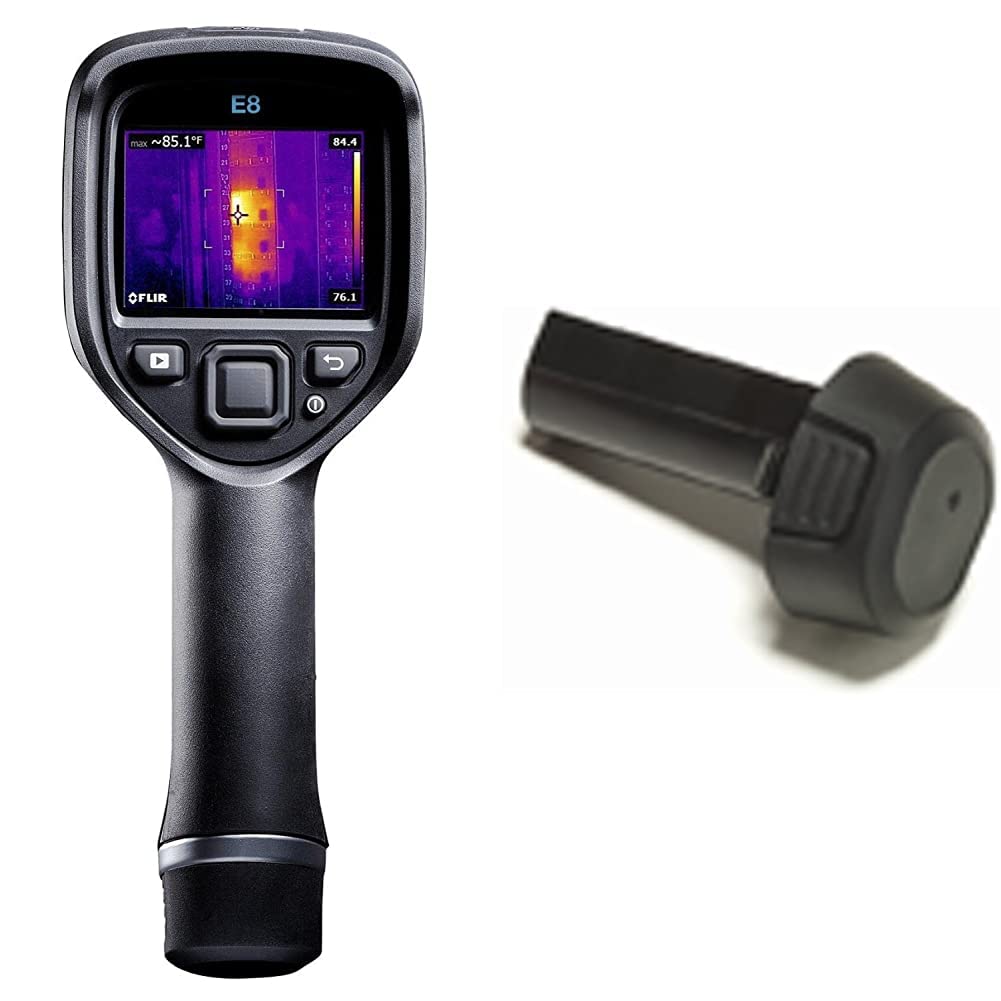
FLIR E6-XT - Handheld Infrared Camera & T199362ACC - Spare Battery for FLIR EX and EX-XT Series Infrared Cameras : Industrial & Scientific
<strong>240x180 IR resolution (43, 200 pixels</strong>); Measurement modes include center spot, area min/max, above/below alarms · Built in LED spotlight you can use as a flashlight and for photo illu
Check Price on AmazonCore tools
- SCADA analytics: Trend key performance indicators (KPIs)—power curve, rotor speed, nacelle temperature, gearbox oil temp, generator temps, yaw activity. Flag anomalies using z‑scores vs. fleet baselines or machine‑learning models trained on normal behavior.
- Vibration/condition monitoring systems (CMS): Accelerometers on main bearing, gearbox stages, and generator. Analyze spectral bands for bearing defect frequencies, gear mesh sidebands, and shaft order harmonics. Set alarm thresholds based on ISO 10816/20816 guidance and OEM specs.
- Oil analysis: Quarterly to semi‑annual sampling with consistent method and temperature. Track ISO 4406 particle codes, water, acid number (TAN), oxidation/nitration, and wear metals (Fe, Cu, Cr, Pb). Ferrograms and particle counters help differentiate rubbing vs. cutting wear.
- Thermal imaging: Annual surveys of converters, generators, cables, terminations, and transformers to spot resistive heating.
- Electrical testing: Insulation resistance (IR), polarization index (PI), and partial discharge (PD) for high‑voltage equipment per schedule.
- Remote sensing and drones: High‑resolution blade imagery to detect cracks, erosion, and lightning strikes without large cranes. AI‑assisted defect classification speeds triage.
Operational strategies
- Power curve monitoring: A persistent deviation at specific wind speeds often signals blade surface degradation, pitch sensor offset, or yaw misalignment. Correcting a 2–3% loss can be worth tens of thousands of dollars per turbine per year.
- Alarm management: Tune and rationalize SCADA alarms to reduce nuisance trips and alarm fatigue. Use multi‑parameter logic (e.g., high gearbox temperature AND rising vibration) to escalate priority.
- Fleet‑level baselining: Compare turbines of the same model; outliers are early candidates for inspection. Normalize for shear, turbulence intensity, and wake effects.
- Predictive models: Use survival analysis or random‑forest classifiers trained on historical faults to predict remaining useful life (RUL) for gearboxes and converters. Many operators report 10–20% O&M savings and 1–3 percentage‑point availability gains when models are integrated into planning (IEA Wind TCP task reports; operator case studies).
Documentation and feedback loops
- Close the loop by linking work orders to condition indicators at the time of intervention (e.g., vibration levels, oil codes). This creates labeled data that improves model accuracy over time.
Safety, regulatory, and environmental considerations
Wind maintenance is high‑risk work at height and around high‑energy systems. Strong safety culture is non‑negotiable.
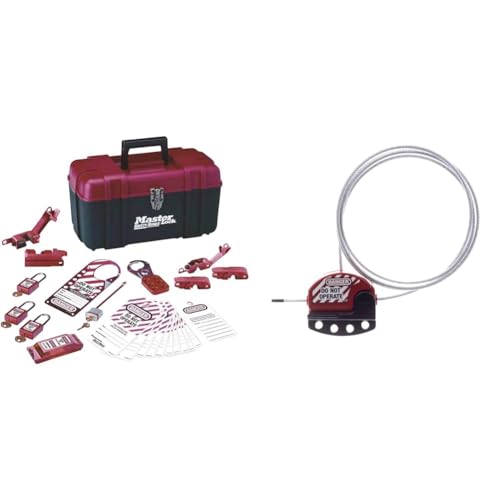
Master Lock 1457E410KA Lockout Tagout Group Lockout Kit : Industrial & Scientific
View on AmazonSafety fundamentals
- Lockout/Tagout (LOTO): Follow a written energy‑control procedure before any work—mechanical, electrical, hydraulic, and stored energy must be isolated and verified. In the U.S., OSHA 1910.147 applies.
- Working at height: Full‑body harness, double lanyards, rescue plan, and annual equipment inspection. Maintain 100% tie‑off inside towers; practice rescue drills.
- Electrical hazards: Arc‑flash risk assessment, PPE per NFPA 70E (where applicable), insulated tools, and absence‑of‑voltage testing before contact.
- Training: Global Wind Organisation (GWO) Basic Safety Training and Advanced Rescue Training for technicians; site‑ and OEM‑specific authorizations.
- Weather windows: Respect wind speed cutoffs for climbs, crane lifts, and rope access. Ice throw and lightning protocols must be clear and enforced.
Regulatory and grid compliance
- Permits and reporting: Comply with local work‑at‑height, crane operation, and environmental permits. Maintain logs for utility and regulatory audits (protection relay tests, transformer inspections).
- Grid codes: Periodic verification of protection settings, reactive power/voltage control functions, and ride‑through capabilities per interconnection requirements.
Environmental stewardship
- Wildlife mitigation: Schedule noisy or disruptive work outside sensitive breeding seasons when possible; follow site‑specific bird and bat protection plans. Curtailment strategies and acoustic deterrents should be coordinated with O&M where installed.
- Spill prevention: Store oils and lubes with secondary containment; maintain spill kits at base and nacelle. Larger sites may require Spill Prevention, Control, and Countermeasure (SPCC) plans under environmental regulations.
- Material selection: Consider biodegradable hydraulic fluids where OEM‑approved; use long‑life synthetic gear oils and high‑durability blade coatings to reduce waste.
- Waste handling: Segregate oily rags, filters, and electronics; use certified recyclers. Plan end‑of‑life pathways for blades and components as part of site ESG commitments.
Cost optimization and decision guidance
Good maintenance is about timing, logistics, and data as much as wrenches.
Spare parts planning
- Criticality classification: A (long lead/high impact) — gearboxes, blades, converters, main bearings; B (weeks lead/moderate impact) — yaw drives, pitch motors, slip rings; C (readily available) — filters, sensors, fuses.
- Stocking policy: Hold at least one A‑class spare per X turbines (fleet‑dependent) or secure framework agreements with guaranteed lead times. Consider pooled spares at the portfolio level.
- Condition‑based spares: Use CMS/oil data to forecast component needs 3–12 months out; align with crane availability and seasonal low‑wind periods.
Work scheduling and logistics
- Opportunistic maintenance: Pair corrective work with scheduled service to minimize climbs and downtime; use forecasted low‑wind windows to cut lost production.
- Access optimization: Rope access or drones for blade inspections can avoid large crane mobilizations; plan heavy lifts (gearbox, generator) in favorable seasons.
- Vendor alignment: Pre‑qualify multiple service providers; lock pricing via master service agreements to reduce variability in emergency callouts.
Lifecycle recordkeeping
- CMMS discipline: Every fault, inspection, and part replacement gets a timestamp, root cause, component code, and labor hours. This enables reliability‑centered maintenance (RCM) analyses and budget forecasting.
- KPI dashboard: Track availability, mean time between failures (MTBF), mean time to repair (MTTR), maintenance cost per MWh, and energy‑based availability (weighted by wind resource) for truer performance insights.
Extending service intervals without compromising reliability
- Fluids and filtration: High‑performance synthetic oils with robust oxidation resistance, paired with offline filtration and moisture control, can extend oil change intervals safely when validated by oil analysis trends.
- Automatic lubrication: Condition‑based greasing reduces over/under‑lubrication—improving bearing life and cutting manual service visits.
- Blade protection and cleaning: Durable leading‑edge coatings or tapes and periodic cleaning in high‑soiling sites protect AEP and reduce aerodynamic losses.
- Software and controls: Firmware updates that refine pitch/yaw control and converter switching can reduce mechanical stress; validate in a test turbine before fleet rollout.
DIY vs. certified technicians (especially for small/community turbines)
- Owner‑operators can safely perform ground‑level checks (visual blade/tower scans with binoculars or drones, padlock checks, debris removal) and basic maintenance per OEM manuals. Any work at height, inside electrical cabinets, or involving LOTO should be performed by trained, certified technicians with proper equipment.
- For residential or farm‑scale turbines, align maintenance expectations during purchase. See our resources for small systems: Small Wind Turbine Guide for Homes: Cost, Size & Best Models and Wind Turbine for Home Use: Complete Buyer’s Guide & Cost Analysis.
A practical, sample maintenance schedule (adapt to OEM and site conditions)
- Daily/weekly (remote): Review SCADA alarms, availability, and power curve flags; check weather impacts; confirm no substation or BoP alarms
- Monthly: Ground/drone blade and tower visuals; clean converter/generator filters as needed; check hydraulic accumulators and fluid levels
- Quarterly: In‑nacelle inspection; oil top‑offs; grease pitch/yaw components (if not automated); sample gearbox oil; thermographic scan of cabinets and transformer; torque check high‑movement fasteners per OEM
- Semi‑annual: Replace filters (oil, air, cabinet); inspect lightning protection continuity; test safety systems (overspeed, e‑stop)
- Annual: Full service per OEM; protection relay testing; transformer inspection/DGA (if oil‑filled); update torque survey; verify yaw alignment and pitch calibration; blade close‑ups and LEP touch‑ups
- 3–5 years: Gearbox oil change (unless condition data supports extension); deep inspection of main bearing and shaft alignment; converter capacitor health check
- 5–10 years: Major component life assessments (gearbox, generator bearings, yaw drives); refresh corrosion protection; review retrofit options (e.g., advanced LE coatings, control upgrades)
What this means for owners, operators, and policymakers
- Owners/operators: A strong CBM program pays back through avoided crane mobilizations and preserved AEP. Prioritize CMS/oil analysis integration, alarm rationalization, and a disciplined CMMS.
- Community and farm owners: Budget for annual professional inspections and safety‑critical work. Keep a small consumables stock (filters, fuses) and establish a service contract for higher‑risk tasks.
- Policymakers and regulators: Support standardized reliability data sharing (an IEA Wind TCP priority) and workforce development for GWO‑certified technicians. Incentivize blade recycling and use of low‑toxicity maintenance materials.
Where maintenance is heading
The next frontier combines higher‑resolution data with autonomous inspection. Turbine OEMs are rolling out native CMS, edge analytics, and digital twins that simulate drivetrain loads in real time. Drones and climbing robots are taking over routine blade inspections, while AI highlights defects that matter most for energy capture. Synthetic lubricants, better filtration, and longer‑life components will stretch service intervals—but only with evidence from oil, vibration, and thermal trends. Expect more “availability‑as‑a‑service” contracts where vendors share risk and reward for uptime.
Well‑planned maintenance is the cheapest megawatt you’ll ever buy. Adopt these wind turbine maintenance tips—grounded in data and OEM guidance—to reduce unplanned downtime, extend component life, and keep the wind working for you.
Recommended Products
Wind Energy Handbook: Burton, Tony, Jenkins, Nick, Sharpe, David, Bossanyi, Ervin
"I highly recommend the classic and definitive reference book Wind Energy Handbook, Second Edition by Tony Burton, Nick Jenkins, David Sharpe, and Ervin Bossanyi, to any engineering students in u
FLIR E6-XT - Handheld Infrared Camera & T199362ACC - Spare Battery for FLIR EX and EX-XT Series Infrared Cameras : Industrial & Scientific
<strong>240x180 IR resolution (43, 200 pixels</strong>); Measurement modes include center spot, area min/max, above/below alarms · Built in LED spotlight you can use as a flashlight and for photo illu
Master Lock 1457E410KA Lockout Tagout Group Lockout Kit : Industrial & Scientific
Lockout Kit Includes: (1) S1017 ultra-durable safety carrying case containing: (3) 410RED Zenex thermoplastic padlocks, keyed-alike (each key opens all locks) (1) 420 lockout tagout hasp (1) 427 label