
Rainwater Harvesting: Practical Guide to Systems, Costs, and Benefits
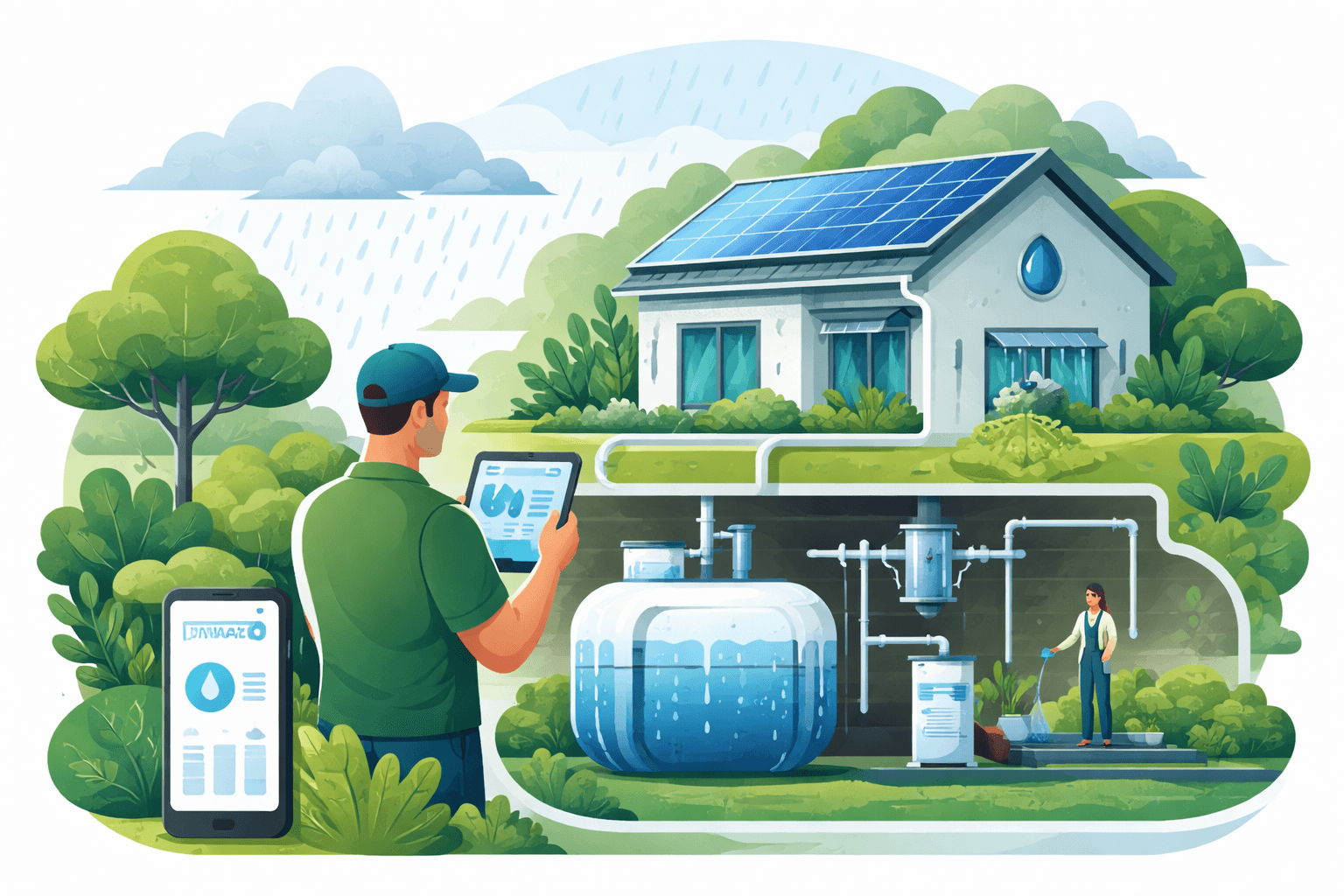
Rainwater harvesting is moving from niche to mainstream. In arid U.S. cities, outdoor water use can reach 60% of household demand (U.S. EPA), and the Water Research Foundation estimates toilets, showers, and laundry comprise roughly 61% of indoor use that non‑potable rainwater can offset. With a simple rooftop and tank, a typical 1,500‑square‑foot home in a 30‑inch rainfall climate can capture around 24,000 gallons per year—enough to supply all toilet flushing and irrigation for many households. This guide explains how rainwater harvesting works, how to design and size a system, what it costs, and how to operate it safely.
What is rainwater harvesting and why it matters
Rainwater harvesting is the collection and use of precipitation from roofs or landscapes for non‑potable or, with proper treatment, potable purposes. It reduces potable water demand, lowers utility bills, cuts stormwater runoff and flood risk, and can provide emergency water resilience during droughts and outages.

Design for Water: Rainwater Harvesting, Stormwater Catchment, and Alternate Water Reuse: Kinkade-Levario, Heather
Design for Water: Rainwater Harvesting, Stormwater Catchment, and Alternate Water Reuse [Kinkade-Levario, Heather] on Amazon.com. *FREE* shipping on qualifying offers. Design for Water: Rainwater Harv
Check Price on Amazon- Water demand: Across the U.S., outdoor irrigation averages 30% of residential use and can exceed 60% in hot, dry regions (U.S. EPA WaterSense). Indoors, toilets (~24%), showers (~20%), faucets (~19%), and clothes washers (~17%) dominate demand (Water Research Foundation, Residential End Uses of Water, Version 2).
- Stormwater: Every inch of rain on 1,000 ft² yields 623 gallons of runoff. Capturing and slowing that flow reduces erosion, combined sewer overflows, and polluted discharges to streams (U.S. EPA).
- Energy and emissions: Treating and pumping water and wastewater typically requires 0.5–2.0 kWh per cubic meter (EPA guidance). Reducing utility-supplied volumes with rainwater lowers indirect greenhouse gas emissions from the water-energy nexus.
For households seeking practical conservation, rainwater harvesting pairs well with other steps to save water and support resilience; see our broader guidance on how to practice conservation at home.
How rainwater harvesting works: key components and technology
A complete system includes components to collect, convey, screen, store, treat, pump, and control water.

Rain Harvesting First Flush Downspout - First Flush Diverter Kit, Suits 3" Round Pipes - Bathtub And Shower Diverter Valves - Amazon.com
View on Amazon- Catchment: Most commonly rooftops (metal, tile, or asphalt shingles). Landscape catchments (paved areas, compacted soils) are used for passive systems like rain gardens.
- Conveyance: Gutters and downspouts direct flow to storage. Screens at gutters and downspout inlets block leaves and debris. All inlets and overflows are insect‑screened (e.g., 1 mm mesh) to prevent mosquito entry.
- First‑flush diverter: A bypass that discards the initial portion of runoff (often 0.02–0.05 inches of rainfall volume) to remove roof dust, pollen, and bird droppings before water reaches storage. Many systems use simple ball‑valves or automatic diverters sized to roof area.
- Storage: Above‑ground polyethylene tanks, corrugated steel with liners, fiberglass, or concrete cisterns. Tanks should be opaque or shaded to inhibit algae growth, fitted with sealed lids, screened vents, and an overflow to a safe discharge area or infiltration feature.
- Treatment: For non‑potable uses (toilets, irrigation), basic screening and sediment filtration (50–100 micron) are typical. For potable use, a multi‑barrier train is needed: fine filtration (1 micron absolute), activated carbon for taste/odor, and disinfection (UV or chlorination). Treatment must be matched to water quality verified by lab testing.
- Pumping and pressure: A pressure pump (0.5–1.5 hp) delivers 30–50 psi for indoor fixtures or irrigation. Small pressure tanks or variable‑speed drives stabilize pressure and reduce short‑cycling. Gravity systems are possible with elevated tanks.
- Controls and sensors: Float/level sensors to prevent dry‑running, solenoid valves to switch to municipal backup when the tank is low, and overflow controls. Smart controllers can integrate weather forecasts to pre‑drain tanks before storms, boosting capture and flood mitigation.
Types of rainwater harvesting systems: rooftop, surface, passive, and integrated
- Rooftop to tank (active): The most common residential approach, capturing roof runoff to a sealed cistern for indoor non‑potable uses (toilet flushing, laundry) and irrigation. With appropriate treatment and approvals, rooftop rainwater can be made potable.
- Surface catchment to storage: Larger paved or compacted soil areas convey runoff to a central tank. Useful for small farms or industrial yards; requires robust sediment control and pretreatment.
- Passive systems (infiltration/retention): Shape the landscape to keep water on site—rain gardens, bioswales, infiltration trenches, and permeable pavements. No pumps or tanks; water soaks into the soil, supporting plants and groundwater recharge. Passive harvesting complements gardening and landscaping; see our guides to practical sustainable gardening and wildlife‑friendly gardening to turn rain into a biodiversity asset.
- Integrated reuse systems: Combine rainwater, graywater, and stormwater controls, managed by a central controller with real‑time sensors. These systems can prioritize uses (e.g., toilets first, irrigation second), switch between sources, and pre‑drain storage ahead of forecast storms.
Designing your system: sizing catchment, storage, filtration, and pumps
A reliable design matches expected harvest to demand over time and chooses components to deliver the right quality and pressure.
Step 1: Estimate potential harvest
Annual harvest (gallons) ≈ Roof area (ft²) × Annual rainfall (in) × 0.623 × Runoff coefficient.
- 0.623 converts inches of rain on a square foot to gallons.
- Runoff coefficient (C): 0.75–0.95 for typical roofs (higher for smooth metal; lower for rough shingles). Allow for 10–15% losses from wind, splash, and first‑flush.
Worked example (mid‑humid climate):
- Roof: 1,500 ft², Rainfall: 30 in/yr, C: 0.85
- Harvest ≈ 1,500 × 30 × 0.623 × 0.85 ≈ 23,900 gallons/year.
Monthly rainfall distribution matters. A mass‑balance calculator (simple spreadsheet) using monthly rainfall and demand will estimate reliability (e.g., 80–90% of months meeting target demand).
Authoritative manuals such as the Texas Water Development Board’s “Texas Manual on Rainwater Harvesting” and university extension tools (e.g., University of Arizona) provide coefficients and worksheet methods.
Step 2: Quantify demand
- Irrigation: Estimate plant water needs or use historical metered outdoor use. As a rough screen, turf and gardens often require 0.5–1.0 inches/week in summer; drip irrigation trims demand by 30–50% compared to sprinklers.
- Indoor non‑potable: Toilets (1.1–1.6 gpf), laundry (10–20 gal/load for high‑efficiency washers), and, where allowed, cold‑water supply to outlets like hose bibbs. A 3‑person household might use 20–30 gallons/day for toilet flushing alone.
- Potable demand: Highly variable; design to local code and include backup supply.
Step 3: Size the tank
Storage balances harvest and demand through dry spells.
- Rule‑of‑thumb: For non‑potable indoor uses in moderate climates, size storage for 2–4 weeks of demand. For irrigation‑heavy systems, size for peak‑season needs with drawdown before wet seasons.
- Screening approach: Tank volume (gallons) ≈ Average monthly demand, or ≈ 5–10% of annual harvest—then refine via monthly water balance.
- Practical constraints: Space, weight (8.34 lb/gal), structural support, frost line, and access for maintenance. Above‑ground tanks are cheapest and easiest to service.
Step 4: Select treatment
- Non‑potable: Leaf screens (mesh 1–2 mm), sediment filters (50–100 micron), optional carbon for odor. Keep turbidity low to protect pumps and fixtures.
- Potable: Multi‑barrier treatment with filtration to 1 micron absolute, activated carbon, and disinfection (UV rated for ≥40 mJ/cm² dose, or chlorine maintaining 0.2–0.5 mg/L free residual at the tap). Turbidity should ideally be below 1 NTU for effective disinfection (WHO).
- Materials: Use components certified for potable contact (NSF/ANSI 61) if water will be drunk. Filters and UV units should carry relevant NSF/ANSI certifications (e.g., 42/53 for carbon/particulate, 55 for UV), where applicable.
Step 5: Pump and controls
- Target pressure: 30–50 psi at fixtures. Estimate total dynamic head (vertical lift + friction + required pressure) to size the pump. Many homes use 0.5–1.0 hp multistage pumps for indoor supply.
- Protection: Dry‑run cutoff, coarse prefilter to protect impellers, and a small pressure tank to limit short‑cycling. Variable‑speed pumps improve efficiency and acoustics.
- Backup: An automatic mains bypass valve maintains service when the tank is empty, with air‑gap or backflow prevention as required by code.

Grundfos 98562818 SCALA2 3-45 AVCBDF 1x115V 60Hz Pressure Boosting Pump - Amazon.com
View on AmazonBy the Numbers
- 623 gallons: runoff from 1 inch of rain on 1,000 ft² of catchment (engineering constant).
- 24,000 gallons/year: typical harvest from a 1,500 ft² roof in a 30‑inch rainfall climate with 85% efficiency.
- 30–60%: share of residential water used outdoors in many U.S. areas (U.S. EPA WaterSense).
- 0.5–2.0 kWh/m³: energy to treat and move water and wastewater in typical U.S. utilities (U.S. EPA). 20,000 gallons saved avoids roughly 57–227 kWh of grid energy.
- 0.387 kg CO₂/kWh: approximate U.S. grid average emission factor (EPA eGRID 2022). Avoiding 100 kWh saves ~39 kg CO₂.
- 10–100%: potential stormwater fee discounts in select cities for on‑site retention and green infrastructure performance (e.g., Portland Clean River Rewards program parameters).
Costs, savings, and environmental impact (data‑driven ROI)
Costs vary with storage size, materials, treatment level, and excavation needs.
Typical 2024 U.S. price ranges (market survey; your area may differ):
- Rain barrels (50–100 gal) with screen and spigot: $100–$300 each.
- Above‑ground polyethylene tanks (500–5,000 gal): $0.50–$1.50 per gallon ($250–$7,500), plus pads, plumbing, and pump.
- Corrugated steel with liner: $1.00–$2.00 per gallon.
- Underground concrete or fiberglass cisterns: $1.50–$3.50 per gallon, plus excavation/backfill (often $3,000–$10,000 install premium).
- Pumps, filters, controls: $800–$3,000 for non‑potable; $2,000–$6,000 for potable treatment trains.
- Turnkey systems: 1,000–5,000 gallons non‑potable $3,000–$12,000; potable systems $10,000–$25,000+ depending on complexity.
Savings drivers:
- Water and sewer rates: Combined charges commonly range $5–$15 per 1,000 gallons each (varies widely by city and usage tier). Irrigation replacements avoid water charges but often not sewer fees, since irrigation may not be billed for sewer.
- Example (non‑potable indoor + irrigation): 24,000 gallons/year offset at $10/1,000 gal blended rate → $240/year. Higher‑tier rates can double that figure.
- Stormwater fee credits: Where available, rainwater tanks connected to controlled outflows or infiltration can earn recurring bill credits (10–100% of stormwater line items depending on performance verification).
- Peak season resilience: During droughts, avoiding irrigation cutbacks protects landscaping investments.
Environmental impact:
- Reduced runoff volume and peak flow rates; improved water quality by capturing first flush.
- Lower embedded energy and emissions in water supply and wastewater treatment; 24,000 gallons avoided can save on the order of 90–200 kWh, or ~35–80 kg CO₂ on an average U.S. grid, with larger savings where water is energy‑intensive (long‑distance pumping or advanced treatment).
- Urban heat mitigation when paired with green infrastructure (vegetation kept healthy with stored rainwater).
ROI outlook:
- Simple rain‑to‑irrigation systems often pay back in 3–8 years in high‑rate, high‑rainfall regions, longer in low‑rate areas.
- Indoor non‑potable integration (toilets/laundry) improves annual utilization and shortens payback, especially in climates with dry summers.
- Adding smart controls that pre‑drain before storms can unlock stormwater credits and enhance flood mitigation value documented in utility and Water Research Foundation case studies (20–50% performance gains in capture and overflow reduction are reported where real‑time control is used).
Regulations, permits, and water quality & safety standards
Rules vary by country, state, and city. Always check local plumbing, building, and environmental health codes before building.
- Legality and use: Many U.S. states explicitly allow and encourage rainwater harvesting for non‑potable uses. Some prohibit or restrict potable use without engineered treatment and permits. A few states (e.g., Colorado) limit storage volume in simple residential systems unless special permits are obtained.
- Plumbing codes: Non‑potable rainwater must be kept separate from potable plumbing with clear labeling (e.g., purple pipe convention for non‑potable), dedicated outlets, and approved backflow prevention at any municipal connection (International Plumbing Code/Uniform Plumbing Code provisions and local amendments).
- Cross‑connection control: Backflow preventers, air gaps, or break tanks as specified by the local authority.
- Materials and certification: For potable applications, components in contact with water should meet NSF/ANSI 61 for drinking water system components; point‑of‑use filters may carry NSF/ANSI 42/53 (aesthetic/health contaminants) and UV systems NSF/ANSI 55 where applicable. Rainwater reuse systems may also be evaluated under NSF/ANSI 350 for onsite water reuse performance in some jurisdictions.
- Water quality: The U.S. CDC cautions that untreated rainwater can contain pathogens (from bird droppings), debris, and chemicals (roofing materials). The WHO advises multi‑barrier treatment and regular testing if used as a drinking source. Potable designs should incorporate source control (suitable roofing like metal or tile), first‑flush diversion, fine filtration, disinfection, and periodic lab testing for E. coli, turbidity, and targeted metals.
- Discharge and overflow: Direct overflows to infiltration areas or approved drains; avoid nuisance flows across sidewalks or onto neighbors. Some cities require controlled outflows to limit peak stormwater discharge rates.
Local environmental agencies, water utilities, and extension services publish guidance and may offer incentives or expedited permits for green infrastructure. Where technology is central to permitting and monitoring, see our explainer on using technology for environmental protection.
Installation, maintenance, and troubleshooting checklist
Installation checklist:
- Verify local code requirements, permits, and allowable uses; locate utilities before digging.
- Choose compatible roof materials; avoid treated wood shingles and evaluate copper/zinc roofs for potential metals leaching, especially for potable systems.
- Install gutters with adequate slope (1/16–1/8 inch per foot), leaf guards, and screened inlets.
- Size and fit first‑flush diverters (0.02–0.05 inches of rainfall volume for the roof area); ensure automatic drain or manual cleanout.
- Place tanks on a level, compacted pad (concrete or crushed stone), protected from sun where possible. Seal lids; screen all vents and overflows.
- Plumb sediment prefilters before the pump; include unions and isolation valves for service.
- Install pump with vibration isolation, dry‑run protection, and a small pressure tank or variable‑speed drive.
- Label non‑potable outlets; install backflow prevention on any municipal backup connection.
- Program controllers and test low‑water cutoff, make‑up valves, and overflow routing.
Maintenance schedule:
- Roof and gutters: Inspect and clean 2x per year; more often in leaf season.
- Screens and first‑flush: Check quarterly; empty and rinse after major storms.
- Sediment/carbon filters: Replace every 6–12 months or per pressure drop indications.
- UV disinfection: Clean quartz sleeve and replace lamp annually (per manufacturer runtime hours).
- Chlorination (if used): Monitor free chlorine residual (0.2–0.5 mg/L target at tap for potable); adjust dosing and maintain contact time.
- Tank: Inspect annually for sediment; vacuum or pump‑out as needed every 2–5 years.
- Pumps and controls: Check for leaks, pressure stability, and abnormal cycling quarterly.
- Water testing (potable systems): Test for E. coli and turbidity at least twice per year; metals and other parameters as indicated by roofing materials and local health guidance.
Troubleshooting tips:
- Low pressure/short‑cycling: Add or service pressure tank; check for clogged filters; verify pump suction is airtight.
- Odors or discoloration: Increase first‑flush volume; verify opaque tank; flush sediment; replace carbon; check for stagnation.
- Algae or mosquitoes: Ensure tank is light‑tight; confirm all vents/inlets have insect screens; add fine mesh where needed.
- Pump cavitation/noise: Verify flooded suction or install foot valve; clear suction line blockage; reduce suction lift.
- Freezing risk: Insulate exposed lines, drain seasonal systems, or bury lines below frost depth; use heat tape on vulnerable sections.
Further resources, grants, and links to related tech (smart sensors, IoT)
- Incentives and grants: Many water utilities and stormwater agencies offer rebates for rain barrels, cisterns, and green infrastructure. Check your city or county environmental services and water utility. Some programs include performance‑based stormwater fee credits for controlled discharges and infiltration.
- Design manuals and science: Look for guidance from state water boards, university extension services (e.g., Texas, Arizona, North Carolina), and national public health agencies (U.S. CDC, WHO) for potable safety.
- Smart systems: IoT level sensors (ultrasonic or pressure transducers), rain gauges, automated valves, and cloud controllers can optimize storage. Integrating weather forecasts to pre‑drain storage has been shown in utility and research pilots (e.g., Water Research Foundation and U.S. EPA case studies) to improve capture and reduce overflows by 20–50% in suitable networks.
- Technology primers: Explore how sensors, data, and renewables strengthen conservation in our features on how technology aids conservation and using technology for environmental protection.
Where rainwater harvesting is heading
Three trends are reshaping rainwater harvesting:
- Code modernization: More jurisdictions are creating clear pathways for non‑potable indoor use and, with engineered treatment, potable use—aligning plumbing codes with water‑scarcity realities while protecting public health.
- Smart, integrated water management: Real‑time control, forecast‑informed operations, and integrated rain‑graywater systems are expanding the performance envelope from simple conservation to stormwater mitigation and urban flood control services.
- Nature‑positive design: Pairing storage tanks with rain gardens, bioswales, and permeable pavements turns a hardscape into a small urban sponge, improving biodiversity and microclimate while reducing runoff. Our guides to practical sustainable gardening and how to practice conservation at home offer project ideas that dovetail with a cistern.
Done thoughtfully—with data‑driven sizing, appropriate treatment, and routine upkeep—rainwater harvesting delivers reliable water savings, measurable stormwater benefits, and a tangible piece of climate resilience for homes, businesses, and communities.
Recommended Products
Design for Water: Rainwater Harvesting, Stormwater Catchment, and Alternate Water Reuse: Kinkade-Levario, Heather
Design for Water: Rainwater Harvesting, Stormwater Catchment, and Alternate Water Reuse [Kinkade-Levario, Heather] on Amazon.com. *FREE* shipping on qualifying offers. Design for Water: Rainwater Harv
Rain Harvesting First Flush Downspout - First Flush Diverter Kit, Suits 3" Round Pipes - Bathtub And Shower Diverter Valves - Amazon.com
Rain Harvesting First Flush Downspout - First Flush Diverter Kit, Suits 3" Round Pipes - Bathtub And Shower Diverter Valves - Amazon.com
Grundfos 98562818 SCALA2 3-45 AVCBDF 1x115V 60Hz Pressure Boosting Pump - Amazon.com
Grundfos 98562818 SCALA2 3-45 AVCBDF 1x115V 60Hz Pressure Boosting Pump - Amazon.com
More in AI & Technology
- Practical Sustainable Gardening: Greener, Resilient Practices for Every Garden
- How to Create Sustainable Gardens: Practical Strategies for Biodiverse, Low‑Impact Landscapes
- Solar Water Heater: Buyer's Guide to Savings, Costs & Installation
- Solar Powered Water Pumping: How It Works, Benefits, and What to Consider