
Energy Harvesting from Ambient Sources: How Everyday Environment Energy Becomes Power
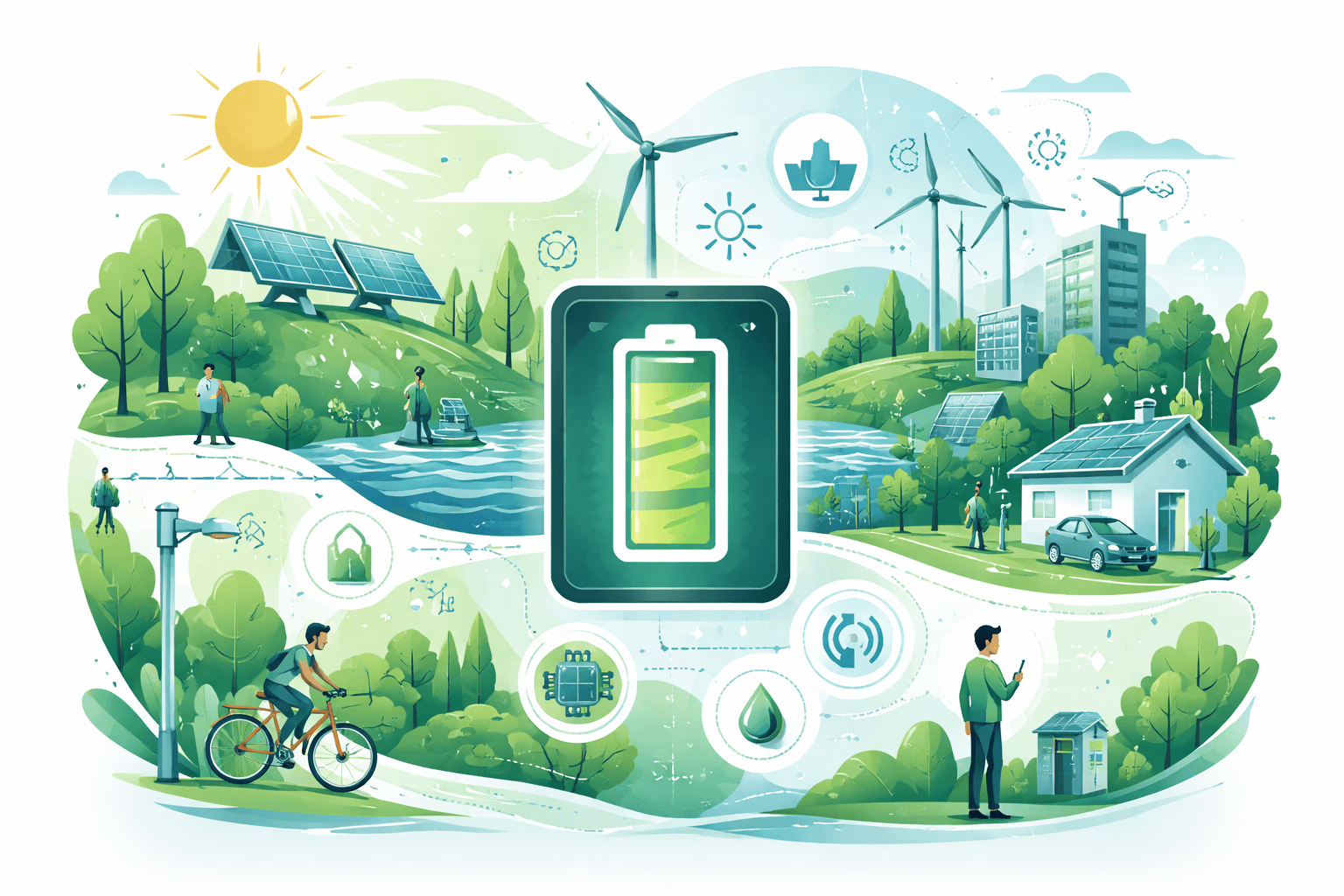
Energy harvesting from ambient sources turns tiny trickles of energy already present in our surroundings—light, heat, vibration, motion, radio waves, or airflow—into usable electrical power. Under typical office lighting (200–1000 lux), indoor photovoltaics can deliver roughly 10–100 microwatts per square centimeter according to NREL and IEEE research—often enough for low‑power sensors or Bluetooth beacons. That data point captures the promise: not grid-scale electricity, but reliable microwatts-to-milliwatts that eliminate or stretch batteries for billions of small devices.
This explainer unpacks how the main harvesting methods work, what they can realistically power, and where the technology is headed.
What “energy harvesting from ambient sources” really means
Ambient energy harvesting (also called energy scavenging) is the capture of very small, otherwise-wasted energy flows and their conversion into electricity for ultra‑low‑power electronics. It is fundamentally different from utility‑scale renewables like solar farms or wind turbines. Here, the target is power on the order of microwatts (µW, millionths of a watt) to a few milliwatts (mW), suitable for duty‑cycled sensors, wearables, asset trackers, and control switches—not appliances or vehicles. For a refresher on grid‑scale options, see our overview of Renewable Energy Sources: A Clear Guide to Solar, Wind & More.
Energy Harvesting for Autonomous Systems (Smart Materials, Structures, and Systems): Beeby, Stephen, White, Neil M
by Stephen Beeby (Editor), Neil ... unique resource <strong>provides a detailed understanding of the options for harvesting energy from localized, renewable sources to supply power to autonomous wirel
Check Price on AmazonThe core stack typically includes:
- A transducer that converts ambient energy (e.g., light to electricity, heat gradient to voltage, motion to current)
- Power management electronics that boost, rectify, and regulate that trickle while maximizing efficiency
- A small energy buffer (supercapacitor or thin‑film battery) to handle intermittent input and peak loads during radio transmissions
- An ultra‑low‑power sensor/processor and communication link (e.g., BLE, sub‑GHz) designed to sip energy
The main ambient sources and how they become electricity
Light: outdoor and indoor photovoltaics (PV)
- How it works: Photons create electron‑hole pairs in a semiconductor; a built‑in electric field separates charges to generate current. Silicon dominates outdoors; indoor PV often uses amorphous silicon, dye‑sensitized, organic, or tailored perovskites optimized for low‑light spectra.
- Typical output: Under full sun (1,000 W/m²), commercial modules (~20% efficiency, per NREL tracking) deliver ~200 W/m², or ~20 mW/cm². Indoors at 200–1000 lux, peer‑reviewed studies and NREL/IEEE measurements commonly report 10–100 µW/cm² depending on spectrum and cell type—enough to power e‑paper labels or BLE beacons with infrequent updates.
- Pros: Mature, no moving parts, strong performance at modest illumination for certain chemistries; form factors from rigid glass to flexible films.
- Cons: Output falls sharply in very low light or shadow; indoor spectra vary by lighting technology.

PowerFilm R15-1200 15.4V @ 1.2A Rollable Solar Panel
View on AmazonHeat: thermoelectric generators (TEGs)
- How it works: The Seebeck effect converts a temperature difference (ΔT) across a thermoelectric material into voltage. Arrays of p‑ and n‑type legs form a TEG module.
- Typical output: With small ΔT typical of body heat or electronics (5–10 K), coin‑sized TEGs produce ~10–200 µW; on warm industrial pipes with higher ΔT (30–100 K), output can rise to milliwatts to tens of milliwatts, depending on thermal coupling and heat sink. Reviews in Applied Energy and IEEE report conversion efficiencies of just a few percent at these scales.
- Pros: Always‑on where a temperature gradient exists; silent and solid‑state.
- Cons: Requires sustained ΔT and good thermal design; efficiency is modest; cold‑start at low voltage can be challenging for power electronics.
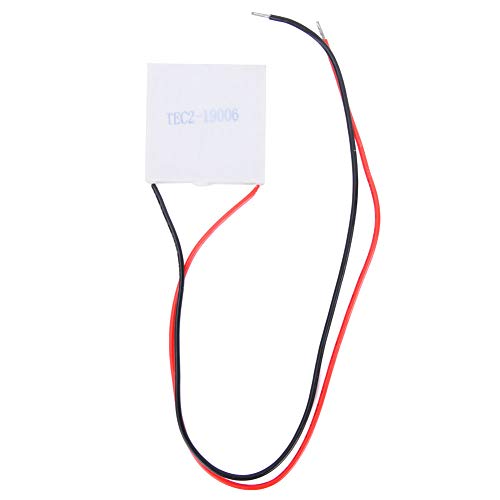
Thermoelectric Generator, Heatsink Thermoelectric Cooler Cooling Peltier Plate TEG Module High Temperature Thermoelectric Power Generator Semiconductor Thermal Peltier SP1848-27145 : Electronics
View on AmazonVibration and motion: piezoelectric, electromagnetic, and triboelectric
- How it works:
- Piezoelectric: Mechanical strain in materials like PZT generates charge. Efficient near a resonant frequency.
- Electromagnetic: A moving magnet and coil induce current (Faraday’s law), useful for human motion or machinery.
- Triboelectric: Contact and separation of dissimilar materials transfer charge; high voltages, low currents.
- Typical output: Real‑world machinery (0.1–1 g acceleration) can yield tens of µW to a few mW from well‑tuned piezo or electromagnetic harvesters; human motion (walking) often supports tens to hundreds of µW on average, with short bursts to mW for wearables. Triboelectric nanogenerators in labs show high peak voltages; practical average power for periodic contact is in the µW–mW range per extensive IEEE and Nature reviews.
- Pros: Attractive in environments with persistent vibration (motors, HVAC, rail, bridges) or routine motion (gait, door presses).
- Cons: Narrowband resonance, mechanical durability, and mounting matter; output is spiky and needs good rectification and storage.
Radio frequency (RF) energy
- How it works: Rectennas (antenna + rectifier) convert incident RF (cellular, Wi‑Fi, TV) into DC power.
- Typical output: Received power decays with the square of distance. Indoors, far‑field harvesting often provides nanowatts to a few microwatts at typical distances from access points (received levels of −50 to −20 dBm). Close to intentional RF sources or with dedicated RF power beacons, tens to hundreds of microwatts are possible, as documented in IEEE Microwave Magazine and Sensors reviews.
- Pros: Works where light/heat aren’t available; can leverage existing transmissions.
- Cons: Very low, variable power density; regulatory constraints; requires ultra‑low‑power electronics and aggressive duty cycling.
Airflow and fluid movement
- How it works: Micro‑turbines, fluttering beams, or piezo/tribo structures convert airflow or fluid motion into electricity.
- Typical output: In 3–10 m/s airflow (typical HVAC ducts), prototypes and field pilots report milliwatts of average power; in outdoor micro‑wind, tens of mW are plausible in steady breezes.
- Pros: Useful in ducts, vents, or consistent outdoor flows.
- Cons: Moving parts or mechanical fatigue in some designs; output highly dependent on flow speed and turbulence.
By the numbers: realistic power from ambient energy
Power density and harvestable energy vary widely. Meta‑analyses from NREL, IEEE, and academic reviews provide the following practical ranges for well‑designed systems:
- Indoor PV (200–1000 lux): ~10–100 µW/cm²
- Outdoor PV (full sun): ~20 mW/cm² for ~20% efficient cells
- Thermoelectric (ΔT 5–10 K): ~10–200 µW per coin‑sized module; (ΔT 30–100 K): mW to tens of mW
- Vibration on machinery (0.1–1 g near resonance): tens of µW to few mW
- Human motion (walking): tens to hundreds of µW average; bursts to mW
- RF harvesting (typical indoor distances): nanowatts to few µW; dedicated power beacons: 10–100+ µW
- Airflow in HVAC ducts (3–10 m/s): milliwatt‑class
These numbers align with the power budgets of many modern wireless sensor nodes, which, with aggressive duty cycling and edge processing, can average 10–1000 µW while periodically transmitting short packets.
Practical applications where harvesting shines
Industrial monitoring and predictive maintenance
- Vibration harvesters mounted on motors, pumps, and gearboxes can power temperature/acceleration sensors that wake periodically to send condition data via sub‑GHz radios. Avoiding wiring and minimizing battery swaps reduces downtime and service truck rolls—important operational and emissions benefits documented in numerous IEEE/ISA case studies.
Smart buildings and homes
- Indoor PV or kinetic energy from switch presses can power occupancy, temperature, and CO2 sensors or wireless light switches. The EnOcean family of battery‑free building controls (standardized under ISO/IEC 14543‑3‑10) demonstrates mature deployments. For a broader view of where these devices plug into whole‑home strategies, see our guide to Smart Home Technology for Sustainability: High‑Impact Upgrades, Integration, and Real‑World Guidance and our Smart Home Energy Saving: A Practical Guide to Cut Bills with Tech.
Wearables and personal health
- Thermoelectrics leveraging body heat, or motion harvesters in footwear and clothing, can extend runtime of health monitors and fitness trackers. While continuous smartwatch‑level power remains out of reach, duty‑cycled sensors (skin temperature, UV exposure, posture) are already viable with indoor PV or motion energy.
Environmental and wildlife monitoring
- Solar micro‑panels or TEGs power remote sensors tracking microclimates, water quality, or species presence for months to years without battery changes—a major advantage for conservation teams. Pairing such nodes with edge AI reduces data transmission needs. Explore methods in AI for Environmental Monitoring: Methods, Use Cases & Tools and broader context in How Technology Aids Conservation: Sensors, AI, and Renewable Solutions.
Transportation and logistics
- Asset trackers on reusable totes or pallets can trickle‑charge from indoor light, reporting only when moved. Rail and roadway infrastructure exploit vibration to power strain and displacement sensors on bridges or tracks.
Smart infrastructure and cities
- Airflow in ventilation shafts, minor thermal gradients on utility enclosures, or weak RF fields near communication hubs can collectively support dense sensing without extensive wiring.
Benefits and limitations
Benefits
- Maintenance reduction: Analysts and field reports indicate that battery replacements can represent a large fraction of total cost for large‑scale IoT deployments; harvesting reduces site visits and device failures from depleted cells.
- Sustainability: Fewer primary batteries mean less hazardous waste and lower embedded emissions from manufacturing and logistics. Avoided “truck rolls” for maintenance also cut operational CO2.
- Design flexibility: Battery‑free or battery‑assisted nodes can be smaller and more freely placed (e.g., adhesive sensors on glass powered by indoor light).
- Reliability in niche conditions: Where light or heat is always present (e.g., near hot pipes), harvesters can outperform batteries that degrade at temperature extremes.
Limitations
- Power is scarce and intermittent: Ambient sources rarely provide continuous power above a few milliwatts; sunlight, vibration, and RF vary widely over time.
- Energy‑efficient hardware is mandatory: Success depends on ultra‑low‑quiescent current electronics, intermittent computing, aggressive duty cycles, and efficient radios.
- Storage and cold‑start challenges: Energy harvesting ICs must start from very low voltages and tiny currents; buffers (supercapacitors or micro‑batteries) must handle peak loads and temperature swings.
- Economics and integration: Harvesters add bill of materials cost and design complexity; ROI hinges on avoided maintenance and access costs.
- Environmental fit: A harvester tuned for 120 Hz machinery vibration may not work on a slowly swaying structure; indoor PV tuned to LED spectra may underperform under skylights.
Designing for harvest-first devices: key technical principles
- Power budgeting from the start: Determine average and peak loads. Many sensor nodes can target 10–1000 µW average by using low‑power sleep states, event‑driven sensing, and short radio bursts (tens of milliseconds) at tens of milliwatts, amortized over long intervals.
- Maximum power point tracking (MPPT): For PV especially, use MPPT or fixed‑fraction tracking to extract the most energy as light levels change.
- Rectification and boost at micro‑power: Piezo and RF harvesters benefit from low‑leakage rectifiers; TEGs need converters that cold‑start from tens to hundreds of millivolts.
- Hybrid storage: Supercapacitors excel at high cycle life and power bursts; thin‑film or Li‑ion micro‑batteries offer higher energy density. Some designs combine both.
- Intermittent computing: Modern microcontrollers and non‑volatile memories support “checkpointing” so tasks survive brownouts. Research published at ACM/IEEE venues shows robust operation with microjoule‑scale energy buffers.
- Protocol choice matters: Sub‑GHz narrowband radios (e.g., LoRa) can cover long distances at low energy per bit; BLE broadcasts can be extremely frugal for short bursts; choose modulation, data rate, and duty cycle to match harvested power.
Where the technology stands now
- Maturity: Indoor PV and building controls are mature and widely deployed; vibration harvesters are proven in industrial pilots and targeted production uses; thermoelectrics are dependable when a steady ΔT exists; RF harvesting is feasible for ultra‑low‑power tags and is improving with better rectifiers and antennas.
- Performance trajectory: Semiconductor roadmaps are favorable. Ultra‑low‑power MCUs now sleep below 100 nA and execute at ~1 µA/MHz; sensors integrate on‑die intelligence; radios adopt energy‑friendly features (e.g., Bluetooth Low Energy periodic advertising). Materials advances—high‑efficiency indoor perovskites/organics, flexible TEGs, durable piezo/tribo films—continue to raise output at a given footprint.
- Integration: Multi‑source harvesters combine PV with motion or heat to smooth intermittency. Power‑management ICs provide MPPT, cold‑start at <100 mV, and nanowatt‑scale quiescent currents, making sub‑100‑µW average budgets realistic.
- Markets: Battery‑free e‑paper labels, self‑powered light switches, and condition‑monitoring nodes are in commercial use today. Large‑scale deployments in retail, logistics, and buildings demonstrate multi‑year autonomy.
How big a role will ambient harvesting play in energy and electronics?
Ambient harvesters will not displace grid‑scale renewables; their role is complementary. Think of them as the power plant for distributed electronics rather than for the electric grid. They will:
- Decouple sensor deployment from wiring and frequent battery replacement
- Enable denser instrumentation of buildings, factories, and ecosystems—key to efficiency gains and resilience
- Reduce lifecycle costs for massive IoT fleets
This complements broader electrification and renewable integration by providing data that makes systems smarter and more efficient. For example, self‑powered occupancy and temperature sensors inform HVAC optimization, which in turn reduces building energy demand—an indirect but meaningful contribution to decarbonization that compounds with other measures. For more context on whole‑system savings, see our overview of Smart Home Energy Saving: A Practical Guide to Cut Bills with Tech.
Practical implications for decision‑makers
- Facility managers: In large buildings, prioritize indoor‑PV‑powered sensors and battery‑free switches in areas with consistent illumination. In mechanical rooms, evaluate vibration or TEG solutions near hot equipment.
- Industrial engineers: For condition monitoring, start with a power budget, then match harvester type to local physics (frequency spectra for vibration, ΔT for TEGs). Prototype mounting and resonance; success often hinges on mechanical design.
- Sustainability teams: Quantify avoided battery waste and truck rolls in emissions reports; harvesting‑ready devices may justify a premium via reduced maintenance.
- Product designers: Adopt intermittent‑compute paradigms, non‑volatile state, and radios configured for minimum energy per useful bit. Consider hybrid storage and plan for component derating over temperature and time.
What to watch next
- Better indoor PV: Tailored perovskite/organic cells pushing higher efficiency at low lux and under LED spectra, with stability improvements documented in Nature Energy.
- Robust multi‑harvesters: Compact modules blending PV + TEG + motion with intelligent source selection to smooth intermittency.
- Materials durability: Advances in piezo and tribo polymers to maintain output over millions of cycles.
- Ultralow‑power AI at the edge: Keyword spotting or anomaly detection at microjoules per inference, reducing radio transmissions dramatically.
- Standardization: Broader adoption of energy‑harvesting‑friendly protocols (e.g., low‑duty BLE features, energy‑adaptive MACs) and expansion of building standards like EnOcean.
Energy harvesting from ambient sources won’t run your house—but it can run the small, smart senses of the built and natural world. As electronics sip less power and materials eke out more from dimmer light, gentler heat, and subtler motion, billions of devices can operate for years without a battery swap. That’s a quiet revolution at the edge of the energy transition—one that makes our infrastructure not only smarter, but also lighter‑touch on the planet.
Recommended Products
Energy Harvesting for Autonomous Systems (Smart Materials, Structures, and Systems): Beeby, Stephen, White, Neil M
by Stephen Beeby (Editor), Neil ... unique resource <strong>provides a detailed understanding of the options for harvesting energy from localized, renewable sources to supply power to autonomous wirel
PowerFilm R15-1200 15.4V @ 1.2A Rollable Solar Panel
Amazon.com: <strong>PowerFilm R15-1200 15.4V @ 1.2A Rollable Solar Panel</strong>
Thermoelectric Generator, Heatsink Thermoelectric Cooler Cooling Peltier Plate TEG Module High Temperature Thermoelectric Power Generator Semiconductor Thermal Peltier SP1848-27145 : Electronics
Buy Thermoelectric Generator, Heatsink Thermoelectric Cooler Cooling Peltier Plate TEG Module High Temperature Thermoelectric Power Generator Semiconductor Thermal Peltier SP1848-27145: Heatsinks - Am